

“The light shines in the darkness, and the darkness did not overcome it.” —John 1:5.
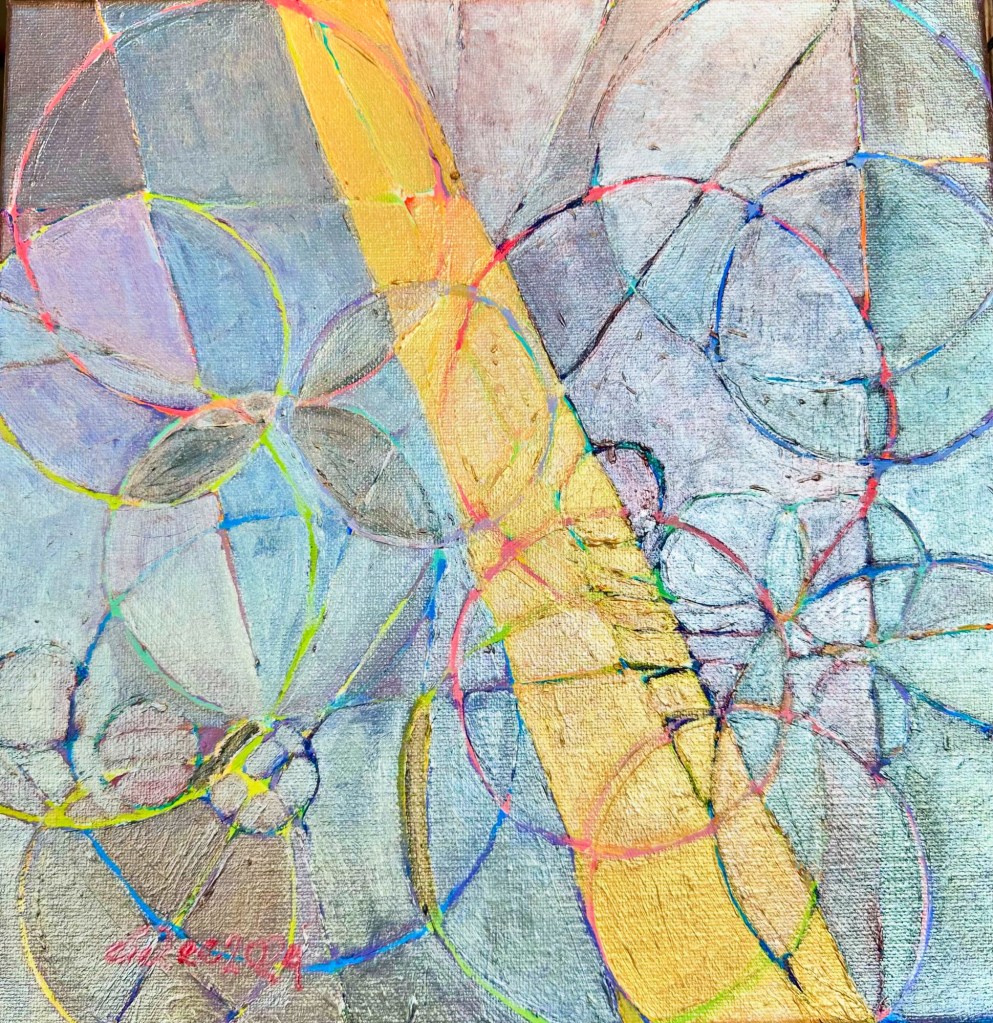
Some of us can hear these words with hope, two thousand years after John’s gospel was first written. These words come as a ray of hope, like a flashlight’s beam bursting into a collapsed mine to let imprisoned workers know help and life-giving oxygen is on the way. For the people in the first century who lived under the Pax Romana—the peace of Rome—not everyone had the same rights and privileges as the citizens of Rome. The conquered lands, including the nation of Israel, were under military occupation and suffered brutal taxation and unfair application of the laws.
More importantly, obedience to the emperor and the empire was required, which for the Jewish people meant making a sacrifice in honor of the emperor. Because this act would acknowledge a human being as a god, the Jews were between a rock and a hard place. If they denied the emperor, they were unpatriotic. If they sacrificed to him, they committed blasphemy against their God. After all, we find one of the great commandments in Exodus 20:2-3:
“I am the LORD your God, who brought you out of the land of Egypt, out of the house of slavery; you shall have no other gods before me.”
We take religious freedom and expression as a given here in the United States, since the first European settlers to these shores came here with the express purpose of worshipping God in their own way. Unfortunately, they also persecuted the next groups who arrived and who worshipped differently. After gaining independence from England, America has been one of the few nations of the world in that one of its core values is to honor every faith tradition and allow each person to worship freely (or not) God as they want.
Insisting on the priority or preference for one religion isn’t historical or grounded in our constitution. We find this in both Article VI of our Constitution, which prohibited religious tests for federal office holders, and in Article I of the Bill of Rights:
“Congress shall make no law respecting an establishment of religion, or prohibiting the free exercise thereof; or abridging the freedom of speech, or of the press; or the right of the people peaceably to assemble, and to petition the Government for a redress of grievances.”
In this present time, when certain groups of Christians (Christian Nationalists) want to claim an alternative history of our national origin and our national destiny, they also are trying to rewrite our history to make it fit their purposes. This elevates their religious group above others and gives them preference over other Christian denominations as well as other faiths and nonbelievers. When these other groups become persecuted or marginalized, the whole suffers, while a few prosper.
The situation was much the same back in the first century CE, when tax farming was a corrupt practice in the Roman provinces. A family bought the rights to a tax area, collected whatever they wanted, and gave the due to Rome. The rest they kept as profit. No wonder folks hated the local tax collectors: they were not only greedy, but they colluded with the occupation. The priests in the temple made sure they never rocked the boat, so they could keep up their rituals and practices of the law, both scriptural and secular.
Therefore the people yearned for a savior, a messiah. In every age, in the stillness of the night, in the darkness of despair, when hope was flickering to an ember, a voice of a prophet would arise. These prophetic voices weren’t often heard, but occasionally one voice would pierce the gloom like a bright light in a dark cave. When a prophet speaks a true word from God, people recognize it as true because it speaks the truth of God, reminds people they belong to God, calls the people back to God, and tells them the consequences of their resulting behavior. Prophecy isn’t just about fortune telling.
Poets are often the prophets of their age. The first stanza of William Butter Yeats’ Ode speaks both toward that first century past and to the second coming:
“Turning and turning in the widening gyre
The falcon cannot hear the falconer;
Things fall apart; the centre cannot hold;
Mere anarchy is loosed upon the world,
The blood-dimmed tide is loosed, and everywhere
The ceremony of innocence is drowned;
The best lack all conviction, while the worst
Are full of passionate intensity.”
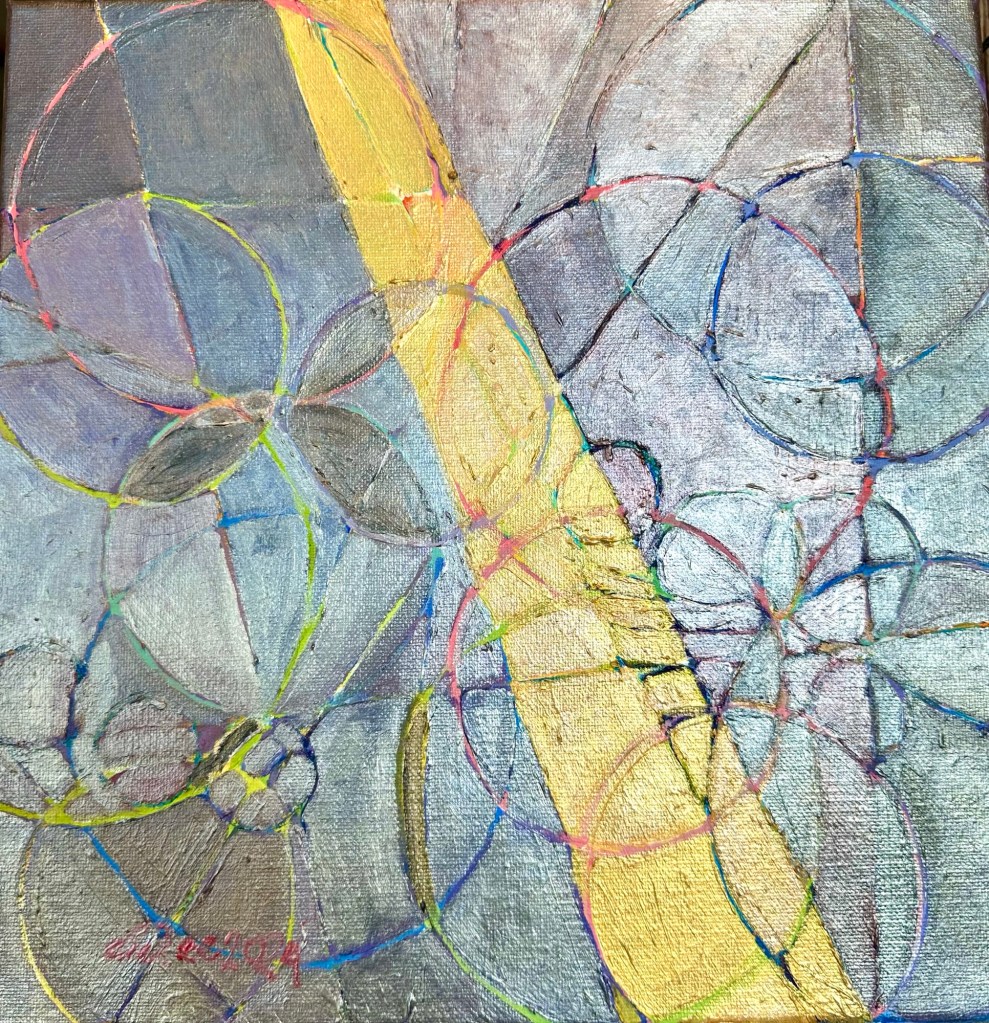
If we lose hope, if we give up on the hope of redeeming our world and ourselves, we will fall into despair and nihilism. These emotions are not good. We won’t listen for the still small voice of God in the dark and quiet spaces anymore. We won’t hear the voice of God in the weed growing in the crack in the pavement of the sidewalk as we go about our daily tasks. We will fail to hear the promises of new hope and new strength when the crocuses pop through the snow next spring.
Art and poetry keep us connected to the magic and mystery of the Spirit of God. A steady diet of news and television is a soul killer. If you find your attitude going south, I recommend you limit your news consumption to two hours or less per day. Replace those other hours with sunlight, exercise, cooking, a new hobby, fiction reading, journaling, or whatever. If you keep getting drawn back into the distressing activity, remember to let go, and return to a better activity. Optimism and a sense of hope will carry us further than negativity will. As Isaiah 6:13 says,
“Even if a tenth part remain in it, it will be burned again, like a terebinth or an oak whose stump remains standing when it is felled. The holy seed is its stump.”
Or as my daddy always said, “Don’t let the bad guys grind you down.” Of course, this sentiment had some bad medical school Latin he and his friends translated when the going got tough and the sleep got short in his younger days. “While I breathe, I hope,” is “Dum spiro spero,” in Latin. It’s been one of my favorite sayings. Night doesn’t last forever, and morning will come. Dawn will break! There will be a new day and a fresh opportunity to do at least one thing better. To make a difference in one person’s life, to make a difference for the good for someone, somewhere. I may be just baking cookies to bring to overworked volunteers somewhere, who are doing good for others, but I can bring a bright light to someone’s day today. I don’t have to save the entire world.
If I can be a ray of light for someone today, I might give them hope. Hope is a gift. We should share it freely. Then hope would grow and “The people who walked in darkness have seen a great light; those who lived in a land of deep darkness—on them light has shined.” (Isaiah 9:2).
Joy, peace, and light,
Cornelia
Faith of Our Forefathers (May 1998) – Library of Congress Information Bulletin
https://www.loc.gov/loc/lcib/9805/religion.html
The Second Coming | The Poetry Foundation
https://www.poetryfoundation.org/poems/43290/the-second-coming

 Artandicon's Blog