

Einstein never said, “If we do the same thing every time, but expect a different result, this is the definition of insanity.” So why do artists return over and over to the still life? For that matter, why do preachers repeatedly use the same scripture texts for their sermons? Some of my former congregation members might have said I was overly fond of certain verses. The scalawags among them might have thought I did not get my point across the first five times I preached a version of the sermon text. As Jesus was wont to say in Luke 14:34-35 about Salt:
“Salt is good; but if salt has lost its taste,
how can its saltiness be restored?
It is fit neither for the soil nor for the manure pile;
they throw it away.
Let anyone with ears to hear listen!”

I always kept my sermon notes just in case I had a difficult week and might need a backup sermon, but I never used these notes. I wrote each of those sermons for a time and a place, but they were never useful for the current time or the present location. Likewise, an artist brings their emotions and experiences of the present time to each working session in the studio. Sometimes an artist is chock full of energy and power, full of joy and life. Their paintings or works exude these same emotions. At other times, the cares and chaos of the world intrude into the otherwise peaceful precincts of the artist’s workplace. These emotions and troubles will also be visible in their work, for artists are in tune with their times.

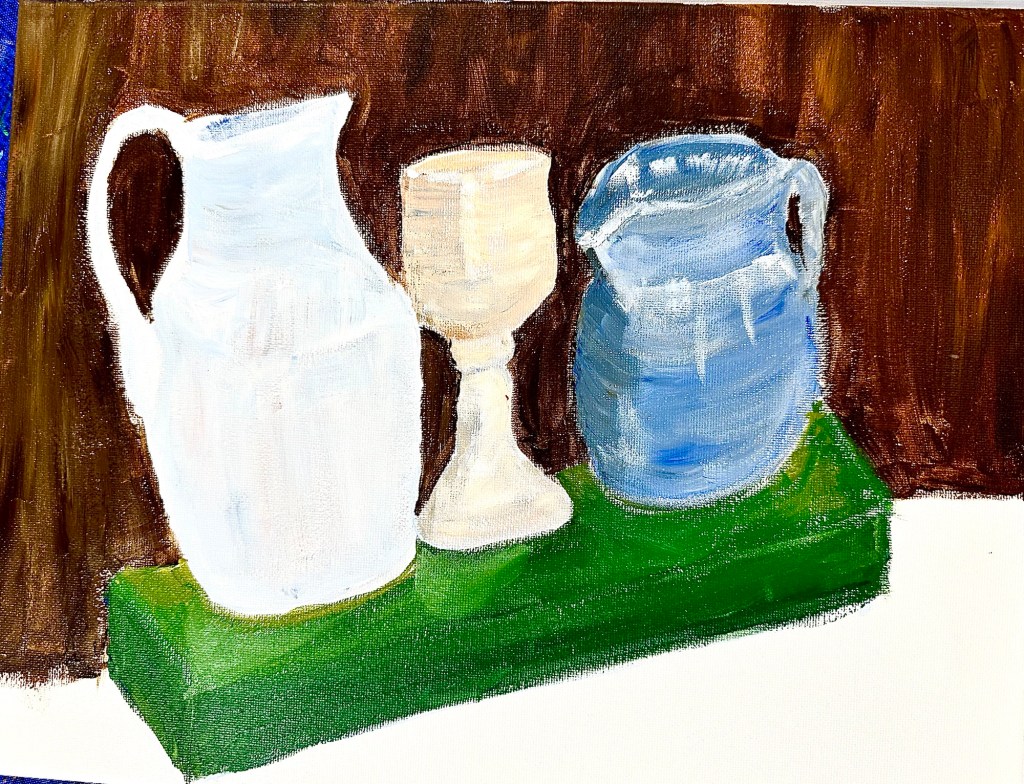
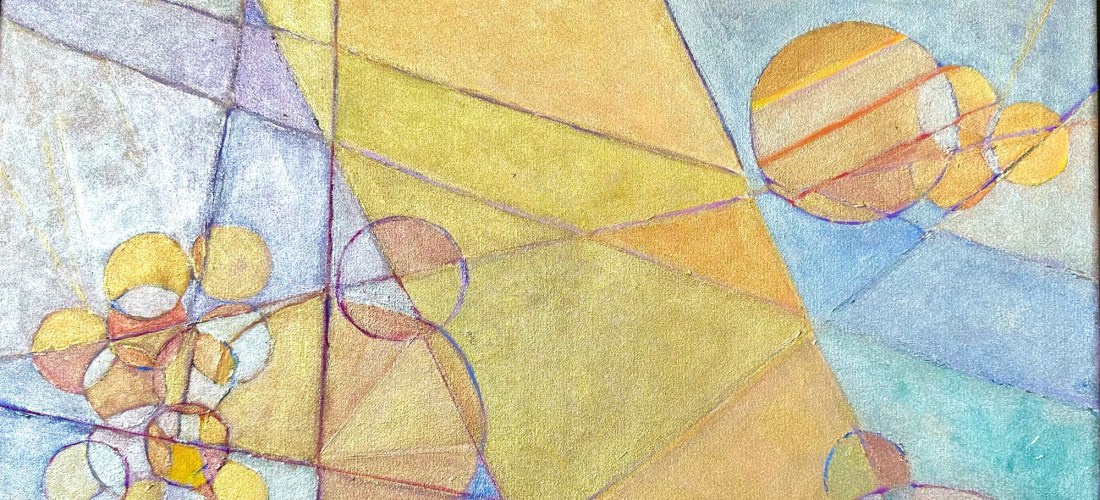
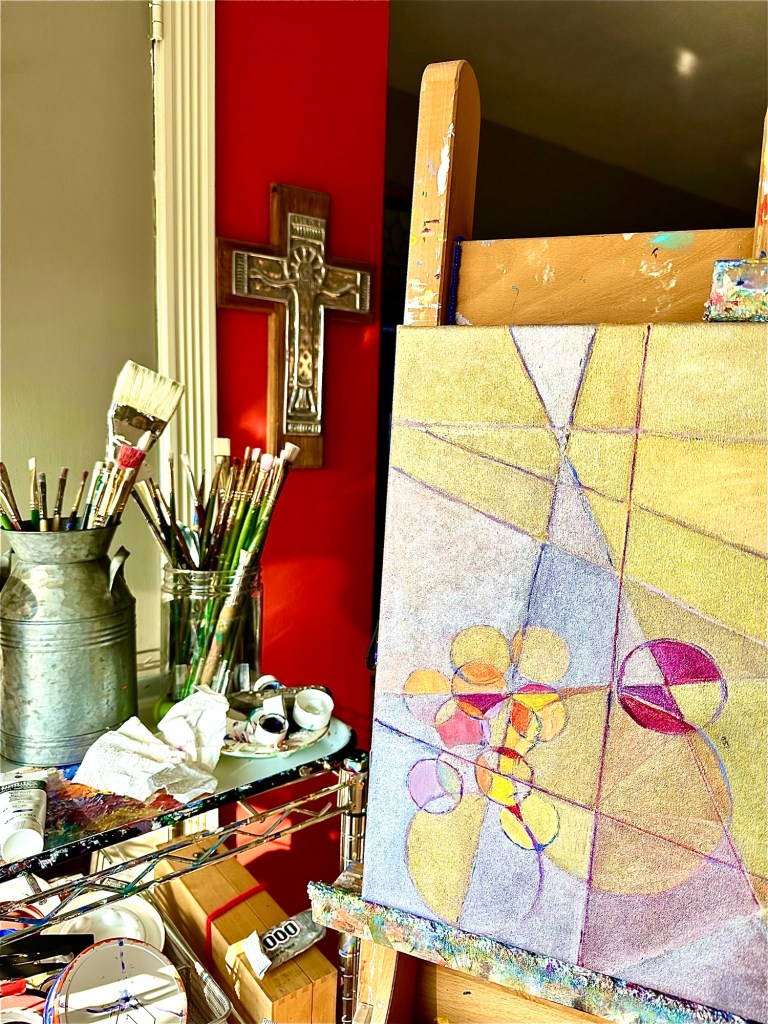
This year in the adult art class I’m teaching at Oaklawn UMC, the students are getting lessons not only on how to paint, but on awakening their individual creative voice. These lessons are part art history and part “thinking like an artist” by painting in another artist’s style. The week before, we worked on a typical still life painting. For this session, we worked on what we saw in front of us, but tried to make an emotional connection with the objects. When most of our energy is going to getting proportions in proper order, shadows cast in the right direction, following the shape of the objects, and the colors correct, putting our emotions into the work comes in a distant fifth or last.

To be sure, our class is still analyzing the containers as physical objects more than feeling or experiencing the vessels as objects with personality. We have not yet become friends with the objects, or really gotten to know them on a deep and intimate level. This is also a problem in our society today. We are not willing to know others too deeply, and we aren’t likely to let many others know us too deeply either.
This isn’t a problem confined to older people. For my own demographic, meeting new people seems a mite risky these days in the online world because we never know who is behind that chatbot or Facebook account who seems so charming. For younger people, who sometimes never seem to come up for air from the online world, this online reality can seem more real than the three-dimensional world in which we live. (I was today old years when I learned the latest online AI fad is personalizing your own chatbot companion. I wonder if these chatbots have Asimov’s 3 Laws of Robotics ingrained in their program guardrails.)

Having empathy with inanimate objects is difficult. Artists bring into their own studio the objects which interest them. A teacher brings in objects her students can approach, given their skill level. I will blow that concept out of the water this Friday with some crazy Halloween pumpkins but, if the subject matter is consistently too difficult, many students will give up if the challenge is too far out of reach.

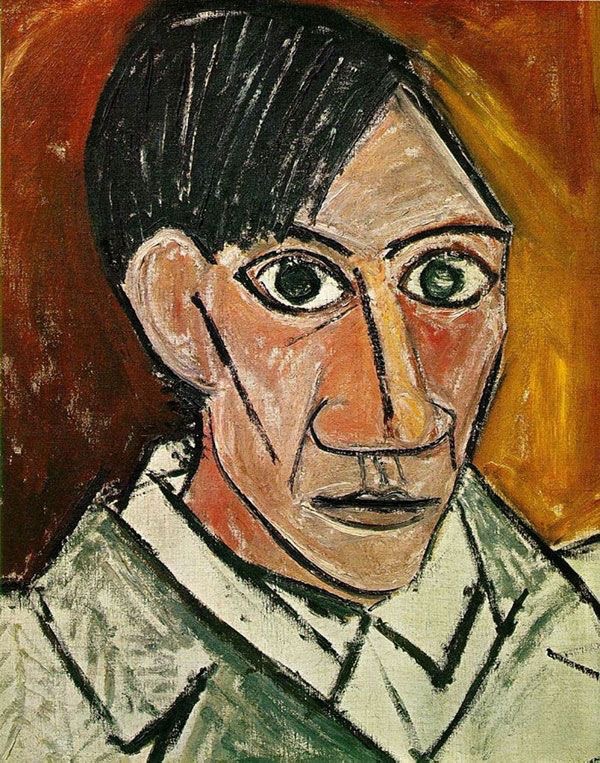
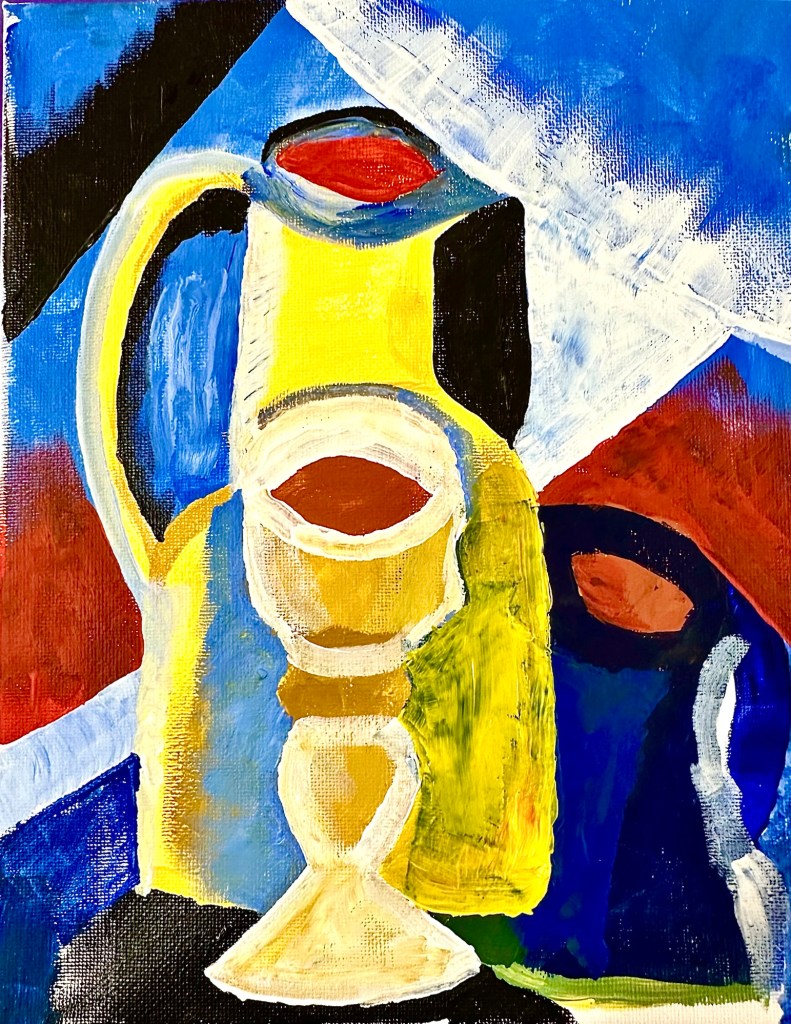
In the second session when our class saw these same liturgical vessels, we chatted about Picasso and cubism. Cubism had several different forms of expression, but we focused on synthetic cubism, a later phase of the cubist style dating from about 1912 to 1914. It had simpler shapes and brighter colors. Synthetic cubist works also often include collaged real elements such as newspapers and cardboard. These works have interesting designs, such as multiple points of view (perspective), overlapping shapes which make their own patterns, and linear outlines. This style is an outgrowth of the work of Cézanne, who said: “A work of art which did not begin in emotion is not art.”

If you’ve ever tried to put on your socks in the morning beginning with a different foot than normal, you can begin to appreciate how difficult it is to imagine how to create an artwork in a fresh style. If we were to ever have a stroke or a traumatic brain injury, relearning how to do simple tasks is much the same.

Our brains can handle the rebuilding project, but we will feel strange doing it! This is because we are building new neural circuits and pathways in our brains. Going to work or the grocery store by taking a different route also feels strange, as does a golfer trying to reconstruct their swing pattern.
As a comparison, we can look at the great hurricane which came through North Carolina recently and took out the big interstate highway that runs through the mountains and valleys. The sooner the highway construction engineers can come inspect the ground, the better. They must decide if the land is safe for rebuilding and then check the infrastructure also. They may need to redesign the road to current standards and also the underlying roadbed. When the great 1900 hurricane hit Galveston, rebuilding the city took twelve years. People were still living there, and life was going on, but the city began a process of raising the land levels and building a sea wall that took that extensive time.

Change doesn’t happen overnight. Every sales or leadership training session I’ve been in has emphasized the idea “Three weeks are necessary to build a habit.” The origin of this myth has nothing to do with habit formation. Instead it comes from a 1960 self-help book Psycho-Cybernetics, in which plastic surgeon Maxwell Maltz wrote how his patients took about 21 days to become used to their new appearance after surgery.
He did no double blind, peer reviewed study to verify this, but his book applied this 21-day timeline to many other wide-ranging aspects of self-transformation in life. He also believed three weeks was the time people needed to adapt to a new house or change their mind about their beliefs. (He also didn’t live with a preteen girl child who enjoyed rearranging the living room every night just to see how her mom negotiated a new obstacle pattern in the dark when she came home from a sales call.)
If artists want to make paintings which are technically proficient and resemble the objects they see, they are only halfway to creating a good painting. They must also bring who they are and allow the voice of God to speak through their hand to make a masterpiece. In this way we separate artists into the good and the great, the ordinary and the masters. Not all of us will be prophets who listen to God’s word, but all of us can and should silence our hearts and minds of the world’s chatter and claims so the word of God can pierce our hearts.

Museo Nacional Centro de Arte Reina Sofía (MNCARS), Madrid, Spain
Rabbi Nahum Ward-Lev describes how the ancient prophets listened for God’s liberating word:
“At its heart, the prophetic witness was a way of listening, listening beyond the social norms of the day, listening to the word of the liberating God. The prophets urged the people to listen to God’s word because the discourse of the king, princes, and wealthy landowners was too narrow and was limited to the interests of these elites. This conversation did not include the voices of suffering people. The prophets, in God’s name, offered a much broader discourse, a conversation that listened to and addressed the needs of the poor and the disadvantaged….
The prophetic listening tradition is alive today to inspire people to listen beyond the established conversation. The prophetic tradition challenges us to listen especially to the cries of those who suffer and to listen to the voice of alternative possibility, to the voice of God.”
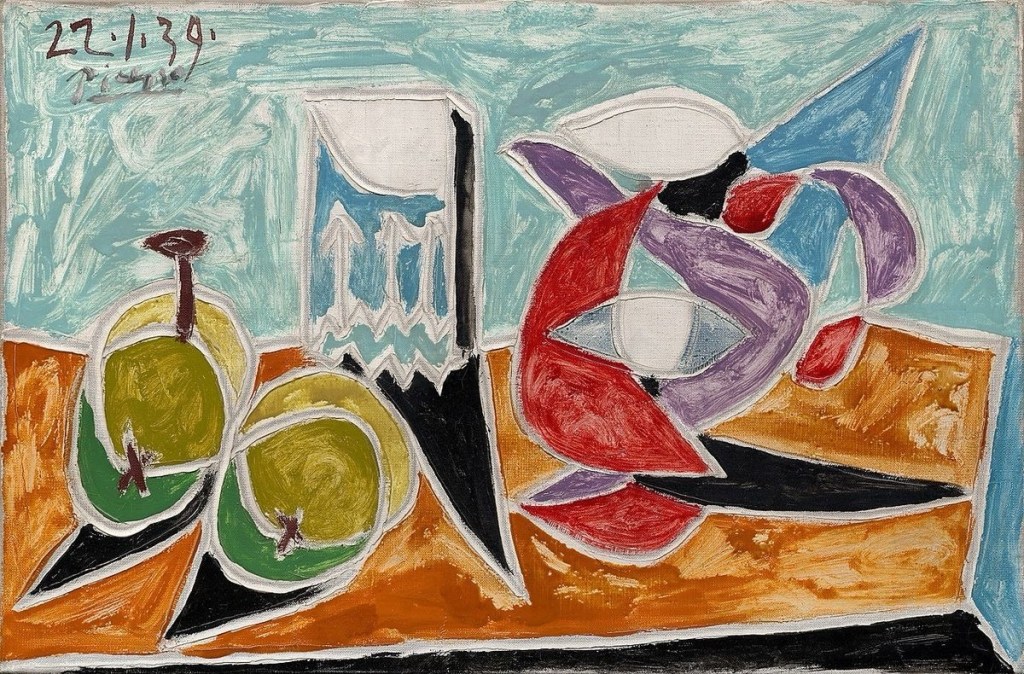
Making a painting is quite different from making a work of art. This is why house painters aren’t called artists. They may cover a surface with color and not make a mess, but their heart and soul isn’t in their work. Learning to risk our vulnerability and emotional expression is also part of art class, just as much as learning what colors to mix to make orange or green. Picasso, quoted in Alfred H. Barr Jr.’s Picasso: Fifty Years of his Art (1946), understood this:
“The artist is a receptacle for emotions that come from all over the place: from the sky, from the earth, from a scrap of paper, from a passing shape, from a spider’s web.”
We have these same experiences also, but we don’t realize these are part of the artist’s toolbox. These ordinary moments of life are also the extraordinary means of God speaking to us, if only we have ears to hear and a heart and hands ready to be used by God for God’s good purposes.
Joy, peace, and prophecy,
Cornelia
Quote Origin: Insanity Is Doing the Same Thing Over and Over Again and Expecting Different Results—Quote Investigator®. The origin of the quote is misattributed to Albert Einstein, but it originated in the 12-Step Anonymous groups in the 1980’s.
https://quoteinvestigator.com/2017/03/23/same/
Isaac Asimov’s “Three Laws of Robotics”:
- A robot may not injure a human being or, through inaction, allow a human being to come to harm.
- A robot must obey orders given it by human beings except where such orders would conflict with the First Law.
- A robot must protect its own existence as long as such protection does not conflict with the First or Second Law.
https://webhome.auburn.edu/~vestmon/robotics.html#:~:text=A%20robot%20may%20not
How Long Does It Really Take to Form a Habit? | Scientific American
https://www.scientificamerican.com/article/how-long-does-it-really-take-to-form-a-habit/
Nahum Ward-Lev, The Liberating Path of the Hebrew Prophets: Then and Now (Maryknoll, NY: Orbis Books, 2019), 133, 134, 135–136.
https://cac.org/daily-meditations/living-presence-liberating-journey/
Meet My AI Friends, by Kevin Roose, NYTimes gift article
Pablo Picasso – Oxford Reference
https://www.oxfordreference.com/display/10.1093/acref/9780191826719.001.0001/q-oro-









 Artandicon's Blog