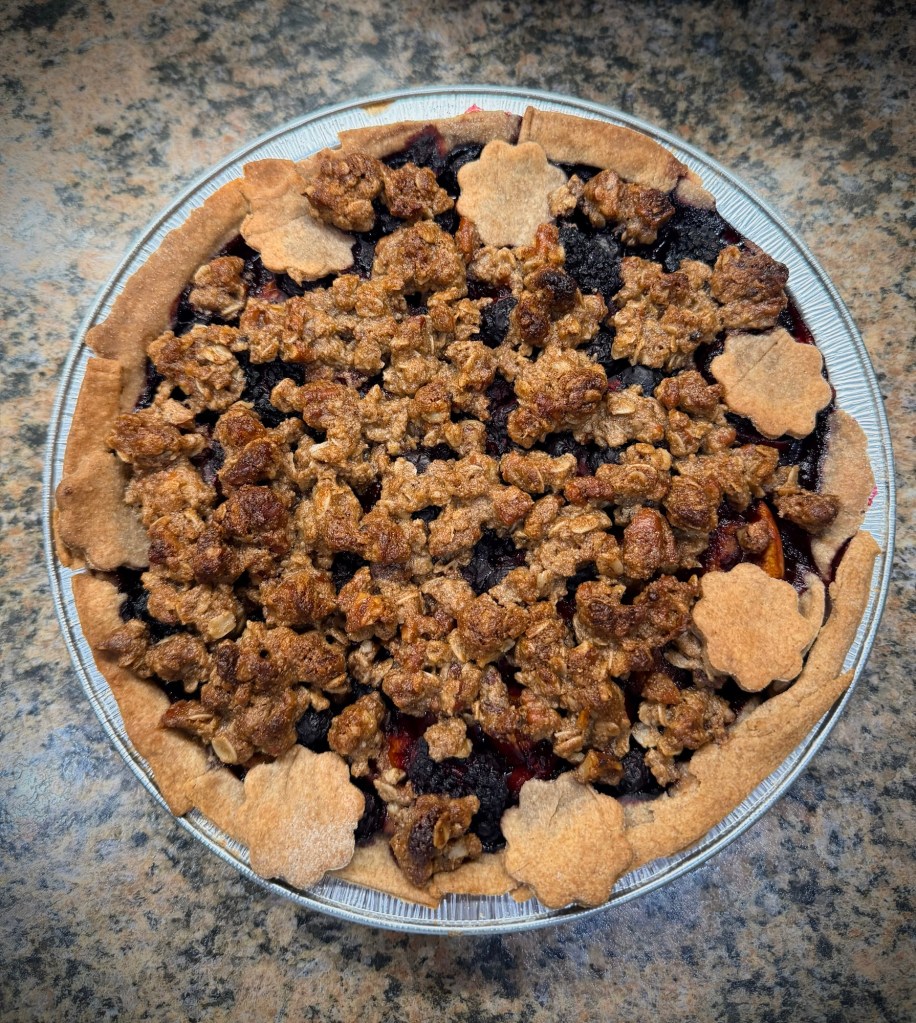
During the recent cool weather spell, I indulged my creative cooking skills. I brought an Oatmeal Crisp Topping on Mixed Fruit Pie with Homemade Crust to our recent Friday Art Class. I figure if I were going to throw a hanging curveball at the group, I should at least bring a taste of sweetness to take off the edge of this challenge. Our group is up for anything, however, and they always take my craziness in stride. Sometimes I have difficulty taking the weirdness of the world in stride, so I tend to cook and bake. This is better for everyone than my indulging in drag racing or freestyle climbing of sheer mountain cliffs, especially at my hoary age.
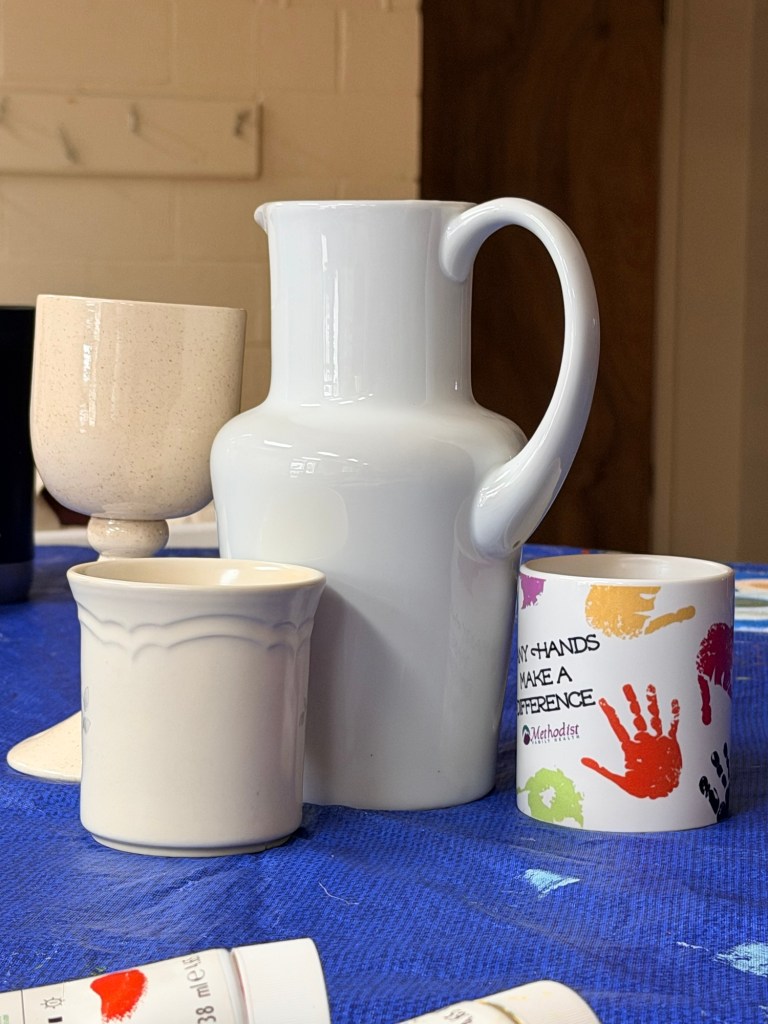
Last week we pursued primary color mixtures and their values in the warm and cool tones. This week, I brought an all white still life of various pottery forms. We looked at Morandi’s works, who was famous for his emotional treatment of common objects against simple backgrounds. Morandi worked most often in oils, but also drew in pencil and charcoal, plus he did many watercolor paintings.
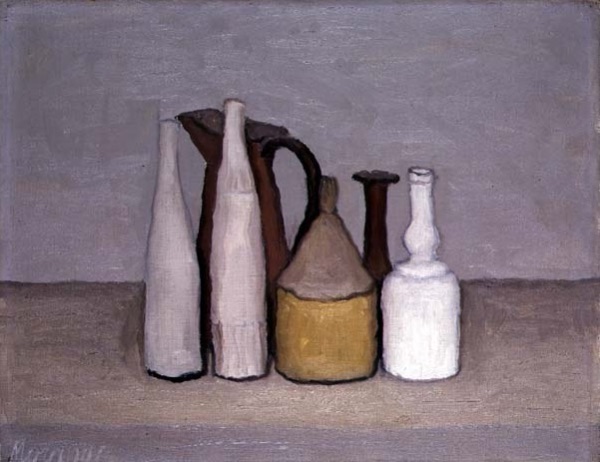
This Morandi painting is typical of the artist’s work. He links the objects, both in purpose and in placement. They are also in a single range of value, color, and tone. We can see the whole scale here from black to white.
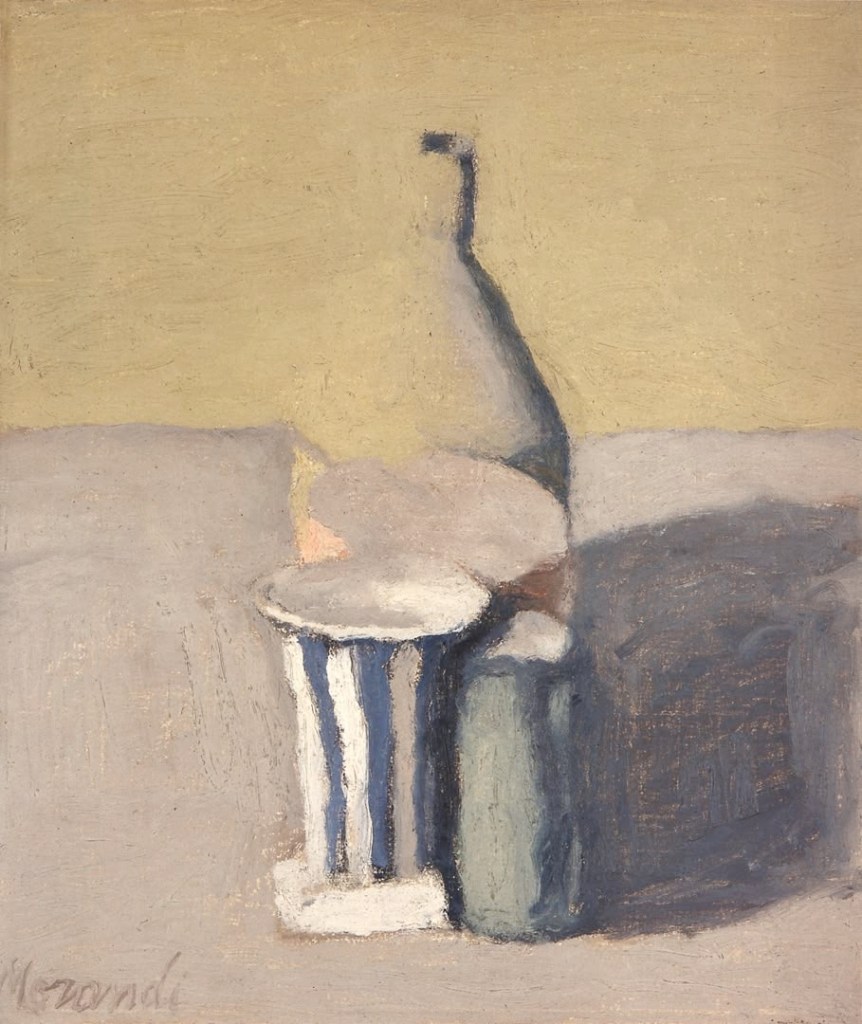
This painting also shows the closely set objects, but viewed more from above. This perspective change alters the experience of the viewer. No longer do we regard the objects as “equals,” but by looking over them, we recognize they serve us in our daily lives. When we take the next step and ask, “What does this mean?” We are asking several questions. Do we want to know what was in the artist’s mind or experience that caused this change of viewpoint, or do we want to ask ourselves the questions about how we use tools, people, or the environment?
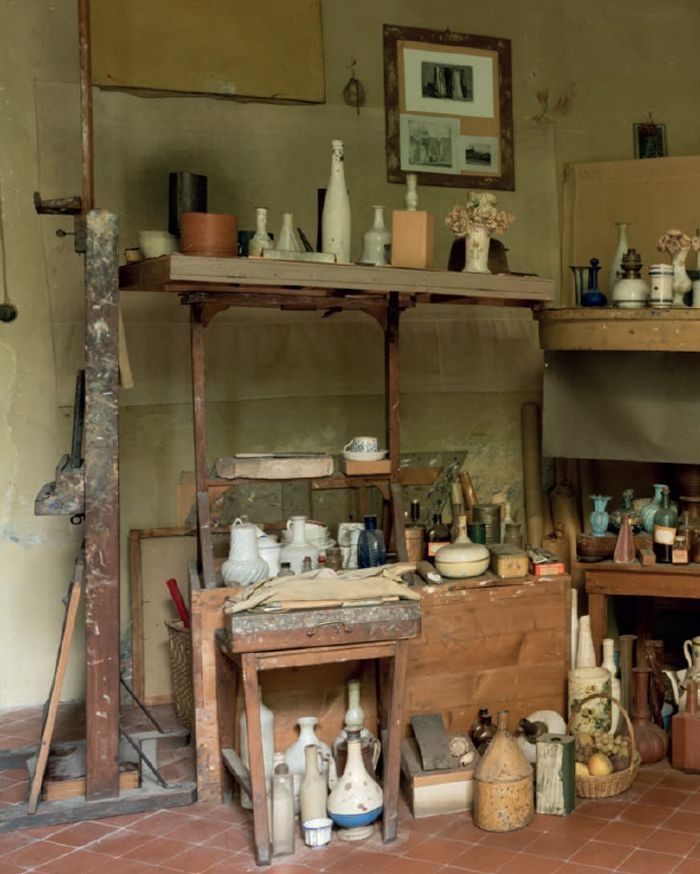
Art is more than painting pretty pictures which will cover the space above the couch in your living room. Art asks us to get involved with the great questions of our day. This alchemy between reality and the artist’s soul is so crucial that the 18th-century Romantic painter Caspar David Friedrich insisted that:
“The artist should paint not only what he sees before him, but also what he sees within him. If, however, he sees nothing within him, then he should also refrain from painting that which he sees before him. Otherwise, his pictures will be like those folding screens behind which one expects to find only the sick or the dead.”
Artists are not shy about sharing their opinions about what makes a good painting. Then again, they have a bit of bravery, first to make these marks, and then to show them off for public critique. Morandi is unique because he limited his world to the small apartment he shared with his mother and three sisters, where he acquired many small jars, pitchers, bowls, and vases, which he combined in multiple arrangements and colors. Still, other artists recognized him as a painter’s painter, and many collected his works.
Encouraging bravery is part of our regular practice in the Friday art classes. The more we practice a skill, the more easily our hands and minds can remember it. As a teacher, I find it rewarding to see people grow in their confidence and skill. They have joy, for they know how far they have come. They may hit a new stumbling block somewhere along the line, but having overcome earlier challenges, they will eagerly try these new ones with confidence.
One obstacle I find insurmountable is the autumn pollen season. It will lay me low with enough congestion in my head to make me think I am carrying an entire cement mixer inside my skull. This is why I am weeks late posting this reflection on our recent class project. If I cannot string together words to make a coherent sentence, my writing gibberish will not be worth reading for anyone.
As the apostle Paul reminds us in 1 Corinthians 14:2-3, “For one who speaks in a tongue speaks not to men but to God; for no one understands him, but he utters mysteries in the Spirit. On the other hand, the one who prophesies speaks to people for their upbuilding and consolation.” It was only this Friday I was able finally to call forth intelligible words from the depths. Some say silence is golden, but those of us who were born talking do not know our inner thoughts if we are not able to speak them aloud.
Those of you who are introverts will never understand this experience. We extroverts often do not know what we are thinking until we write or speak it. This characteristic does tend to get us into trouble until we learn to filter our thoughts before we let them cross our lips. We usually learn the hard way the harm our critical words have on others and then change our speech accordingly. This is why I always asked my students to critique their own artwork with positive energy. They could say, “My work needs improvement,” which is true of all work, but saying, “My work stinks” only discourages their desire to improve.
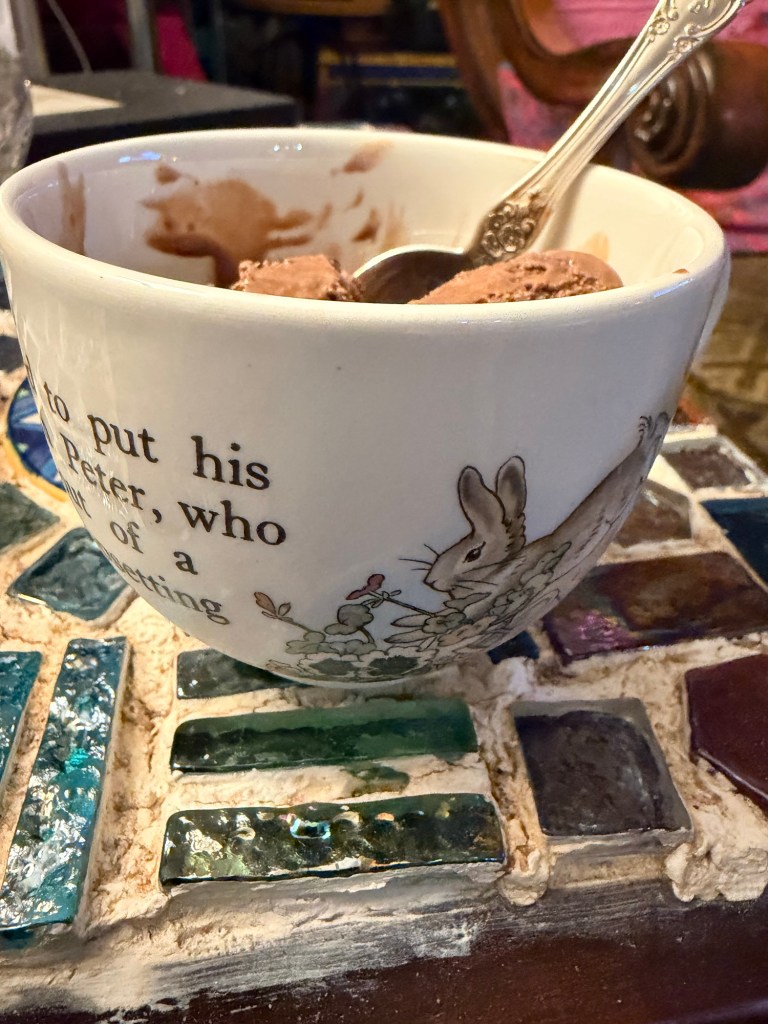
As with book learning, all students who are not practicing their craft over the summer will regress a bit. This is normal. The body and mind always revert to the earlier form. This is why I struggle to lose weight if I ever go back to eating the same foods or exercising less than my new lifestyle. Yet, I have not “lost the skill,” but I have merely failed to use the techniques which have proven effective. I can choose to use that skill once again and get success. Or I can keep on the wrong path. There is a time and a place for ice cream snacks. Now I only eat ice cream from a Beatrix Potter Bunnykins cup when I am sick. It is a magical cure.
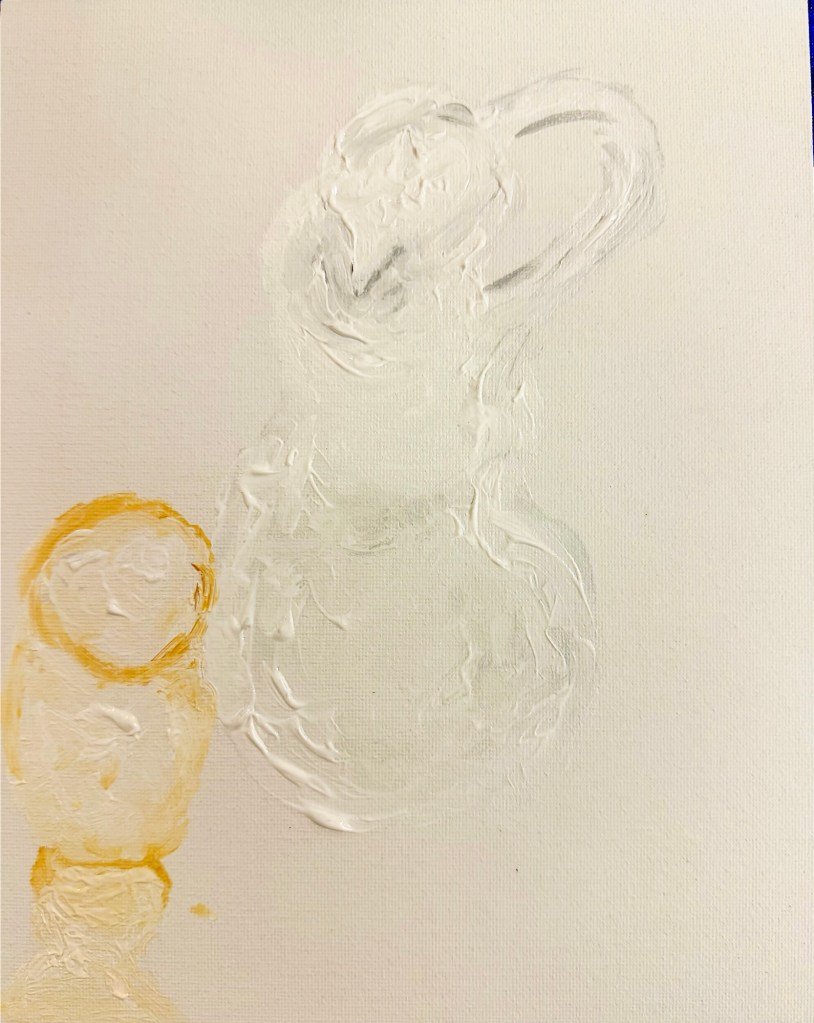
One of the first lessons I teach is drawing the whole composition with a light-colored wash. This planning ensures the subject fits on the canvas and is in proportion. Of course, when we are excited and eager to get going, we start painting on the most interesting object in the still life, then work on the rest if we have time. My brothers used to eat their supper in this manner. They gobbled down all their potatoes and gravy, then their meat, and then complained they were too full to eat their vegetables. Mom and Dad grew up in the depression, so they were not having any of that foolishness. The boys sat at the table until the veggies were gone.
I was different because I ate a bite of everything to “keep the plate equal.” My parents thought this was unusual, but since I was eating everything, they said nothing. In truth, I did not care for the taste of some of the foods, so covering them up with others was the best way to make them edible. I also did not want to hear “people are starving in China sermon” before I got to eat dessert.
This childhood digression shows I may not be fully recovered from this infection just yet, but Mike always brings such good energy and irresistible cheerfulness to his work, I am always glad for his willingness to pursue this creative process. In the brief time he was with us for this class, he jumped on the opportunity to explore the variety of values in the whites of the vases and cups.
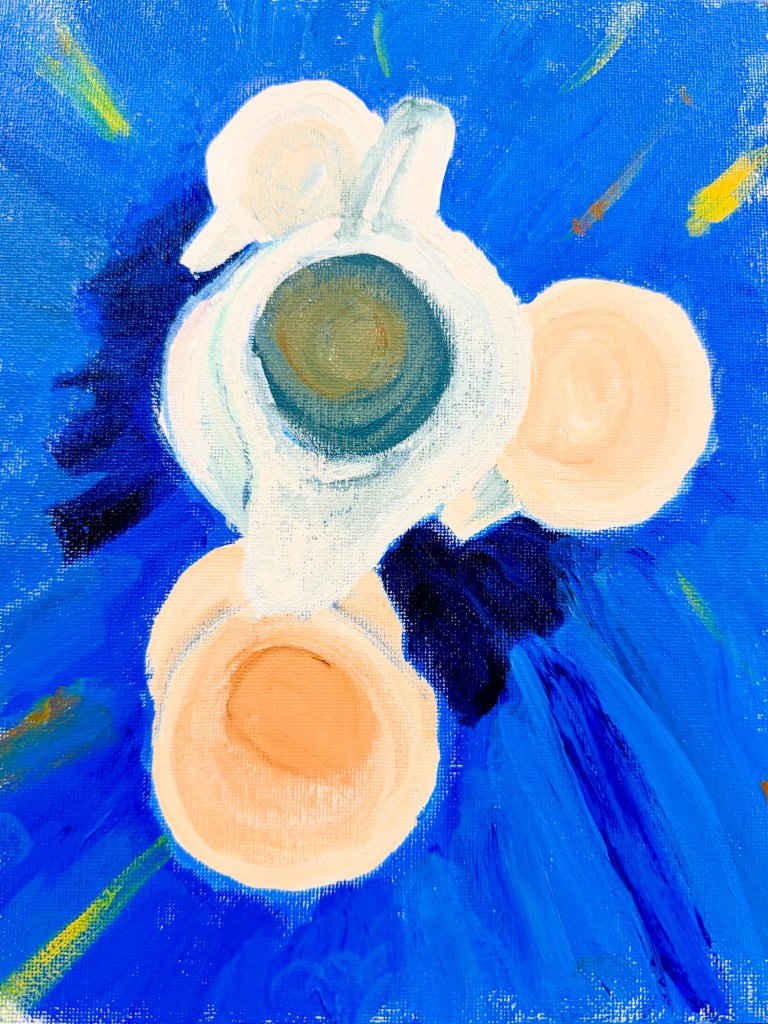
Gail imagined the vases from a bird’s eye view, even though she was painting in a seated position. Taking a photograph and working from that two-dimensional medium to transfer it into another flat image is easier than making our brains translate three dimensions into two dimensions. Imagine a nonnative speaker translating in real time the speech of a foreign dignitary during a fraught negotiation. We would only entrust the most experienced persons with such a task. With less experience, we take these unusual photos both to challenge and to check ourselves. This is an example of risk and reward.
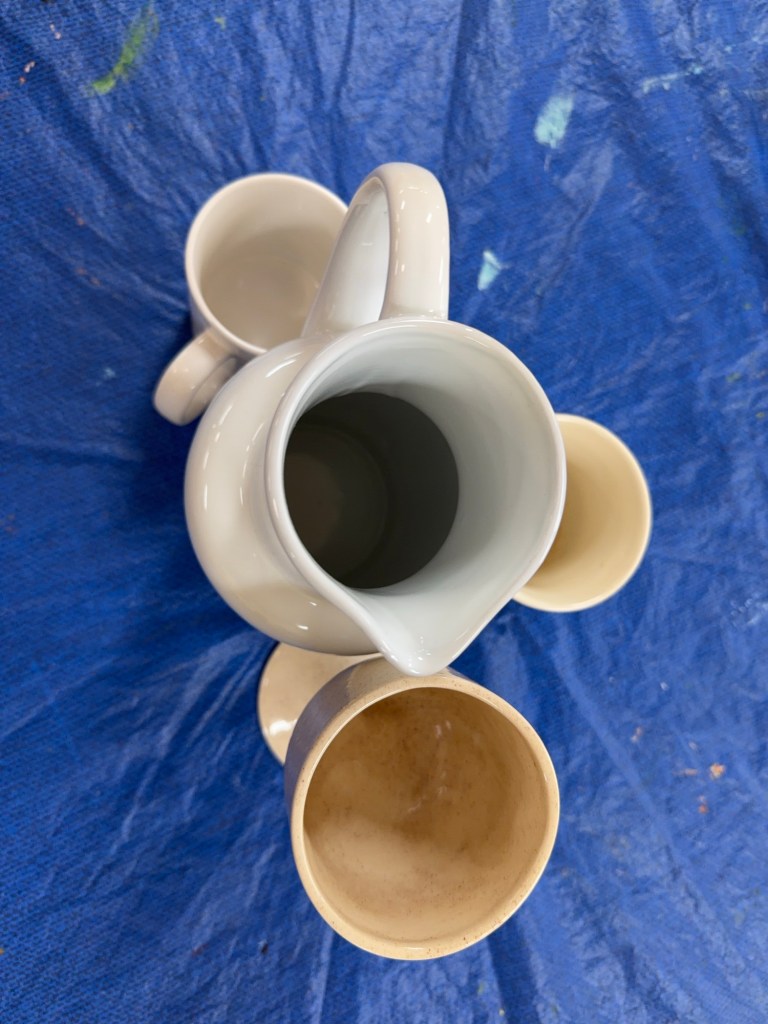
Every time we challenge ourselves, we grow. If lifting a weight five times this week tires us out, next week we can try seven times. If our bodies cannot recover in one day afterwards, we know to go back to five repetitions for the next week. Then we try seven repetitions and check our recovery. If we feel good, we can do seven more. This is how we grow strong. As a teacher, I try to observe how the class is managing their challenges. The class needs to learn the basics and get these under their belt. Individually, each one will need special attention to some individual issues, but I provide the stimulus and they rise to the occasion with their own unique expressions.
“My sheep hear my voice, and I know them, and they follow me,” (John 10:27) is how Jesus explains his relationship with his followers. Teachers, leaders, and shepherds all know in a relationship the leader cannot get so far ahead of the group that they can no longer see or hear them. The presence is important, not the power. Staying in touch with the feelings of the group so you know when to reteach a lesson in a different manner or offer an unfamiliar activity to stir up interest anew is done only by close attention.
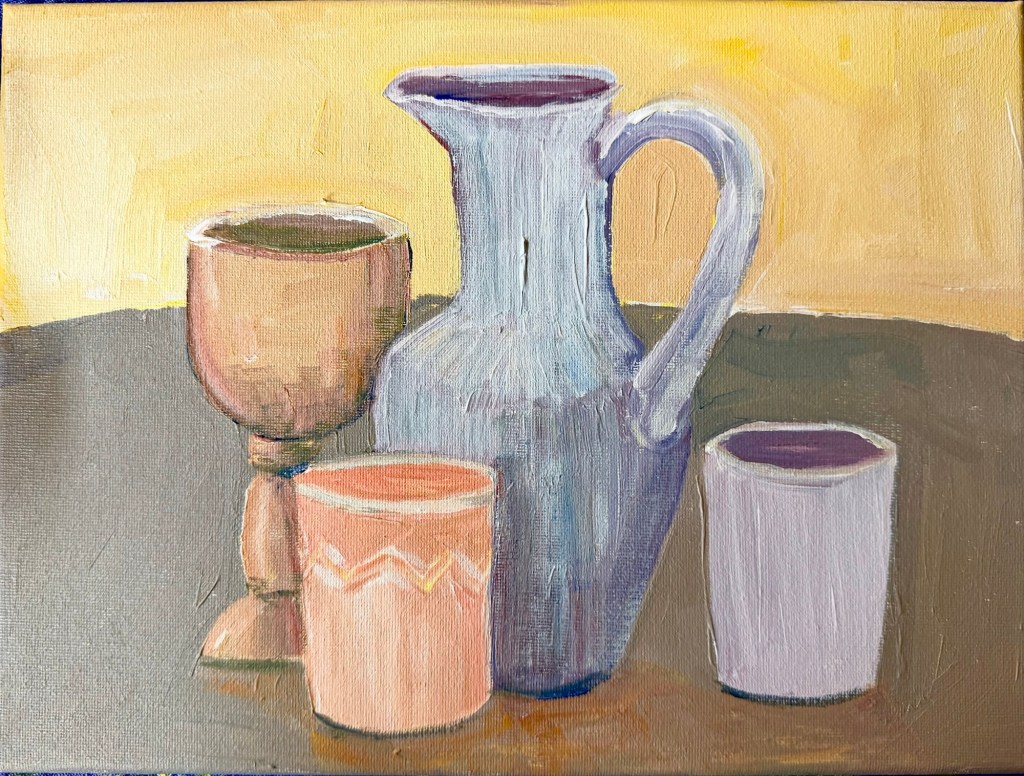
When I am sick, I do not paint well. But I show up and make marks on the canvas anyway. If I learn anything from this effort, it is persistence and humility are gifts of grace, not human attributes. Yes, we can slog along but not enjoy it. Or we can work continually and know our efforts will bear fruit eventually. If nothing else, we have yet another record of our lives as an artist! One day we will look back on these scrubs and wonder how far we have come. If we do not see improvement from day to day, then from year to year we will see progress. We are caught in the microwave moment of needing an instant breakfast or a quick fix, but artistic growth takes time.
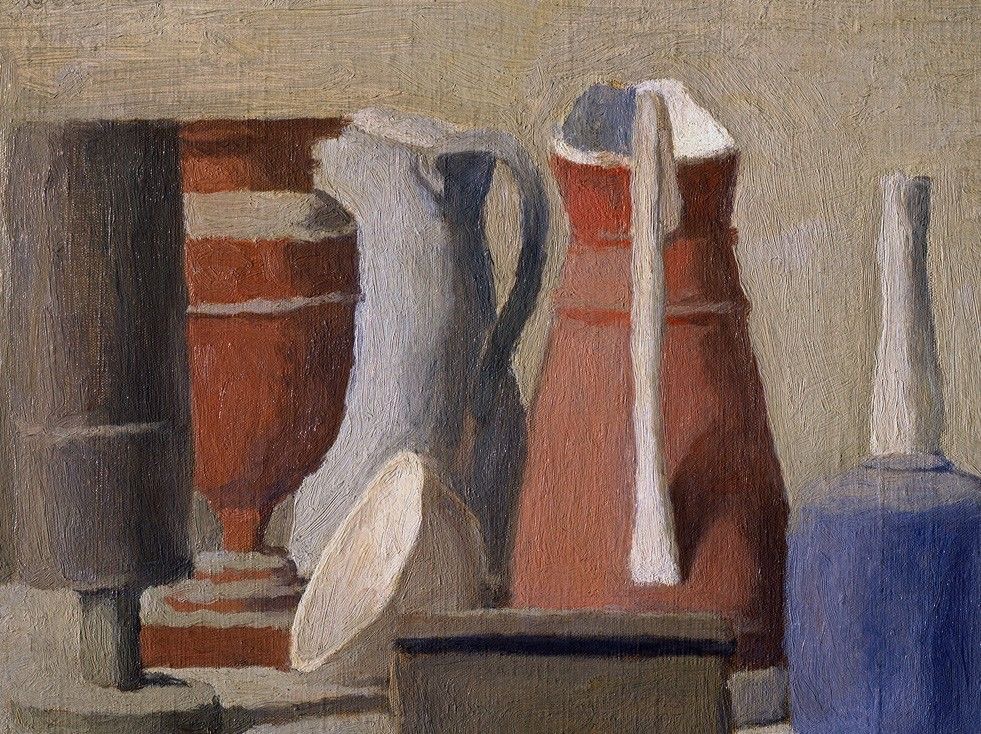
Oil on canvas, 28 x 42.5 cm
The spiritual life is like this: God’s grace could in an instant transform us into perfectly loving human beings, but most of us will grow slowly into perfect love under the sanctifying grace of God’s Holy Spirit with the aid of our own cooperating spirit. This is why we do works of love for others in need and why we continually work to improve ourselves in everything we say and do. Even in our art classroom. Illness is only a temporary setback. If today we are not our best selves, we can hope for a better future. Tomorrow will be a better day, for sure.
Joy and peace,
Cornelia


Leave a Reply