One of my seminary professors once said to our class, “People will not change until the pain of staying the same becomes worse than the pain of changing.” After years of personal experience in the church and in my own personal life, I believe he was on to something about human nature. We often prefer the comfort of our suffering in mediocrity rather than the suffering we must undertake to achieve excellence. This is because we do not want to separate ourselves from our community, while the cost of excellence is often isolating. We do not realize the small pond in which we swim is only a bay in the larger sea. In that larger sea are other extraordinary creatures. We only need to seek them out.
Another reason we do not seek excellence is our fear of failure. This often results from a false sense of the effort needed to produce successful results. I meet adults who give up immediately on art classes because their work looks “amateurish.” Of course it does! They are not willing to spend at least six hours a day for twenty years to acquire professional proficiency. I ask them, “Do you ask God for a better baby when it cannot walk on its first try?”
When they laugh at my question, I reply, “If we expect a baby to take time to learn to walk, why do you expect to become Michelangelo after one lesson?” Then they realize they have set excessive expectations of their ability to master this craft.
Of course, I am no stranger to this experience. I once complained to my dear mother that I had been with a certain congregation “for three whole years and they still don’t get it.” She replied, “How long was Jesus with the disciples?” I knew where she was going with this, but I humored her anyway: “Three years.”
“And he had to die on a cross, lie in a grave for three days, and rise from the dead before they figured it out.” I stay silent and humbled as she asked me, “Are you planning to do this anytime soon?”
I laughed, “No mother. Do you think I think too much of myself?”
“Just a little bit, honey,” she answered. Mothers can always help us with the reality check. As I got older, I discovered my mother got smarter. Imagine that.
I always hold on to the verse from Philippians 3:12 when I think about my faith walk and my own artistic journey:
“Not that I have already obtained all this, or have already arrived at my goal, but I press on to take hold of that for which Christ Jesus took hold of me.”
Paul speaks about Christian perfection and the resurrection life in Christ. To live a perfect life is to love God and love neighbor with all one’s heart, soul, mind, and body, so that nothing else can exist, as John Wesley said. If we were to live this life, we would partake of the living God, who is always creating a new and beautiful world. All things in the natural world will pass away, but God is always creating anew. We humans can live in tune with God when we choose to be co-creators instead of destroyers of God’s creation.’
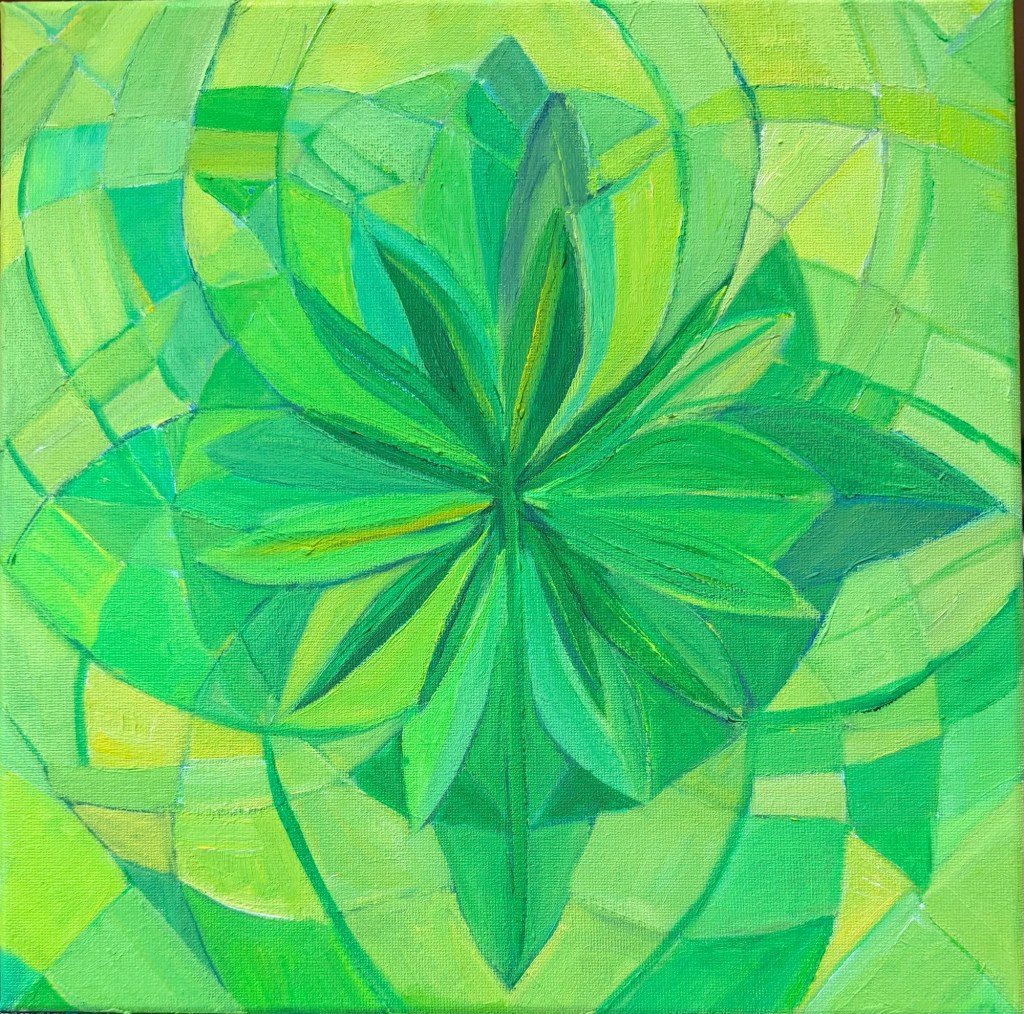
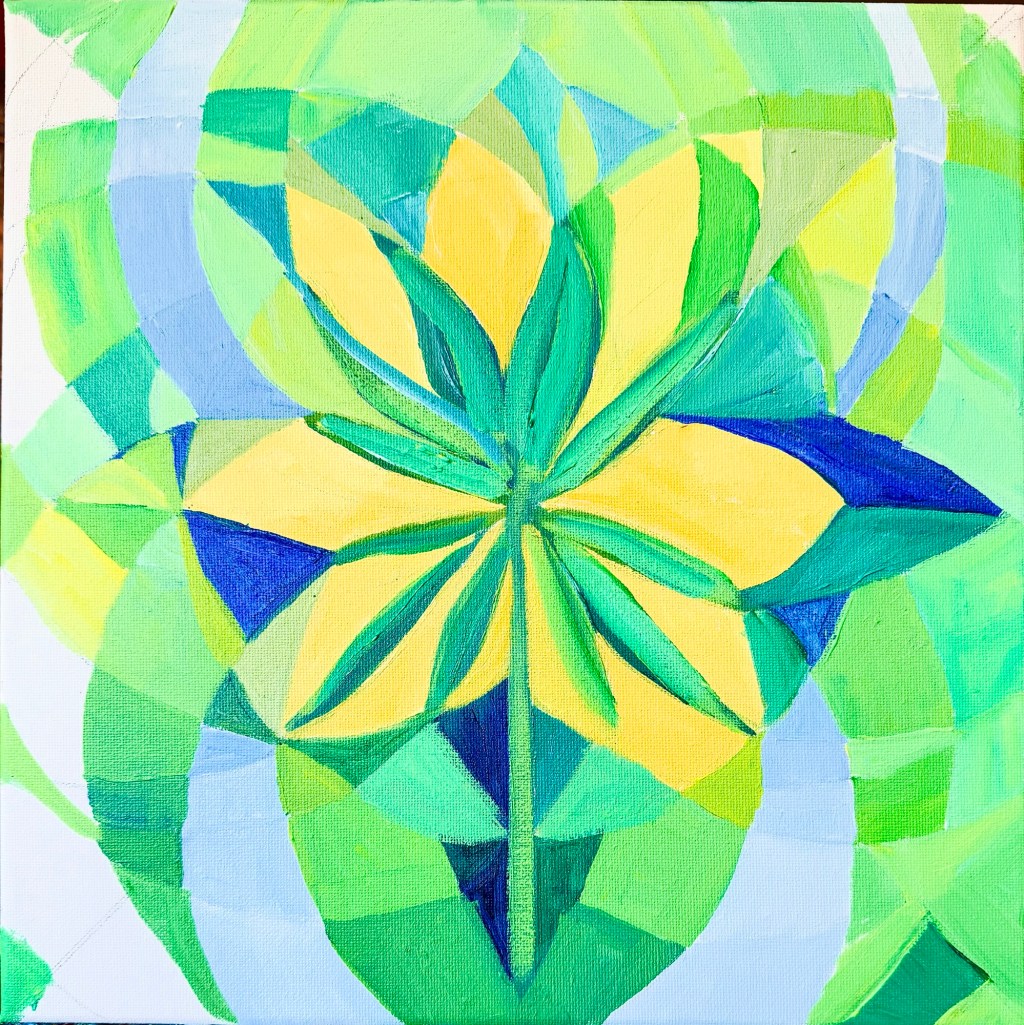
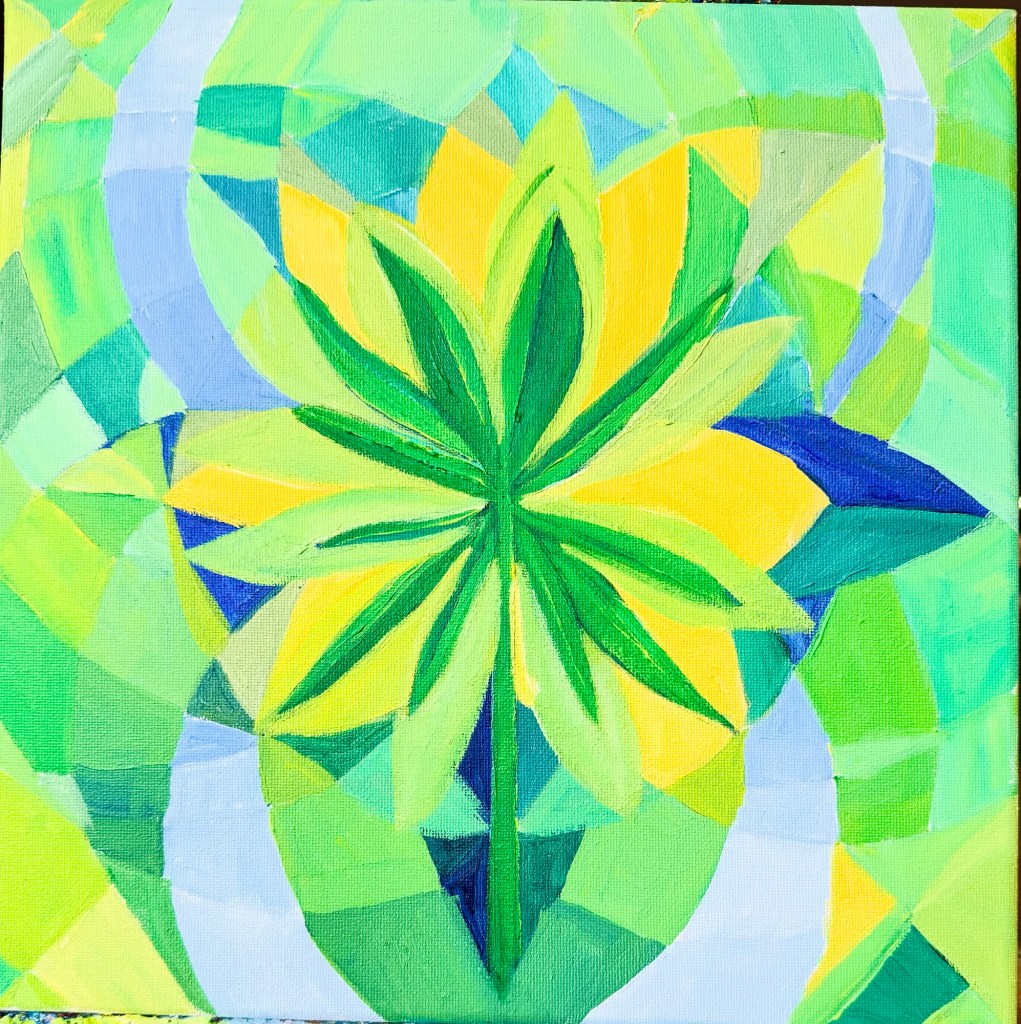
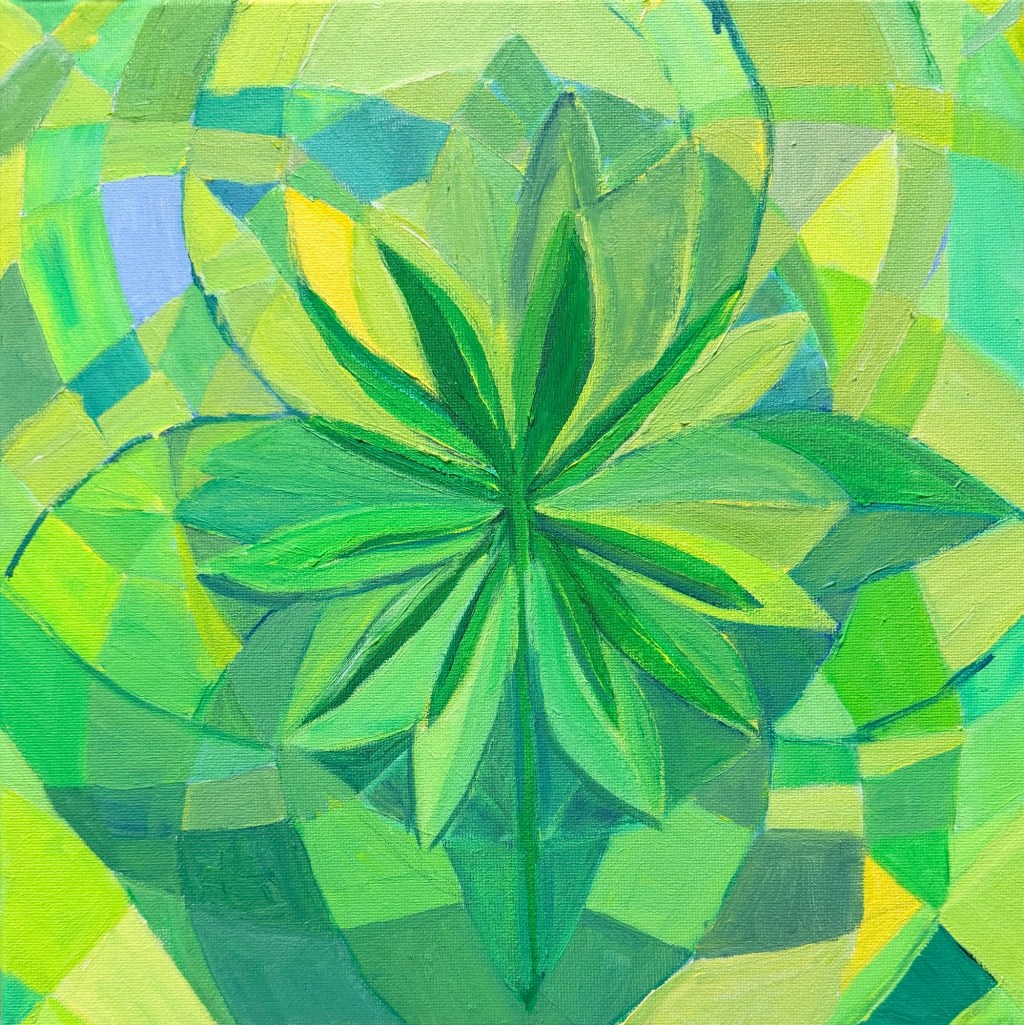
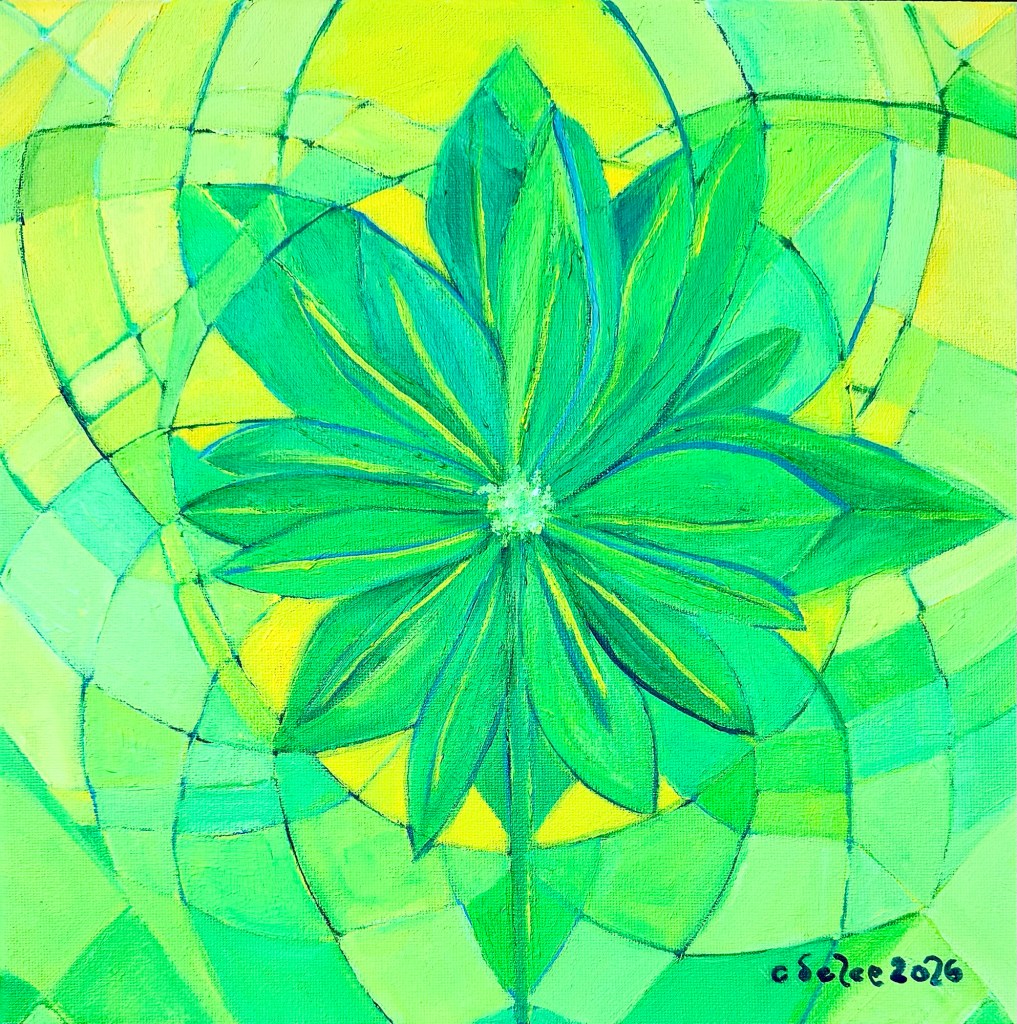
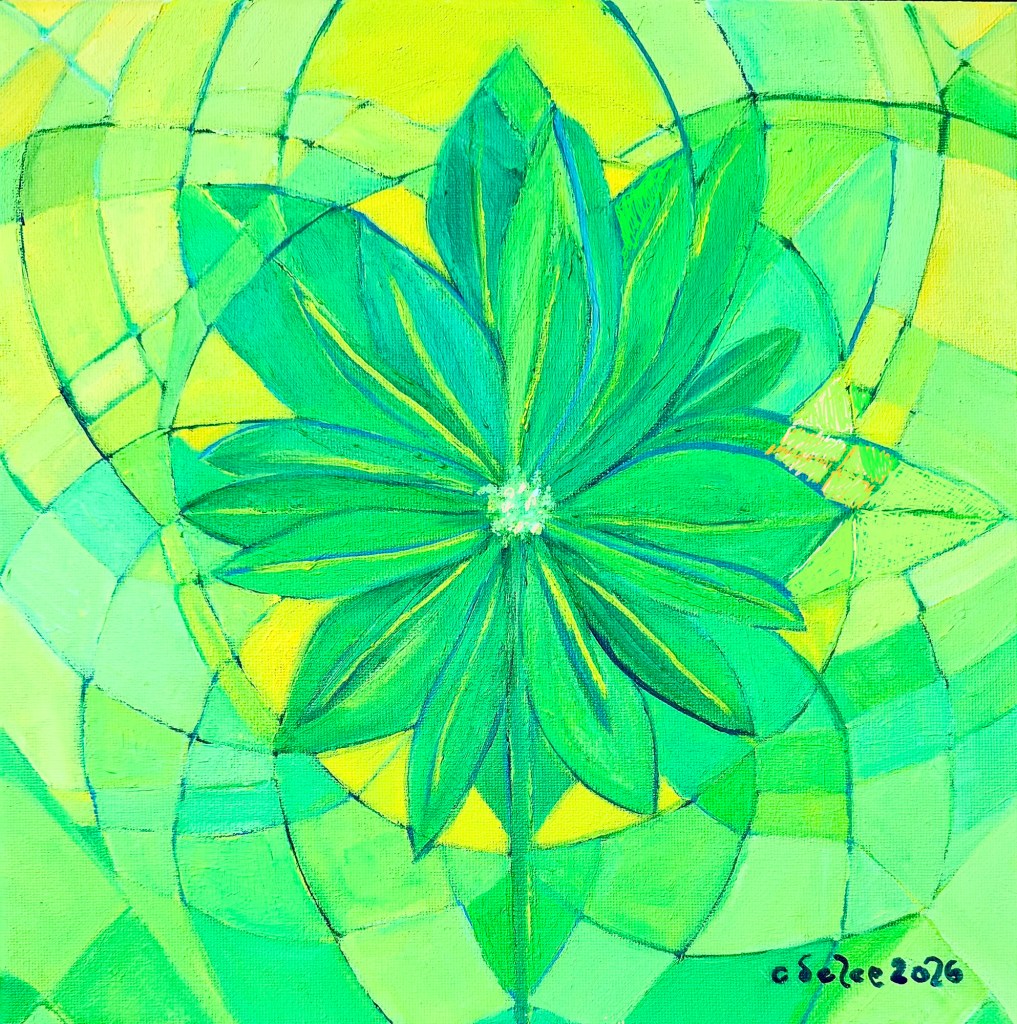
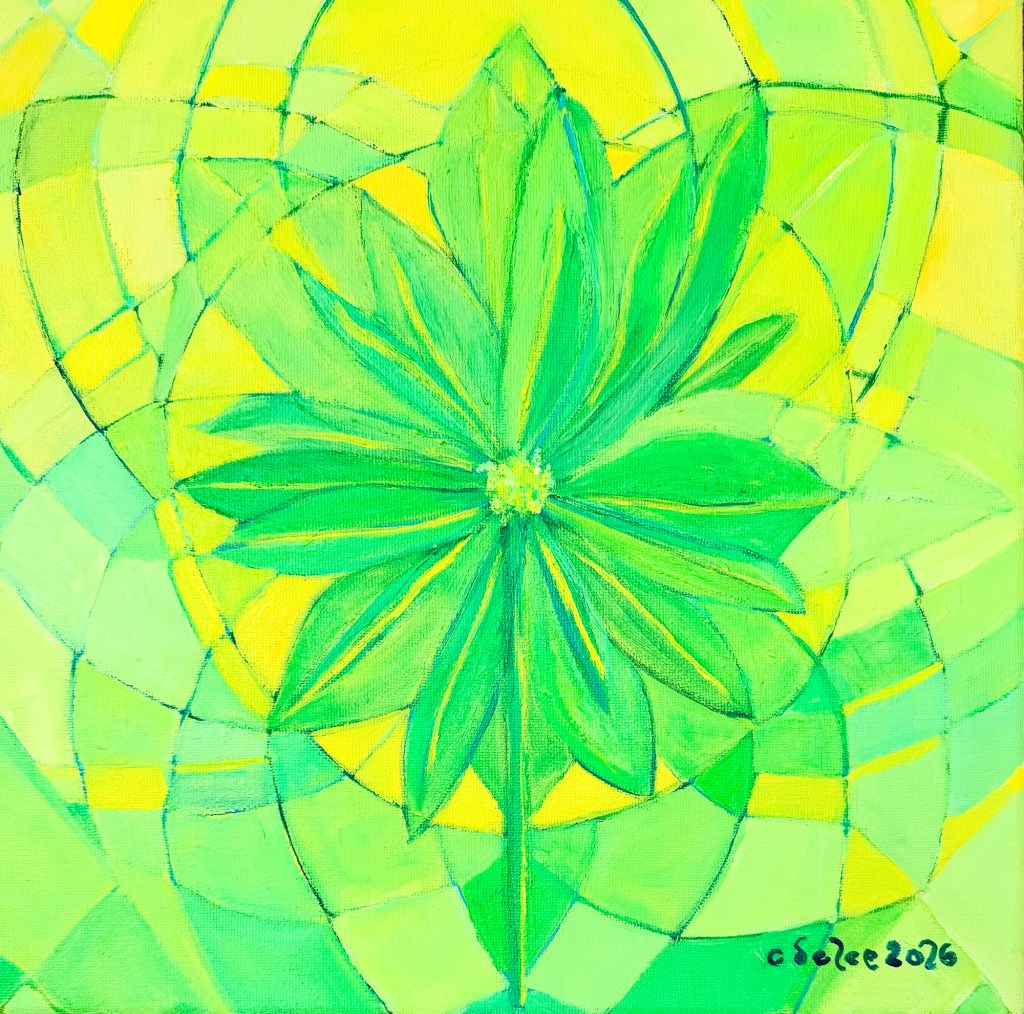
In this creation series I have pursued, some of the images have come together easily, while others I struggled over. This one is a struggle painting. That is not to say I did not enjoy painting it, but I would finish it, set it up to critique it, and the next day return it to my easel. This process went on for several days, and each time I removed it, I was certain it was “perfect.” This one-foot square painting took nine studio sessions, plus one drawing session on my iPad.
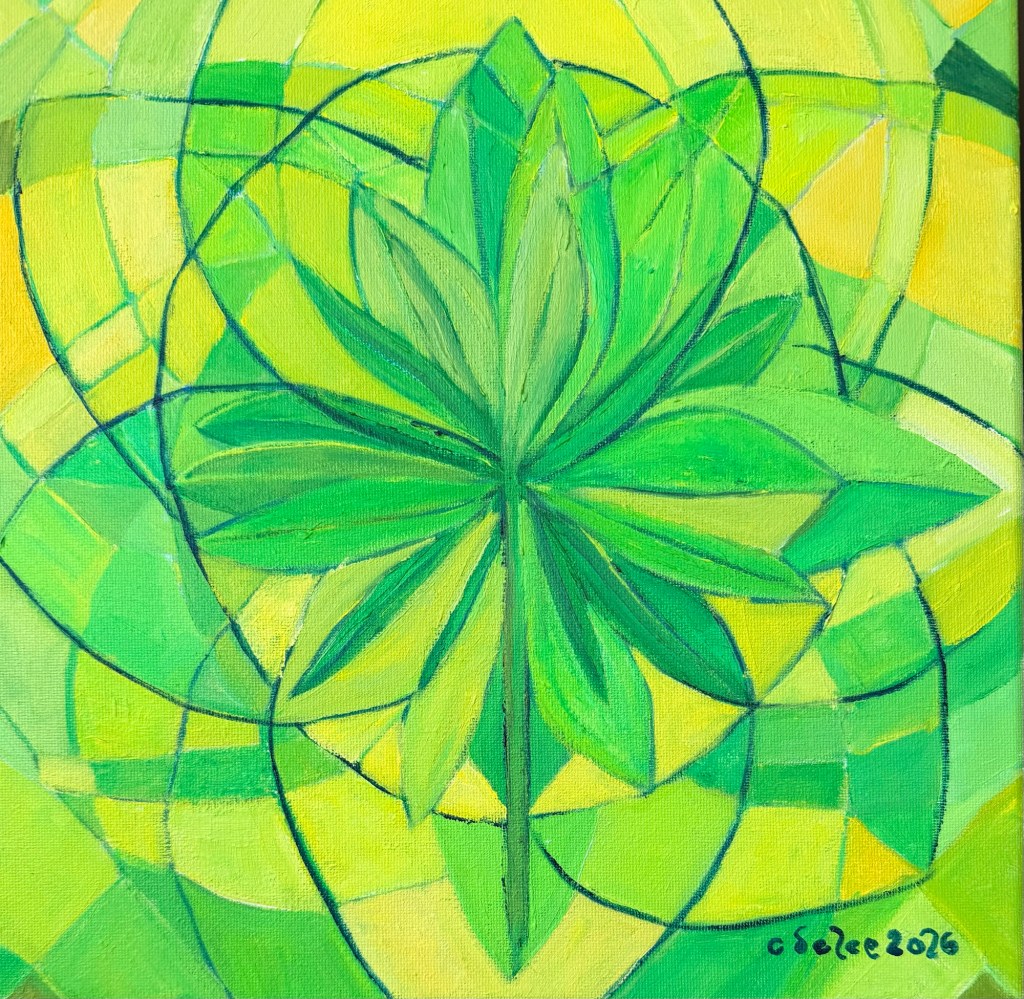
Of course, during the three weeks I worked on this piece, I had a couple of A-fib events, saw several doctors, got a heart monitor, saw my dentist for a crown, and got a touch of the flu that put me on the couch for a few days. I am thinking I should visit the courthouse and change my name. I have never had a middle name, so I might adopt FORD: Fix Or Repair Daily. These changes and challenges are only the evidence of the world, which is passing away, but we are not meant to live in this world forever. As Paul reminds us in 2 Corinthians 4:16,
“Therefore, we do not lose heart. Though outwardly we are wasting away, yet inwardly we are being renewed day by day.”
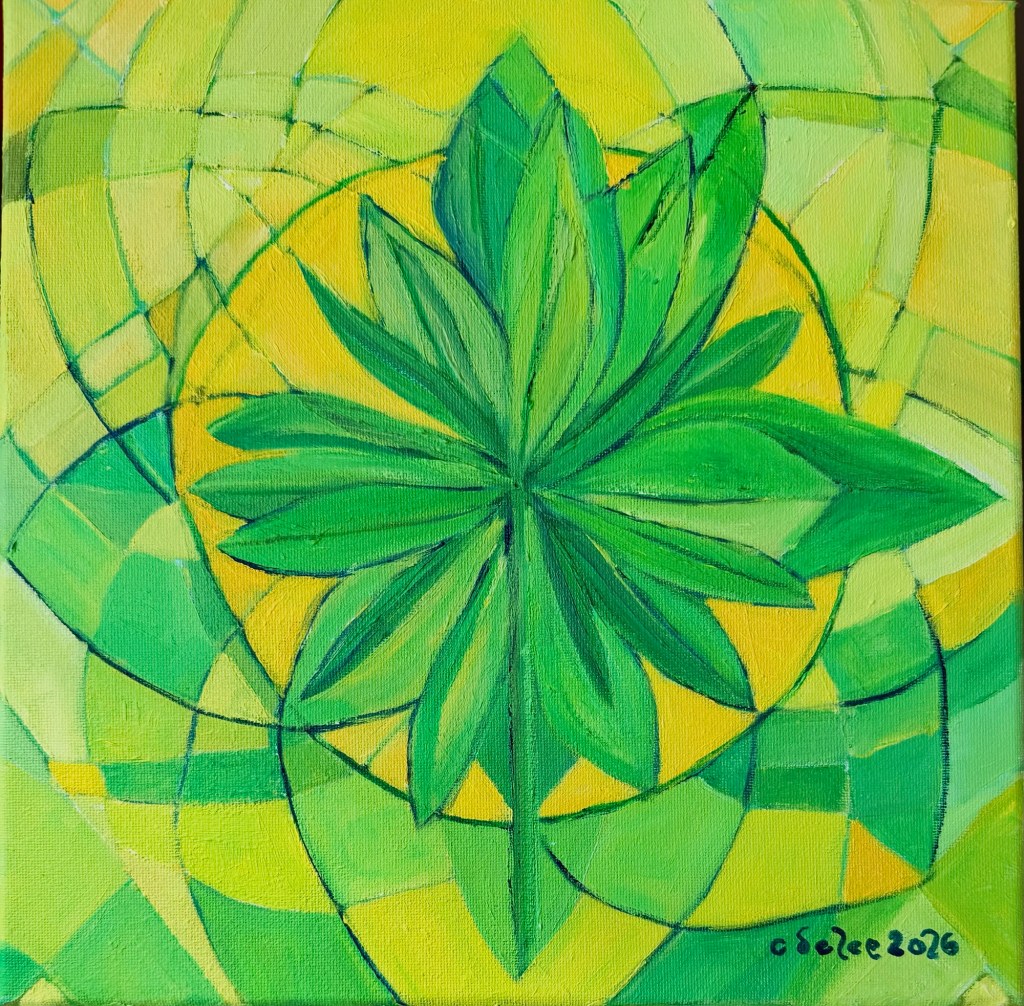
When I was younger, I dressed to look good for “the boys,” but now I dress up to make myself feel good. On terrible, stormy days when I go out and about, I am aware the bad weather makes many people grumpy or sad. On these days I will dress in my brightest and happiest clothes as a gift to others, for I will be a bright spot in their gloomy day and mood. If I can create a better day for someone just by my presence, then I am a co-creator in the energies of the creating God who is making all things new:
“When you send your Spirit, they are created, and you renew the face of the ground.”
~ Psalm 104:30
We can all be co-creators with the creating God, not that we are as powerful as God to bring whole worlds out of nothingness but our word, but our imaginations, and inspirations are a partial reflection of the greater truth of God’s dynamics. Even those of us who believe we have “not a single artistic bone in our bodies,” can create daily. As I brush my teeth in the morning, I practice my smile. I can give a smile to a stranger and lower the tension of the world around me. Some say if they do one thing at all, they make their bed. I personally do not find this to be a creative expression, but picking socks to match the color of my shirt is a creative expression. I also like to view the eastern sky and thank God for the new day God has created. I make coffee or tea, read some created works, or write in my journal. Around mid morning I am ready for some creative work: painting or blogging.
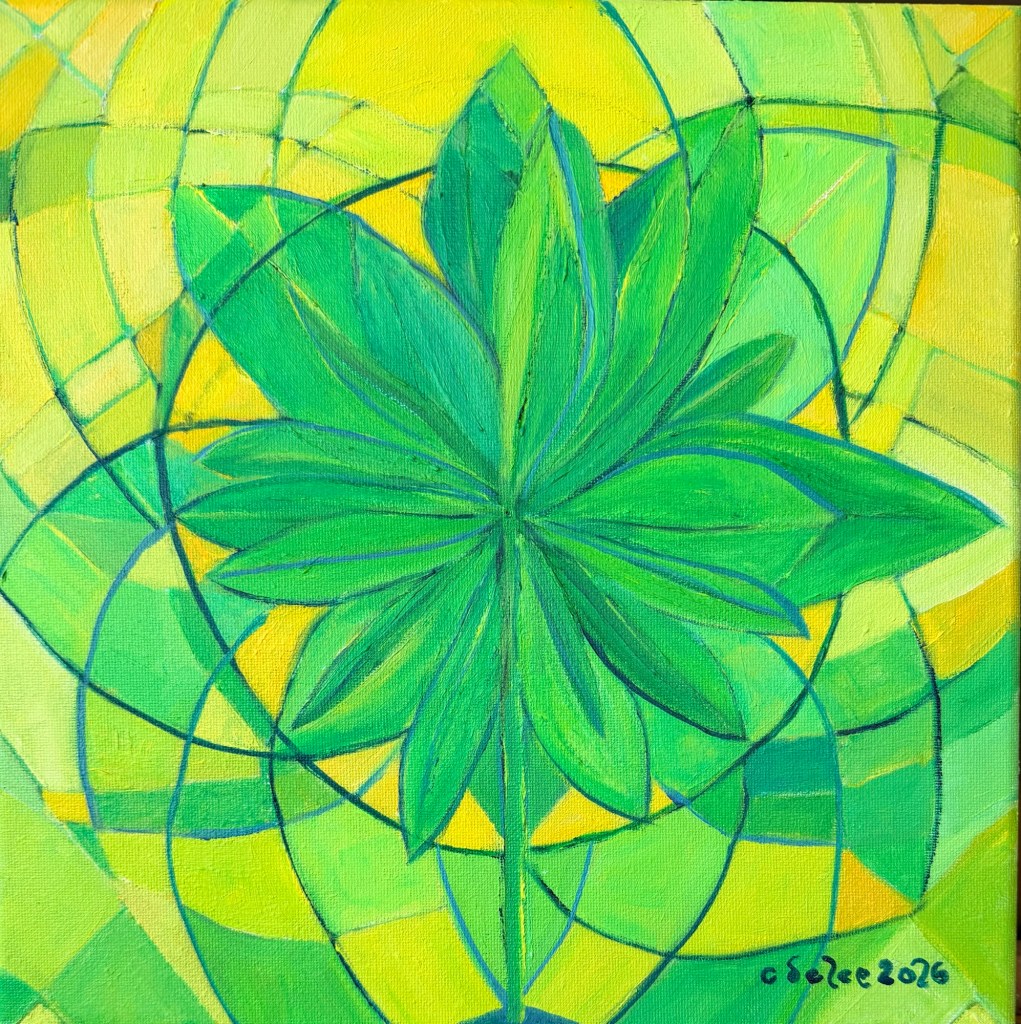
In my painting I used a compass with a fixed radius on a square canvas marked on a central grid. A central circle surrounded all these intersecting arcs. As I painted in the areas, I lost some of the symmetry of that inner circle, while the leaf patterns at times overwhelmed overall pattern. I limited my palette to white, two yellows, and three blues. The combination of these colors gives a wide variety of yellows, yellow greens, and greens. Painting over any of these hues changed the top color due to light’s transition into and out of the color by reflecting the base color through the top color.
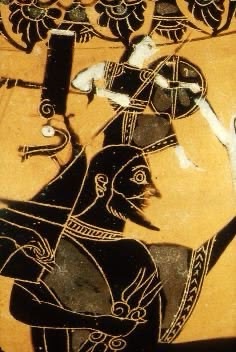
I often wish I had the ability of the mythical Zeus, who birthed Athena, the goddess of Wisdom, fully formed from his brow when he had a splitting headache one day, or so the Greek myth relates. Most of our ideas need fleshing out by trial and error, and do not spring forth fully formed. We can see vaguely, but not clearly. We climb Mount Everest one step at a time, not by leaps and bounds. Moreover, we will make plans and train for months and years in advance for such an important endeavor. The ancient wisdom of Proverbs 11:2 reminds us,
“When pride comes, then comes disgrace, but with humility comes wisdom.”
When we try to be perfect in behavior, rather than perfect in love of God and love of neighbor, we will often try to organize others’ lives and behaviors. This is a fool’s errand, for if we have difficulty controlling our own desires and passions, doing the same for others is unlikely. We can only hope to control our own thoughts and actions, not those of others. We can set consequences for others, but making them change is not under our control. Other people will change when they see the need to change, just as we will.
When I teach art, I recognize some people are not ready to move on from what they already know. Some do not want to give up the affirmations from their supporters or the satisfaction they get from what they create. They are not ready to experience new challenges which will build new skills and create new neural networks, both of which will benefit them in their elder years. Not everyone chooses the struggle, even though the work brings multiple advantages. Delayed gratification is often not a preferred choice, hence the proverb, “a bird in the hand is worth two in the bush.”
If we take part in creative activity, we created beings share in the energies of the creating God. While this participation does not make us divine, it does allow us to touch the outer edges of the glory of God when we create. If we struggle to bring our creative product to fruition, it is because we do not have either the mind or the hand of God. This too is part of the human condition, for we have only the image and likeness of God. We are not God. If we each morning repeat only this small thought, “There is only one God, and I am not this god,” we will have the proper humility with which to greet the rest of the day. Then we can meet every challenge with hope: “No testing has overtaken you that is not common to everyone. God is faithful, and he will not let you be tested beyond your strength, but with the testing he will also provide the way out so that you may be able to endure it.” (1 Corinthians 10:13)
Joy, peace, hope, and humility,
Cornelia
Opening image: The birth of Athena. The goddess leaps, fully dressed in armor, from the head of her father, Zeus. Boston 00.330, Attic black figure panel amphora, c. 540 B.C. E. Courtesy, Museum of Fine Arts, Boston. H. L. Pierce Fund


Leave a Reply