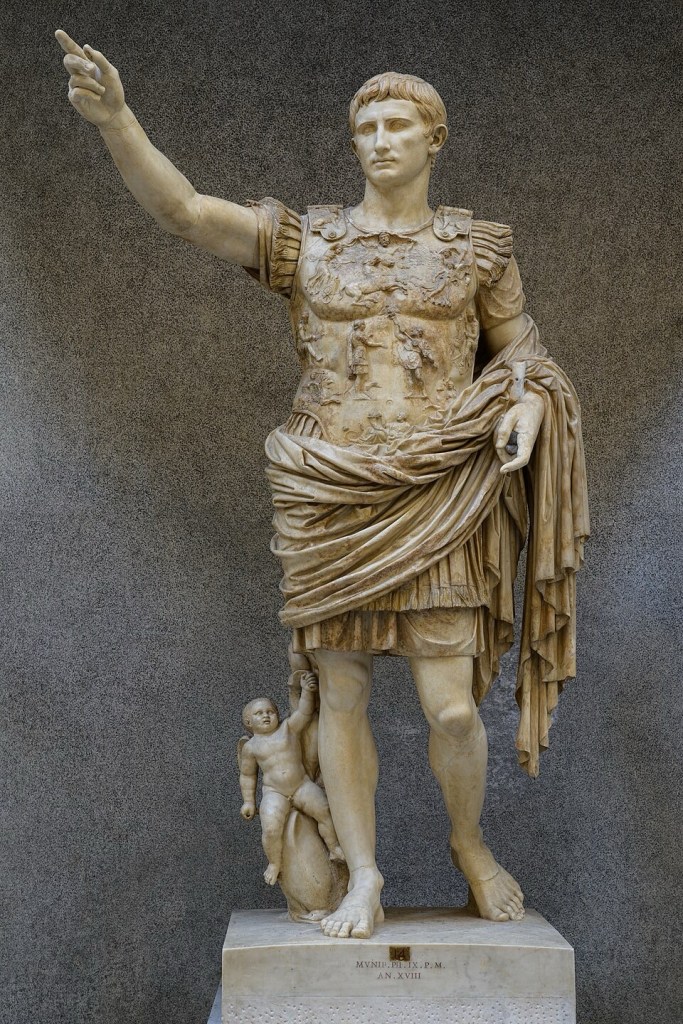
Amid trying times, and history has been full of them forever, people often look beyond their own resources for a savior. Sometimes people look for a strongman to take control of events, especially one who promises to return the country to an earlier golden age. The Roman emperor Augustus claimed he was restoring the ancient Roman Republic, but instead he held supreme power as the sole ruler.
While Augustus revived the ancient rituals to the pagan gods and passed strict moral laws to control family life, he also destroyed the democratic system on which Rome was built. Moreover, the strict moral family laws he passed applied to everyone else but him. He did not banish his own daughter Julia for adultery. He also banished poets and writers he didn’t approve of, not to mention executing Rome’s political and cultural leaders to seize their property and end their opposition.
It was a brutal time. History calls this era of political stability and security the Pax Romana, or Latin for “Roman Peace.” This time began with the ascension of Augustus as the first Roman emperor in 27 BCE, and lasted this lasted until the death of Marcus Aurelius in 180 CE. While the strength of the Roman army kept the borders secure, people were able to trade, share culture, and travel within the expanding borders of the empire. The travels of the apostle Paul benefited from the Pax Romana, just as his life as a citizen of Rome meant only the emperor could decide his fate.
Christ was born into this time of trouble. The gospel of Luke tells us (2:1): “In those days a decree went out from Emperor Augustus that all the world should be registered.” There’s no wonder people were looking for a savior! The Hebrew people had been hoping for a messiah, an anointed one, who would retake the throne of David again, and overthrow their latest oppressors. This great messianic hope would be a warrior to whom God would grant eternal victory. We know how this worked out for all the young male children under age two when Herod heard of the birth of a new king. It didn’t end well for them.
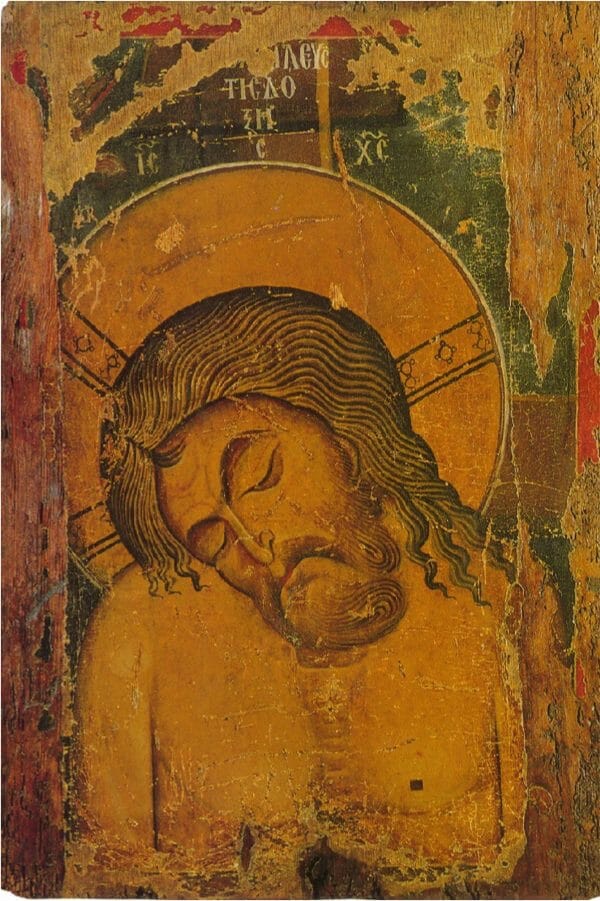
This is the reason many of the contemporary religious authorities did not recognize Jesus as the Messiah, for he came not as a conquering figure, but as a teacher, a healer, a prophet, and a priest. Yet God had a different plan for this new messiah. The Suffering Servant of Isaiah 52:13-53:12 envisions a person who is a co-sufferer with those who suffer and yearn for healing. The Servant’s wounds will vicariously heal the wounds of the wounded, and the Servant, just like us, will not win any beauty contest. The Servant doesn’t look like a Messiah, but the Suffering Servant is a Messiah in God’s eyes.
When I was in seminary, I learned about the “messianic secret.” Jesus was always doing wonderful things to reveal himself as the Messiah, but often even his disciples didn’t recognize him. We only see what we are looking for, so if we are looking for a warrior king, we will overlook the king who comes to us in peace and love. Today some people are looking for both the second coming of Christ and the Anti Christ. Daniel foretold the coming of a final persecutor who would “speak great words against the most High and wear out the saints of the most High and think to change times and laws.” The Christian concept of the Anti Christ comes from the Hebrew tradition in Daniel 7:25, written in the second century BCE:
“He shall speak words against the Most High,
shall wear out the holy ones of the Most High,
and shall attempt to change the sacred seasons and the law;
and they shall be given into his power
for a time, two times, and half a time.”
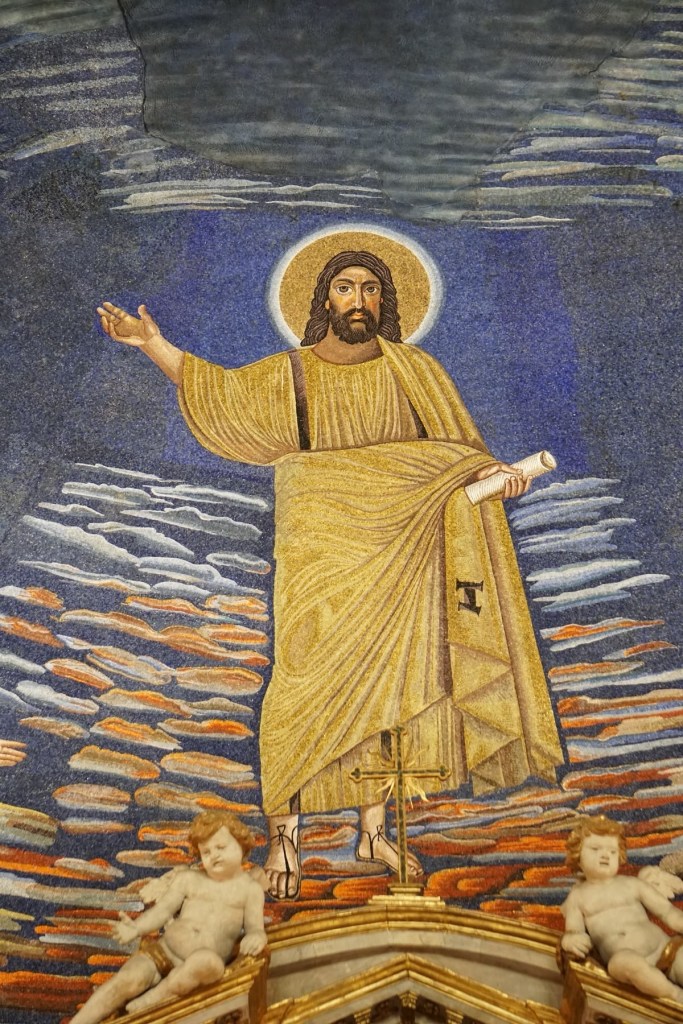
Of the four New Testament books which deal with the Anti Christ, the authors never call out an individual by name. In fact, the first epistle of John introduces an important distinction between “the” Antichrist who will come and the many antichrists who are already active in the world. They named the “body of Antichrist” as a collective entity existing in the present but destined to have its day of triumph in the future. The New Testament is always sure of one truth: while many anti Christs will come wrapped in light, only the one true Christ is the light of the world. As we hear the words from John 1:4 so often on Christmas:
“In him was life, and the life was the light of all people. The light shines in the darkness, and the darkness did not overcome it.”
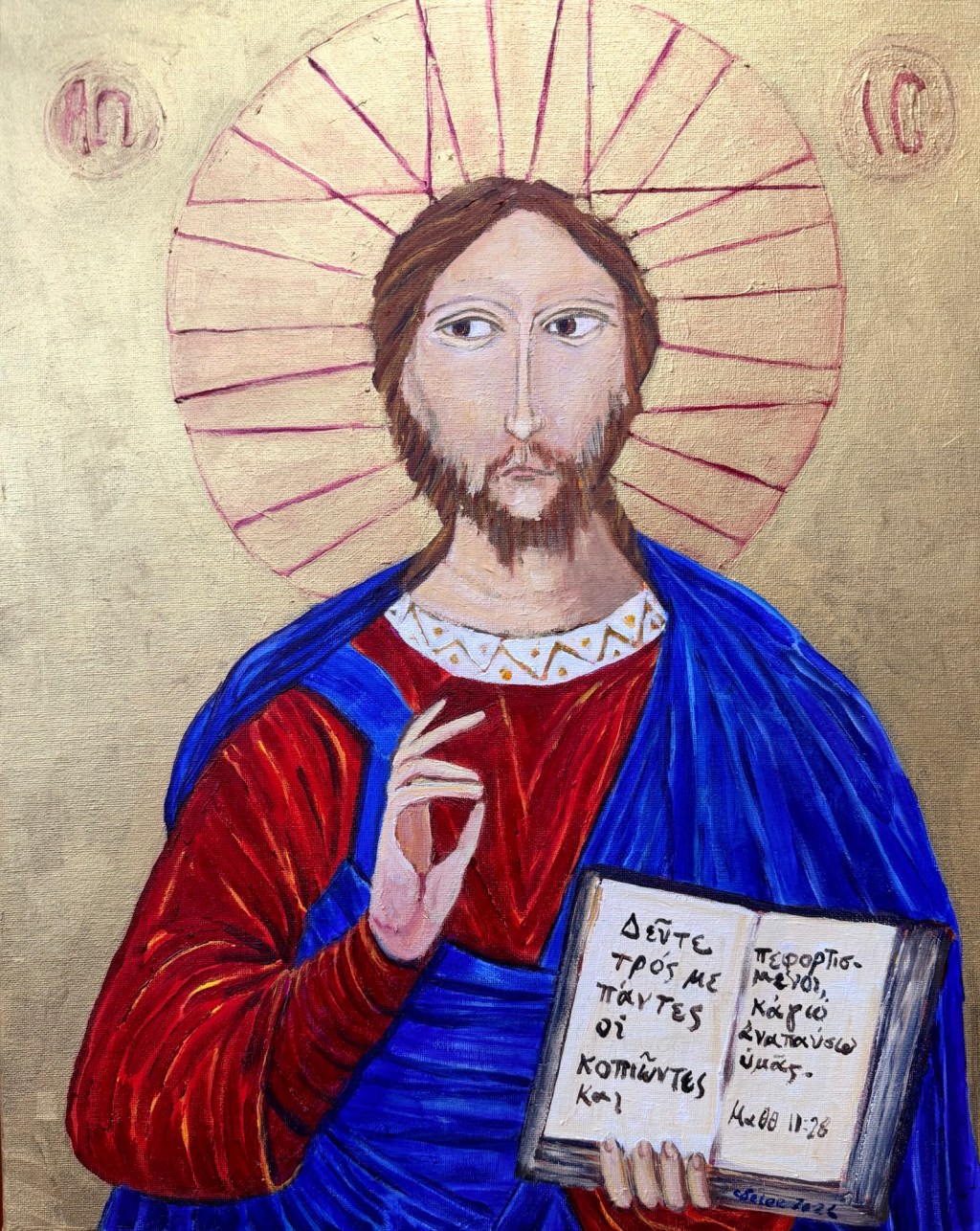
The icons of every age and provenance are full of light because they show us the light of heaven. Windows into sacred spaces are the best description of icons, rather than mere faithful images of a person’s physical appearance. The icon of Christ Pantokrator, Ruler of the World, always has an open Bible with the words from Matthew 11:28—
“Come to me, all you that are weary and
are carrying heavy burdens, and I will give you rest.”
He raises his hand in blessing for the one who appears before his image/icon and his face is full of mercy, rather than severe judgement. Although Christ wears the royal robes of a Roman emperor, on which the artists styled his image, and Christ holds the power of life and death over the whole creation by virtue of God giving him the “Name above all names” (Philippians 2:9), Christ will give us rest, not punishment. Icons always have an ear visible to remind the one who gazes beyond the image that God always hears our prayers. Likewise, the foreheads of icons are usually broader than life to remind us God’s wisdom is greater than our understanding. This is why we say we “read an icon,” rather than “look at an icon.”
To paint an icon is to come closer to the image and likeness of the image of God, for as Colossians 1:15 reminds us about Christ:
“He is the image of the invisible God, the firstborn of all creation…”
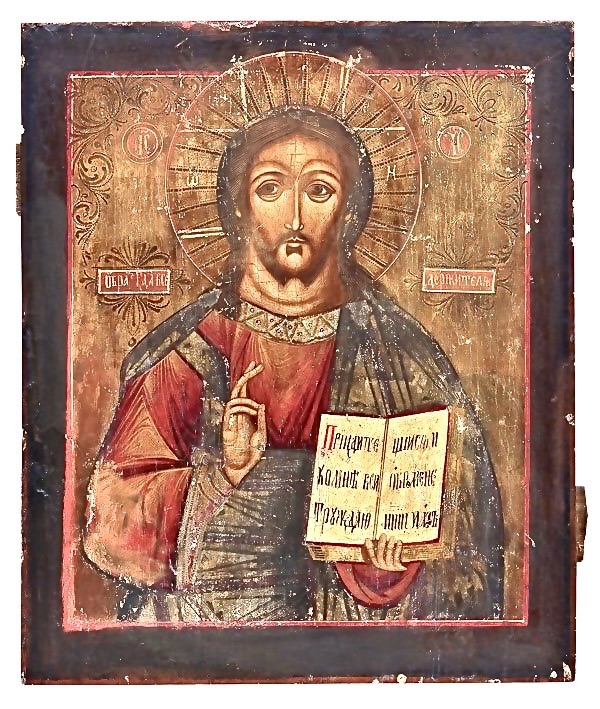
We may not be able to see God, but we can see and know Jesus through reading and studying the scriptures, worship, prayer, service to the poor, and creative works such as singing, needlework, and painting. I wanted to paint this icon from an unknown 18th century Russian artist. The form follows traditional icons of the Pantokrator type: Jesus is Lord of all, which is what the Greek title means. Pantokrator is a combination of the Greek words pantos and kratos: all and strength. He is the strong God of all things, or the Almighty One. In the Old Testament, God the Almighty is El Shaddai in Hebrew, so in the New Testament the Almighty name transferred to the Son, who became the Pantokrator in the Greek language.
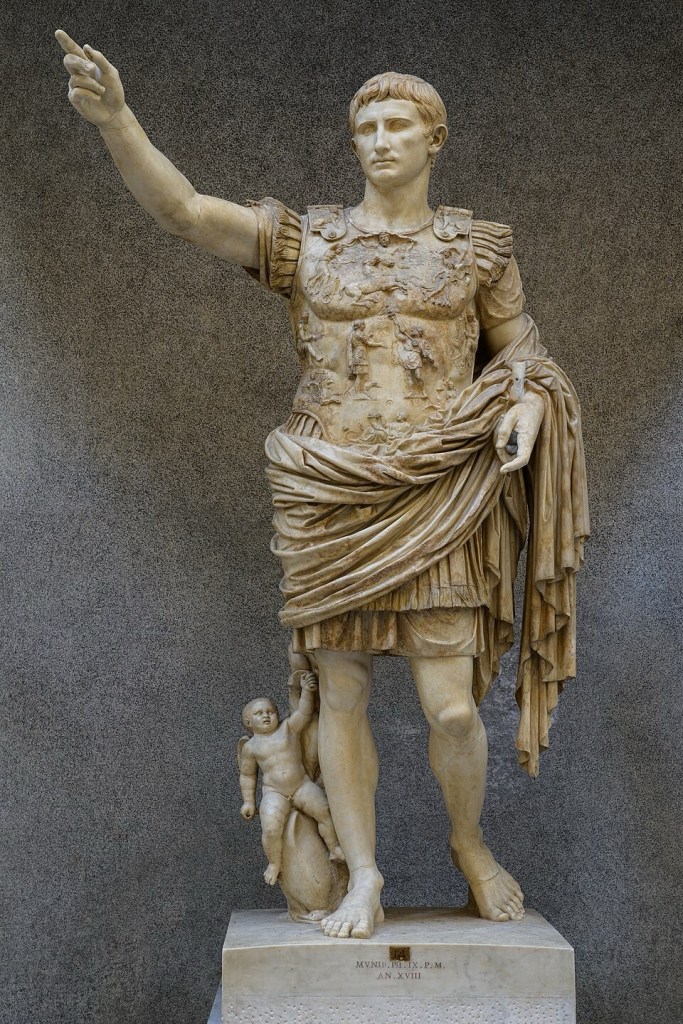
Because Christianity developed as a major religion among the Roman world, early Christian artists took their art traditions from those which were current in that time and place. If you wondered when the Pax Romana was going to become relevant again, this is it. The greatest authorities and powers of the age were Roman emperors. The emperors said they were gods, so people had to make sacrifices of obedience to them to prove their loyalty to the emperor and the Roman state. The rays in the halo remind us of the sun, the life, and the light, while the cross is superimposed upon it to remind us of the death Christ died for all people to give us all a new and everlasting life.
The Romans had temples dedicated to Sol Invictus, the Unconquerable Sun, whom we see in the marble below. Early Roman converts to Christianity sometimes kept their affection for their pagan gods along with their new love for Christ by bowing to the east in the morning before prayers: they conflated Sol Invictus with the “Sun of Righteousness” of Malachi 4:2.
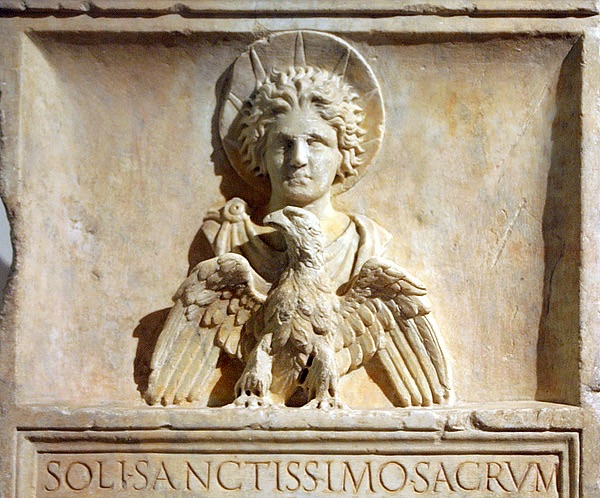
The early Christians adopted the Roman art forms from their earthly rulers and transferred these signs and symbols to their heavenly Lords, for they knew what Paul wrote to the people of Philippi was true (3:20-21):
“…our citizenship is in heaven, and it is from there that we are expecting a Savior, the Lord Jesus Christ. He will transform our humble bodies that they may be conformed to his glorious body, by the power that also enables him to make all things subject to himself.”
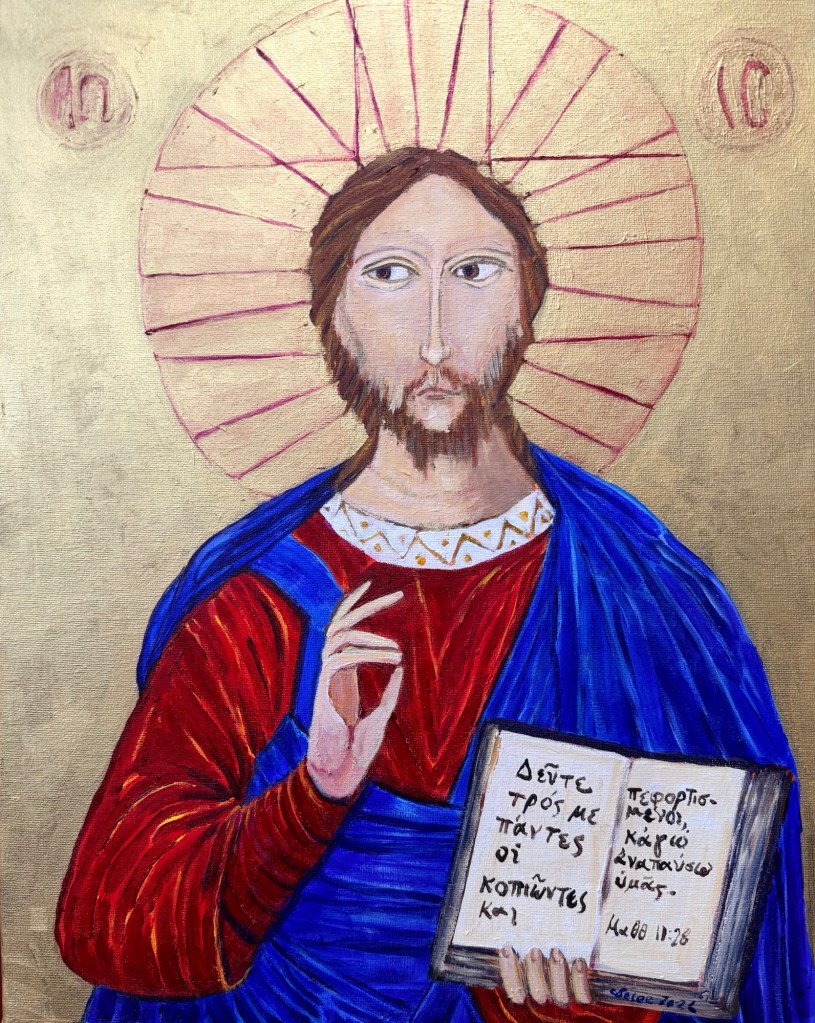
So today when we gaze at an icon, we are entering into a process of transformation. As we open our hearts and minds to the image/icon of the living God, we can ask God to purify our hearts, refine our intentions, and increase in us our desire to do God’s will and work upon God’s earth. I need to also ask at times for God to decrease in me my desire to have my own way and my own will. Facing Christ daily, even in an image, holds my concrete mind to account. As Paul says to the Philippians, “Let the same mind be in you that was in Christ Jesus (2:5).”
This is why the icons have survived for generations in the Orthodox and Catholic traditions of Christianity. The paintings themselves are not holy, but the experiences people have with them are holy, for the icon is truly a window into the spiritual realm.
Joy and peace,
Cornelia
“Δεῦτε πρός με πάντες οἱ κοπιῶντες καὶ πεφορτισμένοι, κἀγὼ ἀναπαύσω ὑμᾶς.”
The English translation of Matthew 11:28 is “Come to me, all you that are weary and are carrying heavy burdens, and I will give you rest.”
An alternate text sometimes appearing instead of Matthew 11:28 is Matthew 6:14—
ἐὰν γὰρ ἀφῆτε τοῖς ἀνθρώποις τὰ παραπτώματα αὐτῶν, ἀφήσει καὶ ὑμῖν ὁ πατὴρ ὑμῶν ὁ οὐράνιος·
“For if you forgive others their trespasses, your heavenly Father will also forgive you,but if you do not forgive others, neither will your Father forgive your trespasses.”
The SBL Greek New Testament (SBLGNT):
a critical Greek text edition published in October 2010 by the Society of Biblical Literature in association with Logos Bible Software. It provides scholars, students, and pastors with a reliable and freely accessible Greek text.
SBL Greek New Testament
How Ancient Rome Thrived During Pax Romana | HISTORY
https://www.history.com/articles/pax-romana-roman-empire-peace-augustus
Antichrist | History, Characteristics, Symbols, & Facts | Britannica
https://www.britannica.com/topic/Antichrist
A Closer look at the Apsidal Mosaic of the Basilica dei Santi Cosma e Damiano ~ Liturgical Arts Journal
https://www.liturgicalartsjournal.com/2023/07/a-closer-look-at-apsidal-mosaic-of.html
Christ Pantocrator Icon Meaning and Symbols – Art Christiana
https://artchristiana.com/blogs/news/christ-pantocrator-icon-meaning
Sol Invictus and Christmas
https://penelope.uchicago.edu/encyclopaedia_romana/calendar/invictus.html


Leave a comment