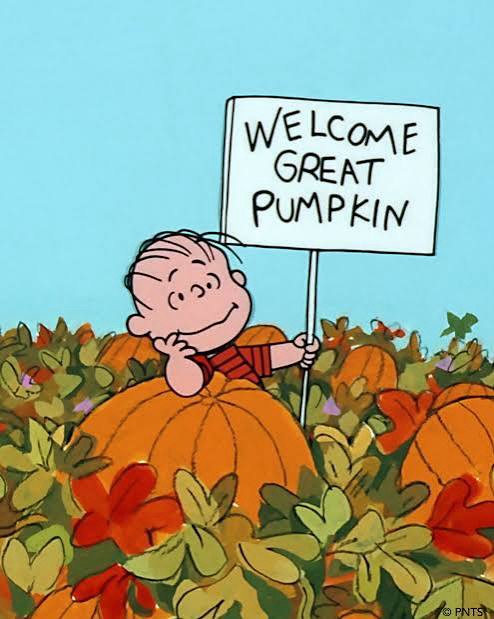
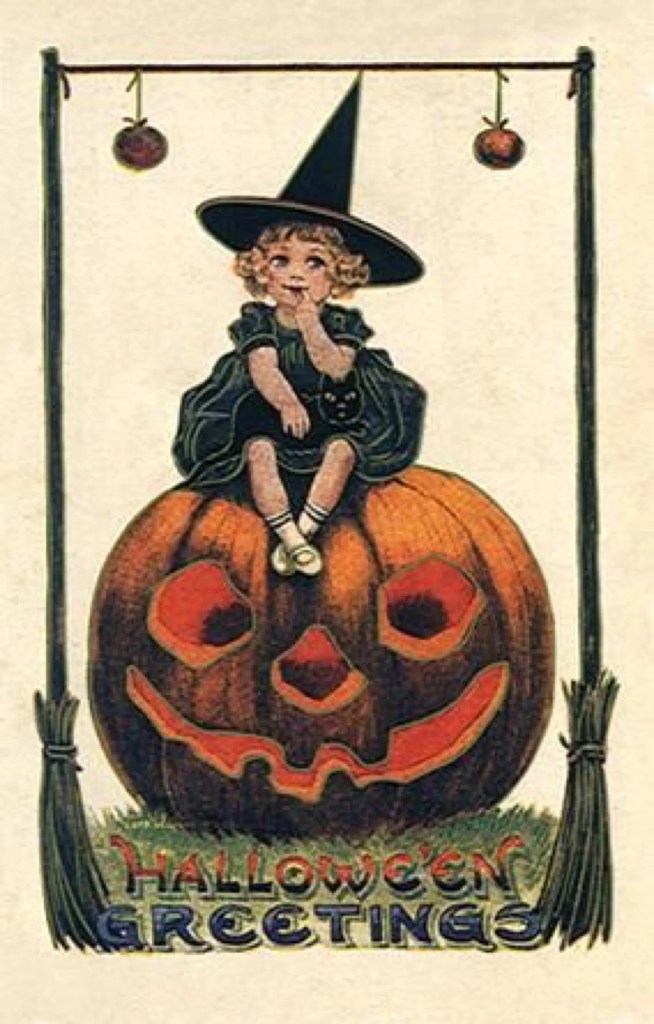
Every October the Peanuts characters eagerly anticipate the arrival of the Great Pumpkin. Charlie Brown and his friends are convinced this mythical personage will come on this spooky evening to bring treats and goodies for all who believe. Like a child’s faith in the benevolent Santa Clause, who dispenses toys to all the good girls and boys, the Great Pumpkin knows who has been naughty and nice. Everyone gets the goodies except for hapless Charlie Brown, who gets a rock. Of course he does, just as Lucy always takes the football away as poor Charlie is about to kick it. Charlie is a modern-day Everyman.
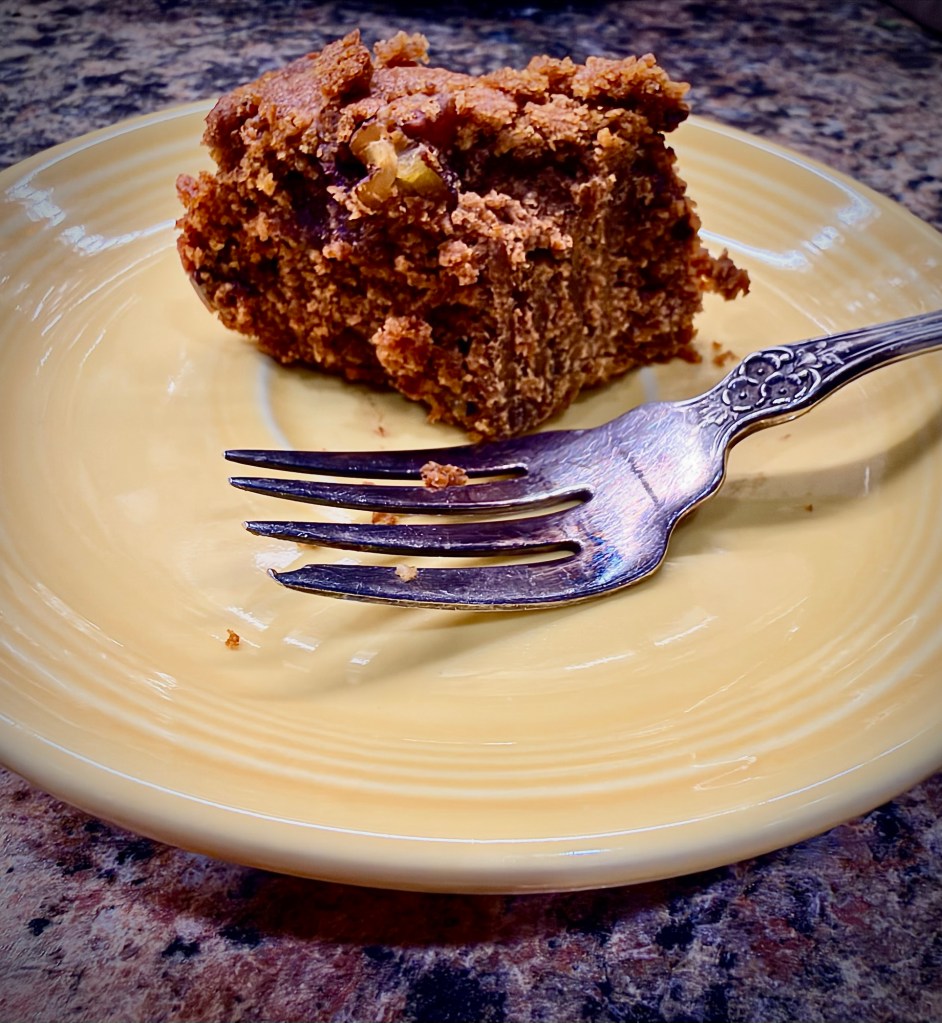
In October I also look forward to the annual Giant Pumpkin contests. I always hope for a new world record setting winter squash. Pumpkins, squashes, and gourds are all members of the same Cucurbitaceae family, which consists of over 700 species within over 100 different genera. Included in this garden family are cucumbers and melons. Of course, I last took biology classes in the summer multiple decades ago, so I have forgotten most of what I learned. To review, “Taxonomy is the science of classifying and naming living things into a nested hierarchy.” I need a Pumpkin Blondie with chocolate chips after that mouthful! Two, if I think about it!
- Family: A large group consisting of one or more closely related genera. Members share broad physical or genetic traits from a common ancestor.
- Genus (plural: genera): A smaller group within a family consisting of one or more closely related species.
- Species: The most specific and fundamental rank of classification. It identifies a single, unique kind of organism capable of interbreeding and producing fertile offspring.
I tend to think of pumpkins as giant gourds, but that only shows how many nights I have slept since my summer high school biology class where I was supposed to learn pumpkins are more closely related to summer squash. I was thinking more about swimming pools and sunbathing than science. Pumpkins are winter squashes, just as are acorn squash, small hubbard, miniature pumpkin, and spaghetti types. The large hard-skinned types, including banana, butternuts, cheese pumpkins, cushaws, and large hubbards are more types of winter squash. Many of these we only see at a farmers’ market, but all are fully edible and nutritious.
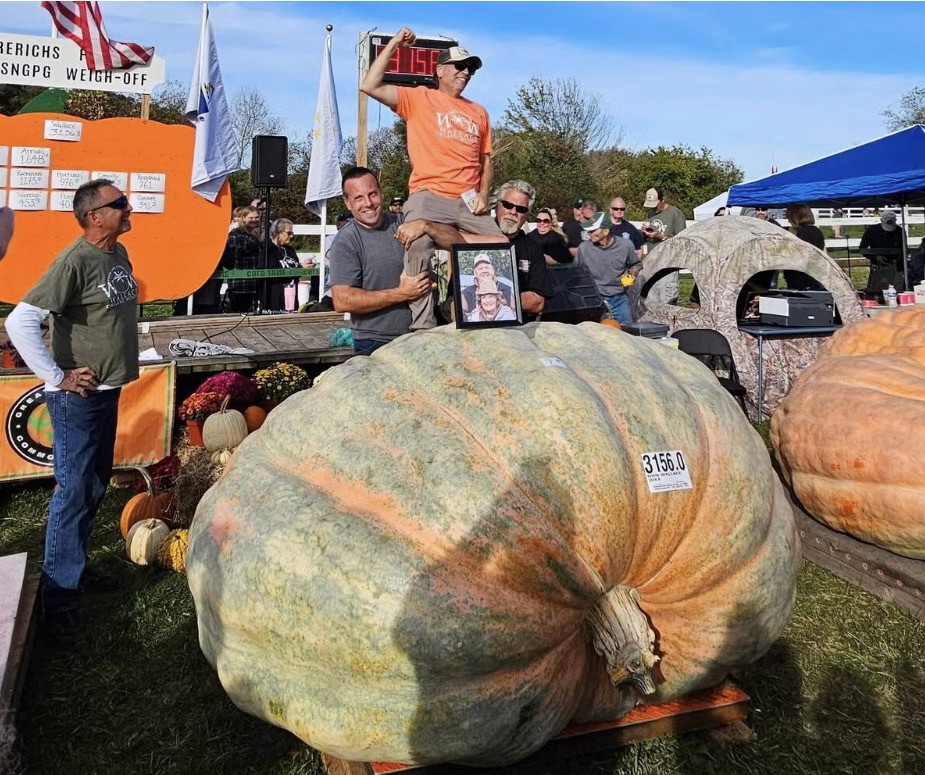
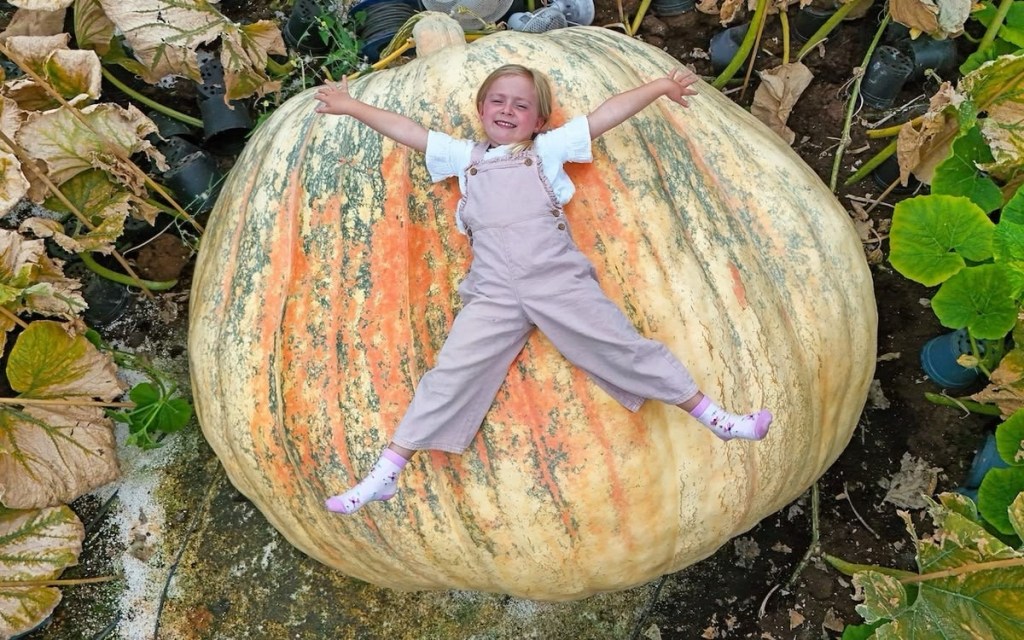
The 2026 World Record Great Pumpkin, however, is not edible. Farmers grow the Giant Pumpkin because they can. A century ago, giant pumpkins weighed around 400 pounds, but with improved irrigation and fertilization techniques, they now top in the thousands of pounds. Other than the Great Pumpkin’s exceptional size, it has no redeeming qualities. It is the Mount Everest of pumpkins. A farmer grows it to see if he can achieve this accomplishment, just as people climb Mt. Everest because it is there. Someone must break the world record weight for a pumpkin. They do this because records are a challenge. Ron Wallace, who grew the 2026 world record holder, will auction off the seeds so those who are most interested in growing future behemoth pumpkins can further refine the genetic lines of the plant. His pumpkin will be the star attraction at parades and festivals for a while, then he will reduce his giant squash to compost and rebuild the fields from which it grew.
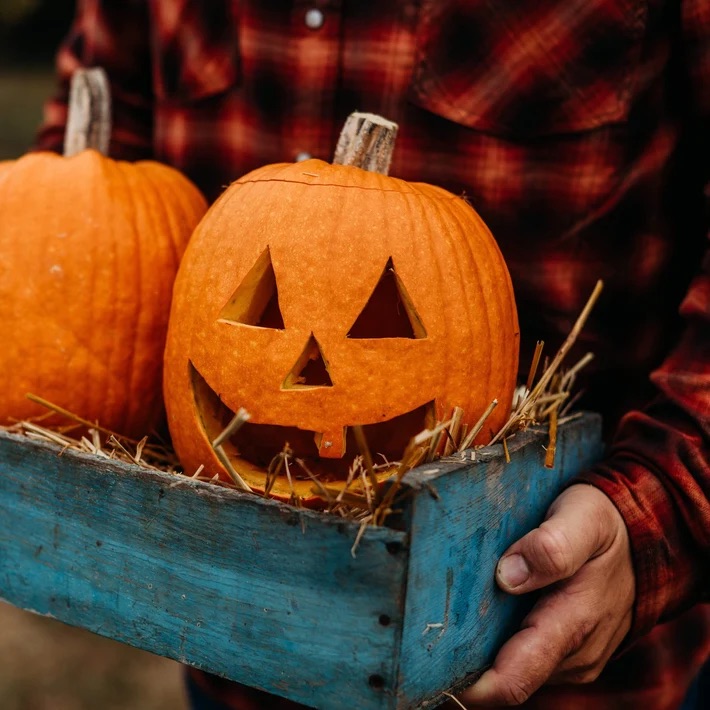
The JACK-O-LANTERN pumpkin (Cucurbita pepo) is an heirloom variety dating back to the 1950’s. The vigorous plants are excellent producers of classic carving pumpkins reaching about 10 lbs each. The orange, ribbed pumpkins are healthy and uniform, measuring approximately 8 inches wide by 10 inches tall. Excellent for use as a traditional carving pumpkin, they are also great for baking and as a supplemental feed for chickens and pigs.
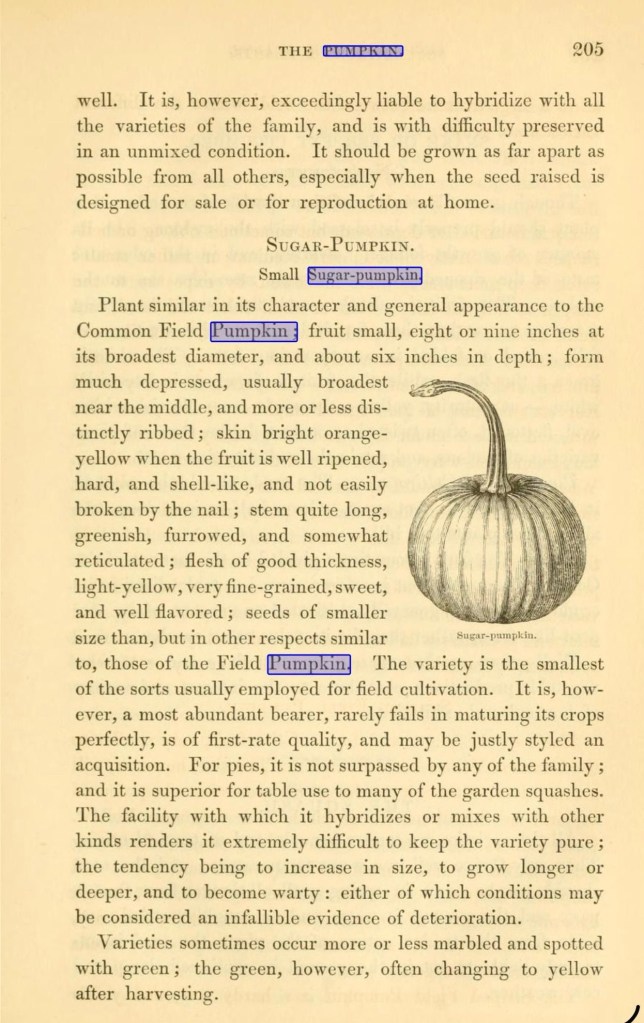
Another variety of the Cucurbita pepo is the SMALL SUGAR pumpkin. Fearing Burr, the author of one of America’s earliest horticultural encyclopedias, described this heirloom pie pumpkin in 1863. Also known as New England or Boston Pie pumpkin, Small Sugar’s extremely productive vines bear loads of sweet pie pumpkins. Orange and ribbed, these pumpkins measure eight inches wide by six inches tall and weigh between five to six pounds. Slice them open to reveal thick, dense flesh of the highest quality for baking and cooking. They also mature about 100 days after sowing.
Plant geneticists think all our domestic varieties of pumpkins descend from wild varieties originally found in Mexico over 10,000 years ago. Pumpkins have a complex family pedigree due to their ease of pollination and interbreeding. Finding a “wild, pure pumpkin” strain is getting harder year by year due to loss of natural habitat, increased fertilizer use, nearby domestic pumpkin production, as well as climate change. All Cucurbita species are native to the Americas, with a dozen or so species with scattered wild distributions, mostly in Mexico. Humans domesticated at least five Cucurbita species several thousand years before the Europeans arrived in the Americas.
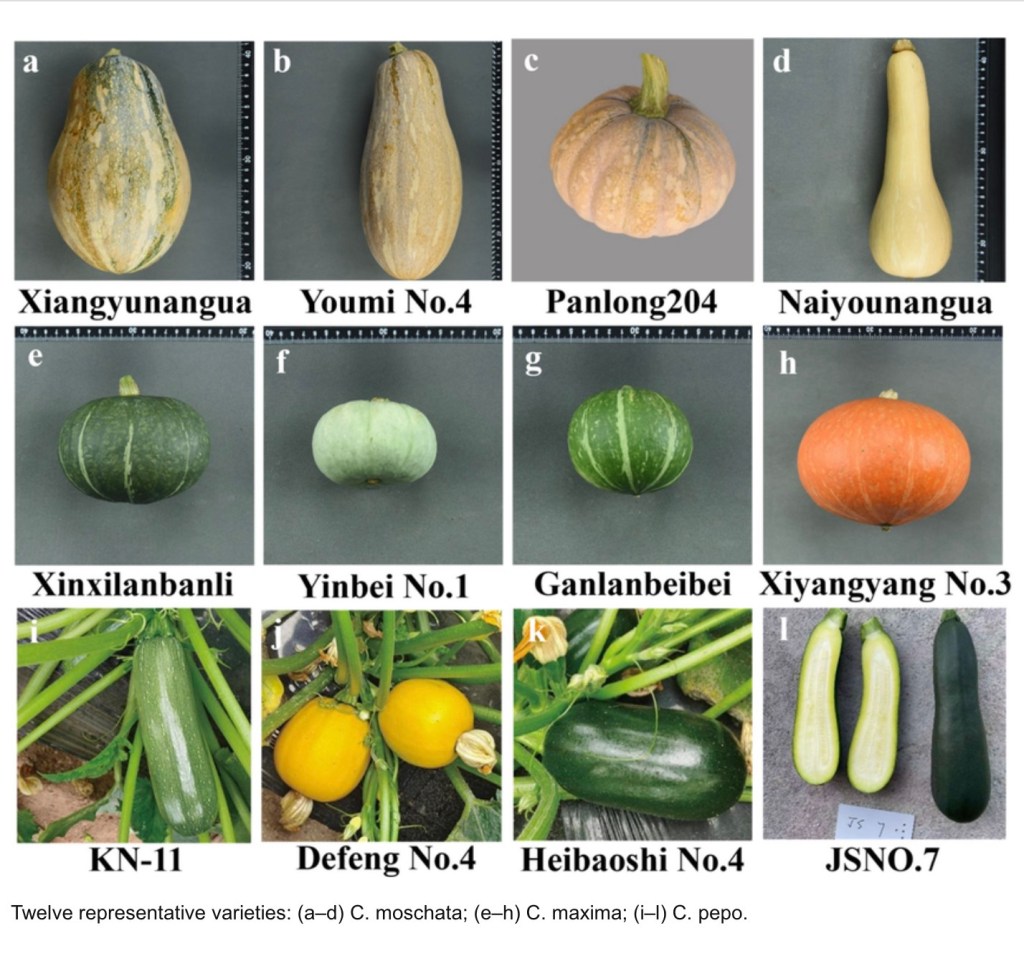
People in the New World domesticated pumpkins around 8,000 BCE. Old World agriculture was most likely born in the Fertile Crescent, between about 10,000 to 7,500 BCE during the Young Dryas period. This era in the Middle East had both winter frosts and summer droughts (9,000-8,3000 BCE). Because of the changing climate produced a period of reduced available food resources, human societies began to cultivate the plant species they used to gather.
Archaeologists have identified remains of C. moschata pumpkin varieties from abandoned Native American settlements from the southwestern United States (from 1500-2000 years BCE) and Guatemala (from around 900 AD). Central America is the suspected origin of this species. From there it spread south, where archaeologists have discovered its seeds in centuries-old Peruvian tombs, and in the north, with corn and beans.
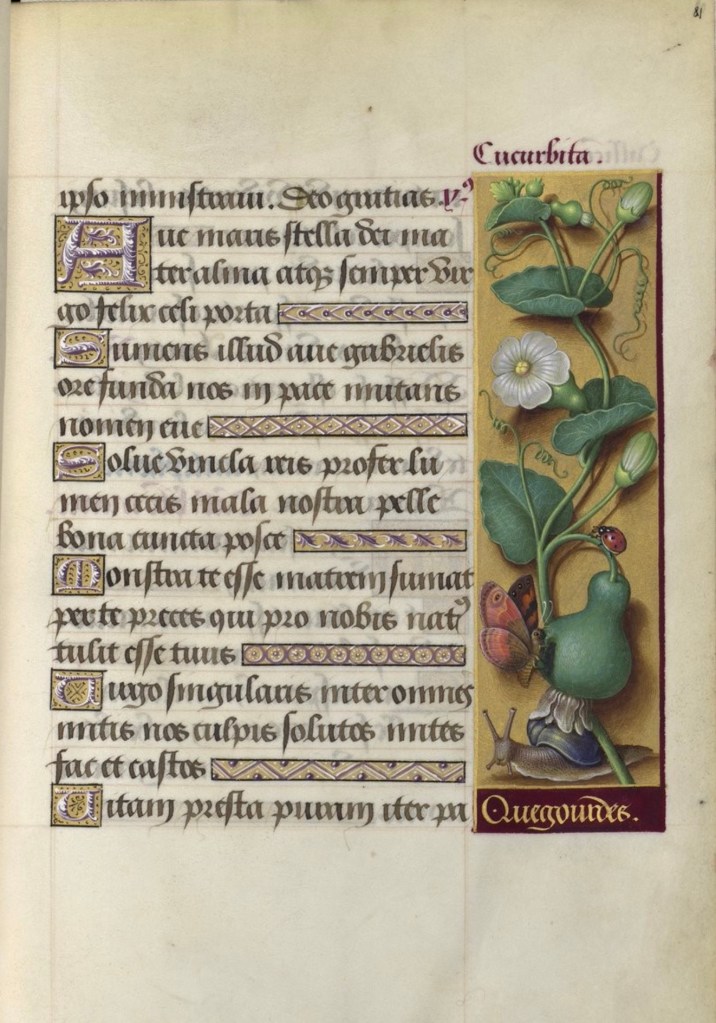
European explorers introduced the American Cucurbita to the rest of the world starting in the early 16th century. The first known image of Cucurbita in Europe dates from 1503–1508. “The Great Hours of Anne of Brittany,” painted by Jean Bourdichon, has a comprehensive and extensive botanical treatise including more than 330 plants provided with both their scientific name in Latin and their French names. Climatic preference differences among Cucurbita species influence their modern distribution around the globe’s agricultural regions. C. moschata prefers hotter, more humid conditions than others of its kind.
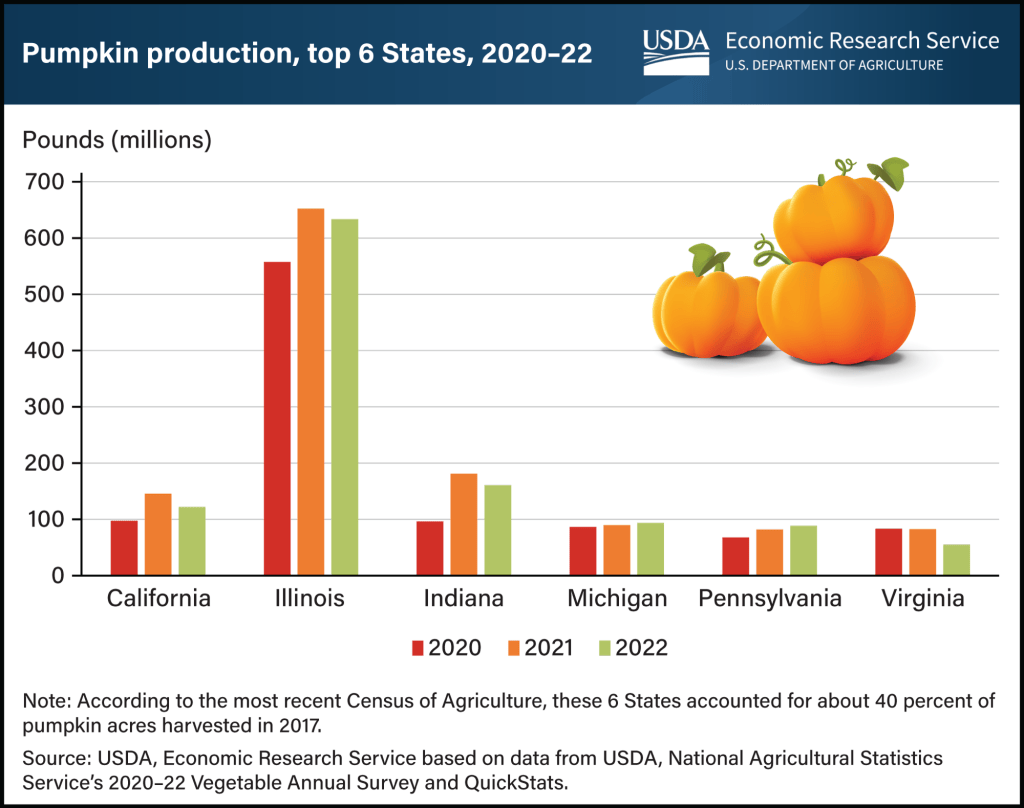
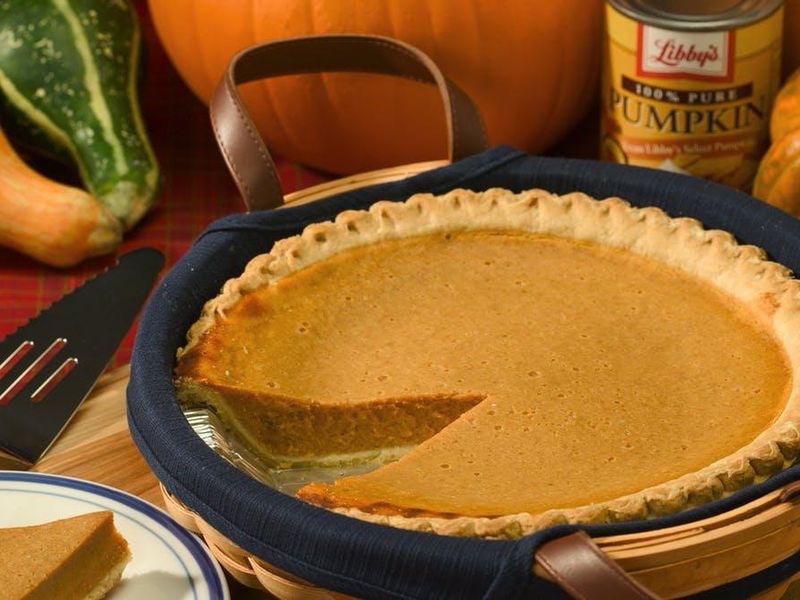
Worldwide, growers produce over 25 million tons of pumpkins annually. In the United States, Illinois produced 630 million pounds (315,000 tons) of pumpkins, primarily for canning at Libby Pumpkin, for the pumpkin purée we buy in cans for our pies at Thanksgiving. Pumpkin availability rebounded in 2016 after a spate of poor weather reduced crop yields. Americans consumed about 5.2 pounds per person in 2025.
I personally have been eating my share lately in Pumpkin Blondies, Pumpkin Ricotta Cheesecake, and Pumpkin Lentil Stew. China is the world leader in pumpkin production, with India coming in second. Together they account for more than 60% of the world’s pumpkin production. Ukraine, which is Europe’s breadbasket, is the third largest producer. Mexico grows 679,000 tons of pumpkins every year. It is the primary pumpkin shipper in the world. In 2020, Mexico shipped 87% of its pumpkins to the U.S.
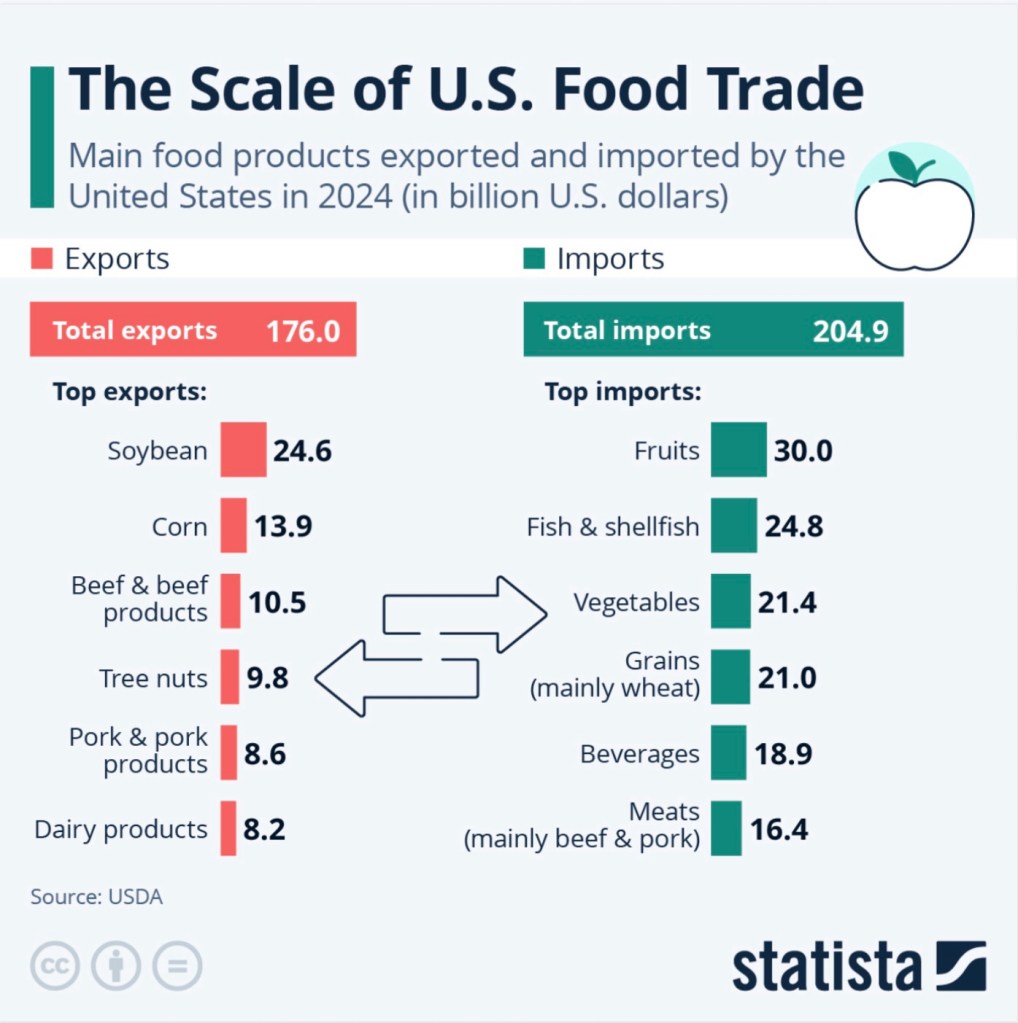
I mention this chart because of our current economic situation. If your grocery bill is higher, we have multiple reasons. Although the US exports many foods, we also import foods which we have come to expect to have year-round, rather than only in season. Our farmers have also dedicated their crop land to more valuable crops, such as corn and soybeans, rather than to oats or fragrant jasmine rice, which we need to import.
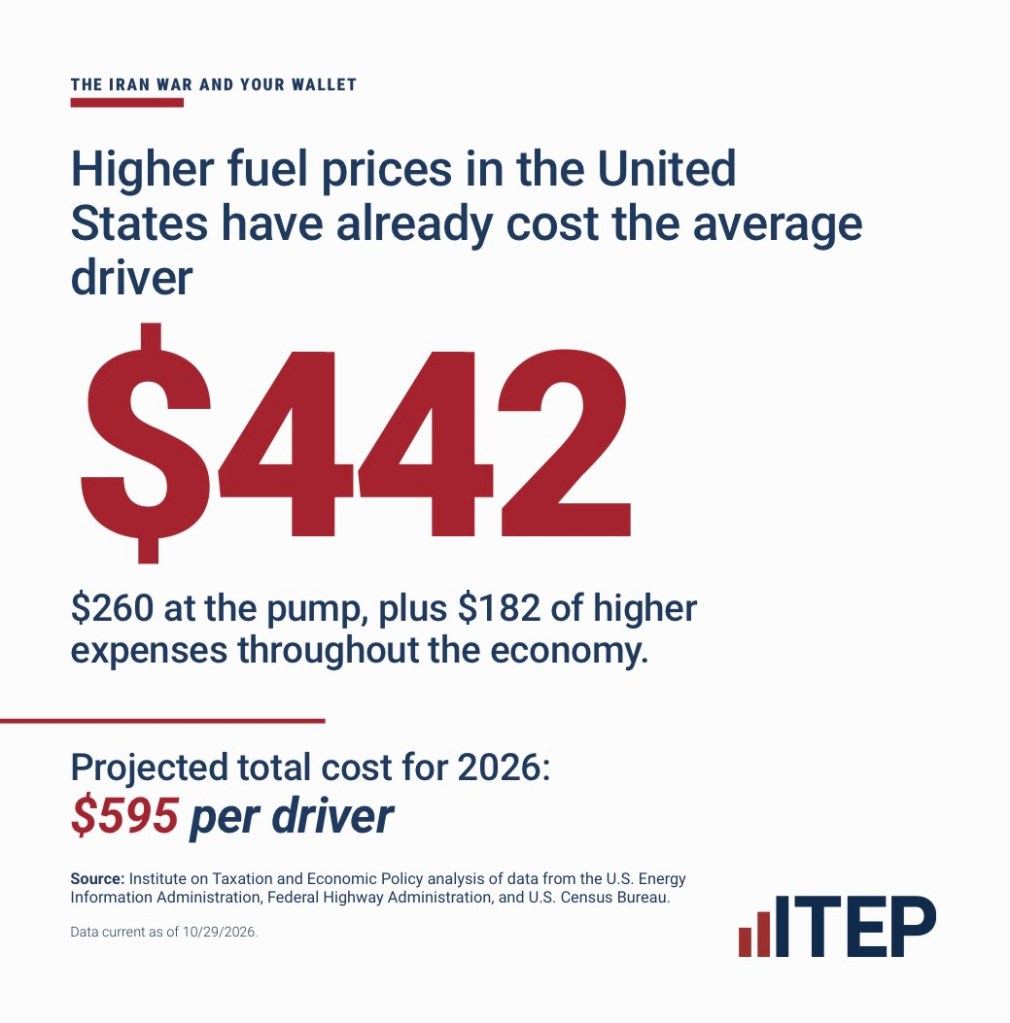
Then there is the war in Iran, which has raised the cost of both fertilizers and diesel, not to mention the gasoline we use to run our grocery errands. The average American driver will pay about $600 extra this year, with households on the west and east coasts paying more. Families with multiple drivers will pay proportionately. Farmers use the fertilizer to grow crops, and they use the diesel to drive their machinery and to transport the food stocks to market. When those costs go up, the prices we pay go up.
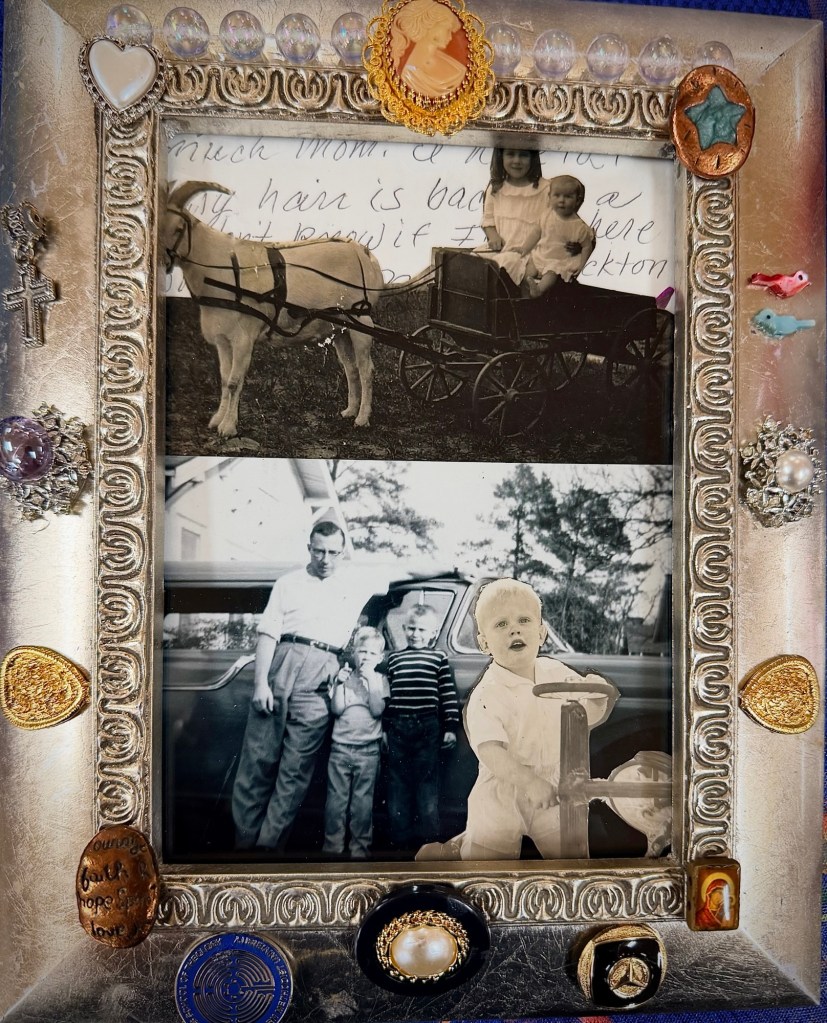
I remember the recession of the late 1950s when my daddy brought home the cash payments from the day’s collection at his office. We had a brand new 1957 Ford station wagon in the driveway, but we children and our Mom walked daily to the grocery store to buy that day’s food because we could not afford the gasoline. We drove the car on Sunday to church. I also remember my daddy crying because he was not supporting his family like a man should. My mother reminded him, “We are in this together. We will make it through.” When I went to the first grade, she took a teaching position.
We also cannot forget the vagaries of our weather, a factor which has confronted farmers of every generation. Excessive heat or rain in the wrong amount or the wrong time is never a good predictor for a good crop. The supply chain problems which we confronted during Covid and which the Russian invasion of Ukraine worsened have not decreased. Instead, global unrest and the Trump tariffs have caused much of the costs of our imported food stuffs to increase. If it is not one thing, it is another. If only the Great Pumpkin were an all benevolent, all-powerful entity who would cast a spell for good upon all of humankind so they would indeed be “human kind.”
My mother, who had a home economics degree, taught me to buy foods in season and on sale, since this would stretch my grocery dollar further. Of course, this does take a few minutes to check the weekly advertisement, search the digital coupons, and plan for leftovers as soup. If we cannot change the outer world, we can at least adjust our inner world, or our own habits. Premade foods will cost more per serving than foods you make at home. You can also control the fat and salt content, as well as avoid preservatives. Then again, you will lose convenience and preparation time. You can choose which is the better trade off for your health and budget. These days, my budget is winning every time.
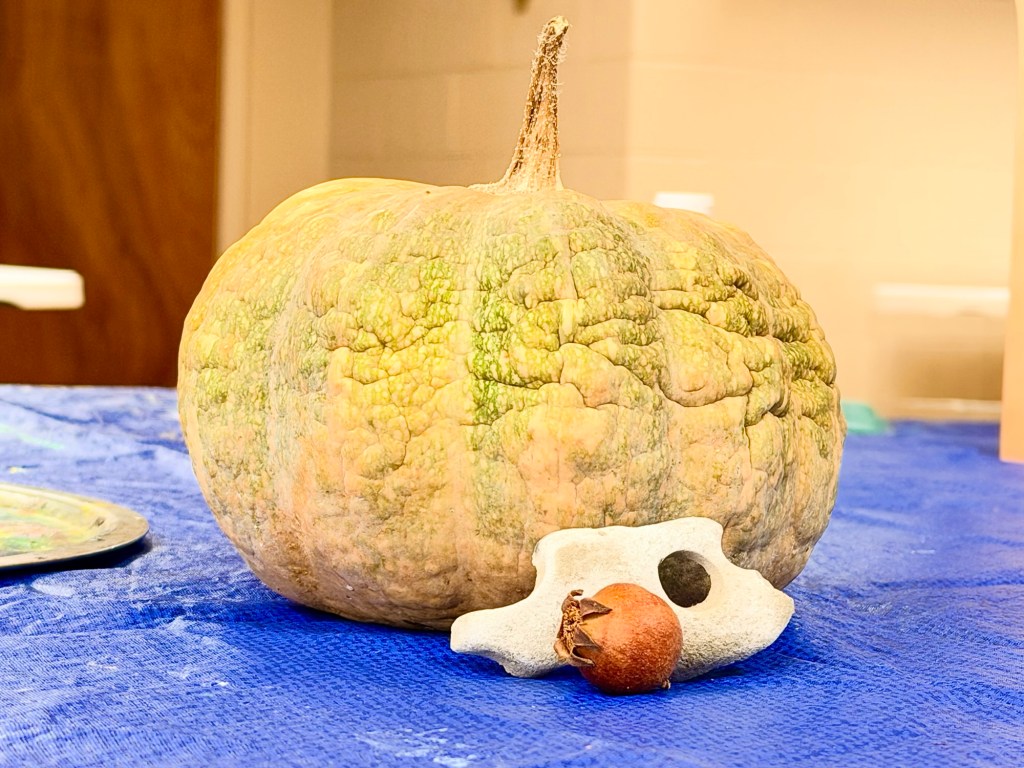
Gail S. brought our class a pumpkin from her garden for our painting prompt. While it was not a contender for the Giant Pumpkin Award, it was unique in its skin color and texture. Its mottled green surface inspired our group to take several different approaches to the creative experience of the day.
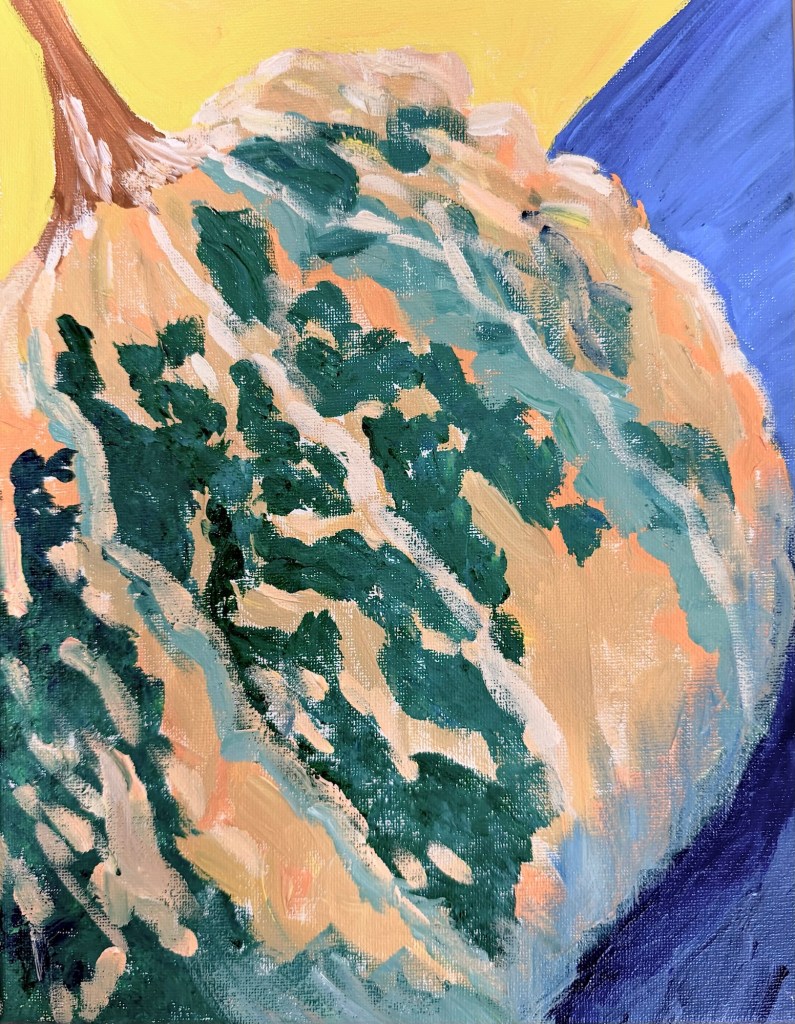
Close cropping the image allowed Gail S. to focus on the textures and colors of this wonderful pumpkin. Our usual orange ribbed pumpkins which we carve with spooky faces are not interesting to paint. They do provide a great blank canvas for our imagination as we scoop out their goopy guts and slice through the skin to create scowls and growls to scare our tiny, costumed Halloween visitors seeking sugary sweets. This is the most abstract and freely brushed work Gail S. has done in our class. Her usual approach is clean edged and smoothly painted. I think the Great Pumpkin’s mysterious power was influencing her technique! We will never know!
I found Mike in the kitchen destroying a sponge with a pair of scissors. He is always getting into trouble. I am sure his mother used to tell him this was his middle name when he was younger.
“I know what I am doing,” he said. “I am not crazy.” I laughed.
“I am going to put this destruction to good use.” I nodded. I have faith in him.
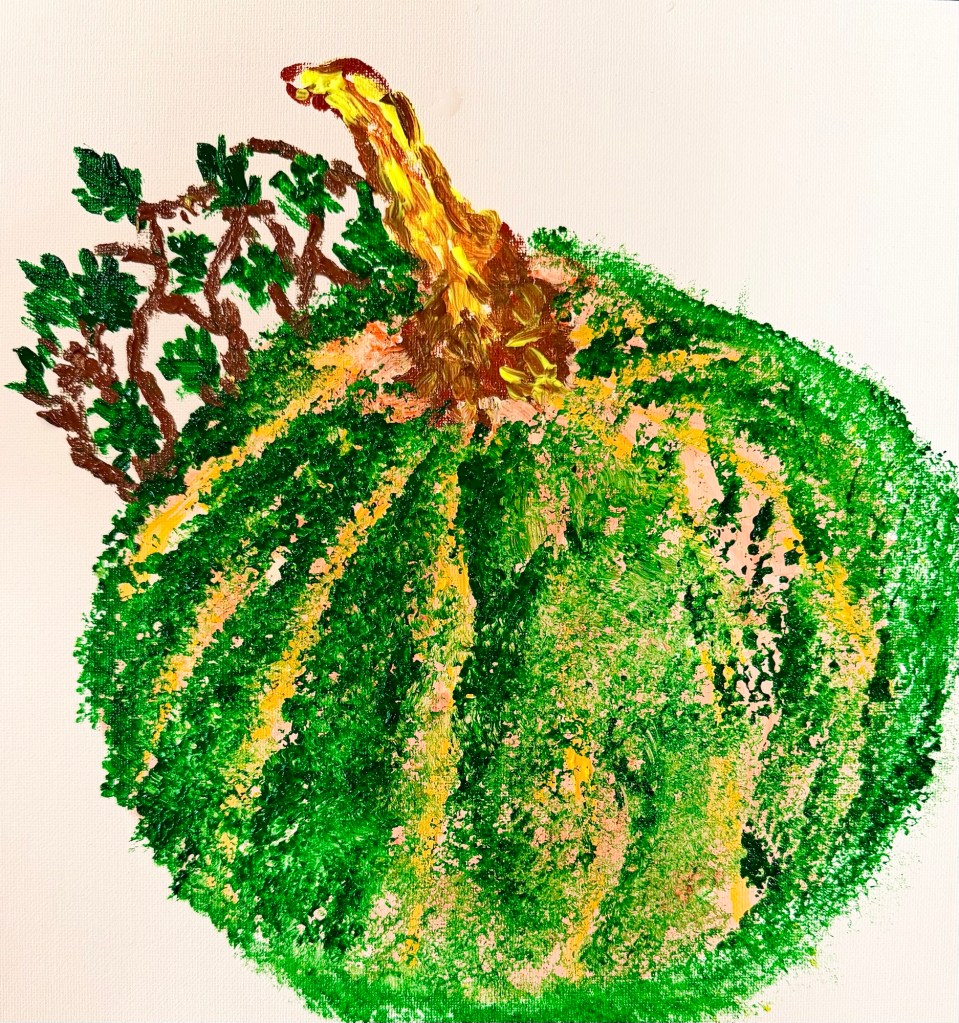
Sure enough, once Mike had his basic pumpkin design done, he put out some green and yellow acrylic paint. Touching the remains of the sponge to the paint, he began to tap the canvas to get the pumpkin’s mottled surface. Mike often wants to paint only with his one favorite brush, but today he chose a different method.
Was the Great Pumpkin at work here too? Do pumpkins have spirits? Or does only the Great Pumpkin have a Spirit? Deep reflection question calling for a piece of Spiced Pumpkin Ricotta Pie. I brought some to class so I would not eat all of it! Anticipating the arrival of the Great Pumpkin, I also have been making Pumpkin Blondies and Pumpkin Lentil Soup.
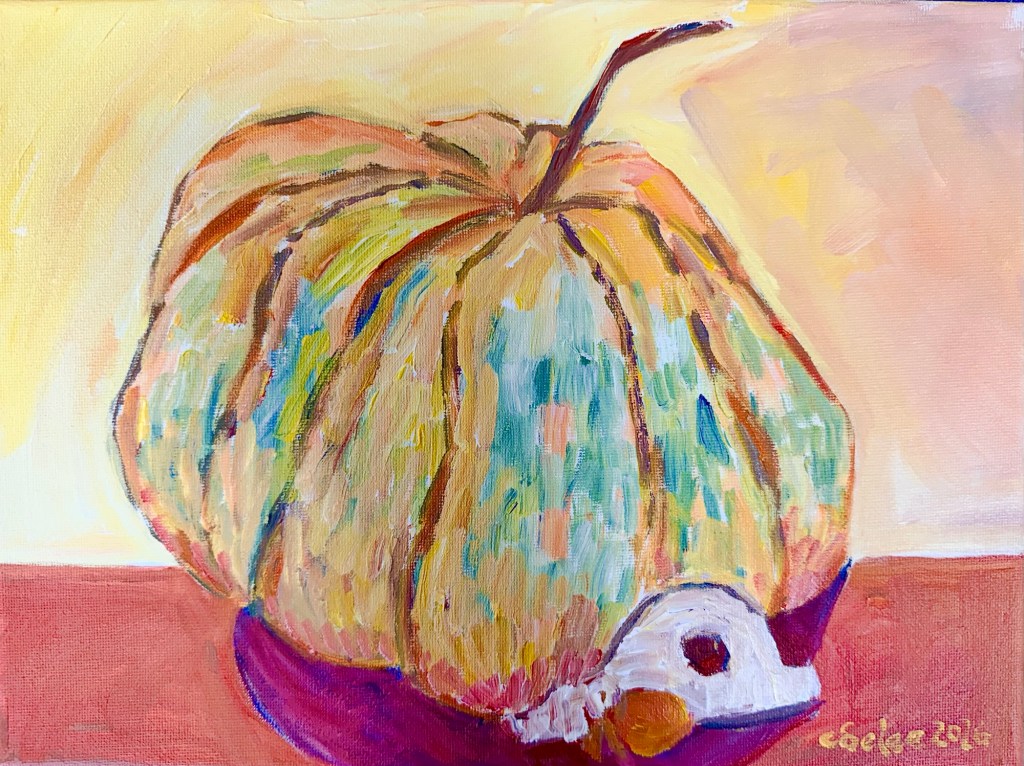
I confess to being a habitual collector of stones and other strange objects that strike my fancy. I may be approaching my witching hour but, in my heart, I am eternally an eight-year-old. I heartily recommend finding your inner child if you are able, for life is much too short to be serious all the time. Of the things we should be serious about—the truth, fairness, love, the common good, justice for all (not just for the well connected), and caring for the poor and dispossessed—we have short shrift for these in the present. If we teach our children these worthy goals, then why do we wonder why they do as we do, rather than as we say? The Great Pumpkin might need to drop a rock of truth or consequences into our outstretched goodie bag this Halloween evening.
I picked that rock up on a Florida beach ramble when I attended my granddaughter’s wedding weekend. The ocean waves are good at wearing all the rough edges smooth and any small hole becomes larger with the sands repeatedly washing through it. How many times has this one stone washed upon a beach from its watery depths? Neither it nor I know, but on that one day when I was walking barefoot in the wet sand, I saw it and took it home.

I often say these objects call my name. If we as artists can find an emotional connection to our subjects, we will find ourselves making more interesting artworks. If we are just making marks on a surface, our lack of interest will show up in a resulting lack of quality in our work. We all have off days. Even the best athletes in the World Series will make fielding errors and the best NASCAR drivers will come across the Daytona or Talladega finish line in “The Big One” wrecking along with the field and even upside down and on fire! We are not at our best every single day, but we all can show up and give the best we have. If we give all we have, no matter what this happens to be, we have done our very best. And The Great Pumpkin will live forever in our hearts, while we eat another slice of pumpkin pie.
Joy, peace, and pumpkin spice forever,
Cornelia
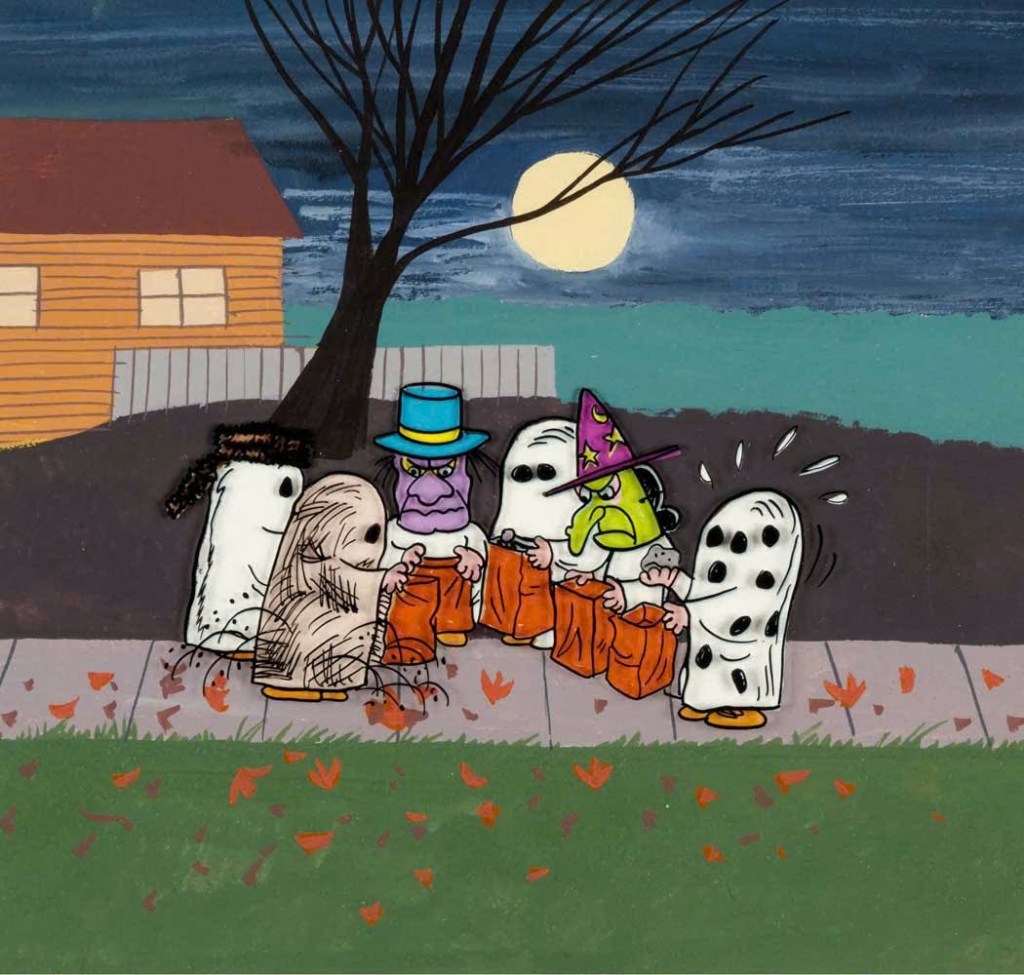
“Tricks or treats, money or eats! I got a chocolate bar! I got a quarter! I got five pieces of candy… what did you get Charlie Brown? I GOT A ROCK!!!” The original illustration cel and background by Bill Melendez for the 1966 CBS Special sold for $16,132 at Heritage Auctions. Courtesy Heritage Auctions (2022).
Collecting Charlie Brown and Peanuts Gang a Halloween Treat
https://www.antiquetrader.com/collectibles/great-pumpkin-charlie-brown
Jack-O-Lantern Pumpkin – Thresh Seed Co. (non-GMO seeds) The seeds mature 100 days after sowing and will store for up to two months, when properly cured. Each packet holds a minimum of 25 non-GMO and chemical free seeds.
https://www.threshseed.com/products/jack-o-lantern
New England Sugar Pie Pumpkin Squash | RareSeeds.com (non-GMO seeds)
https://www.rareseeds.com/products/squash-winter-new-england-sugar-pie-pumpkin
Burr, Fearing: The field and garden vegetables of America: containing full descriptions of nearly eleven hundred species and varieties; with directions for propagation, culture, and use: Free Download, Borrow, and Streaming: Internet Archive
https://archive.org/details/fieldgardenveget00burr/page/n5/mode/2up?q=+pumpkin+#
Tracing back the origin of pumpkins (Cucurbita pepo ssp. pepo L.) in Mexico—PMC
https://pmc.ncbi.nlm.nih.gov/articles/PMC6710597/
The top 6 pumpkin-producing States grew 1.2 billion pounds of pumpkins in 2022 | Economic Research Service
http://www.ers.usda.gov/data-products/charts-of-note/107728
Pumpkins: Background & Statistics | Economic Research Service
http://www.ers.usda.gov/newsroom/trending-topics/pumpkins-background-statistics
Who Grows the Most Pumpkins? 10/21/2026
https://www.freightcenter.com/who-grows-the-most-pumpkins/
USA Food Imports and Exports Chart
https://www.statista.com/chart/35606/main-food-products-exported-and-imported-by-the-united-states/
Paris, Harry S.; Daunay, Marie-Christine; Pitrat, Michel; Janick, Jules (July 2006). “First Known Image of Cucurbita in Europe, 1503–1508”. Annals of Botany. 98 (1): 41–47. /mcl082. PMC 2803533. PMID 16687431.
Jean Bourdichon: First Known Image of Cucurbita in Europe, 1503–1508, The Great Hours of Anne of Brittany, Bibliothèque Nationale de France (link belongs to whole book, image on p. 81) The whole is beautiful, including the scenes from Christ’s life, everyday life in France, and all the botanical images.
https://gallica.bnf.fr/ark:/12148/btv1b52500984v/f11.item
Only the squash image:
https://gallica.bnf.fr/ark:/12148/btv1b52500984v/f11.image
Iran War Fuel Costs – ITEP
https://itep.org/iran-war-fuel-cost/
Ryan Newman, driver of the #6 Koch Industries Ford, crashes and flips behind them during the NASCAR Cup Series 62nd Annual Daytona 500 at Daytona International Speedway on February 17, 2020, in Daytona Beach, Florida.


Leave a Reply