Faith is a Gift from God

arkansas, art, beauty, change, Evangelism, Faith, Fear, generosity, Healing, Holy Spirit, hope, Icons, inspiration, john wesley, Love, Mandylion, Ministry, Painting, perfection, purpose, renewal, Spirituality, United Methodist Church, Van Gogh, vision

In the “late unpleasantness” which has some of our Methodist congregations in turmoil, many have their reasons for going or staying. As one born into the Methodist Church, who spent a portion of my life looking for a “better god” before God called me back home, I have some experience with faith. I’ve had it, lost it, and received it once again. My privilege in seminary to work along side the Wesley librarian allowed me to touch authentic Wesley letters. I also had the blessing of being the late Dr. Billy Abraham’s assistant for the Evangelism Chair. When I think of faith, Romans 12:3 comes to mind:

“For by the grace given to me I say to everyone among you not to think of yourself more highly than you ought to think, but to think with sober judgment, each according to the measure of faith that God has assigned.”

Here Paul’s word for faith is the Greek word pistis, which is always a gift from God, never something that can be produced by people. In short, faith for the believer is always “God’s divine persuasion” and therefore distinct from confidence or human belief. The Spirit continuously births faith in the yielded believer so they can know God’s will (1 Jn 5:4).

The former UMC Bishop Mike Lowery wrote in his notice of withdrawal from the Council of Bishops as he surrendered his elder’s orders: “I believe “We are in a fight for the faith delivered once for all.” (Jude 3, CEB).

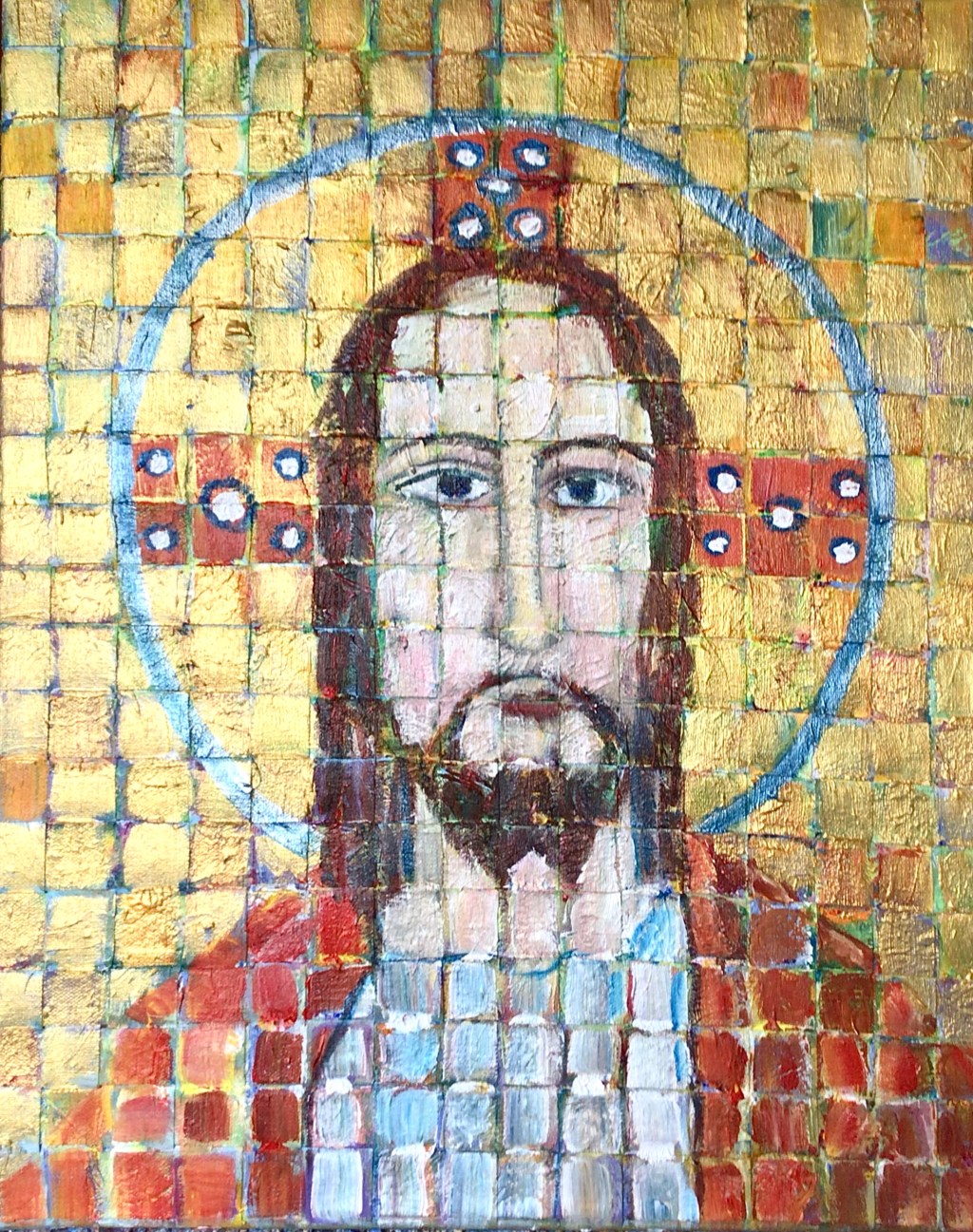
Resurrection Christ

I’m not picking on the former bishop. I knew him from my Emmaus community days in Southwest Texas. But his posted letter, which can be read at the link below, charges the United Methodist Church has lost her Wesleyan understanding of Christianity. This piqued my interest, so I decided to focus my own thoughts, as well as to inform others, on this matter of faith.

Faith as Doctrine of Assent vs Doctrine of Assurance:

Today we often think of faith as a set of beliefs, or the Doctrine of Assent. In Wesley’s time, he understood faith as the Doctrine of Assurance, a unique gift to the Christian church, whereby believers can know with certainty they are truly beloved of God with a steadfast love which endures forever.

This love is unconditional and saves us from the tragic consequences of the law of sin and death by bringing us into the law of life and love through Jesus Christ’s life, death, and resurrection. That descriptive mouthful is John Wesley’s heartwarming experience he had at Aldersgate in 1738 on the fateful evening when he attended a meeting very unwillingly, yet had the heart changing event that set his life on a different path.

Christ Surrounded by Angels

Historic Wesleyan Faith is a Gift of Grace

We need to ask, “What is the historic Wesleyan understanding of the Christian faith, anchored in the Holy Trinity and welded to Christ as Lord and Savior?” Is it located in regeneration, aka the new birth, or is it located in human morality as proof of righteousness in Jesus Christ? This probably means nothing to people in the pews, but if we’re going to claim the mantle of John Wesley, or the argument from tradition, we must get Wesley’s understanding of faith down pat. We find Wesley’s thoughts in his Notes on the New Testament and in his Standard Sermons, both of which are part of our Methodist teaching.

In the sermon OF EVIL ANGELS, Wesley reminds us faith is “our evidence of things unseen.”

“Faith is the life of the soul; and if ye have this life abiding in you, ye want no marks to evidence it to yourself: but [elencos pneumatos/Spirit control] that divine consciousness, that witness of God, which is more and greater than ten thousand human witnesses,” is Wesley’s explanation of faith in AWAKE, O SLEEPER.

Faith as the Spirit of Adoption

Another way of saying this is Romans 8:15-17,

“When we cry Abba! Father! It is that very Spirit bearing witness with our spirit that we are children of God, and if children, then heirs, heirs of God and joint heirs with Christ.”

For Wesley, faith is a gift of salvation, our trust in the saving work of Christ. As he says in the sermon AWAKE OH SLEEPER:

“Awake, and cry out with the trembling jailer, ‘What must I do to be saved?’ And never rest till thou believest on the Lord Jesus, with a faith which is His gift, by the operation of His Spirit.”

Then Wesley gives his altar call:
“In what state is thy soul? Was God, while I am yet speaking to require it of thee, art thou ready to meet death and judgement? Canst thou stand in His sight, who is of ‘purer eyes than to behold iniquity’? Art thou ‘meet to be partaker of the inheritance of the saints in light’? Hast thou ‘fought a good fight, and kept the faith’? Hast thou secured the one thing needful? Hast thou recovered the image of God, even righteousness and true holiness? Hast thou put off the old man, and put on the new? Art thou clothed upon with Christ?”

“Hast thou oil in thy lamp? grace in thy heart? Dost thou ‘love the Lord thy God with all thy heart, and with all thy mind and with all thy soul, and with all thy strength’? Is that mind in thee, which was also in Christ Jesus? Art thou a Christian indeed that is, a new creature? Are old things passed away, and all things become new?”

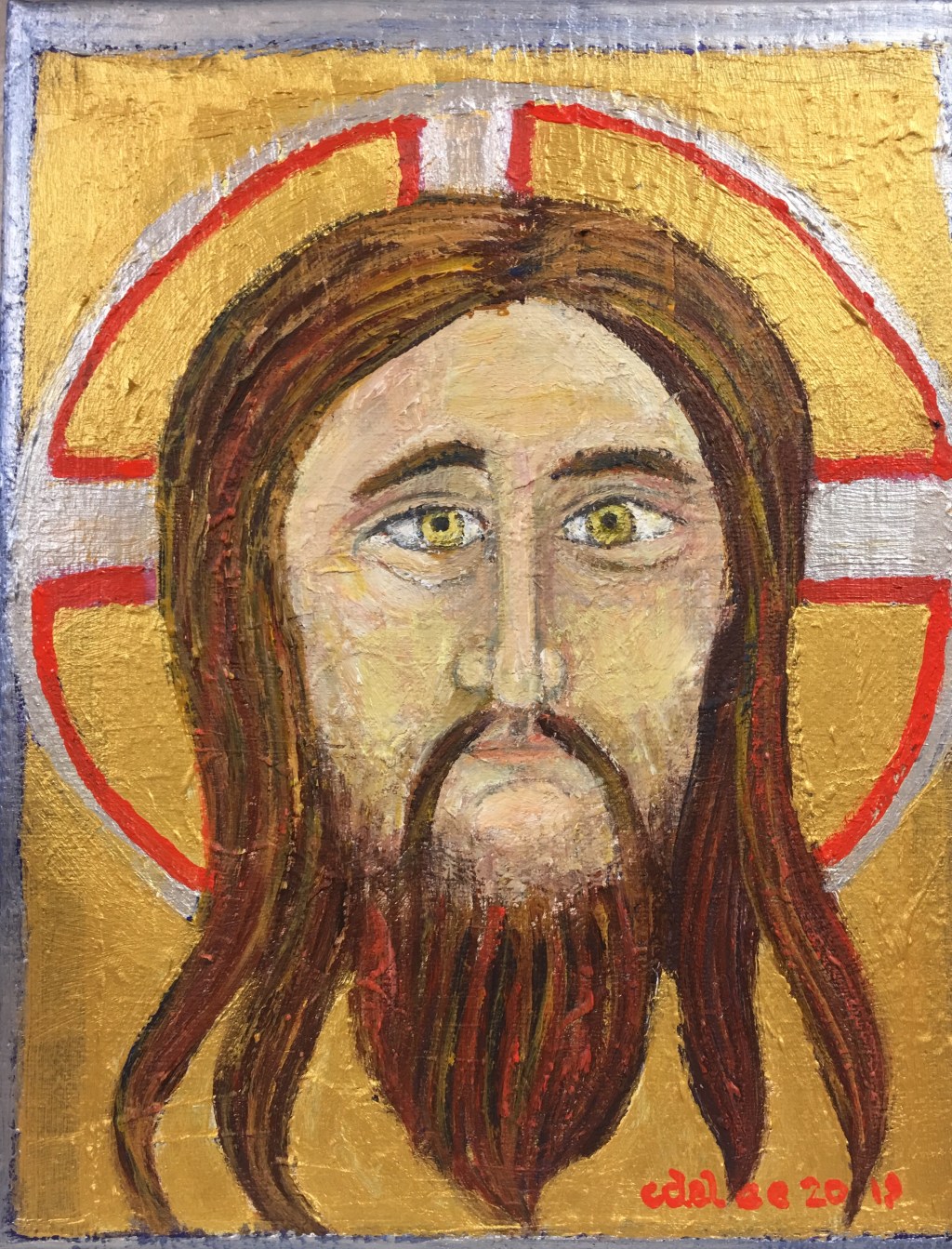
Mandylion: Image Not Made by Human Hands

Faith comes as a Gift. Our good works respond to Christ’s work.

Most of us are in agreement Wesley’s initial understanding of FAITH having to do with accepting Christ’s work for us as the only precondition for our salvation. There is no good deed or accumulation of good deeds needed to earn our salvation from God. What many of us have difficulty is accepting we also don’t earn our perfection in holiness by our own power.

Our Christian perfection is always a cooperative work of the Holy Spirit and our own spirit. As the Spirit works in us, we respond to work toward the complete renewal into the original image of God in which we were created. While it’s possible we might attain this perfect state in this lifetime, most Christians will attain completion in the purity of love of God and neighbor at the moment of death by God’s work, not by our own accomplishments.

Do the Born Again Christians Sin?

In Wesley’s sermon, “The Great Privilege of Those That Are Born of God,” he quotes 1 John 3:9—

“Whosoever is born of God doth not commit sin.”

The Golden Bridge—Ba Na Hills, Vietnam

Wesley admits people who are born again can err or make mistakes, but they don’t sin. That’s a bridge too far for many to accept today, for many of us are prone to judging others. We have a dysfunctional understanding of “perfection.” We think it’s like a Martha Stewart design, forgetting she has a whole staff of helpers to carry out her ideas. As one of my professors once explained it, “Once you’ve been to Waxahachie, you’ve always been to Waxahachie.”

If you don’t know Waxahachie, it’s a midsized Texas town about the size of Hot Springs, Arkansas. It was known for cotton in its hey day, and now hosts a crepe myrtle festival. Once you’ve been there, you can’t lose that experience. In the same way, you can’t lose your status of new birth. It’s a gift of the Holy Spirit, given by faith through Christ.

But some of us will try to throw it away anyhow. Wesley wrote in that same sermon, The Great Privilege, “Some sin of omission, at least, must necessarily precede the loss of faith; some inward sin: But the loss of faith must precede the committing outward sin.”

The Outward Appearance vs. The Inward Attributes

So, one who has faith doesn’t sin, since we have to lose faith in God to sin. In other words, we have to reject the gift freely given to us without price. As he also says in his great sermon on Christian Perfection, “Every one of these can say, with St. Paul, “I am crucified with Christ: Nevertheless I live; yet not I, but Christ liveth in me:” [Gal 2:20]— Words that manifestly describe a deliverance from inward as well as from outward sin.”

Van Gogh: The Good Samaritan

Christian Perfection

For Wesley, the goal of Christian perfection, or the recovery of the image of God, was to love God and neighbor with one’s whole heart until nothing else could exist inside. No favoritism for a group, no exclusion for a group, no yearning to be better than others, no desiring a better place at the table, no hoarding of resources for selfish purposes, no fear of tomorrow, nor any other anxiety that strikes the human heart.

We give our resources away so we can have room for new blessings. God always provides for those who give with generous hearts. We open our doors to the least, the last, the lost, and the unloved, because Jesus and Wesley went out into the fields and met the people where they were. Those are our people out there, and they aren’t “living moral lives,” any more than the imperfect people within our churches are. But we all can and do live lives of faith. We all can learn to trust a savior who loves every sinew of our wounded and broken bodies. We can love a God who never gives up on us even if we’ve given up on ourselves.

Homeless Jesus Statue, Timothy Schmaltz

We United Methodists might be messy, but we surely can love God and neighbor. Moreover, we’re all going on to perfection, even if some of us are moving more slowly than others. We’re still a community of faith, a people who trust God’s grace and one another to get through this thing called life together. We’ll bring each other along, for we’re not leaving anyone behind. We include in the great worldwide Body of Christ the body of Christ whom we meet outside our doors. After all, the race isn’t to the swift, but to the ones who help their brothers and sisters to the finish line, where we have a finishing medal for everyone, along with a big potluck dinner with enough food for folks to take home leftovers. That’s the never ending banquet table to which we invite all who hunger and thirst for community—both spiritual and personal.

The Word of God holds the Scripture of Salvation

Trusting Faith for a Risky Love in Unsettled Times

All we have to do is ask ourselves in this unsettled time: “Do I have Wesley’s trusting faith to live this risky love? Are these the people with whom I want to experience God’s steadfast love and share the grace of Christ? This is our heritage in the United Methodist Church, for we’re a people of faithfulness, who believe the “Bible has everything sufficient for salvation.”

I can only hope for those who leave, whether they become global Methodists, independents, or community congregations, that they will provide a large enough tent for our big God and big Christ, for the Spirit always is seeking people and places to fill completely with the gift of God’s extraordinary love and power.

Why not become all aflame with the fire of God’s redeeming love?

My prayer is our United Methodist churches will receive a fresh rush of the Spirit to become even more of what we are today, for

“Who will separate us from the love of Christ?“

Joy, peace, and faith,

Cornelia

Strong’s Greek: 4102. πίστις (pistis) — faith, faithfulness
https://biblehub.com/greek/4102.htm

Crossing the Rubicon: A Bishop Says Goodbye to the United Methodist Church
https://firebrandmag.com/articles/crossing-the-rubicon-a-bishop-says-goodbye-to-the-united-methodist-church

Of Evil Angels, sermon by John Wesley
http://wesley.nnu.edu/john-wesley/the-sermons-of-john-wesley-1872-edition/sermon-72-of-evil-angels/

Awake, Thou that Sleepest, sermon by John Wesley
http://wesley.nnu.edu/john-wesley/the-sermons-of-john-wesley-1872-edition/sermon-3-awake-thou-that-sleepest/

The Great Privilege of those that are Born of God, sermon by John Wesley
http://wesley.nnu.edu/john-wesley/the-sermons-of-john-wesley-1872-edition/sermon-19-the-great-privilege-of-those-that-are-born-of-god/

“Our standards affirm the Bible as the source of all that is “necessary” and “sufficient” unto salvation (Articles of Religion) and “is to be received through the Holy Spirit as the true rule and guide for faith and practice” (Confession of Faith).”
Theological Guidelines: Scripture
https://www.umc.org/en/content/theological-guidelines-scripture

On Christian Perfection, sermon by John Wesley
http://wesley.nnu.edu/john-wesley/the-sermons-of-john-wesley-1872-edition/sermon-40-christian-perfection/

NOTE: For a longer discussion on “Love thy neighbor,” see—
Kierkegaard, D. Anthony Storm’s Commentary on—Works Of Love
http://sorenkierkegaard.org/works-of-love.html

John Wesley’s Notes on the Old and New Testaments. http://bible.christiansunite.com/wesindex.shtml

Sermons of John Wesley, 1872 edition
http://wesley.nnu.edu/john-wesley/the-sermons-of-john-wesley-1872-edition/

Rabbit! Rabbit!

adult learning, at risk kids, brain plasticity, Children, city, Dreamscape, Faith, Family, flowers, Healing, holidays, Icons, Love, mandala, Mandylion, Ministry, ministry, nature, Prayer, purpose, rabbits, Reflection, renewal, risk, school shootings, shame, Spirituality, Stonehenge, summer solstice, texas, Uncategorized

Welcome to June! I’ve found my sunshades and my flip flops, so this rabbit is ready for a summer vacation. Old school teachers never die, they just take the summer off. And teachers, as well as students, will need a summer off, along with some intensive counseling, to get them ready to return in a healthy frame of mind next fall.

Summer Solstice Mandala

In my early years in ministry, I served in a certain county where many people were caught up in despair. I often complained to my district superintendent of my desire to pour mood elevators into the public water supply.

“You do know drugging the water supply isn’t exactly an acceptable activity for a Methodist minister?”

“Oh, yeah, but it sure would make my job easier.”

Rabbits Love One Another

Remember, June 3 is Love Conquerors All Day. I need to remind myself of this on occasion when I want to take the easy road. As Jesus reminds us in Matthew 7:13—

“Enter through the narrow gate; for the gate is wide
and the road is easy that leads to destruction,
and there are many who take it.”

Taking the easy way out isn’t always the best choice, but it’s the one we rabbits most often choose. We rabbits don’t like to rock the boat, and we like to make all the other rabbits happy if at all possible. The only problem is if we please A, B gets upset. If we please B, A gets upset. We don’t even try to please C, since C is so cranky, even the good Lord Jesus couldn’t fry an egg to please them. We set our hearts and minds on pleasing God, as best we can, and hope to hear the words, “Well done, good and faithful servant, enter into the joy of your master.”

Make Mine Chocolate Ice Cream Day

Chocolate ice cream brings me joy any day of the year, but June 7 is a day dedicated to this frozen delight. Don’t worry about frying eggs, but keep it frozen. I like mine plain, but fresh strawberries or peaches are a nice addition, plus some chopped nuts. Always go for complex, unless you just can’t wait. Then grab a spoon and eat it straight from the pint. (Mark it with your name, since you ate from it.)

Often we cut the Gordian Knot and go for the shortcut to our complex problems. Sometimes this is a good solution, for the shortest distance between two points is a straight line. My daughter used to call my vacation navigation shortcuts “the long cuts,” since I’m directionally challenged. Most of the time, that straight line went through swamp land and alligators. I can hear her voice now, “NOOOOO!!!” I’m known for taking the scenic route, so I often see America’s less known sights, which are off the beaten path.

In the gospel of Luke (14:34), Jesus quotes a proverbial saying:

“Salt is good; but if salt has lost its taste, how can its saltiness be restored?”

Another translation of the latter portion of this verse is “how can it be used for seasoning?”

When I think of loss, I think of a life snuffed out. Some people are burned out, so we can say they’ve lost their seasoning ability. There’s no vim or vigor in them. Other lives are cut short and aren’t able to fulfill their purpose to season the great soup of our community. Our past month was marked by 47 mass shooting incidents in May alone. A mass shooting incident is defined as one in which at least four people are injured or killed, not including the shooter. Suicides aren’t included.

Suicides are also a public health problem. They are the “deaths of despair” that leave ripples of grief and hopelessness in the survivors. They’re the ultimate shortcut solution to a problem, the placing of a period where life has placed a comma or a semicolon. My daughter once attempted suicide by downing half a bottle of aspirin. I noticed the open bottle and pills scattered across the floor. She said the “dog ate it.”

“That’s too bad, I’m going to miss that dog. She won’t be long for this world. We’ll need to make burial plans for her.”

“Well, actually, I’m the one who ate the aspirin.”

“Then we’re going to the hospital. You aren’t going to like getting your stomach pumped, but it’s better than being dead. You want to have a chance to grow up and have a good life. A dog we can replace. You—not so much.”

It was a rough time in her life, and mine too. But God was with us. And we had support from counselors, friends, family, and our church family. My work family and my clients supported me too. I must be the most extroverted rabbit in the patch, because I asked everyone for help. It turned out my problem was shared by everyone else. I discovered I wasn’t alone, but was the most ordinary of rabbits around.

This is a humbling experience, especially when you’re a first child and the only girl. I admit to being spoiled, but don’t let my brother rabbits hear me say this. I’ll deny it to my last breath: I’m like every other rabbit I know. I want to think I’m someone special, even when I’m just as fluffy as every other bunny out there on Gods green earth.

June 21—Summer Solstice

Unfortunately, half the suicides today are committed with a gun, not aspirins. When looking at overall gun deaths, roughly two-thirds are attributed to suicides—a proportion that is consistent across most states. Gun suicides are on the rise and data also indicates men, white Americans, older people, and individuals living in rural areas present higher rates of gun suicides. Another group presenting a unique risk for suicide is current and former members of the armed forces, especially those with PTSD.

Compared with the general population, current and former military members have significantly higher rates of gun ownership. According to a 2015 study, nearly 50% of U.S. veterans own a gun. In contrast, studies suggest that only about 22% of the general U.S. population owns firearms. Similarly, the age groups of 50 to 64 years old and 65 and older have the highest rates of gun ownership, according to a 2017 Pew Research Center study. This can further explain the high rates of suicide among older veterans.

According to data from the U.S. Department of Veterans Affairs (VA), in 2019, close to 4,332 veterans died by gun suicide in the United States, representing close to 18 percent of the total number of gun suicides reported by the Centers for Disease Control and Prevention (CDC) during that year. Perhaps more alarming is the fact this figure shows a veteran is killed by gun suicide every two hours. In 2019, active duty military members committed suicide by gun 64% of the 498 total (318), almost one gun suicide per day.

Why isn’t anyone speaking about this? For all the lip service our politicians give to the flag and to the armed service members, they seem to forget them once they’re no longer useful to fight their wars or march in their parades. Perhaps because Congress won’t devote any money to study the effects of gun violence on the citizens of our Beautiful America, so we have to fund private studies here and there to piece together a patchwork of facts of this scourge on the peace of our people.

My young neighbor, only 8 years old, was in a panic as he knocked on my door the other day. His parents hadn’t come straight up the elevator, as they’d said they would. He was crying to beat the band and was sure something bad had happened to them. I invited him inside and left the door open so we could see them come past. He was so worked up, he couldn’t sit down. I suggested a call to his daddy, but they came walking past just at that moment.

June 19—Father’s Day

We don’t realize what terror these school shootings put our children through. There’s no safe place for them any more, no matter how “hardened” we make the buildings. Some person always breaks the shell at the most inopportune moment.

Some rabbits will have empty seats at their family reunion tables because someone decided to act impulsively. Father’s Day (June 19) won’t be a celebration without the son or daughter to give Dad the tie, the golf balls, or breakfast in bed.

I think back to my own childhood. We worried in the 1950’s more about the urban legends of Halloween candy poisoning, when we were more likely to get killed crossing Highway 1, a four lane highway running through our town. My mother rabbit would wait for me to ride the trolley home from school. She would wait until the near lane of traffic cleared before she walked out to the center median and time this so the far lane’s cars would finish passing so she could walk across the newly empty lanes to meet me on the other side. We held hands and crossed in the same manner on the way back to our home.

This was our routine from the start of school until sometime in the autumn. Mother was delayed one day, so I sat down to wait for her and opened my book to read. I was wearing a brown jacket against the early cool spell, and my dirty blonde hair blended in with the pile of dry leaves on the ground. Intent on my book, I failed to see her come outside. She overlooked me and went inside thinking I’d missed my ride.

A bit later, I decided if she wasn’t coming for me, I’d come to her. Gathering up my possessions, I stood on the curbside. I watched the comings and goings of the quickly moving traffic. Once I saw the break in the pattern, I walked out into the clearing, waited at the median, and crossed behind the trailing traffic of the second lane. When I walked inside, my mother had a conniption fit. After this, I began riding my bicycle to school, and my brother got to come with me.

Brain Functions

Not everyone is mature enough to cross a four lane busy highway by themselves when they’re in the fourth grade, which is the same age as the children who lost their lives at Robb Elementary in Uvalde, Texas. . Some people still need to be supervised at work even in their 20’s. The brain keeps maturing past age 21, as the frontal lobes, which are home to key components of the neural circuitry underlying “executive functions” (such as planning, working memory, and impulse control) are among the last areas of the brain to mature; they may not be fully developed until halfway through the third decade of life. Although neuroscience has been called upon to determine adulthood, there is little empirical evidence to support age 18, the current legal age of majority, as an accurate marker of adult capacities.

Since May 24, the date of this tragedy in Uvalde, Texas, the gunviolencearchive.org has recorded 16 mass shootings in six days, with 79 killed or wounded. Some of these are high school graduation parties where uninvited guests arrived and gunfire broke out, others are the result of young people wandering about in the late hours and getting into trouble with guns. During my time of ministry, youth, alcohol, and firearms were usually a recipe for trouble. Maybe parental rabbits’ brains are still developing too, if they aren’t able to put their rabbit foot down and tell the junior rabbits to leave their weapons at home. Visiting Jack Rabbit in jail for accidental death or intentional use of a firearm will throw a curve into your best laid plans for your progeny.

Rabbits in Cars Going for a Joyride

Instead, cities may have to reinstitute curfews after dark to curtail the opportunities for gun violence. Or they could raise the age to buy a weapon and require a longer waiting time and a more thorough background check. I wouldn’t be opposed to a training class and a test to see if the owner knows how to use the weapon safely. After all, we do this for the 2 ton weapon of mass destruction known as the family automobile. So what if the founding fathers never had autos; they also never had automatic pistols or large magazine weapons, modeled on the ones used in combat.

Did I mention June is National Safety Month? Its emphasis is workplace safety, but as a former teacher, this old rabbit reminds you, between 2009 and 2020, teachers’ workplaces are in schools, which is where 30% of mass shootings occurred in public places (schools, malls, or bars), while 61% of mass shootings occurred entirely in the home and another 9% occurred partially in a home and partially in a public location. The common factor in these is the gun and the presence of domestic violence. In at least 53 percent of mass shootings between 2009 and 2020, the perpetrator shot a current or former intimate partner or family member during the rampage.

Richard Small seen posing with his rifle before turning it over to police.
(Joshua Lott/The Washington Post)

I know y’all usually expect a bright and cheery note from me at the beginning of the month, but my heart is broken. Thoughts and prayers are nice, but they don’t stop the carnage. We need to make some changes. At least one man has turned in his assault weapon to his local police station, so it doesn’t fall into the wrong hands. He couldn’t bear the thought of it being used to perpetrate a similar crime if he were to sell it. If we parents don’t say no to our children, if we keep voting for politicians who are doing nothing, then we get to keep the distinction of having the highest rate of violent gun deaths for any of the developed countries.

That’s not the American Exceptionalism I believe in. We can do better. These are crimes against the common good and against the innocent. The shooter shares the primary blame, but everyone who does nothing to change our society for the better also shares the blame and shame for the next group of victims. At the rate we’re going, we’re having about one mass shooting per day. Eventually this scourge will come to YourTown, USA, and your small town police force will be just as flabbergasted as poor Uvalde’s. How could this happen in our little corner of the world?

I cry along with Jeremiah ( 8:21-22):

For the hurt of my poor people I am hurt,
I mourn, and dismay has taken hold of me.
Is there no balm in Gilead?
Is there no physician there?
Why then has the health of my poor people
not been restored?

Time Magazine Cover from 2019 with all the Mass Shooting Locations Named

Sometimes we go along with the attributes of cultural Christianity, rather than practicing the Christianity of Jesus Christ. Romans 12:2 reminds us

“Do not be conformed to this world, but be transformed
by the renewing of your minds, so that you may discern
what is the will of God—what is good and acceptable and perfect.”

Joy, peace, and balm for hurting souls,

Rev. Cornelia

Deadly Dreams: What Motivates School Shootings? – Scientific American
https://www.scientificamerican.com/article/deadly-dreams/

You can view a report of any 2022 mass shooting incident by visiting the list on the Gun Violence Archive’s website:
https://www.gunviolencearchive.org/reports/mass-shooting

Poisoned Halloween Candy | Snopes.com
https://www.scientificamerican.com/article/deadly-dreams/

Mass Shootings in America | Everytown Research & Policy | Everytown Research & Policy
https://everytownresearch.org/maps/mass-shootings-in-america/

Adolescent Maturity and the Brain: The Promise and Pitfalls of Neuroscience Research in Adolescent Health Policy – PMC
https://www.ncbi.nlm.nih.gov/pmc/articles/PMC2892678/

Guns and Mass Shootings: Data Show Why US Is Outlier on Deaths From Firearms
https://www.bloomberg.com/graphics/2022-us-gun-violence-world-comparison/

Texas romance with guns tested by Uvalde school shooting – The Washington Post
https://www.washingtonpost.com/nation/2022/05/30/uvalde-shooting-guns/

Meditation with Mandalas

adult learning, architecture, art, beauty, Carl Jung, Chartres Cathredral, Creativity, Faith, Holy Spirit, incarnation, inspiration, mandala, Meditation, Ministry, Notre Dame de Paris, Painting, perfection, Spirituality

The mandala is a geometric design representing the universe in Hindu and Buddhist symbolism. It generally has a circular form and can be varied in any number of ways, but it’s always balanced. In the Hindu and Buddhist traditions, mandalas are objects of meditation to aid in one’s spiritual development. The imagery depicts the universe and the symbols represent one’s spiritual journey, the cycles of birth-life-death, and the interconnectedness of all living things.

The Hindu tradition focuses on the realization of the self as one with the divine. Whereas in the Buddhist tradition, the emphasis is on the potential for enlightenment (Buddha-nature) and the pictures within the mandalas illustrate the obstacles that one has to overcome in order to cultivate compassion and wisdom. Drawing mandalas in this tradition follows strict rules.

Castle Mandala by Carl Jung, from the Red Book

Carl J. Jung was the Swiss psychiatrist who introduced to the West the practice of creating mandalas for self-expression, discovery, and healing. He discovered the shapes, colors, and symbols of his mandalas reflected his mental, emotional, and spiritual well-being at the time that he created them. He noticed his mandala drawings changed as his mental and emotional states changed. Reflecting on these mandala drawings, Jung concluded our subconscious and conscious selves are always seeking balance. When Jung worked with his clients, he would have them draw mandalas. He observed through creating mandalas, his patients experiencing chaotic psychological states could regain balance and calm. Jung also identified universal patterns and archetypes that reoccurred in his and his clients’ mandalas.

Celtic Cross Knot: Everything is Connected

As in other cultures, the round shape in Christianity represents the universe, and therefore, is seen as a way to connect the earthly and spiritual realms. Whether in the form of windows in a church or as a rosary, mandalas are used to take the time to contemplate the self and the divine. Perhaps the most iconic representation of the Christian mandala is in the majestic stained glass windows that decorate many churches and cathedrals. While some of these are on a far grander scale than others, the stained glass window is often made up of a central point – often the figure or scene being depicted – which is surrounded by a design that is inherently geometric due to the fact that it’s made up of hard-edge pieces of glass.

Some of the world’s oldest cathedrals are home to rose windows. The rose window is one of the most classic examples of the mandala in Christianity, and their origins trace back to the Roman oculi. These windows are created using geometric segments, and can contain extremely intricate patterns made from different colors of glass, all of which extend out from a central starting point in the middle of the circle.

South Rose Window, Notre Dame, Paris
Photo: Getty Images/Julian Elliott Photography

Aside from its famous French Gothic architecture, this venerable cathedral contains some of the most iconic stained glass in the world. Pictured here is the South Rose Window—a gift from King Louis IX of France—which was designed by Jean de Chelles and Pierre de Montreuil. Installed in 1260, the window is 42 feet in diameter and contains 84 panes divided into four circles. It serves as a counterpoint to the window on the north side, which was completed a decade prior.

Notre Dame, North Rose Window, Two views after the fire of 2019

Of course, we can also see balance and symmetry in architectural designs around and above us, even if they weren’t meant meant to be “symbols of the universe or creation.” We have to ask ourselves, “How do we feel when we enter a space of a particular design?” The architect uses forms, voids, lines, and heights to imbue in us certain emotions, as well as to make the building practical for its intended use. I always know I’ve found my home when I’m house hunting because the place will “call me by name.” I’ll feel at ease when I walk in. It won’t matter how badly the current owners have decorated it, the place will call to me.

Gran Hotel Ciudad de México, Mexico City
Photo: Courtesy of Nick Mafi

This 1899 upmarket department store with a soaring Tiffany-stained-glass ceiling in the lobby was transformed into a luxury hotel in anticipation of the 1968 Olympic Games. The ceiling, which evokes the country’s Mesoamerican heritage with a lively palette of turquoise and gold, was designed by French artisan Jacques Gruber and also features a Louis XV–style chandelier. The domes in the center have a geometric, mandala design.

Chicago Cultural Center, Chicago
Former Chicago Public Library
Photo: Alamy

The Louis Comfort Tiffany dome at the Chicago Cultural Center measures 38 feet in diameter, making it one of the largest stained-glass domes in the world. Held together by an ornate cast-iron frame that features some 30,000 pieces of glass shaped like fish scales, the dome was finished in 1897, the same year the building opened as the city’s first public library. The dome underwent a meticulous restoration in 2008 and is now lighted electrically. Tiffany pushed the art of stained glass to the extreme, but this dome certainly has the wow factor the citizens of that era expected, for Chicago was a world class city experiencing tremendous growth, while attracting such luminaries as Frank Lloyd Wright and hosting the World’s Colombian Exhibition in 1893.

Palau de la Música Catalana, Barcelona
Photo: Alamy


Completed by Catalan Art Nouveau architect Lluís Domènech i Montaner in 1908, this steel-framed concert hall boasts a stained-glass skylight featuring a three-dimensional depiction of the sun. Named a UNESCO World Heritage Site in 1997, the music hall contains countless other artworks, including the busts of Anselm Clavé and Beethoven flanking the stage. It’s also the only European concert hall to be illuminated only by natural light. The impressive stained-glass ceiling and the way it’s designed allows the Palau de la Música to use only natural light to illuminate the main concert hall during the day.

Dome, Salzburg Cathedral

Designed by Italian architect, Santino Solari, the Salzburg Cathedral in Austria stands out in a city already filled with stunning architecture. Built in the 17th century, the cathedral was the site of Wolfgang Amadeus Mozart’s baptism. In the center of the dome is a sunburst behind a descending dove of the Holy Spirit. The hexagonal shape repeats down through the dome, with window openings ending at the four trapezoid shapes at the column junctions, which contain paintings of the four gospel authors. It is peaceful and serene, ordered and mathematically precise, much like a Mozart composition. It’s said Mozart wrote his pieces almost without correction, as if they came to life fully born, like Athena, who sprang to life in full adult form from Zeus’ forehead when he had a terrible headache.

Sally’s Flower Inspired Mandala

Our class has painted mandalas before, but this was before Sally had joined us, so it was a novel idea to her. Still, she decided to go for it, using her new favorite color, Manganese blue. The growing and expanding flower shapes show her love and connection to the natural world. She can paint faster than her decision making can override her energy. This takes time to learn the discipline to hold back the hand, or one can choose to paint on a larger canvas to spread that energy around. Sometimes we have to get our tools fitted to our personalities so we can make the art best suited to our energy and creative imagination. Then our work will begin to “speak to others and call to them with the unique artistic voice of the creator.”

Mike’s Mandala

Mike’s mandala balances dark and light, circles and squares, and various sizes of triangles. I get a sense it’s a representation of the creation of earth, but I didn’t get a chance to confirm this with him. Mike typically sits down to paint and doesn’t talk much during class. This is his quiet place, his meditation place, and his medicine for his very busy life. The only thing that will get him talking is “Did you hear about those SEC coaches calling each other out? That’s gonna be some kind of hoodoo when they get together.”

Cornelia’s Sunflower Mandala

I got started on another creation mandala: the plants and vegetation. I’m basing it on the sunflower, but I’ve only just begun. I have the graphite underdrawing, and part of the central image painted. I’m just a bit irritated at the graphite, since it mixes into the paint and grays it out. This is why I usually sketch my initial image in a pale yellow wash, which I can easily paint over.

Jung wrote in Memories, Dreams and Reflections, “The mandala is an archetypal image whose occurrence is attested throughout the ages. It signifies the wholeness of the Self. This circular image represents the wholeness of the psychic ground or, to put it in mythic terms, the divinity incarnate in man” ( Pages 334-33). As Philippians 3:21 promises,

“He will transform our humble bodies so that they may be conformed to his glorious body, by the power that also enables him to make all things subject to himself.”

Those of us who spend time in meditation don’t do this practice merely to feel better or to relieve stress, but to become one with the creator of the universe. As we come closer to God and Christ, we also become closer to the people for whom Christ gave his birth, life, death, and resurrection. As he said,

“And I, when I am lifted up from the earth, will draw all people to myself.” ~~ John 12:32

The unity of those for whom Christ lived, died, and was resurrected, is all encompassing. It’s not for a selected few, or for some who look like us or believe like us, but for “all people.” It’s a common fault among human beings to ask, like the lawyer in the parable of the Good Samaritan, “But who is my neighbor?” Jesus led him to understand the one who showed mercy to the hurt one was the true neighbor, even if Samaritans normally were shunned.

If drawing mandalas brings us to understand our Bible, our faith, and our God in a deeper way, I’m all for it. If all we’re doing is making pretty patterns on a blank surface, without contemplating the generous Providence of the God who created and sustains our universe, we might as well be mumbling the Apostles Creed on a Sunday morning without giving a thought to any of the words we say. Both of these can be time fillers, mere mind numbing activities, that keep us from having the inner form of Christ, while we give the outward appearance of Christianity. This would be a waste of time, and as the ancient word concerning the law says,

“Circumcise, then, the foreskin of your heart, and do not be stubborn any longer. For the LORD your God is God of gods and Lord of lords, the great God, mighty and awesome, who is not partial and takes no bribe, who executes justice for the orphan and the widow, and who loves the strangers, providing them food and clothing. You shall also love the stranger, for you were strangers in the land of Egypt.” ~~ Deuteronomy 10:16-19

Next week is our last class for the spring, to let this old teacher have a summer break. We’ll start up again in the fall after Labor Day. If you’ve never painted before, this a one room Art School. Everyone proceeds at their own pace. You only have to give up your competitive spirit and your desire for immediate gratification and perfection. It’s art, not microwave pop tarts. You won’t be Michelangelo and that’s a good thing. He’s dead. We want you to be alive and growing in Christ.

Joy, peace, and mandalas,

Cornelia

What is a Mandala? | How to Draw Mandalas and the 100 Mandalas Challenge with Kathryn Costa
https://100mandalas.com/what-is-a-mandala/

Beautiful Stained-Glass Windows Around the World | Architectural Digest
https://www.architecturaldigest.com/gallery/stained-glass-windows

Carl Jung: Ten Quotations about Mandalas – Jung Currents
http://jungcurrents.com/carl-jung-ten-quotations-about-mandalas

Palau de la Música Catalana: Barcelona’s most amazing concert hall – MAKESPAIN https://makespain.com/listing/palau-de-la-musica-catalana/

Rabbit! Rabbit! Welcome to May 2022

art, coronavirus, Faith, flowers, generosity, greek myths, Holy Spirit, inspiration, Love, nature, Painting, poverty, purpose, rabbits, Spirituality, Turkey, Ukraine, vision

May your garden grow.

This rabbit isn’t ready for May. Even as I say “Rabbit, Rabbit,” on this prime morning, I realize time already is too quickly flying past. I knew this day would eventually come, but surely I thought, not yet. When my rabbit parents were long of tooth—I think they were over forty—they said they had a longer “to do list” than their day was long. I think this was the time they were sending me the golden “round tuit” so I would get my own to do list done. Parental units in every generation have always projected their problems onto their offspring, or perhaps their offspring inherit or imitate the adults’ tendencies.

A Round Tuit

May is a good time for spring cleaning. Every rabbit hutch or den can use a bit of freshening up after a long winter and a cold spring. May 17th is Pack Rat Day, an opportunity to touch those items once and for all as you decide whether they belong in a Distribute, Donate, or Dump Box. If you just touch and can’t decide, you may be one of the 15 million hoarders in the United States. The days are getting warmer with more daylight and global warming adding to the elevated temperatures. We can’t do anything about the length of days, as these are determined by our planet’s oribit and inclination toward the sun. As we move toward summer, the Northern Hemisphere tilts toward the sun and gets warmer. In the Southern Hemisphere, the opposite happens and their Christmas is warmer than their springtime.

Eid Mu Barak

May marks the end of Ramadan, the month long Islamic fast recognizing the gift of the Quran to the prophet Mohammed. In most communities in the United States, Eid begins at sundown on Monday, May 2, and lasts one to three days, depending on cultural tradition. Eid al-Fitr, which means “festival of breaking the fast,” comes after a month of abstaining from food and drink from sunrise to sunset in observance of Ramadan. This is a time of renewal, wearing a new outfit, giving charity to the poor, and resuming the everyday rhythms of life.

Some of us finally get our gardens planted, in honor of the Ancient Greek and Roman goddesses of May. The word May entered the English language in the 1050’s, developing from the Old English Maius, which was borrowed directly from the Latin Maius, short for Maius mēnsis, “Maia’s month.” The Greek goddess Maia was one of the Pleiades, who were the companions of Artemis, the goddess of the hunt. This Maia was the mother of Hermes, the messenger of the Gods. But the Romans had yet another goddess named Maia, who just happened to share her name with the Greek goddess. When later generations conflated the Greek Maia with the Roman Maia, a goddess of fertility and spring, we now celebrate May for growth and increase in the natural world.

Victory Gardens were in vogue during wartime due to shortages at home caused by food supplies diverted to soldiers fighting on the front. Original “supply chain problems.”

If we want to “go green,” in our gardens, we can practice composting our lawn clippings along with any brand of manure. This will enrich our earth with earthworms and organic materials. We can also practice “crop rotation.” This means we plant our tomatoes ina different plot every year so we don’t deplete the soil of certain nutrients or invite nematodes to eat the roots. As a spiritual practice, gardening calms the mind, for it connects us to the earth and the source of our food. Our forebears supplemented their menus in the hard times in days of old with fresh food from home gardens. Community gardens serve the public in urban areas.

An April Bunny’s Bad Hair, Don’t Care Day

Spring reminds us the seasons of the year are balanced, for we have a cold winter and a hot summer, just as we have a middling spring and autumn. I say “middling,” but I might have said “muddling,” for these two seasons in my corner of Rabbitville are marked by rain and mud. Torrents of rain, drenches of rain, and sometimes mere drizzles of rain. Some of us rabbits may have bad hair days, but I hear all this moisture is good for the face and the skin.

In our world, the great powers also attempt to maintain balance and influence. Two world wars will push nations into this choice, but nations rise and fall. Once Great Britain was the world’s great super power, but after these great wars, it was greatly diminished, while the United States, which was the source of Britain’s war materials, prospered. Germany, was cut off from international trade due to its war mongering, became dependent on itself. American industries prospered, so that by the end of the first world war, America became the creditor nation to these former belligerents.

America Feeds the World: after the World Wars, hunger was rife in Europe and Russia. American farmers sent our surplus to feed the continent’s populations.

Moreover, we began to feed the world. This rabbit would like to think our government is more generous than Mr. McGregregor, who is always chasing us hungry bunnies out of his precious garden, but poverty and hunger lead to unrest among the world’s people, and that destabilizes governments. Stable governments, which don’t oppress their people, are more welcome on the world stage than dictatorships that exist to serve only a small group of privileged individuals.

As the United States and the Soviet Union struggled to reach a balance of power during the Cold War that followed World War II, President Harry S. Truman outlined what became known as the Truman Doctrine in a speech to a joint session of Congress on March 12, 1947. He emphasized the broader consequences of a failure to protect the democracies in Greece and Turkey by saying:

“The United Nations is designed to make possible lasting freedom and independence for all its members. We shall not realize our objectives, however, unless we are willing to help free peoples to maintain their free institutions and their national integrity against aggressive movements that seek to impose upon them totalitarian regimes. This is no more than a frank recognition that totalitarian regimes imposed on free peoples, by direct or indirect aggression, undermine the foundations of international peace and hence the security of the United States.”

Seventy-five years later, some of us rabbits have abandoned our national vision of democratic ideals, and have turned our back on our historic uniqueness among the nations of the world. While we may have aspired to grand ideals, but haven’t yet achieved them, this shouldn’t stop us from helping others continue their own difficult journey toward perfection. Once again, we have a bellicose dictatorship attempting to overthrow the will of Ukraine, a democratic nation, with the potential to continue such destabilizing activities in neighboring countries. What’s worse, Ukrainian agricultural products feed the world’s poorest countries, so without their harvests being replaced by American grain, people might go hungry. Hungry people are at risk for strong men with bad intentions.

Journeys aren’t ever easy. Any rabbit who tells you the road is easy, wide, and well marked on the way to their destination, has never heard the call of God saying, “Go to a land I will show you.” Those who think their path is sure, certain, and easy might want to remember this word from Matthew 7:13—

“Enter through the narrow gate; for the gate is wide and the road is easy that leads to destruction, and there are many who take it.”

This is why we admire heroes, for their journeys aren’t ever easy, but usually require some difficult and demanding task, which transforms them into a new person. They become more than they ever were before. Yet, perhaps, they were always a hero, and they only needed the auspicious moment to bring forth their true character.

The Guardian of Stuff

I remember the young man I met at a NASCAR event at Texas Motor Speedway. I asked him what he did under the stands while the race was going on.

He shrugged, “I just stand here and make sure nobody takes the other worker’s things.”

“Oh, like you’re the guardian of stuff!”
“I never thought of it like that.”

“Strike a hero pose. I’m going to take your picture .”

Everyone has a hero within, but not everyone has someone who affirms that hero. We all need to discover the hero within us, just as Jesus heard at his own baptism (Luke 3:22)—

“and the Holy Spirit descended upon him in bodily form like a dove. And a voice came from heaven, “You are my Son, the Beloved; with you I am well pleased.”

My dear rabbit mother gifted this to me years ago

We rabbits can’t fail to recognize the heroes who gave us life and brought us into this world. I speak of our mothers, of course. My own dear mother was ready to move mountains and call in every personal favor to come be by my side when I was in an Italian hospital while I was on a summer student art program. My dear daddy had to calm her jets and remind her, “Honey, it’s just a bit of food poisoning. It’s not like major surgery.” Our mothers will do anything to protect their offspring, and that makes them heroes in my eyes. I was released in three days, so it would have been a futile trip for my sweet mother. Make sure you recognize your hero mom on May 8, for without her, you wouldn’t be here.

Speaking of hospitals, May 12th is the birthday of Florence Nightingale, whose service as a volunteer nurse during the 1854 British war against Russia in Crimera. Because of her service, dedication to her call, and the innovations she brought to her vocation, we now celebrate the women and men who follow her in the nursing profession. Back in Victorian times, nursing wasn’t a respectable job, and women of the upper classes were expected to remain at home to care for the family’s affairs. Those who hear God’s call don’t worry about cultural expectations, but follow the solitary path of the heroes who went before them. Remember the nurses of today who’ve had to put themselves into harm’s way to care for people with a disease that now can be prevented from the worst complications and death in most people with immunizations and ordinary remedies like masks, hand washing, and avoiding crowds.

All us rabbits can celebrate Sally Ride Day on May 26, which was the birthday of the first American woman in space. While our national space program seems to have lost its energy and will as we’ve outsourced its efforts to the private sector, we have to ask if giving millionaires the ride of their lifetimes benefits a democratic society more than when we funded the space program by a community of citizens who sent the most highly trained and vetted astronauts into space. But then, I’m only one rabbit and I can remember the thrill, excitement, and joy when I saw our first astronauts exiting from their bobbing capsules. I saw these events on a small screen, black and white television in my school room. Afterwards, all we could talk about in our classrooms was the heroic journey of these brave individuals and the team that helped them circumnavigate our planet at such heights.

Finally, all rabbits of every stripe can celebrate Memorial Day Weekend. For some of us, this holiday has been reduced to a three day picnic at the lake or the racetrack. Others will decorate the graves of fallen soldiers from one of our many wars, participate in a patriotic parade, or watch a plethora of auto racing events around the world. Memorial Day weekend is the busiest weekend in motorsports, with Formula 1 racing in Monoco, NASCAR at Charlotte, the 100th running of the Indianapolis 500, and Lucus Oil Pro Motocross Championship from California. This rabbit will be in heaven. You could spend your tax refund on a new Television, many of which will go on sale over the weekend, or you could open a savings account for emergencies. A wise rabbit always has a little something extra stashed away for lean times. One never knows when Mr. McGregor will lock down his garden, since he doesn’t practice the ethics of Isaiah 58:10—

“if you offer your food to the hungry
and satisfy the needs of the afflicted,
then your light shall rise in the darkness
and your gloom be like the noonday.”

Self Portrait of the Artist as Wonder Woman

My old mother rabbit always reminded me if I was feeling down, all I needed to do was help someone less fortunate than me. It would get me out of my funk by focusing on helping another, as well as reminding me my problems were shared by others. Her message was a key to unlock the hero within me, without which I wouldn’t have done half the good I visited upon this world. My hope for each of you rabbits is to find the hero within you. If you allow God to accomplish deeds of courage through you, whether they be great or small, you’ll be transformed.

Joy, Peace, and May Flowers,

Cornelia

Truman Doctrine | Definition & Facts | Britannica
https://www.britannica.com/event/Cold-War

May 17 Is National Pack Rat Day! Here’s How to Celebrate.
https://ourcommunitynow.com/lifestyle/may-17-is-national-pack-rat-day-heres-how-to-celebrate

The Real Story of How America Became an Economic Superpower – The Atlantic
https://www.theatlantic.com/international/archive/2014/12/the-real-story-of-how-america-became-an-economic-superpower/384034/

Origin Of The Month of May’s Name | Dictionary.com
https://www.dictionary.com/e/may/

To Be or Not To Be

Alexander the Great, art, city, Civil War, cognitive maps, Creativity, Faith, Forgiveness, Healing, Holy Spirit, hope, inspiration, Painting, picasso, Reflection, renewal, Spirituality, vision

Hamlet’s famous soliloquy begins with these very words,”To be, or not to be: that is the question.” In seminary I learned one of those big fifty cent words I often had to check my dictionary for its meaning. Ontological is a word we don’t throw around in ordinary conversations. I never used it in a sermon, for its strangeness would have been a stumbling block to folks without similar training. Who am I kidding? It was often a stumbling block when I tripped over it in my reading. I finally understood it after my first year of Greek. I needed to know its meaning fully and completely to comprehend it.

Current events, however, make an auspicious teaching moment for this weird word. Ontology is a branch of metaphysics concerned with the nature and relations of being. Ontology is the the branch of philosophy which deals with abstract entities. It’s concerned with the nature of being or the kinds of things that have existence, but are outside objective experience. It deals with the first principles of things, including abstract concepts such as being, knowing, substance, cause, identity, time, and space. Our word essence carries the meaning well, for it means “the permanent as contrasted with the accidental elements of being.”

An example of an ontological statement in scripture is the discussion Jesus has in John 8:56-58 with some of the Jews who opposed him:

“Your ancestor Abraham rejoiced that he would see my day; he saw it and was glad.”

Then the Jews said to him, “You are not yet fifty years old, and have you seen Abraham?”

Jesus said to them, “Very truly, I tell you, before Abraham was, I am.”

In Shakespeare’s play of the same name, Hamlet’s whole soliloquy is about his existence, and whether he should live or die:

Whether ’tis nobler in the mind to suffer
The slings and arrows of outrageous fortune,
Or to take arms against a sea of troubles,
And by opposing end them? To die: to sleep;
No more; and by a sleep to say we end
The heart-ache and the thousand natural shocks
That flesh is heir to, ’tis a consummation
Devoutly to be wish’d. To die, to sleep;

Ontology comes from the Greek root ontos, ōn, which is the present participle of einai, of the verb to be. As I’ve watched the unfolding horror of this “Russian special exercise” on Ukrainian soil, I’m struck by the sense of Hamlet’s description of the struggles of life:

To sleep: perchance to dream: ay, there’s the rub;
For in that sleep of death what dreams may come
When we have shuffled off this mortal coil,
Must give us pause: there’s the respect
That makes calamity of so long life;
For who would bear the whips and scorns of time,
The oppressor’s wrong, the proud man’s contumely,
The pangs of despised love, the law’s delay,
The insolence of office and the spurns
That patient merit of the unworthy takes,
When he himself might his quietus make
With a bare bodkin?

“To be” is the ontological insistence for the Ukrainians, for they desire to exist as a free people in a free nation. They resist occupation and occupiers. Dictatorship isn’t in their five year plan, or in their distant future, if they can help it. The surrounding nations have suddenly come alive in their recognition of Russia’s unfortunate foray into this breadbasket of Europe.

Yet even as the Ukrainian people are being killed in their streets, for no reason other than their citizenship; and their homes, hospitals, museums, and public buildings are reduced to smithereens by cluster bombs and artillery fire; they fight for their land and their freedom. I watch for one hour on the evening news, for I believe our world must stand witness to this horror.

Yes, some will turn away, for they have too much trauma in their own lives to bear the pain of others. Others will watch and say this isn’t our problem. If we remember our scripture, the chosen disciples abandoned Jesus in his hour of pain and need, but the women stayed by his side until his last breath. Then they came to dress his dead body’s wounds, but found an empty grave, while the men were holed up in a locked room for fear of the Jews (John 20:19).

Humanity is always our concern and when inhumane acts or conditions prevail, the human responsibility is to bear witness and to share the burden. As Paul writes in Galatians 6:2—

“Bear one another’s burdens, and in this way you will fulfill the law of Christ.”

Hamlet muses on, dithering as contemplates taking his own life, but he takes no action for fear of what awaits him in the world beyond.

who would fardels (burdens) bear,
To grunt and sweat under a weary life,
But that the dread of something after death,
The undiscover’d country from whose bourn (boundary)
No traveller returns, puzzles the will
And makes us rather bear those ills we have
Than fly to others that we know not of?
Thus conscience does make cowards of us all;
And thus the native hue of resolution
Is sicklied o’er with the pale cast of thought,
And enterprises of great pith and moment
With this regard their currents turn awry,
And lose the name of action.

While none of us know with certainty what lies beyond this world, for no one has ever returned with souvenirs, people of faith have trusted God to be always with them, even in the worst of times. As Paul writes in Romans 8:35, 37-39—

“Who will separate us from the love of Christ? Will hardship, or distress, or persecution, or famine, or nakedness, or peril, or sword?…No, in all these things we are more than conquerors through him who loved us. For I am convinced that neither death, nor life, nor angels, nor rulers, nor things present, nor things to come, nor powers, nor height, nor depth, nor anything else in all creation, will be able to separate us from the love of God in Christ Jesus our Lord.”

Battle of Issus Mosaic, Detail: Portrait of Alexander the Great

Artists across the centuries have responded to the horrors of war, if they aren’t held in thrall to the purveyors of such deeds. Those who exist to magnify the glories of battle are there as servants of powerful leaders, not as representatives of the fragility of the human condition. Think of Alexander the Great and his route to deification, first as a glorious leader, then as a god.

The Alexander Mosaic depicts a moment of victory in Battle of Issus in which Alexander has broken through to Darius of Persia, whom he defeated and shocked, before Darius was at the verge of fleeing. The mosaic is as great as Alexander himself, for it’s about 9 feet by 17 feet in size and contains over 1.5 million individual blocks of color, or tesserae. This Roman copy of an original Greek fourth century BCE painting dates from the second century BCE and is in the Museo Nazionale, Naples, Italy.

Goya: The 3rd of May 1808 in Madrid, or “The Executions”, oil on canvas, 1814, Prado Museum, Spain.

Here we see Goya painting the horrors of war and its impact on humanity. His inspiration comes from the French army’s assassination of a group of Spanish patriots during the 1808 rebellion. The Spanish heroes are illuminated by the intense light, but their faceless enemies aren’t easily visible in the darkness from which they operate. Not only does the design make plain Goya’s feelings, but his psychological understanding of the scene as well.

As Matthew writes in Jesus’ teaching kernel known as “The Sound Eye,”

“The eye is the lamp of the body. So, if your eye is healthy, your whole body will be full of light; but if your eye is unhealthy, your whole body will be full of darkness. If then the light in you is darkness, how great is the darkness!” (6:22-23)

Picasso: Guernica

Probably the best known war painting of our modern era is Picasso’s Guernica. He painted it in response to the Nazi bombing of Guernica, a Spanish town in the Basque region during the Spanish Civil War. At about 16:30 on Monday, 26 April 1937, warplanes of the German Condor Legion, commanded by Colonel Wolfram von Richthofen, bombed Guernica for about two hours. Germany, at this time led by Hitler, had lent material support to the Nationalists and were using the war as an opportunity to test out new weapons and tactics. Later, intense aerial bombardment became a crucial preliminary step in the Blitzkrieg tactic.

Guernica, Picasso’s most important political painting, has remained relevant as a work of art and as a symbol of protest. It has kept the memory of the Basque town’s nightmare alive. While Picasso was living in Nazi-occupied Paris during World War II, one German officer allegedly asked him, upon seeing a photo of Guernica in his apartment, “Did you do that?” Picasso responded, “No, you did.”

Käthe Kollwitz, Woman with Dead Child, 1903, etching on paper. Courtesy: © Getty Research Institute, Los Angeles and Artists Rights Society (ARS), New York

Lest we forget, while wars are often started by those in power, it’s the mothers who suffer when young soldiers are killed in action. Some are fortunate enough to have the body of their loved one to hold, but it’s a sad consolation prize. How heart rending it must be for the families whose children were left behind as casualties of war. As the old Cold War era 1985 Sting song about nuclear war reminds us—

There’s no such thing as a winnable war
It’s a lie we don’t believe anymore…
We share the same biology, regardless of ideology
But what might save us, me and you
Is if the Russians love their children too.

The great sadness of this brutal war foisted on the Ukrainian people is while we’re free to see and own the pain inflicted on others, too many of us will turn away. Then again, we often have difficulty acknowledging our own pain and weakness, for we prefer to see ourselves as whole, strong, and unconquerable. All of us have a weak place and we all have an emptiness that needs to be filled. Some of us fill this emptiness by seeking power and control, while others choose various substances or activities to overuse. A few will let God’s Spirit fill us, as Paul writes in 2 Corinthians 4:7—

“But we have this treasure in clay jars, so that it may be made clear that this extraordinary power belongs to God and does not come from us.”

Cornelia DeLee: Obliterated Ukrainian Landscape, Maxar Satellite Image, Apple Pencil, 2022.

When I see the satellite imagery of the obliterated Ukrainian towns, I recall my childhood memories of the old ones in my family repeating their ancestors’ stories of the troubled times during the Civil War. I can easily imagine in Ukraine, for several generations to come, all the stories of pain, survival, and resilience that will be told as they rebuild their nation from the ground up. In the midst of this ongoing disaster, they’re already thinking “How can we build back better?”

This is a great lesson for all of us. If our life hits a major roadblock, we can either give up, scale the wall, or find a way around the wall. Another option is to make peace with the wall and find a way to be happy there. Since Putin is tearing down all the walls for the Ukrainian people, they’ve decided to double down on being Ukrainian. “To be me” is “to be free” and that means “to be Ukrainian.” As their land lies in ashes about them, those who once also spoke Russian, a similar language to Ukrainian, now find that language dead as ashes in their mouths.

Cornelia DeLee: Ukrainian Town Reduced to Ashes, acrylic on canvas, 2022.

To win friends and influence people requires a gentle hand, not the ham-fist of a dictator. I only wonder if the Russian people will ever understand this. But they may have been slaves of their state for so long, they don’t know the sweet taste of freedom. Perhaps only those who believe in a forgiving God, who allows God’s people the freedom to make mistakes and gives them through the reconciling grace of renewed fellowship, are able to come through such disasters. Those who are “sinners in the hands of an angry god” must think their fate is destiny and accept it.

So the questions remain:

  1. What IS the nature of YOUR God?
  2. How does God’s nature affect your understanding of human nature?
  3. Does your view of humanity reflect your image of God or do you see humanity through “God’s eyes?”
  4. Read the Prodigal Son in Luke 15:11-30 and answer the questions again

Some days I AM Joy and Peace,
Cornelia

Hamlet, Act III, Scene I [To be, or not to be] by William Shakespeare
https://poets.org/poem/hamlet-act-iii-scene-i-be-or-not-be

Why is the Alexander mosaic significant?
https://www.rampfesthudson.com/why-is-the-alexander-mosaic-significant/

The 3rd of May 1808 in Madrid, or “The Executions” – The Collection – Museo Nacional del Prado
https://www.museodelprado.es/en/the-collection/art-work/the-3rd-of-may-1808-in-madrid-or-the-executions/5e177409-2993-4240-97fb-847a02c6496c

Pablo Picasso: Guernica
https://www.pablopicasso.org/guernica.jsp

Pomegranates and New Life

adult learning, Altars, art, change, Creativity, Faith, greek myths, Habits, incarnation, inspiration, Israel, mystery, New Year, Painting, Persephone, pomegranate, renewal, shame, vision

Pomegranates are one of those seasonal fruits which show up at my grocery store along with tangerines and other Florida citrus fruits. When I was young, these were rare and extraordinary foods, unlike today, when we have fresh fruits from all corners of the world all year long. The only difference is the cost: if they come from nearby, they cost less than if they come from afar. When my daddy was a boy, fresh citrus at Christmas were a treat indeed.

Those that want to go back to the “good old days” often forget food was sometimes hard to get, for earlier generations also had supply chain disruptions as well as economic collapses. In the Depression Era, food became a gift, for it was often hard to come by. Oranges had a secondary meaning, for since they had segments, they could be shared. The lesson was all gifts were meant to be shared with others.

Dante Gabriel Rossetti: Proserpina, 1874

In art, the paintings of the saints follow a certain iconography, or visual images and symbols used in a work of art. Once we learn this language, we can “read the icon” and understand its meaning. The pomegranate typically stands for the Christian church, for it has many seeds within one fruit. In earlier Greek and Roman mythology, the fruit stands for Persephone/Proserpina, the daughter of Demeter/Ceres, the goddess of harvest and agriculture. Pluto, the god of the underworld, abducted Persephone for his wife. Ceres became despondent and nothing above ground would grow. The Olympian gods arranged Persephone’s   release, but she eaten a few seeds of a pomegranate. Therefore, she could spend only part of the year above ground. This is how the ancients explained the seasons.

Pomegranate from Torlonia Catacomb

This story illustrates how Persephone became connected to the idea of dying and rebirth, so her symbol, the pomegranate,  also transferred over into Christian art as a symbol of immortality and resurrection. The term for appropriation of another culture’s symbol is syncretism. In a similar manner, in mythology, the dove was an attribute of Aphrodite/Venus; but in the Old Testament, Noah’s dove signified God’s covenant with mankind; and in the New testament, John the Baptist likened the dove to the Holy Spirit, which descended upon Jesus at his baptism. Painted pomegranates can be found on the frescoes of the Roman catacombs of Torlonia.

5th century CE church mosaic with pomegranates and fish, Israel

The imagery continued into the 5th century in a floor mosaic with a cross, stylized fish, pomegranates, and three chevrons representing Golgotha. Death on the cross is connected with the resurrection appearance of Christ and the disciples’ meal on the beach at Galilee.

Fra Angelico: Virgin and Child with Pomegranate, c. 1426

Fra Angelico’s Virgin and Child with Pomegranate is a beautiful example of a late icon. The Virgin of the Pomegranate takes its name from the pomegranate held by the Virgin and which attracts the attention of the Christ Child, who touches it. In this context the fruit has a double meaning: in the Virgin’s hands it refers to her chastity, while by touching it the Christ Child prefigures his own death and resurrection. It reminds us of Ephesians 5:25-26–

“Husbands, love your wives, just as Christ loved the church and gave himself up for her, in order to make her holy by cleansing her with the washing of water by the word.”

This iconography of chastity, cleanliness, and sacrifice was widely used in 15th-century Florence, where it interested artists such as Sandro Botticelli and Leonardo da Vinci.

Unknown Artists: Unicorn In Captivity, 1495–1505

The unicorn, a mythical animal to all but eight year old girls (and those of us who retain our eight year old hearts inside our full grown bodies), is a creature of fantasy, both then and now. From the same era as the Virgin of the Pomegranate is the beautiful tapestry of “The Unicorn in Captivity,” now at the Metropolitan, which may have been created as a single image rather than part of a series. In this instance, the unicorn probably represents the beloved tamed. Tethered to a tree and constrained by a fence, we see he could escape, for the chain isn’t secure and the fence is low enough to step over.

Clearly, however, his confinement is a happy one, to which the ripe, seed-laden pomegranates in the tree—a medieval symbol of fertility and marriage—testify. The red stains on his flank don’t appear to be blood, for we see no visible wounds. Instead, they represent juice dripping from bursting pomegranates in the tree above. Many of the other plants represented here, such as wild orchid, bistort, and thistle, echo this theme of marriage and procreation; they were acclaimed in the Middle Ages as fertility aids for both men and women. Even the little frog, nestled among the violets at the lower right, was cited by medieval writers for its noisy mating.

Botticelli: Madonna and the Pomegranate, c. 1487, Uffizi, Florence.

Botticelli also painted his version of the Madonna and the Pomegranate about 1487. This painting now hangs in the Uffizi, in Florence, Italy. The Virgin seems aloof, reserved, or far away, as does the Christ child. The angels in attendance also seem not connected to one another or engaged with the viewer. They carry roses and lilies, flowers connected with purity. One angel has the Latin words of the beginning of the rosary on his clothing, which is notable since this prayer became popular in devotions in the 15th century. The baby holds a pomegranate, cut open to reveal the multiple seeds of suffering.

Botticelli was influenced by the loss of his patrons, the Medici family, and the rise of Savonarola, a Dominican monk, who wanted to not only reform a corrupt church, but also redeem a materialistic and humanistic society. He was the very opposite of the trade oriented and culturally progressive Medici family. Moreover, as the year 1500 approached, Savonarola preached an apocalyptic message of the end of the world. Botticelli’s delightful Birth of Venus would give way to the 1497 Mystical Crucifixion. Things didn’t end well for Savonarola, who was tried, convicted of heresy, hanged, and burned in 1498. Florence then returned to the city’s prior communal ideals, led by the next generation of the Medici family.

Lorenzo di Credi: Madonna and Child with Pomegranate

Often attributed to Da Vinci or Verrocchio, this Madonna and Child with a Pomegranate by Lorenzo di Credi, now in the National Gallery of Art, was painted in 1475-1480. He and da Vinci apprenticed under the same master, so their styles show some similarities. He’s better known for his portraits.

Lucy’s Italian Movie, 1951

I brought the pomegranates to art class because the new year deserves a new start and a new way of thinking about our lives. In the sacrament of holy communion, we recognize “many are made one,” for how many individual grains are ground for the bread and how many grapes must be crushed to fill a cup? I keep thinking of that Lucy and Ethel skit from I Love Lucy—you just knew walking in a circle in a grape vat would not end well, but you held your breath waiting to burst out laughing. Lucy’s comedic genius never failed us.

Mike’s Pomegranate

The joy of abundance jumps out in the bold brush strokes and colors of Mike’s painting. He loves coming to class, for it’s a time when he’s free. No one’s life depends on him in this time. He can give expression to this sense of freedom.

When we elevate the elements over the altar, we remind ourselves, “the one loaf is broken for all, just as the one cup is offered for all.” The pomegranates have many seeds, but they’re one fruit. The pomegranate reminds us of the mystical body of Christ, which we call the church. When we take communion, we receive the symbolic body of Christ, but we also receive the mystical body. We often limit ourselves to thinking the body of Christ is his actual body or perhaps only our church fellowship. We often forget there’s a greater body of Christ beyond our doors, and it’s not just formed of all the believers. The greater body of Christ is all of humanity, for we all share the same incarnation of his  spirit.

In several ways we can open our eyes to the “many within the one.” We can trace the history of the symbols we use to communicate our hopes and dreams with one another. Some of these are positive and worth keeping, but others might need retirement, under the “it’s good not to eat meat or drink wine or do anything that makes your brother or sister stumble” (Romans 14:21). We get attached to the visible symbol, failing to realize others see the same symbol as harmful. For instance, some are so attached to their “authorized version” of a scripture translation, they idolize it above all other translations. In doing so, they make the vehicle more important than the content. No one would ever make an Amazon Prime delivery truck more important than its content, but we sure get distressed when our package gets mangled in shipping. I personally use an ebook for my Bible now, since it has more recent and multiple translations plus a Greek New Testament. Nevertheless, the God revealed is more important than the object itself, as we’re reminded twice in Exodus 20:2-3 and Deuteronomy 5:6-7:

“I am the LORD your God, who brought you out of the land of Egypt, out of the house of slavery; you shall have no other gods before me.”

Gail’s Pomegranate

Gail is always careful to look closely for the details in everything she paints. Naturalism is her calling. In our brief time together, she might not finish her work, but finishing isn’t the goal. Learning to see is our goal and the secondary goal is making a likeness. The detail on the crown of the pomegranate is superb.

Sally’s Pomegranate

Sally has a good rendering of the pomegranate, yet she was unhappy with the background. We solved part of that together by identifying how the horizontal line dipped down at the intersection with the outer edges of the fruit. It’s a straight line now, because she fixed the places where the Hulk had hit the table behind the pomegranate. (If only we could do this in real life, disaster recovery would be a piece of cake). She has a circular pattern working, since she’s working on another piece with this same idea. It’s another example of how art is a continuity, not an isolated moment in time.

Cornelia’s Pomegranate

I went home to finish my painting. I took a photo to have a reference, rather than just painting from memory. As soon as I was in my quiet place, I realized my perspective was off—I could tell because the plate on which the fruit was resting didn’t break at the right height of the fruit. White overpainting fixed that problem. Our blue table cover, which has paint stains on it, became my background. As I told the class, my painting is brighter because it’s a primary color scheme: red, yellow, and blue. I also painted the juices, the secondary shadows, and the highlights of the nibs. Adding earth colors or black to a painting darkens its tone considerably.

Can we break old habits right away? If those who start a diet in the New Year have anything to teach us, restricting our eating lasts for about 10 days at best before we begin to cheat on it. Strava, a fitness brand, named  January 19th “Quitter’s Day,” since most people ditch their fitness resolutions then. Our question then becomes, how do we learn something new? How do we make progress? Perhaps, are we teachable, or willing to grow beyond what we know? The last question calls us to step out of our safe places, as Peter did when he stepped out of the boat onto the storming waves. When he was frightened, he called out, “Lord, save me!”

The good news about art class is no one will drown if we struggle to make what’s in our mind come out on our canvas. Sometimes our ideas are ahead of our technical abilities. Some days we’re tired or distracted. If I’m coming down sick, but not “sick sick” enough to be home, my work looks dead. It’s a sure sign I need to visit the doctor soon!

Next week we’re going to do color theory. We need to revisit the color wheel and make some of the interesting colors that don’t come straight from the tube. We’ll paint in squares, so this is a “entry level” class. Actually, all classes are entry level. Like a one room schoolhouse, you enter at your own level and progress from there. Your only competition is you. There’s no grades, no pass or fail. We come to give our best self a chance to grow and shine.

We’ll also be wearing masks again, due to that pesky omicron variant.

Joy and peace,

Cornelia

Signs & Symbols in Christian Art – George Ferguson, George Wells Ferguson – Google Books

https://books.google.com/books/about/Signs_Symbols_in_Christian_Art.html?id=GF4XDp-eSTwC

Jewish Catacombs: The Jews of Rome: funeral rites and customs – Elsa Laurenzi – Google Books

https://books.google.com/books/about/Jewish_Catacombs.html?id=PmKBBj_qRbwC

Vaults of Memory—Roman Catacombs

http://archives.catacombsociety.org/vom/vomframes.html

Why We Put Oranges in Christmas Stockings

https://www.thekitchn.com/heres-why-we-put-oranges-in-stockings-at-christmas-holiday-traditions-from-the-kitchn-213985

Sandro Botticelli | Biography, Paintings, Birth of Venus, Primavera, & Facts | Britannica

https://www.britannica.com/biography/Sandro-Botticelli

The Museo del Prado acquires The Virgin of the Pomegranate by Fra Angelico for €18m 


A Study of 800 Million Activities Predicts Most New Year’s Resolutions Will Be Abandoned on January 19: How to Create New Habits That Actually Stick | Inc.com

https://www.inc.com/jeff-haden/a-study-of-800-million-activities-predicts-most-new-years-resolutions-will-be-abandoned-on-january-19-how-you-cancreate-new-habits-that-actually-stick.html

Guido di Pietro, known as Fra Angelico: Virgin and Child with Pomegranate,  or The Virgin and Child with two Angels, or The Virgin of the Pomegranate, c.1426. Tempera on panel, 83 x 59 cm, Prado, Madrid.

Unknown Artists: The Unicorn Rests in a Garden (from the Unicorn Tapestries), weaving, Made in Paris, France (cartoon); Made in Southern Netherlands (woven), Wool warp with wool, silk, silver, and gilt wefts, 1495–1505, Metropolitan Museum of Art, Gift of John D. Rockefeller Jr., 1937, Accession Number: 37.80.6.


No One is an Island

art, cognitive maps, Creativity, Faith, flowers, Healing, inspiration, Ministry, nature, Painting, Spirituality, vision

If we watch the evening news on television, read a newspaper, or check our Twitter feed, bad news seems to fill the whole of it. Sometimes it gets to be too much, and we turn it all off, for we can’t cope with the next straw; it will break our camel’s back and we won’t be able to go on. Or we may already be broken by all the grief and pain, wounded by the wounds we can’t heal or by those wounded ones who wound others, rather than seek healing. I often thought I spent 50% of my pastoral care on 10% of my congregation, the “broken” ones.

After a while, we can feel like Elijah, who was worn out from doing great things for the LORD, and felt “I alone am left.” God comes to remind him he’s not alone. John Donne was very ill when he wrote this famous meditation. The artists all are from the margins, or made their art during a time of suffering. Yet, what beauty they found in this time. Artists often find their way back into the unity of all things by joining in the creating spirit of God.

Sam Doyle: Untitled (Rambling Rose), paint on metal, Smithsonian Institute.

Sam Doyle, who was on born and died St. Helena Island, SC (1906-1985), was a self taught Gullah artist, who painted the local stories of his community on anything he could find. He covered the walls of his home, as well as scraps of metal and wood with iconic figures of his people. You can read about this richly talented primitive artist at https://www.soulsgrowndeep.org/artist/sam-doyle

Hilda Wilkinson Brown: Third and Rhode Island, Washington DC, oil on canvas, 1930-40, Smithsonian Institute

Hilda Wilkinson Brown was born in Washington, DC 1894 and died there in 1981. She was an African American artist and art educator who brought her love of education and creativity to everything she did. Her work was mostly “under the radar,” except for in her own community. Yet she persisted. As a teacher, she’s best remembered for introducing individual creativity as a goal, rather than having students mimic the teacher’s model. Unfortunately, art education classes are still teaching mimicry.

Myrna Báez: Platanal, acrylic on canvas, 1974, Smithsonian Institute.

Myrna Báez of Puerto Rico (1931-2018), painted this lush field of plantain trees, a crop long wedded to concepts of Puerto Rican identity and sovereignty. She depicted the crop’s large leaves as they reflect the tropical sun and delighted in her manipulation of paint on unprimed canvas. Báez’s belief in Puerto Rican independence manifests in her impulse to look, depict, and therefore possess the island’s landscape on her own terms. Puerto Rico is currently an unincorporated territory of the United, in which the people are American citizens, but have no vote, unless they move to the mainland.

Georgia O’Keeffe: Hibiscus with Plumeria, oil on canvas, 1939, Smithsonian Institute

Georgia O’Keeffe, who was born in Sun Prairie, WI in 1887 and died in Santa Fe, NM in 1986, painted this exquisite “Hibiscus with Plumeria,” (oil on canvas, 1939, Smithsonian Institute). Intrigued by the opportunity to paint tropical flora, O’Keeffe accepted an offer from the Dole Pineapple Company for an all-expenses paid trip to the state of Hawaii to create a painting for the company’s 1939 advertising campaign. It was a perfect escape from the stress of her husband, Alfred Stieglitz’s ongoing affair with Dorothy Norman, the beautiful young wife of an heir to the Sears, Roebuck & Co fortune.

She visited Maui, O’ahu, Hawai’i, and Kaua’i, painting the islands’ dramatic gorges, waterfalls, and tropical flowers, among them Hibiscus with Plumeria. Pink and yellow petals towering against a clear blue sky transform the delicate blossoms into a joyous monumentality. But of the twenty canvases of Hawaii she completed, none showed a pineapple. Only after Dole had one flown to New York did she finally, if reluctantly, paint the desired fruit.

George Bellows: Vine Clad Shore–Monhegan Island, oil on canvas, 1913, Smithsonian Institute

George Bellows was born in Columbus, OH in 1882 and died when his appendix ruptured at the age of 42 in New York City in 1925. He’s best known for his “outsider” subject matter: tenement life, New York street scenes, and boxing subjects. While Bellows was famous for his fight scenes, he recovered his soul in the landscape, such as this Vine Clad Shore on Monhegan Island, Maine.

Frank Wilbert Stokes: The Eighth of March–Island Ice, Greenland, 1894, Peary and Party near 6 p.m., oil on canvas, 1893, Smithsonian Institute.

Frank Wilbert Stokes (born Nashville, TN 1858-died New York City 1955) was the artist member of Robert Edwin Peary’s Greenland Expeditions. He did small works such as this one on site as a record of the journey. Stokes spent eight weeks in the Arctic, the first painter to work on the ice fields, where he had to learn a method as he went, mixing kerosene into his pigments to stop them freezing and sketching outdoors through indistinguishable Arctic days and nights. Based in his studio at Bowdoin Bay, Stokes would spend fourteen months in all working in this extraordinary Arctic environment:

The outside winter temperature was frequently forty degrees below zero Fahrenheit. The lowest temperature experienced was frequently sixty-five degrees below zero. In order to prevent his colours from freezing, [Stokes] mixed them with petrol and poppy oil and kept his colour box in a deerskin bag. Lieutenant Peary’s general orders forbade any member of the party to go more than a quarter of a mile from the main camp. This restriction was relaxed in the case of Mr. Stokes, who frequently went four or five miles in moonlight or starlight, during the polar night, to study effects which he had declared to be indescribable in words, but which are shown by his pictures.

Thomas James Delbridge: Lower Manhattan, oil on canvas, 1934, Smithsonian Institute

Thomas James Delbridge (born Atlanta, GA 1894-died Long Island, NY 1968) painted this view of Lower Manhattan, an oil on canvas, in 1934, which is now in the Smithsonian Institute. It was part of the Federal Work Projects Administration, which gave support to “starving artists” during the Great Depression. Lower Manhattan’s glorious skyscrapers inspired all New Yorkers, including the city’s artists, through the worst hardships of the Great Depression.

Looking from the dock of a harbor island, Thomas Delbridge showed the dark mouths of Manhattan’s ferry terminals; above them ever taller buildings climb out of red shadows into gold and white sunshine. The crisply outlined forms evoke such famous structures as the Woolworth Building to the left and the Singer Building to the right without placing the buildings precisely or describing specific details. The skyscraper at the center suggests the mighty Empire State Building as it had stood incomplete before its triumphant opening on May 1, 1931. Even as the stock market foundered and thousands were thrown out of work, New Yorkers had gathered in excited throngs to watch their tallest tower rise. The Manhattan skyscrapers in the painting appear to be pushing back dark clouds, creating an oasis of brilliant blue around the island. (1934: A New Deal for Artists exhibition label)

DeLee: How Many Times Must Paradise Burn?

Does art come only from the mind, or does it come from the greater depths of our souls and our hearts or guts? If we reduce art to only its analytical forms and colors, we may rob ourselves of the deeper experiences of the art itself. Likewise, if we put on our false face of “I’m fine,” but in fact we’re falling apart inside, pretty soon our facade will crack open too. Then folks will say, “What happened there?” And perhaps we’ll be too ashamed by then to speak of it, for we lied about our truth too long.

My recent canvas is another cognitive map, for it deals with the changing landscape and our changing climate. It uses paper scraps, lace trims, the button row of an old outfit, and old blue jean seams all glued on the canvas in the proximate place of the main roads of the Dixie Fire out in California. I painted flame colors over the surface, but left some greens for where the fire hadn’t yet spread. Then I took out my handy Bic torch lighter to sear some of the cloth additions. Even acrylic paints, if overheated, will combust, as I soon discovered, for I burned two holes in the painting. They look like the black holes of outer space or the dark night of the soul in our spiritual lives.

When I think of all the needless deaths from the coronavirus since we’ve have the introduction of our current safe and effective vaccines, I feel very sad for every life lost. Even with nearly 4.4 million deaths worldwide and almost 639,000 deaths in the USA alone, I’m not so inured to the loss of my brothers and sisters that I can just shrug it off. I know very few of those Covid has taken from us, but the world is a lesser place without those millions.

And so I leave you with this famous meditation. Donne didn’t know if he was on his deathbed or not when he wrote it. I’m pretty sure I won’t leave behind such immortal words when I think my end is near.

No man is an island,
entire of itself;
every man is a piece of the continent,
a part of the main.
If a clod be washed away by the sea,
Europe is the less,
as well as if a promontory were.
as well as if a manor of thy friend’s
or of thine own were.
Any man’s death diminishes me,
because I am involved in mankind;
and therefore never send to know for whom the bell tolls;
it tolls for thee.

~~ John Donne, “Meditation 17,” (1623, transcribed into modern English)

“It was fitting that God, for whom and through whom all things exist, in bringing many children to glory, should make the pioneer of their salvation perfect through sufferings. For the one who sanctifies and those who are sanctified all have one Father. For this reason Jesus is not ashamed to call them brothers and sisters.” —Hebrews 2:10-11 NRSV

About Hilda Rue Wilkinson Brown: African American artist and teacher who lived in Washington, D.C. (1894 – 1981) | Biography, Facts, Career, Wiki, Life
https://peoplepill.com/people/hilda-rue-wilkinson-brown

George Bellows | The Metropolitan Museum of Art
https://www.metmuseum.org/exhibitions/listings/2012/bellows

The Project Gutenberg eBook of My Arctic Journal, by Josephine Diebitsch-peary. https://www.gutenberg.org/files/64549/64549-h/64549-h.htm

Art Inspired by the Covid Blues

art, at risk kids, beauty, cognitive maps, coronavirus, Creativity, Faith, Family, generosity, greek myths, Healing, Holy Spirit, Imagination, Painting, pandemic, picasso, renewal, The Odyssey, vision

After the initial burst of summer excitement, my community is not only sweltering in a heat wave, but we’re also smack dab in the midst of the third wave of this Covid-19 pandemic. We might be more than halfway through 2021, but at the rate my home state of Arkansas is pursuing vaccinations, it’ll be years before we reach the holy grail of herd immunity, estimated to be at 80% immunity. Only 37% of our people are fully immunized, with Alabama and Mississippi pulling up the rear nationally with 35% and the states of Louisiana and Wyoming tied with us at 37%.

@rdaily—Arkansas hospital bed availability. Getting nearly impossible to find an ICU bed again. Many really sick patients being held in ER beds all over the state.

Like the old gal who’s always worn a certain size shoe or dress, my state now tries to fit an increasing number of Covid patients into a fixed set of ICU beds in our state. My days of a size seven shoe or skirt are a dim memory, as are the days of empty medical facilities.

“We have nowhere to send COVID-19 patients within the State of Arkansas. There is limited bed capacity at trauma centers increasing pressure on the time-sensitive healthcare system,” said Jeff Tabor, program director for the COVIDComm system, which helps match covid-19 patients with hospitals.

Tabor said the one COVID ICU bed which is available is located in southern Arkansas. There are five hospitals, also in southern Arkansas, showing limited COVID bed space. Tabor said some COVID-19 patients are so critical at rural Arkansas hospitals that they cannot be transferred to other hospitals because the patient is too critical and because of bed space.

Recently our state legislature adjourned a special session without amending their misguided law mandating no masks ever in public schools or government agencies. Act 1002, by Sen. Trent Garner, R-El Dorado, prohibits state and local governments, including public schools, from requiring people to wear masks. Act 1002 became effective on July 28.

The state’s largest school district, joined by a small district already suffering from Covid quarantine attendance problems in its early opening days, filed suit in court to stop this law from going into effect. The judge issued a temporary restraining order. The reasons for this aren’t political, but are found in the Arkansas constitution.

LRSD and MSD are likely to succeed on the merits. Act 1002 violates the Education Article of the Arkansas Constitution, Article 14, § 1, which requires that “the State shall ever maintain a general, suitable and efficient system of free public schools and shall adopt all suitable means to secure to the people the advantages and opportunities of education.” A suitable and efficient system of public education would not require students to risk their health and their lives to get the education promised to them in the Arkansas Constitution, especially when the State is required to “adopt all suitable means” to provide them “the advantages and opportunities of education”.

An affidavit provided by Dr. Glen Fenter, the superintendent of the Marion School District, said that incentives, including gift certificates, groceries, and even big-screen televisions, didn’t entice many local citizens to take the vaccine. Only one out of every three students in the district has acceptable home internet service, making remote learning difficult; even then, “very few” students who did “participate in the virtual education option last year achieved an acceptable level of academic progress,” the affidavit said.

The Marion superintendent said that his district was forced to “quarantine over 500 students and employees” based on CDC and state health department guidance after the second week of school. The school year in Marion began July 27, 2021. This rural system has only 3,325 students enrolled for the 2021-22 school year. Their math proficiency score averages 22% and reading averages 31%, compared to the statewide averages of 47% and 45%.

The broader lawsuit argues that the Act violates an education clause of the state constitution, the equal protection clause of the state constitution, and that certain federal laws preempt the state from enforcing the Act. It also argues that the Act violates separation of powers principles, conflicts with a subsequent state law, and violates the premise of Jacobson v. Commonwealth of Mass., the 1905 U.S. Supreme court case during the smallpox scourge, which allowed mandatory vaccination policies — and penalties for those who refused to comply — to stand.

On another front, the mayor of Little Rock, Frank Scott, Jr., said the capitol city’s covid-19 task force had recommended to him that “masks be worn again in public spaces for which the city is responsible.” He strongly exhorted businesses to follow suit. Scott made note of the many children who visit city parks and community centers and who will be returning to school later this month, adding that “right now, they don’t have the ability to mask up.”

“The Lotus Eaters” by James Dromgole Linton

In the middle of all this stress, I ponder these questions: “What inspires a work of art? In our search for beauty in this world, do we have to forget our pain and become as the lotus eaters of the ancient myths?”

Edward Marle: The Lotus Eaters, 1970, Glasgow Museum

Worn out from the years of the Trojan war fought in a foreign land and tired from an unending journey full of trials and tribulations on the way home, Odysseus found his men succumbing to the hypnotic lure of the magic flower. When eaten, it caused people to forget both their troubles and also their future plans. In the words of the hippies of yore, they were content to “get high and get by.”

Alfred Lord Tennyson’s poem, The Lotus Eaters, inspired Robert S. Duncanson, an African American landscape painter, prior to the Civil War:

Hateful is the dark-blue sky,

Vaulted o’er the dark-blue sea.

Death is the end of life; ah, why

Should life all labour be?

Let us alone. Time driveth onward fast,

And in a little while our lips are dumb.

Let us alone. What is it that will last?

All things are taken from us, and become

Portions and parcels of the dreadful past.

Let us alone. What pleasure can we have

To war with evil? Is there any peace

In ever climbing up the climbing wave?

All things have rest, and ripen toward the grave

In silence; ripen, fall and cease:

Give us long rest or death, dark death, or dreamful ease.

Robert S. Duncanson, Land of The Lotus Eaters, 1861

Odysseus had to bodily carry his men back to the ship and tie them to their seats to keep them rowing on a straight course for home. Today we’re treated to videos of airline passengers taped to their seats because of their unruly behaviors. Rage flying has taken the place of rage driving. Neither the roads, the post offices, nor the skies are friendly anymore. “Going postal” has almost lost its meaning when no workplace is safe these days.

In the midst of the record deaths of despair, come now the increasing deaths of our most precious inheritance—our children. The number of children contracting Covid-19 has increased fivefold since the end of June, with a “substantial” 84% jump in the last week alone, according to a new report from the American Academy of Pediatrics. This number comes as numerous states report upticks in child hospitalizations amid the ongoing delta surge. In Arkansas, we’ve had three children die from Covid.

Picasso: The Weeping Woman, 1937 (Portrait of Dora Maar)

Some would say this is an “acceptable loss or trade off to allow others to have freedom.” I find this line of reasoning heartless at best and cruel in reality. I wonder what these folks would say if their child had lost their life instead. It seems not too long ago some of these same persons were advocating for the elderly to accept a shortened lifespan, since their productive lifetimes were expended. They seem to value people only for their economic ability, rather than for their humanness or for their lived experience. Allowing the “weak” to die in this part of the pandemic also devalues those who aren’t yet ready to produce economic gain for the big machine. (Yet, they fail to recognize the loss of future gain of these young “production units.”)

I would rage blog at the inhumanity of our legislators, who couldn’t find an giant acorn in the midst of an empty football field, even if they had the scales removed from their eyes, but then there’s always the hope they might learn the lesson of Job, for whom suffering brought new understanding of God. Then they’d call themselves back into session and amend their own misbegotten law so it’s flexible enough to meet our current, extreme circumstances. Who knows, they might even rescind this unconscionable law, for persons who truly have the capacity to lead with courage also have the ability to change their minds. Some say it’ll never happen, but I’ve always been afflicted with incurable optimism.

Google Map of National Park Medical Centet

In the meantime, I paint and pray. Even this dire event can inspire a work of art. One of our local hospitals has already canceled elective surgeries in order to concentrate on Covid care. The other hospital has very limited intensive care unit availability. Right now, no one in our tourist town needs to get sick and we certainly don’t need a mass casualty incident. Of course, I could live in a rural county and my nearest medical facility with a trauma unit could be hours away. I remember my early years of ministry when I reminded people, “If I’m ever unconscious, please just have them stabilize me and send me off to the big hospital in Little Rock or Memphis.”

Photo Sketch on Google Map

Today I blog about another painting based on a Google map of my adopted city, so it’s another “cognitive map.” I used scraps of an old preaching stole. I made the stole from odd pieces of fabric, plus an old pair of overalls, and a garden glove. I deconstructed the stole, since I’m no longer preaching in my retirement years, and added a few worn out face masks, in which I sewed small pleats. I took some of my grandmother’s old crochet and rickrack trim to mark some of the roads, but let the three dimensional shapes mark the other directional lines. My mother made Belgian lace collars for my young daughter’s dresses, so I’d used these for masks.

Layout on Raw Canvas of Primary Fabric Elements

I too wore these masks until I was tired of them. I was hopeful when those who know more than I do believed the virus had subsided and we were safe to shed our face coverings. One day in early July at Kroger I had an hour long conversation with a young man who was also glad to be shed of the mask, just to see people’s smiles. We talked for a while and I learned he was just a few weeks past a suicide attempt. This pandemic has been hard on him. We talked some more, for I’ve been in the dark place before too.

Cognitive Map: Search for Healing

I don’t need a preaching stole anymore, for preaching isn’t what I do best in this season of my life. God sets people in my path who need an encouraging or healing word. The world, in its beauty or its sadness, inspires me to paint a new vision of the world as it could be, for I don’t think I’ve ever painted what was ever “real.”

People ask, “Why don’t you make a painting that looks like real life?”

I answer, “We have cameras today for this. In any event, how do we know this ordinary world we see today is what God intended? This could be the fallen world, and not the original world of colors and joy, which God originally created.”

Perhaps we need to rethink our cognitive maps or how we view our world. If we consider all persons to be made in the image of God, then caring for them becomes important also. We can’t separate the Spirit of God from the body in which it resides. We also have to recognize God works through extraordinary events as well as through ordinary events. If we are to reject the inspiration and special providence of God in the matter of scientific discovery, then we’re going to go back to living in caves for a long time.

Posted on Homes to Warm of Highly Transmissible Disease

I remember when my daddy came home from his medical office with a small vial and a special double pronged needle. The windows were open, so it wasn’t yet the heat of summer. He stood next to the light, as he always did in his office when he worked, and gave us children the smallpox vaccine.

“Let’s put a little light on the subject, shall we?” I laughed as I proffered my left arm. He washed it with a cotton swab and alcohol, in his usual calm way. I went first because I was the oldest. Also, I was a role model for my brothers, but I was used to this because of my birth order. I knew to trust my daddy and to show my brothers the way forward. A few tiny pin pricks later, a bandaid, and I was good to go. My brothers followed suit, and we were all told, “Hands off.” We were restricted from playing with our friends because of our parents’ fear we’d end up with a limp or in an iron lung. Polio was eradicated in the USA in 1979, but it still occurs in war torn and poverty areas worldwide.

Finally, while some will write off as heartless idiots the ones using the tired canard of freedom of choice (the ones who fail to protect our vulnerable children), I remind them we require measles, mumps and rubella vaccines to enter schools because medical professionals deem it important for the children’s health and welfare. Of course this same group throws back to us the name “liberal whackdoodles” in return. Maybe we’d all be better off if we thought less of our own egos and territory, and cared more about the welfare of our future generations.

We could then fulfill the promise of God in Isaiah 57:19—

“Peace, peace, to the far and the near, says the LORD;

and I will heal them.”

God is full of grace and love, given to offering gifts of healing to those who are both close to us—our neighbors—and those who are far from us—the strangers. If only we humans could love one another as God loves us all.

Changing the way we see our world, one map at a time, brings

Joy and Peace,

Cornelia

More Poetry By W. H. Auden: Funeral Blues

https://allpoetry.com/funeral-blues

Stop all the clocks, cut off the telephone,
Prevent the dog from barking with a juicy bone,
Silence the pianos and with muffled drum
Bring out the coffin, let the mourners come.

Let aeroplanes circle moaning overhead
Scribbling on the sky the message ‘He is Dead’.
Put crepe bows round the white necks of the public doves,
Let the traffic policemen wear black cotton gloves.

He was my North, my South, my East and West,
My working week and my Sunday rest,
My noon, my midnight, my talk, my song;
I thought that love would last forever: I was wrong.

The stars are not wanted now; put out every one,
Pack up the moon and dismantle the sun,
Pour away the ocean and sweep up the wood;
For nothing now can ever come to any good.

What Percentage of Arkansas is Vaccinated? | Arkansas Vaccine Tracker | USAFacts

https://usafacts.org/visualizations/covid-vaccine-tracker-states/state/arkansas

UPDATE: ADH announces additional COVID ICU beds after hospitals reached limited availability | KARK
https://www.kark.com/news/health/coronavirus/the-perfect-storm-rural-hospitals-facing-critical-situation-as-covid-icu-beds-fall-to-only-one-available-in-arkansas/

Legislators Who Voted for Act 1002 — Arkansas Citizens First Congress

http://www.citizensfirst.org/act-1002

Little Rock mayor reinstates city mask mandate in defiance of state law

https://www.arkansasonline.com/news/2021/aug/06/little-rock-mayor-reinstates-city-mask-mandate-in/

LINK TO COURT DOCUMENTS HERE:

Arkansas Judge Blocks Statewide Ban on Mask Mandates

https://lawandcrime.com/covid-19-pandemic/arkansas-judge-blocks-statewide-ban-on-mask-mandates-the-law-cannot-be-enforced-in-any-shape-fashion-or-form/

Jacobson v. Massachusetts :: 197 U.S. 11 (1905) :: Justia US Supreme Court Center

https://supreme.justia.com/cases/federal/us/197/11/

Are Vaccine Mandates Constitutional? | The National Constitution Center

https://constitutioncenter.org/interactive-constitution/podcast/are-vaccine-mandates-constitutional

Covid Cases Among Children Jumped 84% Last Week—Here Are The States Where Kid Hospitalizations Are Increasing

https://www.forbes.com/sites/jemimamcevoy/2021/08/04/covid-cases-among-children-jumped-84-last-week-here-are-the-states-where-hospitalizations-are-increasing/

Marion School District 2021 Review

https://www.publicschoolreview.com/arkansas/marion-school-district/509390-school-district


Maps of My World

arkansas, art, at risk kids, brain plasticity, Children, cognitive maps, coronavirus, cosmology, Creativity, Faith, Healing, Health, Historic neighborhood, Icons, Imagination, Israel, Painting, pandemic, renewal, Spirituality, Travel, vision

A cognitive map is a representative expression of an individual’s knowledge about the spatial and environmental relations of geographic space. Everyone has a unique relationship to his or her own environment, so each person’s cognitive map is different. I learned this the hard way back before the advent of GPS. Folks would give me directions to their homes in the days when I would make sales calls or later on when I’d make a pastoral visit. It didn’t help that some gave me landmarks like “go past the barn that used to be green,” or “turn left where the old trailer used to be.” I’d clear my throat and reply, “What color is that barn now and what took the place of the old trailer?” Often they couldn’t say, for their internal map was based on old programming and not the latest update. Some people still use their old flip phones, like Mark Harmon on NCIS, but that’s his quirk. They can get around, but it’s hard to get others to come on board with these old ideas.

DeLee: Hot Springs Downtown Historic District

Everyone’s map is different, for sure, but for some of us, the landmarks can change, but our memories aren’t replaced. Some people are like me, who get lost in a tea cup, so I’m unsure of where I am at any given time. This may be why I give some the impression I’m a tad “spacey.” Others can steer a sure and certain course at any time of the day or night to make their way home, like a carrier pigeon with an important message for those who await their arrival. Once I was riding with the men from the West Helena Church to the Methodist Camp for a meeting. I always liked the Methodist Men’s meetings, for they had steaks and other real food, not dainty salads like the women’s groups. Night was coming on and rural roads in the Arkansas Delta look much like one another in the gloom. Our driver could tell I was uncomfortable.

“What’s the matter, preacher?”
“I’ve only been to the camp in the daytime. This doesn’t feel right to me, somehow.”

“You know we all grew up hunting in these woods and rice fields. We know these places like the back of our hands.”
“I know. I also know I always get lost every time I go somewhere by myself.”

“Well, you don’t have to worry about getting lost tonight! We’ll get you there and back.”
“It’s probably better you’re driving, since we don’t want to miss supper.”

They laughed. They all had a much better cognitive map of their home county than I did, since they had spent their whole lives there and I’d only spent three years. Of course I grew up in my home town and even there I still managed to get confused about places, so I’m not sure my living anywhere longer would have filled out my cognitive map with more details.

Characteristics of Cognitive Maps:

  1. Diverse in nature and purpose. Cognitive mapping is used in a broad range of disciplines for a variety of purposes. Cognitive maps are the most general type of mental-model visualization.
  2. No restrictions on structure or form. Cognitive maps don’t have to adhere to a specific format. Thus, they’re often abstract and have no consistent hierarchy. They’re flexible and can accommodate a wide set of concepts or situations that need to be represented.

I usually get lost in a teacup, and my typical travel technique is to drive in the general direction of my goal and then circle it until I have it surrounded. I once drove to Springfield, Missouri to find the hospital there. Once I saw the blue H sign, I took the highway exit, and drove until I began to see a multitude of fast food shops along with drug stores and medical uniform shops. Once I saw physicians’ offices, I knew I was close. Then the height of the hospital building was unmistakable. I knew it would be located in this area, for my cognitive map of every city told me “this is how a hospital district is arranged.”

Google Satellite Map of Springfield, Missouri

I’m not a direct point to point person, a fact which drives most of my friends crazy. They also insist on driving when we go places, so I guess they don’t like my usual scenic route. I’m well aware most people’s minds aren’t like mine, so I design my sermons so they can be understood by the greatest number, most of whom are logical or literal thinkers, who like one point to build upon another. This has always been a growth area for me, much like navigating directly to a destination. Yet I’ve always arrived (to everyone’s amazement) and somehow I’ve also found a sermon that didn’t put everyone to sleep. (Those who stayed out all night at the drag races sometimes gave me a challenge to preach in between their intermittent snores, but I digress.)

Clippy’s Sermon Prep Service never made it past Beta

For instance, when I used to prepare my sermons, I often put notes on a legal pad throughout the week. Other ideas would percolate up to my consciousness and I would jot those down too. I would write some clarifying remarks out to the side and connect them to an idea already on the page. Sometimes I’d draw a circle around an idea, or enclose it in a box to make sure I’d emphasize it. Later in the week I’d number those ideas as to their prominence or order of presentation. This would go on throughout the week as I blindly drew the cognitive map of my sermon for Sunday from the depths of my heart and mind.

I couldn’t bring it in this form for my congregation, however, so I’d have to sit down to make sense of it. In other words, I needed to produce a map or outline of such clarity, a blind person could find their way to the main point of the sermon with ease. Once I got it in this form, it was a strong enough armament to hang a sermon upon. I could elaborate these points with Bible verses and illustrations from life. Then I’d sometimes chop a few limbs off, just to keep from driving in circles, but this is how I mapped out my sermons every week to get people from point A to point B without getting lost along the way. I never learned this direct method to travel in a car, however.

T and O World Map

One of the earliest extant maps is the T and O map, first created by Isidore of Seville in 600 AD. It was an early attempt to envision the world on paper. The T in the circle represents the Mediterranean Sea, which partitioned the 3 continents Asia, Africa and Europe.

Most of us are more familiar with maps of city streets, state highways and byways, as well as world maps. If we visit the museums, or do a Google search, we can find interesting antique maps of how our ancestors viewed the world. The British Library has some of the oldest maps in its collection These images are surrounded by water, since people hadn’t sailed across the ocean yet. This world map comes from a beautifully illuminated copy of Beatus of Liébana’s ‘Commentary on the Apocalypse of St John’, a religious text from the 8th century held in high esteem by medieval Christians. This copy was made at the Spanish Monastery of San Domingo de Silos in 1106, a time when the monastery’s scriptorium was producing some of its finest work.

Copy of Beatus of Liébana’s ‘Commentary on the Apocalypse of St John’ (1106)

In this old map, Adam and Eve are shown with the serpent against a dark green background representing the verdant Garden of Eden. It’s a picture of a world centered round the Mediterranean Sea virtually unchanged since the 8th century and reflects an even older world-view inherited from Roman times. Beyond the Red Sea is a hint of an undiscovered fourth continent that some ancient thinkers, such as Pliny, the 1st-century Roman author, had suggested must exist in order to balance the known land masses of Europe, Asia and Africa.

DeLee: Sunrise Over Lake Hamilton

In my mixed media cognitive maps, I’ve kept the primary city streets, but selected only the geographic and architectural details which had meaning for me. I’ve used left over fabrics from the Covid masks I’ve made, old needlepoint seat covers from my parent’s garage, and antique crochet my grandmother made that she never sewed onto a pillowcase. I’ve often said, I’m going to “get around to it” and do something with these souvenirs from my ancestors, but this pandemic might not last that long. Also, I have other more pressing and exciting projects to pursue.

Kathryn Clark: Foreclosure Quilt, Washington DC

The pandemic has tossed my well conceived notions of how I live my life right out the window. Confined to my home, I longed to travel and to wander the city streets as I did in the days before Covid. While I had the grounds of my condominium property to explore, it wasn’t enough. When I began to look at the Google maps of the sites I’d painted before, I noticed I liked the patterns of the satellite views. Sketching out colors and shapes on the images saved from my iPad, I started making some preliminary works. Then I found some old paintings that no longer pleased me and began to rework them with maps of places which have meaning for me.

DeLee: Condominium and Boat Docks at Lake Hamilton

Now we’re a year and a half into the Covid emergency, but for some of us, our cognitive maps haven’t yet changed. Goldman Sacs estimates the United States would save $1 trillion in healthcare costs with a nationwide mask mandate, whereas hospitalizations nationwide cost $24 billion. We could save many lives, especially those of our vulnerable, youngest children. We also will need to vaccinate the whole world, for this plague knows no boundaries. Until all are safe, no one is safe.

DeLee: Hot Springs Airport

I don’t have the type of mind that can conceive of a worldview in which I abdicate my responsibilities toward my neighbor. I’m too steeped in the biblical worldview, in which God calls Cain to account for killing his brother Abel, but Cain answers, “Am I my brother’s keeper?” God’s answer is “Absolutely!” The Hebrew ancestors once trusted in their Temple to protect them, rather than God. When the Babylonians took them into exile, they had to get a new vision, or a new cognitive map, of who they were as God’s people, for they had once tied God to the land of Israel only.

Ezekiel had a vision in which God spoke to him in a desert valley of dried bones:

“Prophesy to these bones, and say to them: O dry bones, hear the word of the LORD. Thus says the Lord GOD to these bones: I will cause breath to enter you, and you shall live. I will lay sinews on you, and will cause flesh to come upon you, and cover you with skin, and put breath in you, and you shall live; and you shall know that I am the LORD.” (37:4-6)

DeLee: Old Fairgrounds, Now a Shopping Center

When our world changes, we either have to live in exile and despair or we can live in the power and presence of God. If we have a hope to return to our ancestral home, in our case, “the precovid era,” we have to survive this uncertain time. When this crisis passes, we’ll discover on our return the Temple needs rebuilding, the infrastructure of the city needs repairs, and the houses need care to become homes again. We’ll need communities to care for one another, especially for the weakest and the least of our brothers and sisters who live on the margins of society. Perhaps we shouldn’t go back to how “things used to be,” but use this crisis as an opportunity to create new visions for new maps, the maps which represent a better world for all humanity.

DeLee: Medieval Icon of Christ Blessing the World

Joy and peace,

Cornelia

The New BauHaus
https://youtu.be/Efz67zwDU6k

The Hidden Costs of Covid Hospitalizations
https://www.forbes.com/sites/leahrosenbaum/2020/10/30/the-hidden-costs-of-coronavirus-hospitalizations/

Steven M. Weisberg, Nora S. Newcombe: Cognitive Maps: Some People Make Them, Some People Struggle, 2018
https://journals.sagepub.com/doi/10.1177/0963721417744521

Memories and Forgiveness

arkansas, art, brain plasticity, butterflies, Carl Jung, change, cognitive decline, Creativity, Faith, Family, Fear, Forgiveness, garden, Healing, Holy Spirit, hope, Imagination, Love, Ministry, Painting, Philosophy, Reflection, renewal, salvation, shame, Spirituality, trees, vision

Does God, who knows all things, also have a memory, or can God choose to forget?

I often wonder about such ideas, for when we ordinary folk experience horrific traumas, we often say, “This is going to be with me for the rest of my life. I’ll never get over it.” In some cases this may be true, especially if the person doesn’t seek long term counseling and faith support to deal with the soul damaging harm. With assistance, one can heal from the pain, even while remembering the injury, just as a broken bone can be mended over time.

Those who’ve been wounded and healed can go on to help others heal from their pain and brokenness. The memories of the wound remain, just like a scar on the skin, but they don’t interfere with living a positive and productive life. For those whom Henri Nouwen called “wounded healers,” and who find meaning in their suffering, their lives are a model for others to emulate, for their memories don’t destroy them.

If we look at the nature of God—the one who is, the one who will be, and the one always becoming—we can understand better the discussion between Jesus and the Temple authorities in John 8:56-59–

“Your ancestor Abraham rejoiced that he would see my day; he saw it and was glad.”

Then the Jews said to him, “You are not yet fifty years old, and have you seen Abraham?”

Jesus said to them, “Very truly, I tell you, before Abraham was, I am.”

So they picked up stones to throw at him, but Jesus hid himself and went out of the temple.

Moses and the Burning Bush

Jesus made the claim to the I AM name and being of God, an act of blasphemy, which the devout Jews found outrageous, since it made him equal to God. Their memories of Moses meeting God in the burning bush are to this day a seminal recollection of their liberation story from their Egyptian captivity:

But Moses said to God, “If I come to the Israelites and say to them, ‘The God of your ancestors has sent me to you,’ and they ask me, ‘What is his name?’ what shall I say to them?”

God said to Moses, “I AM WHO I AM.” He said further, “Thus you shall say to the Israelites, ‘I AM has sent me to you.’ ” (Exodus 3:13-14)

Can one who always lives in the present have a memory of the past, or envision the future? I met a lady at Sam’s Club in the days before the July 4th weekend. She was standing in the center of the entrance while folks were pushing baskets quickly past on either side of her. I thought she looked like the choose cone at a NASCAR restart. Bewildered and worried, she was looking for someone who wasn’t to be found. I asked her if she needed help, and she was even uncertain about this request. I suggested we walk over to customer service. On the way, I discovered her name and that her people had walked off to shop without waiting for her. She didn’t know their names, but she did know hers.

I thought about my own daddy, who had Parkinson’s and Alzheimer’s diseases. He progressively lost the memory of our family members: first my younger brothers, then me, and finally my mother became “the lady who came to kiss him every afternoon at 4 o’clock.” However, he could remember every bit of his medical training, even when he slipped and fell. On entry to the ER, he began ordering the medical staff about as if he were in charge. They tried to shush him up, until they realized he was running the accustomed intake drill.

Map Landscape of Hot Springs

Memories are like this, for we keep some which we find necessary and yet lose some very important ones we’d really like to hold onto. We also keep painful memories longer than happy memories, perhaps as a survival instinct. We won’t touch that hot stove again! This doesn’t bode well for our overall optimism, however, if we end up seeing the world as a fraught and dangerous place. How we imprint the emotions on our memories is still debated, for we tend to assign positive or negative emotions to events of our past. Then these affect our future experiences. This is why some of us fear dogs, while others of us approach them with respect, allowing the animal to sniff us out and accept us before we interact with them. We can change our future reactions to old memories, but this is a work in process.

God never gets old, even though God is eternal. If God is always I AM, or I AM WHAT I AM or I WILL BE WHAT I WILL BE, then God is a very present god and as well as a God of the future. If the past is also the present for God, then perhaps the past may be also as the future. In fact, for all we humans know time, as we understand it, may have no meaning for God, and what we think of as past, present, and future, God may experience as the eternal NOW. This may be how we understand Hebrews 13:8— “Jesus Christ is the same yesterday and today and forever.”

Recently I’ve been finding old mementos, souvenirs of my youth. Some are faded newspaper clippings, others are letters from old boyfriends, and then there’s the strange and esoteric memorabilia that somehow survived over half a century in storage along the various stages of my journey. My people are genetically predisposed to collecting. Did I ever mention my grandmother’s ball of tinfoil she kept on the kitchen window sill next to the sweet potato plant she was growing in the old mason jar? I come by this habit through my maternal line.

As I’ve been going through these, I had no difficulty throwing away utility bills from the early 2000’s, but then I found the college freshman beanie from my childhood boyfriend. He lived thirteen houses down the street from me. We had a thing for each other all through junior high and high school. For some reason, he gifted it to me. That motive is lost to the fog of memory now. Perhaps as Isaiah 43:18 says:

“Do not remember the former things,
or consider the things of old.
I am about to do a new thing;
now it springs forth, do you not perceive it?”

Memories of a Landscape

When I picked up this ancient cap of shame, for that’s exactly what it is, since it marks its wearer out as the low man on the totem pole, I marveled at how small the hat was. I don’t remember my beloved having a pinhead! In fact, I mooned and pined over his handsome and athletic form. Then again, I was young. As I held it in my hands, I felt the need to recreate something new from it. I had a landscape painting which had gone poorly because I was ill. I decided to paint over it, using the hat as the central tree structure, and adding some cut fabric trees to balance it. I also found some printed butterflies I cut out for embellishment. Once I glued those shapes on the canvas, I could repaint the canvas.

As I destroyed the old canvas and remade it into a new creation, the words from the prophet Isaiah (43:25) came to mind:

“I, I am He, who blots out your transgressions for my own sake, and I will not remember your sins.”

God is a forgiving god, but more importantly, God is a forgetting god. How many times do we say, “I’ll forgive, but I won’t forget?” We might as well say, “I’m not forgiving or forgetting, because I’m going to carry this wound or harm or slight FOREVER.” So much for our going onto perfection in love, or learning to love as God loves.

The cornerstone of all forgiveness is self-forgiveness. Too many of us believe the verse from John 3:16 only applies to the world, but not to themselves individually—

“For God so loved the world that he gave his only Son, so that everyone who believes in him may not perish but may have eternal life.”

If we can’t forgive the darkness within us, or the mistakes we’ve made, or allow God to forgive us, how are we to forgive others? In fact, if we tell God our sins are too great for God to forgive, we’ve set ourselves above God’s authority to forgive sins. This is pride, authority, and idolatry all wrapped into one. We’ve made ourselves into a god, rejecting God. The Pharisees of old rejected Jesus for this very reason.

Who was the most forgiving person in all of scripture? Jesus, of course, for he claimed authority to forgive sins just as God did, as when Jesus healed the paralytic whose friends let him down through the roof (Luke 5:20-24). Those who were nearby wondered at his boldness, but he asked, “What’s easier, forgiving sins or saying stand up and walk?” If we’re going to claim the name of Christ, we too are going to be forgiving people. Forgiving is an act that heals not only the other, but also ourselves. If we can’t forgive, we’ll never be able to forget, or transform our painful memory into one which God can use for the healing of others.

Map of Hot Springs: Airport

In a sense, we make a new map in our minds and hearts of our old landscapes of pain and sorrow. What once were places of despair can become fertile fields, if not gardens of delight. Our wounds become the tender points which open us up to the suffering of others, and allow us to minister to their needs. Our healing is part of God’s steadfast love. As Jeremiah reminds us:

“No longer shall they teach one another, or say to each other, “Know the LORD,” for they shall all know me, from the least of them to the greatest, says the LORD; for I will forgive their iniquity, and remember their sin no more.” (31:34)

When I think of the faithfulness of God, I also believe in the timelessness of God. When Jesus meets his disciples in Galilee to give them the Great Commission in Matthew 28:20, he says, “And remember, I am with you always, to the end of the age.” When this present age ends and God renews the heavens and the earth, how will we experience time in the new creation? Surely, if God is making all things new, we won’t be in this same world anymore and the rules it follows won’t be the same. We aren’t thinking boldly enough or big enough if we limit God to only recreating only the current fallen and broken world we have now.

Maybe if more of us began to think on the world a forgiving and loving God could create, we could begin to remake this present world into the new creation. If we were to make acts of love and forgiveness more prominent in our daily lives, we might restore our neighbor to fellowship and community. We can forgive even those who don’t seek it, for they’re the ones who’re most in need of forgiveness. With a forgiving and loving God’s help, we can do this.

Joy and Peace,

Cornelia

How memories form and fade: Strong memories are encoded by teams of neurons working together in synchrony – ScienceDaily
https://www.sciencedaily.com/releases/2019/08/190823140729.htm