It’s Not Under Control!

adult learning, art, Attitudes, bottles, brain plasticity, Cezanne, Creativity, failure, Family, Fear, Healing, Lent, Marcus Aurelius, Painting, perspective, Ralph Waldo Emerson, renewal, risk, samuel Beckett, shadows, Stress, Super Bowl

All things will renew themselves in good season, yet we have only the present moment before us. We can’t live in the past, nor can we control the future. We have to recognize even our present moments aren’t always in our control, as we witnessed in the big Super Bowl game last Sunday.

Random Actions Often Determine the Outcomes of Sporting Events

Who would ever believe a punt would hit a receiving teammate’s foot, and suddenly become a live ball? Then get recovered by the Chiefs for a quick touchdown? If you think you can control your circumstances or the actions of others, just watch the NASCAR races at Daytona this weekend. The wonder is they don’t wreck in every turn, but only occasionally during the 500 mile race on Sunday.

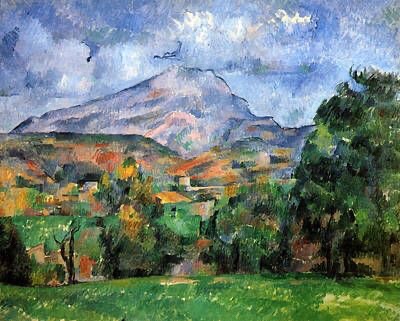
Cezanne Watercolor “Mont Sainte-Victoire (La Montagne Sainte-Victoire vue des Lauves)”( 1902–06) by Paul Cézanne. (The Museum of Modern Art, New York/Photo © 2021 MoMA, NY)

Watercolor is more difficult medium to manage than acrylic paints because it’s wetter and refuses to dry as quickly as we want to paint in that same area. It’s not being obnoxious; it’s just being its own true self. Cezanne used watercolors to think out his ideas beforehand, and then worked in oils. Often, he tossed aside the watercolor work, sometimes even leaving it out in the landscape which he’d just painted. He’d learned all he could from it and now was ready to paint his new image, but not a copy of the original painting. This mountain shows up in sixty of Cezanne’s artworks.

Paul Cézanne: La Montagne Sainte-Victoire, 1888, oil, The Stedelijk Museum, Amsterdam.

The stoic philosopher and Roman Emperor Marcus Aurelius wrote a series of meditations on life. In one he speaks of all life experiences as being the same. This attitude keeps him from getting too high or too low about what happens in his life. He takes it as it comes. Even death, which some fear as a loss, doesn’t bother him, for if he isn’t bothered about the present, he can’t be bothered about losing that too. Marcus Aurelius wasn’t a Christian, but his quest for equanimity is admirable. Take life as it comes and worry not:

“First, that all things in the world from all eternity, by a perpetual revolution of the same times and things ever continued and renewed, are of one kind and nature; so that whether for a hundred or two hundred years only, or for an infinite space of time, a man see those things which are still the same, it can be no matter of great moment. And secondly, that that life which any the longest liver, or the shortest liver parts with, is for length and duration the very same, for that only which is present, is that, which either of them can lose, as being that only which they have; for that which he hath not, no man can truly be said to lose.”

The Still Life in Our Classroom

When we work in watercolor, we have to take what the watercolor gives us. While we can plan, design, and control the outcomes to a certain extent, watercolor often goes its own way. If we work over the whole surface, rather than noodling around in one little space like a puppy sniffing a single spot while out on its morning constitutional walk, we get more done, just as the puppy is more likely to get its “business” done.

One of the reasons we work in a new medium is for the challenge. In school, when I was bored, I’d take notes in class by writing upside down. When that got too easy, I began using my left hand to write upside down. This was a true challenge! I didn’t have any ingrained pathways in my brain for left-handedness, much less the upside-down images. I was truly bored, however, so I struggled on until I got serviceable images. This was the year in which I went to art school as a midyear junior and was taking a freshman level history course.

Tim’s Painting

Tim has voluntarily switched to his left hand because he will have surgery on his right side, which will knock out his ability to use that arm for several months as he recovers. This is a good effort for his non dominant hand. You can tell he focused on the scoop, for it has the most detail. Training our alternate hand to do the work of our dominant hand requires resetting the brain to prefer the new hand. If you try brushing your teeth with your other hand, you’ll see exactly how strange it feels to use a different hand. This is because you have no well-worn pathways in your brain circuitry that makes this routine effort possible.

The fancy pants word for this is neuroplasticicy. We meet this concept with stroke survivors who do physical therapy to rewire their brain connections to make new pathways so they can speak, write, or walk. Everyone who tries a new game, learns a new language, or tries a new hobby also builds new pathways in their brains. Be learners for life, if you want to keep your mind healthy.

Gail’s Painting

Our still life was challenging today. It had solid shapes, a clear bottle, and a metal scoop. Not only were there multiple colors, but textures and transparency also. Gail has had several years of drawing under her belt, so she was able to render the perspective of the still life well. Note the clear blue bottle, which has a wonderful oval bottom. The lemons and limes are distinct also. The grey shape is an antique scoop, sans the handle.

In 2008, J.K. Rowling spoke at the Harvard commencement exercises, telling the graduates, “Talent and intelligence never yet inoculated anyone against the caprice of the Fates.” Because we don’t know what tomorrow will bring, taking care for today is the best preparation for the future. Rowling studied the Classics at Harvard, a subject most people would consider useless for this modern era. Yet after a divorce, as a single parent working for Amnesty International, she began writing her wizard novels. Harry Potter is now part of our cultural heritage.

As Jesus said in Luke 12:25-26–

“And can any of you by worrying add a single hour to your span of life? If then you are not able to do so small a thing as that, why do you worry about the rest?”

Worry is stressful, for sure, and it’s an example of “bad stress,” along with traumatic events, such as adverse childhood experiences (ACE), disease, divorce, and death of a loved one. We also endure “good stress,” as when we challenge ourselves to lift heavier weights, cook a new recipe, or learn a new language. As Ralph Waldo Emerson wrote in his 1841 essay Heroics, paragraph 14:

“The characteristic of a genuine heroism is its persistency. All men have wandering impulses, fits and starts of generosity. But when you have chosen your part, abide by it, and do not weakly try to reconcile yourself with the world. The heroic cannot be the common, nor the common the heroic. Yet we have the weakness to expect the sympathy of people in those actions whose excellence is that they outrun sympathy, and appeal to a tardy justice. If you would serve your brother, because it is fit for you to serve him, do not take back your words when you find that prudent people do not commend you.

“Adhere to your own act and congratulate yourself if you have done something strange and extravagant, and broken the monotony of a decorous age. It was a high counsel that I once heard given to a young person, —”Always do what you are afraid to do.”

When I was in high school, the ancient Latin teacher, who had taught my daddy when he went to school, tossed out the challenge, “No one has ever made 100% on my final Latin exam.”

I bit on that challenge like a starving dog bites on a bone, even if it has no scrap of flesh remaining on it. I made flash cards and studied for an hour every night before bed, I was so determined to be the exception to the rule. On the test, I got all the Latin correct, but lost ½ point for misspelling an English word. I never followed up on her retirement, but I fully expect her record remained unblemished. Also, I’m still spelling challenged. I’m thankful for SpellCheck in our writing apps.

Gail W.’s Painting

Gail W. paid attention to the still life and took care to lay down a close image in a pale wash before she began to add darker washes of color. Her left lime is most successful, with at least six shades of green and yellow in the shape. I also like the highlight on the central lemon. These two images capture the essence of the watercolor medium. Her perspective on the bottle bottom indicates it sits well on the cloth.

Failure teaches us what we don’t know, so we can improve the next time. This is what we call resilience. When I taught art, my students had to find three things they did well in their work before they named anything they needed help on. This was to build up their confidence. For some of them, just making a mark on the page was a start. If we fear making a mistake, we can sketch in a pale-yellow wash. This is very forgiving, like a whisper in the wind. If it’s not quite right, the next few marks may be nearer our desired outcome.

This Is Fine—Leave Me Alone, I’m Having a Crisis

Our mindset is what controls how we react to events in our lives. As one of my friends would remind me, “Not everything is a hair on fire moment.” Of course, when I was a young teen, the least slight or distress caused me to fling myself over my bed in a paroxysm of sobs, wailing loudly, “I’m going to die!” My parents would look at each other and shrug, “What boy is it now?” Fifteen minutes later I’d be in the kitchen looking for a snack, having cried my eyes out, and now I was on to the next thing. As I had more experiences, I learned to roll with the moment. Sometimes you need to wait for the next wave to rise before you take your ride. God’s timing is always right, for our experiences, both the failures and successes, prepare us for what comes next in our lives.

Cornelia’s Watercolor

I had some of the same perspective problems as everyone else, especially with the base of the bottle. Actually, it’s a challenge to get a “transparent three-dimensional object on a flat surface” to appear as if it’s actually sitting on a flat surface in two dimensions. Learning some shading techniques and remembering a round bottle bottom becomes an ellipse helps to bring off this sleight of hand. I got my paint too dark on the front of the bottle base and had to let it dry so I could come back in with some clear water and an almost dry brush to pick up the color. This gave me the highlight I needed.

Cornelia’s Drawing over the Watercolor

When I got home, I noticed my eyesight seems to be going amiss with my increased age. Lately I’ve not been careful to paint my verticals straight. Either I’m being lazy, or I’m tilting my head as I look at the subject. Maybe my neck injury has something to do with it. I duplicated the photo and used the Apple Pencil to straighten up the bottle and even up its symmetry. I also touched up a few of the lemons and limes. Maybe I’m still the puppy that likes to noodle around and sniff about until I can wrest all I can get from a work. This way I learn all I can from it. Like a kindergartner, if my work ends up a huge grey blob, I can say, “That was a great learning experience!”

My grandmother, who painted portraits and still lifes, kept a saying written on the back of an envelope, near her easel:  “Ever tried. Ever failed. No matter. Try again.” She passed in 1970. Years later, Samuel Beckett, in his 1983 story, Worstword, Ho wrote:

“Ever tried. Ever failed. No matter. Try again. Fail again. Fail better.”

We need to be like great artists and athletes, or the Michelin chefs who just keep trying, falling short, until they get close enough to qualify for their stars. Persistence makes all things possible, and if we “fail,” we’re only getting closer to perfection.

I hope for you a blessed Lent,

Joy and peace,

Cornelia


Emperor of Rome Marcus Aurelius: Meditations, XII   https://books.apple.com/us/book/meditations/id396136148

Neuroplasticity: re-wiring the brain | Stroke Association

https://www.stroke.org.uk/effects-of-stroke/neuroplasticity-rewiring-the-brain

10 Brain Exercises to Help Boost Memory

https://www.everydayhealth.com/longevity/mental-fitness/brain-exercises-for-memory.aspx

Neurobiological and Systemic Effects of Chronic Stress – PMC

https://www.ncbi.nlm.nih.gov/pmc/articles/PMC5573220/

​“Try Again. Fail Again. Fail Better”: Beckett’s unlikely Mantra – Goethe-Institut Los Angeles – USA

https://www.goethe.de/ins/us/en/sta/los/bib/feh/21891928.html


The Project Gutenberg eBook of Essays, by Ralph Waldo Emerson

https://www.gutenberg.org/files/16643/16643-h/16643-h.htm#HEROISM


Rabbit! Rabbit!

Altars, architecture, art, Christmas, Creativity, Faith, holidays, hope, inspiration, Light of the World, Marcus Aurelius, Painting, photography, poverty, rabbits, renewal, Roman Forum, Saturnalia, Temple of Saturn, winter solstice

Welcome to December! While I was writing this blog, it was Black Friday in November, when many rabbit families were either shopping in person or online. I once did this with my dear rabbit mother, for she loved to shop. As a child of the Great Depression, the thrill of giving gifts, however small to all her friends, was a joy denied to her while growing up. Today we rabbits aren’t so much into giving gifts, but in sharing experiences. We’re making different choices. We aren’t rejecting our forebears’ decisions, but we have different values. As the writer of Ecclesiastes 3:1 reminds us, everything has its time:

“For everything there is a season, and a time for every matter under heaven.”

Christmas Gift

The holiday season begins earlier and earlier, or maybe I’m just an old rabbit having a fever dream. Last year the supply chain snafus were the Grinch that stole Christmas. Some of you rabbits may have been in a FIFA World Cup worthy soccer scrimmage last year at a big box discounter while trying to score one of the few PlayStations that managed to make its way from China to America on one of the large container ships that wasn’t lost at sea or stuck in the Suez Canal. The good news is the resulting logjam at the shipping docks has since been cleared and all the major retailers expect to get their holiday goods on time, compared to only 53% in 2021. We rabbits aren’t getting this news, however, so about half of us are pessimistic about being able to find our desired gifts in stock.

On March 23 2021, the containership Ever Given ran aground in the Suez Canal, blocking all traffic going both ways.

As a young rabbit, I learned about Murphy’s law from the “Rambling Wrecks from Georgia Tech, who were all one heck of an engineer.” If you’re not familiar with Murphy, his law states, “Anything that can go wrong will go wrong,” and the corollary law is “It’ll go wrong at the worst possible time and cause the most damage possible.” One would think these engineers were all chronic pessimists who saw the proverbial water glass half empty, but they would claim they’re just realists. Murphy’s Law simply reflects the natural fact we can’t control outcomes or people. Since the results of future actions can’t be avoided, you always should prepare for the worst and rejoice if the best happens instead.

Murphy’s Laws

I’ve always been fond of Murphy’s Law, but never more so during the holidays. Holiday festivities always include people, activities done only once a year, and often larger, unsupervised groups (often including alcohol), which means Mr. Murphy is often an uninvited guest. How he manages to sneak in, I have no idea, but he’s shown up in my rabbit den or kitchen more than once. Maybe he has an affinity for my rabbit clan, or perhaps he’s drawn to chaos and confusion. I’m not saying my rabbit family is a rowdy bunch, but we’ve always been loud and active. There’s not much difference between a whirlwind, a tornado, and my two brothers.

Grand Rabbit Wisdom

I don’t remember Murphy appearing at my Grand Rabbits’ celebrations, but they were of the generation who believed “little rabbits should be seen and not heard.” I imagine they showed Murphy the door if he dropped by. Likewise, when my mother began hosting the holiday meals, the Murphy drama of “anything that can go wrong will go wrong at the worst possible time” also never happened. My mom took on a drill sergeant’s precision when she produced the roast beast feast.

Not my tree, not my cats, but same Murphy result

When I bought a little house, Murphy made himself welcome. I invited friends over to decorate the Christmas tree. We stepped back to toast our creation, but the tree crashed forward to the floor, as if it were taking a bow in response. Our toast interrupted, we set the tree upright, tied it to the window handle, and resumed our toast in peace. One day I’ll tell you about my experiences of raking the roof on that little house before the rainy season set in each fall.

Murphy wouldn’t leave me alone. I moved to Texas, bought another little house, and my dear mom and dad invited themselves and my brother’s family over for a holiday feast. She pushed all the potato peels into my starter home’s basic garbage disposal and turned it on. If “Anything can go wrong at the worst possible time and cause the worst damage possible,” my dear bunny mom discovered it.

“I don’t understand; my disposal at home will handle all this.”
“Yes, mother. You have a real, custom house, not a starter home. This is a baby disposal.”

Then we got the wastebasket, the pliers, and I put on my plumber’s hat. We pulled out the clog, drained the water, and put it all back together again. Mom was traumatized. Mom kept apologizing, but I reminded her, “It’s no big deal. It won’t happen again. And we have food to eat. We’ll laugh about this one day!”

Murphy still visits me on occasion. But I’ve learned to prepare for him to limit his damages. This thanksgiving I had a friend for dinner. They made a bathroom visit before they left. When I went there, I found the faucet still running and I wasn’t able to turn it off. Water was all over the floor and inside the original cabinet from 1965. I turned off the water under the sink, thinking I was glad I’d asked my plumber to give me new shutoffs when I put the new faucet in. The old ones had froze shut. I’m now brushing my teeth in the kitchen sink, but that’s all right. I’ll probably have to replace this whole thing, all for the demise of a $5 faucet washer. This is Murphy’s Law in a nutshell. Santa will have to visit Lowes or Home Depot for my Christmas gift this year. I hope I’ve been a good rabbit, as the saying goes. And my stocking is extra big.

Christmas isn’t the only holiday of December, although an estimated $942.6 billion in holiday retail sales in the United States might cause us rabbits to think otherwise. One study found that 60% of workers were more distracted and less motivated as the Christmas holidays approached, with some workers even saying this feeling started as early as November. Likewise, during the holiday time many employees will take off to spend time with family or just to enjoy the holiday. That cuts into productivity as well. We have our own Mr. Scrooge in our rabbit towns too. I have any number of rabbit buddies who need time off to hunt and be alone in the woods for a bit. I begrudge them not, as long as their spouses can take care of holidays uninterrupted.

Postal Worker delivering packages

The coming darkness of the Winter Solstice causes people all around the world to light fires and burn candles to overcome the gloom. We’ve done this for ages and in many places. In fact, humans may have observed the winter solstice as early as Neolithic period—the last part of the Stone Age—beginning about 10,200 BCE. The Romans celebrated Saturnalia, a winter solstice celebration dedicated to the Saturn, the god of agriculture, wealth, and time. While it began as a one-day celebration in early December, this pagan festival later expanded into a riotous weeklong party stretching from December 17 to 24.

Robert Macpherson: Roman Forum—Temple of Saturn, 1850s, J.Paul Getty Museum

The Temple of Saturn, the oldest temple recorded by the pontiffs, had been dedicated on the Saturnalia around 497 BCE on a site originally occupied by an altar to the god. Due to the link between Saturn and agriculture, the original source of Rome’s wealth, the temple was also the repository for the State Treasury, or the Aerarium Populi Romani, which was located beneath the stairs under the high podium. It also contained the bronze tablets on which Roman law was inscribed.

Saturn with Harvest Scythe

The woolen bonds, which fettered the feet of the ivory cult statue of Saturn within, were loosened on the festival day to symbolize the god’s liberation. On this festival day, after a sacrifice at the temple, the people held a public banquet attended by both slave and free persons. An image of the god was placed as if in attendance at this meal, or a lectisternium (reclining on a couch), a tradition which Livy says was introduced in 397 BCE. (Others date this to 399 BCE.) The practice was introduced as a specific emergency response to a natural crisis: extremes of temperature occurring in both summer and winter had given rise to a devastating plague that had proceeded to ravage the population. It was celebrated from December 17 to 23, ending on ending on the Dies Natalis Solis Invicti, or the birthday of the Unconquerable Sun.

Not only were public rites celebrated with all the splendour then available, but Livy goes on to describe the general tenor of the private celebration in the late 1st C BCE (around the time of the birth of Jesus Christ):

“They also celebrated the rites in their own homes. All through the city, it is said, doors stood wide open, all kinds of food were setout for universal consumption, all comers were welcomed, whether known or not, and men even exchanged kind and civil words with personal enemies; there was a truce to quarreling and legal action; even prisoners were released from their chains for those days, and they hesitated thereafter to imprison men whom the gods had befriended.”

Roman coin with a image of of Marcus Aurelius on obverse and on reverse, a lectisternium associated with an atonement meal, c 167/168 CE. Münzkabinett, Berlin

This ritual meal was commonly shared by the worshippers, in contrast to normal sacrifice, which distinguished human from divine portions. In other words, in the Lectisternium the gods were not only present in spirit, but in form, and they shared in the ritual meal.

The question we have to ask is how did Saturnalia move from a feast of appeasement to reduce harm to the people, to the debauchery which most history books write about today? The powers that be tried over the years to limit the length and celebratory excesses of the season, whether they were civic or religious powers. I suppose they had no counselor rabbits to advise them of Murphy’s Law: “Very little work will get done in the holiday season, and what does manage to get done will most likely need redoing in the New Year.”

Beaker with Inscription, “Rejoice Much,” 1st century AD, Eastern Mediterranean.
Glass, 3 1/16 × 2 7/8 in. The J. Paul Getty Museum, 2004.35

By the 1st CE, Pliny, the Roman historian, was holed up in his room during Saturnalia, while the rest of the family celebrated the feasts, hijinx, and tomfoolery. In the 4th CE, the Christian church decided Christ’s birthday should be celebrated in the winter near the solstice, instead of in the more likely time of spring. The first reference to December 25 as the Nativity of Jesus occurs in a section of the Chronography of AD 354 known as the Calendar of Philocalus, which, even by this late date, still identified December 17 as ludi Saturnalia. By this time, some of the traditions of Saturnalia had already transferred into the Christian era. These were the green decorations of holly, a plant sacred to Saturn, in people’s homes; the small gifts of affection for all comers; the feasts; and the welcoming of strangers with fruit treats and nuts. Upending social conventions for a while reminds us God has no favorites, unlike our stratified social structures of the past and present.

Monogramme of Christ (the Chi Rho) on a plaque of a sarcophagus, 4th-century AD, marble, Musei Vaticani, on display in a temporary exhibition at the Colosseum in Rome, Italy. / Photo by Jebulon

December 17 was recognized as the date of the Saturnalia as late as 448 CE, when the ecclesiastical calendar or laterculus (“list”) of Polemius Silvius noted it as feriae servorum (“festival of the slaves”), a festival now deprived of its pagan significance. By the eighth century CE, church authorities complained how even people in Rome were still celebrating the old pagan customs associated with the Saturnalia and other winter holidays. The Temple of Saturn was largely destroyed in the mid-fifteenth century, so all that remains today is six of its Ionic granite columns crowned with a frieze thought to date to approximately 30 BCE.

As we approach the solstice time and the season of the Lord’s birth, we give thanks along with the gospel writer of John 1:5—

“The light shines in the darkness, and the darkness did not overcome it.”

Along with all my bunny friends and family, I hope you all remember what my little daughter said about that “Luke guy, who had such a big part in the Christmas Eve service” the year she learned to read:

“By the tender mercy of our God,
the dawn from on high will break upon us,
to give light to those who sit in darkness and in the shadow of death,
to guide our feet into the way of peace.” — Luke 1:78-79

Holman Hunt: Behold, I Stand at the Door and Knock , 1854, Kebel College, Oxford, England

Joy, peace, and Good Cheer,

CORNELIA

Consumers Expecting Issues in Survey on Holiday Supply Chain Issues | Transport Topics
https://www.ttnews.com/articles/consumers-expecting-issues-survey-holiday-supply-chain-issues

Murphy’s Laws—CMU School of Computer Science
https://www.cs.cmu.edu/~fgandon/miscellaneous/murphy/

How Murphy’s Law Works | HowStuffWorks
https://people.howstuffworks.com/murphys-law.htm

Statistics on Holiday Retail Sales 2022
https://www.statista.com/statistics/243439/holiday-retail-sales-in-the-united-states/

The business of Christmas | Hult International Business School
https://www.hult.edu/blog/the-business-of-christmas/

8 Winter Solstice Celebrations Around the World – HISTORY
https://www.history.com/news/8-winter-solstice-celebrations-around-the-world

December Solstice Traditions and Customs
https://www.timeanddate.com/calendar/december-solstice-customs.html

Temple of Saturn – History and Facts | History Hit
https://www.historyhit.com/locations/temple-of-saturn/

(99+) ‘Guess who’s coming to dinner?’: the origins and development of the lectisternium. | Michael Beer – Academia.edu
https://www.academia.edu/2076041/_Guess_who_s_coming_to_dinner_the_origins_and_development_of_the_lectisternium

Saturnalia: How Did The Romans Celebrate ‘Christmas’? | HistoryExtra
https://www.historyextra.com/period/roman/how-did-the-romans-celebrate-christmas/

Saturnalia
https://penelope.uchicago.edu/~grout/encyclopaedia_romana/calendar/saturnalia.html