Steps in drawing a Geometric Still Life: sketch, refined sketch, shadows, intense shadows and cast shadows
We are back in art class again on Friday mornings at Oakland United Methodist Church. Our first lesson is in solid geometry, but it’s not a math class. Art is more like learning a visual two-dimensional language to be able to render three dimensional objects on a flat plane. This isn’t as easy as you might think, but once you learn to see in perspective, you never can unsee it again. Art class is like an old fashioned one room schoolhouse, in which a teacher has students of varying ages and experience levels to instruct. I provide one lesson and modify it for each student according to their needs.
Gail S.—Pencil Drawing of Solid Geometry
The first day of class, I had three brand new students and one who has done this exercise at least three times before. Two others were out doing family obligations, just as I was missing in action last week due to attending my niece’s graduation ceremony for her MBA in Business Administration. Life and family watershed events are always important to make our presence known. The life of the artist is as important as the art itself. We aren’t just people who make beautiful objects for others, but people who make life beautiful by being present at their most important moments.
Vermeer: The Art of Painting, 1666-1668.
When we look at the painted floor in the Vermeer painting above, we know in our minds these stand for black and white square tiles. If we take a moment to closely observe them, we realize these are more like diamond shapes. This optical illusion is the result of perspective. Perspective comes in multiple forms. Linear perspective has one-point, two-point, three-point, and multi-point vanishing points. Aerial or atmospheric perspective uses color, clarity, and value as objects overlap each other and recede into the background. There’s also reverse perspective in which objects are larger as they grow more distant and foreshortening, in which nearby objects are emphasized.
Pop Tarts from the Pop Tarts Bowl Toaster Trophy in 2024
Can we teach all of this knowledge in a single two-hour lesson? Absolutely not. Michangelos aren’t turned out like pop tarts from a toaster. In the Renaissance era, a family would place a youth between the age of 7 to 14 with a master artist to learn the trade. This child would do the chores of the studio and learn to grind the pigments and mix paint. Then they would progress to drawing and composition. After a training time, they might get to do the backgrounds of the paintings or the landscape. After eight years, if they were any good, they would be entrusted with an entire commission. Then they would venture out on their own or take over from their master’s studio.
Cornelia—Purple Geometric Forms
I started taking art lessons when I was eight years old from the city parks and recreation art teacher on Saturday mornings, and then after school from a former art teacher in town. My grandmother was a portrait and still life painter. I have been taking or teaching classes for over seven decades. Art is not a skill or a product a person can ever perfect. It is more like a journey of faith, one in which we are always going on to perfection, but by the grace of God, will only be completed at our last day. Even at my age, I have more than a few “needs improvement works” left to create.
Tonya—Black and white Geometric Forms
The more you know, the more room for improvement you can find. I always ask students to first find three positive critiques of their work to praise before they begin to talk about their “improvement areas.” In this lesson, if they drew all three shapes, used two distinct colors for light and dark, and used up the space on the canvas, rather than drawing an inch tall image, those are positive points. Then they can point out their troubles.There’s enough negativity in this world. We need to overcome that in our own lives. What we learn on this canvas will carry over to the next one. Then we will find new opportunities for improvement yet again!
Marilyn—Geometric Forms in Aqua
No one who gets a significant health condition finds making a wholesale change overnight easy or achievable. This is why people who try extreme diets like Whole 30 that restrict too many foods discover they can’t stick with it or must continually start over. People looking to make lasting, healthy changes must start small and focus on progress over perfection, according to nutrition coach Brady von Niessen. “You start feeling so good about them that you can’t even imagine not doing them.” The same principle applies in art. Over time, a student’s skills will improve if they trust the process. Rome wasn’t built in a day!
Jeanne—Geometric Forms
Another important aspect of art class is relationships. Pierre Teilhard de Chardin said, “The most empowering relationships are those in which each partner lifts the other to a higher possession of their own being.” As a teacher, I try to help each person find their own creative voice, rather than trying to copy an idea of what “good art should look like.” Beginners in tennis don’t get to play on the same courts as Wimbledon or the US Open, or at least not at the same time as those who claimed the trophies! As Picasso once said, “It took me my whole life to learn to draw like a child.”
I consider this first class a success for each student. First, I got to hear some of their stories, which helps to build relationships. I got to hear their fears about not being perfect—none of us are perfect, but as United Methodists we are all going on to perfection in love by God’s grace and that’s the only perfection we concern ourselves with in art class. Can we love ourselves and give ourselves the grace to come up short? As the great Leonardo da Vinci said, “Art is never finished, only abandoned.”
I look forward to next week when we mix colors for the color wheel for the first time students. The returning students will get a lesson that uses geometry and mixed colors also. The more seasoned students project is a step up because they have more experience, so they have a greater challenge.
The one room art schoolhouse meets at 10 am on Friday mornings. It’s never to late to join.
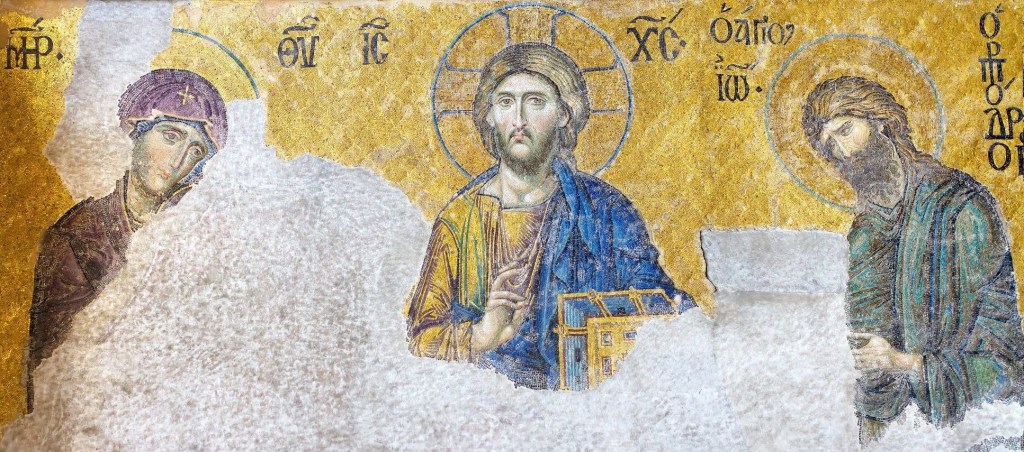
When does an image become a meme? Or an icon, an idol, or a shibboleth? I ask those questions, and then have go about defining them. We all know what an image is—a representation of something which actually exists. An icon is the Greek word for image, but to become a venerable image, it must bring the viewer into the spiritual realm, rather than leave the viewer only in this earthly world.
An idol is an inert representation of a god, but isn’t a god at all, for the god is invisible and spiritual. Praying to a golden calf or a carved wooden statue will get no response since it has no power or animation. The same can be said for shibboleth, which is a word or saying used by adherents of a party, sect, or belief and usually regarded by others as empty of real meaning. If the Ten Commandments are held up as mere words, idolized, but not kept in their hearts and lives, then they are as empty of power as golden calves. They also aren’t to be worshipped, but the God who gave them is.
Are the Ten Commandments now a meme? Memes are an amusing or interesting item (such as a captioned picture or video) or genre of items that are spread widely online especially through social media. Because this version of the Ten Commandments had its origin in the Charlton Heston movie, “The Ten Commandments,” which we see every single Easter and Passover season, it’s definitely in the public sphere. I’m of the opinion it’s fast becoming a meme—devoid of actual meaning and held up to ridicule.
DeLee: Icon of Christ, acrylic on woven canvas , 2022.
The version in the Louisiana law matches the wording on the Ten Commandments monolith that stands outside of the Texas State Capitol in Austin. It was given to the state in 1961 by the Fraternal Order of Eagles, a more than 125-year-old, Ohio-based service organization with thousands of members. In 2005, a divided U.S. Supreme Court ruled it did not violate the constitution and could stay.
The Eagles organization notes on its website that it distributed about 10,000 Ten Commandments plaques in 1954. The organization also partnered with the creators of “The Ten Commandments” to market the film, spreading public displays of the list around the country.
“It’s significant that the Louisiana law uses the same text created for ‘The Ten Commandments’ movie promotions by the Fraternal Order of Eagles and Paramount Pictures because it reminds us that this text isn’t one found in any Bible and isn’t one used by any religious faith,” Kruse said via email. “Instead, it’s a text that was crafted by secular political actors in the 1950s for their own ends.” Kevin M. Kruse is the author of “One Nation Under God: How Corporate America Invented Christian America” and a history professor at Princeton University.
Unknown Flemish Artist: God speaks to Moses while the people worship the golden calf, colored ink and gold leaf on parchment, 1372, National Library of the Netherlands.
The actual biblical Ten Commandments are spiritual and can bring us closer to understanding God’s relationship with God’s chosen people during their wilderness journey. We can learn about boundaries, justice and mercy. Also we learn God wants us to be imitators of God’s nature, something that’s missing in the movie version of the Ten Commandments. The movie commandments are a Reader’s Digest version of the Biblical commandments and miss the grace of God entirely.
For Benjamin Marsh, a North Carolina pastor watching the Louisiana law, his primary concern is people’s spiritual formation, so altering the Ten Commandments is worrisome to him. “The problem with changing the text of the Ten Commandments is you rob the spiritual implications of the actual biblical text. So you’re giving some vague likeness to the Ten Commandments that isn’t the real thing,” said Marsh. He leads First Alliance Church Winston-Salem, which is part of a conservative evangelical denomination.
So I offer these two versions below for you to read. I believe the placing of the Ten Commandments in the schools in these states has less to do with “religion” than with culture wars, which these politicians hope to use to their advantage. If we see these in our communities, we should ask for comparative religions to be taught, or none at all. I find the misuse of scripture abusive. This isn’t what we should be doing to vulnerable children. We should give them a God who loves, cares for, and provides for their needs. The Ten Commandments in the school houses is like having a cop in the classrooms.
FROM THE MOVIE, “The Ten Commandments:”
The Ten Commandments I AM the LORD thy God. Thou shalt have no other gods before me. Thou shalt not make to thyself any graven images. Thou shalt not take the Name of the Lord thy God in vain. Remember the Sabbath day, to keep it holy. Honor thy father and thy mother, that thy days may be long upon the land which the Lord thy God giveth thee. Thou shalt not kill. Thou shalt not commit adultery. Thou shalt not steal. Thou shalt not bear false witness against thy neighbor. Thou shalt not covet thy neighbor’s house. Thou shalt not covet thy neighbor’s wife, nor his manservant, nor his maidservant, nor his cattle, nor anything that is thy neighbor’s.
FROM KJV: Exodus 20:2-17
I am the LORD thy God, which have brought thee out of the land of Egypt, out of the house of bondage. Thou shalt have no other gods before me. Thou shalt not make unto thee any graven image, or any likeness of any thing that is in heaven above, or that is in the earth beneath, or that is in the water under the earth: Thou shalt not bow down thyself to them, nor serve them: for I the LORD thy God am a jealous God, visiting the iniquity of the fathers upon the children unto the third and fourth generation of them that hate me; And shewing mercy unto thousands of them that love me, and keep my commandments. Thou shalt not take the name of the LORD thy God in vain; for the LORD will not hold him guiltless that taketh his name in vain. Remember the sabbath day, to keep it holy. Six days shalt thou labour, and do all thy work: But the seventh day is the sabbath of the LORD thy God: in it thou shalt not do any work, thou, nor thy son, nor thy daughter, thy manservant, nor thy maidservant, nor thy cattle, nor thy stranger that is within thy gates: For in six days the LORD made heaven and earth, the sea, and all that in them is, and rested the seventh day: wherefore the LORD blessed the sabbath day, and hallowed it.
Honour thy father and thy mother: that thy days may be long upon the land which the LORD thy God giveth thee. Thou shalt not kill. Thou shalt not commit adultery. Thou shalt not steal. Thou shalt not bear false witness against thy neighbour. Thou shalt not covet thy neighbour’s house, thou shalt not covet thy neighbour’s wife, nor his manservant, nor his maidservant, nor his ox, nor his ass, nor any thing that is thy neighbour’s.
Joy, peace, and time to read your Bible,
Cornelia
Louisiana Ten Commandments law raises preferential treatment concerns | AP News
My parents would often say, “Time flies when you’re having fun.” If this is so, I’ve had a one whale of a time in 2023. I don’t know where the time has gone, for I’d swear I just woke up in the bright new year of 2023, and now this year has grown a beard of some length. Indeed, the ground was bare, awaiting the warm breath of spring, and now it has experienced its first freeze.
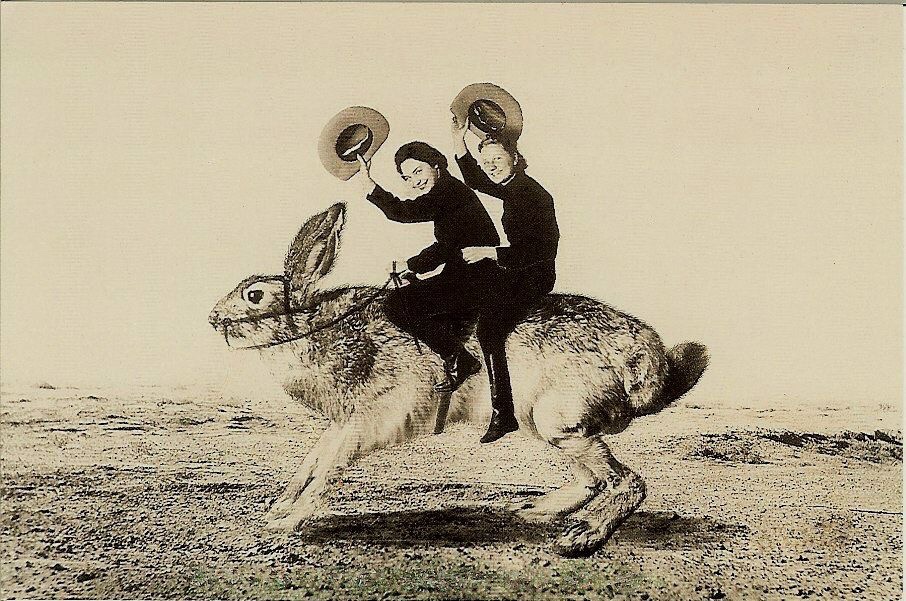
Autumn is a time of transitions. Not only do the trees change colors, and then lose their wardrobe altogether, but we rabbits go from Halloween’s sugar high on October 31st to overstuffing ourselves and the roast beast at the Thanksgiving feast on the Fourth Thursday of this new month. Then we segue into Christmas somnolence with yet more cookies and egg nog (spiked and plain). On occasion we tramp out to decorate the house or scour the woods for greenery, but those days are long gone for most urban dwellers. We’re going to buy from local providers or have it delivered online.
Some of us on the first day of November will still have some of the 35 million pounds of candy corn which are still produced each year. That’s about 9 billion pieces — over a billion more than there are people on Earth. As far as this bunny is concerned, this is 8,999,999,999 pieces of candy corn too many. I’m not a lover of this form of sugar; give me dark chocolate any day. Fortune reported the “dangerous” amount of sugar consumed by kids on Halloween — three cups of sugar in 7,000 calories of candy. For context: That’s 675 grams of sugar, or the same as chomping down almost 169 standard sugar cubes, according to a Fortune article published in 2017.
A Young Bunny
When I was a young bunny, sugar was so restricted in our home, my friends and I would escape our parents’ notice during fellowship time at church to go to the empty adult Sunday school classrooms. We knew where they kept the wonderful Domino Pure Cane sugar cubes for the coffee the grownups drank. We didn’t care for coffee, which was already gone, but the sugar we fell upon like pirates on buried treasure. We didn’t ever consume 169 cubes at once, since that would’ve destroyed the entire stash.
If these had been the 35 million pounds of candy corn, which are still produced each year for Halloween, neither I nor my bunny friend would have ever touched them. The idea about 9 billion pieces — over a billion more than there are people on Earth—are still produced today is incomprehensible to my bunny brain. I think the texture of corn syrup and gelatin isn’t my first choice.
Of course, when the weather turns colder, our bunny bodies sense the need to stoke our internal fires. We do this by consuming more calories, especially the quick acting carbohydrates we find in the sugars and starches that provide the instant “heat” boost our bodies crave. Actually, any food will heat us up, but fruits and vegetables don’t have the same appeal as warm, savory, and fatty foods do in colder weather. The shorter days and the decrease of light in the winter cause problems with our body’s biological clock and lower the levels of the brain chemical serotonin. Plus, many of us reduce our physical activity, so our exercise induced levels of serotonins drop.
Healthy Eating includes More Fiber
We can overcome this loss by planning to be outside during the daytime and making sure to exercise at least 30 minutes daily. Having protein rich snacks and fiber rich soups with complex carbohydrates will help control our hunger spikes. Perhaps this transition time into longer nights and shorter days is why the First Wednesday in November is always National Eating Healthy Day (November 1). If we do only one new healthy choice per week, and add a new healthy option each week thereafter, we can transition our lifestyle into “Eating Healthy.” As a bunny, I remind my friends, it’s also National Vinegar Day—have compassion on yourself and on others. We can love ourselves and others into a better life with kindness rather than harshness. As my grandfather Bunny always said, “You catch more flies with honey than vinegar.”
Day of the Dead Skull
All Saints Day and Dia de los Muertos both are celebrated on November 1. Both recognize the departed loved ones. All Saints recognizes both those who have worked miracles as well as those ordinary saints who have lived among us and given quiet witness to their faith. Dia de los Muertos, the Day of the Dead, is a three-day festival to remember the ancestors and friends who predeceased us. People decorate altars with marigold flowers, photos, and skulls in memory of the dead. They make special food offerings in their honor also.
All Soul’s Day on November 2 is a Catholic holiday to pray for the souls which aren’t yet in heaven, but are in purgatory. Protestants don’t believe in purgatory, so we don’t attend upon this day as holy.
Cookie Monster: “Me want COOKIES!”
Many of us do celebrate Cookie Monster Day on November 2, because who doesn’t like cookies?! The same goes for National Sandwich Day on November 3, for hot or cold, almost anything can be slapped between two slices of bread and get slathered with avocado or mayonnaise, and it’s good to go.
Sandwiches first appeared in American cookbooks in 1816. The fillings were no longer limited to cold meat, but the recipes called for a variety of things: cheese, fruit, shellfish, nuts and mushrooms. After the Civil War sandwich consumption increased and were sold both in high-class lunch rooms and in working-class taverns. A typical turkey sandwich in the 1980s contained about 320 calories, according to a report from the National Heart, Lung and Blood Institute. Twenty years later, a turkey sandwich contained about 820 calories. Choose whole grain bread if possible.
We seniors have more than time on our hand
“Fall Back” on Sunday, November 5, when Daylight Savings Time Ends. We get another hour of sleep on this day when the clocks go back 1 hour at 2 am. I won’t be awake to notice it, but I suggest those of you who aren’t good sleepers begin to look at your evening routines. Set a wind down time on your clock, watch, or mobile device. Let it remind you to turn on quiet music, read inspirational books, or begin your bedtime routine. Sometimes taking off our outside clothes and wearing our “at home” clothes is a signal to our mind to let go of the cares of the world.
Fighting over Van Gogh Pokémon Gifts at the Museum
Go to an Art Museum Today Day and National Chaos Never Dies Day are both celebrated on November 9 this year. I don’t normally consider chaos and art museums as being in the same category, but Disney has made several Night at the Museum movies that revolve around the trope of ancient Egyptian gods awakening to cause havoc. Actual chaos recently erupted at the Van Gogh Museum in Amsterdam when visitors realized the gift shop had already sold out of the Pikachu with Grey Felt Hat promo card, which was modeled on the Vincent self-portrait. Evidently a small group of fans descended on the gift shop, causing a ruckus, and buying out the merchandise. It’s now for sale on eBay.
2023 Veterans Day Poster
Armistice Day marks the November 11,1918 anniversary of World War I, a war which began in August 1914, that few expected to last beyond Christmas. In 1921, an unknown soldier was buried in Arlington National Cemetery. This First World War was “the war to end all wars,” but we’re an overly optimistic nation. We’ve had a Second World War since then, plus many a regional conflict. Every time our battle ships show the flag somewhere, people think it’s going to be WWIII. Fear mongering doesn’t help the nation. We’re better and stronger than that. Plus, we have the moral duty of leadership: our country needs to show the world there’s a better way.
As I recall, both the North and the South expected the great Civil War to last just a short while, just as Putin entered Ukraine believing his army would roll into Kiev in mere weeks. Yet WWI lasted four years, WWII was six years (the US was involved only the four years from 1941-1945), and our Civil War was another 4-year slog. Wars aren’t so much “won” as lost by attrition: one side loses more men, materiel, and willpower so they surrender to the other. War is the most brutal way to settle our differences.
Armistice Day now is Veterans’ Day, November 11, but observed a day earlier (10th) this year. We celebrate our veterans who do the difficult and challenging work of using judicious force against enemy combatants, rather than civilian populations. All of our enlisted personnel take the same oath to protect and to defend our Constitution against all enemies, foreign and domestic:
I, (state name of enlistee), do solemnly swear (or affirm) that I will support and defend the Constitution of the United States against all enemies, foreign and domestic; that I will bear true faith and allegiance to the same; and that I will obey the orders of the President of the United States and the orders of the officers appointed over me, according to regulations and the Uniform Code of Military Justice. (So help me God).”
The US Constitution, 1787
We are an unusual people, we Americans, for our loyalty isn’t to a party, a president, or a person. We are loyal to the constitution, which protects our democratic institutions, values, and freedoms. We can be thankful for those who were inspired to write it, heard the prophetic call to amend it, and have the wisdom to keep us on the straight and narrow.
National Hunger and Homeless Awareness Week is November 11-19 this year. While the economy is recovering, the loss of pandemic assistance funds Is hurting lower income households. They are making hard choices: food or rent, medicine or food. The number of homeless veterans has decreased, but so has the overall population of veterans. The bad news is veterans are still overrepresented in the homeless population. As you prepare for your own feast this year, I hope you remember the hungry in your community. The best way to help is with a financial donation to the local food bank. The bank can purchase food from the warehouse food bank at greatly reduced prices, thereby providing more food per dollar than individuals can purchase on their own.
World Diabetes Day is November 14. Diabetes is a disease on the increase in the world today. In the US alone, over 37 million people have this disease and over 8.5 million have it but are undiagnosed. Over 96 million US adults have prediabetes, a condition in which their insulin doesn’t take the sugar out of the bloodstream well. Switching to whole grains, less processed foods, and adding more fiber to the diet usually helps lower the blood sugar. So does daily moderate exercise.
National Clean Out Your Refrigerator Day is November 15. This is a good day to practice this task, since you’ll be filling it up with excess foods if you’re hosting the feast, or you’ll be traveling away from home. If the latter, you don’t want to return home to spoiled food if the power goes off for any length of time. Ugh: I won’t regale you with the story of stench of the refrigerator in the garage which didn’t power back on after a power outage. Those outlets need to be reset manually because they’re in a “might get wet” zone. The refrigerator inside will come back on automatically. (This turned out to be a get rid of the refrigerator day.)
National Stuffing Day is November 21. If you bake your bread mixture outside of the great bird, it’s called dressing, but if you cram it into the bird, it’s stuffing. It’s safer to cook the bird without stuffing, also quicker. When baking stuffing inside a turkey, it can get get wet and mushy. If you make a flavorful stock from the turkey neck and giblets, you can make your stuffing moist and flavorful without turning it into mush.
If you live in a giant pumpkin, buy a smaller pumpkin for your pie
Pumpkin Pie Day is also November 21, so you can prepare this ahead of time if you wish. You can make a handmade crust or use a store-bought crust from the grocery. Pre bake it and fill it with the pumpkin mixture.
National Cranberry Relish Day is November 22. You can easily make your own with the juice of an orange, some sugar to taste, and cinnamon combined with a package of rinsed cranberries. Heat over medium in a saucepan, stirring frequently to keep from sticking. When the berries burst, reduce heat to simmer and reduce the liquid. Taste and adjust the seasoning. Take off the heat and put into container for icebox. Chill overnight to let seasonings combine. Serve cold as side dish.
Thanksgiving Day is Thursday, November 23. You’ve baked the turkey, and it smells amazing! Let me introduce you to pan gravy from the drippings. You need a little flour, about 2 Tbs; some pepper, about ½ cup of drippings, and 1 cup of hot water. Put the drippings in a heavy saucepan or skillet, add the flour, stirring constantly over medium high heat until flour turns caramel color. This is a medium roux. Slowly add hot water, stirring so no lumps form. Keep stirring till smooth, reducing heat. Add more water slowly if gravy thickens too much. Pepper and salt if necessary.
The idea of “thanksgiving” for the harvest is as old as time, with records from the Egyptians, Greeks, and Romans. Native Americans in North America celebrated harvest festivals for centuries long before Europeans appeared on their soil and before Thanksgiving was formally established in the United States.
In the 1600s, settlers in Massachusetts and Virginia had feasts to thank for surviving, fertile fields, and their faith. The Pilgrims in Plymouth, Massachusetts, had their infamous Thanksgiving feast in 1621 with the Wampanoag Native Americans. The three-day feast consisted mainly of meat: wild fowl procured by the colonists and five deer brought to the feast by the Wampanoag. A a stew called sobaheg was most likely served as a side dish to the main course. It was an easy way to make use of seasonal ingredients, for the stew often included a mixture of beans, corn, poultry, squash, nuts and clam juice. All are used in the traditional dish today, and all would have been available in 1621.
Potatoes weren’t around in 17th-century New England, but corn was plentiful. Natalija Sahraj
Corn and cornmeal were the main carbohydrates on the first thanksgiving meal. The first New England crop of potatoes was grown in Derry, New Hampshire in 1722, so no mashed potatoes were on the menu. Corn bread, corn mush, and corn puddings abounded, since the Native Tribes had shown the colonists how to plant beans, squash, and corn together to maximize growth of all three. The harvest of 1621 likely included beans, squash, onions, turnips and greens such as spinach and chard. All could have been cooked at length to create a green, pulpy sauce that later became a staple in early New England homes. Sweet dishes concocted from sugar or maple syrup weren’t on the menu, nor were honey sweetened deserts. At least, the Pilgrims didn’t have to save room for pie.
After the Pilgrims, for more than two centuries, individual colonies and states celebrated days of thanksgiving. The first national celebration of Thanksgiving was observed for a slightly different reason than a celebration of the harvest—it was in honor of the creation of the new United States Constitution! In 1789, President George Washington issued a proclamation designating November 26 of that year as a ”Day of Publick Thanksgivin” to recognize the role of providence in creating the new United States and the new federal Constitution. During the Civil War, President Lincoln called for a national Thanksgiving Day on the last Thursday of November after the Battle of Gettysburg. In the Great Depression President Franklin Roosevelt moved Thanksgiving Day to the next to last Thursday in November. After two years of public unhappiness, Congress passed a law in 1941 setting Thanksgiving on the fourth Thursday of November.
Thanksgiving, 1858, by Winslow Homer, Boston Public Library
During the week of Thanksgiving, from November 19-25 or 26, we have the holidays of Church/State Separation Week and National Bible Week. If you haven’t been giving thanks for your blessings up to this time, take a break, breathe, and rejoice that you are alive. Give thanks for your hands, your food, your breath, and your heart of love. Share this thanksgiving with someone else. If each of us gives a bit of hope to someone else, we can help others have something to be thankful about.
Chocolate answers all questions.
After the rush of Thanksgiving, some of us bunnies may need medicinal chocolate. November 29 is Chocolate Day. Depending on your personality, you can buy fancy chocolate to share, or you can enjoy it by yourself along with a good book and some lavender tea. If Thanksgiving Day was really overwhelming, National Personal Space Day on November 30 might be calling your name. We all have times in our lives when we don’t need hugs, either because of physical or emotional distress. Besides, we bunnies need to catch our breath before we dash into the Christmas season.
I’m thankful for each of you who read and share my stories.
On September 5, we celebrate Labor Day, and our kids are already back in school. We’re once again slowing down in school zones in the morning and afternoon, and setting an extra plate at the kitchen table for our absent college freshman. We might even see the first fall colors when the Fall Equinox comes around at the end of the month.
Edwardian Summer Gown, 1905
September is when we set aside our summer white clothes and shoes to change our closet over for darker colors and longer lengths. My dear mother had a rule of never wearing white past Labor Day. This quaint fashion principle dates from before Memorial Day, which was instituted in 1868 after the Civil War. This rule helped to separate the old money families, who summered in the country and at the seashore, from those who stayed to struggle on in the grimy cities, which were polluted by coal fired engines. These urban families usually wore dark clothes year round, as the rich did when they returned to their city residence.
Air conditioning has changed this now, but wearing starched, white cotton still reminds people you either have money to send your clothes to the cleaners or hire laborers to do it for you. Or, you might just work extra hard to look like one of the first two. This bunny has reached the age of dripping dry all those cotton clothes. I actually do more ironing when I do a craft project, such as quilting, since those seams need to be pressed open to make a good square. As this bunny has aged, I’ve changed my mind about what I think is important enough to worry about.
Rabbit Ironing
September is also a time to reassess the three core myths which animate much of American life. These myths are we can give 100% to our work, 100% to our family, and 100% to our personal health. I don’t know about you, but I’ve never been able to do this type of higher math without going bananas or feeling significant amounts of guilt that I’m not doing enough in one of those areas. Eventually I learned I was only Wonder Woman in my fantasies, but not in real life. I also realized other people who managed better than I hired help for the housework to free themselves up for family time.
My Wonder Woman Fantasy
Somewhere along the line we’ve bought into the myth of the “ideal worker,” who “has no competing obligations that might get in the way of total devotion to the workplace.” The second myth is the “perfect parent,” who “always puts family first.” The last myth is the “ultimate body,” which is cultivated through diligent dieting and exercise, and doesn’t deteriorate with age.
The authors of Dreams of the Overworked, note in the digital age, when people can post curated images of their best lives, “Achieving even one of these myths would be impossible, but achieving all three is ludicrous.” If your daily stress has increased and you feel like everything you do isn’t enough, I suggest deep breathing with your eyes closed (unless you’re driving a vehicle!). Once you get some extra oxygen to your brain, you’re in a position to calmly reconsider your situation. Not all situations are hair on fire, unless you’re a two year old with separation anxiety. Most of us beyond this age have experience and memories which can guide our future behaviors. An ancient proverb is “Experience is the mother of wisdom,” or as my folks used to say, “The school of hard knocks is the most expensive degree you’ll ever pay for.” Live and learn. With age comes wisdom.
Now that you’re calmer, you can decide, “Do I have options? Do I have a support system with people who can help me discern my way? Can I lay down my false self image of competence so I can ask for help? Can I triage my priorities to say NO to the less important ones, even if it means not pleasing everyone in my social circle?”
Google it, Ask friends for recommendations, and Breathe!
Speaking of options, women are primarily responsible for housework and childcare, not only in America, but also across the pond. About 91% of women with children spend at least an hour per day on housework, compared with 30 % of men with children. The latest available data shows that employed women spend about 2.3 hours daily on housework; for employed men, this figure is 1.6 hours. Gender gaps in housework participation are the largest among couples with children, at 62 p.p., demonstrating an enduring imbalance in unpaid care responsibilities within families. This leads to women taking lower and slower career paths.
Animated Map of 2022 Fall Color Change
September 22 is the Fall Equinox. We’re already seeing signs of seasonal leaf color changes, due to heat stress and drought. Some call this “False Fall,” but I call it a sign of hope. Trees will drop their leaves in order to survive in extreme conditions. Although some claim plants are sentient, they don’t have a brain or consciousness that we can recognize. They do interact and react to their environments. Their first priority is survival. Photosynthesis and the subsequent leaf abscission after changing color is part of this process. I always look for the change of light which precedes this event. One morning last week, I noted the color of the morning light had turned cooler, and wasn’t the warm yellow of summer. I also had a spark of energy I hadn’t had before. I look forward to more daylight.
This bunny is very fond of September, since I’ve always been eager to start fresh and new. I always got new pencils and a new manilla paper writing pad when I started elementary school. Later on, as I progressed up in grades, ink pens with cartridges were a special treat. Even to this day, I keep my journals with hand written ink in good paper books. I love the feel of these materials in my hands. I probably would have stayed in school my whole life if possible. The day our brains quit learning something new is the day our minds begin to die.
School Bunnies and Friends
That leads me to remind my bunny friends that Alzheimer’s disease is the 7th leading cause of death in the USA and it’s the most common cause of dementia in persons over 65. While most of you may not be baby boomers, you young bunnies have grandparents or parents of that age. Today, about 6.5 million Americans have Alzheimer’s disease, but that number is expected to almost double to 12.7 million by 2050. Perhaps beginning September with World Alzheimer’s Day is a good reminder for all of us to be proactive about our health choices, so we can live independently as long as possible into our senior years.
Talk Like a Pirate
I also like Positive Thinking Day, since reframing negative thoughts into positive ones changes our attitude, our behaviors, and then we get better outcomes as a result. If you don’t feel like being Batman on the 17th, you can ARRRGUH yourself about, MATEY, as you Talk Like a Pirate on the 19th. Bonus points if you wear an eye patch, earring, and tricorne hat or bandana on your head.
The Jewish New Year of Rosh Hashanah begins at sunset on the 25th. It’s one of the four “new year” celebrations in their religious calendar. This one recalls God’s creation of humanity, as well as the legal new year. On this one night in September, when the faithful eat apples dipped in honey or other sweet sauces, they remember how God originally created humans in a sinless state and wish each other a good year to come.
Magic Bacon Carpet Ride
Did I forget International Bacon Day? How can any rabbit forget bacon? Someone will cut my carrot rations for the future, I fear. But if I remember to keep the coffee pot full, I’ll probably get out of the rabbit hoosegow before National Coffee Day on the 29th.
Some interesting holidays we can celebrate this month are: Better Breakfast Month (I suggest bacon, eggs, and pancakes on the weekend and old fashioned oatmeal during the week). There’s also Hispanic Heritage Month and National Sewing Month. Finally, every year on September 30th is National Love People Day. The purpose of the day is to show love to everyone—no exceptions. National Love People Day offers us the opportunity to show unconditional love, which many have never experienced. When we genuinely love our neighbors and express it with kind words and thoughtful deeds, we make our world a better place. This the true meaning of “love your neighbor as yourself.”
Maybe one meaning of loving your neighbor is offering a meal to them. Food insecurity is increasing once again, this time due to increased rents and costs of transportation. Consider a weekly meal service from your church building or organization’s meeting place. It doesn’t need to be fancy, but calories and nutrition would help hungry people have the strength to move on from their current situations. Joining with other groups to cover all the days of the week would be a bonus to your community, not only for the hungry, but also for the smaller groups who could team up to share in the blessing of loving their neighbors.
Until the spice is on the pumpkin, I wish all my bunny friends
Welcome to June! I’ve found my sunshades and my flip flops, so this rabbit is ready for a summer vacation. Old school teachers never die, they just take the summer off. And teachers, as well as students, will need a summer off, along with some intensive counseling, to get them ready to return in a healthy frame of mind next fall.
Summer Solstice Mandala
In my early years in ministry, I served in a certain county where many people were caught up in despair. I often complained to my district superintendent of my desire to pour mood elevators into the public water supply.
“You do know drugging the water supply isn’t exactly an acceptable activity for a Methodist minister?”
“Oh, yeah, but it sure would make my job easier.”
Rabbits Love One Another
Remember, June 3 is Love Conquerors All Day. I need to remind myself of this on occasion when I want to take the easy road. As Jesus reminds us in Matthew 7:13—
“Enter through the narrow gate; for the gate is wide and the road is easy that leads to destruction, and there are many who take it.”
Taking the easy way out isn’t always the best choice, but it’s the one we rabbits most often choose. We rabbits don’t like to rock the boat, and we like to make all the other rabbits happy if at all possible. The only problem is if we please A, B gets upset. If we please B, A gets upset. We don’t even try to please C, since C is so cranky, even the good Lord Jesus couldn’t fry an egg to please them. We set our hearts and minds on pleasing God, as best we can, and hope to hear the words, “Well done, good and faithful servant, enter into the joy of your master.”
Make Mine Chocolate Ice Cream Day
Chocolate ice cream brings me joy any day of the year, but June 7 is a day dedicated to this frozen delight. Don’t worry about frying eggs, but keep it frozen. I like mine plain, but fresh strawberries or peaches are a nice addition, plus some chopped nuts. Always go for complex, unless you just can’t wait. Then grab a spoon and eat it straight from the pint. (Mark it with your name, since you ate from it.)
Often we cut the Gordian Knot and go for the shortcut to our complex problems. Sometimes this is a good solution, for the shortest distance between two points is a straight line. My daughter used to call my vacation navigation shortcuts “the long cuts,” since I’m directionally challenged. Most of the time, that straight line went through swamp land and alligators. I can hear her voice now, “NOOOOO!!!” I’m known for taking the scenic route, so I often see America’s less known sights, which are off the beaten path.
In the gospel of Luke (14:34), Jesus quotes a proverbial saying:
“Salt is good; but if salt has lost its taste, how can its saltiness be restored?”
Another translation of the latter portion of this verse is “how can it be used for seasoning?”
When I think of loss, I think of a life snuffed out. Some people are burned out, so we can say they’ve lost their seasoning ability. There’s no vim or vigor in them. Other lives are cut short and aren’t able to fulfill their purpose to season the great soup of our community. Our past month was marked by 47 mass shooting incidents in May alone. A mass shooting incident is defined as one in which at least four people are injured or killed, not including the shooter. Suicides aren’t included.
Suicides are also a public health problem. They are the “deaths of despair” that leave ripples of grief and hopelessness in the survivors. They’re the ultimate shortcut solution to a problem, the placing of a period where life has placed a comma or a semicolon. My daughter once attempted suicide by downing half a bottle of aspirin. I noticed the open bottle and pills scattered across the floor. She said the “dog ate it.”
“That’s too bad, I’m going to miss that dog. She won’t be long for this world. We’ll need to make burial plans for her.”
“Well, actually, I’m the one who ate the aspirin.”
“Then we’re going to the hospital. You aren’t going to like getting your stomach pumped, but it’s better than being dead. You want to have a chance to grow up and have a good life. A dog we can replace. You—not so much.”
It was a rough time in her life, and mine too. But God was with us. And we had support from counselors, friends, family, and our church family. My work family and my clients supported me too. I must be the most extroverted rabbit in the patch, because I asked everyone for help. It turned out my problem was shared by everyone else. I discovered I wasn’t alone, but was the most ordinary of rabbits around.
This is a humbling experience, especially when you’re a first child and the only girl. I admit to being spoiled, but don’t let my brother rabbits hear me say this. I’ll deny it to my last breath: I’m like every other rabbit I know. I want to think I’m someone special, even when I’m just as fluffy as every other bunny out there on Gods green earth.
June 21—Summer Solstice
Unfortunately, half the suicides today are committed with a gun, not aspirins. When looking at overall gun deaths, roughly two-thirds are attributed to suicides—a proportion that is consistent across most states. Gun suicides are on the rise and data also indicates men, white Americans, older people, and individuals living in rural areas present higher rates of gun suicides. Another group presenting a unique risk for suicide is current and former members of the armed forces, especially those with PTSD.
Compared with the general population, current and former military members have significantly higher rates of gun ownership. According to a 2015 study, nearly 50% of U.S. veterans own a gun. In contrast, studies suggest that only about 22% of the general U.S. population owns firearms. Similarly, the age groups of 50 to 64 years old and 65 and older have the highest rates of gun ownership, according to a 2017 Pew Research Center study. This can further explain the high rates of suicide among older veterans.
According to data from the U.S. Department of Veterans Affairs (VA), in 2019, close to 4,332 veterans died by gun suicide in the United States, representing close to 18 percent of the total number of gun suicides reported by the Centers for Disease Control and Prevention (CDC) during that year. Perhaps more alarming is the fact this figure shows a veteran is killed by gun suicide every two hours. In 2019, active duty military members committed suicide by gun 64% of the 498 total (318), almost one gun suicide per day.
Why isn’t anyone speaking about this? For all the lip service our politicians give to the flag and to the armed service members, they seem to forget them once they’re no longer useful to fight their wars or march in their parades. Perhaps because Congress won’t devote any money to study the effects of gun violence on the citizens of our Beautiful America, so we have to fund private studies here and there to piece together a patchwork of facts of this scourge on the peace of our people.
My young neighbor, only 8 years old, was in a panic as he knocked on my door the other day. His parents hadn’t come straight up the elevator, as they’d said they would. He was crying to beat the band and was sure something bad had happened to them. I invited him inside and left the door open so we could see them come past. He was so worked up, he couldn’t sit down. I suggested a call to his daddy, but they came walking past just at that moment.
June 19—Father’s Day
We don’t realize what terror these school shootings put our children through. There’s no safe place for them any more, no matter how “hardened” we make the buildings. Some person always breaks the shell at the most inopportune moment.
Some rabbits will have empty seats at their family reunion tables because someone decided to act impulsively. Father’s Day (June 19) won’t be a celebration without the son or daughter to give Dad the tie, the golf balls, or breakfast in bed.
I think back to my own childhood. We worried in the 1950’s more about the urban legends of Halloween candy poisoning, when we were more likely to get killed crossing Highway 1, a four lane highway running through our town. My mother rabbit would wait for me to ride the trolley home from school. She would wait until the near lane of traffic cleared before she walked out to the center median and time this so the far lane’s cars would finish passing so she could walk across the newly empty lanes to meet me on the other side. We held hands and crossed in the same manner on the way back to our home.
This was our routine from the start of school until sometime in the autumn. Mother was delayed one day, so I sat down to wait for her and opened my book to read. I was wearing a brown jacket against the early cool spell, and my dirty blonde hair blended in with the pile of dry leaves on the ground. Intent on my book, I failed to see her come outside. She overlooked me and went inside thinking I’d missed my ride.
A bit later, I decided if she wasn’t coming for me, I’d come to her. Gathering up my possessions, I stood on the curbside. I watched the comings and goings of the quickly moving traffic. Once I saw the break in the pattern, I walked out into the clearing, waited at the median, and crossed behind the trailing traffic of the second lane. When I walked inside, my mother had a conniption fit. After this, I began riding my bicycle to school, and my brother got to come with me.
Brain Functions
Not everyone is mature enough to cross a four lane busy highway by themselves when they’re in the fourth grade, which is the same age as the children who lost their lives at Robb Elementary in Uvalde, Texas. . Some people still need to be supervised at work even in their 20’s. The brain keeps maturing past age 21, as the frontal lobes, which are home to key components of the neural circuitry underlying “executive functions” (such as planning, working memory, and impulse control) are among the last areas of the brain to mature; they may not be fully developed until halfway through the third decade of life. Although neuroscience has been called upon to determine adulthood, there is little empirical evidence to support age 18, the current legal age of majority, as an accurate marker of adult capacities.
Since May 24, the date of this tragedy in Uvalde, Texas, the gunviolencearchive.org has recorded 16 mass shootings in six days, with 79 killed or wounded. Some of these are high school graduation parties where uninvited guests arrived and gunfire broke out, others are the result of young people wandering about in the late hours and getting into trouble with guns. During my time of ministry, youth, alcohol, and firearms were usually a recipe for trouble. Maybe parental rabbits’ brains are still developing too, if they aren’t able to put their rabbit foot down and tell the junior rabbits to leave their weapons at home. Visiting Jack Rabbit in jail for accidental death or intentional use of a firearm will throw a curve into your best laid plans for your progeny.
Rabbits in Cars Going for a Joyride
Instead, cities may have to reinstitute curfews after dark to curtail the opportunities for gun violence. Or they could raise the age to buy a weapon and require a longer waiting time and a more thorough background check. I wouldn’t be opposed to a training class and a test to see if the owner knows how to use the weapon safely. After all, we do this for the 2 ton weapon of mass destruction known as the family automobile. So what if the founding fathers never had autos; they also never had automatic pistols or large magazine weapons, modeled on the ones used in combat.
Did I mention June is National Safety Month? Its emphasis is workplace safety, but as a former teacher, this old rabbit reminds you, between 2009 and 2020, teachers’ workplaces are in schools, which is where 30% of mass shootings occurred in public places (schools, malls, or bars), while 61% of mass shootings occurred entirely in the home and another 9% occurred partially in a home and partially in a public location. The common factor in these is the gun and the presence of domestic violence. In at least 53 percent of mass shootings between 2009 and 2020, the perpetrator shot a current or former intimate partner or family member during the rampage.
Richard Small seen posing with his rifle before turning it over to police. (Joshua Lott/The Washington Post)
I know y’all usually expect a bright and cheery note from me at the beginning of the month, but my heart is broken. Thoughts and prayers are nice, but they don’t stop the carnage. We need to make some changes. At least one man has turned in his assault weapon to his local police station, so it doesn’t fall into the wrong hands. He couldn’t bear the thought of it being used to perpetrate a similar crime if he were to sell it. If we parents don’t say no to our children, if we keep voting for politicians who are doing nothing, then we get to keep the distinction of having the highest rate of violent gun deaths for any of the developed countries.
That’s not the American Exceptionalism I believe in. We can do better. These are crimes against the common good and against the innocent. The shooter shares the primary blame, but everyone who does nothing to change our society for the better also shares the blame and shame for the next group of victims. At the rate we’re going, we’re having about one mass shooting per day. Eventually this scourge will come to YourTown, USA, and your small town police force will be just as flabbergasted as poor Uvalde’s. How could this happen in our little corner of the world?
I cry along with Jeremiah ( 8:21-22):
For the hurt of my poor people I am hurt, I mourn, and dismay has taken hold of me. Is there no balm in Gilead? Is there no physician there? Why then has the health of my poor people not been restored?
Time Magazine Cover from 2019 with all the Mass Shooting Locations Named
Sometimes we go along with the attributes of cultural Christianity, rather than practicing the Christianity of Jesus Christ. Romans 12:2 reminds us
“Do not be conformed to this world, but be transformed by the renewing of your minds, so that you may discern what is the will of God—what is good and acceptable and perfect.”
When faced with a complicated task, what’s the first thing we need to do? I usually vote to have a cup of coffee and sit down to think about it. Some may call this procrastination, but I call it contemplation. I need to settle my mind, focus my senses, and discern the most important parts of my task. This is necessary, for if I were cutting off a limb from a tree, I’d sure want to get my body placed on the part of the tree that wasn’t going to fall. Keep the most important thing the first thing in mind is always the best practice.
Manet: Chrysanthemums and Clematis
Once our youth group from church went to the Appalachian Mountains for a mission work project. Most of our kids came from poor homes and we arrived in a single church bus, which for some reason the license plate hadn’t got renewed. The group even let me be the navigator. Only by the grace of God did we arrive, for I’m known to be directionally challenged among all my friends.
The other group who attended this session with us came with another truck, complete with all their own tools. Our children were despondent at first, for they felt they couldn’t “compete.” Our adult team leaders reminded them, “We’re here to do the work God has called us to do. This isn’t a contest. Everyone has value and all our work counts toward the greater good.”
Cross Stitch Motto from my Mother
That big, well provisioned group got the job of replacing a front porch and a roof. They divided up into a porch and roof team. The porch team finished first, but then they got mad when the roof team had to destroy their work to put the roof on right. They had failed to talk out an overall plan first. If the roofers had started on the porch end, then the porch team could come behind them and work would progress along properly.
This is called team work in groups. Our small group was experienced in talking out the process before we began working, so we knew the consequences of our actions. “If…then” is always an important consideration, especially in our artistic endeavors.
If we’re familiar with the work of Dr. Stephen R. Covey, he talks about putting first things first by organizing and executing around our most important priorities. We live and are driven by the principles we value most, not by the agendas and forces which surround us. Pleasing others isn’t God’s purpose for us, but to do God’s work of loving all and serving the least of God’s people.
Spider Plants in the Classroom
When we look at a landscape, we have to select the primary image to emphasize, and relate the other forms around this important image. In the still life, we might drive ourselves crazy trying to paint every single petal, pistil, and leaf of some flowers in a vase, or we could find the most important shapes, which give us enough visual cues to let the viewer say, “Yes, this is a flower painting.” Not every leaf needs to be given the same attention, since our goal is to make a painting, not a rendering of the subject before us.
Cornelia’s Spider Plant Painting, 2020
Some might ask, “Why do we return to this well worn theme from time to time?” The best answer is we continue to learn from our repeated exposure to this theme. For another, our drawing skills improve over time, so we can see our progress. Also, our ability to handle the paint gets better, so we are more comfortable with mixing our colors and planning our composition. Besides, the great artists over the centuries have found this discipline fruitful, so if it benefited them, most likely we’ll get some good from it also. My nanny’s wisdom comes clear here: “What’s sauce for the goose is sauce for the gander.”
Beauty Berry Plant
When faced with so many shapes of leaves, a central stem, and a glass vase with ridges and reflections, our untrained brain wants to explode. We have to catch our breath, inhale, and exhale to cleanse our nerves. This is the point we begin our first simplification. If we note the proportions, the leaves are about the same height as the vase, and we can set the vase on a plane (the table) so it has depth. We can mark these off on the bare canvas with light pencil or a light wash of yellow paint. We’ll paint over it later.
Cornelia’s Beauty Berry Painting, 2020
The next step of simplification is to get the basic lines and shapes down. These don’t have to be perfect, but give you an idea of where you’re going to paint. If you do this in a pale wash, you can paint over it with the heavier colors in the more exact form. In sculpture, Michelangelo was known for chipping away from the stone everything that didn’t look like his subject. In painting, we add color, tint, and shade until it looks like our subject.
Cornelia’s False Wild Indigo
The final stage of simplification is to get the background in. Here you can paint up close to the individual shapes and “clean up the edges.” You can add highlights in places to bring out the foreground shapes, and add a shadow in the background for variety. By this time, the vase ought to be dry enough to put highlights on it also. Notice the leaves aren’t all the same color and they don’t bend the exact same way. Nothing in nature is perfect, for each part grows according to the amount of sun, shade, and nutrients it receives. As one of my old teachers reminded me, “Nature has no straight lines, so you never have to worry about that.”
Daffodils from 2019
To show you how sustained effort and intentional looking over time can helps student’s work improve, I offer the following examples from February, 2019, and September, 2020. One was the spider plants and the other the daffodils. I’m not sure who did these, so I won’t identify them.
Daffodils from 2019
I merely throw these in here because Gail and Mike have been working with me for several years. If practice hasn’t yet made perfect, it certainly has made improvements, and that’s all anyone can ask for. After all, we’re not asked to be perfect, but to go on to perfection (in love of God and neighbor).
Spider Plants from 2020
For history buffs a side note. Wild indigo is in the genus Baptisia, which derives from the Greek word, βάπτω, which means “to dip” or “immerse,” just as our baptism (βαπτίζω) does. North American indigenous peoples and early settlers would extract yellow, brown, and green dyes from the leaves and stems of wild indigo, notably blue false indigo (Baptisia australis) and other species. Indigo dye was extracted from yellow wild indigo (Baptisia tinctoria), but it proved to be an inferior source compared to the treasured true indigo (Indigofera species).
For years, wild indigo remained an obscure historical relic, its ornamental and ecological contributions undiscovered and under appreciated. Yet, in the springtime, wild indigo produces tall spikes of pea-like flowers that rise above the gray- to blue-green three-lobed leaves to provide nearly a month long display of color. The flowers sustain bumblebees and other winged pollinators, while the leaves feed the larvae of a variety of butterflies that include the wild indigo duskywing, frosted elfin, eastern tailed-blue, silver-spotted skipper, and various sulphurs. If you want to encourage butterflies in your garden, this is a hardy, drought tolerant, and deer resistant plant.
Gail’s Wild Indigo
Gail found the plants with their unique seed heads on a hike last week. This subject matter was received with more joy than my suggestion of apples. Evidently, what was good enough for the great master Cezanne is an acquired taste for my students. I might need to bring apple pie to soften them up. I’m not above bribery for a good cause. Besides, pie would be a great still life. Gail got a very detailed drawing of the leaves, the vase, and the grouping’s placement on the table. She sketched in the counterbalanced stick with its mossy growth. This was the quickest I’ve seen her work, for she’s usually very deliberate in her choices.
Mike’s Vase of Leaves
We had a full house last Friday, so Mike sat at a different table. He had to paint with the added burden of looking over his shoulder periodically to check his work. He began to paint more from emotions than from sight, which isn’t a bad choice. As long as his work carries enough of the vocabulary of the image to speak its message, he’s good with it. It’s the energy, the experience of painting, and using his mind to solve a problem in his own creative way that engages his interest. So if his painting looks “less real” than Gail’s, it doesn’t mean it’s less successful. He began from a different place, so his destination is also different.
Sally’s Vase of Leaves
A new member of our group, Sally is experimenting with techniques and tools, as well as the paint itself. This week she came with heavy body Liquitex paints, the professional quality paint, which has more pigment than binder. She was so used to the thin bodied paints, however, she watered down these excellent colors. When she asked why they weren’t working like she thought, I pointed out, “You’re supposed to use them straight out of the tube, thick.” This is why we have a group session, so we can learn together. Sally also had a new fan brush, which she used to make brown decorative marks all over her canvas. “I just wanted to try it!” Now that she knows, maybe she’ll plan ahead. I really like the swaying energies of her leaves. They’re happy and full of life. If this were in bright colors, Matisse would be proud.
Lauralei’s Vase
Lauralei brought an interesting solution to our subject this past week. The clear vase was a little intimidating, so she, like several others, colored it solid. When we first learn to swim, we want the security of water wings or the proximity of the edge of the pool. We all take small steps before we take bigger steps. She got the stick and fringed moss down and the many leaves of the plant.
Making all these decisions takes a lot of energy. Our brains use about 20% of our calories, so if we’re engaged in a new challenge, our blood sugar can dip if we’re not careful. If we aren’t aware of this, we can run out of energy or make careless choices. As someone who has prediabetes, I get low blood sugar easily. Stress and excitement can cause my blood sugar to dip. I always bring a small snack as well as eat a good breakfast with whole grain complex carbohydrates, like old fashioned oats. That snack is important, since I test my blood sugar before I drive home.
I’ve learned the hard way if my blood glucose reading is under 80, it’s falling and my driving skills will be going south too. I usually know I’m having trouble, for I can’t string two thoughts together and I begin to overwork my painting. I can’t make the good decision to stop while I’m ahead. Not everyone has this problem, but learning to recognize when you’re tired or just painting with no purpose in mind, is also an acquired skill. Taking care of our bodies so we can fully enjoy exploring a new adventure is a gift we can give ourselves. We only have one body in which to live out God’s purpose for our lives.
Dusty’s Icon of Vase and Leaves
Dusty concentrates well and gets a good shape on his canvas before he sets out to paint. I can’t read his mind, but it seems as he draws, the steps he needs to paint his image come into his mind. This is contemplating at a deep level. It’s not surface thinking, but an inner, deep knowledge that percolates up from within. I mention it’s an icon, for the tablecloth is tipped upward as if it were a background, not a flat plane on which the vase sits. This isn’t something he did by choice, since we haven’t done a lesson on perspective together. In the language of icons, the four cornered shape represents the world and its cardinal directions, or all creation. So we have one plant and all creation, as Paul said to the Romans (8:19-21):
“For the creation waits with eager longing for the revealing of the children of God; for the creation was subjected to futility, not of its own will but by the will of the one who subjected it, in hope that the creation itself will be set free from its bondage to decay and will obtain the freedom of the glory of the children of God.”
We’ll take Friday, February 4, off due to the frozen roads. On February 11, we’ll do paper Valentine collages. Y’all stay warm and safe. Eat hearty soups and enjoy the beauty of the snow.
Joy and peace,
Cornelia
Manet: Chrysanthemums and Clematis in a Crystal Vase, 1882, oil on canvas, Musée d’Orsay, Paris, France.
We’ve made it to May, the official door to summer, picnics, swimming pools, backyard cookouts, and slower paced lives. Or so we hope, as the temperatures warm and the pandemic wanes. Of course, this last is dependent not just on our individual responses, or even on our citizens’ cooperative actions, but it also depends on the developed nations of our world sharing our expertise and resources with the larger world’s need. If we ever thought we could build a wall and isolate our people and economy from the outside, our need for imported goods and our desire to travel on cruise ships seems to trump our need for isolation. India’s ongoing coronavirus catastrophe results from an inadequate health care system and a lack of vaccines, oxygen, and PPE. Less than 10 percent of Indians have gotten even one dose, despite India being the world’s leading vaccine manufacturer.
Matisse: Swimming Pool, paper cutouts, 1952, MOMA
As we come out of our enforced hibernation, like bears we shed our winter coats and start foraging for foods in an ever widening territory. We’re looking for reasons to celebrate and tantalizing foods to taste. The yum factor and new environments suddenly become sirens singing irresistible songs, which have the opportunity to dash our small bark against the rocks if we’re not careful. Like Ulysses, the ancient Greek hero, we travel between Scylla and Charybdis, hoping not to wreck.
J. M. W. Turner: Ulysses Deriding Polyphemus, 1829, Tate Gallery, London.
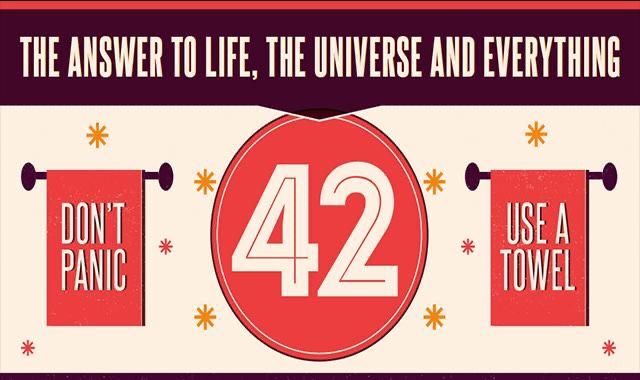
Fictional heroes make a big splash in May. On May 1, 1939, Batman, the caped crusader, made his first appearance in Detective Comics Issue #27. Star Wars Day is “May the 4th be with you.” On May 5, 1895, Richard F. Outcault published the first ever cartoon, The Yellow Kid. Since all those years ago, cartoons have seeped into our lives through every media outlet possible. If it weren’t for The Yellow Kid all those years ago, we probably wouldn’t be watching Iron Man and Captain America slugging it out on the big-screen. May 25 is a tribute to author Douglas Adams, who wrote the famed novel, The Hitchhiker’s Guide to the Galaxy.
Quote from The Hitchhiker’s Guide to the Galaxy
It’s a rather easy day to celebrate and it’s done by taking a towel with you wherever you go: to work, school, or just to the shops. This way you can celebrate such gems of wisdom as, “Nothing travels faster than the speed of light with the possible exception of bad news, which obeys its own special laws.” The only thing that’s truly important on this day is you don’t forget to bring a towel!
Don’t Panic: Carry a Towel
Oh, and the answer to the “Great Question of Life, the Universe and Everything” is “forty-two.” In the 1979 novel, the supercomputer Deep Thought takes 7.5 million years to calculate the answer to this ultimate question. The characters tasked with getting that answer are disappointed because it isn’t very useful. Yet, as the computer points out, the question itself was vaguely formulated. To find the correct statement of the query whose answer is 42, the computer will have to build a new version of itself. That, too, will take time. The new version of the computer is Earth. To find out what happens next, you’ll just have to read Adams’s books. For a math geek discussion of the significance of 42, read the link “For Math Fans” below.
Salad of spring greens and edible flowers
Having dispensed with heroes, we can move onto the significant May Days that truly appeal to me. “April showers bring May flowers” is a saying I’ve heard since my childhood ever so long ago. Historians believe this phrase may date back to a 1610 poem, which contained the lines, “Sweet April showers, do spring May flowers.” A longer phrase, “March winds and April showers bring forth May flowers,” has also been traced back to 1886. Of course, this tidbit of wisdom depends upon your geographic location, for folks inland and north may wait until what we southern folks call “early summer” before they get their “springtime.”
Rabbit and animals dancing around a Maypole
“The month of May was come, when every lust heart beginneth to blossom, and to bring forth fruit,” wrote Sir Thomas Malory in Le Morte d’Arthur. The early Greeks called this month Maia, after the goddess of fertility, many of the early May festivals relate to agriculture and renewal. May Day, celebrated on the first with the Maypole, is one such festive event that was more debauched in earlier times, but now survives as a chaste minuet of colorful ribbons woven around a tall pole by children dancing in an interweaving circle below it.
Maypole dance patterns
Other modern May festivities include No Pants Day on 5/1, originally an end of the college year prank at the University of Texas, Austin, which spread to other realms needing release, and World Laughter Day, celebrated on the first Sunday of May. This holiday helps raise awareness about the benefits of laughing and promotes world peace through laughter. Laughing can instantly help reduce stress and brings us closer to other people, as we share our happiness with them. Those who take part in World Laughter Day can help spread positivity and cheerfulness to help change the world for the better. As Ralph Waldo Emerson said, “What potent blood hath modest May.”
No Diet Day is May 6, a good day to remember our good health isn’t based on a scale number or a pant size. Instead, our health is dependent on nutritious foods, adequate exercise, and sufficient sleep. Extreme weight loss, except under a doctor’s supervision, usually leads to yo-yo weight gain, with the body gaining back the lost weight and more after severe deprivation. Slow, long term, weight loss is more likely to be permanent loss, since we aren’t “dieting,” but changing our habits. May 11th is Eat What You Want Day. I suggest we don’t follow Oscar Wilde’s habit: “My doctor told me to stop having intimate dinners for four, unless there are three other people.”
Speaking of breaking a fast, May 12th ends the month of Ramadan, the holy month of observance for Muslims. It was during Ramadan Muhammad, the prophet of Islam, received the revelations from angel Gabriel that allowed him to compile the holy book of Quran. Upon arriving in Medina, Muhammad announced Allah had established two days of celebrations for Muslims, Eid Al Fitr and Eid Al Adha. The purpose of Eid Al Fitr was to commemorate the end of the fasting of Ramadan, and mark the start of the Shawwal month, as well as to thank Allah for giving Muslims the perseverance to fast during Ramadan. The customary feast day greeting is “Eid Mubarak,” which translates to “blessed celebration” or “Happy Eid.”
The dessert of May is apple pie. Originally invented in England, the earliest apple pie recipe dates all the way back to 1381. The original recipe is very similar to the one we currently know, but it also included figs, raisins, pears, and saffron. The Dutch also created their own version of the apple pie, and the first recipe was published in a 1514 cookbook. This recipe is very similar to the apple pie we know and love today. Apple Pie Day is May 13th.
English and Dutch settlers brought the apple pie recipes into the colonies of what would become the United States, during the 17th and 18th centuries. They had to wait until the apple trees they planted grew and bore fruit, so at first apples were mainly used to make cider. It was only in the 18th century, when the first apple pie recipes were printed in America, that the dessert quickly grew in popularity. Following this came the 19th century Legend of Johnny Appleseed, whose real name was John Chapman. He crisscrossed the expanding American frontier to bring seeds for apple orchards for homesteaders. He also brought news and the gospel for fifty years.
Apple Pie 5 cents a slice and Homemade
Chapman, or Appleseed, lives on as a barometer of the ever-shifting American ideal. Some see him as a pacifist, others as an example of the White Noble Savage (so remembered long after the settlers drove indigenous peoples from the land), and others see a mere children’s book simpleton. Some see him as a frontier bootlegger, since he helped expand the hard cider industry. Others see Johnny Appleseed as the patron saint of everything from cannabis to evangelical environmentalism and creation care—everything, that is, but the flesh-and-blood man he really was.
Our heroes are too often cardboard cutouts, and we don’t spend much time reflecting on their shadow sides. Of course, much like a Flat Stanley, a two dimensional character doesn’t have enough density to cast much of a shadow, unless the light is just right. This is why continuing Bible study is so important: most of us stop in grammar school and never get an adult insight into the scriptures. When we meet grownup problems, we have to wrestle the questions of faith that we once easily accepted trustingly. Or we walk out the door and never come back.
A Single Rose in Memory
One of the most difficult sermons I ever preached was on the first Mother’s Day after my mother died. One of my best clergy pals, who was a mentor in my ministry, had arranged for a single rose to be on the pulpit beside me on that morning. It was a gift of grace and an empowering symbol, for roses were my mom’s favorite flower. Every time I thought I might cry, I held on tight to the polished oak wood and inhaled the fragrance of the rose. Even now, nearly two decades later, I can clearly see this rose and pulpit, and while I remember where I was, I recall the congregation’s faces were a blur on that day. It’s always the second Sunday in May.
I talk about my fresh grief from years ago, for during this current Pandemic too many of us have had present grief and stress, but either have no words for it, or perhaps have no safe place to express it. Then again, we may be “managing the grief of others,” and don’t have time for caring for our own needs. I call this Deferred Maintenance Grief. If you have an old, leaky faucet, you can keep turning the handle tighter for only so long. You can keep the leak stopped for a while, but soon you’ll strip out the insides of the faucet. Once it’s stripped down, it both streams steadily and needs a completely new fixture to replace it, instead of a minor repair.
I experienced this DMG once after a spate of ten deaths in a week, or maybe it was seven in ten days, followed by the death of one of the old, beloved black clergymen in my community. As I lay on the parsonage couch watching a rerun of Babylon 5, I was crying as if old E.D. were my own daddy. I then realized I’d been too busy caring for others and doing the “work I was called for,” to do the grief work I needed to do for myself. I needed to honor my loss and give myself dedicated spaces to deal with my feelings, so I could be present for others. That’s Deferred Maintenance Grief in a nutshell. If I were eating Cheetos by the bucketful, I’d be in a deep hole of DMG and digging it deeper!
Most of the churches I served had a “Don’t fix it unless it’s broke” policy. I grew up in a Depression Era family, so I was familiar with this attitude. However, these same people didn’t live this way in their own homes. We usually had a long list of deferred maintenance projects in the church property to finish in my time there. Then I’d go to the next place and do it all over again. “Always leave a place better than you found it, both structurally and theologically. Teach people the law of love. As we learn in Romans 13:8, “Owe no one anything, except to love one another; for the one who loves another has fulfilled the law.”
Most of us human beings have “deferred maintenance projects” also: days off, doctor visits, exercise, healthy meals, quiet times, and family times. Taking time for ourselves means we’re refreshed and eager to serve from the quickening power of the Spirit. Without this resting or love for our own embodied image of God, we end up working from the dying embers of our body’s frail resources—burnout calls our name.
When we get this broken, our families and our ministries both suffer along with us. We know better than to drive our vehicles with the gas gauge on empty past every filling station on the road of life. We aren’t called to die on the cross to prove our worth to Christ or to anyone else. He’s our savior and we claim his work on the cross. Anything else is workaholism or salvation by works. We need to name and claim this.
For clergy moving to a new appointment, this is an opportunity for a reset. For those who remain in place, I suggest a planning book. Mark off in advance quiet times, office hours, and visitation times. Take educational events, even if zoom is the only offering. Read for pleasure. Take a day off out of town. Don’t answer the phone after 9 pm unless it’s an emergency. Boundaries are blessings. I always told people up front, “I take my brain out of my head and put it inside a brain box at 9 pm. I put it back in at 9 am. If you call me between those hours, somebody better have died, be on the way to the ER, or the church is burning down.” They laugh, but I’ve had friends who wanted their pastor to be their bedtime Bible expositor. Boundaries keep us from burning out.
Speaking of burning, the official door to summer begins with Memorial Day Weekend. This holiday celebrates those who gave their lives in the great wars of our nation. It began after the Civil War in 1865 as a way to deal with the shared grief of a nation, which lost 750,000 people, or 2.5% of the population, in the struggle. If we were to translate this to today’s world, the number would equal 7,000,000 deaths. War is a pandemic all its own.
An engraving of The Dying Soldier – The last letter from home during the US civil war, circa 1864. (Photo by Kean Collection/Archive Photos/Getty Images)
As a parting commentary on Memorial Day, the Pandemic, and Extreme Care Giving, I leave you with a portion of the 1865 Walt Whitman poem, “The Wound Dresser,” which he wrote after serving as a hospital volunteer in the Civil War.
But in silence, in dreams’ projections, While the world of gain and appearance and mirth goes on, So soon what is over forgotten, and waves wash the imprints off the sand, With hinged knees returning I enter the doors, (while for you up there, Whoever you are, follow without noise and be of strong heart.)
Bearing the bandages, water and sponge, Straight and swift to my wounded I go, Where they lie on the ground after the battle brought in, Where their priceless blood reddens the grass the ground, Or to the rows of the hospital tent, or under the roof’d hospital, To the long rows of cots up and down each side I return, To each and all one after another I draw near, not one do I miss, An attendant follows holding a tray, he carries a refuse pail, Soon to be fill’d with clotted rags and blood, emptied, and fill’d again.
I onward go, I stop, With hinged knees and steady hand to dress wounds, I am firm with each, the pangs are sharp yet unavoidable, One turns to me his appealing eyes—poor boy! I never knew you, Yet I think I could not refuse this moment to die for you, if that would save you.
Remember to wear sunscreen to protect your skin if you plan outdoor activities on the first three day weekend of the summer and watch the temperature of the grill. We don’t want anything to burn if we can help it. Charred meat and burned skin are both indicated for cancer risks. Be safe and continue to mask up in public. Get vaccinated as an act of love for your family, your neighbors, and the world community. Since we’re all wound dressers, as well as the wounded also, we want to give as much care to healing our own wounds as we do to the wounds of others.
Nearly a century ago, no one had “Pandemic Shuts Down Halloween “ on their bingo card. The Great Influenza Pandemic griped the nation back in 1918, so most Halloween celebrations were cancelled due to quarantines. At least 195,000 people had died of this novel disease in America by October, 1918. The CDC estimates about 500 million people—or a third of the world’s population—had come down with this killer virus. By the1920’s, at the end of the Pandemic, at least 50 million people died, with 675,000 victims in the United States alone.
USA Red Cross volunteers in 1918 flu epidemic APIC / Getty Images
At the time, we had no vaccines to protect against influenza and no antibiotics to treat secondary bacterial infections. Many doctors and nurses were serving in World War I, so the civilian medical professionals around the world tried to control infections with nonpharmaceutical interventions such as isolation, quarantine, good personal hygiene, masks, use of disinfectants and limitations of public gatherings. An interesting side note is all the flu pandemics which have happened since — 1957, 1968, 2009 — are derivatives of the 1918 flu, according to scientists at the National Institutes of Health.
The world back then was falling apart on two fronts from the first world war and disease. People at home were dropping like flies. Bodies were stacking up like cordwood and were placed in mass graves. Then, as now, we rabbits, like people, can only take so much stress before we need to release it. Many of us are pots with tight fitting lids: as soon as we reach the boiling point, our lid begins to rattle and clatter. If the cook doesn’t remove the lid and stir down the goo inside, we’ll be an over flowing volcanic mess, much like my morning oatmeal I’ve neglected when I’ve had too little coffee. Then Halloween, with its ghouls, goblins, witches, and other demons of the dark, arrives like Washington Irving’s ghost of the Headless Horseman, which we meet in The Legend of Sleepy Hollow, written in 1820.
The Headless Horseman Pursuing Ichabod Crane (1858) by John Quidor
Flu Pandemic Inspired Fiction
H. P. Lovecraft was one of the great horror writers, famous for his zombies, which may have been inspired by the grisly experiences of the influenza pandemic. Providence, Rhode Island, Lovecraft’s hometown, wasn’t spared the pandemic’s ghastly atmosphere.
As one local witness remembered, “all around me people were dying… [and] funeral directors worked with fear… . Many graves were fashioned by long trenches, bodies were placed side by side.” The pandemic, the witness laments, was “leaving in its wake countless dead, and the living stunned at their loss” (letter by Russell Booth; Collier Archives, Imperial War Museum, London).
White Zombie: First Zombie Movie, 1932
Lovecraft channeled this existential horror into his stories of the period, producing corpse-filled tales with infectious atmospheres from which sprang lurching, flesh-eating invaders who left bloody corpses in their wake.
In his 1922 story “Herbert West: Reanimator,” Lovecraft created a ghoulish doctor intent on reanimating newly dead corpses. A pandemic arrives that offers him fresh specimens. This echoes the flu scenes of mass graves, overworked doctors and piles of bodies. When the head doctor of the hospital dies in the outbreak, Dr. West reanimates him, producing a proto-zombie figure that escapes to wreak havoc on the town. The living dead doctor lurches from house to house, ravaging bodies and spreading destruction, a monstrous, visible version of what the flu virus had done worldwide. Lovecraft wrote about a zombie super-spreader even before we knew such a thing existed. Who says “life sometimes doesn’t imitate art?”
Thriller: Zombie Dancers backing up Michael Jackson, 1983
Infection, Prejudice and the Viral Zombies
In other episodes and stories, Lovecraft’s proto-zombies suggest an additional thread of prejudice that runs through the zombie tradition, one fueled by widespread fears of contagion during the pandemic. Even before the outbreak, Lovecraft believed that foreign hordes were infecting the Aryan race generally, weakening the bloodlines. These xenophobic anxieties weave their way into his stories, as contagion and pandemic-soaked atmospheres blend into racist fears of immigrants and nonwhite invaders. We hear these same themes repeated today in our pandemic times by white supremacists and far right groups who want a sovereign nation within the land of the free.
Indeed, many of Lovecraft’s stories are unwitting templates for how prejudicial fears may be problematically amplified at moments of crisis. Such fears are evoked and often critiqued in later depictions of viral zombie hordes, such as the infectious monsters of Romero’s 1968 movie, “Night of the Living Dead” and the film’s subtle commentary on race, as when the white police force mistakes the main African American character for a viral zombie. Amazing how systemic racism persists in making “walking while black equate to viral zombie” even today.
Small Rabbits Fear Large Monsters
Lovecraft’s proto-zombies also provided a strange compensation for some of the pandemic’s worst memories. Like the covid-19 virus of today and the flu of the last century, these monsters consumed the flesh of the living, spread blood and violence, and acted without cause or explanation. Lovecraft assures his readers that these monsters are far worse than anything they saw in World War I or in the pandemic, the twin defining tragedies of his era. Unlike the virus, though, these literary monsters could be seen, stopped, killed, and reburied. Every decade seems to need its own monster or zombie, and Lovecraft offered his readers a version that spoke deeply to the anxieties of his moment.
Modern Fears Birth Modern Monsters
Our modern monsters are more in tune with the unimaginable horrors of our present world. In the 1950’s we had nuclear terrors, so our monsters were Godzilla and the Creature From The Black Lagoon. In the 1990’s, cloning was a scientific advance we knew could go amiss, so we had dinosaurs run amuck in Jurassic Park. Aliens have always been the most foreign of foreigners, so whether it’s the Thing from Outer Space or Invasion of the Body Snatchers, we can scream into our popcorn all afternoon long. If we don’t scream, everyone will know we’re one of the “pod people.” Even before cinema took over entertainment, Orson Welles’s radio broadcast of the H.G. Wells novel War of the Worlds caused mass panic among listeners who believed Earth really had been invaded by Martians on October 30, 1938.
Image Invasion of the Body Snatchers, 1956
Dangers of Dualistic Thinking
Maybe this is why we rabbits need structured experiences which bring us up to the edge of fear, but in a safe environment. We need to learn to deal with our feelings and emotions as they threaten to overwhelm us. We need reassurance we can handle the frightening experience. We don’t need to be thrown off a cliff, but tested appropriately. If we don’t deal with our inner fears, we’ll see a ghoul in every dark shadow. This is why movies today have ratings for age groups.
When I was young, I was certain monsters lived under my bed and in my closet. I couldn’t sleep unless my closet door was shut. I was in art school before I could leave that door open. Something clicked in my mind, or I realized I was now at the age of responsibility. If this were so, I needed to give up this childish fear of invisible monsters. It was time for me to be the monster slayer in real life.
My daddy had a fear of monsters all his life—he called them communists. As a member of the now discredited John Birch Society, he claimed there was a “commie in every breadbox.” We’re no different today, for we rabbits seem to need our own monsters in the world beyond us. If we can’t deal with the brokenness or fears within us, we’ll project it outward onto an outside “other” group. Just as we too often put certain rabbits on a pedestal and are shocked when they fall, we also put some rabbits in a pit and wonder why they can’t get out of it. We tell ourselves “they don’t try hard enough” or “they aren’t worthy enough,” but neither of these statements are true. People are individuals, so we can’t make conclusions about them as a group.
Mischief Abounds All Night
By the 1920s, Halloween in America had become synonymous with mischief, which young people used as an excuse to break windows or damage property. Mischief comes from the Middle English word meschief, or “misfortune,” which itself derives from the Old French meschever, “to end up badly.” In the U.S., mischief has a legal definition: “Criminal mischief” includes true vandalism, such as the defacement or destruction of property, but also includes fully reversible pranks, like toilet-papering a house. In some states, it covers even vanishingly minor annoyances, like ding-dong-ditch, or ringing the doorbell and running off before the homeowner can answer the door. In 1923, the police chief commissioner in Omaha, Nebraska, went so far as to designate the “city’s worst boys” as junior police officers on October 31 and relied on them to report criminal behavior in an attempt to curb vandalism.
The first known printed reference to “trick-or-treat” appeared in the Alberta Canada Herald on Nov. 4, 1927, according to the Smithsonian.
ModernMischief Makers
I met two of my young students dressed in black garbage bags as my daughter and I returned from trick or treating one Halloween night. Their too guilty grins as they said hello and hid their hands underneath their costumes was a dead giveaway they were the likely culprits for the artistically draped toilet paper on my giant live oak tree. I let them pass on by and got my car keys to go visit their home, which was just up the street. After a drink and a chat with the parents, we agreed the boys would clean up my tree. My parents also were visited with this “sign of endearment” more than they liked when I was young. I imagine it’s still going on today.
Image of Other Outstanding Mischievous Vandals and Toilet Paper Trees
Reflections on a Non Traditional Halloween
While we grownup rabbits think our little bunnies are going to miss Halloween traditions, the smallest ones don’t know what is tradition yet and the older ones can understand why this year will be different. Trick or treating began in the USA after WWII, as a way to discourage mischief, for if the kids get candy, they’ll be less likely to wreck havoc. As far as long term memories go, I’ve stretched mine, and can remember only one neighborhood walk about. I was slowed by my Carmine Miranda costume, while my brothers ran two houses ahead. I was delayed by holding my fruited headdress on my head.
Another Halloween we had a party at home with apple bobbing, snack making, and games. This was probably due to a fear of poison or pins in candy bars. This fear comes around every year, but it seems to be an urban legend. I also remember attending a school haunted house and walking through the dark and spooky cloakroom. There I touched all sorts of icky, gooey substances purporting to be “brains, eyeballs, and assorted body parts.” I do remember I did everything I could to not be banished to that same cloakroom for bad behavior the rest of year. No sense tempting fate, for sure, my eight year old mind reasoned.
If this holiday is for four year olds to twelve year olds, I can only remember one third of the years. In the short run it seems important, but in the long life of a person, only a few extraordinary moments will rise to peak memory. If this isn’t a year for house to house galavanting, or trunk to trunk acquisitions of treasure, then we’ll use our creativity to make it special, for that’s what we do.
Carmen Miranda Fruit Hat
This Is Not the Apocalypse
We rabbits live in a world of apocalyptic scenarios, yet we have safer, healthier, and longer lives than people in any other point in history. Still we constantly imagine our whole world could all fall apart in a heartbeat. We take our worries and translate a lot of our anxiety into fears about our children. If we listen to the new or hang out on social media, we might get caught up in “doom scrolling.” This is the internet version of rubbernecking at a gory traffic accident. Halloween began as the dark and terrifying compliment to the following bright and glorious All Saints Day celebration of November 1st, when the faithful remembered the saints, martyrs, and ordinary believers who have touched the lives of all the living.
The World of the Living and the Dead Meet
In both these festivals, the world of the living and the dead is permeable and fluid. These two days help us meet our fears about death, the uncertainty of our world, and our inability to control the seeming chaos of a world spinning out of control. We look to fallible individuals today for the change we seek, forgetting that we ourselves need to become the change we want to happen. Moreover, we forget the power of faith and the purpose of our combined faith communities called to work for a just and better world, which reflects the heavenly world to come.
The prophet Isaiah (65:17-18) speaks of God’s glorious new creation:
For I am about to create new heavens and a new earth; the former things shall not be remembered or come to mind. But be glad and rejoice forever in what I am creating; for I am about to create Jerusalem as a joy, and its people as a delight.
The promises for the Hebrew people in exile belong also to us today, for we find ourselves living in “exile from the life we once knew.” If we live in the past, we’ll always live in exile from the present. Perhaps we should choose to live in hope for a better future and spend our time in this now making that promise come true.
April showers bring May flowers and Coronavirus containment orders. Everything we once knew about our worlds has been upended by the advent of this novel virus. Once we were proud of our abilities to master our planet and to wrest its unruly ways to our wills. Now we meet an invisible, but infinitely small agent that can weigh lay us from some hidden corner or passing person. I have friends who say they don’t want to go to the grocery store without their spouse or partner, for they don’t feel safe anymore. Then there’s the folks who run pell mell into the jaws of death, daring the virus to take them on.
Dr. Bunny Rabbit, MD
From my rabbit hole, I wonder if the virus doesn’t affect the nervous system and cause some of us to act more fearful and others to act more foolhardy. I think the stress of looking at our four walls of our various hutches, being cooped up with our rabbit families, and dealing with teaching our bunny children their lessons is getting to us all. Maybe raises for those teachers are due in the next go round, now that we understand what they go through every day. The stress is getting to all of us, and even to this rabbit, who’s used to organizing my own time.
People laughed at me back in my seminary days when I brought my appointment book to school, but I blocked off all my classes, set aside time for study, time for meals, and I only worked a half day on Saturday. Sunday I did church and watched the Cowboys, back when they really were America’s Team. I’m retired now, but I still keep a calendar of projects. Since my two art shows got cancelled, I started making masks for those who’ll be opening up shop again soon. I keep up on my pages, my sci-fi spiritual blog, and I started a new painting series, “Postcards from the Pandemic.” I’m down to working about 30 hours a week now, but I’m almost as old as the dinosaurs. The young rabbits can work the long hours and they’re welcome to them.
The world is topsy turvy these days
This May won’t be like any May we’ve ever had before. Whatever model or image you have of the “merry month of May,” you should toss it out the window and let it smash to smithereens like a precious crystal vase dropped from the top of the Leaning Tower of Pisa. We won’t be traveling there any time soon, but if you can find a high up window, your fantasies about May will crash with a resounding clash. Then you can have a good cry about it or a stiff drink, whatever suits your fancy.
Just get your rabbit mind wrapped around this idea: San Antonio has cancelled its Cinco de Mayo celebrations and the Kentucky Derby won’t run on May 4, but has deferred this premier horse race to September 5, 2020. The Indianapolis 500, a Memorial Day tradition for 104 years, has been rescheduled for Sunday, Aug. 23. These events haven’t been cancelled forevermore. They’ve merely been postponed to a future date. We can bury the small grief of our delayed gratification, and look forward to a better time in the future.
NASCAR will be the first major sport to return to television, but without fans in the stands. NASCAR will resume its season without fans starting May 17, at Darlington Raceway in South Carolina with the premier Cup Series racing four times in an 11-day span. The revised schedule for now will only race at tracks within driving distance of the Charlotte-based race teams and in states that have started reopening.
Drivers, start your engines!
Charlotte Motor Speedway will then host the Coca-Cola 600 on May 24 to mark 60 consecutive years of the longest race on the NASCAR schedule being held on Memorial Day weekend. The track in Concord, outside NASCAR’s home base of Charlotte, will then host a Wednesday race three days later. The teams won’t travel far, they won’t practice, they won’t qualify, they’ll wear face masks, practice social distancing, and the rules might be adjusted for pit stops, but when the green flag drops, those drivers will forget about these minor things because they have a race to win. Racing rabbits always go for the trophy, as in “Wreckers or Checkers! Baby, I’m using the chrome horn if you don’t get out of my way!”
Some holidays and celebrations won’t change, and we rabbits can be glad for this. I’ve often listed all the commercial holidays ginned up to advertise some food stuff or group, but not this May. My bunny nose sniffs a different wind in the air. In the interest of not working too hard, I’ve picked five good holidays and celebrations for May:
May 1—May Day—love and hope May 4—Star Wars Day—May the force be with you May 10—Mother’s Day—remember your mama! May 25—Memorial Day—honor those who died serving the USA May 25—Carry a Towel Day—homage to Douglas Adams’ Hitchhiker’s Guide to the Galaxy
May pole celebrations
Our age is seeking a new spring of life. May Day once marked the halfway point between darkness and light. It’s half way between the spring equinox and the summer solstice. In Ireland, the pre-Christian Celtic peoples divided the year into two main seasons: Winter and the beginning of the year, which fell on November 1, and the Midyear/Summer, which began on May 1. These two junctures were thought to be critical periods when the bounds between the human and supernatural worlds were temporarily erased.
Many of us have experienced thin times, when we feel the presence of God’s spirit with us more deeply than on other occasions. For me, this is more often when I’m in nature. The great dome of the sky, the clouds lit with the glow of the sun, and the liquid light overflowing and casting its glow on the land below. I can get lost in these thin moments and forget what I’m doing and where I am. If you meet a rabbit stopped for speeding on the highway, perhaps they were in a thin moment and not really a jerk.
There are also thin places, which are places of energy, or a place where the veil between this world and the eternal world is thin. A thin place is where one can walk in two worlds—the worlds are fused together, knitted loosely where the differences can be discerned or tightly where the two worlds become one. These are places which have been recognized over the ages as connected with the spiritual world. Often overlaid with the most recent god of the newest inhabitants, the place retains its spiritual energy. Many temples in the ancient world were built on the sites of even more ancient holy places, only to have churches built over them even later still.
In this era of Coronavirus, we might not be using our frequent travelers miles, so we could seek an alternative thin space. The holy icons are perfect for this, for since they’re a “window into heaven,” they’re by definition a “thin place.” They usually are given a designated place in the home, called the Red Corner, for the Russian word for red and beautiful are the same. Of course, we don’t pray to the icon, and the object isn’t worshipped, for that would be idolatry. We pray to the God of the saint represented, or to the Son of God, but not to the icon itself, which is merely an outward and visible reminder of the inward and invisible spirit which connects us all to what is good and holy and communal in our socially distancing world.
May the Fourth be with you!
On May 4th, we can say, “May the Fourth be with you,” and remember the “Force is always with us,” for every time and place can be a thin place if only we rabbits would become aware the greater power beyond us is also operating within us, for “we have this treasure in jars of clay, to show that the surpassing power belongs to God and not to us” (2 Corinthians 4:7).
We all have Mothers, who gave birth to us. Some of us also have adopted mothers, mothers who raised us, mothers who formed us in the faith, or mothers who took us under their wing and taught us how to get along in the world. Mothers today don’t have to be women, but they do have to nurture and shelter. The church has been a great mother for centuries, nurturing the poor and the marginalized through the ministries of outreach to the neighborhood and the world. These ministries haven’t stopped just because of the coronavirus, but are increasing because of job losses, homelessness, and hunger. If you have the means to share with your local food pantry, please do. Hungry rabbits depend on us.
Memorial Day weekend was for a long time a pause to honor the nation’s war dead. Then it became a three day weekend for backyard barbecues and sporting events. As the toll from the novel coronavirus pandemic in America marches past the total of Americans killed in the Vietnam War, our holidays may take on a more somber nature. For other rabbits, who have an overripe case of cabin fever, a need to break loose in a wild debacle may override their common sense. I know my rabbit friends have good sense, so even if your state flings the doors wide open to “life as usual,” common sense and expert wisdom will prevail instead. Let others test the waters on this idea, and let them be the guinea pigs to see if the curve has actually flattened.
A cotton towel for a cotton tail would be best.
May 25 is also Carry a Towel Day, so if we have a towel, we won’t panic. As explained in the Hitchhiker’s Guide to the Galaxy, towels are “the most massively useful thing an interstellar hitchhiker can have.” A towel has both practical value, since it can be used for warmth, shelter, a weapon, and also strangely to dry one’s body. It also had psychological value, for if a non-Hitchhiker sees you with a towel, they’ll assume you’re fully stocked with other necessities as well. The lesson I take from this is while life is serious, I shouldn’t take myself too seriously. Humor will get a rabbit through the thickets and briars of this world better than struggling against the thorns and weeds. After all, angels fly because they take themselves lightly.
I will see you next month, when the June bugs fly. Until then,
Love, Joy and Peace,
Cornie
Recipe for CLASSIC MINT JULEP for a delayed Kentucky Derby, best consumed while wearing a fancy hat or elegant jacket. This recipe is adapted from “The 12 Bottle Bar,” a fun, informative cocktail recipe book by David Solmonson and Lesley Jacobs Solmonson. To make simple syrup, pour one cup of granulated sugar or Splenda into one cup of water and slowly heat on the stove, stirring until the sugar/Splenda is dissolved. Plus a Handful of fresh mint leaves, 1 oz. simple syrup (2 tablespoons), and 2 oz. bourbon or rye, your choice (1/4 cup or 4 tablespoons).
Put the mint in a cup, preferably one made out of silver or some other metal that will keep things nice and cold, and muddle it by pressing it gently against the sides and bottom of the cup for a few seconds (use that muddler you got as a wedding present or the handle of a wooden spoon). This rabbit would use a spoon.
DO NOT MASH THE MINT. You just need to release the mint’s oils, which does not require a strenuous effort. Over-muddling will result in an overly bitter drink. Add the simple syrup. Fill the cup with crushed ice and add the bourbon. Stir gently for 30 seconds or so, until frost forms on the side of the drink. Add more ice if needed and garnish with another sprig of mint. If you don’t have metal cups, make it in any cup cup you have. The metal is traditional, however.
This is a stay at home beverage, or a split between two persons, since it exceeds the recommended one ounce per day consumption of alcoholic beverages. Enjoy responsibly.
For more information on some of the subjects mentioned above:
Life for extroverts in the Age of Social Distancing is difficult. They need people to bounce their ideas off of, friends to hear their tales of daily struggles or victories, and most of all, the transfer of energy between the parties to feel alive. For introverts, most of whom need space and quiet to restore their energies, the “stay at home unless absolutely necessary” directives are more welcome than not. A good book, some quiet music, and a calming drink of herbal tea is a balm for the body and the soul.
Of course, if you have children, activity is your middle name, no matter where you fall on the spectrum of extroversion or introversion. Taking walks in the neighborhood of your city is an opportunity to learn about architecture. How is it built, what are the forms called, and how many styles can you identify as you walk about? You can make an art project from this walk about, by building a shoebox city, a collage from magazines or scrap paper, or making a map.
Fantasy Forest
When my daughter was young, we lived in south Texas, so our walks meant we might stumble upon a limestone fossil creature. She was always amazed some animal from the prehistoric times would find its way into our modern age, even if it were a lifeless stone. To find a treasure from 100,000,000 years ago always added excitement to our jaunts about the home place.
If you live in the countryside, you might have access to the woods or a forest, or you can go there. We haven’t decided to lock down everyone in their home yet. However, it’s my “Dr. Cornie” opinion we all should limit our goings and doings to the utmost necessities of grocery, health, and essential services. While I’m not a “real doctor,” those of us who are “Coronavirus Cathys and Chucks” can spread this disease to others, even if we don’t feel sick or have symptoms.
In this Age of Coronavirus, staying put at home means we “flatten the curve” of the spread of the disease. While many will have a mild disease, too many will have a difficult outcome, especially when they face a lack of hospital beds and equipment to treat them. Let’s think of these others, and not just of ourselves alone.
Autumn Sunlight at Poverty Point, Louisiana
With this admonition in mind, I invite you to travel virtually in solitude to the woods. Many of my paintings are of nature, for I feel close to God in nature. My parents may have been getting a vacation from me when I went to summer church camp at the old Works Project Administration site at Caney Lake, but I connected with the God who meets us in nature while I was there.
The Germans have a constructed word Waldeinsamkeit, which roughly translates to “the feeling of being alone in the woods.” The structure of the word says it all: “wald” means woods/forest, and “einsamkeit” means loneliness or solitude. The Grimm Brothers wrote many fairy tales, which were also set in the famed German Black Forest: Hansel and Gretel, Rumpelstiltskin, Snow White, and Little Red Riding Hood to name a few.
I don’t know if children read these stories today, since they’re a tad scary, but my parents grew up in the Great Depression and fought the Great War in Europe against the Nazis. They helped us through the imaginary, scary events so we could take on the actual, distressing situations. Practicing the easy operations in a safe space helped us confront our fears in real life.
Creek Side Reflections
Sometimes I’ll walk in the woods and hear a voice calling me to turn around. It’s not an audible voice, as if an outside agent were speaking to me. It’s also not my own inner sense, as “I should turn around.” Instead, I perceive a stillness from beyond, and the word I hear is “Turn around and look.”
If nature speaks to us, it’s because “Ever since the creation of the world God’s eternal power and divine nature, invisible though they are, have been understood and seen through the things God has made.” (Romans 1:20). Does this mean all persons see God’s hand in creation? Of course not, for some can’t even see the image of God in their own faces when they look in the mirror as they brush their teeth in the morning. Perhaps this is why the city streets are littered, the country roads are trashed, and violence to humanity is a sad trouble in every zip code. If we are God’s people, we’ll care for one another and for God’s world.
Even in the Age of Coronavirus, when our solid underpinnings have been cut down from under us and we have crashed to the ground with the noise of a giant sequoia tearing through its smaller companions, we don’t lose hope and we don’t lose heart. “Even though our outer nature is wasting away, our inner nature is being renewed day by day.” (2 Corinthians 4:16)
Walk in the woods, in silence, and renew your soul, with Ralph Waldo Emerson:
Waldeinsamkeit I do not count the hours I spend In wandering by the sea; The forest is my loyal friend, Like God it useth me.
In plains that room for shadows make Of skirting hills to lie, Bound in by streams which give and take Their colors from the sky;
Or on the mountain-crest sublime, Or down the oaken glade, O what have I to do with time? For this the day was made.
Cities of mortals woe-begone Fantastic care derides, But in the serious landscape lone Stern benefit abides.
Sheen will tarnish, honey cloy, And merry is only a mask of sad, But, sober on a fund of joy, The woods at heart are glad.
There the great Planter plants Of fruitful worlds the grain, And with a million spells enchants The souls that walk in pain.
Still on the seeds of all he made The rose of beauty burns; Through times that wear and forms that fade, Immortal youth returns.
The black ducks mounting from the lake, The pigeon in the pines, The bittern’s boom, a desert make Which no false art refines.
Down in yon watery nook, Where bearded mists divide, The gray old gods whom Chaos knew, The sires of Nature, hide.
Aloft, in secret veins of air, Blows the sweet breath of song, O, few to scale those uplands dare, Though they to all belong!
See thou bring not to field or stone The fancies found in books; Leave authors’ eyes, and fetch your own, To brave the landscape’s looks.
Oblivion here thy wisdom is, Thy thrift, the sleep of cares; For a proud idleness like this Crowns all thy mean affairs.