Learning, Growing and Thriving

adult learning, art, Athanasius, brain plasticity, Christmas, Civil War, cognitive decline, Creativity, crucifixion, Faith, Imagination, incarnation, john wesley, Love, mystery, nature, renewal, Spirituality, St. Athanasius, United Methodist Church, Valentine’s Day, Valentine’s Day

In most adults, learning and thinking plateaus and then begins to decline after age 30 or 40. The old adage, “Don’t trust anyone over thirty” takes on new meaning in regards  to creativity. People after this age start to perform worse in tests of cognitive abilities such as processing speed, the rate at which someone does a mental task. The slide becomes even steeper after 60 years of age. We also notice a similar learning decline in children after summer vacation, which results in the fall semester becoming a “reteaching opportunity.”

As one who is also “growing long in tooth,” I have passed this yardstick by a mile. I notice I have a “slower processing speed” in my creative writing. I don’t consider it a reason to quit, but a reason to better organize my other time-wasting behaviors (social media, newsletters, newspapers, etc.). I can always ignore cleaning the condominium! Creativity before housework, is my motto.

Housecleaning Meme

We often think older adults are on a downward slope with unrecoverable loss. “Use it or lose it,” the saying goes. Recent research suggests we need to apply a more hopeful mindset and vocabulary when discussing older people—much like that used for childhood or early adulthood. Decline, as we so often see it, may not be inevitable. In fact, learning a new skill and practicing it for three months has shown benefits beyond the the practice time.

Adults often have limited time or resources, so if we encourage learning a new skill, this may help them step out of their comfort zones. In people’s later years, many personal and societal changes—such as moving out of state to be closer to family members, switching jobs or coping with physical distance from loved ones—make learning new skills necessary to adapt and succeed.

For example, taking a class to improve technological skills could aid seniors’ success in an increasingly digital world, such as helping them use Telehealth or online banking platforms. Learning new skills in an art class allows a person to express their feelings and solve problems in creative ways. Each person can find their own path to success in artistic practice.

Potholder Loom, just like the one I had back in the day.

Our art class is trying a new thing: weaving. We have been painting for quite a while, so this is really a hands-on project. Some of us had the benefit of making woven potholders as children, or weaving newspaper “sit-upons” at summer camp. The technique isn’t unknown, but making a creative design interpretation is how we take our basic skill forward into a stimulating and creative brain challenge.

DeLee: Woven Paper on a Stick (Earth and Sky)

We could just repeat what we already know, but this doesn’t build us new neurons in our brains. If we keep the same old paths and don’t create new ones, we aren’t flexible when we meet new situations. Since we live in a rapidly changing world, building a brain capable of rapidly adapting is important to live independently and vibrantly for as long as possible.

I remember how my Daddy could only use the old tv remote to change the channel for the original non cable stations. When “Murder, She Wrote” came on the cable channel, my Mother had to use the cable remote to change the station for him. His Alzheimer’s disease prevented him from learning new skills, but he remembered all of his previous medical training and could diagnose his condition and boss the emergency room doctors when he was admitted to the hospital for a fall. Our brains are a mystery indeed.

Mike jumped the gun on Valentine’s Day and created a woven heart. These were big in the Danish and German communities and very popular in the 19th century in America. During the Civil War, soldiers made many of these in elaborate forms to send to their loved ones back home.

Unknown Artist: Affirmation Weaving

The brain is a fantastic and mysterious organ. If we make a habit of learning something new every day, of whatever interests us, we have the opportunity to keep our lucidity for a longer time. We also we meet the quickening changes of modern life with a steadfast heart and mind. We stress less when we know we can adapt and change in our own lives. We don’t have to be the people who say, “You can’t teach an old dog new tricks.” We can teach and we can learn, but we might need to be more patient with the old dog. In some corners, we call that “grace.”

I watched my Granddaughter’s Daddy Daughter Dance

Our group was in and out during the several weeks devoted to this project. One of us was sick, one was grieving the death of a beloved pet, another had pressing work issues, and the teacher went to Florida to see her granddaughter get married. Amazingly, life goes on. People dropped in for spiritual support, which is a side benefit of the community of art class. I managed to get mine mostly done, and Gail S. finished hers completely. Sometimes life interrupts our best intentions and we move on. We will learn new lessons on the next project.

Gail S’s “Eye of God” weaving

 Gail S’s “Eye of God” weaving incorporates yarns from two different mop heads, some sticks, and a bird feather. Gail almost always keeps a realist focus in her works, so her eye of God has a bird feather to mark the pupil. The upper field of grey and white mop yarns represent the cloudy sky, while the blue yarn stands for the water and the brown for the land. God watches over all of God’s creation. Gail S’s love of the outdoors and all of nature is evident in all her work.

Cornelia’s Cross on a Hill (unfinished)

I also recycled some old paintings and cords which I’d used in the preparatory work of other paintings. In addition, I used some recycled strips of Amazon shipping parcels as well as a wire shape which once belonged to a butterfly wing. In repurposing these items into the weaving along with two old brushes bound together with a God’s eye, I invoke the renewal of life after death.

We people of faith have two opportunities for a renewal of life after death. The first is by our profession of faith in Christ and his life, death, and resurrection on our behalf for our salvation. This gives us a living faith in this world. The second renewal is for the resurrection from death itself. This gives us a life beyond this world. Our faith is worthless if it doesn’t change us for our walk upon this world. If we don’t have the heart and mind of Christ within us, and if we aren’t earnestly seeking to be made perfect in the love of Christ daily, our United Methodist heritage tells us we’ve not yet been converted.

Yet Christ desires to save all, as John records in 12:32,  Jesus tells the crowd,

“And I, when I am lifted up from the earth, will draw all people to myself.”

Not just some people, or only the best, or even just us United Methodists, but ALL people. Most of us aren’t able to understand such a wide ranging love, for we live in a world of tribal loyalties. If we look at creation, which is God’s first work, God loves that which God created. God loves everything God created. We humans are the ones who choose sides and introduce boundaries and hate into God’s singular creation. The world or Kosmos is the creation first and then the people in it.

Today we tend to ascribe “world” to the “culture,” or secular society in general, but its plain meaning is creation and the human presence, for good or ill. The ancient Greeks and Romans divided the world into the material (bad) and the spiritual or mind (good), but the Jewish theology conceived the unity of both as part of God’s gift to humankind.

In the fifty-fourth chapter of On the Incarnation, St. Athanasius of Alexandria wrote a sentence that has echoed down through the centuries even into our own time as a brilliant summary of the Gospel. He wrote this: “God became man so that man might become god” (54:3).

This doctrine is called theosis or acquiring the whole nature of God. We United Methodists call this state Christian Perfection, or “a heart so full of love of God and neighbor that nothing else exists.” Our Wesleyan heritage was influenced by the Wesley brothers’ deep love for the Greek Orthodox fathers of the early church. To focus only on fallen nature is to deny the power of God to redeem us and all creation and to make all things new. We humans and nature aren’t more powerful than God!

If we cut off part of our God given self, we deny the incarnation of Christ, who became human for us that we might become divine. We need to remember what John 3:16 so succinctly states:

“For God so loved the world that he gave his only Son, so that everyone who believes in him may not perish but may have eternal life.”

Art is a way to open our eyes and hearts to a new way of seeing spiritual truths. Art is also reflective of the artist’s soul and spirit. A sensitive viewer can read the tale of trauma or the struggle for survival in an artist’s body of work. More than this, we can listen for their voices straining to be heard. Most people have been silenced and conformed to the “cause no trouble, don’t get out of step” mantra of the public school system training our youth for the workplace.

In art class, we can lose our fear of being different because being different gets rewarded! Being original gets an attaboy or attagirl.  I find such joy helping people find new courage and creativity they didn’t know existed within themselves. My students keep me young too. I feel blessed beyond measure.

Joy and peace,

Cornelia


To Stay Sharp as You Age, Learn New Skills | Scientific American

https://www.scientificamerican.com/article/to-stay-sharp-as-you-age-learn-new-skills/

That Man Might Become God — Fr. Andrew Stephen Damick
https://blogs.ancientfaith.com/asd/2015/01/22/man-might-become-god/

The Creating God

art, Attitudes, change, Creativity, Evangelism, Faith, garden, Healing, Holy Spirit, hope, Imagination, incarnation, inspiration, john wesley, Light of the World, Ministry, Painting, purpose, Reflection, renewal, shadows, Spirituality, vision, Work

In the dead heat of summer, our gardens aren’t putting forth the fruit of our planting. Maybe the animals of our neighborhood have made their too frequent nightly visitations, so our harvest is skimpy. We can forget God is a both a creating god and a recreating god as well. The first words of the alternate NRSV translation of the Bible’s first book Genesis (a word meaning “origin”) are—

First stage: string, fabric scraps, and under painting

 “When God began to create…”

In the old KJV, Genesis 1:1 readsIn the beginning, God created the heaven and the earth.”

I appreciate even more the next verse from Genesis 1:2—

“The earth was a formless void and darkness covered the face of the deep, while a wind from God swept over the face of the waters.”

Alternate translations read— “while the spirit of God or while a mighty wind” swept over the face of the waters. This reminds us nothingness and darkness aren’t problems for God, who is able to bring glorious light to any situation.

Psalms 139:12 speaks of the nature of God:

“Even the darkness is not dark to you; the night is as bright as the day, for darkness is as light to you.”

I’ve lived for over half a century with chronic depression, so I can recognize darkness, not only in my own life, but also in the lives of others. Most of my ministry and even my secular work was done with a calling to bring others to the light of hope and confidence that anything was possible.

In art classes, I asked my students to trust in ABC—Attitude, Behavior, and Consequences. If they had a Positive Attitude, they would have Positive Behavior and work on their assignments. If they worked, they would see Positive Consequences or Improvement over time. Asking people who’ve been told they can’t do art to believe they can learn even if they aren’t “talented” is a big ask, but if they have faith in this promise, they discover it’s true.

When I sold insurance, I asked people to trust in the idea of making a small sacrifice now to prevent a greater loss later. Also, if they had no loss, they shared in a community to underwrite the group losses and keep the cost of protecting their own property low. Not everyone has the light to see this benefit of community, but for those who do, I could help keep their consequences from being a disaster.

Second stage: overpainting, printed circles, and added ruler lines

When I entered the ministry, I discovered congregations who had lost their faith in the God who could make something out of nothing This began with the creation story, the choosing of the nation of Israel to be God’s people (even though they were once no one’s people), and feeding them in the extended wilderness wandering before they arrived at the promised land. The Bible is full of examples of God’s providing more when people have too little to sustain them: Elijah and the widow of Zarephath, the feeding of the crowds with a few fish and loaves, and the water turned into wine. These modern people didn’t have a “recreating faith” that God could work in their lives today, just as God had once worked in the lives of others in the days of Christ.

That is what we call a “dead faith,” or as John Wesley put it in his notes on the New Testament at 2 Timothy 3:5— “An appearance of godliness, but not regarding, nay, even denying and blaspheming, the inward power and reality of it.”

It’s dead, because the Spirit isn’t at work in it. I used to tell my beloved evangelism professor, the late Dr. Billy Abraham, the first place we needed to do evangelism was in the local church, because folks hadn’t heard the good news. If they weren’t excited enough to have a living faith, they wouldn’t go out and spread the good news to others.

I’ve never been a cheerleader, although I did have some time in my high school pep squad. I was more often involved in making the football banners and pep posters for the other sports activities. Also debate team took up much of my time. One of the best practices I learned in debate was positive points sell better than negative ones. Also, it’s better to make the same point over and over with different facts and examples.

When I say our God is a creating and recreating God, I can point to the beautiful verses of John 1:1-5—

“In the beginning was the Word, and the Word was with God, and the Word was God. He was in the beginning with God. All things came into being through him, and without him not one thing came into being. What has come into being in him was life, and the life was the light of all people. The light shines in the darkness, and the darkness did not overcome it.”

In the beginning was the Word

 As believers in the Holy Trinity, the Word made flesh is Christ, so he was co-creating with God the Father and God the Holy Spirit from the beginning. By virtue of the incarnation, Christ takes on our flesh to redeem us and make us whole again. This comes to completion through the cross. When we place our faith in Christ’s act of love for all creation, we are made one with Christ, and one with God. The Holy Spirit brings us ever closer to the true nature of Christ, until we’re perfected in love of God and neighbor.

I painted on unprimed canvas, just to see what would happen. Also, because I knew the paint surface would be different than the usual texture on the primed canvas. After I painted several different colors in blocks with the scrap pieces of cut canvas used as “masking tape,” I decided to use a mix of iridescent gold and silver acrylic paints to glaze over the under painting. I also added some circles and straight lines. I’ve collected a few jar tops recently, I used some string elements, and I had a school ruler left from my last teaching job back in the 1980’s. (Yes, I keep things. They are tools of the trade. My Sears Craftsman staple gun from art school finally died after half a century of use.)

I’ll be working some more of these experiments for a while. Creating and recreating our lives is what keeps us new every morning. As someone who has been renewed and recreated more than one time can attest, along with the prophet Jeremiah,

“For surely I know the plans I have for you, says the LORD, plans for your welfare and not for harm, to give you a future with hope.” (29:11)

Joy and peace,

Cornelia


John Wesley’s Notes on The New Testament, 1755:

2 Timothy 3:5—“holding to the outward form of godliness but denying its power. Avoid them!”

The Witness of the Cross

art, Creativity, crucifixion, Faith, Holy Spirit, Holy Spirit, Imagination, inspiration, john wesley, Love, mandala, nature, Painting, perfection, Rumi, Spirituality, suffering, Sun, United Methodist Church, vision

Mosaic Crucifixion, with Mary and John.

We are a people who follow Jesus, “the pioneer and perfecter of our faith, who for the sake of the joy that was set before him endured the cross, disregarding its shame, and (who) has taken his seat at the right hand of the throne of God,” as the writer of Hebrews 12:2 reminds us. The suffering servant motif of Christ was once a model all early Christians expected to inherit and emulate.  

The Suffering Servant

Paul spoke to this suffering model in his letter to the Romans:

“…How can we who died to sin go on living in it? Do you not know that all of us who have been baptized into Christ Jesus were baptized into his death? Therefore, we have been buried with him by baptism into death, so that, just as Christ was raised from the dead by the glory of the Father, so we too might walk in newness of life. For if we have been united with him in a death like his, we will certainly be united with him in a resurrection like his.” (6:2-5)

Paul’s first sentence is perceptive because he recognizes many who call on the name of Christ nevertheless go on living an unchristlike life. In the early Christian centuries, many didn’t get baptized until they were near death because they weren’t ready to change their wicked ways. The early Christian habit of hyper-delayed baptism is well attested by the later fourth century. Apparently, the reasoning behind waiting until fairly late in life was the belief baptism cleansed sin once and only once. Consequently, any meaningful sin after baptism could leave one in a serious lurch in the economy of salvation. We have the well-known example of the early 4th CE Emperor Constantine who delayed baptism until his deathbed.

Of course, this is a misunderstanding of the Holy Spirit’s work of perfecting our human nature, but it took many centuries to work this out. We can thank John Wesley for our understanding the works of grace in the ongoing process of Christian Perfection. Baptism washes us from the stain of original sin, which is common to all humanity. Baptism also anoints us with the Holy Spirit to be continually with us and bring us to know God’s saving love in Jesus Christ.

As we grow in faith and the Spirit of God calls us to give our lives to Christ, we are justified from past sins. Some faith communities stop here, so they need over and over justification. They have no ongoing theology of sanctifying grace. We United Methodists do have this great gift, which we can give to the world. When we aren’t going on to perfection in love quite as fast as our neighbors wish we were, it’s because we’re being stubborn and resisting God’s grace.

W. H. Auden says it best:

“We would rather be ruined than changed, 

We would rather die in our dread 

Than climb the cross of the moment 

And let our illusions die.” 

The Cross and Self-Denial

The cross is ever a witness to our willingness or unwillingness to bear the cross of Christ. As Jesus told his disciples:

“If any want to become my followers, let them deny themselves and take up their cross and follow me. For those who want to save their life will lose it, and those who lose their life for my sake will find it. For what will it profit them if they gain the whole world but forfeit their life? Or what will they give in return for their life? (Matthew 16:24-26)

Often we interpret this verse in terms of giving up material possessions, but we can never give up outward things unless we’re first willing to give up our false images of ourselves. We might want to be large and in charge, or soft and sweet. Perhaps our self image is invested in being holy and serious. We may even be the class clown. These are only masks behind which we hide our truths and vulnerabilities.

Jesus spoke a parable in John 12:24-25—

“Very truly, I tell you, unless a grain of wheat falls into the earth and dies, it remains just a single grain; but if it dies, it bears much fruit. Those who love their life lose it, and those who hate their life in this world will keep it for eternal life.”

If we want to be changed, we must die to our ordinary selves, and then rise as a new creation. If we remain the same, we won’t be much, but if we’re willing to take on the image of Christ, we can be a new creation of the first order.

How The Witness was made

Ukrainian children’s hospital bombed by Russia

This is how art gets made. I saw an image of a bombed-out children’s hospital in Ukraine. Because the photographer had cropped it in a certain way, I saw an image of a cross on the brickwork. Those rectangular bricks contrasted with the diamond shaped wire work in the darkened areas in the four outer quadrants. I usually weave the whole painting surface, but this time I wove only the cross area. That was a challenge. I had to invent a new way to secure the woven canvas strips on the wooden stretcher strips.

Weaving two paintings together

As I painted the first layer, I made all the contrast of bright colors in the cross and dark blues and reds in the outer quadrants. The next day, I added a gold wash over the cross squares and painted diamond line patterns over the dark quadrants. I came back to add silver into the diamond shapes and to touch up the diagonal lines. I also painted the sides of the canvas to unify it.

Adding blocks of color to the cross of witness

I began with a gritty black and white image, but ended up with bright colors, silver and gold. This too is a metaphor for for the change which we undergo when we die to old selves and begin our transformation into the wholeness of the new creation in Christ. As Paul wrote to the Corinthians:

Gold cross and diamond shapes in the dark quadrants

“So if anyone is in Christ, there is a new creation: everything old has passed away; see, everything has become new! All this is from God, who reconciled us to himself through Christ, and has given us the ministry of reconciliation; that is, in Christ God was reconciling the world to himself, not counting their trespasses against them, and entrusting the message of reconciliation to us.” (2 Corinthians 5:17-19)

Finished painting: Cross of Witness

The cross isn’t a means to divide us from one another, just because we hold varying views on baptism, holy communion, pastoral authority, and scriptural authority or interpretation. The cross stands as a witness to all who are willing to give up their identities to their old egos and claim the only one uniting all persons every day.

Unity through the Cross

This is the Christ, whose love was so great for all creation, he was willing to be lifted up on the cross to draw all humankind unto himself. As Jesus said in John 12:32-33—

“And I, when I am lifted up from the earth, will draw all people to myself.” (He said this to indicate the kind of death he was to die.)

We want to have our Big Mac and Eat it too.

Delusional Mathematics

As we self interested people today have difficulty with many of the words of Christ, we resort to our cafeteria style of choosing which bites we want to enjoy. If a dish in the line is too expensive or not on our diet plan, we can ignore it. The problem with Christ is how we can ignore one claim upon our faith, reject another, and keep another. As a dieter from way back days, I splurged on many a Big Mac or Whopper and large fries, which I washed down with a giant Diet Coke. Unfortunately, my body didn’t follow the same mathematical logic of my mind. I was practicing delusional math.

“Cheeseburger and fries, with a side of Diet Coke.”

“This is my commandment, that you love one another as I have loved you. No one has greater love than this, to lay down one’s life for one’s friends. You are my friends if you do what I command you” (John 15:12-14). John Wesley, in his sermon, The Almost Christian, talks about those who have the outward form of Christianity, but not the inward being. They can be recognized by their attendance at Sunday services, their good deeds, and their attention to the outward shows of ritual. Inside, however, their hearts aren’t filled with love, but with anger, spite, or mere duty instead. They lack sincerity, which is a classic characteristic of one who wears a false mask.

The Last Presidential Assassination

When Ronald Regan was shot by a would-be assassin, his diary recorded his thoughts on his excruciating experience.

“Getting shot hurts. Still my fear was growing because no matter how hard I tried to breathe it seemed I was getting less & less air. I focused on that tiled ceiling and prayed. But I realized I couldn’t ask for God’s help while at the same time I felt hatred for the mixed-up young man who had shot me. Isn’t that the meaning of the lost sheep? We are all God’s children & therefore equally beloved by him. I began to pray for his soul and that he would find his way back to the fold.”

 The Altogether Christian

To be a Christian in the true sense, Wesley says the “Altogether Christian” requires us both to “love God and neighbor in our hearts until nothing else exists.” This means even our enemies. I personally find this the most difficult part. I can hold a grudge with the best of the nonbelievers. Yet I don’t find myself calling those people evil or deranged, like so many others who seek to find a reason for their scapegoating.

I can still see people, even myself, as part of flawed and fallen humanity. 

Christian Perfection

Wesley defines the pure faith: “Now, whatsoever has this faith, which purifies the heart, (by the power of God, who dwelleth therein,) from pride, anger, desire, from all unrighteousness, from all filthiness of flesh or spirit; which fills it with love stronger than death, both to God and to all mankind; love that doth the works of God, glorying to spend and be spent for all men, and that endureth with joy, not only the reproach of Christ, the being mocked, despised, and hated of all men, but whatsoever the wisdom of God permits the malice of men or devils to inflict: whosoever has this faith, thus working by love is not almost only, but altogether a Christian.”

Under John Wesley’s exacting standards, we may all be “almost Christians,” but the good news is we can always hope in the one who gave his life to begin a new life in us and others. If we pray for our enemies’ faults, which we spot so easily because they are our own, God will help to heal both them and us.

Mending Broken Hearts

The Cross Supplants Division

An ancient wisdom story told among the rabbis says the students were questioned on the difference between night and day. All their answers marked divisions: some prayers are said only at certain hours, or there isn’t enough light to distinguish one field or a house from another. The rabbi grew frustrated and cut them off. “You only know how to divide! Daylight begins when you can look on your neighbor’s face and see a friend, not an enemy.”

In this time of division, the witness of the cross reminds us Christ died for all humanity, so no one is outside the love of Christ. If we’re to love our neighbor as ourselves, caring for the poor and marginalized should be a priority for the people of faith. Our neighbors don’t stop at our borders, for our world is interconnected.

Migrations were a fact back in Abraham’s day, when Egypt was the land of opportunity. We ought to treat immigrants better than the Pharaohs treated the Hebrew people. Moreover, in our current political landscape, we might want to quit name calling and playing to the lowest denominator of our bases. Policy statements won’t get sound bites on television, but that’s a good thing. Sound bites play to our false selves and not to our true selves in Christ Jesus.

DeLee: Sun Mandala, 2022, private collection

 I can close with a poem from the Persian poet Rumi:

I only speak of the Sun
because the Sun is my Beloved 
I worship even the dust at His feet.

I am not a night-lover and do not praise sleep
I am the messenger of the Sun !
Secretly I will ask Him and pass the answers to you.

Like the Sun I shine on those who are forsaken
I may look drunk and disheveled but I speak the Truth.

Tear off the mask, your face is glorious,
your heart may be cold as stone but
I will warm it with my raging fire.

No longer will I speak of sunsets or rising Moons,
I will bring you love’s wine
for I am born of the Sun
I am a King !

Joy, peace, and sacrificial love,


Cornelia


—W. H. Auden, The Age of Anxiety: A Baroque Eclogue (Princeton, NJ: Princeton University Press, 2011), 105.


Baptismal Trajectories in Early Christianity, Part III: Toward an Explanation – Ad Fontes
https://adfontesjournal.com/church-history/baptismal-trajectories-in-early-christianity-


Wesley’s Sermon Reprints: The Almost Christian | Christian History Magazine
https://christianhistoryinstitute.org/magazine/article/wesleys-sermon-reprints-almost-


The Regan Diaries—

 https://www.amazon.com/Reagan-Diaries-Ronald/dp/006087600X?_encoding=UTF8&qid=&sr=&linkCode=sl1&tag=jeffjaccom-20&linkId=472649155c0e042b8192d46f0dbbfcb8&language=en_US&ref_=as_li_ss_tl

 Rumi: Ghazal (Ode) 1621
Translated by Azima Melita Kolin and Maryam Mafi
Rumi: Hidden Music, HarperCollins Publishers Ltd, 2001

Seeds of Dissent and a Harvest of Distrust

Ancestry, arkansas, art, Faith, Family, Forgiveness, greek myths, Holy Spirit, hope, incarnation, inspiration, john wesley, Love, Ministry, Painting, perfection, poverty, purpose, Ravenna Italy, renewal, Retirement, stewardship, Stress, United Methodist Church, vision

Christ Enthroned with the Angels
6th century Mosaic
Church of Sant’Apollinare Nuovo, Ravenna, Italy

Nothing springs full grown to life in an instant. Everything begins in a seed, which is planted, watered, and nourished into full growth. Only in myths or fantasies can an idea come into being instantly. Zeus had a very bad headache, a “splitting headache,” that birthed his daughter Athena, the goddess of wisdom. She leapt out in fully grown from his brow. We don’t take this myth to be scientifically true, but as a metaphor for the difficulty and struggles we undergo to obtain wisdom. As my daddy used to tell me after I’d learned some hard life lesson, “The school of experience is a rough master, and we all earn a costly degree in gaining its wisdom.”

Little Master Lip Painter Attributed to the Phrynos Painter: Birth of Athena, Attic Black Figure Ware, Kylix, Date ca. 555 – 550 B.C., Early Archaic Period,

Some of us will repeat the same lessons over and over, as if we expect to get a different result. The purpose of an education isn’t to regurgitate a right answer to pass a test, but to understand why the answer is right. That’s why math classes require showing the steps to the solution, rather than the “full blown adult answer” only. In matters of faith or ethics, many of us haven’t had the training to “set out the proof” for our final answer or deed. In fact, in one situation we may think or act one way, and quite differently in another.

The name for this behavior is “situational ethics.” Less kindly, it’s also known as spinelessness, shiftiness, being two faced, or dishonesty. Mostly it means people don’t have a true center or a plumb line by which they measure themselves. If we’re measuring our lives against other people, we’re measuring against other fallible human beings. Even our heroes have feet of clay, for none of us are gods. When I used to call my parents out on this character trait, they always told me, “Do as I say, not as I do.” This sets up a moral conflict for most people, even those raised in the church or in religious homes.

We need to have a moral center based on a higher authority than our individual or cultural conventions, one that includes or exceeds the ethics of the group to which we belong, and not just our individual beliefs and actions. Professional groups—physicians, lawyers, clergy, educators, and others—all have ethical standards for caring for those they serve, even if they morally disagree with the behaviors that bring them into their care. Who decides the ethics of the group? At the risk of making my favorite seminary professor, Billy Abraham, roll about in his still fresh grave, we United Methodists do have the so-called Wesleyan Quadrilateral of Scripture, Tradition, Reason, and Experience to guide us. Often we assign our personal life experience to this latter quadrilateral edge, but Wesley meant our Experience of the Assurance of God’s All Embracing and Adopting Love. As Wesley once said, “God is able to save all to the uttermost.”

The Good Samaritan by English School, (19th century)

Ethics and morals are often used as synonyms, but ethics refer to rules provided by an external source, e.g., codes of conduct in workplaces or principles in religions. Morals refer to an individual’s own principles regarding right and wrong. Ethics is a a late 17th century word derived from the Greek ēthos (disposition, character), in contrast to pathos (suffering). In Latin it means ‘character, depiction of character’, or (plural) ‘customs’.

Then we have the words moral and morals. The first is concerned with the principles of right and wrong behavior. The goodness or badness of human character is another concern. From these, people decide what behavior is considered right or acceptable in a particular society. We often say a person has morals if they conform to standards of behavior or beliefs concerning what is and is not acceptable for them to do. We can speak of “the corruption of public morals, “ or you can hear people talking as if “they believe addicts have no morals and can’t be trusted,” rather than understanding the disease and abuse bases which often underlie addictions.

These distinctions don’t change the negative consequences of the addict’s behaviors, yet the addicted person still has the same image of God and the same potential for wholeness each of us have, but perhaps with more suffering, or pathos. If we judge the morality of a person’s choices, and then refer that moral state to the individual’s worthiness, we can end up losing compassion for the person as well as losing the will to help them better their lives. This leads to hard heartedness and a lack of love. We reject our neighbors and make them strangers, unwelcome to our world. We forget our spiritual ancestors were once strangers in a strange land, wanderers without a home. How easily we forget our savior, who had no place to be born even in his ancestral home, and whose family fled religious persecution and certain death to live in Egypt, far from home. Strange how some Christians have no sympathy for others in the same fix today.

Moral is a word from the late Middle English by way of the Latin moralis, from mos, mor- ‘custom’, with the plural mores or ‘morals’. It refers to one having the property of being right or wrong, good or evil, or voluntary or deliberate, and therefore open to ethical appraisal. When we apply moral attributes to a person, it means “capable of moral action; able to choose between right and wrong, or good and evil.” Not until 1803 did moral come to mean “virtuous with regard to sexual conduct,” according to the Oxford English Dictionary.

As a noun, we meet the word in the Latin Moralia, the title of St Gregory the Great’s moral exposition of the Book of Job. Later it was applied to the works of various classical writers. All Methodists and the holiness denominations birthed from the seed of the great Methodist revival recognize the genius of John Wesley. We all quote him, but we also apply his wisdom through our own individual preconceived notions of what is “good, true, and noble.”

When John Wesley was asked, “What is that faith whereby we are sanctified?” he answered:

“First believe that God has promised to save you from all sin, and to fill you with all holiness; secondly, believe that He is able thus to save to the uttermost all that come unto God through him; thirdly, believe that He is willing, as well as able, to save you to the uttermost; to purify you from all sin, and fill up all your heart with love. Believe fourthly, that He is not only able, but willing to do it now! Not when you come to die; not at any distant time; not tomorrow, but today. He will then enable you to believe, it is done, according to His Word.”

In the old days, we said we were “going on to perfection,” not that we were so bold as to claim that we’d already arrived there or been perfected. Oh no, we allowed God could complete this for us and had the power to do it, as well as the will, but our human nature was still fallible. If a word comes up more than once in a text, writers go to the thesaurus for an alternative, but in reading scripture, we learned repetition was a sign of importance, a marker especially meant for those of us who are slow learners in the school of life.

Oliver O’Donovan in “Scripture and Christian Ethics” writes, “Moral theologians have a secret knowledge, apparently concealed from other kinds of theologians, especially those devoted to hermeneutics. They know that the most mysterious and most difficult question we ever have to answer is not, what does Scripture mean?, but, what does the situation we are facing mean?, where do we find ourselves existentially?”

We tend to speak as if our selves and our situations were known quantities, so that it only remains to choose out of Scripture whatever seems to fit our circumstances as we conceive them. Scripture has an uncanny way of shedding light on our self and our situation, to overcome our preconceptions about them. We don’t read about our situation directly in the Scriptures, yet it’s from the Scriptures we gain categories of understanding, which re-frame our view of our situation and ourselves. We can’t look for individual texts to guide our actions, but need to consider the whole of the revealed Scripture and God’s nature as we discern our path forward.

Carl Bloch: Monk Looking in a Mirror, 1875, oil on canvas, Nivaagaard Museum, Denmark.

In this sense, the Bible is a mirror which reflects our inner nature to us, convicting us of our failings and giving us grace and comfort in our times of need. We can learn much about ourselves from the verses we lean on, just as much as we can by the verses we ignore. There’s a reason we interpret texts by the whole of scripture, and not piecemeal. This is one way we understand the authority of scripture.

As an interesting aside, SWTX, my original conference, which approved my candidacy for the ministry, didn’t think I should attend seminary because I scored so low on the abstract reasoning tests I took. They didn’t think I would make 65, seminary’s passing grade, in my class work. It’s true I learn and process differently, but knowing this, I crammed a three year program into four years. If I’m slow to grasp the whole until I first understand the parts, this doesn’t reflect on my fitness for ministry or my intellectual ability. It merely reflects a different way of processing information. There’s more way to skin a cat, and many ways people learn.

When I taught art classes, I had to make sure I covered all the learning methods for all my students to have success. I talked about the project, I demonstrated the techniques, I had the steps written out, and for some few children, I had to place their hands in the optimum position to get them started. This covered ear and eye learning, visual reminders, and haptic or touch learning. Some students needed multiple types of learning throughout their working time on a project. Some needed reteaching every class period. Some just needed encouragement when they got stuck at a rough patch. Most all had to learn to talk in positive terms about themselves and their work, as well as about others and their creative process also.

I talk about this teaching method, for this is how we consciously or unconsciously teach those around us ethics and morals. As one youth asked me at a church I once served, “Why are you wearing your cross today? It’s not Sunday.”

“Because Jesus is important to me every day, not just on the day I lead church services.”

I realized even though her family was very active and faithful in our congregation, when they were out in the world of day to day folks, they didn’t stand out from the crowd. Maybe one day day this child will come to a time when wearing a cross becomes bearing a cross. Then again, how many people willingly choose suffering for the sake of the body of Christ? This suffering is often difficult for those of us who’ve committed our lives to Christ’s call, but we realize most laity won’t voluntarily submit to that kind of stress. Yet experience is a great teacher. We learn from others, even those who have differing opinions and choose different actions.

Wesley’s Sermon, “The Nature of Enthusiasm,” has some advice for us: “Beware you are not a fiery, persecuting enthusiast. Do not imagine that God has called you (just contrary to the spirit of Him you style your Master) to destroy men’s lives, and not to save them. Never dream of forcing men into the ways of God. Think yourself, and let think. Use no constraint in matters of religion. Even those who are farthest out of the way never compel to come in by any other means than reason, truth, and love.”

Jean Bondel: The fall of man—Adam and Eve eat from the Tree of Knowledge of Good and Evil, 1372, illustrated manuscript, National Library of the Netherlands.

As a further reminder from his all time classic Sermon, On Working Out Our Own Salvation, 1785: “By justification we are saved from the guilt of sin…by sanctification we are saved from the power and root of sin…”In modern terms, when we profess our faith, Christ saves us from the guilt of that first sin. Some say Adam and Eve were disobedient. They then emphasize rule keeping as their moral choice. There’s always a reason behind every behavior, however. Why were they disobedient? We hear the answer in the parable of the Tree of Wisdom:

“But the serpent said to the woman, “You will not die; for God knows that when you eat of it your eyes will be opened, and you will be like God, knowing good and evil.” (Genesis 3:4-5)

The man and the woman both heard the half truth, saw the shiny fruit, believed the promises of a creature rather than their creator, and ate the fruit they hoped would make them like gods. Instead they only gained knowledge of their nakedness and vulnerability. This first lesson of the school of life came with cost: fig leaves ooze irritating sap. They won’t choose this solution again. God’s providence replaced their poor choice with animal skin clothing even as God sent them out into the world. We might say the attitude of pride or greed drove their bad behavior and was the cause of their negative consequences.

As we grow in holiness and love of God and neighbor, the Holy Spirit destroys any remaining root of sin. One of the important sins, Wesley noted, was pride. Pride is that feeling of deep pleasure or satisfaction we get from our own achievements, or those of our family, tribe, nation, or other associated group. In matters of faith, we always have to remember Paul’s admonition to the Romans (10:9-13):

“because if you confess with your lips that Jesus is Lord and believe in your heart that God raised him from the dead, you will be saved. For one believes with the heart and so is justified, and one confesses with the mouth and so is saved. The scripture says, “No one who believes in him will be put to shame.” For there is no distinction between Jew and Greek; the same Lord is Lord of all and is generous to all who call on him. For, “Everyone who calls on the name of the Lord shall be saved.”

Paul reminds us of the unity of the Jews and the Gentiles, the clean and the unclean, the former masters and slaves, with the gulf now bridged between the former God worshippers and the idol worshiping strangers. Now there’s “no Jew nor Greek, no slave or free, no male or female, but all are one in Christ Jesus” (Galatians 3:28).

When we joined together into one annual conference in 2003, almost twenty years ago, we had good reasons to make one combined administrative body for our faith community. We had underfunded pension obligations, we were over heavy with administrators, and clergy didn’t have equity in retirement accumulation. Likewise, the conferences weren’t equally treated, since one didn’t fully fund pension needs, an act which caused clergy to seek appointments in the other conference, thus robbing the first of talents and gifts. These were the logical consequences of attitudes and behaviors, however.

Historic Souvenir—Can you drink this cup?

The logical person thought, “Let’s make Arkansas One Faith, One Focus, One Fellowship,” and this will solve all our problems. It may have looked good on paper, but our congregations had been used to a personal touch to remind them at least once a year they belonged to a greater whole. Their pride in showing off their home church and being a good host for the Superintendent was taken from them if they were just attendees at another group meeting. The moral choice of what’s better for me, a relaxing Sunday afternoon with my family or a meeting elsewhere, gets weighed and measured.

So now here we are, nearly twenty years into this optimistic marriage of the two annual conferences. The seeds for dissent and discontent were planted long ago, even before this joining. When I inventoried the historic memorabilia of the dead bishops at the SMU Bridwell Library, I saw how the chaos of the Vietnam War era and the sea changes our society were experiencing then affected our church in many ways. Some wanted to hold onto tradition more tightly, while others were ready to experiment with new wine in fresh wine skins. These were just “outer trappings,” however, for the message of “saved by faith, sanctified by faith, and made perfect in love by faith” never changes. This is Christ’s work, enabled by the Holy Spirit.

The past sixty years, as the last two decades, haven’t always been smooth sailing. We often have had trials, storms, and tribulations on our shared journeys. Sometimes we’re so far out to sea, we don’t see the land, and the skies are occluded, so we can’t take a bearing off the stars. Yet God’s spirit will blow us along, for even detours are within God’s providence. As James reminds us:

“Consider it pure joy, my brothers and sisters, whenever you face trials of many kinds, because you know that the testing of your faith produces perseverance. Let perseverance finish its work so that you may be mature and complete, not lacking anything.” (1:2-4)

Van Gogh: The Good Samaritan, after Delaquoix, 1890, oil on canvas, Kroller-Muller Museum, Netherlands

Today we also have powerful economic and political forces that are like wolves in sheep’s clothing. They purport to work for religion and democracy, but actually work against the stewardship of our earth ‘s resources and environment, fail to care for the poor and dispossessed, and support military interventions around the world. Moreover, some of them actively work to destabilize religious denominations with social justice callings, such as the UMC, the Presbyterian Church USA, and others. Some today think “things fall apart; the center will not hold.”

Two final words in summary: one is from the ancient wisdom tradition and the other from Paul’s paean of joy in the midst of suffering. Proverbs 22:1 reminds us, “A good name is to be chosen rather than great riches, and favor is better than silver or gold.” My dying grandfather spoke these words to me in his last hours. Ive always considered them a plumb line for my life.

Byzantine Mosaic, Ravenna, Italy

“Finally, brothers and sisters, whatever is true, whatever is noble, whatever is right, whatever is pure, whatever is lovely, whatever is admirable—if anything is excellent or praiseworthy—think about such things. Whatever you have learned or received or heard from me, or seen in me—put it into practice. And the God of peace will be with you.” — Philippians 4:8-9

Joy and Peace,

Cornelia

Oliver O’Donovan: Scripture and Christian Ethics
(This is a great read!)
https://biblicalstudies.org.uk/pdf/anvil/24-1_021.pdf

John Wesley: Repentance in Believers (Sermon 14), “Repent ye, and believe the gospel.” Mark 1:15. The Complete Works of John Wesley, vol. 1 of 3, Kindle ereader. Read on line here:
http://www.godonthe.net/wesley/jws_014.html

John Wesley’s Quotes – Seedbed
https://seedbed.com/on-john-wesley-quotes/

InterChurch Holiness Convention: a community project of various Wesleyan holiness denominations, with all male leadership
https://ihconvention.com/devotional/may-9-2/

On Patience: James 1:4–But let patience have her perfect work, that you may be perfect and entire, wanting nothing.
https://biblehub.com/sermons/auth/collyer/patience.htm

The Grammarphobia Blog: Ethics vs. morals
https://www.grammarphobia.com/blog/2012/02/ethics-vs-morals.html

The Second Coming by William Butler Yeats | Poetry Foundation https://www.poetryfoundation.org/poems/43290/the-second-coming

Faith is a Gift from God

arkansas, art, beauty, change, Evangelism, Faith, Fear, generosity, Healing, Holy Spirit, hope, Icons, inspiration, john wesley, Love, Mandylion, Ministry, Painting, perfection, purpose, renewal, Spirituality, United Methodist Church, Van Gogh, vision

In the “late unpleasantness” which has some of our Methodist congregations in turmoil, many have their reasons for going or staying. As one born into the Methodist Church, who spent a portion of my life looking for a “better god” before God called me back home, I have some experience with faith. I’ve had it, lost it, and received it once again. My privilege in seminary to work along side the Wesley librarian allowed me to touch authentic Wesley letters. I also had the blessing of being the late Dr. Billy Abraham’s assistant for the Evangelism Chair. When I think of faith, Romans 12:3 comes to mind:

“For by the grace given to me I say to everyone among you not to think of yourself more highly than you ought to think, but to think with sober judgment, each according to the measure of faith that God has assigned.”

Here Paul’s word for faith is the Greek word pistis, which is always a gift from God, never something that can be produced by people. In short, faith for the believer is always “God’s divine persuasion” and therefore distinct from confidence or human belief. The Spirit continuously births faith in the yielded believer so they can know God’s will (1 Jn 5:4).

The former UMC Bishop Mike Lowery wrote in his notice of withdrawal from the Council of Bishops as he surrendered his elder’s orders: “I believe “We are in a fight for the faith delivered once for all.” (Jude 3, CEB).

Resurrection Christ

I’m not picking on the former bishop. I knew him from my Emmaus community days in Southwest Texas. But his posted letter, which can be read at the link below, charges the United Methodist Church has lost her Wesleyan understanding of Christianity. This piqued my interest, so I decided to focus my own thoughts, as well as to inform others, on this matter of faith.

Faith as Doctrine of Assent vs Doctrine of Assurance:

Today we often think of faith as a set of beliefs, or the Doctrine of Assent. In Wesley’s time, he understood faith as the Doctrine of Assurance, a unique gift to the Christian church, whereby believers can know with certainty they are truly beloved of God with a steadfast love which endures forever.

This love is unconditional and saves us from the tragic consequences of the law of sin and death by bringing us into the law of life and love through Jesus Christ’s life, death, and resurrection. That descriptive mouthful is John Wesley’s heartwarming experience he had at Aldersgate in 1738 on the fateful evening when he attended a meeting very unwillingly, yet had the heart changing event that set his life on a different path.

Christ Surrounded by Angels

Historic Wesleyan Faith is a Gift of Grace

We need to ask, “What is the historic Wesleyan understanding of the Christian faith, anchored in the Holy Trinity and welded to Christ as Lord and Savior?” Is it located in regeneration, aka the new birth, or is it located in human morality as proof of righteousness in Jesus Christ? This probably means nothing to people in the pews, but if we’re going to claim the mantle of John Wesley, or the argument from tradition, we must get Wesley’s understanding of faith down pat. We find Wesley’s thoughts in his Notes on the New Testament and in his Standard Sermons, both of which are part of our Methodist teaching.

In the sermon OF EVIL ANGELS, Wesley reminds us faith is “our evidence of things unseen.”

“Faith is the life of the soul; and if ye have this life abiding in you, ye want no marks to evidence it to yourself: but [elencos pneumatos/Spirit control] that divine consciousness, that witness of God, which is more and greater than ten thousand human witnesses,” is Wesley’s explanation of faith in AWAKE, O SLEEPER.

Faith as the Spirit of Adoption

Another way of saying this is Romans 8:15-17,

“When we cry Abba! Father! It is that very Spirit bearing witness with our spirit that we are children of God, and if children, then heirs, heirs of God and joint heirs with Christ.”

For Wesley, faith is a gift of salvation, our trust in the saving work of Christ. As he says in the sermon AWAKE OH SLEEPER:

“Awake, and cry out with the trembling jailer, ‘What must I do to be saved?’ And never rest till thou believest on the Lord Jesus, with a faith which is His gift, by the operation of His Spirit.”

Then Wesley gives his altar call:
“In what state is thy soul? Was God, while I am yet speaking to require it of thee, art thou ready to meet death and judgement? Canst thou stand in His sight, who is of ‘purer eyes than to behold iniquity’? Art thou ‘meet to be partaker of the inheritance of the saints in light’? Hast thou ‘fought a good fight, and kept the faith’? Hast thou secured the one thing needful? Hast thou recovered the image of God, even righteousness and true holiness? Hast thou put off the old man, and put on the new? Art thou clothed upon with Christ?”

“Hast thou oil in thy lamp? grace in thy heart? Dost thou ‘love the Lord thy God with all thy heart, and with all thy mind and with all thy soul, and with all thy strength’? Is that mind in thee, which was also in Christ Jesus? Art thou a Christian indeed that is, a new creature? Are old things passed away, and all things become new?”

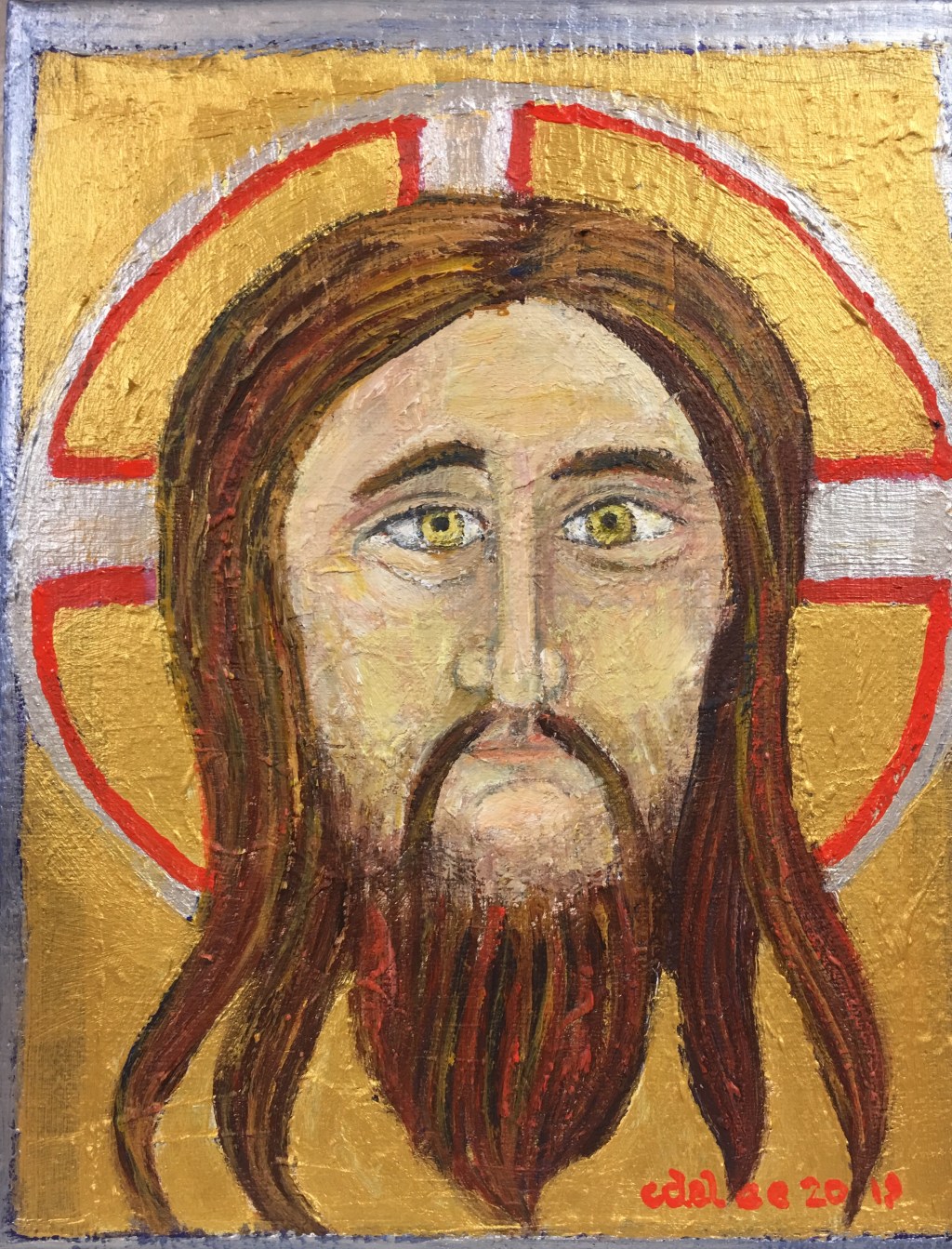
Mandylion: Image Not Made by Human Hands

Faith comes as a Gift. Our good works respond to Christ’s work.

Most of us are in agreement Wesley’s initial understanding of FAITH having to do with accepting Christ’s work for us as the only precondition for our salvation. There is no good deed or accumulation of good deeds needed to earn our salvation from God. What many of us have difficulty is accepting we also don’t earn our perfection in holiness by our own power.

Our Christian perfection is always a cooperative work of the Holy Spirit and our own spirit. As the Spirit works in us, we respond to work toward the complete renewal into the original image of God in which we were created. While it’s possible we might attain this perfect state in this lifetime, most Christians will attain completion in the purity of love of God and neighbor at the moment of death by God’s work, not by our own accomplishments.

Do the Born Again Christians Sin?

In Wesley’s sermon, “The Great Privilege of Those That Are Born of God,” he quotes 1 John 3:9—

“Whosoever is born of God doth not commit sin.”

The Golden Bridge—Ba Na Hills, Vietnam

Wesley admits people who are born again can err or make mistakes, but they don’t sin. That’s a bridge too far for many to accept today, for many of us are prone to judging others. We have a dysfunctional understanding of “perfection.” We think it’s like a Martha Stewart design, forgetting she has a whole staff of helpers to carry out her ideas. As one of my professors once explained it, “Once you’ve been to Waxahachie, you’ve always been to Waxahachie.”

If you don’t know Waxahachie, it’s a midsized Texas town about the size of Hot Springs, Arkansas. It was known for cotton in its hey day, and now hosts a crepe myrtle festival. Once you’ve been there, you can’t lose that experience. In the same way, you can’t lose your status of new birth. It’s a gift of the Holy Spirit, given by faith through Christ.

But some of us will try to throw it away anyhow. Wesley wrote in that same sermon, The Great Privilege, “Some sin of omission, at least, must necessarily precede the loss of faith; some inward sin: But the loss of faith must precede the committing outward sin.”

The Outward Appearance vs. The Inward Attributes

So, one who has faith doesn’t sin, since we have to lose faith in God to sin. In other words, we have to reject the gift freely given to us without price. As he also says in his great sermon on Christian Perfection, “Every one of these can say, with St. Paul, “I am crucified with Christ: Nevertheless I live; yet not I, but Christ liveth in me:” [Gal 2:20]— Words that manifestly describe a deliverance from inward as well as from outward sin.”

Van Gogh: The Good Samaritan

Christian Perfection

For Wesley, the goal of Christian perfection, or the recovery of the image of God, was to love God and neighbor with one’s whole heart until nothing else could exist inside. No favoritism for a group, no exclusion for a group, no yearning to be better than others, no desiring a better place at the table, no hoarding of resources for selfish purposes, no fear of tomorrow, nor any other anxiety that strikes the human heart.

We give our resources away so we can have room for new blessings. God always provides for those who give with generous hearts. We open our doors to the least, the last, the lost, and the unloved, because Jesus and Wesley went out into the fields and met the people where they were. Those are our people out there, and they aren’t “living moral lives,” any more than the imperfect people within our churches are. But we all can and do live lives of faith. We all can learn to trust a savior who loves every sinew of our wounded and broken bodies. We can love a God who never gives up on us even if we’ve given up on ourselves.

Homeless Jesus Statue, Timothy Schmaltz

We United Methodists might be messy, but we surely can love God and neighbor. Moreover, we’re all going on to perfection, even if some of us are moving more slowly than others. We’re still a community of faith, a people who trust God’s grace and one another to get through this thing called life together. We’ll bring each other along, for we’re not leaving anyone behind. We include in the great worldwide Body of Christ the body of Christ whom we meet outside our doors. After all, the race isn’t to the swift, but to the ones who help their brothers and sisters to the finish line, where we have a finishing medal for everyone, along with a big potluck dinner with enough food for folks to take home leftovers. That’s the never ending banquet table to which we invite all who hunger and thirst for community—both spiritual and personal.

The Word of God holds the Scripture of Salvation

Trusting Faith for a Risky Love in Unsettled Times

All we have to do is ask ourselves in this unsettled time: “Do I have Wesley’s trusting faith to live this risky love? Are these the people with whom I want to experience God’s steadfast love and share the grace of Christ? This is our heritage in the United Methodist Church, for we’re a people of faithfulness, who believe the “Bible has everything sufficient for salvation.”

I can only hope for those who leave, whether they become global Methodists, independents, or community congregations, that they will provide a large enough tent for our big God and big Christ, for the Spirit always is seeking people and places to fill completely with the gift of God’s extraordinary love and power.

Why not become all aflame with the fire of God’s redeeming love?

My prayer is our United Methodist churches will receive a fresh rush of the Spirit to become even more of what we are today, for

“Who will separate us from the love of Christ?“

Joy, peace, and faith,

Cornelia

Strong’s Greek: 4102. πίστις (pistis) — faith, faithfulness
https://biblehub.com/greek/4102.htm

Crossing the Rubicon: A Bishop Says Goodbye to the United Methodist Church
https://firebrandmag.com/articles/crossing-the-rubicon-a-bishop-says-goodbye-to-the-united-methodist-church

Of Evil Angels, sermon by John Wesley
http://wesley.nnu.edu/john-wesley/the-sermons-of-john-wesley-1872-edition/sermon-72-of-evil-angels/

Awake, Thou that Sleepest, sermon by John Wesley
http://wesley.nnu.edu/john-wesley/the-sermons-of-john-wesley-1872-edition/sermon-3-awake-thou-that-sleepest/

The Great Privilege of those that are Born of God, sermon by John Wesley
http://wesley.nnu.edu/john-wesley/the-sermons-of-john-wesley-1872-edition/sermon-19-the-great-privilege-of-those-that-are-born-of-god/

“Our standards affirm the Bible as the source of all that is “necessary” and “sufficient” unto salvation (Articles of Religion) and “is to be received through the Holy Spirit as the true rule and guide for faith and practice” (Confession of Faith).”
Theological Guidelines: Scripture
https://www.umc.org/en/content/theological-guidelines-scripture

On Christian Perfection, sermon by John Wesley
http://wesley.nnu.edu/john-wesley/the-sermons-of-john-wesley-1872-edition/sermon-40-christian-perfection/

NOTE: For a longer discussion on “Love thy neighbor,” see—
Kierkegaard, D. Anthony Storm’s Commentary on—Works Of Love
http://sorenkierkegaard.org/works-of-love.html

John Wesley’s Notes on the Old and New Testaments. http://bible.christiansunite.com/wesindex.shtml

Sermons of John Wesley, 1872 edition
http://wesley.nnu.edu/john-wesley/the-sermons-of-john-wesley-1872-edition/

The Spa Life and Righteousness

#MeToo movement, arkansas, art, Attitudes, Faith, Forgiveness, Habits, Healing, Icons, john wesley, Ministry, Painting, Philosophy, Reflection, renewal, righteousness, salvation, Spirituality, Strength, Supreme Court, United Methodist Church

As a gal who loves her spa days, few and far between though they are, I enjoy the pampering these small forays into indulgence involve. The friendly staff, the luxurious soft robes, the warm scented tubs, the cold needled showers, and even the brief stints in the steam box. Most of all, I live for the white terrycloth towels soaked in the hot spring waters, but cooled enough to put onto tender human flesh. The attendant who wraps my knees and back also puts an ice cold towel on my face before she leaves me alone to the quiet. Then I succumb to the ecstasy of this melting experience for about fifteen minutes.

Afterward, she wraps me back into my white robe to walk me over to the massage therapy room. She walks, but I sort of flow, for my feet don’t really feel connected to my legs or knees or hips. The heat can make a person feel giddy for a time, or perhaps the lack of pain is such a relief, I feel euphoric.

DeLee—Christ Blessing the World

I notice the other women waiting for their massages have similar beatific smiles on their faces. The magic of the spa day outing is at work. After our massages, we seem to glow from the inside out. This effect lasts for a few hours at best, until the experience wears off, and we return to normal. I understand now why my grandparents would come to Hot Springs for “the waters” on their vacations. They did the baths daily, for their supposedly medicinal cure, even if it served to merely relax then and distress them. “Take as needed” is a medical prescription we can all understand.

This brings me to my real subject: Faith and Righteousness. Of late in the public realm we’ve been treated to curious definitions of faith and righteousness by groups in powerful places and those who want to ascend to positions of power. “I go to church” is their definition of faith and “I got into the best college and law school “ has been their definition of righteousness. Evidently attendance in these places didn’t include a passing acquaintance with the dictionary or intensive study, much less convincing evidence.

Imputed righteousness and the Faith of Acceptance

Righteousness and faith for the average church going person is like the robe I wear at the spa for a while. I don’t own it, but I use it. It belongs to Christ, who imputes his right relationship with God to me while I wear it. I accept this idea by faith—the faith Christ had in God’s love for humankind as well as Christ’s faith God would raise him from the dead. I don’t own this faith with any depth of conviction, so my outward life isn’t changed in any way from a nonbeliever ‘s life.

As the writer of Ephesians says in 5:12-14–

For it is shameful even to mention what such people do secretly; but everything exposed by the light becomes visible, for everything that becomes visible is light. Therefore it says,

“Sleeper, awake! Rise from the dead, and Christ will shine on you.”

Imparted righteousness and the Faith of Assurance

One day we wake from our sleep and come to the conviction our surface appearances have failed us. We see our outward professions of faith and righteousness are a mere mask for the carefully constructed False Self we’ve been presenting to the world. We see our own righteousness is weak beside the true righteousness of Christ. We no longer see our Self, but Christ. We depend only on Christ, and not on any strength of our own Self.

When we cast aside this False Self, we can finally “buy the robe of Christ,” which he purchased with his own life, death, and resurrection. We buy into the whole life of Christ when we let our False Self die, and let our New/True Self rise with Christ. We can wear this robe of righteousness everywhere we go, for it changes us from within. The evidence shows on the outside by our words, deeds, and temperament. Our attitude changes our behavior and the consequences follow suit. The inner person shows through in the outer person, for better or worse, depending on whether we merely borrow or buy the robe of Christ.

The question for all of us remains: Do we trust our goodness to our ethnicity, our deeds, our social status, our religious heritage, our political group, our wealth, our zip code, our strength, our beauty, or any other transient thing? Or do we trust the unchanging and eternal love of God in Christ Jesus, who gave his son so all of creation could be redeemed to its original perfection?

DeLee—Christ, The Good Shepherd Saves All the Lost

John Wesley has a famous sermon called “The Almost Christian.” He suggests we need to go farther and become an “Altogether Christian.”

You can read his sermon preached at St. Mary’s, Oxford, before the University, on July 25, 1741 at the link below:

https://www.umcmission.org/Find-Resources/John-Wesley-Sermons/Sermon-2-The-Almost-Christian