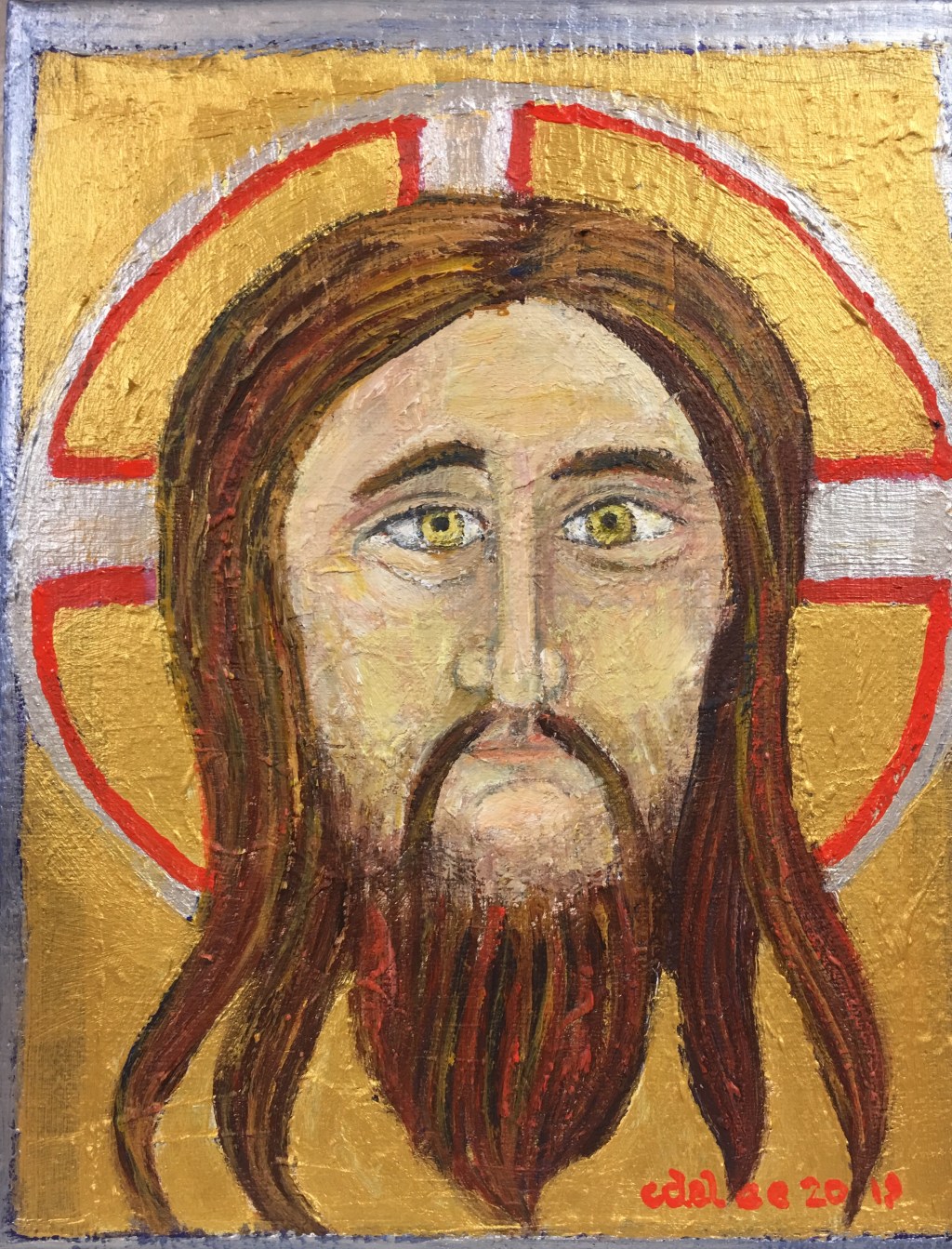
Season of Light

art, Astrology, Christmas, Civil War, Faith, Family, Hanukkah, holidays, hope, Israel, Light of the World, Love, Saturnalia, Spirituality, Ukraine

The damaged Drobytsky Yar memorial near Kharkiv, Ukraine after reportedly being hit by Russian artillery fire, on March 26, 2022

As the days grow shorter and the nights lengthen, the chill air adds to the darkness of our world. We can give into this dour outlook, especially this year with devastating wars in Ukraine and Gaza, or we can light a candle against the gathering gloom. Cultures across history have seen the time before year end as an opportunity for reflection, concern, or fear. Others have found reasons to rejoice.

Rainbow Menorah

Hanukkah (inauguration) is the eight-day Festival of Lights, which occurs in 2023 from sunset December 7 to December 15. It’s a moveable festival, for in 2024 the holiday will occur from December 25 to January 2. The Jewish calendar is a lunar calendar, not a solar calendar. This holiday celebrates the rededication of the Second Temple after the victory of the Maccabees over the Seleucid Greeks in 164 BCE. On discovering in the temple a vial of unpolluted oil, with only enough to light the candle for one day, this oil kept the candle burning for eight days. To commemorate this miracle, faithful Jews now light a special menorah with nine candles. The ninth candle is called the “helper” or “shammash” candle. The root word is from the Hebrew for “servant.”

Helping Hand Menorah

While not everyone is Jewish, all persons can learn from the menorah and the shammash candle. We may have only a little to give, but with God’s help it can be multiplied many times over. We can all be a helper candle, and bring a light to the candles who need a light. Many in this season experience a loss of some kind. Some are mourning a loved one, others have broken relationships, or have lost jobs or status. We are not our jobs and we aren’t our paychecks, but we are the beloved children of God. God will love us when everyone else turns aside. God will remember us when others forget we are alive.

Perhaps these darkening days at the end of the year are why people in all parts of the world have brought fire and light to this time of the year. The Yule Festival in German and Scandinavian countries was part of the pagan festival incorporated into Christianity’s Christmas celebrations. It likely began as a winter solstice or year-end celebration. “Yule” became a name for Christmas about the 9th century, and in many languages yule and its cognates are still used to describe that holiday.

Father Christmas and the Yule Log

The burning in a giant fireplace of a large Yule log until it’s reduced to cinders is one of my favorite mythic memories of the season. Alas, growing up in the Deep South, gas logs were the closest fireplace equivalent, and these were the same yesterday, today, and tomorrow. We rarely turned on the flickering colors of these blue flames because cold nights were few and far between.

By 336 CE, the Christian church in Rome celebrated Christmas on December 25, which coincided with the Roman winter equinox festival of Saturnalia. In medieval England, Christmas was a 12-day festival involving all kinds of revelry, from plays to wild feasts to pageants celebrating Jesus’ birth. Music, gift giving, and decorations all became the norm. Anyone who’s been in a choir singing “The Twelve Days of Christmas” with its repetitive “and a partridge in a pear tree” has those ancestors of ours to thank. Some traditions never die!

Our family stitched and sequined one exactly like this.

Christmas is better known for decorated trees, however. The use of evergreen trees and wreaths in religious ceremonies dates from ancient Roman times, if not earlier. However, the first documented use of a tree in a winter Christmas celebration wasn’t until 1510. In that year, members of a merchant’s guild in Riga, Latvia, placed a tree in the town square. They decorated it with flowers, ribbons, and dried fruit. After the festivities—which included the singing of songs and dancing—were concluded, they burned the tree as a great bonfire to close out the celebrations.

The Grinch Torches Whoville’s Christmas Tree into a Bonfire

Christmas trees gained popularity in Germany and other parts of northern Europe by the 1700s, but the practice of decorating a pine or fir tree during the holiday season remained virtually unknown in the English-speaking world prior to the 19th century. When Queen Victoria married her German cousin Prince Albert in 1840, the Christmas tree became widely accepted and practiced throughout the British Isles.

1836 edition of The Stranger’s Gift: A Christmas and New Year’s Present

In the United States, the practice of placing a decorated tree inside the family home was most likely introduced by German immigrants who arrived soon after the Revolution. The otherwise unassuming volume seen above, the 1836 edition of The Stranger’s Gift: A Christmas and New Year’s Present, is significant for it’s the first book printed in the Americas containing an image of a Christmas tree. Franklin Pierce in 1856 was the first president to erect a tree in the White House. In the United States, Christmas wasn’t celebrated with much gusto until after the Civil War, which reinforced for many the importance of home and family. In 1870, after the war’s end, Congress made Christmas one of nation’s first federal holidays.

Franklin Pierce in 1856 was the first president to erect a tree in the White House.

Light has always been a part of winter festivals, with their signature long, dark nights. Electric Christmas lights are a modern spin-off of the old-fashioned candles that Germans and Scandinavians placed on their trees. Thomas Edison, inventor of the lightbulb, also invented the first strand of lights and hung them outside his Menlo Park, New Jersey laboratory in 1880. In 1882 his business partner, Edward H. Johnson, created the first Christmas tree illuminated with colored lights. In 1895, President Grover Cleveland placed multi-colored electric lights on the White House tree. Since electricity wasn’t available except to the wealthy, most people didn’t have electric lights on their trees at home. Not until the end of the 1920s were electric lights affordable for the average family.

Fast forward to the 1950’s and the postwar period of rural electrification and large family gatherings, colored electric lights of every kind were readily available to the middle classes, not just the wealthy. This was the era of big bulbs and bubble lights, but in a few years, inexpensive miniature colored and white lights imported from China would become popular. Now even single parent households could decorate both the house and tree to their hearts’ content.

Untitled (Lux in tenebris inest—Light in the darkness)
Elisa Sighicelli 2003/2003

The lights bring out our hope of what’s good and wonderful in this world. Christmas and Hanukkah are times when the light burns bright, even when the days are dark. If these holidays didn’t exist, we would need to invent them, for we need the reminders of what is light and good in the world. As Baruch prophesied (5:9):

“For God will lead Israel with joy, in the light of his glory, with the mercy and righteousness that come from him.”

While we don’t know exactly what the Christmas star was, one theory is it was a conjunction of Jupiter, Regulus and Venus. Another possibility includes a set of conjunctions of the planets Jupiter and Venus, and the bright star Regulus. In this case, the mythologies associated with the objects become important. Jupiter in Hebrew is known as ‘Sedeq’, which is often translated as meaning righteousness. Jupiter is also often viewed as being the ‘king’ of the planets. Regulus is Latin for ‘prince’ or ‘little king’, and Venus is often viewed as a symbol of love, fertility and birth. Therefore, the combination of these objects close in the sky could have led to the interpretation of the birth of the ‘King of Kings.’ We do know Matthew records the visit to King Herod:

“After Jesus was born in Bethlehem in Judea, during the time of King Herod, Magi from the east came to Jerusalem and asked, “Where is the one who has been born king of the Jews? We saw his star when it rose and have come to worship him.”
(2:1-2 NIV)

Gerrit Dou: Astronomer by Candlelight, oil, late 1650s, J. Paul Getty Museum

The magi were astrologers, those who studied the heavens for the star signs of rising and falling influences in the ancient world. Herod died soon after their visit, but not before he tried to consolidate his power. He meant his dire deeds to benefit himself, but God spared his son by sending a message to Joseph in a dream to flee to Egypt with Mary and Jesus. The magi were warned not to return to Herod also.
This one who John wrote about in the opening chapter of his gospel (1:5):

“The light shines in the darkness, and the darkness has not overcome it.”

Gerardo Dottori: Nativity, 1930/1930, Museum of modern art

As we celebrate the holidays of light this year, remember to be a “shammash”, or a servant of light, and don’t let this present darkness overwhelm you. Your one light shining may be the brightness that brings someone safely home. Today I wore my bright pink exercise pants, even though I’m sinusy and achy all over. I made at least one person’s day when I said, “They’re stretchy, so I can eat more Christmas cookies!” We spread the joy even when the Grinch has stolen ours. This is a way of taking the darkness back, by making others feel better.

God bless and shine 🕯️on,

Joy and peace,

Cornelia

Jewish Festivals |Britannica
https://www.britannica.com/topic/Jewish-festivals

Shammash | Judaism | Britannica
https://www.britannica.com/topic/shammash

Yule Festival | Britannica
https://www.britannica.com/topic/Yule-festival

O Tannenbaum: Or, a Brief History of the Christmas Tree | The New York Public Library
https://www.nypl.org/blog/2016/12/12/christmas-trees-arrival

Who Invented Electric Christmas Lights |
https://www.eei.org/en/delivering-the-future/articles/who-invented-electric-christmas-lights

A Look Back: 100 Years of Christmas Tree Trends

https://www.bhg.com/100-years-christmas-trees-6751023

Rabbit! Rabbit!

arkansas, art, autumnal equinox, Children, Christmas, Civil War, Constitution, Declaration of Independence, elections, Fall Equinox, Family, holidays, Imagination, inspiration, Labor Day, perfection, photography, rabbits, St. Patrick’s Day, summer vacation, texas, US Constitution

Rabbits under a Harvest Moon

September marks the return to order and organization, since the summer for most of us meant a relaxation of rules and schedules. “Vacay mode” of late mornings, pajama days, and snack meals are now a fading figment of our fevered frenzies. I remember these days all too well. My little girl threw a conniption fit one morning as I hurriedly dressed her so we wouldn’t be late for her pre-k class and my teaching assignment at the same school. We dashed out of the house, I locked her in the car seat, and flew to my workplace. I delivered her to the precare room and made a beeline for my art shack.

Two Types of Teachers

Later on at lunch, her teacher informed me I’d brought my fussy child to school without panties. Oops! Luckily, all the children were required to have a spare change of clothes “just in case of emergency.” Saved by those who are more organized than most. My art classroom always had the paint organized by rainbow colors, the scissors numbered, and shelves labeled. The moral of this annecdote is, “Innanimate objects are easy to organize; people not so much.” Murphy’s Law also comes to mind: “Anything that can go wrong will go wrong,” and Murphy’s First Corrollary: “It will cause the most damage possible.”

For Bunnies, maybe…

In the “No Pants Scandal,” of four decades ago, only my pride was injured. I’m not as organized or as perfect as I thought I was. This brings me to a little chat on appearances vs. our true selves. Our “false self” wants to appear organized, on top of things, spiritual, magnanimous, and virtuous. We’d like to be “perfect” in thought and deed. Yet the more we try to attain perfection or to act perfectly, the more likely dark, hateful, or mean thoughts arise from the depths of our hearts. We see this is our dualist world view, which divides our world into pure evil or pure good. The book of Proverbs reminds us, “Pride goes before destruction, and a haughty spirit before a fall” (16:18). It’s always better to admit, as I did, “I didn’t have a great morning and she wasn’t cooperative. I’m surprised we got here at all.”

Welcome to September 2023

Speaking about regular and organized, our earth is about to have another equinox on September 23, 2023, at 1:50 am CDT. The Fall Equinox happens yearly on or around September 22nd. The date of the fall equinox is variable because the 365 day Gregorian calendar doesn’t match up perfectly with the position of Earth in its orbit around the sun. When we add the leap year, the equinox date also changes. While the September equinox usually occurs on September 22 or 23, it can very rarely fall on September 21 or September 24. A September 21 equinox has not happened for several millennia. However, in the 21st century, it will happen twice—in 2092 and 2096. The last September 24 equinox occurred in 1931, the next one will take place in 2303. This rabbit won’t be around for any of these rare events, so don’t send me an invite.

Rabbits on the Playground

The September 29 full moon occurs at 4:57 AM CDT. It’s called the Harvest Moon in some years, or the Hunter’s Moon in other years. Technically, the Harvest Moon, which is the Anglo-Saxon name, is the Full Moon closest to the September equinox on September 22/23. The Harvest Moon is the only Full Moon name determined by the equinox rather than a month. Most years, it’s in September, but around every three years, it falls in October. We also know this September full moon as the Corn Moon from the Native American tribes harvesting their corn in this time. Other names for this month’s full moon are Celtic and Old English names: Wine Moon, Song Moon, and Barley Moon.

E. Irving Couse: Harvest Moon

Just as summer’s laissez-faire moments will give away to school and work routines, so the onset of autumn and the fall equinox herald another change. You might not yet recognize it over the insistent hum of your air conditioning system or feel it due to the heat waves rising from the black asphalt of your company’s parking lot, but autumn is just around the corner.

ERCOT Service Zones cover most of Texas

Don’t look at your utility bill just yet, and don’t pack your bags for Texas. I talked to my brother down there who has his AC set to “stun”—he said when the bill comes, “It will stun him a second time.” Texas doesn’t belong to the national energy grid, but to ERCOT, the Electric Reliability Council of Texas. It’s not connected to the two major electrical systems of the lower 48 states, but has its own grid to avoid federal regulation. When Thomas Edison started the first electric power plant in Manhattan in 1882, he set off a gold rush of independent power companies. During WWI, they began to unite and even more joined after WWII.

Don’t Mess With Texas

Texas takes seriously its “Don’t mess with Texas” rhetoric. Only on rare, catastrophic instances has it briefly joined either the American or Mexican utility grids. While Texas is a large state with rich energy resources, the USA is larger. When extreme weather events happen, energy costs rise. Rates can vary wildly as a result. The economic lesson is ERCOT is Dollar Store trying to outbid the Walmart of the national grids who can share energy with those in need.

Thomas Nast: The Lightening Speed of Honesty, 1877

Speaking of nations, on September 7, 1813, the United States got its nickname: Uncle Sam. Samuel Wilson from New York, a meat supplier to the US Army, stamped his barrels with US for United States. The soldiers began calling their rations “Uncle Sam’s,” a name the local newspaper noted, which began to spread and soon became the personification of the federal government. Thomas Nast (1840-1902) popularized the image of Uncle Sam. In Nast’s evolving works, Uncle Sam acquired the white beard and the stars-and-stripes suit we associate with the character today. The satirical cartoon of yesteryear’s dithering Congress is apropos of our modern chambers, which can’t seem to come a reasonable compromise to get the people’s business done by funding our country’s basic needs.

Columbia, The Gem of the Ocean

Over a century before Uncle Sam, Columbia was an idealized feminine figure that personified the new nation of America. She was created in 1697 when Chief Justice Samuel Sewall of the Massachusetts Bay Colony wrote a poem that suggested the American colonies be called Columbina, a feminized version of Christopher Columbus’ last name. Over 70 years later, the name evolved further when former slave, Phillis Wheatley, wrote an ode to George Washington invoking Columbia in 1775. Born around 1753, Phillis Wheatley was the first black poet in America to publish a book. She was listed among the enslaved persons at Mount Vernon. You can read her amazing poem here:

His Excellency General Washington by Phillis Wheatley— https://poets.org/poem/his-excellency-general-washington

Over time, the image of Columbia became a symbol for American ideals during wars, such as the American Revolution, the War of 1812, and World War I, as well as the subject of political cartoons and literary works. With her liberty cap and patriotic shield, Columbia stood as the spirit of the country. We even see her name, image, and likeness in modern industry in the Columbia Broadcasting System or CBS, as well as in the seat of our national government, the District of Columbia.

Well Done Labor Poster

Uncle Sam also has honored workers on Labor Day, which we celebrate on September 4th. Many rabbit families treat this three day weekend as the last hurrah of summer. Let’s remember those essential workers who serve and protect the rest of us while we barbecue in our backyards and national parks. The first Labor Day “parade” in 1882 was a strike. Workers marched en masse from New York City Hall to Union Square to protest terrible working conditions during the Industrial Revolution. Workers, including children as young as five years old, labored in unsafe factories, farms, mills and mines for 12 hours or more per day, seven days a week, often without breaks, fresh air or even clean water.

Credits: NASA’s Goddard Institute for Space Studies

This map shows global temperature anomalies for July 2023 according to the GISTEMP analysis by scientists at NASA’s Goddard Institute for Space Studies. Temperature anomalies reflect how July 2023 compared to the average July temperature from 1951-1980.

Only 5 States Provide Heat Relief Laws for Workers. Arkansas doesn’t protect workers from dangerous heat inside or outside.

Today, 141 years later, during the hottest July since 1880, some states are passing laws to prevent workers from getting “special treatment due to the heat” such as extra breaks for cooling or water. Currently only five states have protections for workers in these extreme conditions. According to the U.S. Bureau of Labor Statistics, between 1992 and 2019, extreme heat killed more than 900 workers and sickened tens of thousands more. Those numbers, however, are likely an undercount due to the lack of reporting by negligent employers or by workers who are worried about retaliation or deportation. In addition to the physical implications, time off from a job due to illness can lead to missed wages or the loss of a job altogether.

Bain photograph: LC-USZ62-49516: Four women strikers from Ladies Tailors union on picket line during the “Uprising of the 20,000,” garment workers strike, New York City, 1910 February, glass negative photo, Library of Congress.

As a rabbit who once endured a few days in an unairconditioned art shack at the beginning of school and then fainted from heat exposure, I have a heart for all workers in extreme circumstances. I made sure to take care of my people, since my bosses didn’t care about me. It’s never right to treat others poorly just because you were wronged.

Reading The Constitution Online is also an Option

In late September, we celebrate Constitution Week (Sept. 17-23). The Declaration of Independence, written in 1776, was a list of grievances against the king of England and intended to justify separation from British rule. The Constitution was written and signed in 1787. It was a charter of government ratified by the states, and continues to be the supreme law of the land. All members of the armed services and Congress take a vow to defend the constitution, as do the President and Vice President of our country.

We rabbits will all need to brush up on our civics lessons in the days to come, for the upcoming presidential candidates may be affected by their lack of appreciation for the constitution and the consequences as a result. As I always told my students, “Attitudes drive Behavior and Behavior leads to Consequences. You can choose the good or the negative. It’s all up to you. Try for a good attitude every day.”

Tales of a Bunny Who Went to School

The 14th Amendment, section 3, passed after the Civil War, or the last great insurrection by the southern secessionist states, forbids holding office in the US government by former office holders who then participate in insurrection or rebellion. This constitutional provision is currently being tested in the courts. September is back to school for all us rabbits. The last time I remember a civics lesson was the seventh grade in Mrs. Tampke’s class, but “ex post facto” might have been “non sequitur,” as I was passing notes rather than paying attention.

Mr. Flopsy’s Rabid Rabbit Pirate won’t be Messed with.

We rabbits can only take so much seriousnes in our short lives until we need a break. Thank you September 19th: International Talk Like a Pirate Day! Everyone can ARRGG their way MATIES through a Tuesday, and if Monday is a pain, who says we rabbits can’t Pirate on that day too? After all, pirates rob and steal, lawless vagabonds that they are. Let’s just take over the good ship Monday and drink our strong Pirate Coffee with vigor and daring.

The Bluebird of Happiness

National Bluebird of Happiness Day is September 24th. I love these little blue glass figurines. Dorothy in the Wizard of Oz sings, “If happy little bluebirds fly beyond the rainbow, why, oh, why can’t I?” Bluebirds uplift the heart into joy when we see them in nature. The blue glass iconic sculptures, made in Arkansas by the Ward family, have sold over 9 million birds, large and small. They’re no longer made due to concerns about climate change because the glass production process requires large amounts of natural gas and electricity. I treasure the blue bird in my possession and greet it daily. You might find one in a secondhand store.

God Please Keep My Children Safe, by Grayson Perry, 2005

Love Note Day is September 26, so I suggest you write a sweet letter to your beloved. This might be a spouse, significant other, parent, mentor, or even your own self. Share some affirmations to those who mean something to you. Don’t stop at one note of love, but make a whole symphony of blessings. In our world today, folks don’t hear many positive messages. You can help balance the scales for your recipients.

If the Sears Catalog were still a thing, we bunnies would be wishing

September 30, the last day of this month marks 92 days left in 2023. Where has this year gone?! Don’t ask this rabbit. I’ve already bought a couple of little Christmas gifts for my bunny friends. I’m never this organized. This means I’ll likely lose or misplace these items in the 86 days before Christmas Day. Then again, this is also enough time for this rabbit to find these packages once again! Live with optimism! Expect the best and work for it.


May the Blue Bird of Happiness bring you

Joy and Peace,


Cornelia


The September Equinox

https://www.timeanddate.com/calendar/september-equinox.html


Traditional Full Moon Names

https://www.timeanddate.com/astronomy/moon/full-moon-names.html


Why does Texas have its own power grid? | The Texas Tribune
https://www.texastribune.org/2011/02/08/texplainer-why-does-texas-have-its-own-power-grid/


How The United States Got its Nickname

https://www.history.com/this-day-in-history/united-states-nicknamed-uncle-sam


The lightning speed of honesty [Uncle Sam seated on snail “45th Congress” carrying Army and Navy payroll and money, with Resumption Act (of honesty) in his pocket] / Th Nast.
https://loc.getarchive.net/media/the-lightning-speed-of-honesty-uncle-sam-seated-on-snail-45th-congress-carrying


Database of Mount Vernon’s Enslaved Community · George Washington’s Mount Vernon
https://www.mountvernon.org/george-washington/slavery/slavery-database/


Heat Stress Is Killing Workers. States Can Protect Them.

https://www.nrdc.org/stories/heat-stress-killing-workers-states-can-protect-them


Short Summary—The Character to Lead: Republicans’ Fork in the Road Between Trump and the Constitution’s Eligibility Requirements for President

https://www.justsecurity.org/87750/the-character-to-lead-republicans-fork-in-the-road-between-trump-and-the-constitutions-eligibility-requirements-for-president/


Deep Dive— The Sweep and Force of Section Three. 172 U. PA. L. REV. (forthcoming 2024). William Baude & Michael Stokes Paulsen. https://deliverypdf.ssrn.com/delivery.php?ID=791101027092090122082025003064104018105084007031052035109090080088105005086003018089043050055106031007050097096000078089031112025019027055033023110008092018116067055086024100075002015088106075126126082029114024094102088002003074126075030067104090009&EXT=pdf&INDEX=TRUE

U.S. Senate: The Senate’s First Act—the Oath Act and 1862 Ironclad Oath
https://www.senate.gov/legislative/landmark-legislation/oath-act.htm

Arkansas Bluebird of Happiness – Encyclopedia of Arkansas. https://encyclopediaofarkansas.net/entries/arkansas-bluebird-of-happiness-3822/


Radical Love

art, Attitudes, Faith, Forgiveness, Healing, holidays, Holy Spirit, hope, inspiration, Love, Martin Luther Ling, Ministry, Reflection, silkscreen, Spirituality, Uncategorized, Valentine’s Day

Victorian Embossed Valentine Card

Valentine’s Day is all about love. Television advertisements push candies, dipped gold “eternal” roses, gaudy jewelry—a price for every pocketbook—and the dating apps have been in full swing since the new year.

“Everybody needs somebody to love,” the old song goes. The Blues Brothers sing this oldie before their mad escape from the Illinois Law Enforcement Community. Solomon Burkes treats it with his indigenous soul blues from his lived experience and The Rolling Stones give it their percussive upbeat treatment. Wilson Picket has a good cover, but I don’t recommend the explicit version of Rod Wave’s Sneaky Links. Fitz and the Tantrums was interesting. My “old person “ is probably showing about the edges here.

Martin Luther King, Jr. Quote

We all can love our friends or sweethearts, especially in mid February. After all, February is “for lovers.” The bigger question is, How do we love our enemies? Dr. Martin Luther King, Jr., in his book, A Gift of Love, writes:

“First, we must develop and maintain the capacity to forgive. (The one) who is devoid of the power to forgive is devoid of the power to love. It is impossible even to begin the act of loving one’s enemies without the prior acceptance of the necessity, over and over again, of forgiving those who inflict evil and injury upon us.”

Well, how can I forgive the person who hurt me, my child, my family, my tribe, or my community? We all want that person to come crawling to us and ask for forgiveness, but that’s not how radical love works. We want the wrong doer to show remorse and ask us for mercy and forgiveness. This puts them in a subordinate position and us in a position of power. But that’s not how radical love works. Radical love initiates forgiveness, even if the wrongdoer never shows contrition.

Dr. King goes on to say:

“It is also necessary to realize that the forgiving act must always be initiated by the person who has been wronged, the victim of some great hurt, the recipient of some tortuous injustice, the absorber of some terrible act of oppression.”

Sir Terry Frost: Sun Tree, 2003, Silkscreen on Paper with 9 collage elements. Frost was a prisoner of war in WWII with Adrian Heath, who taught him to paint. They were both imprisoned in Stalag 383, in Germany.

Why must the wronged take on the indignity of offering forgiveness to unrepentant wrongdoers? In this act, we become most like Christ on the cross, who in his final moments, forgave not only the thief who asked for forgiveness, but also all those who crucified him, who had no intention of repenting. Our problem is we enjoy being like the risen Christ, the one with the “name above all names,” but most of us don’t want to “pick up our cross and follow” Jesus, especially if it leads to an ignominious death on that very cross.

Sir Terry Frost: Blue Love Tree, 2003, Silkscreen on Paper

As Dr. King wrote,

“The wrongdoer may request forgiveness. He may come to himself, and, like the prodigal son, move up some dusty road, his heart palpitating with the desire for forgiveness. But only the injured neighbor, the loving father back home, can really pour out the warm waters of forgiveness.”

The injured one, whose heart has been broken and wounded by someone else’s words or deeds, is the only one who can heal the broken rift between them. This is why the deepest lovers of Christ are most often the wounded ones who’ve been healed by God’s mercy, grace, and forgiveness. The woman with the alabaster jar of ointment anointed Jesus’ feet in the house of the Pharisee, but the host had failed at the minimum hospitality for his guest, so Jesus reminded him (Luke 7:47):

“Therefore, I tell you, her sins, which were many, have been forgiven; hence she has shown great love. But the one to whom little is forgiven, loves little.”

Mending Broken Hearts, silkscreen, artist unknown

If we would be healers in our broken and fragmented world, we need to first address our own woundedness. Each of us has a hidden pain or suffering, for this is the human condition. If we give this to God, our healing makes us into vessels where our cracks are filled with precious gold. We can offer more love, more forgiveness, and more hope to people who have been sitting in darkness and despair. People are waiting for joy and love to flow out in abundance from God’s heart into our hearts and into their world. Then we can be the light in the darkness for them, the holy fire that lights the embers of hope in their hearts, not just on St. Valentine’s Day, but every day.

Joy, Peace, and Love,

Cornelia

Kintsugi: Mending cracks with gold

Excerpt from A Gift of Love | Penguin Random House Canada
By Dr. Martin Luther King, Jr.
Chapter 5, Loving Your Enemies

https://www.penguinrandomhouse.ca/books/212014/a-gift-of-love-by-martin-luther-king-jr/9780807000632/excerpt

Winter Solstice 2022

arkansas, art, Faith, Food, hope, inspiration, Light of the World, Ministry, New Year, shadows, Spirituality, Stonehenge, trees, winter solstice

This shortest day of the year is the Winter Solstice, which is on Wednesday, December 21, at 4:48 P.M. EST, in the Northern Hemisphere. Some think of this as the Longest Night, but I’m a person of the light, not the darkness. I always prefer to look to the light, no matter how dim or feeble it may seem.

Be the Light

Yet darkness is a necessary experience in our lives. We do not yet live in the land of the “unclouded sky” or the heavenly realm:

“And the city has no need of sun or moon to shine on it, for the glory of God is its light, and its lamp is the Lamb.” —Revelation 21:23

Kindness is a warm fire

In the darkness, growth often happens: germination and rooting are two types of unseen activity that help produce the plant we see above ground. Without adequate light, the visible plant won’t thrive. So both darkness and light are at work to produce fruit in our lives.

“We know that all things work together for good for those who love God, who are called according to his purpose.” —Romans 8:28

Rejoice! The days will get brighter soon!

The Winter Solstice in Hot Springs is at 3:48 pm CST on Wednesday, December 21, 2022. In terms of daylight, this day is 4 hours, 37 minutes shorter than the June solstice. In most locations north of the equator, the shortest day of the year is around this date. The good news about the Winter Solstice is the days will begin to lengthen, although imperceptibly at first: one minute, four minutes, seven minutes, ten minutes, thirteen minutes, sixteen minutes, and so on.

In Scandinavia, the Norse celebrated Yule from December 21, the winter solstice, through January. In recognition of the sun’s return, fathers and sons would bring home large logs, which they would set on fire. The people would feast until the log burned out, which could take as many as 12 days. Today we recognize the source of the “Twelve Days of Christmas” song in this festival. The Norse believed that each spark from the fire represented a new pig or calf that would be born during the coming year. Prosperity for all in the New Year!

In this present darkness, a small light still shines brightly

In this time of stress and strain, grief and gripes, let’s look to the in-breaking light, and the renewal of life and love. Here’s a “Winter Solstice Chant” by Annie Finch, for your pleasure:

Vines, leaves, roots of darkness, growing, now you are uncurled and cover our eyes with the edge of winter sky leaning over us in icy stars Vines, leaves, roots of darkness, growing, come with your seasons, your fullness, your end.

Rice Krispy Stonehenge

Of course, if you can’t get your travel plans together at the last minute to visit Stonehenge, England for the winter solstice celebration, you can always make Rice Krispies Bars in the shape of the ancient monument. The recipe link is at the bottom of the page. Hint: don’t turn the heat up high or your treats will be hard. Due to high carbohydrate count, one “pillar” of Stonehenge Krispies is actually two servings.

Modern Yule Log

Joy and peace and a Good Yule log,

CORNELIA

Annie Finch, “Winter Solstice Chant” from Calendars, published by Tupelo Press. Copyright © 2003 by Annie Finch. Reprinted by permission of the author.

Sunrise and sunset times in Hot Springs https://www.timeanddate.com/sun/@4115412

The Original Rice Krispies Treats™ Recipe https://www.ricekrispies.com/en_US/recipes/the-original-treats-recipe.html

Reflections on America

Arches National Park, art, beauty, elections, Grand Canyon, Imagination, inspiration, nature, photography, renewal, Travel, US Constitution, vision, Walt Whitman

Today marks one week since our most recent election. Many races have been decided, while some are due for an automatic recount due to the close vote. At least one senate race will have a runoff between the top two candidates (Georgia), as some races haven’t been decided at all, since the vote counters took Veteran’s Day and Sunday off. Then we have all the legal, but late arriving mail-in ballots from the military and overseas residents. These too need counting. We’ll know the final, final results sometime after December 6th, when Georgia results are in.

Grand Canyon

Pundits on the left and right can give you commentary ad nauseam for the duration with breaking news alerts or standing up for what’s right(wing). They’ll talk demographics, policies, and statistics, but you won’t get that commentary here. I’m more interested in the deep derivations of the arcana of the day. Arcana is that mysterious or specialized knowledge, language, or information accessible or possessed only by the initiate —usually used in plural. The singular arcanus, is from the Latin, arca, chest. It was first used in the 15th century.

El Capitan, Yosemite National Park

Of course, the conspiracy mongers among us are busy weaving tales of hanky panky. As an aside, my spell check wants to make this phrase “hanky pancakes.” I’ll check in with Cornie’s Kitchen to see if there’s any special ingredient for making hanky panky pancakes. Hanky pank once referred to any of the various carnival games in which contestants might win small prizes for the exercise of simple skills (such as dart throwing). State Fair enthusiasts who succumbed to the barkers of carnival games might, if they were lucky, grab a few of these prizes, but as in casino betting, the wise player remembers the house usually wins. It’s an old word, dating from the 1840’s, maybe related to Hokey Pokey. Both these words referred to trouble making bordering on the illegal, if not out right against the law.

This is why your parents warned you not to run away and join a traveling circus or side show, as “There’s hanky panky going on there, child, and you’ll come to no good!” Not that I ever tied a peanut butter sandwich up in a bandana and walked away from home, or at least I got as far as that sandwich took me, which was to the end of the city block. Hot summer days can change a child’s mind about running away from home.

Big Oak Road, Yosemite National Park

Those trading in false tales were known as mongers, from which we get the word “costermongers,” or apple sellers. In the 1510s, “itinerant apple-seller” was formed from coster (a type of apple ) + monger (“to traffic in, deal in,” often implying a petty or disagreeable traffic, by 1897). The sense extended from “apple-seller” to “hawker of fruits and vegetables,” to any salesman who plied his wares from a street-cart. Contemptuous use is as old as Shakespeare: “Virtue is of so little regard in these coster-monger times, that true valour is turn’d bear-herd” (2 Henry IV), but the reason for it is unclear.

Arches National Park

But I come not to bury America, but to praise her, especially the American democratic project, which so far has earned the distinction of having the world’s longest surviving written charter of government. It was written in 1787, ratified in 1788, and has been in operation since 1789. We’ve celebrated 233 years of our unique brand of representational democracy. We aren’t ruled by mobs/anarchy, nor by a wealthy few/oligarchy, or even by one/autocracy, but by all who vote/democracy. As Whitman writes, we must be careful to distinguish between the “chosen” and the “act of choosing.” It’s not the winning candidate which represents the “heart”of our democratic achievement, but rather the “quadriennial choosing” itself.

Arches National Park

If you follow my musings, you’ve probably guessed Whitman is a favorite poet, and the varied landscape is a renewing and inspiring source of reconnecting with a creator God. I recently took a vacation to California and photographed some of our great national parks in the month I took off to see America. On my journey, I met generous, kind, and decent people everywhere I went. May God bless America and use her bounty and her people to bring peace and prosperity to the nations of the world. I hope my images do justice to Whitman’s words.

Headed to Albuquerque

Election Day, November, 1884
By Walt Whitman

If I should need to name, O Western World, your powerfulest scene and show,
‘Twould not be you, Niagara—nor you, ye limitless prairies—nor your huge rifts of canyons, Colorado,
Nor you, Yosemite—nor Yellowstone, with all its spasmic geyser-loops ascending to the skies, appearing and disappearing,
Nor Oregon’s white cones—nor Huron’s belt of mighty lakes—nor Mississippi’s stream:
—This seething hemisphere’s humanity, as now, I’d name—the still small voice vibrating—America’s choosing day,
(The heart of it not in the chosen—the act itself the main, the quadriennial choosing,)
The stretch of North and South arous’d—sea-board and inland—Texas to Maine—the Prairie States—Vermont, Virginia, California,
The final ballot-shower from East to West—the paradox and conflict,
The countless snow-flakes falling—(a swordless conflict,
Yet more than all Rome’s wars of old, or modern Napoleon’s:) the peaceful choice of all,
Or good or ill humanity—welcoming the darker odds, the dross:
—Foams and ferments the wine? it serves to purify—. while the heart pants, life glows:
These stormy gusts and winds waft precious ships,
Swell’d Washington’s, Jefferson’s, Lincoln’s sails.

Joy and Peace,

Cornelia

Walt Whitman: Election Day November 1884
https://poets.org/poem/election-day-november-1884

What does Hanky Panky mean?
https://writingexplained.org/idiom-dictionary/hanky-panky

Words related to monger
https://www.etymonline.com/word/monger/related

Shakespeare: Julius Caesar Speech, spoken by Marc Antony
https://www.poetryfoundation.org/poems/56968/speech-friends-romans-countrymen-lend-me-your-ears

NOTES: Whitman’s Election Day, 1884 https://pubs.lib.uiowa.edu/wwqr/article/26076/galley/134444/view/

Seeds of Dissent and a Harvest of Distrust

Ancestry, arkansas, art, Faith, Family, Forgiveness, greek myths, Holy Spirit, hope, incarnation, inspiration, john wesley, Love, Ministry, Painting, perfection, poverty, purpose, Ravenna Italy, renewal, Retirement, stewardship, Stress, United Methodist Church, vision

Christ Enthroned with the Angels
6th century Mosaic
Church of Sant’Apollinare Nuovo, Ravenna, Italy

Nothing springs full grown to life in an instant. Everything begins in a seed, which is planted, watered, and nourished into full growth. Only in myths or fantasies can an idea come into being instantly. Zeus had a very bad headache, a “splitting headache,” that birthed his daughter Athena, the goddess of wisdom. She leapt out in fully grown from his brow. We don’t take this myth to be scientifically true, but as a metaphor for the difficulty and struggles we undergo to obtain wisdom. As my daddy used to tell me after I’d learned some hard life lesson, “The school of experience is a rough master, and we all earn a costly degree in gaining its wisdom.”

Little Master Lip Painter Attributed to the Phrynos Painter: Birth of Athena, Attic Black Figure Ware, Kylix, Date ca. 555 – 550 B.C., Early Archaic Period,

Some of us will repeat the same lessons over and over, as if we expect to get a different result. The purpose of an education isn’t to regurgitate a right answer to pass a test, but to understand why the answer is right. That’s why math classes require showing the steps to the solution, rather than the “full blown adult answer” only. In matters of faith or ethics, many of us haven’t had the training to “set out the proof” for our final answer or deed. In fact, in one situation we may think or act one way, and quite differently in another.

The name for this behavior is “situational ethics.” Less kindly, it’s also known as spinelessness, shiftiness, being two faced, or dishonesty. Mostly it means people don’t have a true center or a plumb line by which they measure themselves. If we’re measuring our lives against other people, we’re measuring against other fallible human beings. Even our heroes have feet of clay, for none of us are gods. When I used to call my parents out on this character trait, they always told me, “Do as I say, not as I do.” This sets up a moral conflict for most people, even those raised in the church or in religious homes.

We need to have a moral center based on a higher authority than our individual or cultural conventions, one that includes or exceeds the ethics of the group to which we belong, and not just our individual beliefs and actions. Professional groups—physicians, lawyers, clergy, educators, and others—all have ethical standards for caring for those they serve, even if they morally disagree with the behaviors that bring them into their care. Who decides the ethics of the group? At the risk of making my favorite seminary professor, Billy Abraham, roll about in his still fresh grave, we United Methodists do have the so-called Wesleyan Quadrilateral of Scripture, Tradition, Reason, and Experience to guide us. Often we assign our personal life experience to this latter quadrilateral edge, but Wesley meant our Experience of the Assurance of God’s All Embracing and Adopting Love. As Wesley once said, “God is able to save all to the uttermost.”

The Good Samaritan by English School, (19th century)

Ethics and morals are often used as synonyms, but ethics refer to rules provided by an external source, e.g., codes of conduct in workplaces or principles in religions. Morals refer to an individual’s own principles regarding right and wrong. Ethics is a a late 17th century word derived from the Greek ēthos (disposition, character), in contrast to pathos (suffering). In Latin it means ‘character, depiction of character’, or (plural) ‘customs’.

Then we have the words moral and morals. The first is concerned with the principles of right and wrong behavior. The goodness or badness of human character is another concern. From these, people decide what behavior is considered right or acceptable in a particular society. We often say a person has morals if they conform to standards of behavior or beliefs concerning what is and is not acceptable for them to do. We can speak of “the corruption of public morals, “ or you can hear people talking as if “they believe addicts have no morals and can’t be trusted,” rather than understanding the disease and abuse bases which often underlie addictions.

These distinctions don’t change the negative consequences of the addict’s behaviors, yet the addicted person still has the same image of God and the same potential for wholeness each of us have, but perhaps with more suffering, or pathos. If we judge the morality of a person’s choices, and then refer that moral state to the individual’s worthiness, we can end up losing compassion for the person as well as losing the will to help them better their lives. This leads to hard heartedness and a lack of love. We reject our neighbors and make them strangers, unwelcome to our world. We forget our spiritual ancestors were once strangers in a strange land, wanderers without a home. How easily we forget our savior, who had no place to be born even in his ancestral home, and whose family fled religious persecution and certain death to live in Egypt, far from home. Strange how some Christians have no sympathy for others in the same fix today.

Moral is a word from the late Middle English by way of the Latin moralis, from mos, mor- ‘custom’, with the plural mores or ‘morals’. It refers to one having the property of being right or wrong, good or evil, or voluntary or deliberate, and therefore open to ethical appraisal. When we apply moral attributes to a person, it means “capable of moral action; able to choose between right and wrong, or good and evil.” Not until 1803 did moral come to mean “virtuous with regard to sexual conduct,” according to the Oxford English Dictionary.

As a noun, we meet the word in the Latin Moralia, the title of St Gregory the Great’s moral exposition of the Book of Job. Later it was applied to the works of various classical writers. All Methodists and the holiness denominations birthed from the seed of the great Methodist revival recognize the genius of John Wesley. We all quote him, but we also apply his wisdom through our own individual preconceived notions of what is “good, true, and noble.”

When John Wesley was asked, “What is that faith whereby we are sanctified?” he answered:

“First believe that God has promised to save you from all sin, and to fill you with all holiness; secondly, believe that He is able thus to save to the uttermost all that come unto God through him; thirdly, believe that He is willing, as well as able, to save you to the uttermost; to purify you from all sin, and fill up all your heart with love. Believe fourthly, that He is not only able, but willing to do it now! Not when you come to die; not at any distant time; not tomorrow, but today. He will then enable you to believe, it is done, according to His Word.”

In the old days, we said we were “going on to perfection,” not that we were so bold as to claim that we’d already arrived there or been perfected. Oh no, we allowed God could complete this for us and had the power to do it, as well as the will, but our human nature was still fallible. If a word comes up more than once in a text, writers go to the thesaurus for an alternative, but in reading scripture, we learned repetition was a sign of importance, a marker especially meant for those of us who are slow learners in the school of life.

Oliver O’Donovan in “Scripture and Christian Ethics” writes, “Moral theologians have a secret knowledge, apparently concealed from other kinds of theologians, especially those devoted to hermeneutics. They know that the most mysterious and most difficult question we ever have to answer is not, what does Scripture mean?, but, what does the situation we are facing mean?, where do we find ourselves existentially?”

We tend to speak as if our selves and our situations were known quantities, so that it only remains to choose out of Scripture whatever seems to fit our circumstances as we conceive them. Scripture has an uncanny way of shedding light on our self and our situation, to overcome our preconceptions about them. We don’t read about our situation directly in the Scriptures, yet it’s from the Scriptures we gain categories of understanding, which re-frame our view of our situation and ourselves. We can’t look for individual texts to guide our actions, but need to consider the whole of the revealed Scripture and God’s nature as we discern our path forward.

Carl Bloch: Monk Looking in a Mirror, 1875, oil on canvas, Nivaagaard Museum, Denmark.

In this sense, the Bible is a mirror which reflects our inner nature to us, convicting us of our failings and giving us grace and comfort in our times of need. We can learn much about ourselves from the verses we lean on, just as much as we can by the verses we ignore. There’s a reason we interpret texts by the whole of scripture, and not piecemeal. This is one way we understand the authority of scripture.

As an interesting aside, SWTX, my original conference, which approved my candidacy for the ministry, didn’t think I should attend seminary because I scored so low on the abstract reasoning tests I took. They didn’t think I would make 65, seminary’s passing grade, in my class work. It’s true I learn and process differently, but knowing this, I crammed a three year program into four years. If I’m slow to grasp the whole until I first understand the parts, this doesn’t reflect on my fitness for ministry or my intellectual ability. It merely reflects a different way of processing information. There’s more way to skin a cat, and many ways people learn.

When I taught art classes, I had to make sure I covered all the learning methods for all my students to have success. I talked about the project, I demonstrated the techniques, I had the steps written out, and for some few children, I had to place their hands in the optimum position to get them started. This covered ear and eye learning, visual reminders, and haptic or touch learning. Some students needed multiple types of learning throughout their working time on a project. Some needed reteaching every class period. Some just needed encouragement when they got stuck at a rough patch. Most all had to learn to talk in positive terms about themselves and their work, as well as about others and their creative process also.

I talk about this teaching method, for this is how we consciously or unconsciously teach those around us ethics and morals. As one youth asked me at a church I once served, “Why are you wearing your cross today? It’s not Sunday.”

“Because Jesus is important to me every day, not just on the day I lead church services.”

I realized even though her family was very active and faithful in our congregation, when they were out in the world of day to day folks, they didn’t stand out from the crowd. Maybe one day day this child will come to a time when wearing a cross becomes bearing a cross. Then again, how many people willingly choose suffering for the sake of the body of Christ? This suffering is often difficult for those of us who’ve committed our lives to Christ’s call, but we realize most laity won’t voluntarily submit to that kind of stress. Yet experience is a great teacher. We learn from others, even those who have differing opinions and choose different actions.

Wesley’s Sermon, “The Nature of Enthusiasm,” has some advice for us: “Beware you are not a fiery, persecuting enthusiast. Do not imagine that God has called you (just contrary to the spirit of Him you style your Master) to destroy men’s lives, and not to save them. Never dream of forcing men into the ways of God. Think yourself, and let think. Use no constraint in matters of religion. Even those who are farthest out of the way never compel to come in by any other means than reason, truth, and love.”

Jean Bondel: The fall of man—Adam and Eve eat from the Tree of Knowledge of Good and Evil, 1372, illustrated manuscript, National Library of the Netherlands.

As a further reminder from his all time classic Sermon, On Working Out Our Own Salvation, 1785: “By justification we are saved from the guilt of sin…by sanctification we are saved from the power and root of sin…”In modern terms, when we profess our faith, Christ saves us from the guilt of that first sin. Some say Adam and Eve were disobedient. They then emphasize rule keeping as their moral choice. There’s always a reason behind every behavior, however. Why were they disobedient? We hear the answer in the parable of the Tree of Wisdom:

“But the serpent said to the woman, “You will not die; for God knows that when you eat of it your eyes will be opened, and you will be like God, knowing good and evil.” (Genesis 3:4-5)

The man and the woman both heard the half truth, saw the shiny fruit, believed the promises of a creature rather than their creator, and ate the fruit they hoped would make them like gods. Instead they only gained knowledge of their nakedness and vulnerability. This first lesson of the school of life came with cost: fig leaves ooze irritating sap. They won’t choose this solution again. God’s providence replaced their poor choice with animal skin clothing even as God sent them out into the world. We might say the attitude of pride or greed drove their bad behavior and was the cause of their negative consequences.

As we grow in holiness and love of God and neighbor, the Holy Spirit destroys any remaining root of sin. One of the important sins, Wesley noted, was pride. Pride is that feeling of deep pleasure or satisfaction we get from our own achievements, or those of our family, tribe, nation, or other associated group. In matters of faith, we always have to remember Paul’s admonition to the Romans (10:9-13):

“because if you confess with your lips that Jesus is Lord and believe in your heart that God raised him from the dead, you will be saved. For one believes with the heart and so is justified, and one confesses with the mouth and so is saved. The scripture says, “No one who believes in him will be put to shame.” For there is no distinction between Jew and Greek; the same Lord is Lord of all and is generous to all who call on him. For, “Everyone who calls on the name of the Lord shall be saved.”

Paul reminds us of the unity of the Jews and the Gentiles, the clean and the unclean, the former masters and slaves, with the gulf now bridged between the former God worshippers and the idol worshiping strangers. Now there’s “no Jew nor Greek, no slave or free, no male or female, but all are one in Christ Jesus” (Galatians 3:28).

When we joined together into one annual conference in 2003, almost twenty years ago, we had good reasons to make one combined administrative body for our faith community. We had underfunded pension obligations, we were over heavy with administrators, and clergy didn’t have equity in retirement accumulation. Likewise, the conferences weren’t equally treated, since one didn’t fully fund pension needs, an act which caused clergy to seek appointments in the other conference, thus robbing the first of talents and gifts. These were the logical consequences of attitudes and behaviors, however.

Historic Souvenir—Can you drink this cup?

The logical person thought, “Let’s make Arkansas One Faith, One Focus, One Fellowship,” and this will solve all our problems. It may have looked good on paper, but our congregations had been used to a personal touch to remind them at least once a year they belonged to a greater whole. Their pride in showing off their home church and being a good host for the Superintendent was taken from them if they were just attendees at another group meeting. The moral choice of what’s better for me, a relaxing Sunday afternoon with my family or a meeting elsewhere, gets weighed and measured.

So now here we are, nearly twenty years into this optimistic marriage of the two annual conferences. The seeds for dissent and discontent were planted long ago, even before this joining. When I inventoried the historic memorabilia of the dead bishops at the SMU Bridwell Library, I saw how the chaos of the Vietnam War era and the sea changes our society were experiencing then affected our church in many ways. Some wanted to hold onto tradition more tightly, while others were ready to experiment with new wine in fresh wine skins. These were just “outer trappings,” however, for the message of “saved by faith, sanctified by faith, and made perfect in love by faith” never changes. This is Christ’s work, enabled by the Holy Spirit.

The past sixty years, as the last two decades, haven’t always been smooth sailing. We often have had trials, storms, and tribulations on our shared journeys. Sometimes we’re so far out to sea, we don’t see the land, and the skies are occluded, so we can’t take a bearing off the stars. Yet God’s spirit will blow us along, for even detours are within God’s providence. As James reminds us:

“Consider it pure joy, my brothers and sisters, whenever you face trials of many kinds, because you know that the testing of your faith produces perseverance. Let perseverance finish its work so that you may be mature and complete, not lacking anything.” (1:2-4)

Van Gogh: The Good Samaritan, after Delaquoix, 1890, oil on canvas, Kroller-Muller Museum, Netherlands

Today we also have powerful economic and political forces that are like wolves in sheep’s clothing. They purport to work for religion and democracy, but actually work against the stewardship of our earth ‘s resources and environment, fail to care for the poor and dispossessed, and support military interventions around the world. Moreover, some of them actively work to destabilize religious denominations with social justice callings, such as the UMC, the Presbyterian Church USA, and others. Some today think “things fall apart; the center will not hold.”

Two final words in summary: one is from the ancient wisdom tradition and the other from Paul’s paean of joy in the midst of suffering. Proverbs 22:1 reminds us, “A good name is to be chosen rather than great riches, and favor is better than silver or gold.” My dying grandfather spoke these words to me in his last hours. Ive always considered them a plumb line for my life.

Byzantine Mosaic, Ravenna, Italy

“Finally, brothers and sisters, whatever is true, whatever is noble, whatever is right, whatever is pure, whatever is lovely, whatever is admirable—if anything is excellent or praiseworthy—think about such things. Whatever you have learned or received or heard from me, or seen in me—put it into practice. And the God of peace will be with you.” — Philippians 4:8-9

Joy and Peace,

Cornelia

Oliver O’Donovan: Scripture and Christian Ethics
(This is a great read!)
https://biblicalstudies.org.uk/pdf/anvil/24-1_021.pdf

John Wesley: Repentance in Believers (Sermon 14), “Repent ye, and believe the gospel.” Mark 1:15. The Complete Works of John Wesley, vol. 1 of 3, Kindle ereader. Read on line here:
http://www.godonthe.net/wesley/jws_014.html

John Wesley’s Quotes – Seedbed
https://seedbed.com/on-john-wesley-quotes/

InterChurch Holiness Convention: a community project of various Wesleyan holiness denominations, with all male leadership
https://ihconvention.com/devotional/may-9-2/

On Patience: James 1:4–But let patience have her perfect work, that you may be perfect and entire, wanting nothing.
https://biblehub.com/sermons/auth/collyer/patience.htm

The Grammarphobia Blog: Ethics vs. morals
https://www.grammarphobia.com/blog/2012/02/ethics-vs-morals.html

The Second Coming by William Butler Yeats | Poetry Foundation https://www.poetryfoundation.org/poems/43290/the-second-coming

Faith is a Gift from God

arkansas, art, beauty, change, Evangelism, Faith, Fear, generosity, Healing, Holy Spirit, hope, Icons, inspiration, john wesley, Love, Mandylion, Ministry, Painting, perfection, purpose, renewal, Spirituality, United Methodist Church, Van Gogh, vision

In the “late unpleasantness” which has some of our Methodist congregations in turmoil, many have their reasons for going or staying. As one born into the Methodist Church, who spent a portion of my life looking for a “better god” before God called me back home, I have some experience with faith. I’ve had it, lost it, and received it once again. My privilege in seminary to work along side the Wesley librarian allowed me to touch authentic Wesley letters. I also had the blessing of being the late Dr. Billy Abraham’s assistant for the Evangelism Chair. When I think of faith, Romans 12:3 comes to mind:

“For by the grace given to me I say to everyone among you not to think of yourself more highly than you ought to think, but to think with sober judgment, each according to the measure of faith that God has assigned.”

Here Paul’s word for faith is the Greek word pistis, which is always a gift from God, never something that can be produced by people. In short, faith for the believer is always “God’s divine persuasion” and therefore distinct from confidence or human belief. The Spirit continuously births faith in the yielded believer so they can know God’s will (1 Jn 5:4).

The former UMC Bishop Mike Lowery wrote in his notice of withdrawal from the Council of Bishops as he surrendered his elder’s orders: “I believe “We are in a fight for the faith delivered once for all.” (Jude 3, CEB).

Resurrection Christ

I’m not picking on the former bishop. I knew him from my Emmaus community days in Southwest Texas. But his posted letter, which can be read at the link below, charges the United Methodist Church has lost her Wesleyan understanding of Christianity. This piqued my interest, so I decided to focus my own thoughts, as well as to inform others, on this matter of faith.

Faith as Doctrine of Assent vs Doctrine of Assurance:

Today we often think of faith as a set of beliefs, or the Doctrine of Assent. In Wesley’s time, he understood faith as the Doctrine of Assurance, a unique gift to the Christian church, whereby believers can know with certainty they are truly beloved of God with a steadfast love which endures forever.

This love is unconditional and saves us from the tragic consequences of the law of sin and death by bringing us into the law of life and love through Jesus Christ’s life, death, and resurrection. That descriptive mouthful is John Wesley’s heartwarming experience he had at Aldersgate in 1738 on the fateful evening when he attended a meeting very unwillingly, yet had the heart changing event that set his life on a different path.

Christ Surrounded by Angels

Historic Wesleyan Faith is a Gift of Grace

We need to ask, “What is the historic Wesleyan understanding of the Christian faith, anchored in the Holy Trinity and welded to Christ as Lord and Savior?” Is it located in regeneration, aka the new birth, or is it located in human morality as proof of righteousness in Jesus Christ? This probably means nothing to people in the pews, but if we’re going to claim the mantle of John Wesley, or the argument from tradition, we must get Wesley’s understanding of faith down pat. We find Wesley’s thoughts in his Notes on the New Testament and in his Standard Sermons, both of which are part of our Methodist teaching.

In the sermon OF EVIL ANGELS, Wesley reminds us faith is “our evidence of things unseen.”

“Faith is the life of the soul; and if ye have this life abiding in you, ye want no marks to evidence it to yourself: but [elencos pneumatos/Spirit control] that divine consciousness, that witness of God, which is more and greater than ten thousand human witnesses,” is Wesley’s explanation of faith in AWAKE, O SLEEPER.

Faith as the Spirit of Adoption

Another way of saying this is Romans 8:15-17,

“When we cry Abba! Father! It is that very Spirit bearing witness with our spirit that we are children of God, and if children, then heirs, heirs of God and joint heirs with Christ.”

For Wesley, faith is a gift of salvation, our trust in the saving work of Christ. As he says in the sermon AWAKE OH SLEEPER:

“Awake, and cry out with the trembling jailer, ‘What must I do to be saved?’ And never rest till thou believest on the Lord Jesus, with a faith which is His gift, by the operation of His Spirit.”

Then Wesley gives his altar call:
“In what state is thy soul? Was God, while I am yet speaking to require it of thee, art thou ready to meet death and judgement? Canst thou stand in His sight, who is of ‘purer eyes than to behold iniquity’? Art thou ‘meet to be partaker of the inheritance of the saints in light’? Hast thou ‘fought a good fight, and kept the faith’? Hast thou secured the one thing needful? Hast thou recovered the image of God, even righteousness and true holiness? Hast thou put off the old man, and put on the new? Art thou clothed upon with Christ?”

“Hast thou oil in thy lamp? grace in thy heart? Dost thou ‘love the Lord thy God with all thy heart, and with all thy mind and with all thy soul, and with all thy strength’? Is that mind in thee, which was also in Christ Jesus? Art thou a Christian indeed that is, a new creature? Are old things passed away, and all things become new?”

Mandylion: Image Not Made by Human Hands

Faith comes as a Gift. Our good works respond to Christ’s work.

Most of us are in agreement Wesley’s initial understanding of FAITH having to do with accepting Christ’s work for us as the only precondition for our salvation. There is no good deed or accumulation of good deeds needed to earn our salvation from God. What many of us have difficulty is accepting we also don’t earn our perfection in holiness by our own power.

Our Christian perfection is always a cooperative work of the Holy Spirit and our own spirit. As the Spirit works in us, we respond to work toward the complete renewal into the original image of God in which we were created. While it’s possible we might attain this perfect state in this lifetime, most Christians will attain completion in the purity of love of God and neighbor at the moment of death by God’s work, not by our own accomplishments.

Do the Born Again Christians Sin?

In Wesley’s sermon, “The Great Privilege of Those That Are Born of God,” he quotes 1 John 3:9—

“Whosoever is born of God doth not commit sin.”

The Golden Bridge—Ba Na Hills, Vietnam

Wesley admits people who are born again can err or make mistakes, but they don’t sin. That’s a bridge too far for many to accept today, for many of us are prone to judging others. We have a dysfunctional understanding of “perfection.” We think it’s like a Martha Stewart design, forgetting she has a whole staff of helpers to carry out her ideas. As one of my professors once explained it, “Once you’ve been to Waxahachie, you’ve always been to Waxahachie.”

If you don’t know Waxahachie, it’s a midsized Texas town about the size of Hot Springs, Arkansas. It was known for cotton in its hey day, and now hosts a crepe myrtle festival. Once you’ve been there, you can’t lose that experience. In the same way, you can’t lose your status of new birth. It’s a gift of the Holy Spirit, given by faith through Christ.

But some of us will try to throw it away anyhow. Wesley wrote in that same sermon, The Great Privilege, “Some sin of omission, at least, must necessarily precede the loss of faith; some inward sin: But the loss of faith must precede the committing outward sin.”

The Outward Appearance vs. The Inward Attributes

So, one who has faith doesn’t sin, since we have to lose faith in God to sin. In other words, we have to reject the gift freely given to us without price. As he also says in his great sermon on Christian Perfection, “Every one of these can say, with St. Paul, “I am crucified with Christ: Nevertheless I live; yet not I, but Christ liveth in me:” [Gal 2:20]— Words that manifestly describe a deliverance from inward as well as from outward sin.”

Van Gogh: The Good Samaritan

Christian Perfection

For Wesley, the goal of Christian perfection, or the recovery of the image of God, was to love God and neighbor with one’s whole heart until nothing else could exist inside. No favoritism for a group, no exclusion for a group, no yearning to be better than others, no desiring a better place at the table, no hoarding of resources for selfish purposes, no fear of tomorrow, nor any other anxiety that strikes the human heart.

We give our resources away so we can have room for new blessings. God always provides for those who give with generous hearts. We open our doors to the least, the last, the lost, and the unloved, because Jesus and Wesley went out into the fields and met the people where they were. Those are our people out there, and they aren’t “living moral lives,” any more than the imperfect people within our churches are. But we all can and do live lives of faith. We all can learn to trust a savior who loves every sinew of our wounded and broken bodies. We can love a God who never gives up on us even if we’ve given up on ourselves.

Homeless Jesus Statue, Timothy Schmaltz

We United Methodists might be messy, but we surely can love God and neighbor. Moreover, we’re all going on to perfection, even if some of us are moving more slowly than others. We’re still a community of faith, a people who trust God’s grace and one another to get through this thing called life together. We’ll bring each other along, for we’re not leaving anyone behind. We include in the great worldwide Body of Christ the body of Christ whom we meet outside our doors. After all, the race isn’t to the swift, but to the ones who help their brothers and sisters to the finish line, where we have a finishing medal for everyone, along with a big potluck dinner with enough food for folks to take home leftovers. That’s the never ending banquet table to which we invite all who hunger and thirst for community—both spiritual and personal.

The Word of God holds the Scripture of Salvation

Trusting Faith for a Risky Love in Unsettled Times

All we have to do is ask ourselves in this unsettled time: “Do I have Wesley’s trusting faith to live this risky love? Are these the people with whom I want to experience God’s steadfast love and share the grace of Christ? This is our heritage in the United Methodist Church, for we’re a people of faithfulness, who believe the “Bible has everything sufficient for salvation.”

I can only hope for those who leave, whether they become global Methodists, independents, or community congregations, that they will provide a large enough tent for our big God and big Christ, for the Spirit always is seeking people and places to fill completely with the gift of God’s extraordinary love and power.

Why not become all aflame with the fire of God’s redeeming love?

My prayer is our United Methodist churches will receive a fresh rush of the Spirit to become even more of what we are today, for

“Who will separate us from the love of Christ?“

Joy, peace, and faith,

Cornelia

Strong’s Greek: 4102. πίστις (pistis) — faith, faithfulness
https://biblehub.com/greek/4102.htm

Crossing the Rubicon: A Bishop Says Goodbye to the United Methodist Church
https://firebrandmag.com/articles/crossing-the-rubicon-a-bishop-says-goodbye-to-the-united-methodist-church

Of Evil Angels, sermon by John Wesley
http://wesley.nnu.edu/john-wesley/the-sermons-of-john-wesley-1872-edition/sermon-72-of-evil-angels/

Awake, Thou that Sleepest, sermon by John Wesley
http://wesley.nnu.edu/john-wesley/the-sermons-of-john-wesley-1872-edition/sermon-3-awake-thou-that-sleepest/

The Great Privilege of those that are Born of God, sermon by John Wesley
http://wesley.nnu.edu/john-wesley/the-sermons-of-john-wesley-1872-edition/sermon-19-the-great-privilege-of-those-that-are-born-of-god/

“Our standards affirm the Bible as the source of all that is “necessary” and “sufficient” unto salvation (Articles of Religion) and “is to be received through the Holy Spirit as the true rule and guide for faith and practice” (Confession of Faith).”
Theological Guidelines: Scripture
https://www.umc.org/en/content/theological-guidelines-scripture

On Christian Perfection, sermon by John Wesley
http://wesley.nnu.edu/john-wesley/the-sermons-of-john-wesley-1872-edition/sermon-40-christian-perfection/

NOTE: For a longer discussion on “Love thy neighbor,” see—
Kierkegaard, D. Anthony Storm’s Commentary on—Works Of Love
http://sorenkierkegaard.org/works-of-love.html

John Wesley’s Notes on the Old and New Testaments. http://bible.christiansunite.com/wesindex.shtml

Sermons of John Wesley, 1872 edition
http://wesley.nnu.edu/john-wesley/the-sermons-of-john-wesley-1872-edition/

Rabbit! Rabbit!

adult learning, at risk kids, brain plasticity, Children, city, Dreamscape, Faith, Family, flowers, Healing, holidays, Icons, Love, mandala, Mandylion, Ministry, ministry, nature, Prayer, purpose, rabbits, Reflection, renewal, risk, school shootings, shame, Spirituality, Stonehenge, summer solstice, texas, Uncategorized

Welcome to June! I’ve found my sunshades and my flip flops, so this rabbit is ready for a summer vacation. Old school teachers never die, they just take the summer off. And teachers, as well as students, will need a summer off, along with some intensive counseling, to get them ready to return in a healthy frame of mind next fall.

Summer Solstice Mandala

In my early years in ministry, I served in a certain county where many people were caught up in despair. I often complained to my district superintendent of my desire to pour mood elevators into the public water supply.

“You do know drugging the water supply isn’t exactly an acceptable activity for a Methodist minister?”

“Oh, yeah, but it sure would make my job easier.”

Rabbits Love One Another

Remember, June 3 is Love Conquerors All Day. I need to remind myself of this on occasion when I want to take the easy road. As Jesus reminds us in Matthew 7:13—

“Enter through the narrow gate; for the gate is wide
and the road is easy that leads to destruction,
and there are many who take it.”

Taking the easy way out isn’t always the best choice, but it’s the one we rabbits most often choose. We rabbits don’t like to rock the boat, and we like to make all the other rabbits happy if at all possible. The only problem is if we please A, B gets upset. If we please B, A gets upset. We don’t even try to please C, since C is so cranky, even the good Lord Jesus couldn’t fry an egg to please them. We set our hearts and minds on pleasing God, as best we can, and hope to hear the words, “Well done, good and faithful servant, enter into the joy of your master.”

Make Mine Chocolate Ice Cream Day

Chocolate ice cream brings me joy any day of the year, but June 7 is a day dedicated to this frozen delight. Don’t worry about frying eggs, but keep it frozen. I like mine plain, but fresh strawberries or peaches are a nice addition, plus some chopped nuts. Always go for complex, unless you just can’t wait. Then grab a spoon and eat it straight from the pint. (Mark it with your name, since you ate from it.)

Often we cut the Gordian Knot and go for the shortcut to our complex problems. Sometimes this is a good solution, for the shortest distance between two points is a straight line. My daughter used to call my vacation navigation shortcuts “the long cuts,” since I’m directionally challenged. Most of the time, that straight line went through swamp land and alligators. I can hear her voice now, “NOOOOO!!!” I’m known for taking the scenic route, so I often see America’s less known sights, which are off the beaten path.

In the gospel of Luke (14:34), Jesus quotes a proverbial saying:

“Salt is good; but if salt has lost its taste, how can its saltiness be restored?”

Another translation of the latter portion of this verse is “how can it be used for seasoning?”

When I think of loss, I think of a life snuffed out. Some people are burned out, so we can say they’ve lost their seasoning ability. There’s no vim or vigor in them. Other lives are cut short and aren’t able to fulfill their purpose to season the great soup of our community. Our past month was marked by 47 mass shooting incidents in May alone. A mass shooting incident is defined as one in which at least four people are injured or killed, not including the shooter. Suicides aren’t included.

Suicides are also a public health problem. They are the “deaths of despair” that leave ripples of grief and hopelessness in the survivors. They’re the ultimate shortcut solution to a problem, the placing of a period where life has placed a comma or a semicolon. My daughter once attempted suicide by downing half a bottle of aspirin. I noticed the open bottle and pills scattered across the floor. She said the “dog ate it.”

“That’s too bad, I’m going to miss that dog. She won’t be long for this world. We’ll need to make burial plans for her.”

“Well, actually, I’m the one who ate the aspirin.”

“Then we’re going to the hospital. You aren’t going to like getting your stomach pumped, but it’s better than being dead. You want to have a chance to grow up and have a good life. A dog we can replace. You—not so much.”

It was a rough time in her life, and mine too. But God was with us. And we had support from counselors, friends, family, and our church family. My work family and my clients supported me too. I must be the most extroverted rabbit in the patch, because I asked everyone for help. It turned out my problem was shared by everyone else. I discovered I wasn’t alone, but was the most ordinary of rabbits around.

This is a humbling experience, especially when you’re a first child and the only girl. I admit to being spoiled, but don’t let my brother rabbits hear me say this. I’ll deny it to my last breath: I’m like every other rabbit I know. I want to think I’m someone special, even when I’m just as fluffy as every other bunny out there on Gods green earth.

June 21—Summer Solstice

Unfortunately, half the suicides today are committed with a gun, not aspirins. When looking at overall gun deaths, roughly two-thirds are attributed to suicides—a proportion that is consistent across most states. Gun suicides are on the rise and data also indicates men, white Americans, older people, and individuals living in rural areas present higher rates of gun suicides. Another group presenting a unique risk for suicide is current and former members of the armed forces, especially those with PTSD.

Compared with the general population, current and former military members have significantly higher rates of gun ownership. According to a 2015 study, nearly 50% of U.S. veterans own a gun. In contrast, studies suggest that only about 22% of the general U.S. population owns firearms. Similarly, the age groups of 50 to 64 years old and 65 and older have the highest rates of gun ownership, according to a 2017 Pew Research Center study. This can further explain the high rates of suicide among older veterans.

According to data from the U.S. Department of Veterans Affairs (VA), in 2019, close to 4,332 veterans died by gun suicide in the United States, representing close to 18 percent of the total number of gun suicides reported by the Centers for Disease Control and Prevention (CDC) during that year. Perhaps more alarming is the fact this figure shows a veteran is killed by gun suicide every two hours. In 2019, active duty military members committed suicide by gun 64% of the 498 total (318), almost one gun suicide per day.

Why isn’t anyone speaking about this? For all the lip service our politicians give to the flag and to the armed service members, they seem to forget them once they’re no longer useful to fight their wars or march in their parades. Perhaps because Congress won’t devote any money to study the effects of gun violence on the citizens of our Beautiful America, so we have to fund private studies here and there to piece together a patchwork of facts of this scourge on the peace of our people.

My young neighbor, only 8 years old, was in a panic as he knocked on my door the other day. His parents hadn’t come straight up the elevator, as they’d said they would. He was crying to beat the band and was sure something bad had happened to them. I invited him inside and left the door open so we could see them come past. He was so worked up, he couldn’t sit down. I suggested a call to his daddy, but they came walking past just at that moment.

June 19—Father’s Day

We don’t realize what terror these school shootings put our children through. There’s no safe place for them any more, no matter how “hardened” we make the buildings. Some person always breaks the shell at the most inopportune moment.

Some rabbits will have empty seats at their family reunion tables because someone decided to act impulsively. Father’s Day (June 19) won’t be a celebration without the son or daughter to give Dad the tie, the golf balls, or breakfast in bed.

I think back to my own childhood. We worried in the 1950’s more about the urban legends of Halloween candy poisoning, when we were more likely to get killed crossing Highway 1, a four lane highway running through our town. My mother rabbit would wait for me to ride the trolley home from school. She would wait until the near lane of traffic cleared before she walked out to the center median and time this so the far lane’s cars would finish passing so she could walk across the newly empty lanes to meet me on the other side. We held hands and crossed in the same manner on the way back to our home.

This was our routine from the start of school until sometime in the autumn. Mother was delayed one day, so I sat down to wait for her and opened my book to read. I was wearing a brown jacket against the early cool spell, and my dirty blonde hair blended in with the pile of dry leaves on the ground. Intent on my book, I failed to see her come outside. She overlooked me and went inside thinking I’d missed my ride.

A bit later, I decided if she wasn’t coming for me, I’d come to her. Gathering up my possessions, I stood on the curbside. I watched the comings and goings of the quickly moving traffic. Once I saw the break in the pattern, I walked out into the clearing, waited at the median, and crossed behind the trailing traffic of the second lane. When I walked inside, my mother had a conniption fit. After this, I began riding my bicycle to school, and my brother got to come with me.

Brain Functions

Not everyone is mature enough to cross a four lane busy highway by themselves when they’re in the fourth grade, which is the same age as the children who lost their lives at Robb Elementary in Uvalde, Texas. . Some people still need to be supervised at work even in their 20’s. The brain keeps maturing past age 21, as the frontal lobes, which are home to key components of the neural circuitry underlying “executive functions” (such as planning, working memory, and impulse control) are among the last areas of the brain to mature; they may not be fully developed until halfway through the third decade of life. Although neuroscience has been called upon to determine adulthood, there is little empirical evidence to support age 18, the current legal age of majority, as an accurate marker of adult capacities.

Since May 24, the date of this tragedy in Uvalde, Texas, the gunviolencearchive.org has recorded 16 mass shootings in six days, with 79 killed or wounded. Some of these are high school graduation parties where uninvited guests arrived and gunfire broke out, others are the result of young people wandering about in the late hours and getting into trouble with guns. During my time of ministry, youth, alcohol, and firearms were usually a recipe for trouble. Maybe parental rabbits’ brains are still developing too, if they aren’t able to put their rabbit foot down and tell the junior rabbits to leave their weapons at home. Visiting Jack Rabbit in jail for accidental death or intentional use of a firearm will throw a curve into your best laid plans for your progeny.

Rabbits in Cars Going for a Joyride

Instead, cities may have to reinstitute curfews after dark to curtail the opportunities for gun violence. Or they could raise the age to buy a weapon and require a longer waiting time and a more thorough background check. I wouldn’t be opposed to a training class and a test to see if the owner knows how to use the weapon safely. After all, we do this for the 2 ton weapon of mass destruction known as the family automobile. So what if the founding fathers never had autos; they also never had automatic pistols or large magazine weapons, modeled on the ones used in combat.

Did I mention June is National Safety Month? Its emphasis is workplace safety, but as a former teacher, this old rabbit reminds you, between 2009 and 2020, teachers’ workplaces are in schools, which is where 30% of mass shootings occurred in public places (schools, malls, or bars), while 61% of mass shootings occurred entirely in the home and another 9% occurred partially in a home and partially in a public location. The common factor in these is the gun and the presence of domestic violence. In at least 53 percent of mass shootings between 2009 and 2020, the perpetrator shot a current or former intimate partner or family member during the rampage.

Richard Small seen posing with his rifle before turning it over to police.
(Joshua Lott/The Washington Post)

I know y’all usually expect a bright and cheery note from me at the beginning of the month, but my heart is broken. Thoughts and prayers are nice, but they don’t stop the carnage. We need to make some changes. At least one man has turned in his assault weapon to his local police station, so it doesn’t fall into the wrong hands. He couldn’t bear the thought of it being used to perpetrate a similar crime if he were to sell it. If we parents don’t say no to our children, if we keep voting for politicians who are doing nothing, then we get to keep the distinction of having the highest rate of violent gun deaths for any of the developed countries.

That’s not the American Exceptionalism I believe in. We can do better. These are crimes against the common good and against the innocent. The shooter shares the primary blame, but everyone who does nothing to change our society for the better also shares the blame and shame for the next group of victims. At the rate we’re going, we’re having about one mass shooting per day. Eventually this scourge will come to YourTown, USA, and your small town police force will be just as flabbergasted as poor Uvalde’s. How could this happen in our little corner of the world?

I cry along with Jeremiah ( 8:21-22):

For the hurt of my poor people I am hurt,
I mourn, and dismay has taken hold of me.
Is there no balm in Gilead?
Is there no physician there?
Why then has the health of my poor people
not been restored?

Time Magazine Cover from 2019 with all the Mass Shooting Locations Named

Sometimes we go along with the attributes of cultural Christianity, rather than practicing the Christianity of Jesus Christ. Romans 12:2 reminds us

“Do not be conformed to this world, but be transformed
by the renewing of your minds, so that you may discern
what is the will of God—what is good and acceptable and perfect.”

Joy, peace, and balm for hurting souls,

Rev. Cornelia

Deadly Dreams: What Motivates School Shootings? – Scientific American
https://www.scientificamerican.com/article/deadly-dreams/

You can view a report of any 2022 mass shooting incident by visiting the list on the Gun Violence Archive’s website:
https://www.gunviolencearchive.org/reports/mass-shooting

Poisoned Halloween Candy | Snopes.com
https://www.scientificamerican.com/article/deadly-dreams/

Mass Shootings in America | Everytown Research & Policy | Everytown Research & Policy
https://everytownresearch.org/maps/mass-shootings-in-america/

Adolescent Maturity and the Brain: The Promise and Pitfalls of Neuroscience Research in Adolescent Health Policy – PMC
https://www.ncbi.nlm.nih.gov/pmc/articles/PMC2892678/

Guns and Mass Shootings: Data Show Why US Is Outlier on Deaths From Firearms
https://www.bloomberg.com/graphics/2022-us-gun-violence-world-comparison/

Texas romance with guns tested by Uvalde school shooting – The Washington Post
https://www.washingtonpost.com/nation/2022/05/30/uvalde-shooting-guns/

The Chair

adult learning, art, Creativity, Forgiveness, Holy Spirit, hope, Imagination, incarnation, inspiration, john wesley, ministry, Painting, perfection, photography, picasso, purpose

The everyday objects around us are like so much white noise: we know they’re present, but after a while, we tend to ignore them. A running joke among the clergy is “Never move anything at the new appointment for six months because you don’t know what objects are the sacred cows.” I learned this the hard way in my first full time appointment when I suggested we rid ourselves of an aging, olive green, velvet curtain hanging on the back wall of the fellowship hall stage, since “It was just hanging there for no purpose.” Oh, the outcries of rage! Little did I know this was the one and only curtain to survive the fire which destroyed the old church building. The people saw this ragged banner as a symbol of hope for the church they were rebuilding for the future. They had invested spiritual meaning into this curtain, even though it no longer served a spiritual purpose.

Picasso: The Chair, 1946

In the same way, we treat our Bibles as holy objects because they contain the inspired writings handed down over the centuries. We recognize they tell us important truths about God, humanity, and our relationship with the God whose steadfast love for God’s creation never wavers. In worship, we often say after reading from scripture, “The word of God for the people of God.” When many read John 1:1—

“In the beginning was the Word, and the Word was with God, and the Word was God.”

These same readers connect the “word of God” with the ”Word and the Word (who) was with God, and the Word was God.” The English translation of LOGOS to WORD derives from the Greek principle of Logos, or divine reason and creative order, which is identified in the Gospel of John with the second person of the Trinity incarnate in Jesus Christ. This is how the early Christian writers argued for the preexistence of Christ and for the existence of the Holy Trinity. When we refer to the Logos/Word of God, we are speaking of Christ. If we read the Old Testament, we’re speaking of the one God who has spoken through the ages, but only revealed God’s Son to humanity during the New Testament era. The Spirit has been active always.

This reminds us to honor the Bible for revealing the Incarnate Christ through inspired words, but not to idolize the Bible as a object greater than the God it reveals. After all, over the centuries, the Bible has been interpreted differently by various schools of thought. This brings up the question of how do we know what we know. There’s a whole body of philosophy dedicated to how we know what we know, called epistemology. There are various kinds of knowing:

  1. Sensory perception or observation of facts
  2. Reason or logic
  3. Authority of tradition or common wisdom
  4. Intuition, revelation, or inspiration

Some of us use one way more than others, but each has both good and bad points. In the case of the authority of tradition or common wisdom, for instance, some have been time tested across the ages, but deference to authority without critical thinking can be a mark of intellectual laziness on our part.

Wesleyan Quadrilateral

John Wesley’s famous understanding of what we now call the Quadrilateral comes from Albert Cook Outler’s discussion on how Wesley understood authority. When challenged for Wesley’s authority on any question, Wesley’s first appeal was to the Holy Bible. Even so, he was well aware that Scripture alone had rarely settled any controversial point of doctrine. Thus, though never as a substitute or corrective, he would also appeal to ‘the primitive church’ and to the Christian Tradition at large as competent, complementary witnesses to ‘the meaning’ of this Scripture or that.

However, Scripture and Tradition would not suffice without the good offices (positive and negative) of critical Reason. Thus, he insisted on logical coherence and as an authorized referee in any contest between contrary positions or arguments. And yet, this was never enough. It was, as he knew for himself, the vital Christian Experience of the assurance of one’s sins forgiven that clinched the matter.

Anglican Meme

In reality, Wesley’s diagram for how we know is really a triangle— consisting of Scripture, Tradition, and Reason—which leads to the Christian Experience of being a Child of God, forgiven for our sins. It’s based on the Anglican tripod of the faith: scripture, reason, and tradition. Wesley took the tripod and added the firm “seat of experience” of God’s loving mercy to forgive all our sins. This insight came out of Wesley’s life changing Aldersgate experience, which he recorded in his journal on May 24, 1738.

“In the evening, I went very unwillingly to a society in Aldersgate Street, where one was reading Luther’s preface to the Epistle to the Romans. About a quarter before nine, while he was describing the change which God works in the heart through faith in Christ, I felt my heart strangely warmed. I felt I did trust in Christ, Christ alone for salvation, and an assurance was given me that he had taken away my sins, even mine, and saved me from the law of sin and death.”

Wesley understood he could spend his whole life learning about God, reading about God, and even serving God to the best of his ability, but he was in his words, an “almost Christian” because he didn’t have the faith of a son or daughter who served God out of love, but had instead the faith of a slave or a servant, who served only from fear of punishment. One of Wesley’s Standard Sermons is the “Almost Christian,” which you can read in its 18th century glorious English at the link below. Most of us would be glad to be accounted in the “almost” category, but Wesley asks, why don’t we go farther and become “altogether Christian?”

In Methodist terms, this is “entire sanctification,” or “going on to perfection.” We don’t talk much about this any more, but it’s the purpose of our Christian life to be conformed to the image of God. We aren’t trying to be like Beyoncé, JayZ, Taylor Swift, or Jake Owen. Instead we have the promise in Romans 8:29—

“For those whom he foreknew he also predestined to be conformed to the image of his Son, in order that he might be the firstborn within a large family.”

David Hockney: Walking Past Two Chairs

We don’t do this on our own, but with the assistance of the Holy Spirit. That’s why the Spirit is called a helper, for it’s a coworker in the process of perfection or sanctification. This epistemology for knowing is useful for art classes also. Some of us believe we need to be perfect from the get go and can’t accept our raggedy messes we produce as we learn the techniques of color mixing and shading, much less the fine motor coordination required to connect our thoughts with our hand movements. If we aren’t able to endure the rough edges of imperfection as we “go on to perfection,” we won’t last long in art class. Just learning how to see the three dimensional world and translate it onto a two dimensional surface is a Mount Everest accomplishment in itself. Some days we have no energy to cope, and that’s when we need to come for support and encouragement.

Last Friday we painted chairs. Every artist’s work we viewed for inspiration had a different take on the chair. We no longer have to make a photographic rendering of an object because we have cameras for this purpose. We can use the chair as a reason to break up the picture plane and organize the spaces. I found a funny little poem called “The Chair,” by Theodore Roethke:

A Funny Thing about a Chair:
You Hardly Ever Think it’s There.
To Know a Chair is Really It,
You Sometimes have to Go and Sit.

Sally’s Chair

As the class went on, Sally decided she wanted to copy one of the inspiration images. She’s new, so she was practicing color mixing with her limited palette. When she couldn’t get the bright turquoise color, I brought my manganese blue over and mixed it with her titanium white. The color she wanted came popping out, much to her delight. “I’m going to buy me some of that color.” Sometimes all we need is the right materials.

Lauralei’s Shower Chair

Lauralei’s humor takes the cake with her shower chair. She can imagine the model chairs in a new environment. She doesn’t let the reality limit her options.

Gail’s Chairs

Gail divided up the canvas into various planes of colors, which sing for joy. I think she had fun. As the only one of our group who took the challenge of the entire scene, Mike took a bird’s eye view of the table and chairs. I hear he may be traveling again, or at least yearning to fly away from the day to day grind of full time work to something closer to retirement.

Mike’s Chairs and Table

I can understand that feeling. After years of teaching school, I look forward to summer vacation. We’ll have art class on the last two Fridays of May, and then take the summer off. Our current plan is to return on September 9, the first Friday after Labor Day. In the meantime, if you want to know how God really is,

“Be still, and know that I am God!” ~~ Psalms 46:10

A fun summertime activity is building a chair fort or a chair cave. All you have to do is turn over a couple of chairs on the floor and throw a sheet or blanket over them. This provides a quiet place for a child of any age to have a “time out” alone during a long summer. I recommend a quiet place for children of all ages, even those who’re long of tooth.

Cornelia’s Chairs

Joy, peace, and a quiet place,

Cornelia

Experience in the so-called “Wesleyan Quadrilateral” | Kevin M. Watson
https://kevinmwatson.com/2013/05/13/experience-in-the-so-called-wesleyan-quadrilateral/

The Wesleyan Theological Heritage: Essays of Albert C. Outler: Albert Cook Outler, Thomas C. Oden, Leicester R. Longden: 9780310754718: Books
https://www.amazon.com/gp/product/0310754712/ref=as_li_ss_tl?ie=UTF8&camp=1789&creative=390957&creativeASIN=0310754712&linkCode=as2&tag=deeplcommi-20

Sermon—The Almost Christian by John Wesley via Words Of Wesley Quotes
http://www.wordsofwesley.com/libtext.cfm?srm=2&

Great Blog by Adam Hamilton on biblical authority and how we read the Bible in different eras
https://www.adamhamilton.com/blog/the-bible-homosexuality-and-the-umc-part-one/

To Be or Not To Be

Alexander the Great, art, city, Civil War, cognitive maps, Creativity, Faith, Forgiveness, Healing, Holy Spirit, hope, inspiration, Painting, picasso, Reflection, renewal, Spirituality, vision

Hamlet’s famous soliloquy begins with these very words,”To be, or not to be: that is the question.” In seminary I learned one of those big fifty cent words I often had to check my dictionary for its meaning. Ontological is a word we don’t throw around in ordinary conversations. I never used it in a sermon, for its strangeness would have been a stumbling block to folks without similar training. Who am I kidding? It was often a stumbling block when I tripped over it in my reading. I finally understood it after my first year of Greek. I needed to know its meaning fully and completely to comprehend it.

Current events, however, make an auspicious teaching moment for this weird word. Ontology is a branch of metaphysics concerned with the nature and relations of being. Ontology is the the branch of philosophy which deals with abstract entities. It’s concerned with the nature of being or the kinds of things that have existence, but are outside objective experience. It deals with the first principles of things, including abstract concepts such as being, knowing, substance, cause, identity, time, and space. Our word essence carries the meaning well, for it means “the permanent as contrasted with the accidental elements of being.”

An example of an ontological statement in scripture is the discussion Jesus has in John 8:56-58 with some of the Jews who opposed him:

“Your ancestor Abraham rejoiced that he would see my day; he saw it and was glad.”

Then the Jews said to him, “You are not yet fifty years old, and have you seen Abraham?”

Jesus said to them, “Very truly, I tell you, before Abraham was, I am.”

In Shakespeare’s play of the same name, Hamlet’s whole soliloquy is about his existence, and whether he should live or die:

Whether ’tis nobler in the mind to suffer
The slings and arrows of outrageous fortune,
Or to take arms against a sea of troubles,
And by opposing end them? To die: to sleep;
No more; and by a sleep to say we end
The heart-ache and the thousand natural shocks
That flesh is heir to, ’tis a consummation
Devoutly to be wish’d. To die, to sleep;

Ontology comes from the Greek root ontos, ōn, which is the present participle of einai, of the verb to be. As I’ve watched the unfolding horror of this “Russian special exercise” on Ukrainian soil, I’m struck by the sense of Hamlet’s description of the struggles of life:

To sleep: perchance to dream: ay, there’s the rub;
For in that sleep of death what dreams may come
When we have shuffled off this mortal coil,
Must give us pause: there’s the respect
That makes calamity of so long life;
For who would bear the whips and scorns of time,
The oppressor’s wrong, the proud man’s contumely,
The pangs of despised love, the law’s delay,
The insolence of office and the spurns
That patient merit of the unworthy takes,
When he himself might his quietus make
With a bare bodkin?

“To be” is the ontological insistence for the Ukrainians, for they desire to exist as a free people in a free nation. They resist occupation and occupiers. Dictatorship isn’t in their five year plan, or in their distant future, if they can help it. The surrounding nations have suddenly come alive in their recognition of Russia’s unfortunate foray into this breadbasket of Europe.

Yet even as the Ukrainian people are being killed in their streets, for no reason other than their citizenship; and their homes, hospitals, museums, and public buildings are reduced to smithereens by cluster bombs and artillery fire; they fight for their land and their freedom. I watch for one hour on the evening news, for I believe our world must stand witness to this horror.

Yes, some will turn away, for they have too much trauma in their own lives to bear the pain of others. Others will watch and say this isn’t our problem. If we remember our scripture, the chosen disciples abandoned Jesus in his hour of pain and need, but the women stayed by his side until his last breath. Then they came to dress his dead body’s wounds, but found an empty grave, while the men were holed up in a locked room for fear of the Jews (John 20:19).

Humanity is always our concern and when inhumane acts or conditions prevail, the human responsibility is to bear witness and to share the burden. As Paul writes in Galatians 6:2—

“Bear one another’s burdens, and in this way you will fulfill the law of Christ.”

Hamlet muses on, dithering as contemplates taking his own life, but he takes no action for fear of what awaits him in the world beyond.

who would fardels (burdens) bear,
To grunt and sweat under a weary life,
But that the dread of something after death,
The undiscover’d country from whose bourn (boundary)
No traveller returns, puzzles the will
And makes us rather bear those ills we have
Than fly to others that we know not of?
Thus conscience does make cowards of us all;
And thus the native hue of resolution
Is sicklied o’er with the pale cast of thought,
And enterprises of great pith and moment
With this regard their currents turn awry,
And lose the name of action.

While none of us know with certainty what lies beyond this world, for no one has ever returned with souvenirs, people of faith have trusted God to be always with them, even in the worst of times. As Paul writes in Romans 8:35, 37-39—

“Who will separate us from the love of Christ? Will hardship, or distress, or persecution, or famine, or nakedness, or peril, or sword?…No, in all these things we are more than conquerors through him who loved us. For I am convinced that neither death, nor life, nor angels, nor rulers, nor things present, nor things to come, nor powers, nor height, nor depth, nor anything else in all creation, will be able to separate us from the love of God in Christ Jesus our Lord.”

Battle of Issus Mosaic, Detail: Portrait of Alexander the Great

Artists across the centuries have responded to the horrors of war, if they aren’t held in thrall to the purveyors of such deeds. Those who exist to magnify the glories of battle are there as servants of powerful leaders, not as representatives of the fragility of the human condition. Think of Alexander the Great and his route to deification, first as a glorious leader, then as a god.

The Alexander Mosaic depicts a moment of victory in Battle of Issus in which Alexander has broken through to Darius of Persia, whom he defeated and shocked, before Darius was at the verge of fleeing. The mosaic is as great as Alexander himself, for it’s about 9 feet by 17 feet in size and contains over 1.5 million individual blocks of color, or tesserae. This Roman copy of an original Greek fourth century BCE painting dates from the second century BCE and is in the Museo Nazionale, Naples, Italy.

Goya: The 3rd of May 1808 in Madrid, or “The Executions”, oil on canvas, 1814, Prado Museum, Spain.

Here we see Goya painting the horrors of war and its impact on humanity. His inspiration comes from the French army’s assassination of a group of Spanish patriots during the 1808 rebellion. The Spanish heroes are illuminated by the intense light, but their faceless enemies aren’t easily visible in the darkness from which they operate. Not only does the design make plain Goya’s feelings, but his psychological understanding of the scene as well.

As Matthew writes in Jesus’ teaching kernel known as “The Sound Eye,”

“The eye is the lamp of the body. So, if your eye is healthy, your whole body will be full of light; but if your eye is unhealthy, your whole body will be full of darkness. If then the light in you is darkness, how great is the darkness!” (6:22-23)

Picasso: Guernica

Probably the best known war painting of our modern era is Picasso’s Guernica. He painted it in response to the Nazi bombing of Guernica, a Spanish town in the Basque region during the Spanish Civil War. At about 16:30 on Monday, 26 April 1937, warplanes of the German Condor Legion, commanded by Colonel Wolfram von Richthofen, bombed Guernica for about two hours. Germany, at this time led by Hitler, had lent material support to the Nationalists and were using the war as an opportunity to test out new weapons and tactics. Later, intense aerial bombardment became a crucial preliminary step in the Blitzkrieg tactic.

Guernica, Picasso’s most important political painting, has remained relevant as a work of art and as a symbol of protest. It has kept the memory of the Basque town’s nightmare alive. While Picasso was living in Nazi-occupied Paris during World War II, one German officer allegedly asked him, upon seeing a photo of Guernica in his apartment, “Did you do that?” Picasso responded, “No, you did.”

Käthe Kollwitz, Woman with Dead Child, 1903, etching on paper. Courtesy: © Getty Research Institute, Los Angeles and Artists Rights Society (ARS), New York

Lest we forget, while wars are often started by those in power, it’s the mothers who suffer when young soldiers are killed in action. Some are fortunate enough to have the body of their loved one to hold, but it’s a sad consolation prize. How heart rending it must be for the families whose children were left behind as casualties of war. As the old Cold War era 1985 Sting song about nuclear war reminds us—

There’s no such thing as a winnable war
It’s a lie we don’t believe anymore…
We share the same biology, regardless of ideology
But what might save us, me and you
Is if the Russians love their children too.

The great sadness of this brutal war foisted on the Ukrainian people is while we’re free to see and own the pain inflicted on others, too many of us will turn away. Then again, we often have difficulty acknowledging our own pain and weakness, for we prefer to see ourselves as whole, strong, and unconquerable. All of us have a weak place and we all have an emptiness that needs to be filled. Some of us fill this emptiness by seeking power and control, while others choose various substances or activities to overuse. A few will let God’s Spirit fill us, as Paul writes in 2 Corinthians 4:7—

“But we have this treasure in clay jars, so that it may be made clear that this extraordinary power belongs to God and does not come from us.”

Cornelia DeLee: Obliterated Ukrainian Landscape, Maxar Satellite Image, Apple Pencil, 2022.

When I see the satellite imagery of the obliterated Ukrainian towns, I recall my childhood memories of the old ones in my family repeating their ancestors’ stories of the troubled times during the Civil War. I can easily imagine in Ukraine, for several generations to come, all the stories of pain, survival, and resilience that will be told as they rebuild their nation from the ground up. In the midst of this ongoing disaster, they’re already thinking “How can we build back better?”

This is a great lesson for all of us. If our life hits a major roadblock, we can either give up, scale the wall, or find a way around the wall. Another option is to make peace with the wall and find a way to be happy there. Since Putin is tearing down all the walls for the Ukrainian people, they’ve decided to double down on being Ukrainian. “To be me” is “to be free” and that means “to be Ukrainian.” As their land lies in ashes about them, those who once also spoke Russian, a similar language to Ukrainian, now find that language dead as ashes in their mouths.

Cornelia DeLee: Ukrainian Town Reduced to Ashes, acrylic on canvas, 2022.

To win friends and influence people requires a gentle hand, not the ham-fist of a dictator. I only wonder if the Russian people will ever understand this. But they may have been slaves of their state for so long, they don’t know the sweet taste of freedom. Perhaps only those who believe in a forgiving God, who allows God’s people the freedom to make mistakes and gives them through the reconciling grace of renewed fellowship, are able to come through such disasters. Those who are “sinners in the hands of an angry god” must think their fate is destiny and accept it.

So the questions remain:

  1. What IS the nature of YOUR God?
  2. How does God’s nature affect your understanding of human nature?
  3. Does your view of humanity reflect your image of God or do you see humanity through “God’s eyes?”
  4. Read the Prodigal Son in Luke 15:11-30 and answer the questions again

Some days I AM Joy and Peace,
Cornelia

Hamlet, Act III, Scene I [To be, or not to be] by William Shakespeare
https://poets.org/poem/hamlet-act-iii-scene-i-be-or-not-be

Why is the Alexander mosaic significant?
https://www.rampfesthudson.com/why-is-the-alexander-mosaic-significant/

The 3rd of May 1808 in Madrid, or “The Executions” – The Collection – Museo Nacional del Prado
https://www.museodelprado.es/en/the-collection/art-work/the-3rd-of-may-1808-in-madrid-or-the-executions/5e177409-2993-4240-97fb-847a02c6496c

Pablo Picasso: Guernica
https://www.pablopicasso.org/guernica.jsp