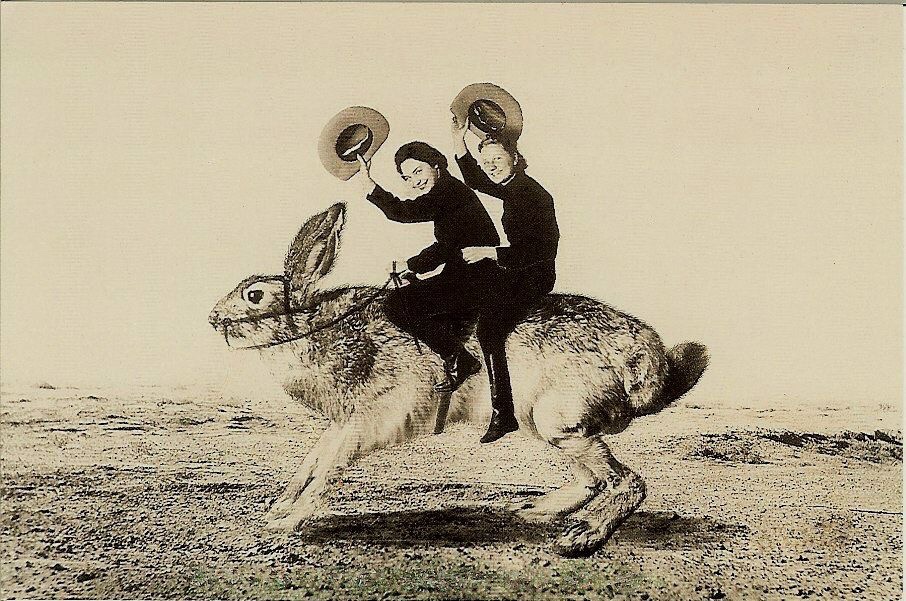
Rabbit! Rabbit! Welcome to November

Abraham Lincoln, All Saints Day, Altars, art, change, chocolate, Civil War, Constitution, Day of the Dead, exercise, Faith, Family, Food, generosity, Habits, Health, holidays, inspiration, Love, nature, poverty, pre-diabetes, pumpkins, rabbits, Thanksgiving, trees, Ukraine, Uncategorized, US Constitution, Van Gogh

My parents would often say, “Time flies when you’re having fun.” If this is so, I’ve had a one whale of a time in 2023. I don’t know where the time has gone, for I’d swear I just woke up in the bright new year of 2023, and now this year has grown a beard of some length. Indeed, the ground was bare, awaiting the warm breath of spring, and now it has experienced its first freeze.

Autumn is a time of transitions. Not only do the trees change colors, and then lose their wardrobe altogether, but we rabbits go from Halloween’s sugar high on October 31st to overstuffing ourselves and the roast beast at the Thanksgiving feast on the Fourth Thursday of this new month. Then we segue into Christmas somnolence with yet more cookies and egg nog (spiked and plain). On occasion we tramp out to decorate the house or scour the woods for greenery, but those days are long gone for most urban dwellers. We’re going to buy from local providers or have it delivered online.

Some of us on the first day of November will still have some of the 35 million pounds of candy corn which are still produced each year. That’s about 9 billion pieces — over a billion more than there are people on Earth. As far as this bunny is concerned, this is 8,999,999,999 pieces of candy corn too many. I’m not a lover of this form of sugar; give me dark chocolate any day. Fortune reported the “dangerous” amount of sugar consumed by kids on Halloween — three cups of sugar in 7,000 calories of candy. For context: That’s 675 grams of sugar, or the same as chomping down almost 169 standard sugar cubes, according to a Fortune article published in 2017.

A Young Bunny

When I was a young bunny, sugar was so restricted in our home, my friends and I would escape our parents’ notice during fellowship time at church to go to the empty adult Sunday school classrooms. We knew where they kept the wonderful Domino Pure Cane sugar cubes for the coffee the grownups drank. We didn’t care for coffee, which was already gone, but the sugar we fell upon like pirates on buried treasure. We didn’t ever consume 169 cubes at once, since that would’ve destroyed the entire stash.

If these had been the 35 million pounds of candy corn, which are still produced each year for Halloween, neither I nor my bunny friend would have ever touched them. The idea about 9 billion pieces — over a billion more than there are people on Earth—are still produced today is incomprehensible to my bunny brain. I think the texture of corn syrup and gelatin isn’t my first choice.

Of course, when the weather turns colder, our bunny bodies sense the need to stoke our internal fires. We do this by consuming more calories, especially the quick acting carbohydrates we find in the sugars and starches that provide the instant “heat” boost our bodies crave. Actually, any food will heat us up, but fruits and vegetables don’t have the same appeal as warm, savory, and fatty foods do in colder weather. The shorter days and the decrease of light in the winter cause problems with our body’s biological clock and lower the levels of the brain chemical serotonin. Plus, many of us reduce our physical activity, so our exercise induced levels of serotonins drop.

Healthy Eating includes More Fiber

We can overcome this loss by planning to be outside during the daytime and making sure to exercise at least 30 minutes daily. Having protein rich snacks and fiber rich soups with complex carbohydrates will help control our hunger spikes. Perhaps this transition time into longer nights and shorter days is why the First Wednesday in November is always National Eating Healthy Day (November 1). If we do only one new healthy choice per week, and add a new healthy option each week thereafter, we can transition our lifestyle into “Eating Healthy.” As a bunny, I remind my friends, it’s also National Vinegar Day—have compassion on yourself and on others. We can love ourselves and others into a better life with kindness rather than harshness. As my grandfather Bunny always said, “You catch more flies with honey than vinegar.”

Day of the Dead Skull

All Saints Day and Dia de los Muertos both are celebrated on November 1. Both recognize the departed loved ones. All Saints recognizes both those who have worked miracles as well as those ordinary saints who have lived among us and given quiet witness to their faith. Dia de los Muertos, the Day of the Dead, is a three-day festival to remember the ancestors and friends who predeceased us. People decorate altars with marigold flowers, photos, and skulls in memory of the dead. They make special food offerings in their honor also.

All Soul’s Day on November 2 is a Catholic holiday to pray for the souls which aren’t yet in heaven, but are in purgatory. Protestants don’t believe in purgatory, so we don’t attend upon this day as holy.

Cookie Monster: “Me want COOKIES!”

Many of us do celebrate Cookie Monster Day on November 2, because who doesn’t like cookies?! The same goes for National Sandwich Day on November 3, for hot or cold, almost anything can be slapped between two slices of bread and get slathered with avocado or mayonnaise, and it’s good to go.

Sandwiches first appeared in American cookbooks in 1816. The fillings were no longer limited to cold meat, but the recipes called for a variety of things: cheese, fruit, shellfish, nuts and mushrooms. After the Civil War sandwich consumption increased and were sold both in high-class lunch rooms and in working-class taverns. A typical turkey sandwich in the 1980s contained about 320 calories, according to a report from the National Heart, Lung and Blood Institute. Twenty years later, a turkey sandwich contained about 820 calories. Choose whole grain bread if possible.

We seniors have more than time on our hand

“Fall Back” on Sunday, November 5, when Daylight Savings Time Ends. We get another hour of sleep on this day when the clocks go back 1 hour at 2 am. I won’t be awake to notice it, but I suggest those of you who aren’t good sleepers begin to look at your evening routines. Set a wind down time on your clock, watch, or mobile device. Let it remind you to turn on quiet music, read inspirational books, or begin your bedtime routine. Sometimes taking off our outside clothes and wearing our “at home” clothes is a signal to our mind to let go of the cares of the world.

Fighting over Van Gogh Pokémon Gifts at the Museum

Go to an Art Museum Today Day and National Chaos Never Dies Day are both celebrated on November 9 this year. I don’t normally consider chaos and art museums as being in the same category, but Disney has made several Night at the Museum movies that revolve around the trope of ancient Egyptian gods awakening to cause havoc. Actual chaos recently erupted at the Van Gogh Museum in Amsterdam when visitors realized the gift shop had already sold out of the Pikachu with Grey Felt Hat promo card, which was modeled on the Vincent self-portrait. Evidently a small group of fans descended on the gift shop, causing a ruckus, and buying out the merchandise. It’s now for sale on eBay.

2023 Veterans Day Poster

Armistice Day marks the November 11,1918 anniversary of World War I, a war which began in August 1914, that few expected to last beyond Christmas. In 1921, an unknown soldier was buried in Arlington National Cemetery. This First World War was “the war to end all wars,” but we’re an overly optimistic nation. We’ve had a Second World War since then, plus many a regional conflict. Every time our battle ships show the flag somewhere, people think it’s going to be WWIII. Fear mongering doesn’t help the nation. We’re better and stronger than that. Plus, we have the moral duty of leadership: our country needs to show the world there’s a better way.

As I recall, both the North and the South expected the great Civil War to last just a short while, just as Putin entered Ukraine believing his army would roll into Kiev in mere weeks. Yet WWI lasted four years, WWII was six years (the US was involved only the four years from 1941-1945), and our Civil War was another 4-year slog. Wars aren’t so much “won” as lost by attrition: one side loses more men, materiel, and willpower so they surrender to the other. War is the most brutal way to settle our differences.

Armistice Day now is Veterans’ Day, November 11, but observed a day earlier (10th) this year. We celebrate our veterans who do the difficult and challenging work of using judicious force against enemy combatants, rather than civilian populations. All of our enlisted personnel take the same oath to protect and to defend our Constitution against all enemies, foreign and domestic:

I, (state name of enlistee), do solemnly swear (or affirm) that I will support and defend the Constitution of the United States against all enemies, foreign and domestic; that I will bear true faith and allegiance to the same; and that I will obey the orders of the President of the United States and the orders of the officers appointed over me, according to regulations and the Uniform Code of Military Justice. (So help me God).”

The US Constitution, 1787

We are an unusual people, we Americans, for our loyalty isn’t to a party, a president, or a person. We are loyal to the constitution, which protects our democratic institutions, values, and freedoms. We can be thankful for those who were inspired to write it, heard the prophetic call to amend it, and have the wisdom to keep us on the straight and narrow.

National Hunger and Homeless Awareness Week is November 11-19 this year. While the economy is recovering, the loss of pandemic assistance funds Is hurting lower income households. They are making hard choices: food or rent, medicine or food. The number of homeless veterans has decreased, but so has the overall population of veterans. The bad news is veterans are still overrepresented in the homeless population. As you prepare for your own feast this year, I hope you remember the hungry in your community. The best way to help is with a financial donation to the local food bank. The bank can purchase food from the warehouse food bank at greatly reduced prices, thereby providing more food per dollar than individuals can purchase on their own.

World Diabetes Day is November 14. Diabetes is a disease on the increase in the world today. In the US alone, over 37 million people have this disease and over 8.5 million have it but are undiagnosed. Over 96 million US adults have prediabetes, a condition in which their insulin doesn’t take the sugar out of the bloodstream well. Switching to whole grains, less processed foods, and adding more fiber to the diet usually helps lower the blood sugar. So does daily moderate exercise.

National Clean Out Your Refrigerator Day is November 15. This is a good day to practice this task, since you’ll be filling it up with excess foods if you’re hosting the feast, or you’ll be traveling away from home. If the latter, you don’t want to return home to spoiled food if the power goes off for any length of time. Ugh: I won’t regale you with the story of stench of the refrigerator in the garage which didn’t power back on after a power outage. Those outlets need to be reset manually because they’re in a “might get wet” zone. The refrigerator inside will come back on automatically. (This turned out to be a get rid of the refrigerator day.)

National Stuffing Day is November 21. If you bake your bread mixture outside of the great bird, it’s called dressing, but if you cram it into the bird, it’s stuffing. It’s safer to cook the bird without stuffing, also quicker. When baking stuffing inside a turkey, it can get get wet and mushy. If you make a flavorful stock from the turkey neck and giblets, you can make your stuffing moist and flavorful without turning it into mush.

If you live in a giant pumpkin, buy a smaller pumpkin for your pie

Pumpkin Pie Day is also November 21, so you can prepare this ahead of time if you wish. You can make a handmade crust or use a store-bought crust from the grocery. Pre bake it and fill it with the pumpkin mixture.

National Cranberry Relish Day is November 22. You can easily make your own with the juice of an orange, some sugar to taste, and cinnamon combined with a package of rinsed cranberries. Heat over medium in a saucepan, stirring frequently to keep from sticking. When the berries burst, reduce heat to simmer and reduce the liquid. Taste and adjust the seasoning. Take off the heat and put into container for icebox. Chill overnight to let seasonings combine. Serve cold as side dish.

Thanksgiving Day is Thursday, November 23. You’ve baked the turkey, and it smells amazing! Let me introduce you to pan gravy from the drippings. You need a little flour, about 2 Tbs; some pepper, about ½ cup of drippings, and 1 cup of hot water. Put the drippings in a heavy saucepan or skillet, add the flour, stirring constantly over medium high heat until flour turns caramel color. This is a medium roux. Slowly add hot water, stirring so no lumps form. Keep stirring till smooth, reducing heat. Add more water slowly if gravy thickens too much. Pepper and salt if necessary.

The idea of “thanksgiving” for the harvest is as old as time, with records from the Egyptians, Greeks, and Romans. Native Americans in North America celebrated harvest festivals for centuries long before Europeans appeared on their soil and before Thanksgiving was formally established in the United States.

In the 1600s, settlers in Massachusetts and Virginia had feasts to thank for surviving, fertile fields, and their faith. The Pilgrims in Plymouth, Massachusetts, had their infamous Thanksgiving feast in 1621 with the Wampanoag Native Americans. The three-day feast consisted mainly of meat: wild fowl procured by the colonists and five deer brought to the feast by the Wampanoag. A a stew called sobaheg was most likely served as a side dish to the main course. It was an easy way to make use of seasonal ingredients, for the stew often included a mixture of beans, corn, poultry, squash, nuts and clam juice. All are used in the traditional dish today, and all would have been available in 1621.

Potatoes weren’t around in 17th-century New England, but corn was plentiful. Natalija Sahraj

Corn and cornmeal were the main carbohydrates on the first thanksgiving meal. The first New England crop of potatoes was grown in Derry, New Hampshire in 1722, so no mashed potatoes were on the menu. Corn bread, corn mush, and corn puddings abounded, since the Native Tribes had shown the colonists how to plant beans, squash, and corn together to maximize growth of all three. The harvest of 1621 likely included beans, squash, onions, turnips and greens such as spinach and chard. All could have been cooked at length to create a green, pulpy sauce that later became a staple in early New England homes. Sweet dishes concocted from sugar or maple syrup weren’t on the menu, nor were honey sweetened deserts. At least, the Pilgrims didn’t have to save room for pie.

After the Pilgrims, for more than two centuries, individual colonies and states celebrated days of thanksgiving. The first national celebration of Thanksgiving was observed for a slightly different reason than a celebration of the harvest—it was in honor of the creation of the new United States Constitution! In 1789, President George Washington issued a proclamation designating November 26 of that year as a ”Day of Publick Thanksgivin” to recognize the role of providence in creating the new United States and the new federal Constitution. During the Civil War, President Lincoln called for a national Thanksgiving Day on the last Thursday of November after the Battle of Gettysburg. In the Great Depression President Franklin Roosevelt moved Thanksgiving Day to the next to last Thursday in November. After two years of public unhappiness, Congress passed a law in 1941 setting Thanksgiving on the fourth Thursday of November.

Thanksgiving, 1858, by Winslow Homer, Boston Public Library

During the week of Thanksgiving, from November 19-25 or 26, we have the holidays of Church/State Separation Week and National Bible Week. If you haven’t been giving thanks for your blessings up to this time, take a break, breathe, and rejoice that you are alive. Give thanks for your hands, your food, your breath, and your heart of love. Share this thanksgiving with someone else. If each of us gives a bit of hope to someone else, we can help others have something to be thankful about.

Chocolate answers all questions.

After the rush of Thanksgiving, some of us bunnies may need medicinal chocolate. November 29 is Chocolate Day. Depending on your personality, you can buy fancy chocolate to share, or you can enjoy it by yourself along with a good book and some lavender tea. If Thanksgiving Day was really overwhelming, National Personal Space Day on November 30 might be calling your name. We all have times in our lives when we don’t need hugs, either because of physical or emotional distress. Besides, we bunnies need to catch our breath before we dash into the Christmas season.

I’m thankful for each of you who read and share my stories.

Joy and peace,

Cornelia


2023 November Holidays Information from Holidays and Observances

http://www.holidays-and-observances.com/november-holidays.html

15 Mind-Blowing Facts About Halloween Candy Consumption in the US

https://www.businessinsider.com/halloween-candy-consumption-usa-facts-statistics-2019-10

Control Your Winter Appetite

https://www.webmd.com/diet/features/control-your-winter-appetite


History of Thanksgiving in America | The Old Farmer’s Almanac

https://www.almanac.com/www.almanac.com/content/when-thanksgiving-day

What the first Thanksgiving dinner actually looked like

https://theconversation.com/what-the-first-thanksgiving-dinner-actually-looked-like-85714


Is Stuffing Your Turkey Safe?

https://www.marthastewart.com/8163046/is-it-safe-stuff-turkey


Wall Street Journal: The American Diet Has a Sandwich Problem – Center for Health Incentives and Behavioral Economics (CHIBE)

https://chibe.upenn.edu/news/wall-street-journal-the-american-diet-has-a-sandwich-problem/


History of the Sandwich | The History Kitchen Blog | PBS Food

https://www.pbs.org/food/the-history-kitchen/history-sandwich/

Van Gogh Museum pulls its Pokémon promo card after opening day chaos

https://www.engadget.com/van-gogh-museum-pulls-its-pokemon-promo-card-after-opening-day-chaos-083349757.html


Rabbit! Rabbit! Welcome to May!

arkansas, art, coronavirus, Faith, Family, flowers, grief, Healing, Health, holidays, Holy Spirit, Icons, Imagination, Ministry, ministry, nature, poverty, rabbits, renewal, Spirituality, Spring Equinox, Travel

Mother Bunny comforts Benjamin Bunny

April showers bring May flowers and Coronavirus containment orders. Everything we once knew about our worlds has been upended by the advent of this novel virus. Once we were proud of our abilities to master our planet and to wrest its unruly ways to our wills. Now we meet an invisible, but infinitely small agent that can weigh lay us from some hidden corner or passing person. I have friends who say they don’t want to go to the grocery store without their spouse or partner, for they don’t feel safe anymore. Then there’s the folks who run pell mell into the jaws of death, daring the virus to take them on.

Dr. Bunny Rabbit, MD

From my rabbit hole, I wonder if the virus doesn’t affect the nervous system and cause some of us to act more fearful and others to act more foolhardy. I think the stress of looking at our four walls of our various hutches, being cooped up with our rabbit families, and dealing with teaching our bunny children their lessons is getting to us all. Maybe raises for those teachers are due in the next go round, now that we understand what they go through every day. The stress is getting to all of us, and even to this rabbit, who’s used to organizing my own time.

People laughed at me back in my seminary days when I brought my appointment book to school, but I blocked off all my classes, set aside time for study, time for meals, and I only worked a half day on Saturday. Sunday I did church and watched the Cowboys, back when they really were America’s Team. I’m retired now, but I still keep a calendar of projects. Since my two art shows got cancelled, I started making masks for those who’ll be opening up shop again soon. I keep up on my pages, my sci-fi spiritual blog, and I started a new painting series, “Postcards from the Pandemic.” I’m down to working about 30 hours a week now, but I’m almost as old as the dinosaurs. The young rabbits can work the long hours and they’re welcome to them.

The world is topsy turvy these days

This May won’t be like any May we’ve ever had before. Whatever model or image you have of the “merry month of May,” you should toss it out the window and let it smash to smithereens like a precious crystal vase dropped from the top of the Leaning Tower of Pisa. We won’t be traveling there any time soon, but if you can find a high up window, your fantasies about May will crash with a resounding clash. Then you can have a good cry about it or a stiff drink, whatever suits your fancy.

Just get your rabbit mind wrapped around this idea: San Antonio has cancelled its Cinco de Mayo celebrations and the Kentucky Derby won’t run on May 4, but has deferred this premier horse race to September 5, 2020. The Indianapolis 500, a Memorial Day tradition for 104 years, has been rescheduled for Sunday, Aug. 23. These events haven’t been cancelled forevermore. They’ve merely been postponed to a future date. We can bury the small grief of our delayed gratification, and look forward to a better time in the future.

NASCAR will be the first major sport to return to television, but without fans in the stands. NASCAR will resume its season without fans starting May 17, at Darlington Raceway in South Carolina with the premier Cup Series racing four times in an 11-day span. The revised schedule for now will only race at tracks within driving distance of the Charlotte-based race teams and in states that have started reopening.

Drivers, start your engines!

Charlotte Motor Speedway will then host the Coca-Cola 600 on May 24 to mark 60 consecutive years of the longest race on the NASCAR schedule being held on Memorial Day weekend. The track in Concord, outside NASCAR’s home base of Charlotte, will then host a Wednesday race three days later. The teams won’t travel far, they won’t practice, they won’t qualify, they’ll wear face masks, practice social distancing, and the rules might be adjusted for pit stops, but when the green flag drops, those drivers will forget about these minor things because they have a race to win. Racing rabbits always go for the trophy, as in “Wreckers or Checkers! Baby, I’m using the chrome horn if you don’t get out of my way!”

Some holidays and celebrations won’t change, and we rabbits can be glad for this. I’ve often listed all the commercial holidays ginned up to advertise some food stuff or group, but not this May. My bunny nose sniffs a different wind in the air. In the interest of not working too hard, I’ve picked five good holidays and celebrations for May:

May 1—May Day—love and hope
May 4—Star Wars Day—May the force be with you
May 10—Mother’s Day—remember your mama!
May 25—Memorial Day—honor those who died serving the USA
May 25—Carry a Towel Day—homage to Douglas Adams’ Hitchhiker’s Guide to the Galaxy

May pole celebrations

Our age is seeking a new spring of life. May Day once marked the halfway point between darkness and light. It’s half way between the spring equinox and the summer solstice. In Ireland, the pre-Christian Celtic peoples divided the year into two main seasons: Winter and the beginning of the year, which fell on November 1, and the Midyear/Summer, which began on May 1. These two junctures were thought to be critical periods when the bounds between the human and supernatural worlds were temporarily erased.

Many of us have experienced thin times, when we feel the presence of God’s spirit with us more deeply than on other occasions. For me, this is more often when I’m in nature. The great dome of the sky, the clouds lit with the glow of the sun, and the liquid light overflowing and casting its glow on the land below. I can get lost in these thin moments and forget what I’m doing and where I am. If you meet a rabbit stopped for speeding on the highway, perhaps they were in a thin moment and not really a jerk.

There are also thin places, which are places of energy, or a place where the veil between this world and the eternal world is thin. A thin place is where one can walk in two worlds—the worlds are fused together, knitted loosely where the differences can be discerned or tightly where the two worlds become one. These are places which have been recognized over the ages as connected with the spiritual world. Often overlaid with the most recent god of the newest inhabitants, the place retains its spiritual energy. Many temples in the ancient world were built on the sites of even more ancient holy places, only to have churches built over them even later still.

In this era of Coronavirus, we might not be using our frequent travelers miles, so we could seek an alternative thin space. The holy icons are perfect for this, for since they’re a “window into heaven,” they’re by definition a “thin place.” They usually are given a designated place in the home, called the Red Corner, for the Russian word for red and beautiful are the same. Of course, we don’t pray to the icon, and the object isn’t worshipped, for that would be idolatry. We pray to the God of the saint represented, or to the Son of God, but not to the icon itself, which is merely an outward and visible reminder of the inward and invisible spirit which connects us all to what is good and holy and communal in our socially distancing world.

May the Fourth be with you!

On May 4th, we can say, “May the Fourth be with you,” and remember the “Force is always with us,” for every time and place can be a thin place if only we rabbits would become aware the greater power beyond us is also operating within us, for
“we have this treasure in jars of clay, to show that the surpassing power belongs to God and not to us” (2 Corinthians 4:7).

We all have Mothers, who gave birth to us. Some of us also have adopted mothers, mothers who raised us, mothers who formed us in the faith, or mothers who took us under their wing and taught us how to get along in the world. Mothers today don’t have to be women, but they do have to nurture and shelter. The church has been a great mother for centuries, nurturing the poor and the marginalized through the ministries of outreach to the neighborhood and the world. These ministries haven’t stopped just because of the coronavirus, but are increasing because of job losses, homelessness, and hunger. If you have the means to share with your local food pantry, please do. Hungry rabbits depend on us.

Memorial Day weekend was for a long time a pause to honor the nation’s war dead. Then it became a three day weekend for backyard barbecues and sporting events. As the toll from the novel coronavirus pandemic in America marches past the total of Americans killed in the Vietnam War, our holidays may take on a more somber nature. For other rabbits, who have an overripe case of cabin fever, a need to break loose in a wild debacle may override their common sense. I know my rabbit friends have good sense, so even if your state flings the doors wide open to “life as usual,” common sense and expert wisdom will prevail instead. Let others test the waters on this idea, and let them be the guinea pigs to see if the curve has actually flattened.

A cotton towel for a cotton tail would be best.

May 25 is also Carry a Towel Day, so if we have a towel, we won’t panic. As explained in the Hitchhiker’s Guide to the Galaxy, towels are “the most massively useful thing an interstellar hitchhiker can have.” A towel has both practical value, since it can be used for warmth, shelter, a weapon, and also strangely to dry one’s body. It also had psychological value, for if a non-Hitchhiker sees you with a towel, they’ll assume you’re fully stocked with other necessities as well. The lesson I take from this is while life is serious, I shouldn’t take myself too seriously. Humor will get a rabbit through the thickets and briars of this world better than struggling against the thorns and weeds. After all, angels fly because they take themselves lightly.

I will see you next month, when the June bugs fly. Until then,

Love, Joy and Peace,

Cornie

Recipe for CLASSIC MINT JULEP for a delayed Kentucky Derby, best consumed while wearing a fancy hat or elegant jacket. This recipe is adapted from “The 12 Bottle Bar,” a fun, informative cocktail recipe book by David Solmonson and Lesley Jacobs Solmonson. To make simple syrup, pour one cup of granulated sugar or Splenda into one cup of water and slowly heat on the stove, stirring until the sugar/Splenda is dissolved. Plus a Handful of fresh mint leaves,
1 oz. simple syrup (2 tablespoons), and 2 oz. bourbon or rye, your choice (1/4 cup or 4 tablespoons).

Put the mint in a cup, preferably one made out of silver or some other metal that will keep things nice and cold, and muddle it by pressing it gently against the sides and bottom of the cup for a few seconds (use that muddler you got as a wedding present or the handle of a wooden spoon). This rabbit would use a spoon.

DO NOT MASH THE MINT. You just need to release the mint’s oils, which does not require a strenuous effort. Over-muddling will result in an overly bitter drink. Add the simple syrup. Fill the cup with crushed ice and add the bourbon. Stir gently for 30 seconds or so, until frost forms on the side of the drink. Add more ice if needed and garnish with another sprig of mint. If you don’t have metal cups, make it in any cup cup you have. The metal is traditional, however.

This is a stay at home beverage, or a split between two persons, since it exceeds the recommended one ounce per day consumption of alcoholic beverages. Enjoy responsibly.

For more information on some of the subjects mentioned above:

Midsummer
https://www.britannica.com/topic/Beltane

Kentucky Derby: September 5, 2020
https://www.kentuckyderby.com/derbyweek

Thin Places
https://thinplacestour.com/what-are-thin-places/

Icons and The Red Corner
https://remstroybutik.ru/en/where-there-should-be-a-red-corner-in-the-apartment-red-corner-of-the-house/

The Inspired Church

architecture, art, Creativity, Easter, Faith, generosity, Historic neighborhood, Holy Spirit, Imagination, Ministry, Notre Dame de Paris, Painting, poverty, purpose, renewal, risk, Spirituality, vision

My newest painting is from a photo I took of a church in downtown Hot Springs on one cloudy spring day. It wasn’t much to look at as a photo, but I was called to stop and snap its image at that moment. I learned long ago in ministry to listen to those promptings of the spirit, for a greater power was working beneath my poor powers of discernment and knowledge. If I listened, I’d show up when people needed me, even when they were unable to contact me. God has a mysterious power to do unlikely works, or things we ordinary folks would call minor miracles.

THE INSPIRED CHURCH

Most of us see our churches as ordinary places, maybe even “our places,” rather than God’s holy place. This is why we say “my church,” but if we were truthful, we’d admit, no church ever belongs to any human being, for the church is the body of Christ. We also aren’t just one congregation either, for all these buildings comprise a greater Body of the greater Church, which is the Body of Christ. Plus, we who look to our membership rolls forget about the ones who are outside our doorsteps: the hungry, lonely, poor, wandering, naked, or the prisoners and infirm who are confined. They too are part of Christ’s body, which yearns to be made whole.

In my painting, this ordinary, grounded church now rises as a golden, ethereal structure striving toward the heavens. As a Inspired Church, it’s “going on to perfection.” While it won’t get there on its on account, God’s energies are there to help it, just as the spirit will help each of our churches to grow in faith and witness to the world. As I consider the pre Easter fire at the Cathedral of Notre Dame de Paris, I think of the cycles of spiritual growth both we and the bodies of Christ undergo. We all have times of growth and lying fallow, and some even seem to have seasons of rot. Yet God’s renewing spirit can make the dead bones live again.

Notre Dame de Paris

A Christian church has been in Paris since the 3rd century of the CE. This site has a history of both blight and renewal. Two ancient churches were destroyed to build the new gothic cathedral. These were built on the site of an old Roman temple dedicated to Jupiter. The work on the cathedral began in 1163 and was completed 203 years later. In 1789, French revolutionaries caused major damage to the building, especially the statuary. Nearly a half century later, publication of Victor Hugo’s The Hunchback of Notre Dame in 1831 sparked a campaign to restore the cathedral.

Although Notre Dame de Paris is a Catholic Church, it’s also a historic building. As such, the cathedral belongs to the state, which is responsible for its maintenance. Nevertheless, the day-to-day maintenance of churches and cathedrals in France often falls to cultural and religious associations. And just because the state is responsible for funding large infrastructure projects doesn’t necessarily mean it has the money to do it.

When the world watched the spire fall and the wooden roof collapse, a great sadness fell across people’s hearts. Immediately large financial pledges poured in to rebuild this architectural treasure. One of the blowbacks in the days of grief after the fire and the generous outpouring of pledges to rebuild this cathedral of hope, which is over 850 years old, was the reality of human needs. Soon folks said, “If we can raise this much money for a building, why can’t we raise it for the homeless, the hungry, the war refugees, and all the other human causes of need?”

Yes, these are important, and we should always provide relief for human distress. Great buildings, which have seen over eight centuries upon this earth, are a special case. They carry the hopes, dreams, and memories of each person who has ever entered their doors. With the advent of television and social media, they now carry the memories and dreams of everyone around the world who watched this great sanctuary burn and all their hopes for what it will become in the future.

When we cast a vision for our own churches, most of us aren’t facing a burned down edifice. Instead, we usually find a burned out congregation or a barely burning membership. Not many of us will stay in our appointments long enough to make “cosmic changes,” so we work to improve what we can, with the hope the next pastor will build on our work. In truth, it’s easier to redesign or renovate a building than it is to restore a congregation to health.

Currently architects are designing their best proposals for this spiritual heart of Paris and France. Some will “go big or go home,” while others will bring a more simple vision. Paris firm Vincent Callebaut Architectures’ vision for the cathedral is an innovative and eco-friendly design that supports the local population and produces more energy than it uses. Its vision of the rebuilt Notre Dame features a futuristic glass design, solar power, and an urban farm to support vulnerable and homeless Parisians.

Proposal for Interior of Notre Dame de Paris

Four years ago, an art historian used lasers to digitally map Notre Dame Cathedral. His work now could help save it. The Vincent Callebaut project is titled “Palingenesis,” a Greek concept of rebirth or recreation. The firm proposes a new roof made of glass, oak and carbon fiber, which connects “in one single curved stroke of pencil” to the sloping spire. The rooster which topped the original spire and retrieved from the rubble after the fire, will resume its watch from the new glass design, while the cathedral’s choir will be bathed in natural light.

Vincent Callebaut Architectures
Beneath the spire, the roof will host a fruit and vegetable farm run by charities and volunteers, in order to produce free food for vulnerable local people. “Up to 21 tons of fruits and vegetables could be harvested and directly redistributed for free each year,” the firm said in a press release. “To that end, a farmers’ market would be held every week on the forecourt of Notre Dame.”

Notre Dame de Paris


Vincent Callebaut Architectures
The roof and spire will also produce electricity, heat and ventilation for the cathedral: an “organic active layer” within the glass will provide solar power, while the roof’s diamond-shaped “scales” will open to offer natural ventilation — a design inspired by termite mounds. The spire will act as a “thermal buffer space” in which hot air accumulates in winter.

The cathedral could host an urban farm which produces food for local people. Credit: Vincent Callebaut Architectures

“How can we write the contemporary history of our country, but also that of science, art and spirituality together?” the firm said in a press release. “We seek to present a transcendent project, a symbol of a resilient and ecological future.”

If the Vincent Callebaut design is selected, the firm said, the reborn Notre Dame will define “the new face of the Church in the 21st century,” presenting “a fairer symbiotic relationship between humans and nature.”

This is so amazing, yet I wonder if the religious community will feel elbowed out of their worship space. I know one of the difficult challenges in church leadership is adopting new ideas because “we’ve never done it that way before.” On the other hand, helping this 14th century gothic cathedral rise from the ashes to a new birth is the perfect moment to claim an extraordinary vision for a forward looking future, not only for the church, but also for Paris, the French, and even the people of the world.

THOUGHT QUESTIONS

  • When we think about a new vision for our own church, are we willing to destroy the pagan temple and the god of its age?
  • When we build a church for an earlier time, do we have the faith to tear it down and build it anew for the age in which we live?
  • Do we hold on to an old form of church until it burns down and we need to create a new one from the ashes?
  • Will we have the courage to reconfigure our “idea of church” so it’s not a separation from the world, but an incorporation of the world, as in the Wedding Banquet parable?
  • Are we ready to entertain new visions and dream new dreams for our churches and our ministries?

https://www.washingtonpost.com/world/2019/04/18/france-separates-church-state-so-whos-responsible-notre-dame/

https://www.cnn.com/style/article/france-notre-dame-green-scli-intl/index.html

https://www.notredamedeparis.fr/en/la-cathedrale/histoire/historique-de-la-construction/

Day of the Dead Altars

adult learning, All Saints Day, Altars, Ancestry, art, Creativity, Day of the Dead, Faith, Family, grief, Healing, Health, Imagination, Meditation, Ministry, photography, poverty, Reflection, renewal, Spirituality, vision

DeLee—Ancestor Altar

Some things I take for granted, since I had the great privilege of knowing my great grandmother in her last years. I knew all but one of my grandparents, since my daddy’s father died when I was only a year old. Even my daughter knew both her Nana and all four of her grandparents. Growing up we attended family reunions or homecomings every summer without fail. We renewed ties with the distant or “kissing cousins” who also showed up for the food and fellowship. I also have family members who care about genealogy, especially if this gets them into exclusive organizations, but I’ve never joined these.

The Mexican festival for the Day of the Dead pays respects to the ancestors. In truth, we don’t need to know who they are, or to have had an intimate relationship with them. After all, I certainly didn’t know my great great ancestors! I can appreciate I wouldn’t be here without their gift of life to my more proximate relatives. This is what the writer of Hebrews means by, “we are surrounded by so great a cloud of witnesses” (12:1).

The Day of the Dead is celebrated on or around All Saints Day, and sometimes for several days on either side of it. It began with an Aztec custom, and blended into the Catholic tradition. This is a time for feasting, celebrations, and joy, to make memorable the experience of recalling the lives of the ancestors. Sweet foods shaped like skulls are one of the traditions.

Michael—Altar

Michael worked on a pyramid of foam core boards, which he painted to look like stones. He decorated it with store bought skulls and a photo of his deceased brother. He has more nuts and bolts from a found object stash to add to it. Telling the story of his beloved one is part of the project. Art is part therapy and part project. We may work with our hands, but our hearts and minds are also involved.

Michael—Found Objects

Gail worked on a tombstone painting with images of her ancestors and their pets. She figured our how to transfer photos to cloth via the printer! Technology! I was impressed! Plus Gail made coffee for my sake, and it was a means of grace, since I’ve had a serious sinus infection that won’t go away. Coffee really is a blessing.

Gail—Ancestral Line

I’m slowly working on a new box for my daughter’s memory. This is the third anniversary of her death. When we think of the Dead, we remember
we believe “he is God not of the dead, but of the living; for to him all of them are alive” (Luke 20:38). So we don’t grieve like others do, for our loved ones aren’t lost to us. Since God is close to us, and our loved ones are with God, this means our loved ones are always as close to us as God is.

In these past three years, grief has roiled not only our nation, but the nations of the world. Since 2015, more than 33,000 Americans have died as a result of the opioid epidemic, but drug overdose deaths overall are even larger. In 2015 alone, 52,404 people died from a drug overdose and 64,070 died in the year ending in January, 2017. Across the world, 2015 was remarkable for forcibly displaced persons: 21.3 million refugees, 40.8 million internally displaced persons, and 3.2 million asylum seekers. The photo of the drowned Syrian boy, who washed up on a Turkish beach, helped open Europe’s doors to people fleeing the war torn country they once called home. Now we have neighbors from the south fleeing gangs and corruption in the hope of a place to work and give their families a better life.

Perhaps we’ve had so much of our own grief, we can’t deal with any more. We’ve become numb to the pain of others. If this is the case, we are dead inside, and others need to grieve for us. The fancy name for our condition is “compassion fatigue,” for we hear folks saying, “We should take care of our own first,” but our own go hungry and sleep in the bushes behind our churches or on our city streets.

To live with joy isn’t easy in the early days after the death of a loved one, but as our journey progresses toward recovery, we come to remember who we are and whose we are. Making a scrapbook, writing a journal, or building an altar are all physical means to engage the senses. Once we tap these, we can open the floodgates to our emotions and thoughts, and then healing can begin. We aren’t healed in a moment, but by a process over time.

“Hear, LORD, and be merciful to me; LORD, be my help.
You turned my wailing into dancing;
you removed my sackcloth and clothed me with joy”
~~ Psalms 30:10-11

NEXT WEEK: We begin a new still life painting series—Ornamental Gourds.
No, we aren’t painting ON the gourds…Bring paints and a canvas!

Joy and Peace, Cornelia

Drug Overdose Statistics:
https://jamanetwork.com/journals/jama/fullarticle/2657548

More Power: Thoughts on the Spiritually of A Found Object Icon

Creativity, Fear, generosity, Healing, Health, Holy Spirit, home, Icons, Imagination, Love, Mental Illness, Ministry, ministry, mystery, poverty, Prayer, purpose, renewal, salvation, Spirituality, Strength, Travel, Uncategorized, vision, Work

I should never begin working with power tools without caffeine. Having said this, I’m glad to report that I still have all the fingers on each hand and no body parts remain glued to a flat surface, unlike Tim “The Tool Man” Allen. My only error was to put my battery pack backwards into the charging unit. This meant I needed an extra hand to help me pull it loose. God provides, for my young neighbor was handy to pull the charger away while I held the battery’s release mechanism. Two minds are better than one, and two efforts double the power.

My friends at the Canvas Community Church in downtown Little Rock, Arkansas, work with the homeless folks there. Street people are made in the image of God, just as you and I are. They have broken lives, just as you and I do. Their brokenness is out on view for all to see, whereas ours is often hidden behind elegant facades or ordinary tract homes. Canvas will host a Good Friday Stations of the Cross worship service for their community. Their art outreach program with the homeless produces some of the art, but other artists offer their works for exhibition and sale also. A portion of the proceeds befits the church’s outreach ministry.

Icons are such sacred objects that they have acquired a sense of holiness all their own. This attribution of holiness to the icon itself, rather than to the person or subject represented, led to the Iconoclast Controversy. Some destroyed many precious works of art because they thought the image was being worshiped, rather than God or Jesus. We do this today, of course, when we worship our “litmus test issues,” such as which Bible translation is the only sacred cow, what age the earth is (a cover for the Creation science or evidential science debate), or picking a Christian candidate to support (by virtue of the proof texting quotes with which we agree, of course).

My thought is that we still worship the image, but fail to worship God or Jesus. If we were to go beyond the icon/image, we might see more of us meeting the Christ who lives on the streets, in the prisons, and in the sickbeds of our nation:

Then the king will say to those at his right hand, ‘Come, you that are blessed by my Father, inherit the kingdom prepared for you from the foundation of the world; for I was hungry and you gave me food, I was thirsty and you gave me something to drink, I was a stranger and you welcomed me, I was naked and you gave me clothing, I was sick and you took care of me, I was in prison and you visited me.’ (Matthew 25:34-36)

In the ten hours I was in my studio assembling this icon, I had time to remember where I found all these items that make up this altarpiece. The two red supporting decorative brackets are from a home decorating project that never got off the ground because I decided to tear out the old counter space rather than to make a mosaic there. I hauled the wood shelf back from a walk. It was once a scrap piece of a fence that kept someone out or in. I pick up sticks that feel right, and scraps of wood or crushed soda cans that call out my name. The debris of this world has a beauty of its own kind, just as the acknowledged fine materials of our convention have value. If one day we found a way to manufacture gold, the metal would become base in a heartbeat.

That Chrysler hubcap was a real find! I may have found that on vacation when I stopped along a quiet roadside to snap a photo. The old crosses are from my days of living in large homes, rather than a small condo. The green glass cross broke in a move, but I couldn’t give it up. Most of us can’t give up our brokenness to the Christ who said, “This is my body, broken for you.” This is why we share our broken lives with all who are broken by sorrow, illness, pain, or hurts. We may wind up rusted on the side of the road, like the windshield wiper or we may end up painted over and stashed away in a garage like the board on which this icon exists. I also used beads and old pieces of jewelry that needed to be recycled and repurposed, in the great icon making tradition.

The power of the icon isn’t in the materials. I’ve made icons of macaroni and plastic jewels that read “holiness” as much as any ancient icon. I’ve had people make icons from their grandmother’s jewelry boxes. These too read as holy icons, even if they are nonrepresentational. The power comes through the Holy Spirit into the artist and then into the work. When I make a work such as this, my hands are steady, my pace is slow, and I lose all track of time. I enter into another realm, so to speak, that of the icon itself. The ancients believed that the icons were a window into heaven. I believe this is true, for the power of such an object is to take us out of our ordinary experiences and into a world where there is no more hunger, pain, or grief.

The icon’s great mystery and power is to remind us that ordinary materials can open us up to the truth and beauty of the holy. When our eyes are jaded by the ugliness of the world about us: wars, beheadings, poverty, injustice, economic destabilization, and human insensitivity, look upon the icons and enter into the power of the one who makes all things holy:

“He will transform the body of our humiliation that it may be conformed to the body of his glory, by the power that also enables him to make all things subject to himself.” (Philippians 3:21)

2015/01/img_8837.jpg

McTemples and Lonely Prophets

Creativity, Evangelism, Family, Food, generosity, Health, Holy Spirit, Imagination, Meditation, Ministry, ministry, photography, poverty, Prayer, purpose, purpose, renewal, salvation, sleep, Spirituality, Stress, Uncategorized, Work

“For where your treasure is, there your heart will be also.”

~~ Matthew 6:21 

Driving home from a retreat in north Arkansas, I made a pit stop at a local McDonalds. I called a friend, for I missed an opportunity to help publicize a group of homeless veterans’ art works.  One of the road riding prophets of the Christian Motorcyclists Associations heard me say, “Let me leave here and we’ll pray,” so he followed me outside. I’d seen his colors as I exited the building, so I wasn’t afraid of his rough looks. Women traveling alone don’t normally want to engage in conversations with strangers because it pierces our bubble of security. The rest of us just want to be left alone so we can get on with our lives. CMA riders share their witness whenever and wherever they can.

This was Ron C, bearing fruit for the weary traveler, sharing that his life now with Christ has been much better than it was before, when he was briefly confined to a mental institution. Now he has a purpose when he rides the road.  He shares Christ with all he meets, for Christ is the seed buried in his heart. I thanked him for his witness and we parted.  I wondered how many Christians have a Christ treasure to share from their heart, or whether Christ is their means to gain earthly treasures.

We’re coming up on the first anniversary of Harold Camping’s prediction of the End of the World (5-21-11).  Many folks cashed in their pension plans to pay for advertising to warn people of the impending doom/judgment/rapture. They were disappointed, but like true believers, unshaken. Perhaps they should have read the text, “no one but the Father knows the day and hour of the coming of the Son of Man” (Matt 24:36). How can we witness to our faith, if we aren’t given to selling all that we have or riding the roads as a lonely prophet?

Jesus says, “store up for yourselves treasures in heaven” (Matt 6:20).  We can’t exactly make a deposit in the First Heavenly Bank & Trust: it doesn’t have a drive through or an ATM. There’s not an app for that for your smart phone. However, we can care for ourselves, since we are the “temple of the Holy Spirit” (1 Cor 3:16). We can also care for others as well as for God’s creation. Caring for ourselves means not burning our candle at both ends, choosing fewer processed foods/more fresh foods, making exercise and sleep a priority, and finding our quiet time with God for prayer and meditation. Two days away for a golf/spiritual retreat with my clergy pals was a way I could honor this need to store up treasure in heaven. When 42% of American adults are predicted to be obese by the next generation, we are building McTemples by the millions! This excess weight adds $550 billion to our medical bills in preventable disease costs, for obesity related costs now outrank those caused by smoking.

Caring for others means we value them as we value them as we value ourselves, for we are all made in the image of God. To care for others means not only means to do good to their bodies and souls, but also to refrain from doing harm. People in caretaking professions and customer relations tend to put others first, and themselves second. Years of doing this will diminish our healthy sense of self, until we no longer can stand up for what is true and right. We will do for others exclusively, and fail to take time for ourselves. For some reason, we think we are Superman or Superwoman, and we can fly forever doing mighty deeds. We don’t see the kryptonite until it’s too late: Doing no harm means caring for ourselves. The truth is not one of us is yet under the complete Lordship of Jesus Christ, for none of us are entirely perfected in love: we are still going on toward perfection! We yearn for our hearts to be so full of love of God and neighbor that nothing else exists, but we still are riding the road, making a way on that journey to perfection.

I may laugh about our McTemples of the Holy Spirit, but that’s only because I come from a culture of eating. I grew up in a Methodist Church and went to a Methodist Seminary. I told folks I had a course called  “Preacher 101—Follow the Food.” It’s a good way to understand the dynamics of the local church, which does run around food: donuts with the pastor, men’s breakfast, ladies’ luncheons, Wednesday night choir supper, potluck dinners, senior club dinners, youth night dinners, spaghetti fund raisers, valentine suppers, potato bakes, etc. I sometimes ate only two meals at home in any given week. All these folks know how to cook, and they all want you to eat their food.  No wonder their pastors have big round bellies, and their insurance is so high! But then, we are just like they are, so we are all going down the same road to illness together.

It’s not that we don’t have access to decent food. Most of my churches have been in small towns, not in the urban jungles of decay that are designated as “food deserts.” They aren’t in rich neighborhoods by any means, but we do have access to a variety of food.  Since I’ve been on health leave, I’ve become more conscious about caring for my body, soul, and mind. I’ve learned that our food industry makes cheap food palatable by layering fat, salt, and sugar together in a heavily processed form. These products are heavily packaged, highly advertised, and subject to extreme couponing offers.  They are not the best foods for you.  The best foods are on the outer perimeter of the grocery store: fruits, meats, vegetables, whole grains, and dairy products.

The food deserts are in the poorer neighborhoods that have more fast food restaurants and fewer grocery stores. They also have less access to transportation and higher rates of metabolic syndrome diseases plus less access to medical care. A good project would be a community garden and cooking classes. Neighbors helping neighbors by improving the little patch of the earth on which they live makes a whole lot of good for God’s kingdom, or “storing up treasures in heaven.”

Our spiritual practice will be an inventory of our heart: what are our treasures? Begin to list them one by one, beginning with all the things and all the people you hold dear to you. Then list all the powers and strengths. Now list all the pains and sorrows, weaknesses and failures.  See how God has used these also to bring treasure into your life.  As our art project, try building a treasure box: If you have an old box, you can paint or decoupage (cut pictures & glue designs) it according to your taste.  This can be a place to keep the treasures from the years gone by. You can also fold a box of scrapbook paper using the ten step directions found at

http://rubberstamping.about.com/od/techniquesandtutorials/ss/Box.htm

Joy and Peace, Cornelia