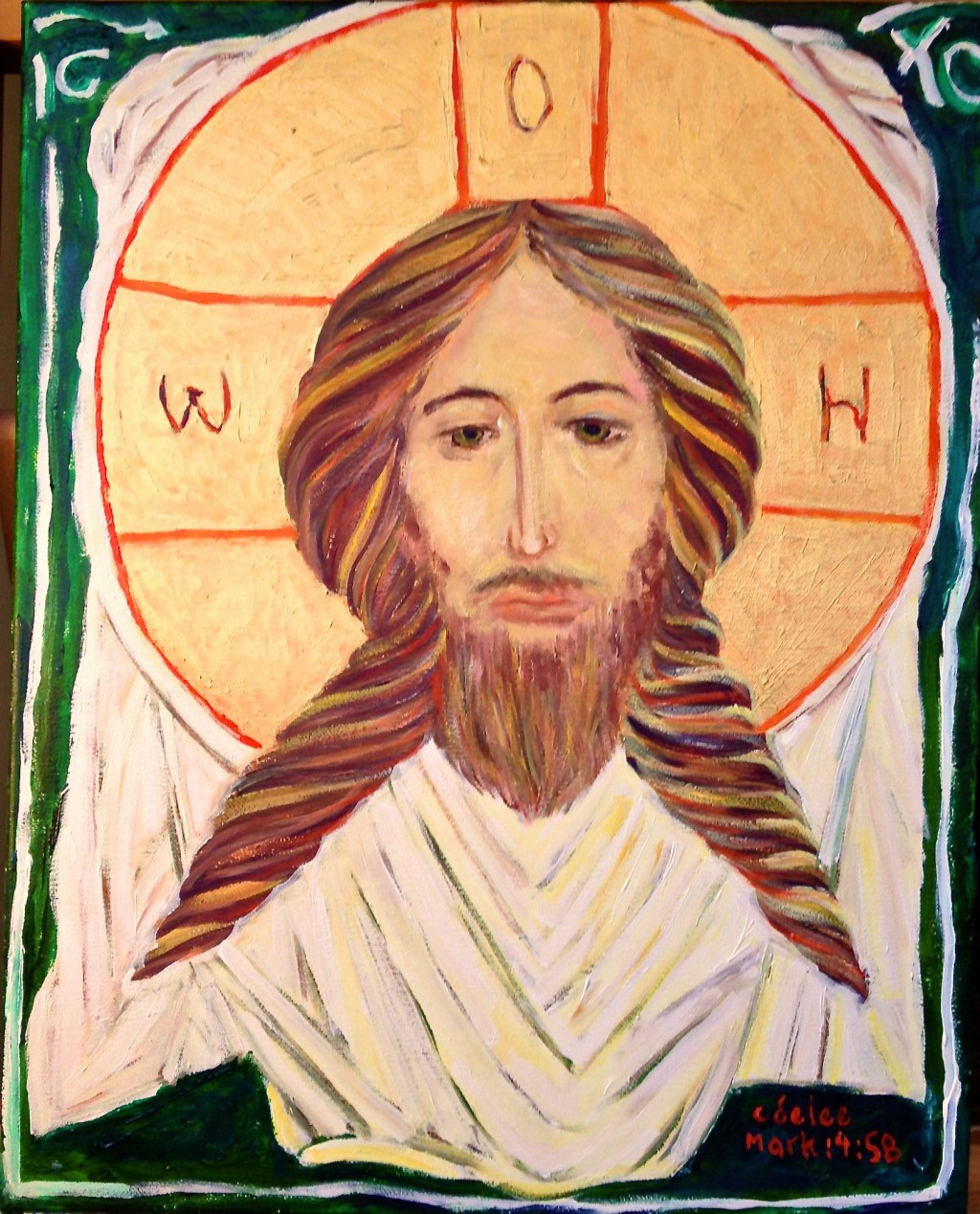
Doing Battle With The Dragon

Children, Creativity, Fear, Health, Holy Spirit, Icons, Imagination, Mental Illness, mystery, purpose, purpose, renewal, Stress, Travel, Uncategorized, vision, Work

“The horse is made ready for the day of battle, 
but the victory belongs to the Lord.”  ~~ Proverbs 21:31

Mount Erciyes, Cappadocia, Turkey As I journeyed with my group along the Silk Road on the fourth day of our pilgrimage, we saw the twin peaked volcano Mount Erciyes, on which St. George of Cappadocia was said to have slain the dragon. As we made our 400 miles across the sunlit fields with poplar trees into the tufted fairy mountain volcanic formations, I had several conversations about art and artists with my fellow travelers. We had visited the Firca Ceramic Factory in the morning. The artisans there explained their apprentice program and the process of training to become a master potter. Not everyone makes the cut, of course, but they can still be employed at the level of tradesman or tourist ware producer.

For people who have no concept of the time, effort, sensibility or spirit that is necessary to produce a great work of art, this “educational session” went right over their heads. Others had their “consciousness raised,” as we used to say back in the old days. This latter group happily gave a fair price for the extraordinary works of these artists’ hands.  I myself brought home a small plate of colorful fish to remind me that I am always called to “fish and to catch the hearts, souls, minds, and bodies of others for the sake of Christ and his church” (Matt 4:19).

At lunch I visited with one of my new friends. She asked, “Why did it take Michelangelo so long to paint the Sistine Chapel?” Because it was fresco—fresh plaster. He could only work while the plaster was wet. Bodies with clothes and landscapes went quickly, but nudes and faces were painted more slowly. If we could get up close we could tell by the edges and lines how much he did in a sitting. “Oh. Everyone who saw the chapel on our tour was kind of bored with it all. Now I understand why it was so important.”

I realized it’s because not many of us make art anymore, just as most of us don’t can jams or jellies. We also don’t quilt, knit, crochet or embroider. We buy our clothes premade and our foods prepackaged. Cooking from “scratch” is a lost art. We don’t seem to want to dirty our hands any more with the creative process. Instead, we have lost the spirit that calls us to enter into battle with the raw materials. We are a people without faith that God is with us in these fights. It is as if we are afraid to risk losing the battle, so we do not enter the fray.

I have recently been teaching art to prekindergarten children. The first thing I had to teach their classroom teacher was that “failure in art is part of the process of learning how to succeed.” In other words, it’s not the finished product of polished perfection that we seek, but the child’s growth in using the tools correctly and their creative response to the imagination challenge of the day.

The second teaching principle was allowing the child to do his/her own work.  Many of our parents have “taken over” doing for our children so they can have a good outcome. These children will have poor motor skills and will not be self-sufficient when they grow older. They will be less independent and less confident.  However, they can master skills in art class that can give them a sense of self-esteem that comes from accomplishing a task, taking charge of their own work, and creating their own designs from their own fertile imaginations.

The third principle about art is joy, and I usually don’t have to teach this to the children.  They love to play and the colors, materials, textures, and tools are great ways to explore the world in play. For adults, however, art is about the finished product from the get-go, so we worry that our idea will not come across on the canvas or paper.  For the work to come alive, the artist must let go of that original idea and go with the image that begins to come to life on the canvas. Sticking with the old idea is like staying with the old battle plan when the lines of engagement begin to shift. We all know what happened to General Custer at Little Big Horn.  The same death will happen to our creative product if we don’t pay attention to the new information coming t us from the front lines.

Likewise, in our lives, we don’t listen to the battles going on in our hearts, minds and bodies. Some might call this our conscience, or that voice that whispers “this isn’t right for you.” That other voice that whispers so sweetly, “but everyone else is doing it…” is like St. George’s dragon, or the personification of evil. Flip Wilson’s character Geraldine used to say, “The Devil made me do it!”

We can go along with the “demon voice” of “everyone else is doing it” and discover that our moral standards are at the lowest common denominator, and we make decisions not on any ultimate truths or standards, but on conditional and relative criteria. The ground is always shifting under us, like a mountain about to erupt. If we refuse to fight this particular dragon and “go along to get along,” then either our mental health or our physical health will begin to fail us. We may intellectually marshal the arguments of reason for our refusal to do battle against this insidious dragon, but like the fiery beasts of the old tales, they will surely begin to ravish the countryside.  In this case, the country isn’t Cappadocia, but the heart and mind of the one who needs to gird the horse for battle.

Many of our modern illnesses are related to stress, which comes from having to reconcile two discordant tunes in one’s head. Only when we can fine that one tune to hear will we be both well and at peace.  Another image is trying to “spot paint a wall that was painted too many years ago.” Putting fresh paint over dull color will make this one spot stick out like a sore thumb.  One must paint the whole wall, and of course, the other three walls and the ceiling, for the rest will look too sad next to that freshly painted wall. The truth is we can’t just put a new piece of cloth on to an old garment; we must change out the whole thing. This is called a “make over” or a life style change, or the “new life in Christ.”

I myself have had a lifestyle change from the hectic, caring for the lives of others that is the life of a pastor to the new life of caring for myself in these years of being on incapacity leave.  These past four years others from my old life have pushed me to be “more involved and to do more ministry with and for others” in the hope that I will be able to return one day to full or part-time ministerial service.

As I listen to my body, I realize that the stresses of these activities aren’t for me anymore. I can do them on an occasional basis, but not on a weekly basis, and definitely not on a daily basis. I am healthier when I am in the solitude of my studio writing and painting. I need the quiet to stay well and avoid the stress that brings on the seizures. Here I can reflect on the battles between good and evil, the struggles we all have to live the full Christian life.

We all do battle against the dragon.  Some of us want to be at the heart of the action, to receive the affirmations of the people to be there for them and to touch their lives. We think if we can make a difference here, it will atone for our failures to make a difference somewhere else or in some one else. We will be at peace when we understand that while we may gird the horse and swing the sword, “the battle belongs to the LORD.”

As an artwork for spiritual reflection, find an icon of St. George and the Dragon. As you meditate upon it, write out the words of your particular “dragons.” These are the powers and principalities that you struggle against: pride, fear, self-doubt, worry, hopelessness, arrogance, anger, weakness, hate, etc.  You can make the words of any size or shape. Embellish them with wings, give them an elongated tail, scales and an open gaping mouth. Now draw a large sword, gleaming brightly in the light of day. Upon this sword write the words of power that come from scripture: “The battle belongs to the LORD!”

Keep this image near you this week and draw strength from it: God is at your right hand!

For photo & info on the volcano at Mt. Erciyes:  http://volcanocafe.wordpress.com/2012/03/29/cappadocia-upright-volcano-of-turkey/

For Illnesses related to Stress:  http://www.webmd.com/balance/stress-management/features/10-fixable-stress-related-health-problems

We Journey By Stages

Creativity, mystery, purpose, renewal, Spirituality, Uncategorized

Canvasari interior, Sultani. Turkey. Along the Silk Road

Caravansary interior, Sultanhani. Turkey. Along the Silk Road

“And Abram journeyed on by stages towards  the Negeb.”

~~ Genesis 12:9

“A wandering Aramean was my ancestor” (Deut 26:5) is likely the first affirmation of faith in the Bible. It speaks to a people who began their lives with a call from God to journey in faith: “Go to the land that I will show you” (Gen 12:1). I spent two weeks in Turkey and Greece along the Silk Road making a journey of faith with others who were out to visit the sites of the Seven Churches of the Revelation.  We were not just on a journey of faith during this brief time, but this pilgrimage was a microcosm of the experiences of our lifetime faith journeys.

Deciding to set out is the first step of a faith journey! For many of us, counting the cost is too expensive. We say we could save so much money by setting out alone, buying a cheap fare on line, and so on. However, we never do this because we are afraid to go alone. Travel in a foreign country, even one as safe and hospitable to Americans as Turkey, is not as safe as being in the USA for those without connections or knowledge of the language.

I missed the tour bus and had to negotiate my own way out to the suburban location of our hotel in Istanbul.  First I tried the bus, but the driver wouldn’t take me there, so I went to the taxi stand. The driver didn’t speak English, but I had the hotel address and phone.  He called them and got me there before the Tour Bus arrived. If my mother were still alive, she would be in the hospital with a heart attack! But I travel by faith, and believed that God takes care of those who journey with him.

In ancient times folks travelled in groups also. These are the caravans of antiquity: traders travelled together to protect their goods and families journeyed together to protect their herds of animals.  The average daily distance herds or camels could cover was 15 or 20 miles. Along the Silk Road we saw many Caravansaries/Hotels, some of which have been converted into destination resort/hotel accommodations rather like our bed and breakfast lodgings.

The Sultanhani Caravansaray pictured is more like a fortress than a hotel.  Inside are rooms for the people and their goods. These have high and small windows and heavy doors for easy defense.  The open courtyard has water and cooking areas for the common use.  Across the way are covered open porticos for the animals and their handlers.  There are also “accounting rooms” for any trade that was contracted there.

We all need a resting spot on our faith journey. Sometimes we just get tired of “going onto perfection.” We think that we are good enough, or at least better than our neighbor, and that ought to suffice.  But is that our true calling as a people of faith on a journey? In the work place, we always strive to do better. On the athletic field, we always want to leap higher or run faster. In our creative endeavors, we are unsatisfied unless we are constantly improving!

So why is it that people of faith who have set out on the long journey of Christian Perfection come to the decision that “good enough” is their Caravansary or Resting Place, when they have “an ancestor who was a wandering Aramean?”  If we are ever to obtain the image of Christ by faith, continuing the dangerous journey is our calling.

Along the way we’ll not know the language, the bathrooms will be hard to find, and the food won’t be familiar.  If we look only for what “feeds my needs,” we probably aren’t leaving familiar territory. We aren’t going to the Land God is going to show us.  We aren’t journeying by stages to the Negeb, to the desert lands. The heart of the matter is we don’t want to go to the desert as part of our journey, for in the desert everything is stripped clean down to the bare essentials.  The excess of the fat lands, the lush growth of flowers, the sweet smell of success, and the power of regeneration that happens with ease all have a siren call. The arid and dry lands have a still small voice that can only be heard by a heart that is in tune to silence and simplicity.

This is a different journey from the world’s journey. Not everyone will hear it. Not everyone will take it. Some of us will use the Caravansary as a place in which to hide from the world, others will use it as a temporary resting place.  The Silk Road beckons us to continue on our pilgrimage.

Our spiritual and artistic reflection project: Journey Image.  Consider your own journey and your own call (spiritual, vocational, missional, etc.).  Pick a line or image or both that represents the story of that journey to date. You can use a “timeline” format, a collage, layers, a clock face, or a self-portrait with multiple images to represent this journey you are on.  If you want to include your hopes and dreams for the future that is also good!

Joy and Peace, Cornelia


Merry Stressmas Everybody!

Creativity, home, Love, Ministry, mystery, photography, purpose, Spirituality, Uncategorized, vision

“The kiln tests the potter’s vessels…”  ~~ Ecclesiasticus 27:5 

I was baking cookies all day Friday, my oven never going higher than 375

Firca Master at Work

Firca Master at Work

degrees Fahrenheit.  This is a great test for butter, sugar and flour: leave it in that heated box too long and the smoke detector just outside the kitchen door will start its screeching. Pottery however, gets tested at much higher temperatures in the kiln.  When I was in Turkey recently, I visited at the Firca Ceramic Shop in Avanos. The craftsmen there work in a cave that was carved out in the middle ages and have been plying their trade for over two hundred years. They make museum reproduction pieces as well as their own creative work done in the Turkish decorative style. Their artists learn their trade by producing first the trade or tourist goods, and then progress onto the craftsman’s level and then to the artist’s level at which they sign their work.

The quality of the ceramic ware may vary, but all the pieces are subjected to the same testing in the heat of the kiln: very high temperatures to turn the fragile clay into hard and durable pottery.  In fact, the whole process of making a pot or dish is one of pressure and stress upon malleable clay.  First the clay lumps are slammed upon a plaster slab to drive the bubbles of air out.  If these stayed inside the clay during the firing, the air trapped inside would expand and explode the pot as the kiln heated up.  Then the clay is slammed upon a wheel.  The potter dips her hands into water, applies pressure to the sides and the top and begins to raise the cylinder to a certain height. Then holding the sides with one hand and pushing in with a thumb, the potter pulls the clay in a firm and even motion out to the desired width.  Only then does she raise the pot to its final height.  Once the clay dries out, it goes to the oven/kiln for the first firing; this makes it hard enough to work on for the glazing/painting so that it won’t break.  The final firing at the highest temperature (2400 F) sets the glaze.  Even here, the results aren’t predictable: the glazes can slip, they can give off gases that discolor other glazes on other pots, or the kiln can cool too quickly and break the pots when the cold air hits their hot skins. The stress of being made into a beautiful pot is sometimes too much to bear.

As I was baking sugar cookies, I was cutting the next batch into stars, Cornie's Kitchensnowflakes, and bells. I would pull out the cooked batch and let them cool on the pan for a minute. Then as I took them up with a spatula, some of them would break. Since I was giving these away, I was forced to eat the broken ones. It is a rule in Cornie’s Kitchen: “only the best goes out for others.” I know that no one forced me to do this, but someone had to do it, and I wasn’t waiting for volunteers. Even a sweet cookie breaks under the stress of the heat of the oven. “If you can’t stand the heat, get out of the kitchen” is the old saw that gets repeated during times of stress.

I have noticed that this holiday season has been a time of stress for many people. I remember that when I was in active ministry, I used to clear my calendar between Thanksgiving and Christmas because I would be handling a lot more counseling for people having seasonal meltdowns than at any other time of the year.  I have felt the stress in the air even though I don’t have a church of my own now. The Kroger clerk told me how she really felt about the guy in produce who didn’t mark all three of the brands of blueberries that were on sale that week. I have friends that I had to recommend to a “real counselor” because they were using me as a therapist and weren’t ever talking to me about anything else anymore. They no longer were “friends” for I never heard about their lives, but only about their sickness. It was stressing me out to the point that it was impacting my health, for I was starting to have the auras that warn a seizure might be imminent. At least I have an early warning system, and can take counter measures in defense.

But what about the people who are tied into the news 24/7? Their stress levels are off the wall, for every event is part of their immediate pain and suffering. And what of the people who are mentally unstable, who feed off the constant attention given to the intense interest and glorification of the victims of mass shootings? There have been 62 mass shootings in the last three decades, and 24 in the last seven years alone.  Mass shootings are those in which four or more people have died. (http://www.washingtonpost.com/blogs/wonkblog/wp/2012/12/14/why-are-mass-shootings-becoming-more-frequent/)

These people may not be able to set boundaries on their obsessions and then they finally give into them. The fact that they have a gun is what makes the carnage so devastating. The sad thing is most of these mass shootings were done with legal guns. Perhaps the only answer is to have armed guards at every public gathering place, but then we would be living in a police state. I don’t think most Americans want that to happen.

Perhaps I am lucky in having a physical condition such as a seizure disorder that can send the “flashing yellow light” that warns me to slow down. Stress lowers the seizure threshold, so too much of a good thing or too much of a bad thing can cause my brain’s electrons to misfire.  I don’t know what sets off a mass murderer, but I do know what stresses out the average person: things that are out of control. I remind everyone I meet, we are not in control of how anyone else receives our words, our actions, or our intentions. We are only in control of what we do, think, say, act, and intend. We cannot make a silk purse out of a sow’s ear. We can lead a horse to water, but we cannot make it drink.

As someone living with epilepsy, I know that if I smell things that no one else can smell, I need to cut back on anything that causes stress in my life.  In ancient times, folks would have screamed “demon possession!”  Today, we modern people are beyond that, and realize that the kiln of life is just “testing this cracked pot.”  I can either keep on going and ignore the warning signs and explode into a seizure, or I can back away and stay seizure free. I choose the latter.

Our lives “explode” sometimes, though most of us don’t become mass murderers. We have fights, fusses, dramas, and all the other distresses of the human condition. It seems all the worse at Christmas because we have the expectation of an idealized and serene family experiencing a blessed birth.

Most of us don’t realize that the reason “there was no room for them at the inn” was because no one wanted Mary and Joseph and their “inconvenient truth” which was “conceived out of wedlock” to be born at their hotel. People were cruel then too. They stayed in a stable because one innkeeper wasn’t so hardhearted. God gave the message of the Christ child to the shepherds and to the foreigners, but not to the Israelite priests or the middle class merchants, for God’s love for human kind includes the poor outcasts and the aliens. The king and the priests conspired to kill all the baby boys, but the Holy Family had already fled into Egypt.  Does the early life of Jesus sound like a sweet innocent Hallmark or Lifetime movie now? (Luke 2, Matthew 2).

Jesus’ life was more like ours: full of stress and pain, not all sweetness and light. Remember that the baby in the manger doesn’t bring the faith you need to get through the days like these, but the Christ who endures the trials of the kiln, the Savior who tests his love for you on the cross.

As an artwork to process your pain in the midst of darkness, consider Christ as the Light that comes into the World.  Chiaroscuro is the term we use for strong contrasts of light and darkness. Set your subject in a strong light, so that the shadows are equally intense. Have only part of your image appear against the darkness. Use paint, crayon, pastel, pencil or photography. Consider how goodness in this world is sometimes obscured by evil, and how we have to find the silver lining in every cloud.

Meditate upon this verse: “We know that all things work together for good for those who love God, who are called according to his purpose.” ~~ Romans 8:28

Money Can’t Buy Art

Creativity, generosity, Grand Bazaar, Holy Spirit, Imagination, Meditation, photography, purpose, Spirituality, stewardship, Turkey, Uncategorized, vision, Work

“But where shall wisdom be found? …It cannot be bought for gold, and silver cannot be weighed out as its price.” ~~ Job 28:12, 15

The recent national elections for President, Senate and House seats cost around $6 billion dollars. At the end of all this storm and fury, the Republicans still hold the House, the Democrats still dominate the Senate, and Mr. Obama is still the President of these United States of America. One candidate, Linda McMahon, the former CEO of World Wrestling Entertainment, spent nearly $100 million of her personal fortune on her two failed bids for the US Senate seat from Connecticut. This is proof that money itself doesn’t buy elections.

Some of my younger friends are prepared to leave the country: anywhere but here is looking good to them. Then there are the secession petitions on the government’s own web site (https://petitions.whitehouse.gov) filed from all fifty states since this election, including one from Vermont (a “safely Democratic state”), from disaffected citizens who are unhappy with the outcome and don’t want to live under this elected government. (We live in America, not Burger King; we all don’t get to have it “our way.”) We seem to think that the grass is greener on the other side of the fence, or things would be better if other leadership were in charge.

Having just returned from a recent journey to Greece and Turkey, I can say with certainty that every person in every place is in some way unhappy with their own government, but they all continue to muddle along. Our own founders designed a famous “system of checks and balances,” so that no part of our government can get the upper hand. Sometimes nothing gets done for a while, as the politicians wait to see if new leadership will take the reins when an election year comes around. When that fails to happen, they get down to brass tacks and do their deal making, especially if they can see the proverbial “fiscal cliff” looming ahead. We don’t act until the last minute either, for we’ll wait until push comes to shove, and then make the hard decisions that have to be made.

The ordinary deals that we make every day pale in comparison, however, to these big number compacts and agreements that our leaders make that affect not only Americans’ pocketbooks but also the whole world’s economy. For us, we make the small decisions: Should I shop at this employee owned grocery store, where the prices are a little higher, or should I shop at a big box grocer who buys in bulk and passes on the low price savings to me? Both are providing jobs for people, but one pays its dividends to its employee-owners and the other pays its dividends/profits to stockholders. We probably aren’t thinking of this secondary consequence of our use of money, for most of us want only the “biggest bang for our buck.” We don’t often consider the moral or ethical consequences of our money’s impact.

What guides our economy today is the “low price.” We outsource jobs overseas to take advantage of lower wage labor that will lower the costs of products to entice Americans to purchase them. It doesn’t matter that the quality of the goods aren’t as high, for unskilled persons are replacing skilled American crafts people who earned a higher wage. We have become adjusted to paying less and expecting less, and we say, “You just don’t get good stuff anymore.” We are so used to mass-produced, manufactured goods that our senses are dulled and we are unable to appreciate the truly good things of life.

On my recent trip to Turkey I shopped with some of my touring companions in the Grand Bazaar of Istanbul, a city of more than 13 million people. Here we saw spices, pipes, leather, gold, silk, cashmere, art, souvenirs, clothing, silver and baked goods. This Byzantine Bazaar has 61 covered streets, but we covered only a few on our short tour. It’s one of the oldest covered markets still in existence, with nearly 500,000 people visiting daily. This was our first day in a foreign country, so everyone was worried about safety: personal and financial. This is a big pickpocket area, but then anywhere folks are spending money is a pickpocket area, even in the USA. Folks “lose their wallets in Wal-Mart” when they don’t pay attention to their surroundings. As the holidays approach, I expect the stories of loses will go up also.

We window-shopped and I stopped to finger the scarves. The merchant began to educate me: “Very fine: 50% cashmere & 50% silk. All cashmere, this one. These rayon and wool. This group just rayon.” Oh yes, very beautiful. My group says to me, “You’ll pay too much for a scarf here, Cornelia. There’re some pretty ones for 12 Lira ($6) back there.” This is when I realized that my group was not trained in art, but was trained by the Bottom Line. They bought into the idea of the Low Price, but my Mother taught me that “you get what you pay for.” At this one merchant, I purchased the silk and cashmere shawl in a beautiful green pattern. It was a “value” buy, but not a “cheap or inexpensive” purchase. Later on in Turkey, I purchased several of the lesser quality and lower priced colorful shawls to have a variety of fun throws for everyday wearing.

We get what we pay for. We artists sometimes wonder why our work doesn’t come out the way we imagined it. We may be using inferior materials, “cheap” paints unworthy of good ideas. If you are a hobbyist or a student and you aren’t progressing in your work, try moving up to professional grade pigments & brushes. Great ideas deserve great materials! You will get more intense colors, more rich interactions with the paint, and more intimate involvement with your work. Don’t worry that you are “spending more money,” for these paints will last longer than your “cheap” paints, for you will use less paint to cover more space. Why throw good money after bad paint? Buy the best! Use the best! Become the best!

Wisdom isn’t bought for silver or gold, it is found in the heart and mind of God. Perhaps you need to reassess your calling: do you seek only the mass produced and the low priced? Where does your money go? Are you supporting great corporations only, or does part of your money also support small farmers or fair trade growers? Do you purchase any handmade crafts or is everything manufactured? Consider what that does to your soul.

This week make something hand made to add to your home. An easy project is a pillow cover. It is two squares of cloth sewed together on three sides and a pillow form for the insert. Once it’s stuffed, turn the 4th open edges inside, pin together and whip the opening closed by hand stitching. You can add embellishments on the corners if you like.

This link from the Huffington Post identifies the true costs of secession from the USA. http://www.huffingtonpost.com/mobileweb/2012/11/20/cost-of-seceding-from-united-states_n_2165696.html

Death by China: Wesley and Barnum Meet Dr. Who

Family, Food, generosity, Health, Love, New Year, poverty, Spirituality, stewardship, Uncategorized, vision, Work

Overheard: PT Barnum & the Rev. John Wesley on the Movie “Death by China”

Citizens of 1880 and 1760 usually don’t have the opportunity to visit over coffee, unless Dr. Who activates his telephone booth or we use the research tools available to us to bring their ideas together in the same space. “Free Books” can bring PT Barnum’s The Art of Money Getting or Golden Rules for Making Money[1] and John Wesley can give us his thoughts on “The Use of Money” from his Standard Sermons.[2] These we can bring together to share thoughts both secular and religious that open up the conversations we should be having with each other as we prepare for our Black Friday Shopping Marathons, for surely our merchants are eagerly awaiting our arrival.

PT Barnum was known for passing off a fake ancient giant skull because a rival group wouldn’t sell him the skull known as the “Cardiff Giant,” which was found in a dig in New York State.  Barnum told the story that this other giant was the fake and his was authentic, causing the other owner to say the immortal words falsely attributed to PT Barnum:  “A sucker is born every minute.” Unfortunately, the Cardiff Giant was an elaborate hoax, so the prophecy was unfortunately true.

This misquote, “A sucker is born every minute,” must have been designed for America when we signed the papers admitting China to the World Trade Organization, for 57,000 factories in America have shut down since China joined the WTO in 2001. These closed factories represent jobs that are no more, but they also represent other support facilities and businesses that supported those workers and factories: beauty and barber shops, bakeries, cafes, shoe shops, clothing shops, and other small businesses such as accounting and legal services, mechanics, and gas stations. All these begin to fold when a factory closes because the workers have no income to spread around. Every one manufacturing job supports a half dozen other jobs. Since 2001, America has lost 2.7 million jobs (Economic Policy Institute estimate), nearly 77% in manufacturing.

We believed a free market would operate in China and open trade would bring prosperity to all parties. Instead by 2012 we posted a $174.5 trillion trade deficit with China. Their low wages and standard of living, combined with their disregard of environmental hazards, pollution standards, labor standards, safe working conditions, and minimum wage laws meant that they could produce goods more cheaply than Americans could. There was no level playing field, so there was no free market. The cheap, addictive products made in China attracted Americans, who wanted to keep their standard of living at the same level.

These Americans had lost their living due to job and wage loss, and didn’t count the costly consequences of also buying from the hand that bit them (lost jobs, closed factories, lost manufacturing base in USA, outsourced economy.)  These facts are brought forward in the movie, “Death by China,” by Peter Navarro (produced by Greg Autry).

We are buying these products on credit: one is the trade imbalance, and the other is the credit card debt people are carrying. Barnum refers to debt as “working for a dead horse” (p. 54), for it doesn’t earn money for anyone. He also said that even in 1880, “Americans as a nation are far too superficial, they are striving to get rich quickly, and do not generally do their business as substantially and thoroughly as they should” (p. 101).

Black Friday deals are made in China: Lead painted toys & jewelry, toxify me Elmo, Cheap electronics and home furnishings, and Shoes produced by prison labor.  If Wal-Mart were a country, it would be the fourth largest trading partner of China. Americans will line up overnight to be the first inside the stores to claim these “bargains.” While we are there we might pick up some Tainted pet food, Toxic toothpaste with antifreeze or Fish/tilapia from China that is raised in a polluted stream. We’ll save a few pennies, but we’ll pay more in health costs in the long run. This is what Barnum calls “penny wise and pound foolish” (p.9). Those of us that have Wal-Mart stocks will celebrate when the sales on Black Friday bring the folks in, as our futures will seem to be more secure. But Barnum reminds us in his book, The Art of Money Getting, or Golden Rules for Making Money, “You cannot accumulate a fortune by taking the road that leads to poverty” (p. 18).

In Sermon 50, “The Use of Money,” John Wesley quotes scripture: “the love of money is the root of all evil” (1 Tim 6:10), but admits that money itself isn’t evil, for the fault lies in those that use it. He proposes several rules: “Gain all you can, Save all you can, Give all you can.” However, he qualifies “Gain all you can” in this manner, for some employments aren’t worth exchanging your life for them, and we have all been in jobs that suck either the life or health out of us.  Wesley’s advice is to change our job even if it means less money. We also aren’t to engage in sinful activities to earn our wages or do work that causes us to lose our souls. We should gain all we can without hurting our neighbor: this includes not selling goods below market price, seeking ways to ruin the neighbors’ trade, or stealing away the neighbor’s employees.  Also, we aren’t to gain by hurting our neighbors’ body, or by impairing the health of the neighbor (spirituous liquors in Wesley’s day, selling illegal drugs or tainted products today). As noted in the paragraph above, the Chinese don’t pass Wesley’s smell test in the Gain of Money.

Wesley’s second principle “Save all you can,” seems to apply to all of us bargain seekers, who should buy the least expensive item and not the most expensive choice.  Instead, Wesley suggests that we reassess our lifestyles and not spend our money on idle expenses: things that merely gratify the desire of the flesh, the desire of the eye, or the pride of life. Most families in America have many more things than European families, and way more things than Asian or African families. We trash more things each year than others buy! Most of what we buy is for the adulation of others, and not for gathering praise from God. Wesley particularly advises his followers to avoid superfluous or expensive apparel or needless ornaments for self and the home.

Lastly, his admonition, “Give all you can,” is the purest test of our love of God and neighbor and the true assay of our hearts. Wesley takes the Biblical view that we are all stewards of God’s creation, for God owns all things that God created.  First we provide for our needs, our family’s needs and then from the surplus, we are to “do good to them that are of the household of faith. If there is an over surplus, we are to do good unto all men.” For the good reverend, the test he used was “Can I offer up this expense as a sacrifice to God through Jesus Christ?”

Today some corporations are taking a new look at their use of money. Their leadership now understands that you have to give back to make more money and they are trying to change their shareholder’s understanding. As a result, Corporations made up 5% or $15 billion of US giving in 2010.  Individuals accounted for 73% or  $211 billion.[3

Black Friday is the day our local merchants will make their books turn from loss to profit. This is the day that determines if they survive into the New Year to spread their dollars around to the other small businesses in town and keep them alive also. Our corporations maximize short-term profits at the risk of long-term jobs. We value money over people, and we value now rather than tomorrow. Outsourcing our jobs is part of valuing the short-term profit over the long-term value of investments in people, research, development, and commitment to excellence that will make our country strong for generations to come.  For instance, the US military uses aircraft “flying” technology that is made in China. We don’t make this in the USA anymore, just as we don’t make our computers, printers, smartphones, iPads, or any other technology. If we end up at war, this is very dangerous. We leave ourselves open to theft of our intellectual property, as well as theft of our national security property.

Manufacturing is the origin of Research and Development. When we outsource the manufacturing, we also farm out the activity of R&D.  Our intellectual property is our inheritance. It is what we build upon for the future. We have sold it for a mess of pottage: a short-term profit to ease our hunger, but we will starve in the long run, for we have lost our blessing to another.

My Nannie used to say those that “bought cheap would live poor.” She meant that you get what you pay for: if you want a quality product, you have to pay for the quality worker. If you want a green and sustainable factory producing the item, you need to pay for the product. If you want workers treated humanely and given a living wage so that they can live in decent housing, you need to pay for it.  If you decide that you are good with buying cheap because it suits your pocket book, look into the eyes of the neighbor who is joining the unemployment line.  This sad and dejected person is the mirror looking back at you.

We have a choice, and our money will talk.  We can put it where our mouth is! What are our ethics in buying? Do we use our money to support poor working conditions, low wages, and hazardous environmental conditions? Do we support our companies outsourcing our jobs and economic prosperity overseas? Buy American as often as possible: it’s better made, lasts longer, keeps our money at home, circulates the wealth in your community, and benefits your neighbors. Look for the designation “Made in America.” This means it was produced here at home. This is different from “Assembled in America” from foreign materials, or “assembled in X” from American materials. Only Made in America is 100% American. [4]

I want to thank Alliance Rubber Company for bringing “Death by China” to the Market Street Cinema in Little Rock for its Arkansas premier. Alliance Rubber Company is a Hot Springs company that is celebrating its 90th year in business. Ms. Bonnie Schawxie, the owner, is carrying on the tradition that her Family began back in Ohio.  They are an American success story, celebrating Manufacturing Day and American Made by keeping American Workers producing quality products at a reasonable price.


[1] Free Books App for iPhone

[2] http://wesley.nnu.edu/john-wesley/the-sermons-of-john-wesley-1872-edition John Wesley Sermon Project General Editors: Ryan N. Danker and George Lyons. Copyright 1999-2011, by the Wesley Center for Applied Theology. Text may be freely used for personal or scholarly purposes or mirrored on other web sites, provided this notice is left intact.

[3] Giving USA Foundation report, The Center on Philanthropy, Indiana University.

Gifts for Everybody!

at risk kids, Children, Creativity, Evangelism, Food, generosity, Holy Spirit, home, Meditation, Ministry, photography, poverty, Prayer, purpose, Spirituality, Uncategorized

“Now there are varieties of gifts, but the same Spirit, and there are varieties of services, but the same Lord, and there are varieties of activities, but it is the same God who activates all of them in everyone.” ~~ 1 Cor 12:4-6

In my actively practicing carboholic years, I loved going to the mall because there I could indulge my addiction at the candy stores. The various colored jelly bellies in clear plastic boxes lined up against the walls of the small shoebox stores brought me inside as if they were a rainbow leading me to a pot of gold. I would select my stash of varied flavors & colors, making sure to make a double purchase of my favorite black liquorish beans.

Once I had those treats in hand, I might peruse a bookstore, but if I were truly pressed for time, I went straight for the chocolate shop. There I bought my favorites: the turtles, brownies and the chocolate covered strawberries. These last I ate before I left the store, for fragile fruit wouldn’t travel well and I needed something for the road.

On the way home, I might purchase a Route 44 Diet Lime aide at the Sonic and eat a couple of the brownies. Diet drinks do cancel out the sugar calories, right? It’s the mantra of every dieter in denial, who has had his or her passport stamped many times over at that famous river in Egypt. The boredom of the drive home and the temptation of my treats in their pristine white sacks were usually too much to resist, and they often met their untimely ends before I met my driveway and my kitchen counter at home.

I can just imagine the Corinthian church, fragmented as it was, arguing over desert choices too. Brownies! Blondies! Red velvet Cake! Pineapple Upside Down Cake! Apple Cobbler! Fruit Salad! Donuts! Jell-O Pudding! Coconut Pie! Etc.!

Paul would have written them a letter saying, “There are varieties of deserts, but only one Cook, varieties of ingredients, but only one Spirit, and varieties of service, but only one Lord…”

Instead, they argued about spiritual gifts, ways to serve Jesus, and how God acts in the world. In this they sound like very modern people. We value and understand what is most like ourselves for we can recognize this in others, as if we are looking in a mirror. This is why when we get excited about a program or a ministry opportunity, we have a hard time understanding why others aren’t also enthusiastic about the same thing.  We sometimes don’t realize that others are just more eager about a different service experience and are putting their energy elsewhere.

If we stopped to think about this, if everyone did the same ministry within the body of Christ, many needful works would be left undone. If we were all “preaching,” it would be a cacophony of sound, or we might get only an occasional week to practice our gift. A better use of this group’s one gift would be to send them all out into the world to spread the good news of Christ with other congregations who had no one with the gift of “preaching.” Disbanding this group would be best, for it doesn’t have the variety of gifts, services and activities to sustain it.  Likewise in a community, not everyone will serve in the same arenas, for some will support the arts, others will feed the hungry, others will champion the children, and others still will want to make sure justice is served for all, rich and poor alike.

This is why the Holy and Triune God in his wisdom assigns a variety of gifts, services and activities to the body of Christ that we call the Church. While we may think that our congregation isn’t “gifted,” we aren’t trusting the faithfulness of God, for “it is the same God who activates (these gifts, services, and activities) in everyone” (1 Cor 12:6).

When scripture makes a blanket promise of “everyone,” it means “all,” not “some or a few.” If we are trusting God for our lives, since he gave his only begotten Son for us that we might live with him forever, then we also need to trust the Holy Spirit to make that promise of “everyone” true in our life also. Each of us has some gift, service, or activity that we can do well. Our gift may be something we learned growing up, like how to make biscuits the old fashioned way. Making biscuits for potlucks is just an activity to some, but it is a gift of hospitality when done in the Spirit for the Lord. Teaching the next generation this skill is a service not only to the body of Christ, but also to human kind, for we no longer know how to cook, but merely heat our foods in this generation. The next generation will only know how to eat at the drive through or from a can or a box, and that is a loss to our humanity.

As we live out our lives this week, we creative people should consider how we use our giftedness in the service of the Lord Jesus Christ. If our gifts are from the one Spirit, and our service is to the one Lord, and if all our creativity is activated by the one God who works in each one of us, how are we using these gifts in God’s world today? Do we stay in our studios creating only for ourselves? When we come out, is it only to do errands, exercise, party, wash clothes, or attend to the other details of our lives? What have we done for the good of others?

I have a young friend how has answered the call to be an urban missionary to the homeless. He is using his art and music background in his ministry with these men and women of the streets. He used to be a musician in the church. My health keeps me from being a full time pastor, but I can teach art in the church day care one hour each week on Awesome Art Tuesday. I get paid with hugs and excitement when I arrive at the door. Each of us has a call from God on our hearts if we will but listen in the silence to hear his voice. What is God calling you to do with your giftedness? Journal about this and do some research on arenas in which you might serve.

This week attempt a self-portrait, which will be difficult, for the face has more planes than the ordinary still life or landscape.  If the drawing or painting is beyond your skill level, pose yourself and capture your inner spirit. This isn’t an “Olin Mills” portrait or a school photo or even a mug shot with numbers under it.  It’s not the idealized photo most of us put on our Facebook pages.  This photo should carry the freight of your personality and your inner heart and soul.  Good work will come of this if you let God work within you!

Hard Work, Community & Individual Success

at risk kids, Children, Creativity, Holy Spirit, Imagination, Ministry, photography, Physical Training, purpose, Spirituality, Strength, Uncategorized, vision, Work

“To each is given the manifestation of the Spirit for the common good.”          ~~ 1 Corinthians 12:7

“If you’ve got a business, you didn’t build that. Somebody else made that happen.” President Obama lit up the ratio and TV talk shows a while back with this statement because 60% of Americans believe that hard work brings success more than lucky breaks, inheritance, or connections (2012—What Americans Believe: American Values Survey by the Atlantic/Aspen Institute). Not even a prolonged and hobbling “recovery” that still seems like a recession to those of us used to fatter times seems to shake this idea that the virtue of individual hard work will prevail.

Yet I am noticing a culture change among athletes, especially those who play team sports, but even among those who are individual “players” but have a support team of coaches, trainers, nutritionists, equipment handlers, bus drivers and press people or agents. In these lean times, when sponsors are most appreciated and not taken for granted, the athletes are thanking them for their support, and not just for the financial gifts, but also for the emotional assistance a name brand brings to their effort. When they begin to look beyond themselves, they realize how many people give their time and energy to help make their individual achievement a success. This is a humbling moment for sure.  Neil Armstrong, who passed away this week and was the first man to walk on the moon, said as he touched that alien soil, “That’s one small step for a man, one giant leap for mankind!” Yet he never took the sole credit for his efforts, for he knew he only went as part of a giant team representing a great nation that willed him forward by adding its corporate strength to the thousands of gallons of rocket fuel that powered his tiny capsule into the highest heavens.

Indeed, an athlete, an artist, a writer, an engineer, an astronaut, or a mechanic doesn’t get to the top of his or her field without dedicating their heart, mind, soul and body to the perfection of their craft. We each have a calling to our work, a desire to be the best or to give our best every day, and this attitude gets recognized by the masters of the generation before us. They share their knowledge with us, like Obiwan shared his with young Skywalker. If we are given to wisdom, we will remember our old masters and give them credit when we surpass them, for if we say, “I did it all by myself,” we are showing our two year old brain to the world.

The culture change of which I speak is the value of the community over the individual. When I was young, boys were expected to work and girls were expected to marry. It’s no wonder that 61% of Americans aged 65+believe our “free enterprise system contributes to America’s having stronger values than other places in the world.” Only 36% of our 18-29 year olds think this way, for freedom of speech ranks highest with them (64%) (2012—What Americans Believe, p. 15).

When older people say, “Kids don’t know how to put in a full day’s work anymore,” I wonder if we taught them the meaning of hard work or if we wanted to spare them the pain of our struggling. We no longer teach cursive writing in schools anymore because almost everyone uses the computer. I’ve noticed that some seven year olds can barely write their names legibly in print, so they aren’t teaching basic writing skills in schools either.  When I came home with my puny first grade letters, I asked my mother how I could make them better. She said, show me how your teacher told you to make the letter. I said, “The form of b is a stick with a ball.” Yes, so got to your desk and fill a whole page of paper with b until you can make a good straight stick and a nice round ball. My mom knew that practice makes perfect and training my little hands was training me to have a work ethic.

In the same manner, when cursive came to town, I already knew my task.  If I wanted pretty handwriting, I needed to fill my pages with theses newfound shapes until my hand automatically produced perfectly formed script.  I was developing my small motor movements and my hand eye coordination both.  I thrive on details, but I’m not good at yanking heavy weights up and down. We all have our callings!

When seven-year-old “Alberto” says he can’t write his name on his artwork, I look at him and say, now is the time to learn! What letter does Alberto start with? “B?” Al? Does Al sound like B? “A?” he says. Yes, so write A. Now what? “L?” Yes. And so on we go, sounding out his name letter by letter.  I am sad that his parents and teachers and the many people in his community haven’t taken the time to make him successful in the one place that has real meaning: his unique name that identifies him.  The struggle to learn and to achieve is something each of us must undergo if we want to be the best, for we will all hit a wall of defeat or failure to improve at some point in our lives.  All learning involves a certain amount of failure, for we have to discover what we don’t know so that we can reteach/relearn that area.  In this sense, learning is just a “going onto perfection” or a smoothing out of the imperfections/failures along the way to our destiny of greatness! We all need to use our gifts of hard work and our Spirits of courage to fail over and over until we succeed. For people like us, we will climb over, tunnel through, or redefine (Kobayashi Maru maneuver) all the obstacles in our paths.

We all would do well to understand what this scripture means: “To each is given the Spirit for the common good.” We each receive spiritual gifts from God, but not because we are hard working and have earned them. We each receive unique gifts from God, but not because we are already born into a spiritually wealthy family and therefore we too participate in our family’s blessings. God chooses freely to whom God will give the gifts of wisdom, knowledge, faith, healing, miracles, prophecy, discernment of spirits, various kinds of tongues and the interpretations of tongues (vs. 8-10).  These gifts aren’t for the purpose of an individual’s success (one doesn’t make a living by healing or divining the spirits), but the gifts are for the common good of the body of Christ, the church that gathers in his name.  Some of the gifts are more exuberant and “flashy” so they brought more attention to the recipient, who began to claim more status and success in the body. However all these gifts are equal and all are useful. We need them all to succeed as a whole, so we need to not only credit one another, but also the give of all good things, our God who activates these gifts in us by his Holy Spirit.

As creative people, we have many people to whom we owe our lives. As I list mine, you should think about listing yours in your journal this week. My grandmother DeLee was a portrait and still life painter, so I wanted “to be an artist when I grew up.” I don’t remember my teacher’s name at the Shreveport Parks and Recreation Saturday Art Classes, but as soon as I could write my name in cursive, I could enter her class and learn the secrets of light and shared, color and value, and begin not only to draw but to paint in various media.  I’m thankful for my parents who encouraged me and paid for my art lessons all those years. I give credit to my crazy college professors who pushed me and the agents who worked with me in the first stage of my art career.  The twenty years I spent in ministry prepared me spiritually for the work I’m doing now: how many lives, deaths, joys and griefs are there in those 7,300 days? Words will not express these feelings, but the power of the visual image will unpack the potency of the unspoken cries of the heart.

As I think about a visual image to express this image of the community supporting the individual’s success and the individual’s gifts supporting the community, I think that if God’s light didn’t shine into the world long ago, we might still be looking for a savior. If the sun didn’t rise each day, we would know the beauty of God’s world. If we didn’t paint or draw this world as God gives us the gift to see it, then the world would be a duller place indeed.  Bring to life with God’s gift to you,  your vision of God’s light breaking into the world. This may be a sunrise or a sunset, or a scene with light and shadows. Share it with someone who has helped you along the way.

Going Onto Beautiful

at risk kids, Children, Creativity, Family, generosity, Health, Holy Spirit, home, Imagination, Love, Ministry, ministry, Physical Training, purpose, purpose, salvation, Spirituality, Uncategorized

going onto beautiful“Athletes exercise self-control in all things; they do it to receive a perishable wreath, but we an imperishable one.”                                               ~~ 1 Corinthians 9:25

The 30th Olympics has opened in London complete with fireworks, a parachuting sovereign, and an aging rock star. We can see some 5,300 plus hours of coverage on our televisions if we aren’t so blessed as to have a ticket to the games across the pond. These athletes from all over the world make perfection seem so easy, so beautiful and attainable, but then we see only the top competitors from each country.  Most athletes, like you and me, are casual participators or “weekend warriors.”

Six months ago I decided I needed to step up my training so I’d be in shape for my planned trip in the fall to Greece and Turkey.  When I made a pilgrimage to the Holy Land in 2000, I felt sorry for the old people who were worn out by all the intense activity on their life time journey: they were reduced to seeing the most important holy sites from the bus. I didn’t want to be stuck on the bus this time around while the younger pups took pity on me! I want to be able to hike up the rocky trails and down the twisting, narrow stairways to the basements where the first century excavations reside.

I committed to the trip in January, so I told my personal trainer Ben, we need to get me in shape for walking. “Then you need to walk more and build up your core muscles,” he said. I had trained by myself for the first year of my medical leave by swimming laps in the pool at the YMCA for five days a week.  I used the www.sparkspeople.com program (a free application for the smart phone & computer that tracks calories, carbs, fats, and protein of restaurant, purchased, and home prepared foods, as well as tracking fitness training and weight). I lost 50 pounds and three dress sizes this way.

Then I began weight training once a week with Ben. He’s not yet 30 and I’m approaching 65, so his purpose in life is to make me suck wind, literally.  I have asthma, and he takes me up to the point of breathlessness to help me increase my lung capacity.  My purpose in life has become to make him at least break a sweat when we train. Then I know that I have reached my absolute maximum for that day.  He still runs circles around me anyway and just laughs.

Thursday I was dripping sweat like a fountain of youth as I did my sit-ups when one of the fellows came over to give me encouragement. “Whose your trainer?” he says. Ben, I say. “You got it going girl!” Yes, Ben’s motto is “if you still look pretty after I’m finished training you, you have wasted your money today.” He gives me a high five and says, “You got your money’s worth today!”

Ben has taught me that when I come to the gym I need to leave behind my preconceived notions of “femininity” in the locker room along with my purse. If I don’t sweat when I work out by myself, I should have stayed home, or gone to the salon for a mani-pedi for all the good it has done me. This is hard, because I grew up in the era when women were supposed to keep their makeup “fresh at all times.”

Along this journey, Ben and I have become friends. As a coach, he going onto beautifulknows how hard to push me. He also knows that I do better with praise than with scolding. He is my accountability partner for my food plan, my exercise, and my health on a weekly basis. I see my doctors once every six months for my health, but having a personal trainer who is monitoring my compliance weekly is invaluable.

When I was young, my orthodontist would ask if I were wearing the rubber bands daily that put tension on my teeth to correct my overbite. Sometimes I didn’t wear them, because when I opened my mouth and laughed really loud, as I usually did, the rubber bands would go flying across the room.  Then everyone would laugh some more. So I would lie, and he would look inside my mouth again and say, “I see two little fairies waving red flags and they are telling me you haven’t been wearing your bands this week.” So I would confess, and agree to put up with the pain, the embarrassment, and reap the reward of a beautiful smile.

This is why we train, whether in art, the gym, or in our spiritual life. We want to reap a reward. The ancient athletes of Greece who competed at the Olympics, “the agonizers, the strugglers” fought for a perishable wreath of laurel leaves which was the crown awarded to the victors. They gave over their whole lives to the competition, just as our top athletes do today. They ate specially prepared foods, trained under coaches, and even kept themselves sexually pure before a big match. Their focus was on the contest first and the goal second. Doing anything less than their best wasn’t a part of their mindset.

In an Awesome Art Tuesday class, a kindergarten child worried about not being “perfect.” I told her, no artist is perfect. We always find something we can improve in our work, so we make another one. But we always give this piece our best effort, for we aren’t seeking perfection, we are only seeking “beauty.” This was freeing to her spirit, for at home she isn’t allowed to make a mess at anything.

The works we do in art are all “going onto beautiful” just as our lives in this world are “going onto perfection in the love of God and love of neighbor.” We can’t mess this up if we are acting in love and with the best intentions.

As you work out this week, be aware of your “self-talk” and body image. Are you loving your body or hating your body? The Jefferson Airplane sang, “You’re Only Pretty As You Feel Inside.” The fashion industry makes clothes for the shape they believe we should be, but most Americans are not this shape! 94% of women are either pear or straight shaped and about 40% of men are portly or have “lower front waists” (NY Times).  We can’t let their designs dictate how we feel about ourselves! Buddha said “You, yourself as much as anybody in the entire universe, deserve your love and affection.”

“We love because God first loved us” (1 John 4:19). Share the love of God with some one else this week by giving away one of your works of art to someone who will not benefit you by this gift. If this is difficult, remember that Christ gave his life for you freely. God sent his Son into the world as a gift of unconditional love (John 3:16). This is part of your training in unconditional love, for a gift that cannot be returned in kind will increase your joy ten fold.

50 Shades of Slavery

at risk kids, Creativity, Family, Fear, gambling, Imagination, Love, Ministry, Prayer, purpose, salvation, Secrets, Spirituality, Strength, Uncategorized, vision, Work

“But take care that this liberty of yours does not somehow become a stumbling block to the weak.”

~~ 1 Corinthians 8:9

Twenty million copies of 50 Shades of Grey have been sold, earning author E.L. James around $50,000,000 to date—one million per shade of grey, as the wag might say. As a result, the romance and erotic novel industry is on the upswing. Moreover, readers of this book are also signing up on the “sugar daddy/sugar baby” online dating site “Seeking Arrangement,” company owner Brandon Wade reports. He owns other sites, such as www.seekingmillionaire.com, and said out of 1.6 million “seeking arrangement” profiles, “50 Shades of Grey” is mentioned 28,382 times, Christian Grey 23,102 times, and Anastasia Steel 18,281 times. He claims that 186,000 females are “actively seeking a Christian Grey type arrangement.” (http://bostinno.com/2012/07/06/more-people-signing-up-for-sugar-daddy-site-after-reading-50-shades-of-grey/)

Even the makers of ties, suits, cars, bubbly and rope, as well as teas, condominiums, hotels, and helicopter rides in Seattle are cashing in on the 50 Shades of Grey phenomenon. Of course the bookstores are benefiting also, and especially Amazon, because the book is downloaded onto Kindles and Ipads galore (the modern equivalent of arriving in your mother’s mailbox in a plain brown paper wrapper). (http://www.businessinsider.com/50-shades-of-grey-is-making-these-companies-rich-2012-6?op=1)

I haven’t read all of 50 Shades of Grey, but then I don’t want to. I did pick it up at the Kroger store where I usually shop ($12 in gray paper on a lower shelf, not near the regular bookshelves. We’re discrete in Hot Springs, not IN YOUR FACE!) The reason I don’t want to read it is because I’ve been in an abusive relationship before. Like the heroine, I somehow thought I would be the one to redeem or rescue the flawed person whom I loved, even though he continually hurt me. I didn’t sign a contract, but then love is its own contract. My abuser disciplined me by words and emotions until I became “his” to control by a look or a word. When the abuse escalated to physical violence, I drew the line and threw him out. The truth is you can love someone who is wrong for you and who can hurt you.

The male character in 50 Shades of Grey was sexually abused at age 15, so now he passes that gift along to an unwitting virgin who has no idea that the world can hold such wickedness. She believes she can determine her own security even though she has given control over every minute part of her own life to another person. She is in denial about her true state of affairs and the loss of her self. In an earlier century, we would say she was a sex slave. In my native state of Louisiana, many a “high-yella” African American slave served in the master’s house rather than in the fields because they were part of the family. Their lives were not their own, however, and one wrong move would get them sold down the river. They were still slaves. This woman is a slave to this man. I do not believe that we have come to the point that we are finding our libidos racing by turning back the clock! Scarlet O’Hara, lace up my corset for me, honey! My waist just isn’t as small as it used to be!

We have to ask ourselves, Why is this book so popular? Do we women really need a jolt to arouse us from this poorly written sex trash? Do we need a rape fantasy to get us “going” as it were? If our husbands or boyfriends were to make us sign a contract that gave them total control over our clothes, our makeup, our hairstyles, our perfumes, and our coming and going, most of us would say, “ In your wildest dreams, buddy!” Maybe because they aren’t billionaires, in which case, we need to realize that our values have a price. Unfortunately, that means we could become “kept women” if the price were right.

When we consider this, that our values can be bought and sold for a price, then we realize that we don’t have a core set of values. These are values that don’t change according to circumstances. They are the values that we hold “come hell or high water,” such as honesty, fidelity, trustworthiness, justice, creativity, peace, compassion, commitment, sharing, excellence, service, beauty and seeking the good of all. You may have different core values, but these are mine. I value other things also, but these are the primary goods that I value. What do you value, and what do you hold dear, or are all things negotiable for you? Have you a steady center, a firm core, or are all things permissible and/or negotiable for you?

Some people say “This is harmless and let love happen. The world needs more love.” This book isn’t about love—this is sadistic, masochistic bondage and dominance. It is abuse. Abuse isn’t love and love isn’t abusive. The dominant male groomed his college age victim just as Jerry Sandusky groomed each of his innocent child victims because they both had power and status greater than the ones they harmed and controlled, even though they made their victims feel “special” with gifts and privileges. These are broken people who break the souls and lives of others. It takes years of counseling and the love of God to make these victims into survivors who can love again, and feel whole again, and not be part of the “gift that keeps on giving,” or the eternal cycle of abuse.

Paul reminds the Corinthians that “food sacrificed to idols” is really only meat and is harmless enough, but some in the faith are still struggling to break free from their old pagan life. If these folks know they are eating “food sacrificed to an idol” they may not be inclined to eat or if they do eat, they will consider themselves sinners. It’s better instead “not to let this liberty of yours become a stumbling block to the weak” (1 Cor 8:9).

Consider the stumbling blocks of your own life and what enslaves you today. Some folks have an internet addiction: posting tons of spiritually uplifting photos to Facebook or playing on-line gambling games or visiting internet pornography sites for hours at a time. Some of us are shopaholics; others are micromanagers (controlaholics). Others of us are slaves to debt and some are enslaved to toxic relationships at home or at work. I myself am in the process of breaking a food addiction, as I learn to deal with my emotions as they arise, rather than stuffing them down with chocolate ice cream or cheesecake.

Write about your path to freedom and what it feels like to have the chains come off. How does it feel when you are bound and subjected to the pain of your addiction/slavery? Give this work to the Christ who broke the chains of sin and death by rising from the dead to set us free for life and love?

For our art exercise, let’s do a drawing with “50 shades of gray.” Using black, chalk, conte crayon, or soft drawing pencils, draw the subject of your choice. A white or yellow rose fully opened might be one choice, or a landscape with large clouds in it would be another. What ever you choose, be sure to have very dark and very light values with all the shades of gray in between! Reflect on how often our choices in life are more often gray than easily black or white.

May your week be full of joy and peace, Cornelia

Pearls and Other Treasures: How Far Will We Go to Find Them?

Children, Creativity, Family, Forgiveness, generosity, Health, home, Imagination, Love, Meditation, Prayer, purpose, renewal, salvation, Spirituality, Strength, Uncategorized, vision, vision, Work

“The kingdom of heaven is like a merchant in search of fine pearls; on finding one pearl of great price, he went and sold all he had and bought it.” ~~ Matthew 13:45-46

In the 1980’s, the price of oil dropped like a stone and the private school in Texas that depended on wealthy oil families had to cut staff to survive. Drama and art classes were cut, but they kept music because the football team needed a marching band. Since I was the art teacher, I was out of luck.  I had hoped to catch on in the public schools, but without a full certificate, I wasn’t hired. All the other certified teachers had seen the writing on the wall and took those jobs that usually went begging because the economy was going downhill. With a master’s degree, I was over qualified for most of the jobs I applied for, until I hit the sales profession.  There they don’t care about your education, only your ability to sell.

My first quarter selling insurance for the Prudential was on a draw since I was a “captive agent employee.”  All my commissions from the first quarter would go into a bucket for the second quarter and I would be paid weekly from my own sales in the next pay period.  The first quarter Prudential was willing to pay me as an investment as they trained me. I figured I had a thirteen-week guaranteed paycheck and one quarter to prove I could sell. I would either make enough to stick around or I would be looking for another job! I was like a merchant in search of fine pearls, or a dog hot on the scent of her prey. I was focused on finding people with needs that could be met by the products my company provided.

After that first quarter, I was making three times as much as I had when I was teaching school. I went out to celebrate, not at a bar, but to the finest jeweler in San Antonio, and spent an entire week’s salary on a matched set of large natural Baroque pearls with gold stems worth around $600 (1987 value).  I checked eBay today: I could buy some that looked like them with silver stems for less than $10 and get free shipping from Hong Kong, but then, what do I know about that seller? These are my “pearls of great price.”

A week’s salary isn’t quite the same as “selling all one has,” and maybe that’s why most of us never quite lay hold of a pearl of great price. We aren’t willing to give all we have for this one really great possession. I met a man last year that was starting up an organic farm near Jessieville. He retired early and sold all that he had. He bought his land, house and farm equipment: his new life was beginning at age 60. This farm for him is his “pearl of great price.” It’s not only his retirement plan, but also the place where he hopes his spirit will be centered. Even if the farm isn’t financially viable, he will still live in a beautiful place that is paid for.

My “pearl of great price” at one time was to be a famous artist, but I soon discovered that I wasn’t willing to give up “all that I possessed.” I didn’t want to move to a large art center, live in a tiny apartment or a cheap warehouse loft, or deal with the lifestyle of my artist friends. I wanted a husband, a child, and time and space in which to create my art. I wanted a “pearl of greater price”—a full life with relationships that extended beyond my career and into the next generation.

All of these “pearls of great price” are just pretty baubles, penultimate pearls, as it were.  None are the true pearls for which we are truly called to give up all that we have so that we may possess and own for ourselves this one desirable object. Jesus, the Son of God, already owns all things, since all things were created through him (John 1:3), so when he gave his life that we might live, he is selling all that he has for us, his “pearls of great price.” We are God’s “treasured possession out of all the peoples” (Exodus 19:5). Jesus took the ultimate risk: he trusted God completely and he believed that God could and would raise him from the dead and give him the name above all names (Philippians 2:9). We take the same risk when we put our faith in Christ and trust in his life, death, and resurrection for the salvation of our lives.

This is why the spiritual life is filled with phrases like “Leap of Faith” and “Let Go & Let God.” To search for the pearl of great price requires active intent and the risk of not finding, but God is faithful.  “When you search for me, you will find me, if you seek me with your whole heart” (Jeremiah 29:13)

What is your pearl of great price?  Is it your family, your job, or your security? Maybe you have had a spell of bad health, and now the pearl you would give anything for is to find wellness again.  I knew one woman who more than anything wanted to shed tears, for she had lost the ability to cry because she was so depressed.  Give your pearl to Christ in your daily journal or prayer time during the week ahead.  Know that you are God’s treasured possession.  Feel his love filling you and giving you strength for the road ahead.

As a creative exercise, seek out the beauty of your treasure box/jewelry box. You may have a stamp collection or coin collection that is valuable. Some folks collect other items that have value. Do you hide this, or is it out where you can enjoy it? If it is locked up, consider having at least one item appraised & insured on your homeowner’s policy (inland marine/fine arts/silver rider) so that you can have it out to enjoy it and appreciate it.  If we have to hide beauty, is it still beautiful if it cannot be seen? These hidden objects should be donated to a museum that can display and protect them properly, so that all can enjoy their beauty.  These “pearls of great price” deserve to be appreciated and enjoyed!

May your week be full of joy and peace, Cornelia