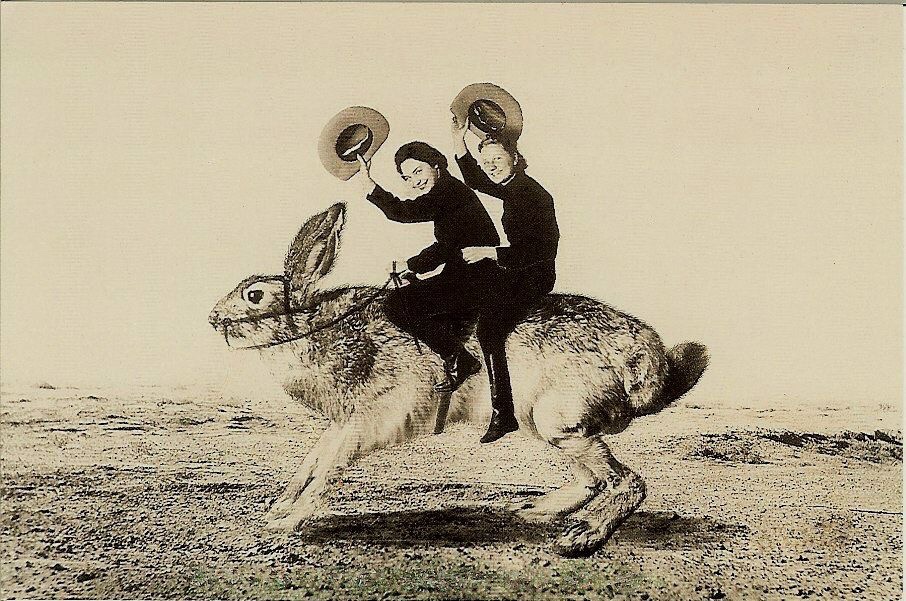
Rabbit! Rabbit! Welcome to November

Abraham Lincoln, All Saints Day, Altars, art, change, chocolate, Civil War, Constitution, Day of the Dead, exercise, Faith, Family, Food, generosity, Habits, Health, holidays, inspiration, Love, nature, poverty, pre-diabetes, pumpkins, rabbits, Thanksgiving, trees, Ukraine, Uncategorized, US Constitution, Van Gogh

My parents would often say, “Time flies when you’re having fun.” If this is so, I’ve had a one whale of a time in 2023. I don’t know where the time has gone, for I’d swear I just woke up in the bright new year of 2023, and now this year has grown a beard of some length. Indeed, the ground was bare, awaiting the warm breath of spring, and now it has experienced its first freeze.

Autumn is a time of transitions. Not only do the trees change colors, and then lose their wardrobe altogether, but we rabbits go from Halloween’s sugar high on October 31st to overstuffing ourselves and the roast beast at the Thanksgiving feast on the Fourth Thursday of this new month. Then we segue into Christmas somnolence with yet more cookies and egg nog (spiked and plain). On occasion we tramp out to decorate the house or scour the woods for greenery, but those days are long gone for most urban dwellers. We’re going to buy from local providers or have it delivered online.

Some of us on the first day of November will still have some of the 35 million pounds of candy corn which are still produced each year. That’s about 9 billion pieces — over a billion more than there are people on Earth. As far as this bunny is concerned, this is 8,999,999,999 pieces of candy corn too many. I’m not a lover of this form of sugar; give me dark chocolate any day. Fortune reported the “dangerous” amount of sugar consumed by kids on Halloween — three cups of sugar in 7,000 calories of candy. For context: That’s 675 grams of sugar, or the same as chomping down almost 169 standard sugar cubes, according to a Fortune article published in 2017.

A Young Bunny

When I was a young bunny, sugar was so restricted in our home, my friends and I would escape our parents’ notice during fellowship time at church to go to the empty adult Sunday school classrooms. We knew where they kept the wonderful Domino Pure Cane sugar cubes for the coffee the grownups drank. We didn’t care for coffee, which was already gone, but the sugar we fell upon like pirates on buried treasure. We didn’t ever consume 169 cubes at once, since that would’ve destroyed the entire stash.

If these had been the 35 million pounds of candy corn, which are still produced each year for Halloween, neither I nor my bunny friend would have ever touched them. The idea about 9 billion pieces — over a billion more than there are people on Earth—are still produced today is incomprehensible to my bunny brain. I think the texture of corn syrup and gelatin isn’t my first choice.

Of course, when the weather turns colder, our bunny bodies sense the need to stoke our internal fires. We do this by consuming more calories, especially the quick acting carbohydrates we find in the sugars and starches that provide the instant “heat” boost our bodies crave. Actually, any food will heat us up, but fruits and vegetables don’t have the same appeal as warm, savory, and fatty foods do in colder weather. The shorter days and the decrease of light in the winter cause problems with our body’s biological clock and lower the levels of the brain chemical serotonin. Plus, many of us reduce our physical activity, so our exercise induced levels of serotonins drop.

Healthy Eating includes More Fiber

We can overcome this loss by planning to be outside during the daytime and making sure to exercise at least 30 minutes daily. Having protein rich snacks and fiber rich soups with complex carbohydrates will help control our hunger spikes. Perhaps this transition time into longer nights and shorter days is why the First Wednesday in November is always National Eating Healthy Day (November 1). If we do only one new healthy choice per week, and add a new healthy option each week thereafter, we can transition our lifestyle into “Eating Healthy.” As a bunny, I remind my friends, it’s also National Vinegar Day—have compassion on yourself and on others. We can love ourselves and others into a better life with kindness rather than harshness. As my grandfather Bunny always said, “You catch more flies with honey than vinegar.”

Day of the Dead Skull

All Saints Day and Dia de los Muertos both are celebrated on November 1. Both recognize the departed loved ones. All Saints recognizes both those who have worked miracles as well as those ordinary saints who have lived among us and given quiet witness to their faith. Dia de los Muertos, the Day of the Dead, is a three-day festival to remember the ancestors and friends who predeceased us. People decorate altars with marigold flowers, photos, and skulls in memory of the dead. They make special food offerings in their honor also.

All Soul’s Day on November 2 is a Catholic holiday to pray for the souls which aren’t yet in heaven, but are in purgatory. Protestants don’t believe in purgatory, so we don’t attend upon this day as holy.

Cookie Monster: “Me want COOKIES!”

Many of us do celebrate Cookie Monster Day on November 2, because who doesn’t like cookies?! The same goes for National Sandwich Day on November 3, for hot or cold, almost anything can be slapped between two slices of bread and get slathered with avocado or mayonnaise, and it’s good to go.

Sandwiches first appeared in American cookbooks in 1816. The fillings were no longer limited to cold meat, but the recipes called for a variety of things: cheese, fruit, shellfish, nuts and mushrooms. After the Civil War sandwich consumption increased and were sold both in high-class lunch rooms and in working-class taverns. A typical turkey sandwich in the 1980s contained about 320 calories, according to a report from the National Heart, Lung and Blood Institute. Twenty years later, a turkey sandwich contained about 820 calories. Choose whole grain bread if possible.

We seniors have more than time on our hand

“Fall Back” on Sunday, November 5, when Daylight Savings Time Ends. We get another hour of sleep on this day when the clocks go back 1 hour at 2 am. I won’t be awake to notice it, but I suggest those of you who aren’t good sleepers begin to look at your evening routines. Set a wind down time on your clock, watch, or mobile device. Let it remind you to turn on quiet music, read inspirational books, or begin your bedtime routine. Sometimes taking off our outside clothes and wearing our “at home” clothes is a signal to our mind to let go of the cares of the world.

Fighting over Van Gogh Pokémon Gifts at the Museum

Go to an Art Museum Today Day and National Chaos Never Dies Day are both celebrated on November 9 this year. I don’t normally consider chaos and art museums as being in the same category, but Disney has made several Night at the Museum movies that revolve around the trope of ancient Egyptian gods awakening to cause havoc. Actual chaos recently erupted at the Van Gogh Museum in Amsterdam when visitors realized the gift shop had already sold out of the Pikachu with Grey Felt Hat promo card, which was modeled on the Vincent self-portrait. Evidently a small group of fans descended on the gift shop, causing a ruckus, and buying out the merchandise. It’s now for sale on eBay.

2023 Veterans Day Poster

Armistice Day marks the November 11,1918 anniversary of World War I, a war which began in August 1914, that few expected to last beyond Christmas. In 1921, an unknown soldier was buried in Arlington National Cemetery. This First World War was “the war to end all wars,” but we’re an overly optimistic nation. We’ve had a Second World War since then, plus many a regional conflict. Every time our battle ships show the flag somewhere, people think it’s going to be WWIII. Fear mongering doesn’t help the nation. We’re better and stronger than that. Plus, we have the moral duty of leadership: our country needs to show the world there’s a better way.

As I recall, both the North and the South expected the great Civil War to last just a short while, just as Putin entered Ukraine believing his army would roll into Kiev in mere weeks. Yet WWI lasted four years, WWII was six years (the US was involved only the four years from 1941-1945), and our Civil War was another 4-year slog. Wars aren’t so much “won” as lost by attrition: one side loses more men, materiel, and willpower so they surrender to the other. War is the most brutal way to settle our differences.

Armistice Day now is Veterans’ Day, November 11, but observed a day earlier (10th) this year. We celebrate our veterans who do the difficult and challenging work of using judicious force against enemy combatants, rather than civilian populations. All of our enlisted personnel take the same oath to protect and to defend our Constitution against all enemies, foreign and domestic:

I, (state name of enlistee), do solemnly swear (or affirm) that I will support and defend the Constitution of the United States against all enemies, foreign and domestic; that I will bear true faith and allegiance to the same; and that I will obey the orders of the President of the United States and the orders of the officers appointed over me, according to regulations and the Uniform Code of Military Justice. (So help me God).”

The US Constitution, 1787

We are an unusual people, we Americans, for our loyalty isn’t to a party, a president, or a person. We are loyal to the constitution, which protects our democratic institutions, values, and freedoms. We can be thankful for those who were inspired to write it, heard the prophetic call to amend it, and have the wisdom to keep us on the straight and narrow.

National Hunger and Homeless Awareness Week is November 11-19 this year. While the economy is recovering, the loss of pandemic assistance funds Is hurting lower income households. They are making hard choices: food or rent, medicine or food. The number of homeless veterans has decreased, but so has the overall population of veterans. The bad news is veterans are still overrepresented in the homeless population. As you prepare for your own feast this year, I hope you remember the hungry in your community. The best way to help is with a financial donation to the local food bank. The bank can purchase food from the warehouse food bank at greatly reduced prices, thereby providing more food per dollar than individuals can purchase on their own.

World Diabetes Day is November 14. Diabetes is a disease on the increase in the world today. In the US alone, over 37 million people have this disease and over 8.5 million have it but are undiagnosed. Over 96 million US adults have prediabetes, a condition in which their insulin doesn’t take the sugar out of the bloodstream well. Switching to whole grains, less processed foods, and adding more fiber to the diet usually helps lower the blood sugar. So does daily moderate exercise.

National Clean Out Your Refrigerator Day is November 15. This is a good day to practice this task, since you’ll be filling it up with excess foods if you’re hosting the feast, or you’ll be traveling away from home. If the latter, you don’t want to return home to spoiled food if the power goes off for any length of time. Ugh: I won’t regale you with the story of stench of the refrigerator in the garage which didn’t power back on after a power outage. Those outlets need to be reset manually because they’re in a “might get wet” zone. The refrigerator inside will come back on automatically. (This turned out to be a get rid of the refrigerator day.)

National Stuffing Day is November 21. If you bake your bread mixture outside of the great bird, it’s called dressing, but if you cram it into the bird, it’s stuffing. It’s safer to cook the bird without stuffing, also quicker. When baking stuffing inside a turkey, it can get get wet and mushy. If you make a flavorful stock from the turkey neck and giblets, you can make your stuffing moist and flavorful without turning it into mush.

If you live in a giant pumpkin, buy a smaller pumpkin for your pie

Pumpkin Pie Day is also November 21, so you can prepare this ahead of time if you wish. You can make a handmade crust or use a store-bought crust from the grocery. Pre bake it and fill it with the pumpkin mixture.

National Cranberry Relish Day is November 22. You can easily make your own with the juice of an orange, some sugar to taste, and cinnamon combined with a package of rinsed cranberries. Heat over medium in a saucepan, stirring frequently to keep from sticking. When the berries burst, reduce heat to simmer and reduce the liquid. Taste and adjust the seasoning. Take off the heat and put into container for icebox. Chill overnight to let seasonings combine. Serve cold as side dish.

Thanksgiving Day is Thursday, November 23. You’ve baked the turkey, and it smells amazing! Let me introduce you to pan gravy from the drippings. You need a little flour, about 2 Tbs; some pepper, about ½ cup of drippings, and 1 cup of hot water. Put the drippings in a heavy saucepan or skillet, add the flour, stirring constantly over medium high heat until flour turns caramel color. This is a medium roux. Slowly add hot water, stirring so no lumps form. Keep stirring till smooth, reducing heat. Add more water slowly if gravy thickens too much. Pepper and salt if necessary.

The idea of “thanksgiving” for the harvest is as old as time, with records from the Egyptians, Greeks, and Romans. Native Americans in North America celebrated harvest festivals for centuries long before Europeans appeared on their soil and before Thanksgiving was formally established in the United States.

In the 1600s, settlers in Massachusetts and Virginia had feasts to thank for surviving, fertile fields, and their faith. The Pilgrims in Plymouth, Massachusetts, had their infamous Thanksgiving feast in 1621 with the Wampanoag Native Americans. The three-day feast consisted mainly of meat: wild fowl procured by the colonists and five deer brought to the feast by the Wampanoag. A a stew called sobaheg was most likely served as a side dish to the main course. It was an easy way to make use of seasonal ingredients, for the stew often included a mixture of beans, corn, poultry, squash, nuts and clam juice. All are used in the traditional dish today, and all would have been available in 1621.

Potatoes weren’t around in 17th-century New England, but corn was plentiful. Natalija Sahraj

Corn and cornmeal were the main carbohydrates on the first thanksgiving meal. The first New England crop of potatoes was grown in Derry, New Hampshire in 1722, so no mashed potatoes were on the menu. Corn bread, corn mush, and corn puddings abounded, since the Native Tribes had shown the colonists how to plant beans, squash, and corn together to maximize growth of all three. The harvest of 1621 likely included beans, squash, onions, turnips and greens such as spinach and chard. All could have been cooked at length to create a green, pulpy sauce that later became a staple in early New England homes. Sweet dishes concocted from sugar or maple syrup weren’t on the menu, nor were honey sweetened deserts. At least, the Pilgrims didn’t have to save room for pie.

After the Pilgrims, for more than two centuries, individual colonies and states celebrated days of thanksgiving. The first national celebration of Thanksgiving was observed for a slightly different reason than a celebration of the harvest—it was in honor of the creation of the new United States Constitution! In 1789, President George Washington issued a proclamation designating November 26 of that year as a ”Day of Publick Thanksgivin” to recognize the role of providence in creating the new United States and the new federal Constitution. During the Civil War, President Lincoln called for a national Thanksgiving Day on the last Thursday of November after the Battle of Gettysburg. In the Great Depression President Franklin Roosevelt moved Thanksgiving Day to the next to last Thursday in November. After two years of public unhappiness, Congress passed a law in 1941 setting Thanksgiving on the fourth Thursday of November.

Thanksgiving, 1858, by Winslow Homer, Boston Public Library

During the week of Thanksgiving, from November 19-25 or 26, we have the holidays of Church/State Separation Week and National Bible Week. If you haven’t been giving thanks for your blessings up to this time, take a break, breathe, and rejoice that you are alive. Give thanks for your hands, your food, your breath, and your heart of love. Share this thanksgiving with someone else. If each of us gives a bit of hope to someone else, we can help others have something to be thankful about.

Chocolate answers all questions.

After the rush of Thanksgiving, some of us bunnies may need medicinal chocolate. November 29 is Chocolate Day. Depending on your personality, you can buy fancy chocolate to share, or you can enjoy it by yourself along with a good book and some lavender tea. If Thanksgiving Day was really overwhelming, National Personal Space Day on November 30 might be calling your name. We all have times in our lives when we don’t need hugs, either because of physical or emotional distress. Besides, we bunnies need to catch our breath before we dash into the Christmas season.

I’m thankful for each of you who read and share my stories.

Joy and peace,

Cornelia


2023 November Holidays Information from Holidays and Observances

http://www.holidays-and-observances.com/november-holidays.html

15 Mind-Blowing Facts About Halloween Candy Consumption in the US

https://www.businessinsider.com/halloween-candy-consumption-usa-facts-statistics-2019-10

Control Your Winter Appetite

https://www.webmd.com/diet/features/control-your-winter-appetite


History of Thanksgiving in America | The Old Farmer’s Almanac

https://www.almanac.com/www.almanac.com/content/when-thanksgiving-day

What the first Thanksgiving dinner actually looked like

https://theconversation.com/what-the-first-thanksgiving-dinner-actually-looked-like-85714


Is Stuffing Your Turkey Safe?

https://www.marthastewart.com/8163046/is-it-safe-stuff-turkey


Wall Street Journal: The American Diet Has a Sandwich Problem – Center for Health Incentives and Behavioral Economics (CHIBE)

https://chibe.upenn.edu/news/wall-street-journal-the-american-diet-has-a-sandwich-problem/


History of the Sandwich | The History Kitchen Blog | PBS Food

https://www.pbs.org/food/the-history-kitchen/history-sandwich/

Van Gogh Museum pulls its Pokémon promo card after opening day chaos

https://www.engadget.com/van-gogh-museum-pulls-its-pokemon-promo-card-after-opening-day-chaos-083349757.html


Rabbit! Rabbit!

arkansas, art, autumnal equinox, Children, Christmas, Civil War, Constitution, Declaration of Independence, elections, Fall Equinox, Family, holidays, Imagination, inspiration, Labor Day, perfection, photography, rabbits, St. Patrick’s Day, summer vacation, texas, US Constitution

Rabbits under a Harvest Moon

September marks the return to order and organization, since the summer for most of us meant a relaxation of rules and schedules. “Vacay mode” of late mornings, pajama days, and snack meals are now a fading figment of our fevered frenzies. I remember these days all too well. My little girl threw a conniption fit one morning as I hurriedly dressed her so we wouldn’t be late for her pre-k class and my teaching assignment at the same school. We dashed out of the house, I locked her in the car seat, and flew to my workplace. I delivered her to the precare room and made a beeline for my art shack.

Two Types of Teachers

Later on at lunch, her teacher informed me I’d brought my fussy child to school without panties. Oops! Luckily, all the children were required to have a spare change of clothes “just in case of emergency.” Saved by those who are more organized than most. My art classroom always had the paint organized by rainbow colors, the scissors numbered, and shelves labeled. The moral of this annecdote is, “Innanimate objects are easy to organize; people not so much.” Murphy’s Law also comes to mind: “Anything that can go wrong will go wrong,” and Murphy’s First Corrollary: “It will cause the most damage possible.”

For Bunnies, maybe…

In the “No Pants Scandal,” of four decades ago, only my pride was injured. I’m not as organized or as perfect as I thought I was. This brings me to a little chat on appearances vs. our true selves. Our “false self” wants to appear organized, on top of things, spiritual, magnanimous, and virtuous. We’d like to be “perfect” in thought and deed. Yet the more we try to attain perfection or to act perfectly, the more likely dark, hateful, or mean thoughts arise from the depths of our hearts. We see this is our dualist world view, which divides our world into pure evil or pure good. The book of Proverbs reminds us, “Pride goes before destruction, and a haughty spirit before a fall” (16:18). It’s always better to admit, as I did, “I didn’t have a great morning and she wasn’t cooperative. I’m surprised we got here at all.”

Welcome to September 2023

Speaking about regular and organized, our earth is about to have another equinox on September 23, 2023, at 1:50 am CDT. The Fall Equinox happens yearly on or around September 22nd. The date of the fall equinox is variable because the 365 day Gregorian calendar doesn’t match up perfectly with the position of Earth in its orbit around the sun. When we add the leap year, the equinox date also changes. While the September equinox usually occurs on September 22 or 23, it can very rarely fall on September 21 or September 24. A September 21 equinox has not happened for several millennia. However, in the 21st century, it will happen twice—in 2092 and 2096. The last September 24 equinox occurred in 1931, the next one will take place in 2303. This rabbit won’t be around for any of these rare events, so don’t send me an invite.

Rabbits on the Playground

The September 29 full moon occurs at 4:57 AM CDT. It’s called the Harvest Moon in some years, or the Hunter’s Moon in other years. Technically, the Harvest Moon, which is the Anglo-Saxon name, is the Full Moon closest to the September equinox on September 22/23. The Harvest Moon is the only Full Moon name determined by the equinox rather than a month. Most years, it’s in September, but around every three years, it falls in October. We also know this September full moon as the Corn Moon from the Native American tribes harvesting their corn in this time. Other names for this month’s full moon are Celtic and Old English names: Wine Moon, Song Moon, and Barley Moon.

E. Irving Couse: Harvest Moon

Just as summer’s laissez-faire moments will give away to school and work routines, so the onset of autumn and the fall equinox herald another change. You might not yet recognize it over the insistent hum of your air conditioning system or feel it due to the heat waves rising from the black asphalt of your company’s parking lot, but autumn is just around the corner.

ERCOT Service Zones cover most of Texas

Don’t look at your utility bill just yet, and don’t pack your bags for Texas. I talked to my brother down there who has his AC set to “stun”—he said when the bill comes, “It will stun him a second time.” Texas doesn’t belong to the national energy grid, but to ERCOT, the Electric Reliability Council of Texas. It’s not connected to the two major electrical systems of the lower 48 states, but has its own grid to avoid federal regulation. When Thomas Edison started the first electric power plant in Manhattan in 1882, he set off a gold rush of independent power companies. During WWI, they began to unite and even more joined after WWII.

Don’t Mess With Texas

Texas takes seriously its “Don’t mess with Texas” rhetoric. Only on rare, catastrophic instances has it briefly joined either the American or Mexican utility grids. While Texas is a large state with rich energy resources, the USA is larger. When extreme weather events happen, energy costs rise. Rates can vary wildly as a result. The economic lesson is ERCOT is Dollar Store trying to outbid the Walmart of the national grids who can share energy with those in need.

Thomas Nast: The Lightening Speed of Honesty, 1877

Speaking of nations, on September 7, 1813, the United States got its nickname: Uncle Sam. Samuel Wilson from New York, a meat supplier to the US Army, stamped his barrels with US for United States. The soldiers began calling their rations “Uncle Sam’s,” a name the local newspaper noted, which began to spread and soon became the personification of the federal government. Thomas Nast (1840-1902) popularized the image of Uncle Sam. In Nast’s evolving works, Uncle Sam acquired the white beard and the stars-and-stripes suit we associate with the character today. The satirical cartoon of yesteryear’s dithering Congress is apropos of our modern chambers, which can’t seem to come a reasonable compromise to get the people’s business done by funding our country’s basic needs.

Columbia, The Gem of the Ocean

Over a century before Uncle Sam, Columbia was an idealized feminine figure that personified the new nation of America. She was created in 1697 when Chief Justice Samuel Sewall of the Massachusetts Bay Colony wrote a poem that suggested the American colonies be called Columbina, a feminized version of Christopher Columbus’ last name. Over 70 years later, the name evolved further when former slave, Phillis Wheatley, wrote an ode to George Washington invoking Columbia in 1775. Born around 1753, Phillis Wheatley was the first black poet in America to publish a book. She was listed among the enslaved persons at Mount Vernon. You can read her amazing poem here:

His Excellency General Washington by Phillis Wheatley— https://poets.org/poem/his-excellency-general-washington

Over time, the image of Columbia became a symbol for American ideals during wars, such as the American Revolution, the War of 1812, and World War I, as well as the subject of political cartoons and literary works. With her liberty cap and patriotic shield, Columbia stood as the spirit of the country. We even see her name, image, and likeness in modern industry in the Columbia Broadcasting System or CBS, as well as in the seat of our national government, the District of Columbia.

Well Done Labor Poster

Uncle Sam also has honored workers on Labor Day, which we celebrate on September 4th. Many rabbit families treat this three day weekend as the last hurrah of summer. Let’s remember those essential workers who serve and protect the rest of us while we barbecue in our backyards and national parks. The first Labor Day “parade” in 1882 was a strike. Workers marched en masse from New York City Hall to Union Square to protest terrible working conditions during the Industrial Revolution. Workers, including children as young as five years old, labored in unsafe factories, farms, mills and mines for 12 hours or more per day, seven days a week, often without breaks, fresh air or even clean water.

Credits: NASA’s Goddard Institute for Space Studies

This map shows global temperature anomalies for July 2023 according to the GISTEMP analysis by scientists at NASA’s Goddard Institute for Space Studies. Temperature anomalies reflect how July 2023 compared to the average July temperature from 1951-1980.

Only 5 States Provide Heat Relief Laws for Workers. Arkansas doesn’t protect workers from dangerous heat inside or outside.

Today, 141 years later, during the hottest July since 1880, some states are passing laws to prevent workers from getting “special treatment due to the heat” such as extra breaks for cooling or water. Currently only five states have protections for workers in these extreme conditions. According to the U.S. Bureau of Labor Statistics, between 1992 and 2019, extreme heat killed more than 900 workers and sickened tens of thousands more. Those numbers, however, are likely an undercount due to the lack of reporting by negligent employers or by workers who are worried about retaliation or deportation. In addition to the physical implications, time off from a job due to illness can lead to missed wages or the loss of a job altogether.

Bain photograph: LC-USZ62-49516: Four women strikers from Ladies Tailors union on picket line during the “Uprising of the 20,000,” garment workers strike, New York City, 1910 February, glass negative photo, Library of Congress.

As a rabbit who once endured a few days in an unairconditioned art shack at the beginning of school and then fainted from heat exposure, I have a heart for all workers in extreme circumstances. I made sure to take care of my people, since my bosses didn’t care about me. It’s never right to treat others poorly just because you were wronged.

Reading The Constitution Online is also an Option

In late September, we celebrate Constitution Week (Sept. 17-23). The Declaration of Independence, written in 1776, was a list of grievances against the king of England and intended to justify separation from British rule. The Constitution was written and signed in 1787. It was a charter of government ratified by the states, and continues to be the supreme law of the land. All members of the armed services and Congress take a vow to defend the constitution, as do the President and Vice President of our country.

We rabbits will all need to brush up on our civics lessons in the days to come, for the upcoming presidential candidates may be affected by their lack of appreciation for the constitution and the consequences as a result. As I always told my students, “Attitudes drive Behavior and Behavior leads to Consequences. You can choose the good or the negative. It’s all up to you. Try for a good attitude every day.”

Tales of a Bunny Who Went to School

The 14th Amendment, section 3, passed after the Civil War, or the last great insurrection by the southern secessionist states, forbids holding office in the US government by former office holders who then participate in insurrection or rebellion. This constitutional provision is currently being tested in the courts. September is back to school for all us rabbits. The last time I remember a civics lesson was the seventh grade in Mrs. Tampke’s class, but “ex post facto” might have been “non sequitur,” as I was passing notes rather than paying attention.

Mr. Flopsy’s Rabid Rabbit Pirate won’t be Messed with.

We rabbits can only take so much seriousnes in our short lives until we need a break. Thank you September 19th: International Talk Like a Pirate Day! Everyone can ARRGG their way MATIES through a Tuesday, and if Monday is a pain, who says we rabbits can’t Pirate on that day too? After all, pirates rob and steal, lawless vagabonds that they are. Let’s just take over the good ship Monday and drink our strong Pirate Coffee with vigor and daring.

The Bluebird of Happiness

National Bluebird of Happiness Day is September 24th. I love these little blue glass figurines. Dorothy in the Wizard of Oz sings, “If happy little bluebirds fly beyond the rainbow, why, oh, why can’t I?” Bluebirds uplift the heart into joy when we see them in nature. The blue glass iconic sculptures, made in Arkansas by the Ward family, have sold over 9 million birds, large and small. They’re no longer made due to concerns about climate change because the glass production process requires large amounts of natural gas and electricity. I treasure the blue bird in my possession and greet it daily. You might find one in a secondhand store.

God Please Keep My Children Safe, by Grayson Perry, 2005

Love Note Day is September 26, so I suggest you write a sweet letter to your beloved. This might be a spouse, significant other, parent, mentor, or even your own self. Share some affirmations to those who mean something to you. Don’t stop at one note of love, but make a whole symphony of blessings. In our world today, folks don’t hear many positive messages. You can help balance the scales for your recipients.

If the Sears Catalog were still a thing, we bunnies would be wishing

September 30, the last day of this month marks 92 days left in 2023. Where has this year gone?! Don’t ask this rabbit. I’ve already bought a couple of little Christmas gifts for my bunny friends. I’m never this organized. This means I’ll likely lose or misplace these items in the 86 days before Christmas Day. Then again, this is also enough time for this rabbit to find these packages once again! Live with optimism! Expect the best and work for it.


May the Blue Bird of Happiness bring you

Joy and Peace,


Cornelia


The September Equinox

https://www.timeanddate.com/calendar/september-equinox.html


Traditional Full Moon Names

https://www.timeanddate.com/astronomy/moon/full-moon-names.html


Why does Texas have its own power grid? | The Texas Tribune
https://www.texastribune.org/2011/02/08/texplainer-why-does-texas-have-its-own-power-grid/


How The United States Got its Nickname

https://www.history.com/this-day-in-history/united-states-nicknamed-uncle-sam


The lightning speed of honesty [Uncle Sam seated on snail “45th Congress” carrying Army and Navy payroll and money, with Resumption Act (of honesty) in his pocket] / Th Nast.
https://loc.getarchive.net/media/the-lightning-speed-of-honesty-uncle-sam-seated-on-snail-45th-congress-carrying


Database of Mount Vernon’s Enslaved Community · George Washington’s Mount Vernon
https://www.mountvernon.org/george-washington/slavery/slavery-database/


Heat Stress Is Killing Workers. States Can Protect Them.

https://www.nrdc.org/stories/heat-stress-killing-workers-states-can-protect-them


Short Summary—The Character to Lead: Republicans’ Fork in the Road Between Trump and the Constitution’s Eligibility Requirements for President

https://www.justsecurity.org/87750/the-character-to-lead-republicans-fork-in-the-road-between-trump-and-the-constitutions-eligibility-requirements-for-president/


Deep Dive— The Sweep and Force of Section Three. 172 U. PA. L. REV. (forthcoming 2024). William Baude & Michael Stokes Paulsen. https://deliverypdf.ssrn.com/delivery.php?ID=791101027092090122082025003064104018105084007031052035109090080088105005086003018089043050055106031007050097096000078089031112025019027055033023110008092018116067055086024100075002015088106075126126082029114024094102088002003074126075030067104090009&EXT=pdf&INDEX=TRUE

U.S. Senate: The Senate’s First Act—the Oath Act and 1862 Ironclad Oath
https://www.senate.gov/legislative/landmark-legislation/oath-act.htm

Arkansas Bluebird of Happiness – Encyclopedia of Arkansas. https://encyclopediaofarkansas.net/entries/arkansas-bluebird-of-happiness-3822/


New Eyes, New Visions

art, Attitudes, cataracts, Faith, Healing, Health, Holy Spirit, Imagination, inspiration, Medical care, nature, Painting, renewal, Spirituality, trees, vision

This week as I recovered from cataract surgery, a memory from my childhood finally surfaced. In the late 1950’s in my hometown, I had met an artist who could barely see to paint anymore because of her vision loss due to cataracts. Doctors hadn’t yet invented the modern replacement lenses and use of small incisions for implantation. Complications back then were common, rather than rare. I can still remember my dad’s response to my desire for contact lens, “What? Put a foreign object in your eye? You’re asking for an infection!” Perhaps this was why I worried myself to exhaustion while waiting for my first surgery.

Unknown Artist: Inlay in the Form of an Eye, Glass and gypsum, Egypt

As it turns out, I can now see my television set without my glasses and I read my iPad with my untreated eye. I’ve always had my glasses within arm’s reach of my bed or my chair for over sixty years. It feels strange not to put them on first thing in the morning.

If there were things I could not see before, I could always feel them if I were still enough to notice their subtle movements. Most of the time I, as many others do, stress over what “might happen,” instead of being present to the moment in which the important stuff is actually happening.

Luke Howard: Graph of wind, rain, and temperatures from 1815-1832

After I worried myself into an exhausted heap on my couch, I woke up in a different mood. I realized I’d been going “from house to house” to borrow a cup of trouble for a cake I didn’t need to bake or eat. It was going to be a decadent cake with multiple layers and a. rich icing. If it were autumn, I’d probably get first prize in the cake competition at the state fair.

Wayne Thiebaud, Cakes, 1963

But no one needs a Trouble Cake. I saw all my ingredients were as nothing, for I had a great doctor, people who would care for me, and this was a new age in medicine. Moreover, the Spirit of God would sustain me in my recovery and remind me my wellbeing depends on following my doctor’s instructions. As we read in John 3:5-8 NRSV—

Jesus answered, “Very truly, I tell you, no one can enter the kingdom of God without being born of water and Spirit. What is born of the flesh is flesh, and what is born of the Spirit is spirit. Do not be astonished that I said to you, ‘You must be born from above.’ The wind blows where it chooses, and you hear the sound of it, but you do not know where it comes from or where it goes. So it is with everyone who is born of the Spirit.”

Sometimes we need to feel the wind and not try to know from whence it comes or why it goes, but merely thank it for arriving to be with us in this present moment.

Utagawa Hiroshige: Yokkaichi: Mie River, 1833-34

Who Has Seen the Wind? by Christina Rossetti

Who has seen the wind? Neither I nor you: But when the leaves hang trembling, The wind is passing through.

Who has seen the wind? Neither you nor I: But when the trees bow down their heads, The wind is passing by.

Sometimes we need a fresh wind blowing through our hearts and minds to get a new outlook on life. We can’t be wedded to the past like the old farmer who said of the new fangled plow he saw at the farm supply store, “My daddy plowed with a two pronged plow, so a two pronged plow is good enough for me.” He never bought the new and improved three pronged plow.

Bernard Evans: Cannock Chase – ‘When the sweet wind did gently kiss the trees, and they did make no noise’, circa 1885

Much like the church that can’t recognize the fresh movement of the Spirit moving through the world today, if we can’t feel that wind, maybe cataract surgery would help us see the movement in the leaves.

Joy and Peace,

Cornelia

NOTE: The Greek word for Spirit and wind are the same: πνεῦμά. Strong’s Greek Concordance 4151 pneúma – properly, spirit (Spirit), wind, or breath. The most frequent meaning (translation) of 4151 (pneúma) in the NT is “spirit” (“Spirit”). Only the context determines which sense(s) is meant. When used with Holy, the word is Holy Spirit, not holy breath!

Christina Rossetti: Who Has Seen The Wind? Source: The Golden Book of Poetry (1947). https://www.poetryfoundation.org/poems/43197/who-has-seen-the-wind

Utagawa Hiroshige: Yokkaichi: Mie River (Yokkaichi, Miegawa), from the series “Fifty-three Stations of the Tokaido (Tokaido gojusan tsugi no uchi),” also known as the Hoeido Tokaido, wood block print, 1833-34, Art Institute of Chicago.

Luke Howard: Graph detailing prevailing wind directions, rain depth, and mean temperature over a period of eighteen years, 1815-1832, in London. The Royal Society.

Bernard Evans: Cannock Chase – ‘When the sweet wind did gently kiss the trees, and they did make no noise’, circa 1885, watercolor. Art Gallery of New South Wales, Sidney, Australia.

Unknown Artist: Inlay in the Form of an Eye, Glass and gypsum, Egypt, (9/16 × 1 13/16 × 3/8 in.), 1540–1070 BCE, J. Paul Getty Museum, Los Angeles, CA.

Wayne Thiebaud, Cakes, 1963, National Gallery of Art, Washington D. C.

Rabbit! Rabbit!

arkansas, art, Astrology, Civil War, cosmology, elections, Faith, Forgiveness, haiku, inspiration, Lost Cause, Painting, Pi Day, rabbits, renewal, sleep, Spirituality, Spring Equinox, St. Patrick’s Day

Welcome to March 2023

This rabbit was shivering during the last week of February.

March is here and the wild hares of the rabbit clan have come to visit. I’m shivering on a cold, dreary, and rainy day, but I’m about to have a cup of steaming hot tea and put dinner on the stove. While I waited for the water to boil, I visited the open AI project out of curiosity. My old daddy used to say, “curiosity killed the cat,” but I think he was trying to keep me safe by not poking my nose into some dangerous places. Without curiosity, we never learn anything new or stretch our horizons. We’d live a sad, constricted life if we always stayed inside the lines and never pushed the boundaries.

The chat bot took my name and combined it with that of Cornelia Adele Strong Fassett, who painted the Florida Case Before the Electoral Commission, to describe the importance of “Cornelia DeLee, artist.” Also according to the chatbot, I am long dead, so I must be communicating from “yonder.” Fassett’s painting was about the contested presidential election of 1876.

The Florida Case before the Electoral Commission
Oil on canvas, by Cornelia Adele Fassett
This painting now hangs on the third floor of the Capitol.

In January, 1877, when the Electoral College met, 20 votes were contested, but neither side would concede the election. Congress passed a law empowering the Electoral Commission at the end of January. Ten days of deliberations passed before the 20 votes passed to the Republican candidate, an act which the Democrats protested until they received assurances federal soldiers would leave the Southern states. With Reconstruction at an end, Congress declared Rutherford B. Hayes the new President of the United States on March 2, only two days before his term began.

The Civil War and the Reconstruction years have marked our nation with an ongoing trauma, which has passed from generation to generation. At some point in time, we’ll have to heal, for continually pouring salt into that old wound will keep it festering and it won’t ever heal. Then we’ll pass it down to another generation once more. However, if scripture has any truth to teach us, humankind continues to reenact the sins of our ancestors, even when we know their stories and have the God given gifts of redemption from these shackles of death and shame. But now this rabbit is preaching, and some would say, “meddling once again.”

Update: Heather Cox Richardson, a noted writer of American history, reminds us once again how Southerners rewrite our history to make us more heroic and powerful. The Federal Army didn’t leave the south right away, but stayed in some states for awhile. See the note below.

I’ll change the subject. I’m not much on poetry, but I thought I’d ask ChatGPT to write a “Poem in Praise of March.” After all, World Poetry Day is March 21, so I thought I’d give the ChatAI a run for its money (it’s free right now, while in training stage). The Artificial Intelligence project was delighted to instantly produce the following example:

March, the month of windswept skies,
A time when winter softly dies.
The earth awakens from her sleep,
As days grow long and nights grow deep.

The snows of winter start to thaw,
And nature’s beauty starts to draw
A tapestry of green and gold,
As springtime’s treasures now unfold.

The birds return with joyful sound,
Their melodies now all around.
The trees bud out, the flowers bloom,
And life returns to end the gloom.

March, the month of change and hope,
A time to cast off winter’s scope.
The promise of new life and growth,
As nature’s beauty takes its oath.

So let us praise this month of light,
For all the wonders it brings to sight.
And may we cherish every day,
As we welcome spring in every way.

I was so amazed the Artificial Intelligence ChatBot could spit this out so quickly, I typed in, “Thank you.”

AI Enhanced Image by Jos Avery: Erik’s Escape

It immediately answered, “You’re welcome! I’m glad you enjoyed the poem. If you have any other questions or requests, feel free to ask!” I quickly closed the application before it became sentient and asked for my hand in marriage or social security number and tried to enroll me in a monthly cryptocurrency investment program. Yikes!

Speaking of poetry, even the folks at Bloomberg News are writing haikus about global food shortages:

Onion shortage looms.
Prices rise, nutrition wanes,
Governments take aim.

When I was a child, my brothers and I amused ourselves by lining up dominoes in artful patterns all morning long. After lunch and before our required afternoon nap, we’d touch the first domino in line, and have a wicked joy of watching our entire morning’s work fall one after another. A food shortage (or a toilet paper shortage) happens much the same way in our global economy. Onion prices are still soaring across the globe and fuelling inflation, so countries like Morocco, Turkey and Kazakhstan have taken action and secured supplies.

Close to 40kg of smuggled produce was discovered in the luggage of Philippine Airlines crew members on Friday.
(photo credit: PHILIPPINE CUSTOMS OFFICE VIA WALLA NEWS)

Because onion prices are going up due to scarce supply, the price of other fruits and vegetables (such as carrots, tomatoes, potatoes, and apples) also are rising and hampering their availability across the globe, according to the United Nations and the World Bank. In fact, prices have increased so much that onions briefly cost more than meat in the Philippines, and some flight attendants were caught smuggling them out of the Middle East.

This didn’t end well for either the attendants or the produce, since the food was sent out for destruction (it’s illegal to import food, except through proper customs) and the personnel got reprimands and retraining. Word to the wise: hoarding onions isn’t a good idea, since whole, raw onions will last two to three months when stored in a cool, dry place (between 45 and 55 degrees F). Places that provide these conditions may include your cellar, pantry, unheated basement, or garage. Usually, at room temperature, onions last only 2 to 3 weeks. Over the long term, the frugal shopper will buy some scarce items at a higher prices and other items at lower cost when the product is in season and at a surplus. The average price over a year will even out.

Former President Carter signing First Women’s History Week Proclamation

March is Women’s History Month. In February 1980, President Jimmy Carter issued the first Presidential Proclamation declaring the Week of March 8th, 1980 as National Women’s History Week. In 1987, Congress passed Public Law 100-9, designating March as “Women’s History Month.” Every president since then has recognized the gifts, graces, and achievements of America’s women by presidential proclamation. Other important women’s days in March we recognize are International Women’s Day (March 8), Harriet Tubman Day and National Women and Girls HIV/AIDS Awareness Day (March 10).


The Jewish celebration of Purim begins on March 6 at sundown and ends on the 7th at sundown. The festival recalls Queen Esther’s faithfulness to God and God’s saving providence for God’s marginalized people. We should always remember God’s grace is wider than ours, even if the faithful seemed to be “assimilating to the current culture.”

Sleep/wake/cycle

Daylight Savings Time begins March 12, with all of us rabbits settling our clocks forward one hour before we go to bed the night before. If you have difficulty remembering which direction, there’s a motto for this event: “Spring forward, and Fall back.” No one falls forward and springs back—silly rabbits maybe, but not the smart rabbits, who have the good sense to “Spring forward, and Fall back.”

National Pi Day March 14— Not all pies are square

The Ides of March 15 were bad luck for Julius Caesar, but originally the Ides of March once signified the new year, which meant celebrations and rejoicing. Two years before his death at an assassin’s hand, Caesar himself had changed the Roman calendar so the Romans celebrated the new year in January. Some people really don’t like change at all. Plus they don’t like military dictatorships.

People celebrate St. Patrick’s Day on March 17 all over the world, whether they’re Irish or not. While the San Antonio River runs green downtown, Hot Springs National Park will have its First Ever 20th Annual World’s Shortest St. Patrick’s Day Parade on the 98 foot long Bridge Street, which is the world’s shortest street in everyday operational use.

Map of Hot Springs St. Patrick’s Day Festivities

Spring Equinox on March 20 can’t come soon enough for this rabbit. Just knowing the light will become stronger with each passing day is a medicine for my spirits. So what if the pollen follows soon after? Eventually, that too will be history and we bunnies will find something else to fuss about. After all, nothing is certain except for change. None of us can stop the circuit of the stars in the heavens above or cease the changing seasons.

The Three Graces of Spring

We can adjust to these great cycles of change, just as we can grow in love for one another and learn to forgive both ourselves (for our falling short of perfection) and others for harming ourselves. If we rabbits wait till the last moment for our death bed reconciliations, we may not have the time or opportunity to make amends with the ones from whom we’ve estranged ourselves.

If you think you’ll be foolish doing this, I suggest you desensitize yourself and celebrate International Talk Like William Shatner Day on March 22. I asked ChatGPT for a haiku in the voice of William Shatner. On the third try, I got something I thought resembled his breathless cadence and broken phrase delivery. I could almost hear him emphatically delivering the words GO and MUST!

Breathless stars above,
Silent darkness, vast and deep,
Boldly go, we must.

Ramadan starts during the evening of March 23 and lasts until sundown on Thursday, April 20. Muslims commemorate the gift of the Koran to Muhammad by fasting if physically able, declaring their faith, prayers, charity, and pilgrimage..

BRITON RIVIÈRE, UNA AND LION, NINETEENTH CENTURY

Remember, if March comes in as a lamb, it will go out as a lion, or so the ancient weather proverb goes. The saying may have its origin in the stars, for at this time of year, Leo is the rising sign; by April, it’s Aries. (“Kid” or “ram” doesn’t have quite the same ring as “lamb,” though.) Also, this is the season Jesus arrives as the sacrificial lamb, but will return as the Lion of Judah. Both mean, weather-wise, a false spring.

The Beast with Two Horns like a Lamb by Albrecht Dürer We don’t want March to enter or exit in this Apocalyptic vision.

To sum up, as I finish up this note on the last day of February, the high today will be near 80F and I’ll most likely turn my air conditioner back on before March comes to visit. Looking ahead to March, the Weather Channel outlook has only three days in the 70’s for my location, so Mr. Air Conditioner won’t get much of a work out. I only see one night in the 30’s, so even Mr. Heater will get light workouts in March. As one wag put it on their restaurant sign:

That was February; I don’t think think we’ll see 80’s in March

Until next month, I hope you have onions and potatoes in abundance, and you enjoy green eggs and ham, or green beer, or green tea.

Joy, Peace, and welcome to Springtime,

Cornelia

NOTE from Heather Cox Richardson, Letters from an American, March 2, 2023—this corrects my research.

What did not happen in 1877, either before or after the inauguration, was the removal of troops from the South.

That legend came from a rewriting of the history of Reconstruction in 1890 by fourteen southern congressmen. In their book Why the Solid South? Or Reconstruction and Its Results, they argued that Black voting after the Civil War had allowed Black people to “dominate” white southerners and virtually bankrupt the region and that virtuous white southerners had pushed them from the ballot box and “redeemed” the South. Contemporaries had identified the end of Reconstruction as 1870, with the readmission of Georgia to the United States. But Why the Solid South identified the end of Reconstruction as the end of Republican rule in each state.

In 1906, former steel baron James Ford Rhodes gave a date to that process. In his famous seven-volume history of the United States, he said that in April 1877, Hayes had ended Reconstruction by returning all the southern states to “home rule.” In his era, that was a political term referring to the return of power in the southern states to Democrats, but over time that phrase got tangled up with what did happen in April 1877.

During the chaos after the election, President U.S. Grant had ordered troops to protect the Republican governors in the Louisiana and South Carolina statehouses. When he took office, Hayes told Republican governors in South Carolina and Louisiana that he could no longer let federal troops protect their possession of their statehouses when their Democratic rivals had won the popular vote.

Under orders from Hayes, the troops guarding those statehouses marched away from their posts around the statehouses and back to their home stations in April 1877. They did not leave the states, although a number of troops would be deployed from southern bases later that year both to fight wars against Indigenous Americans in the West and to put down the 1877 Great Railroad Strike. That mobilization cut even further the few troops in the region: in 1876, the Department of the South had only about 1,586 men including officers. Nonetheless, southerners fought bitter congressional battles to get the few remaining troops out of the South in 1878–1879, and they lost.

The troops did not leave the U.S. South in 1877 as part of a deal to end Reconstruction.

It matters that we misremember that history. Generations of Americans have accepted the racist southern lawmakers’ version of our past by honoring the date they claimed to have “redeemed” the South. The reality of Reconstruction was not one in which Black voters bankrupted the region by taking tax dollars from white taxpayers to fund roads and schools and white voters stepped in to save things; it was the story of an attempt to establish racial equality and the undermining of that attempt with the establishment of a one-party state that benefited a few white men at the expense of everyone else.

Clarence C. Clendenen, “President Hayes’ ‘Withdrawal’ of the Troops: An Enduring Myth,” The South Carolina Historical Magazine 70 (October 1969): 240-250.

Cornelia Adele Fassett | History of American Women
https://www.womenhistoryblog.com/2015/08/cornelia-adele-fassett.html

ChatGPT: Optimizing Language Models for Dialogue
https://openai.com/blog/chatgpt/

“Shortage of Onions Threatens a New Chapter in Global Food Crisis” by Bloomberg News

Onion shortage could trigger a global food crisis. Here’s what’s happening – India Today
https://www.indiatoday.in/business/story/onion-shortage-global-food-crisis-whats-happening-across-the-world-2339214-2023-02-24

Gnomologia: adagies and proverbs; wise sentences and witty sayings, ancient and modern, foreign and British : Fuller, Thomas, 1654-1734, comp :
Free Download, Borrow, and Streaming : Internet Archive
https://archive.org/details/gnomologiaadagi00conggoog

Here’s How Long Onions Last if You Store Them Properly
https://www.allrecipes.com/article/how-to-store-onions/

March Holidays and Observances 2023: Full Calendar
https://www.today.com/life/holidays/march-holidays-and-observances-rcna64226

Viral “Photographer” Reveals His Images Were AI-Generated
https://hyperallergic.com/803915/viral-photographer-reveals-his-images-were-ai-generated/

Pears and Apples

adult learning, Altars, apples, Aristotle, art, brain plasticity, change, cognitive decline, color Wheel, Creativity, exercise, Fear, Habits, Holy Spirit, inspiration, Lent, Leonardo da Vinci, Painting, perfection, Physical Training, purpose, risk, Thomas Merton, Van Gogh

Still Life with canvas, pallet, and brushes

Aristotle said in his Poetics, “The aim of art is to represent not the outward appearance of things, but their inward significance, and this, and not the external manner and detail, is true reality.”

He spoke mainly about poetry, which was the highest art of his age, but his words also apply to the fine arts. Today, many people are still mesmerized by artists who practice various styles of realism, but they overlook the artists who show us the realities of emotion and inner vision.

The good news about art.

“Art enables us to find ourselves and lose ourselves at the same time,” said the spiritual writer, Thomas Merton. Some people use art as a cathartic exercise, and pour out their inner emotions on the canvas or their chosen media. Jackson Pollock’s drip paintings and Van Gogh’s late works are good examples of emotional expression. We all know folks who have a project going in their garage. They go work on “that worthless piece of junk” to focus their attention and energy on fixing something on which they can make a difference, instead of getting tied up in knots about things they can’t change and must accept. Gardening and knitting are also good hobbies for focusing this energy.

We know our nervous system grows to the modes in which it has been exercised. This is what we call building a habit over time. Just as a child doesn’t walk straight out of the womb, they have preparatory skills that must be acquired by stages as they grow. Exercising their muscles by rolling over also helps to strengthen their necks to hold their heads up. Crawling leads to pulling up, and that leads to letting go to learn balance.

Each time a child repeats these movements, he or she will simplify the movements required to achieve the needed result, make them more accurate, and diminish fatigue. In this, they’re building habits that bring them closer to walking. Rushing them to achieve “early” walking actually puts them behind cognitively.

Not only are there twenty five body parts in a baby’s body that are used in the crawl movement, but crawling also strengthens the hip sockets, so the baby will have a strong platform on which to stand. Crawling helps the corpus callosum, which is a band of nerve fibers between the hemispheres of the brain. Criss-cross crawling on the knees and hands stimulates the corpus callosum to develop in a balanced way, facilitating the hemispheres of the brain to communicate. These cross lateral movements work both sides of the body evenly and involve coordinated movements of the eyes, ears, hands, feet, and core muscles. This helps support cognitive function, problem solving, and ease of learning. Exploring the floor in a baby proofed home allows your baby to achieve his or her optimal potential.

Gail’s Painting

“Practice makes perfect” is only as true as the practice is directed in a true direction. This is where a teacher, a parent, a coach, or a spiritual guide comes into play. Only one who’s been led well can lead others with grace. We don’t tear down the learner, but ask questions, give guidance, help them see alternative paths, and allow them a safe place to explore their choices.

Art class isn’t brain surgery. No one will die if the painting isn’t successful, and no one’s salvation is at risk if the painting doesn’t come out the way we hoped it might. Art class is a safe place to take risks, unlike jumping from a tall tower without a parachute. Learning to accept failure on our canvases and coming back next time to try again is a mark of resilience and courage. Every time we fail closer to our target, we realize we’re gaining on it! We never say I CAN’T in art class.

Crawl before you Walk or Run

The sad reality is we can teach and expand the horizons of young people up til the age of 25 or 30. After that, they seem to lose energy and desire to learn more or to change. They “habitually” repeat their previous acts, for good or for ill. We’ve all heard the old saying, “You can’t teach an old dog new tricks.” Those of us who are no longer young have sometimes been accused of being set in our ways. Some of us are afraid we won’t excel at a new challenge, for we’ve always been held to a high standard of achievement. Since none of us will be the next Georgia O’Keefe or Leonardo da Vinci, we can set that worry aside. They both had more years to practice than we have left in front of us. Instead, we should give our remaining time our most focused attention, so we can get the most from our experience.

My high school chemistry book had the same information in it which my daddy’s college chemistry book covered. He was amazed I was learning “advanced” ideas at my young age. In 1982 R. Buckminister Fuller introduced the idea of the “knowledge doubling curve.” Up until 1900, knowledge doubled every century. By 1945, knowledge doubled every 25 years and by 1982, it doubled every year. Some say it’s now doubling twice a day! The newest computer we buy off the shelf today is already obsolete.

We can’t train our students for the jobs of today because these jobs likely won’t exist tomorrow. We need to train people to be lifetime learners instead. Luckily, we don’t have to know all things, but we do need the skills to find the knowledge and sort through the best sources for the best possible information.

1930-2006

Today, knowledge we acquire in high school, college, graduate school, and our last job may already be obsolete. (I’m one who still grieves the loss of Pluto as a planet; it exists but is a dwarf planet in the Kuiper Belt). This is especially true in fast moving fields like technology. As futurist Alvin Toffler wrote, “the illiterate of the 21st century will not be those who cannot read and write, but those who cannot learn, unlearn, and relearn.”

This means all of us will need to become lifelong learners or we’ll risk losing touch with an ever evolving world. Maybe we think our brains can’t handle something new, for we’ve heard about the effect of aging. Cognitive process studies with older brains show learning, memory, and problem-solving in humans are often less efficient in these areas.

However, it has recently been established that dogs show many of the same kind of age related changes that humans do. A study in Vienna showed that older dogs learned new tasks just as well as younger dogs, although they took longer to do so and required more repetitive corrections. This aptitude is also known as “resilience training.”

I think it’s also important to know why we want to keep our brains agile as we move into our later years. John Wesley was fond of repeating William Law’s summary from the Practical Treatise on Christian Perfection,

“Do all the good you can, to all you can,
by any means you can, as long as you can.”

Because Wesley was better known than William Law, this quote is now attributed to Wesley alone. We Methodists have made it our own, however, and have carried its banner around the globe in our world wide mission efforts made possible by our Connectional ministries. Wesley thought enough of Law’s writing to reprint 19 editions of his work.

My late mother, at the age of eighty, learned how to use a laptop computer. She was motivated because she wanted to see emailed photos of her grandchildren, but then she realized she also could find recipes. When a child in her hometown needed a Mercy Flight, she used her new skills to get him transportation to an out of state hospital for treatment. I occasionally had to reteach her on how to double click quickly on her icons, rather than slowly, but she finally caught on.

iPad drawing of pear and apple

If we want to keep our brains agile throughout our middle, silver, and golden years, we always need to try new things. Doing art challenges makes our brain build new neural pathways. Every time we look at a still life or a landscape, we have to make multiple decisions: what shapes do I see—circles, squares, triangles, or rectangles; how do these shapes relate to one another on the plane of our canvas; what is most important; what colors will I use; what emotions do I want to express; and where will I begin?

Eventually, we will find our “style.” We don’t find a style by copying another’s work, but we create enough works until our hand becomes one with our spirit. Since God has placed a special spark of God’s own creative Spirit within each of us, eventually we’ll experience the joy of being one with God when we are in our painting moments. As Paul said to the Romans (8:16):

“The Spirit Himself bears witness with our spirit
that we are children of God.”

Last Friday we had a simple still life as our inspiration. Half our class was out sick with spring pollen troubles, but it was good to see those who could come after a two week hiatus. After a brief show and tell to get us inspired by other artists’ takes on the subject for the day, we got started. I reminded everyone not to make the fruit too tiny, so it wouldn’t get lost on the canvas. I believe everyone succeeded with this goal!

Mike’s painting

Mike painted his whole canvas with one brush. This gave the fruit a certain texture with contrasting colors, and the background, which was in a close value, didn’t show much brush strokes or texture. I like the perspective he chose, which brings the viewer in close to these fruit.

Gail tried a larger canvas with bolder colors than she normally uses. It was more dramatic and stronger in contrast than usual, while she kept her smooth strokes of paint as usual. She also took a view from above.

Cornelia’s Fruits

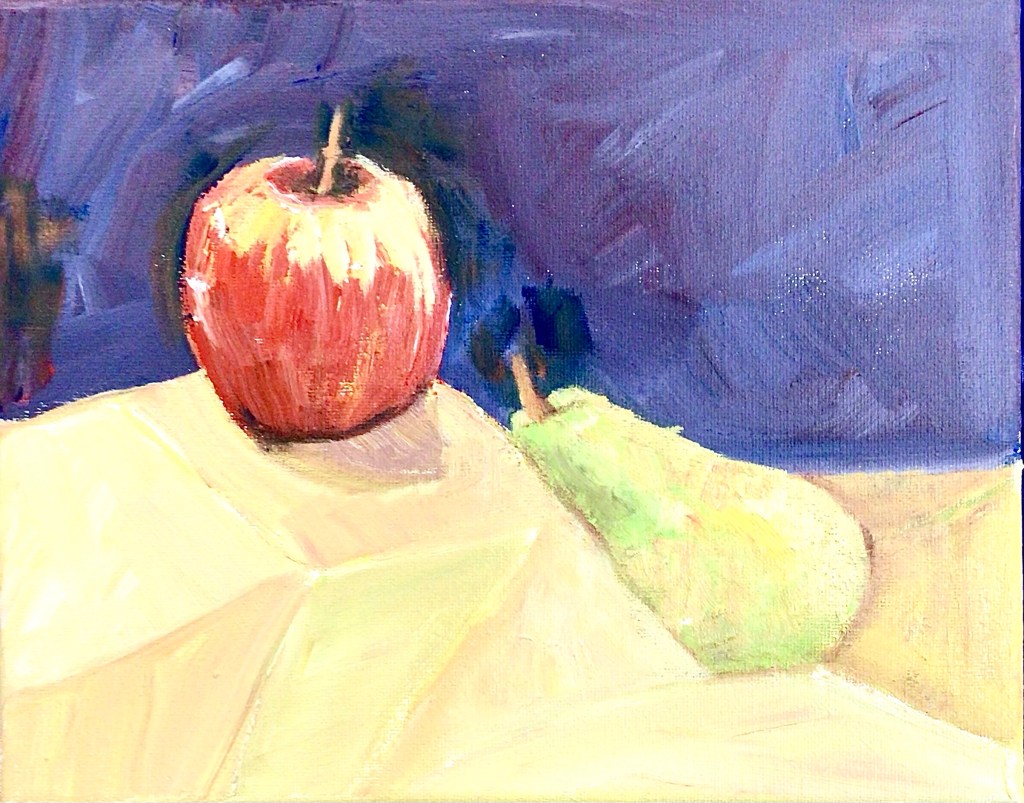
I stuck to a traditional rendering of the still life, since I do many abstract paintings in my own studio. I’d call these two Day and Night, for the Apple is quite awake and the Pear seems to need a little nap. It’s a study in contrasts: red and green, blue violet and yellow orange—a color wheel study masquerading as a still life.

Next week we’re in the season of Lent. As Christ turns his face towards Jerusalem, we’ll begin a study on the icons. This will be accessible and interesting. You’ll end up with your own icon for your personal worship center also.

Joy and Peace,

Cornelia

Classics in the History of Psychology — James (1890) Chapter 4
https://psychclassics.yorku.ca/James/Principles/prin4.htm

Crawling is important for childhood brain development
https://thefnc.com/research/crawling-is-important-for-childhood-brain-development/

You Can Teach an Old Dog New Tricks | Psychology Today
https://www.psychologytoday.com/us/blog/canine-corner/201602/you-can-teach-old-dog-new-tricks

Letters of John Wesley – John Wesley, Augustine Birrell – Google Books, p.423
https://books.google.com/books/about/Letters_of_John_Wesley.html?id=zgYu6NpqWDEC

What It Takes To Change Your Brain’s Patterns After Age 25 https://www.fastcompany.com/3045424/what-it-takes-to-change-your-brains-patterns-after-age-25

Eternal Youth and the Aged Superman

Alexander the Great, arkansas, art, change, Faith, Family, Healing, Health, inspiration, Meditation, Ministry, purpose, renewal, Retirement, Spirituality, Strength, Superman

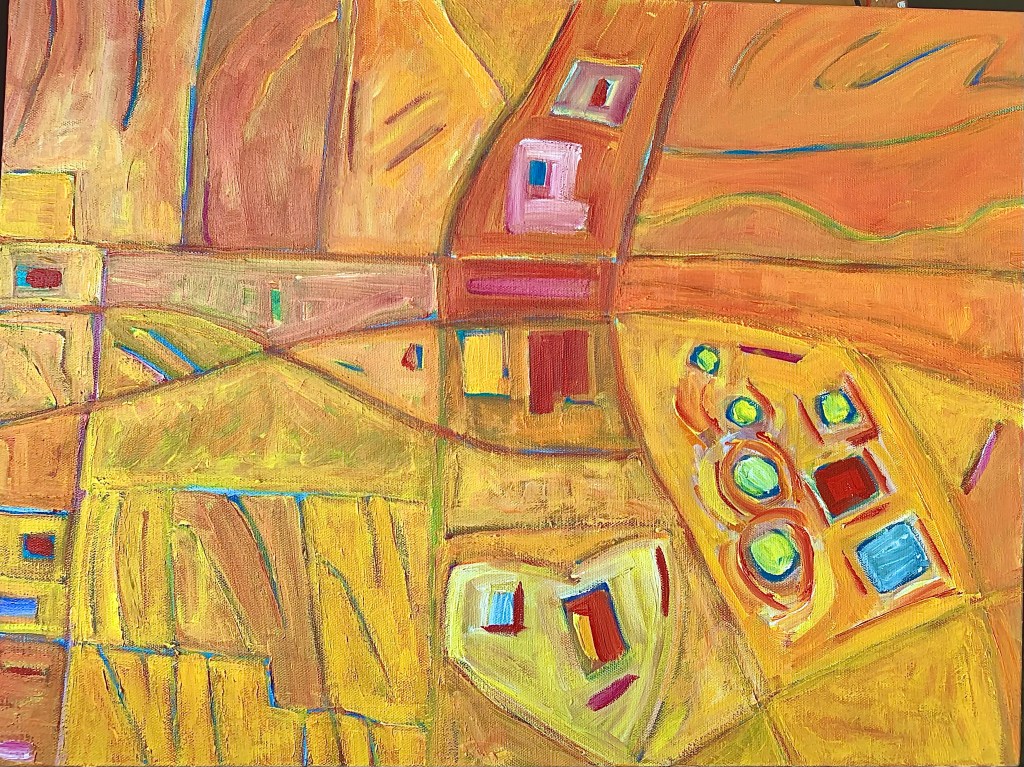
DeLee, Memories of a Certain Springtime, mixed Media, 2021

Springtime is the season of youth, growth, and promise. It’s full of hope and anticipation for the future. It’s the season of our youth, for we identify with the vigor of nature’s growing and fertile surroundings. Winter isn’t the season for most of us, for it’s cold, dark, and the world is buried under ice, snow, or an interminable rain. It reminds us of our own mortality, our own aging and weakness, and our lack of power over our circumstances. No wonder people have searched for the fountain of eternal youth in many cultures across the ages.

As a pastor, I know people die in every season of the year, but somehow the deaths in winter seemed to strike me as more difficult to deal with than those of summer. In recent years, U.S. death rates in winter months have been 8 to 12 percent higher than in non-winter months. Much of this increase relates to seasonal changes in behavior and the human body, as well as our increased exposure to seasonal respiratory diseases. Cold temperatures exacerbate preexisting diseases, plus this weather brings on strenuous activities we don’t do at any other time of the year. Some people work outside all year round, so they’re always subjected to extreme weather conditions. I’m not sure which is worse: extreme heat or extreme cold. I’ve always used the premise, “We can always put on more clothes; taking them off is risky business.”

Drinking from the Water Hose

Of course, summer heat now is more extreme than it used to be. The dinosaurs among us keep saying, “When I was a kid, we played outside all day long and drank from the garden hose. We came inside for lunch, rested during the hottest part of the afternoon, and went back outside to play until it was almost sunset. Then we had a late, light supper, took our baths, and we were in bed by the time the stars came out.”

Weather records back from 1954 tell a different story. It was actually so hot, the extreme heat caused a Kansas City weather beacon to malfunction and forecast snow (St. Louis Post Dispatch, 12 July 1954). The Dinosaurs’ memories of their childhoods aren’t fossilized in stone. They remember what they want to remember. Most of us forget the difficult times and remember the times of joy instead. I remember this era as so hot and humid, my daddy would stand in the back yard with the water hose on full blast as he cooled down the west facing brick wall of our house. The overflow water nurtured the orange day lilies in the flowerbeds below.

I think some of our Dinosaur generation’s memories might have moderated over the years, just as the extremes of any pain—childbirth, war, or cultural changes—have been moderated by the joys of survival and bringing a new generation to adulthood. Also, we tend to remember the better parts of our lives if we have an optimistic outlook.

I wasn’t around for the “The Great Heat Wave of 1936,” which affected around 15 states during its three-week run that brought temperatures above 100 degrees. During the summer of 1936, The United States endured its worst heat wave on record. Ozark, Arkansas exceeded 100F every day from August 3 – 23 and reached a chart topping record 120 degrees Fahrenheit.

Also known as the “1936 North American Heat Wave,” it exacerbated the levels of human suffering during the ongoing Great Depression. During this time, the all-time highest temperature in Arkansas was 120° F (Ozark on Aug.10, 1936). For comparison, in 2010 Little Rock, Arkansas had to endure its hottest summer between June and August when the temperature went above 90 degrees for two months. The Western states, currently under a mega drought that’s the worst the area has seen since 800 AD, hope to see rain and cooler temperatures soon.

Once upon a springtime

It’s not just the weather I connect with the cycles of life, but also the changes in my body. Gone are the days when I could stay up all night talking or frolicking and then go to work without missing a beat. Of course, I was once an energizer bunny, or maybe I didn’t get all that much done when I was “working.” It was a mark of hubris for me that I could still work, no matter how foolish I was the night before. My friends and I thought of ourselves as heroic.

Arthur C. Clarke speaks of youthful infatuation with heroes, who in their minds should benefit from the eternal bloom of everlasting youth. Age and decrepitude shouldn’t affect heroes, for they’re either blessed by god or nature has given them have supernatural bodies. As Clarke describes the movie star walking on the low gravity space dock in his science fiction novel Islands in the Sky,

“Tex Duncan followed close behind. He was trying to manage without an escort and not succeeding very well. He was a good deal older than I’d guessed from his films, probably at least thirty-five. And you could see through his hair in any direction you cared to look. I glanced at Norman, wondering how he’d reacted to the appearance of his hero. He looked just a shade disappointed.”

George Blanda, the oldest football player and record holder

Young folks think 35 is ancient. They never met George Blanda, the oldest NFL quarterback. Blanda played for 26 NFL seasons, the most seasons played by a single player in NFL history. During that time, he broke numerous other records as well. He held the record of most pass attempts in a single game, 68, until Drew Bledsoe broke his record in 1994 with 70 attempts. Blanda also was the first player to score more than 2,000 points, and he’s one of only two players to play in four different decades before he retired at age 48, one month shy of his 49th birthday.

Tom Brady, age 45, is the oldest quarterback to ever start an NFL game, but to break George Blanda’s age record for playing, Brady would have to play for four more seasons to break the age record and play until age 50 to break Blanda’s record of 26 seasons. Brady also has yet to throw seven touchdown passes in one game, a record Blanda and seven other NFL quarterbacks hold.

My old daddy often watched in agony while many young quarterback desperately tried to move a team downfield until the coach sent in Blanda, who somehow snatched victory from the jaws of defeat.

“Finally!” he’d shout at the tv. “How ‘bout that old man?” he’d exclaim to the rest of us. Agonizing over a football game was a family affair.

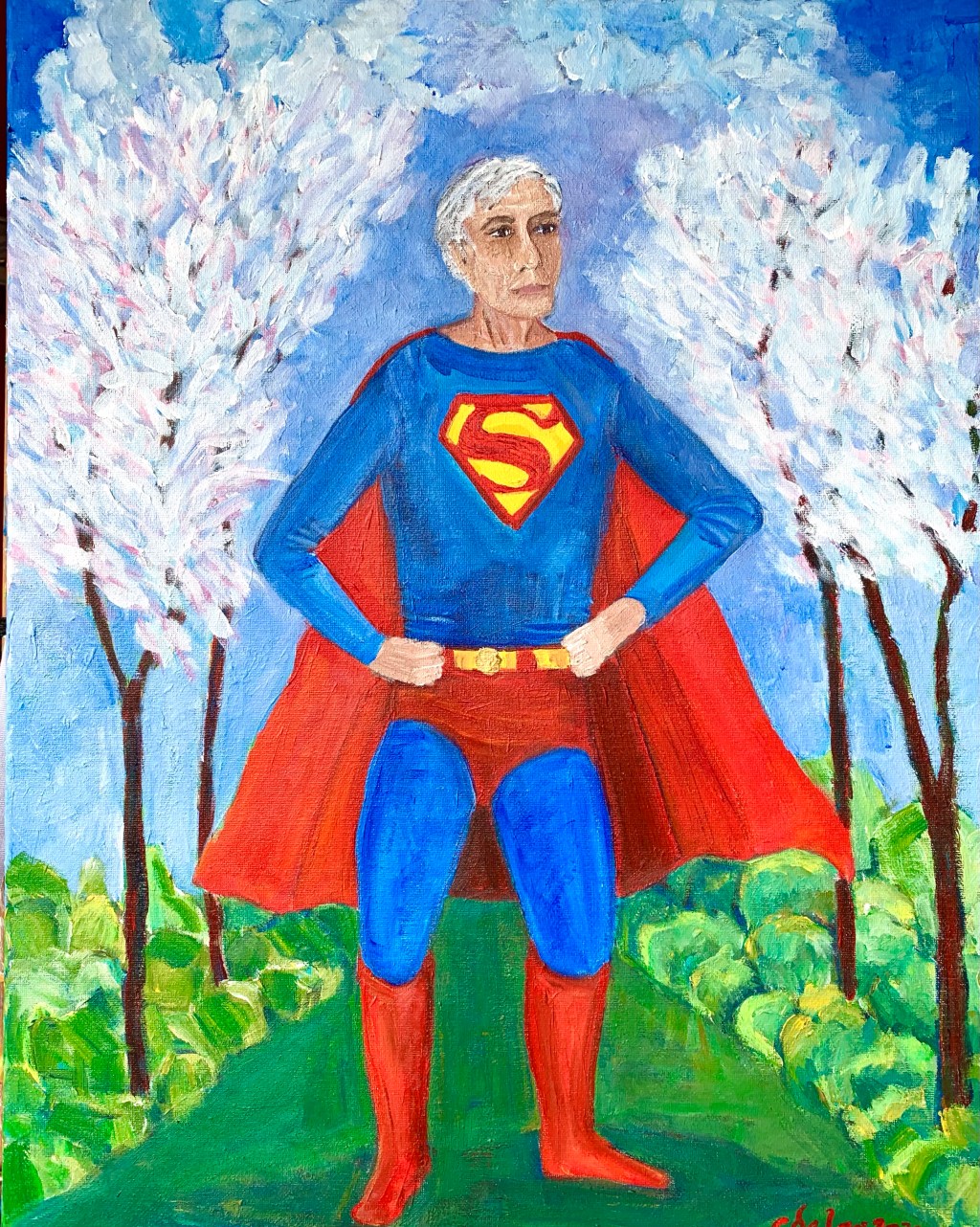
Tired Superman

We humored my daddy, who was just past his mid century mark. As young and vigorous twenty something’s, we kids knew mortality’s chill breath was on his neck, while we were still able to outrun any shade creeping up on us in the night. As young people, we were still at the age when we began to see our parents less as heroes, and more as the flesh and blood realities of their true selves.

Not everyone survives this transition gracefully. Some need to see their parents as “forever heroes,” and are disappointed when the folks don’t measure up to this lofty standard. Likewise, we can transfer these same “forever hero” desires to God, and want God to be our superhero to rescue us from dangers and keep us from harm. We don’t take responsibility for our own lives, but wait for the external power to fix our lives in a dramatic way. We’re forever dependent on the superpower for every thing good.

Johann Baptist Hagenauer: Christ at the Column, ca. 1754–56 , Alabaster, polychromed and gilded

There came a time in my daddy’s life when Parkinson’s disease and dementia weakened both his body and his mind. This wasn’t all at once, but a slow progression. He once had a strong handwriting, firm and legible. As his fine motor skill diminished, this beautiful signature became cramped and small, but it had the same stroke pattern as his original. My mom would fuss when he could no longer open jar lids for her, but I reminded her, “He wants to do this for you, but his hands can’t manage it. It’s a case of the spirit is willing and the flesh is weak.”

She wasn’t used to hearing this verse quoted in this context. I did get her piercing look, like I’d stabbed her to the heart, but she stopped fussing at him for what he couldn’t do and began to enjoy what he could still do. She too had always thought of him as a Superman type because he’d always been there for her. She now understood she would have to be there for him as he began to lose his powers.

“Kryptonite“

We all have our own personal kryptonite, the mineral from our home planet that can drain our super powers the way it does for Superman. For some of us, it’s toxic substances, toxic environments, or toxic people. Some of us make poor choices about the people or places we hang about in, some of us think we need to please everyone, and some of us work too much to avoid emotional involvement.

The heart of Superman is forever young

At an advanced age, after multiple attacks from criminal types, and the burden of saving the planet over the years, even Superman gets tired. We Christians take the verse, “I can do all things through Christ who strengthens me” as a Superman quote, forgetting all the other verses which reflect the humanity of Jesus: he was tired and hungry, so he rested at a well in Samaria; he was moved by the death of a friend, and wept at the news. We might need to recover the superhuman courage of the disabled and the aged instead. These find their strength in their weakness, as Paul reminds us in 1 Corinthians 1:25—

“For the foolishness of God is wiser than human wisdom, and the weakness of God is stronger than human strength.”

The older people I know all believe, “If I get out of bed, I’m going to have a good day. It’s my choice and I’m going to make it a good one. At my age, I don’t have time to waste on bad days!”

If I roll out of bed singing and wondering where my coffee cup is, I know it’s a good day. Then again, I always have a daily plan to do something creative: paint, write, quilt, cook, and if I must, make the condo more beautiful by cleaning it. I share my spiritual thoughts over several media platforms. It’s good to do ministry this way, since I have to keep a low profile due to my seizure disorder.

When we get to a certain age, people begin to ask, “Can he or she still do the job?” We make several assumptions when we ask this question:

  1. The way we imagine the work of ministry requires lots of energy.
  2. We prefer a young person to do this work because of our preconceived ideas about the nature of the work.
  3. We want a fresh face to represent us in the community because a young person reflects well on us.
  4. We think like attracts like, so a young pastor will attract young families.
Alexander the Great, a model of the ever youthful hero

However, we sometimes get more than we bargained for when our Wonder Woman or Superman “young hero” pastor prayers are answered:

  1. We don’t want to move as fast as the energetic young leader.
  2. Young leaders have novel ideas, but we’ve never done it that way.
  3. Young leaders often believe everyone should be in ministry.
  4. Young leaders remind us the congregation is the best representative in the community because they continue, while clergy come and go.
  5. The leader doesn’t change us, for we can only change ourselves.
  6. While a leader may attract new people, those who are part of the ongoing system will keep them by integrating them into the faith community.
Michelangelo: David, the youth as hero

One of the interesting aspects of working with the differently abled is an employer’s willingness to restructure the workplace setting or requirements to mesh with the employee’s abilities. We still have a notion of ministry that hasn’t been seriously reimagined since the 1950’s, when married clergy men were the norm and non working clergy wives were taking care of the children, house, and volunteering in the church and community.

One thing never changes, however: clergy bear the existential burdens of ministry—they carry the weight of others’ emotional and spiritual burdens, they’re overwhelmed by others’ needs and the importance of ministerial issues, and they’re expected to solve unsolvable mysteries of life in relationships.

Wonder Woman, still a hero

This would age any Superman or Wonder Woman, but they persist in their callings to love and serve others. As Paul would say of his own people, “the gifts and calling of God are irrevocable” (Romans 11:29). We are all called to serve by virtue of our baptism into the life, death, resurrection, and ministry of Jesus Chris. Therefore we each have gifts, and these we must use for God’s glory as long as we have breath and strength.

Maybe we won’t be the starting quarterback anymore, but we’ll wait our turn on the bench to take on the last ditch two minute drill, or comfort the grieving when they come off the field in whatever loss they suffer. God will use us as long as we have breath, and God will put us in the right place, at the right time, to be the hands and heart of Christ for those who need us at that opportune moment.

Henri Nouwen, the great spiritual writer, wrote about aging in this way, basing his commentary on Job 12:12 (NIV), “Is not wisdom found among the aged? Does not long life bring understanding?“ He said,

“Much violence in our society is based on the illusion of immortality, which is the illusion that life is a property to be defended and not a gift to be shared. When the elderly no longer can bring us in contact with our own aging, we quickly start playing dangerous power games to uphold the illusion of being ageless and immortal. Then, not only will the wisdom of the elderly remain hidden from us, but the elderly themselves will lose their own deepest understanding of life. For who can remain a teacher when there are no students willing to learn?”

Joy, peace, and May you find your inner superhero,

Cornelia

Unknown Artist: Alexander the Great, from Alexandria, Egypt, 3rd cent. BCE, Ny Carlsberg Glyptotek, Copenhagen (5), CC BY 2.0,

Michelangelo: David, 1501-1504, marble, Academia Galleries, Florence, Italy.

Climate Change Indicators: Cold-Related Deaths | US EPA
https://www.epa.gov/climate-indicators/climate-change-indicators-cold-related-deaths

The Prolonged 1954 Midwestern U.S. Heat Wave: Impacts and Responses in: Weather, Climate, and Society Volume 3 Issue 3 (2011)
https://journals.ametsoc.org/view/journals/wcas/3/3/wcas-d-10-05002_1.xml

See the most extreme temperatures in Louisiana history
https://www.ksla.com/2022/04/11/see-most-extreme-temperatures-louisiana-history/

Arkansas annual temperatures and records
https://coolweather.net/statetemperature/arkansas_temperature.htm

Arthur C. Clarke: Islands in the Sky, 1952. An early novel of space travel, as seen through the eyes of a young contest winner.

Is George Blanda the Oldest NFL Player of All Time? | Stadium Talk
https://www.stadiumtalk.com/s/george-blanda-oldest-nfl-player-789d32390d914687

Nouwen Meditation: The Illusion of Immortality
September 7, 2022 at 4:02:09 AM CDT
Henri Nouwen Society email_lists@henrinouwen.org

Tom Brady Continues Chasing George Blanda’s Records – The Virginian Review
https://wvdn.mynews360.com/news/17796/tom-brady-continues-chasing-george-blandas-records/

To Be or Not To Be

Alexander the Great, art, city, Civil War, cognitive maps, Creativity, Faith, Forgiveness, Healing, Holy Spirit, hope, inspiration, Painting, picasso, Reflection, renewal, Spirituality, vision

Hamlet’s famous soliloquy begins with these very words,”To be, or not to be: that is the question.” In seminary I learned one of those big fifty cent words I often had to check my dictionary for its meaning. Ontological is a word we don’t throw around in ordinary conversations. I never used it in a sermon, for its strangeness would have been a stumbling block to folks without similar training. Who am I kidding? It was often a stumbling block when I tripped over it in my reading. I finally understood it after my first year of Greek. I needed to know its meaning fully and completely to comprehend it.

Current events, however, make an auspicious teaching moment for this weird word. Ontology is a branch of metaphysics concerned with the nature and relations of being. Ontology is the the branch of philosophy which deals with abstract entities. It’s concerned with the nature of being or the kinds of things that have existence, but are outside objective experience. It deals with the first principles of things, including abstract concepts such as being, knowing, substance, cause, identity, time, and space. Our word essence carries the meaning well, for it means “the permanent as contrasted with the accidental elements of being.”

An example of an ontological statement in scripture is the discussion Jesus has in John 8:56-58 with some of the Jews who opposed him:

“Your ancestor Abraham rejoiced that he would see my day; he saw it and was glad.”

Then the Jews said to him, “You are not yet fifty years old, and have you seen Abraham?”

Jesus said to them, “Very truly, I tell you, before Abraham was, I am.”

In Shakespeare’s play of the same name, Hamlet’s whole soliloquy is about his existence, and whether he should live or die:

Whether ’tis nobler in the mind to suffer
The slings and arrows of outrageous fortune,
Or to take arms against a sea of troubles,
And by opposing end them? To die: to sleep;
No more; and by a sleep to say we end
The heart-ache and the thousand natural shocks
That flesh is heir to, ’tis a consummation
Devoutly to be wish’d. To die, to sleep;

Ontology comes from the Greek root ontos, ōn, which is the present participle of einai, of the verb to be. As I’ve watched the unfolding horror of this “Russian special exercise” on Ukrainian soil, I’m struck by the sense of Hamlet’s description of the struggles of life:

To sleep: perchance to dream: ay, there’s the rub;
For in that sleep of death what dreams may come
When we have shuffled off this mortal coil,
Must give us pause: there’s the respect
That makes calamity of so long life;
For who would bear the whips and scorns of time,
The oppressor’s wrong, the proud man’s contumely,
The pangs of despised love, the law’s delay,
The insolence of office and the spurns
That patient merit of the unworthy takes,
When he himself might his quietus make
With a bare bodkin?

“To be” is the ontological insistence for the Ukrainians, for they desire to exist as a free people in a free nation. They resist occupation and occupiers. Dictatorship isn’t in their five year plan, or in their distant future, if they can help it. The surrounding nations have suddenly come alive in their recognition of Russia’s unfortunate foray into this breadbasket of Europe.

Yet even as the Ukrainian people are being killed in their streets, for no reason other than their citizenship; and their homes, hospitals, museums, and public buildings are reduced to smithereens by cluster bombs and artillery fire; they fight for their land and their freedom. I watch for one hour on the evening news, for I believe our world must stand witness to this horror.

Yes, some will turn away, for they have too much trauma in their own lives to bear the pain of others. Others will watch and say this isn’t our problem. If we remember our scripture, the chosen disciples abandoned Jesus in his hour of pain and need, but the women stayed by his side until his last breath. Then they came to dress his dead body’s wounds, but found an empty grave, while the men were holed up in a locked room for fear of the Jews (John 20:19).

Humanity is always our concern and when inhumane acts or conditions prevail, the human responsibility is to bear witness and to share the burden. As Paul writes in Galatians 6:2—

“Bear one another’s burdens, and in this way you will fulfill the law of Christ.”

Hamlet muses on, dithering as contemplates taking his own life, but he takes no action for fear of what awaits him in the world beyond.

who would fardels (burdens) bear,
To grunt and sweat under a weary life,
But that the dread of something after death,
The undiscover’d country from whose bourn (boundary)
No traveller returns, puzzles the will
And makes us rather bear those ills we have
Than fly to others that we know not of?
Thus conscience does make cowards of us all;
And thus the native hue of resolution
Is sicklied o’er with the pale cast of thought,
And enterprises of great pith and moment
With this regard their currents turn awry,
And lose the name of action.

While none of us know with certainty what lies beyond this world, for no one has ever returned with souvenirs, people of faith have trusted God to be always with them, even in the worst of times. As Paul writes in Romans 8:35, 37-39—

“Who will separate us from the love of Christ? Will hardship, or distress, or persecution, or famine, or nakedness, or peril, or sword?…No, in all these things we are more than conquerors through him who loved us. For I am convinced that neither death, nor life, nor angels, nor rulers, nor things present, nor things to come, nor powers, nor height, nor depth, nor anything else in all creation, will be able to separate us from the love of God in Christ Jesus our Lord.”

Battle of Issus Mosaic, Detail: Portrait of Alexander the Great

Artists across the centuries have responded to the horrors of war, if they aren’t held in thrall to the purveyors of such deeds. Those who exist to magnify the glories of battle are there as servants of powerful leaders, not as representatives of the fragility of the human condition. Think of Alexander the Great and his route to deification, first as a glorious leader, then as a god.

The Alexander Mosaic depicts a moment of victory in Battle of Issus in which Alexander has broken through to Darius of Persia, whom he defeated and shocked, before Darius was at the verge of fleeing. The mosaic is as great as Alexander himself, for it’s about 9 feet by 17 feet in size and contains over 1.5 million individual blocks of color, or tesserae. This Roman copy of an original Greek fourth century BCE painting dates from the second century BCE and is in the Museo Nazionale, Naples, Italy.

Goya: The 3rd of May 1808 in Madrid, or “The Executions”, oil on canvas, 1814, Prado Museum, Spain.

Here we see Goya painting the horrors of war and its impact on humanity. His inspiration comes from the French army’s assassination of a group of Spanish patriots during the 1808 rebellion. The Spanish heroes are illuminated by the intense light, but their faceless enemies aren’t easily visible in the darkness from which they operate. Not only does the design make plain Goya’s feelings, but his psychological understanding of the scene as well.

As Matthew writes in Jesus’ teaching kernel known as “The Sound Eye,”

“The eye is the lamp of the body. So, if your eye is healthy, your whole body will be full of light; but if your eye is unhealthy, your whole body will be full of darkness. If then the light in you is darkness, how great is the darkness!” (6:22-23)

Picasso: Guernica

Probably the best known war painting of our modern era is Picasso’s Guernica. He painted it in response to the Nazi bombing of Guernica, a Spanish town in the Basque region during the Spanish Civil War. At about 16:30 on Monday, 26 April 1937, warplanes of the German Condor Legion, commanded by Colonel Wolfram von Richthofen, bombed Guernica for about two hours. Germany, at this time led by Hitler, had lent material support to the Nationalists and were using the war as an opportunity to test out new weapons and tactics. Later, intense aerial bombardment became a crucial preliminary step in the Blitzkrieg tactic.

Guernica, Picasso’s most important political painting, has remained relevant as a work of art and as a symbol of protest. It has kept the memory of the Basque town’s nightmare alive. While Picasso was living in Nazi-occupied Paris during World War II, one German officer allegedly asked him, upon seeing a photo of Guernica in his apartment, “Did you do that?” Picasso responded, “No, you did.”

Käthe Kollwitz, Woman with Dead Child, 1903, etching on paper. Courtesy: © Getty Research Institute, Los Angeles and Artists Rights Society (ARS), New York

Lest we forget, while wars are often started by those in power, it’s the mothers who suffer when young soldiers are killed in action. Some are fortunate enough to have the body of their loved one to hold, but it’s a sad consolation prize. How heart rending it must be for the families whose children were left behind as casualties of war. As the old Cold War era 1985 Sting song about nuclear war reminds us—

There’s no such thing as a winnable war
It’s a lie we don’t believe anymore…
We share the same biology, regardless of ideology
But what might save us, me and you
Is if the Russians love their children too.

The great sadness of this brutal war foisted on the Ukrainian people is while we’re free to see and own the pain inflicted on others, too many of us will turn away. Then again, we often have difficulty acknowledging our own pain and weakness, for we prefer to see ourselves as whole, strong, and unconquerable. All of us have a weak place and we all have an emptiness that needs to be filled. Some of us fill this emptiness by seeking power and control, while others choose various substances or activities to overuse. A few will let God’s Spirit fill us, as Paul writes in 2 Corinthians 4:7—

“But we have this treasure in clay jars, so that it may be made clear that this extraordinary power belongs to God and does not come from us.”

Cornelia DeLee: Obliterated Ukrainian Landscape, Maxar Satellite Image, Apple Pencil, 2022.

When I see the satellite imagery of the obliterated Ukrainian towns, I recall my childhood memories of the old ones in my family repeating their ancestors’ stories of the troubled times during the Civil War. I can easily imagine in Ukraine, for several generations to come, all the stories of pain, survival, and resilience that will be told as they rebuild their nation from the ground up. In the midst of this ongoing disaster, they’re already thinking “How can we build back better?”

This is a great lesson for all of us. If our life hits a major roadblock, we can either give up, scale the wall, or find a way around the wall. Another option is to make peace with the wall and find a way to be happy there. Since Putin is tearing down all the walls for the Ukrainian people, they’ve decided to double down on being Ukrainian. “To be me” is “to be free” and that means “to be Ukrainian.” As their land lies in ashes about them, those who once also spoke Russian, a similar language to Ukrainian, now find that language dead as ashes in their mouths.

Cornelia DeLee: Ukrainian Town Reduced to Ashes, acrylic on canvas, 2022.

To win friends and influence people requires a gentle hand, not the ham-fist of a dictator. I only wonder if the Russian people will ever understand this. But they may have been slaves of their state for so long, they don’t know the sweet taste of freedom. Perhaps only those who believe in a forgiving God, who allows God’s people the freedom to make mistakes and gives them through the reconciling grace of renewed fellowship, are able to come through such disasters. Those who are “sinners in the hands of an angry god” must think their fate is destiny and accept it.

So the questions remain:

  1. What IS the nature of YOUR God?
  2. How does God’s nature affect your understanding of human nature?
  3. Does your view of humanity reflect your image of God or do you see humanity through “God’s eyes?”
  4. Read the Prodigal Son in Luke 15:11-30 and answer the questions again

Some days I AM Joy and Peace,
Cornelia

Hamlet, Act III, Scene I [To be, or not to be] by William Shakespeare
https://poets.org/poem/hamlet-act-iii-scene-i-be-or-not-be

Why is the Alexander mosaic significant?
https://www.rampfesthudson.com/why-is-the-alexander-mosaic-significant/

The 3rd of May 1808 in Madrid, or “The Executions” – The Collection – Museo Nacional del Prado
https://www.museodelprado.es/en/the-collection/art-work/the-3rd-of-may-1808-in-madrid-or-the-executions/5e177409-2993-4240-97fb-847a02c6496c

Pablo Picasso: Guernica
https://www.pablopicasso.org/guernica.jsp

Rabbit! Rabbit! Welcome to April 2022

adult learning, art, Carl Jung, Creativity, Easter, Faith, holidays, hope, Ministry, mystery, nature, Painting, rabbits, renewal, shadows, trees

Ukrainian Psyanky Easter Eggs

What a difference a month makes! Only a few weeks ago, I was speaking with a rabbit pal, who was ground down by her constant caregiving in this pandemic world. She cares for elderly rabbits in a nursing home, a vulnerable population, plus she’s grieved the passing of several of her own family members lost to COVID.

“I’m not getting another shot,” she said. “I’m so tired of COVID, I could scream.”
“I know,” I replied, “but this isn’t over. As long as we have hosts—those who either can’t or won’t get vaccinated—COVID is going to mutate and stick around.”

“Oh, don’t tell me that! We’ve been through alpha, beta, and gamma. We’re on omicron now. What’s next?”

I laughed. “It doesn’t matter. It could be gigatron, megaton, or atragon—they’re all monsters and we’ll have to cross that bridge when we come to it. We’ll do what ever it takes to beat those monsters, just like in the Japanese movies.”

Booster Shots Meme

Her mood lifted somewhat, for in these hard times a friend has to be a support. I was only returning the favor, for she’s been my rock when I’ve been down.

Speaking of monsters, I love Japanese films. I once had a boyfriend in college who had a fondness for Japanese films.

“Oh, me too!” I exulted.
“What’s your favorite ?” he asked.
“I really like Mothra and Godzilla,” I replied to his frozen face.

Mothra and Godzilla

He favored more arcane fare, such as The Burmese Harp, Rashomon, and others with samurai military themes. We did share a common love of pasta, but his military service took him elsewhere, and my artistic sensibilities took me to a different place also.

We rabbits like to escape from reality when life gets too real at times, as it has this past month. The Bible speaks of “the spring of the year, the time when kings go out to battle,” in 2 Samuel 11:1. When the sap rises and the light gets brighter, some circadian rhythm must kick in that sets off a power struggle amongst the powers that be. When I taught school back in the day, all my rabbit students were wild as hares from April Fool’s Day until the last day of school in May. During my first year teaching, we got an extra week of spring break, since we didn’t use any of our snow days.

My old daddy found me crying on that Monday morning.
“What’s wrong, honey?”

I sobbed, “We only have one more week of vacation before school starts again!”
“It’s all downhill from here, honey. You can do this,” he said, encouragingly. “Dry those tears and let’s share a cup of coffee at the breakfast room table.”

Life is always better with coffee, and with an older bunny to talk some sense back into you. At least my daddy was always willing to listen to my tales of woe. I must have been a real drama queen back when I was young, but surviving those “bad old days” meant I could take my turn later on and help other young rabbits through their peaks and valleys. As the apostle Paul wrote in 2 Corinthians 12:10—

“Therefore I am content with weaknesses, insults, hardships, persecutions, and calamities for the sake of Christ; for whenever I am weak, then I am strong.”

Atragon, Monster of the Mu Empire

One of the ways I would escape reality was to watch those Japanese monster movies. They weren’t always long on plot or character development, but you could count on lots of action. Atragon, a huge monster of the Mu empire, an underwater civilization that was supposedly extinct, resurfaced in one movie to declare war against all nations. The sole hope of humanity seemed to lie on Captain Hachiro Jinguji, who refused to surrender, and his atomic super-submarine, the Gotengo. When the Mu and their evil Queen kidnapped his daughter, he decided to attack them. Earthquakes and battles between submarines and the great sea monster ensued.

Demon Brand

I’ve always found watching monster movies and the concomitant destruction they cause easier than watching the actual mayhem reported on the evening news, but then I grew up in the Vietnam era. I always had difficulty with the people my parents’ age who wanted to “bomb the North Vietnamese back to the Stone Age.” Now when I see a Russian dictator doing this very deed to Ukraine, an independent nation, I have even more distaste for this activity. I’m reminded how easy it is for us to project a demonic nature on those who do terrible, unprovoked, and unimaginable deeds on others.

Krampus: The Punisher of Bad Children at Christmas

In the years after the United States dropped atomic bombs on Hiroshima and Nagasaki, the Japanese worked out their fears of another nuclear horror or the after effects of that first one with their mutated monsters by atomic radiation. Today, we have movies which deal with our fears of robots taking over the world or artificial intelligence throwing over its creators.

1939 Attack of The Robots

These aren’t new themes, of course, for Greek mythology tells of the early Titan king Chronos, who swallowed all his children, so none would fulfill the prophecy of taking his throne. When Zeus was born, his mother spirited him away. When he grew up, he came home, caused his father to vomit up his siblings, and together they defeated him. This is how the gods came to rule the heavens, the oceans, and the underworld. These gods were made in the image of human kind, so while they were more beautiful, stronger, and immortal, they were also given to the same passions and consequences as those besetting humanity.

The Greeks and Romans were always in a contest of power, whether between the gods, gods and humans, or humans alone. Nothing was ever in a steady state. Their great leaders were known both for their military successes as well as their political prowess. They were leaders both in peace and war. The Ancient Greek philosopher
Heraclitus said, “War is both king of all and father of all, and it has revealed some as gods, others as men; it has made some slaves, others free” (no. 22 fragment B53).

Wolf image

Native American tribes have a story of the warring nature we each carry within us. It’s commonly known as “the two wolves” or “the grandfather story.”

“I have a fight going on in me,” the old man said. “It’s taking place between two wolves. One is evil – he is anger, envy, sorrow, regret, greed, arrogance, self-pity, guilt, resentment, inferiority, lies, false pride, superiority, and ego.”

The grandfather looked at the grandson and went on. “The other embodies positive emotions. He is joy, peace, love, hope, serenity, humility, kindness, benevolence, empathy, generosity, truth, compassion, and faith. Both wolves are fighting to the death. The same fight is going on inside you and every other person, too.”

The grandson took a moment to reflect on this. At last, he looked up at his grandfather and asked, “Which wolf will win?”

The old Cherokee gave a simple reply. “The one you feed.”

We each have a wolf or a Godzilla within ourselves, but sometimes we fail to notice it. Instead we see it only in the outsiders, in our enemies, or those whom we’ve excluded from our privileged circle. How we manage this “darkness” within us, how we the battle the “enemy within,” is the great work Jung spoke to when he proposed the presence of the Shadow within each of us.

The Shadows we all carry

When the world is falling apart, we too feel unmoored. When a dictator attempts to redraw the borders of another country, our cognitive maps also fall apart. If that part of the world isn’t safe, is our world at risk also? Even though we know change is inevitable, will the apple cart be set on fire or just dumped over? We rabbits aren’t the bravest animals, so we can borrow trouble from the morrow, as well as from the next half hour. Somehow we have to revision our old lives, shed our old cocoons, and renew our selves for the new world to which we find ourselves awakening.

A hundred years ago, T. S. Elliott wrote these opening lines of his famous poem, The Waste Land. In the days after the end of World War I, his wife was suffering from mental illness and his marriage was falling apart because she was having an affair with another man. He too was suffering from the shared grief of the loss of so many in the Great War, as well as his own personal relationship problems. He wrote this poem at a sanatorium, where he was taking a “cure” for his own mental health.

April Lilacs on Hwy 7S to Arkadelphia

April is the cruelest month, breeding
Lilacs out of the dead land, mixing
Memory and desire, stirring
Dull roots with spring rain.
Winter kept us warm, covering
Earth in forgetful snow, feeding
A little life with dried tubers.

If we’re ever to understand the great mysteries of faith, we have to meet the darkness within us. That’s what is symbolized by the suffering, death and resurrection of Christ. The loneliness in the garden of Gethsemane, the descent into the grave, and the rising back to life once again. If ever we’ve had this loneliness, emptiness, and sense of rebirth, we’re participating in the Easter mystery. Once we die to our old selves, we can live the Christ life, not just a life assenting to the doctrines of the Christian faith.

Sea Bass by Paul Summer: recycled antique and modern tin, riveted to a hand-carved pinewood base, forming colorful scales

No one will be able to call us rabbits April Fools, even if they call us fools for Christ. Let’s celebrate this month some of the great faith holidays, and don’t forget your taxes are due. That perhaps is “the cruelest” event of April.

April 3—Ramadan begins—revelation of the Koran to Muhammad
April 10–Palm Sunday
April 14–Maundy Thursday
April 15–Good Friday & Income Tax Day
April 16–Passover & Holy Saturday Vigil
April 17–Easter
April 18–Easter Monday (Emmaus Monday)
April 24–Orthodox Easter
April 28–Holocaust Remembrance Day
April 29–Laylat al Qadr is the day in Ramadan that observes the night when the Prophet Mohammad received the first verses of the Koran

Joy, peace, and mysteries,

Cornelia

Atragon (Ishiro honda, 1963)—underwater monster takes Tokyo.

The Burmese Harp
https://en.wikipedia.org/wiki/The_Burmese_Harp_(1956_film)

The Waste Land by T. S. Eliot | Poetry Foundation
https://www.poetryfoundation.org/poems/47311/the-waste-land

The waste land : a facsimile and transcript of the original drafts, including the annotations of Ezra Pound / T. S. Eliot ; edited by Valerie Eliot. – British Library
http://explore.bl.uk/primo_library/libweb/action/dlDisplay.do?vid=BLVU1&afterPDS=true&institution=BL&docId=BLL01010067643&_ga=2.6871095.423095881.1648426637-1262842970.1648307341

Justice and the Justification of War in Ancient Greece: Four Authors
Tristan K . Husby
http://digitalcommons.conncoll.edu/classicshp/1?utm_source=digitalcommons.conncoll.edu%2Fclassicshp%2F1&utm_medium=PDF&utm_campaign=PDFCoverPages

The Heart of the City

arkansas, art, change, city, cognitive maps, Creativity, Historic neighborhood, hope, Imagination, mystery, Painting, trees

Cities are growing organisms, each having their central growth from their place of origin. Some begin on a waterfront, as a place of trade. Other communities began along a creek, where people would meet to connect, trade, and settle differences in peace. These were safe spaces, welcoming places, but they existed only so long as everyone acknowledged them.

In our cities today, safe spaces are rare. Some reasons are we don’t know everyone anymore, since our populations are so large. We don’t know who to trust, so we trust no one. If we’re anonymous, we think can do what we want, since no one knows who we are and we don’t know whom we harm. Of course, this is absurd, for if we do harm to another, we aren’t living out our best life, not to mention we’re not living out the wisdom of “Do unto others what you want done unto yourself.”

“Who knows what lurks in the heart of man?” the old radio program asked. “The Shadow knows,” was the answer. Most of what we know as the city is hidden behind the layers of paint, wallpaper, and various accretions of dust in our historic district. In Hot Springs, we can eat hamburgers in buildings where mobsters would hang out, walk the streets where old time baseball players strolled, and take hot baths where our ancestors took the “cure” for every disease known to humankind. They got clean, but the cure didn’t take.

Autumn Facade, Downtown Hot Springs

We have a civic interest in renewing our old buildings, for they attract tourists and provide incomes for owners and workers in our restaurants, shops, and hotels of all sizes and qualities. We have dive bars and first-class accommodations within a mile of each other. This is a sure sign of a community in transition. I won’t name either, but if Hot Springs were to be the setting of an old-time radio show, it wouldn’t lack for interesting characters or venues.

During this pandemic era, for it’s stretched long enough now to be called such a lengthy time, I’ve been working on a group of cognitive maps. A cognitive map is any visual representation of a person’s (or a group’s) mental model for a given process or concept. Cognitive maps have no visual rules they need to obey. There’s also no restriction on how the concepts and the relationships between them are visually represented. If we were to take a number of people to the same place, we’d most likely end up with the same number of maps. Some parts might overlap, but everyone would notice different aspects of the landscape.

My own cognitive maps start with a screen shot of a google map of a place I’ve been prepandemic, and work in process through sketches, then several layers of paint, and finally, the end product. This last stopping point sometimes comes only after I think I’ve finished the painting, but I leave it sitting out where I can look at it some more. In the looking, I discover, I’m not ready to release this image out to the world. It lacks unity, power, focus, or some other defining quality I can’t put words to. I only know I am unhappy with it the longer I look at it.

When I cook a recipe, I have a certainty if I follow the directions, I measure correctly, and my oven is true to temperature, I’ll come out with a good approximation of the original recipe. Afterall, I’m recreating someone else’s process and instructions. Making something new, from the imagination is part of the creative process. Sometimes the end product arrives easily, but other times, its birth is a struggle, and the child arrives crying to beat the band.

Creekside Landscape, Hot Springs, 2021 springtime

Most of us are used to seeing the landscape from our upright view, for we walk through our world with our head up every day as we reconnoiter along our daily paths. Some of us keep our heads buried in our phones, so we depend on the good nature of others to keep us from bumping into them, or these people must have particularly good side vision to avoid collisions with other walkers. We don’t have the bird’s eye view of the city, so we don’t see how the streets connect or how they follow the elevation changes. We also don’t get to see the patterns of tree growth, or the hidden waterways. Mostly we have a patchwork vision of just the immediate areas we inhabit, but not a vision of the whole.

Greenway Park Map: Apple Pencil Drawing on Google Map

I saved a screenshot to my iPad so I could draw on it. Color for me has emotional energy, so as I drew, I over laid the first colors with others. The changes the drawing went through prepared me for the changes through which the painting would transition. This pandemic has certainly been a time of change, but life has always been changing. One of my old friends always said, “Human beings are meant to change. We’re brand-new people every 27 days! That’s how often we get a whole new skin.”

I spent many years in the church, an organization not noted for changing. It’s not the organization that doesn’t want to change, but the people. We find those same people resistant to change in NASCAR fans, football fans, and any other group you want to name. As one wag said, “It was the 56th Super Bowl and they finally had rap music in Los Angeles, and NASCAR had Pit Bull at the LA Coliseum for the Clash for the first time in 43 years. If you have a point, it’s time to make it.” If we don’t like change, we should quit washing our bodies, since we’re just hurrying those dead skin cells off to their final demise.

First Stage of Greenway Park Map Painting

Artists must embrace change, however, for the moment we put a mark on a canvas or tap a stone with a chisel and hammer, we’ve changed the surface before us. We can’t be afraid to go into the emptiness or the unknown, for there we’ll find the beauty of the unspoken or the hope of the silence in which we work.

This stage of the painting adheres closely to the drawn image. The blue streets define the city blocks and a few building shapes are notated. It’s a complicated street map from one of our older sections of town.

Second Stage of Greenway Park Map Painting

On this repainting, I balanced the colors better, but kept the greens and oranges. I signed it, for I thought I was “finished.” I set it down in my living room to observe it for a while. I often do this with my work, for if it still looks good after six months, I think it’ll survive for a year. If it lasts a year, I think it’ll last longer. If I look at it three years later and it doesn’t survive, I’ll destroy it. This was painted during the winter, with the worst low light of the season. No wonder it looked grim under the brightening light of the returning sun.

Final Stage Greenway Map

Some sunshine has come into my life here in the middle of February. I’m very sensitive to the transition of light across the seasons, so when it begins to leave in October, I start shutting down. When the light begins to return again, I awake, as if from a hibernation. Perhaps this is the reason I took all my yellows and reds and overpainted the other colors on the canvas. Now my canvas is almost monochromatic, except for small streaks and blobs of color in places. You can still see the city blocks and streets, but now the over all feeling is less of a map and more of an energy record of the city area.

This is the city as it grows, as it lives, and as it changes. The dynamics and life blood of the city move and pulse as it transforms. Hot Springs is unique in that we keep as much of our old as possible and build new when we must. I’m thankful for this city, for its love of the arts, and its honor of its history, as well as its embrace of the future.

After all, that’s all any of us can do, is remember who we are, whose we are, and give thanks to the one whose steadfast love remains forever.

Joy and Peace,

Cornelia

How Often Does the Epidermis Renew?
https://www.webmd.com/beauty/cosmetic-procedures-overview-skin

A Map of a Changing World View

art, change, cognitive maps, cosmology, Creativity, Faith, Healing, Icons, mappa mundi, nature, Painting, Pantocrator, renewal, Spirituality, vision

Jesus and The Cosmos

When our world is changing “faster than we can say Jack Rabbit,” sometimes life can get overwhelming. My dad often used this quaint phrase when he wanted something in a hot minute, like a bowl of ice cream just before bedtime. Or when he wanted us kids to get a move on and not dilly dally. Usually we were messing around and goofing off when our parents had time constraints, so the tone of his voice sometimes sharpened with the promise of consequences if we weren’t front and center right now. My parents were usually in hurry mode, while we kids never quick unless the destination was the local Dairy Queen. We all screamed for ice cream in my family.

This clock knows which way the wind blows

Grownups have a different sense of time than children do. Adults know from experience how short lived is the human existence, for they’ve lived long enough to have loved and lost. Children, who’re generally protected from such harsh realities, live in worlds in which time both stretches into eternity and seems to stand still. I call this variable sense “rubber band” time, since it can both stretch to the moment of breaking, but also snap back to inertia or non movement. For children, especially at year end, Christmas comes on lumbering feet, but for parents, the season is far too brief. The day blows through on a wind from the north, like a polar front charging into the Deep South on a mission to freeze every fragile magnolia blossom before the new year can make an appearance.

Treasure at the end of the rainbow

Children’s worlds are different from adults, for they still have a sense of wonder and all things are new to them. I remember seeing my first rainbow high up in the sky. I put up such a clamor on the front porch as I called for my mother, she was sure I’d seen a snake or some dangerous animal. She was put out I’d called her away from her household tasks “just to see a rainbow.” To this day, I still think rainbows are wondrous writings in the sky and meant to give us joy for our mundane lives. Seven decades later, the child in me still celebrates rainbows.

Our sense of time changes as we age, for everything a child sees is a first and a best. This is why we can have such deeply imprinted memories from our childhoods. Later on, we’re doing the same things over and over, so unless these events stand out for some different reason, they all tend to blend together. We also tend to think of these as “this is the way life is,” or they become the “model” for our world. This is also known as our cognitive map.

Some people can give good directions to their home, while others wouldn’t be able to get someone to their place even if they lived in a teacup. Those “others” lack good cognitive maps, for they don’t have a good mental image of the landmarks on the way to their home. Today, our cognitive maps are undergoing rapid change. The world we used to know doesn’t exist, mostly because of COVID. Once we had a service economy, but now we don’t do face to face experiences because of the pandemic, so we buy goods. We’re buying so many goods (can we ever buy bads?), we have supply chain problems trying to provide them all. We’re so used to same day or next day delivery from our pre-pandemic lives, we think our world is coming to an end if it’s going to take a week to get our cherished gifts delivered.

That old world existed back in 2005, when Amazon Prime partnered with the US Postal Service for its packages’ last leg of delivery. Today we have on demand groceries ordered through the app for immediate pick up or delivery, as well as restaurant foods for the same. This was unimaginable just a decade ago. It’s still so new, some folks won’t use it, even if they were on their death bed. Their cognitive map won’t let them try a new thing, for these new places and experiences aren’t encoded on their mind maps.

British Library: Mappa Mundi

The ancient world maps, dating from the peak of the Middle Ages, take their cartography from both faith and geography. One of the earliest is the Map Psalter, which takes its name from its full-page illustration of a map of the world. It’s design shares close parallels with the famous Mappa Mundi, now housed at Hereford Cathedral. The manuscript was made in London during the latter half of the 13th century but after 1262, as the Psalter’s calendar commemorates on 3rd April the feast day of St Richard of Chichester (d. 1253) who was canonized in 1262.

The image shows Christ holding the orb of the world, flanked by two angels. The map itself is highly detailed. Jerusalem is marked in the center, with Rome appearing slightly below it. Major rivers, such as the Ganges and the Danube, are drawn in blue, and the Red Sea is also included. Representations of the so-called ‘Marvels of the East’ line the right-hand side of the painting. The British Isles are found to the lower left.

Hereford Mappa Mundi

The Hereford Mappa Mundi is unique in Britain’s heritage. An outstanding treasure of the medieval world, it records how 13th-century scholars interpreted the world in spiritual as well as geographical terms. The map bears the name of its author, ‘Richard of Haldingham or Lafford’ (Holdingham and Sleaford in Lincolnshire). Recent research suggests a date of about 1300 for the creation of the map. An unknown artist drew the Hereford Mappa Mundi on a single sheet of vellum (calf skin), measuring 64 × 52 inches (1.58 × 1.33 meters), tapering towards the top with a rounded apex.

The geographical material of the map is contained within a circle 52 inches in diameter and reflects the thinking of the medieval Church, which places Jerusalem at the center of the world. Drawings of the history of humankind and the marvels of the natural world are superimposed onto the continents of the world. These 500 or so drawings include around 420 cities and towns; 15 Biblical events; 33 plants, animals, birds, and strange creatures; 32 images of the peoples of the world; and 8 pictures from classical mythology.

We all make maps in our minds, otherwise we’d get lost going from our easy chair to the kitchen to get a snack on a commercial break. This is because our hippocampus is working well. Some of us have a talent for getting lost in a proverbial tea cup, especially when landmarks aren’t visible. When I lived in Colorado, I always knew which way I was headed as long as I could see the mountains. At night, I had no idea, so I could get lost easily.

T shape map, East at top

The ancient western world oriented their maps with east at the top and Jerusalem at the center because the sun rose in the east and faith was primary in their world view. The Chinese, who were the first to invent the compass, often drew maps with South on top because they always thought the compass pointed to South. South was their sacred direction, for in any religious or royal ceremonies the kings faced south. This perception may have come because the northern parts of China were cold and dark.

The Islamic maps of the era also drew the south on top, since the initial Islamic habitations were north of Mecca. Therefore, South-oriented maps would show the followers looking up towards it. Yet, our maps today orient north instead, due to Mercator, the noted mapmaker of the 16th century. By this time, sailors were navigating not only by the North Star, but also with the compass. Their sailing records were complete and detailed. Mercator used these to create the first Mercator Projection map, which was more correct than any map beforehand. After this map, all western maps set North as the top of the map.

Columbus managed to find the Americas in 1492 with the map he had at the time, but he was convinced he’d found islands outlying Japan or Asia because he’d traveled the distance the map had indicated was necessary to find the Asian continent. This is a classic case of cognitive dissonance, for the map Columbus had in his mind and in his hand didn’t correlate with reality. This disconnect can cause us discomfort or cause us to make decisions or conclusions based on a reality that no longer exists or doesn’t fit the facts in hand.

All of us have this problem, to one degree or another. As we grow up, we discover our childhood myths are just stories, and the Tooth Fairy, the Easter Rabbit, and Santa Claus aren’t real, but just our parents acting in secret to bring magic into our childish world. As the oldest child in my family, I recall the Christmas I realized Santa Claus wrote in the same distinctive script for which my father was known. Unlike many doctors, my dad had elegant and legible handwriting. At the tender age of five, I made the choice to keep the secret of Santa Claus safe for my younger brother’s sake. Besides, as long as I believed, I would get presents from both my parents and Santa. Keeping the Santa secret safe had its advantages.

These old maps also remind us how our point of view determines our world view. If we see the world with the eyes of faith, we’ll observe the world through a different lens than the person who looks through a microscope or telescope. A person of faith can look through these tools and see the wonders of God in the smallest or most distant bits of creation, but without faith, these views will be unique, but not inspiring.

In ancient times, while sailors navigated with their eyes fixed on the Northern Star, they also depended on the written records of previous sailors. They depended on the capricious sea gods to protect them and their cargo from harm. Sailing was a dangerous occupation and goods were often lost at sea. The apostle Paul was caught in a storm on the Mediterranean for two weeks, when the crew finally threw the cargo of wheat overboard to lighten the load. Even in the first century, there were supply chain issues in the grocery business (Acts 27). Afterwards, Paul met and healed people on shore and the ship finally got under way with new supplies to replace the old ones.

Today, our settled lives have been upended by a tiny virus that seems to mutate and persist. What we used to know as normal now feels strange. I grew up hand washing dishes at the kitchen sink, but since COVID and the demise of my garbage disposal, I’m back to hand washing them until the plumber can rotorouter my drain and I can put Mr. Dishwasher back to work. I’m not sure my dishes are clean or sanitary. Of course, I obviously made it to a ripe old age without a dishwasher, but the pandemic has changed my worldview. I see germs everywhere now.

“‘Adjusting our expectations to account for unpredictability, uncontrollability, and the fact that our lives may be disrupted on and off, and building that into our expectations, would be good for our mental health,’ said Karestan Koenen, a professor of psychiatric epidemiology at the Harvard T.H. Chan School of Public Health. “As humans, we don’t have as much control as we think we do. The virus has just made it very clear.” Many of us have a world view that puts us in charge of all things, when in truth we aren’t the captains of our fate.

First Stage, Map Icon

The first stage of my icon map followed the original map fairly well, but I let it rest next to my easel for a long time. This was a sure sign I wasn’t happy with it. The old map was a world view which belonged to a different age, but not to me. When I thought of my own world view, Jesus still had priority as Lord and Ruler of creation, but the world over which he reigned wasn’t merely the earth, but all of the known universe.

After a vacation, I decided to repaint it. The central swath of color represents the Milky Way in the night sky, as seen from earth. The warm golds and reds are the energies of all the planets and the stars in our universe, as well as the heat of all the life on earth. If we are all one, and Christ is lord of all, we humans have a particular responsibility to care for life in all its forms. As John 10:10 reminds us, Jesus said:


“I came that they may have life, and have it abundantly.”

Joy and Peace,

Cornelia

Cognitive Map – an overview | ScienceDirect Topics
https://www.sciencedirect.com/topics/neuroscience/cognitive-map

Map Psalter, British Library
https://www.bl.uk/british-library-treasures/articles/maps-and-views

Mappa Mundi | Hereford Cathedral
https://www.herefordcathedral.org/mappa-mundi

No, It’s Not Just You: Why time “speeds up” as we get older – Science in the News
https://sitn.hms.harvard.edu/flash/2019/no-not-just-time-speeds-get-older/

Why maps point North on top? – Geospatial World
https://www.geospatialworld.net/blogs/why-maps-point-north-on-top/

The Washington Post Analysis | This is how America is responding to Omicron
By Olivier Knox and Caroline Anders
https://www.washingtonpost.com/politics/2021/12/03/this-is-how-american-is-responding-omicron/