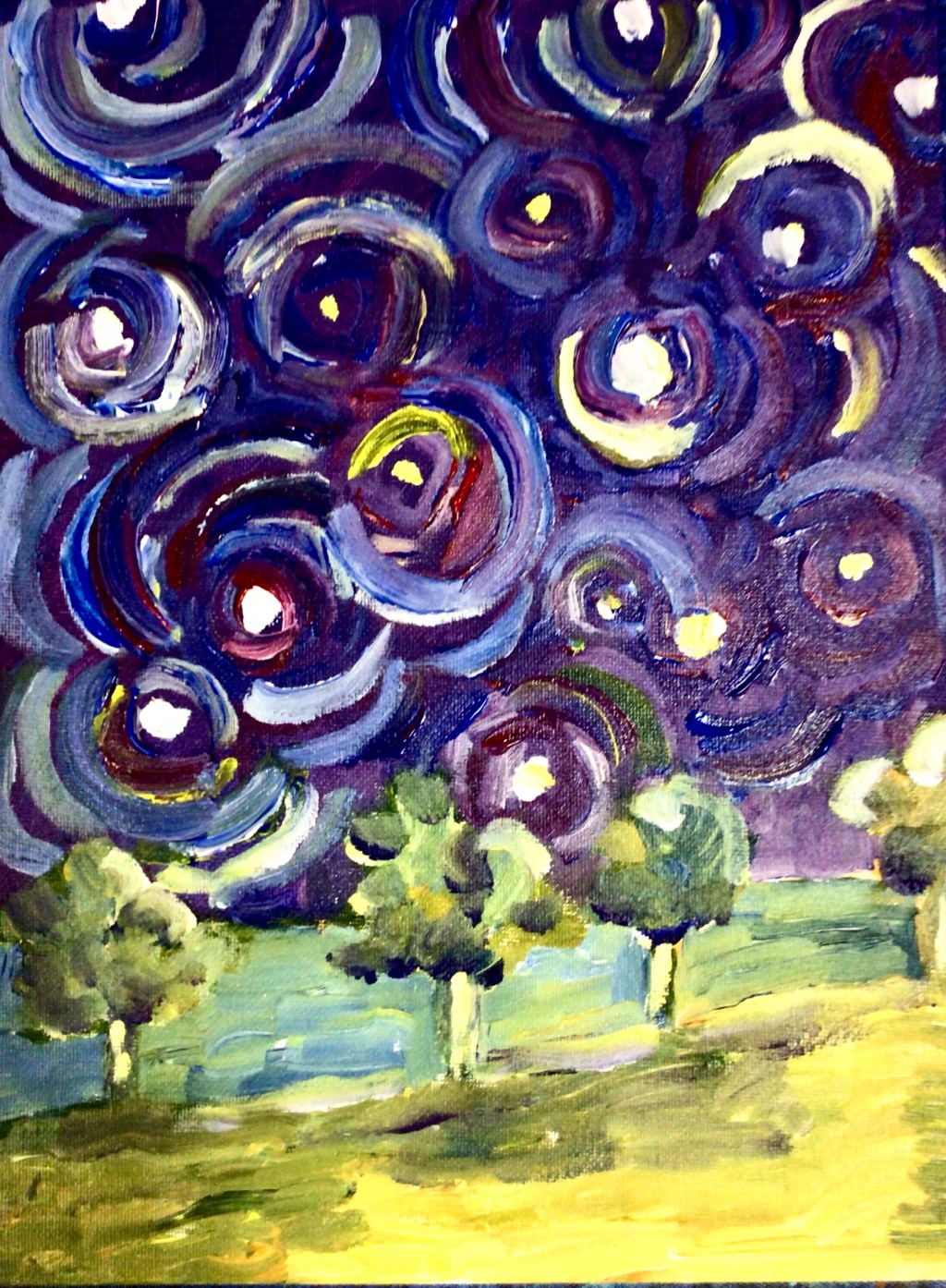
This is the Way

adult learning, art, beauty, change, Children, Creativity, Faith, Holy Spirit, Imagination, inspiration, ministry, mystery, nature, Painting, purpose, Reflection, risk, shadows, Socrates, Spirituality, vision

Are we our works? Are we valued by our works? Is work a noun or a verb? The child in me asks these questions until the parent in me wants to answer, “I don’t know. Go ask Alexa!”

Alexa Meme

We’ve all been there with the rug rats of our families and kinfolks. Children are curious and for this we’re grateful. This incessant questioning is their way of learning about the world. It’s altogether better than a puppy’s chewing on every new object it comes across. If families are to encourage their child’s interest, they get them a library card so they can have internet access and books to read, and they answer as many questions as possible. If they don’t know the answer, “Go look it up in Google or the encyclopedia.”

In ancient Greece, Socrates taught by asking his students questions, a technique we call the Socratic Method. Some of us teach art in this way also. When we see the student at a stopping point, we teachers ask, “Are you having a problem and not figuring out a solution?”

Raphael: School of Athens , Vatican City, 1509-11.

The student can usually point out what they want to change on their work, but they don’t have the experience or prior learning to drawn upon to solve it. For instance, if the flower petals all look flat because they’re painted in one color, the beginning student knows this doesn’t look right, but they need a trained eye to point out the variety of values in the petals. Once they see the gradation of light to dark, it’s never again unseen. We know it’s there.

Teachers can point out the range of values from dark to light that make up the visual vocabulary of shading a two dimensional image so it looks like a three dimensional shape. Students can learn this technique and master it over time. Mastery then becomes a matter of hand and eye coordination. In a sense, we have to lose ourselves in the subject matter so we can let its energies enter into our hearts and minds, and quicken our hands. The rest is a matter of practice and learning how our egos can quit controlling the outcome.

Old Farmland off Higdon Ferry Road

The spiritual writer and Jesuit priest Richard Rohr speaks of the three eyes in his book, The Naked Now. The first eye grasps what the senses can understand, the second eye understands the science and poetry, while the third eye is aware of all of the above, but especially how all things connect as part of God’s great mystery. When we enter into this “now,” we’re present not only to God, but to all creation, as well as our own selves. This is the contemplative spirit for which the artist strives, and not just for the mastery of the materials or for the rendering of the subject matter.

If we allow this energy to move our hands, does that mean our work also becomes part of us? If we baked a simple yellow cake out of a box, we might not ask that question. When we start decorating a cake made from scratch and adding frillies of frosting, then we start identifying with the cake. Should someone smash the cake enroute to the soirée, there’ll be hockey sticks to pay.

I remember almost fainting in Italy when I saw a glue blob on one of my delicate watercolor paintings, which had just been framed for an exhibition there. A stiff shot of some unknown alcohol brought me back to life. The framer made it good, for the glue was water soluble, so we could gently lift it up. I was more of a drama Queen in my 20’s also. I take things as they come these days. I also was more immature, for I didn’t separate my work from my identity.

Some say we are what we eat, so then are we what we create? Jesus had an answer in Mark 7:18-19 for those who thought certain foods were unclean, or forbidden to eat:

“He said to them, “Then do you also fail to understand? Do you not see that whatever goes into a person from outside cannot defile, since it enters, not the heart but the stomach, and goes out into the sewer?” (Thus he declared all foods clean.)”

That fancy dinner we ate two nights ago leaves us after a few cups of coffee in the morning. We don’t recognize it and most of us don’t even inspect it as we flush it down the toilet on its way out the sewage pipes to the sanitation station. Of course, only parents can get excited about their two year olds who manage to do their “business” in the toilet instead of in their diapers. I know I was one of those. If Facebook had been invented back in the day, I’m sure I’d have posted an update.

As we grow older, we enjoy making and crafting for the experience of the textures and the command of the materials. Children have fun pushing the paints, papers, and glue all around the surface of their artwork. Parents often look askance at the grey, scribbled messes their children excitedly present to them for the honored place on the refrigerator display, but these muddy creations are the result of a dramatic story of their child’s imagination. “Interesting, why don’t you tell me what’s going on here?” Is an adult’s best response in this situation.

Art Lesson: Cut a Snowman on the Fold

I’ve had kindergarten children meltdown because they had difficulty cutting a snowman on the fold. It’s hard to be five years old and live in a home in which the parents don’t want their children to make a mess. These children, as a result, have poor fine motor skills, have difficulty writing, and handling scissors. Even folding a piece of paper is tough. Then they miss the important information: hold the fold, and cut on the flaps. If they hold the flaps instead, they end up with two halves of a snowman. And a meltdown into tears.

“I’ll never be able to make a snowman! My snowman is cut in two pieces. Why can you make a perfect snowman and I can’t?”

Therapy Hat

This lesson always called for me to wear my therapy hat, and remind my five year old students I’d been making folded snowmen for a very long time and my first ones looked just like theirs did. There was hope for them. We just needed to go over the directions again and make one together. Sometimes we miss a step, and that’s ok. It’s just a piece of paper. It’s not like we took away recess from everyone forever.

Usually when we went over the directions again, I could remind them of the way to hold the fold and cut the flaps. Then they’d all be amazed at how easy the project was. “Everything is easier when you follow the directions.” They’d laugh and start decorating their snowman, all their meltdowns forgotten.

Most of us aren’t successful the first time we attempt a new experience. If we were all extraordinary artists right off the mark, none of us ever would get excited about Michelangelo, Rembrandt, or Picasso. If we could all pick up a musical instrument and play it well right off the bat, who’d have the need for civic symphonies or even bar bands? We’d all be happy making our own music. The truth is some of us not only have the interest and inclination, but also the will to spend not just hours, but years, honing our craft, until we sing our notes purely or paint with a master’s hand.

Woven Canvas: Greenway Park

If we all aren’t masters, we all can enjoy the journey if we learn to detach our egos from our products. When I wrote papers in seminary, before I opened up my graded work, I’d repeat the mantra, “I am not my grade. I am a daughter of the living God, chosen for God’s work.” Then I’d look at the markings on the inside. This helped me to remember who I was, whose I was, and what my purpose was. I was also two decades older than that fainting child in Italy.

As I would tell visitors to Perkins, “If your well-being is wrapped up in your grade average, you might want to rethink either that notion or choose another school.”
“Oh, really?”

“Yes, if you’re going on for a PhD, you’ll get over a 90 in your classes. The top grade for the Mdiv is 89. If you get any grade higher than that, the professor thinks you could do PhD level work.”
“That doesn’t seem right,” they said.

“It’s a curve. If you go elsewhere for a DMin, those schools know Perkins’ grading system. Think of it as an A at 89 and don’t worry about it.”

Some people can’t restructure their world so their 89 is an A, but if that’s the system they’re in, that’s how it is. If they have in their mind nothing less than a 95 will validate their worthiness, then if they do their degree work at Perkins, they’ll always be up against the immovable wall. When they go out into ministry, they’ll discover everyone they meet has a grading system. That can drive a person crazy, unless he or she decides the ultimate approval they seek comes from the one who says, “Well done, good and faithful servant.”

Likewise, if we’re beginners in art, we have to suspend our criticism of our imperfections in our work. Instead, we reframe our critiques into “areas which need improvement.” Even now, after decades of working in my studio, I’ll let a canvas rest near me in my living room. I’ll eye it in different lights, until I hear it call my name. I’ve totally repainted some of these, and others I’ve destroyed. A few I leave alone. All of us will keep learning something new, both from our “good paintings “ and our “need improvement works.” Most likely, artists quit painting when they they think they have nothing left to learn, or when they lose the courage to risk moving into the unknown mystery, as it’s written in 1 Corinthians 2:9—

“What no eye has seen, nor ear heard, nor the human heart conceived, what God has prepared for those who love him.”

Paul also writes in Romans 8:27-28,

“And God, who searches the heart, knows what is the mind of the Spirit, because the Spirit intercedes for the saints according to the will of God. We know that all things work together for good for those who love God, who are called according to his purpose.”

Poverty Point World Heritage Site, Louisiana

So we too ask the Spirit to work more in us and free us from attachment to our need to be loved and affirmed by our works, since God is already working for good for those who love God and who are called according to God’s purpose. As we drop our old ideas and preconceived notions of the good, we become open to God’s good and God’s purposes. Releasing control to God is an act of humbleness and faithfulness, both of which are contrary to our modern belief in self-actualization and autonomy. This is the way of the mystic, or the contemplative, and the inspired artist.

Gastrointestinal Transit: How Long Does It Take?
http://www.vivo.colostate.edu/hbooks/pathphys/digestion/basics/transit.html

The Naked Now: Learning to See as the Mystics See – Kindle edition by Rohr, Richard. Religion & Spirituality Kindle eBooks @ Amazon.com. (Also available in iBooks, for more money)
https://www.amazon.com/Naked-Now-Learning-See-Mystics-ebook/dp/B011H5IKU8/ref=sr_1_1?crid=2GSFR51RZ25BM&keywords=richard+rohr+naked+now+ebook&qid=1645568603&sprefix=richard+rohr+naked+now+ebook%2Caps%2C107&sr=8-1

Paper Valentines

Abraham Lincoln, adult learning, art, brain plasticity, butterflies, Civil War, Creativity, Faith, Gettysburg Address, holidays, Love, Super Bowl, Valentine’s Day

Does anyone else find it unusual that Lincoln’s Birthday, the Super Bowl, and Valentine’s Day all fall within a single three day period? When I was young, we celebrated every holiday possible in public school, since these were teaching opportunities. I always loved them for the art periods and the story telling events. Not that I was deeply invested in the facts of history, but I cared about the personalities and the principles of their lives’ work.

This meant February focused on Lincoln and Washington both. Of the two, I always preferred Lincoln, perhaps because my teacher had our class memorize the Gettysburg Address. I was entranced by the thought Lincoln wrote this speech on the back of an envelope on the train ride out to that fateful battle field. It wasn’t true, but that’s just one of the hallowed myths of history we’ve spun about the giants of the past.

Of course, we always celebrated Valentine’s Day in the classroom with decorated boxes or bags for exchanging cards. The rule in class was to bring a card for everyone and leave no one out. No one meant no one. The cards didn’t have to be fancy, but everyone needed to get a card, handmade or bought. Of course, we always had some parental snack provided. I think we overdosed on sugar back in those days.

When we’re young, we don’t really have a sense of history, so we don’t see the connections from one act to the later consequence of another. It takes time for young people to mature, process, and grasp the connections between past, present, and future in order to navigate their place in time. When someone says the past is meaningless to them, they’ve built their house on a foundation of sand. The first lesson I always taught in art class was “Attitude, Behavior, and Consequences.” The second lesson was “Clean up after yourself and leave the art room good for the next group.” That first lesson was about how individual actions affected their own work and grades. The second was about community responsibility. And some folks thought I was just letting the kiddos have fun with colors, scissors, and glue.

But back to this Trifecta weekend. The very first Super Bowl was January 15, 1967. I’ve slept several decades since then, so I don’t remember if I watched it. Super Bowl XXXVI, was the first one held in February, but all of the prior February games have been held in the first week until this LVI event. That’s 56, for the non Romans among us. This is quite a streak, but all streaks are meant to be broken. This is how we get the great Trifecta of Lincoln, Super Bowl, and Valentine’s all in a row.

Scrap Paper Valentine: Civil War Era

Back during the Civil War, supplies were scarce. The supply chain nightmare isn’t a recent issue, for during the war, the South lacked supplies due to the Union embargo for imports and their crops were confiscated by both armies as they marched through the areas near the battlefields. One of the touching homemade valentines of the era was made in 1862 from scrounged paper by the Confederate soldier Robert King for his wife. The basket weave folded card, when opened up, showed two crying lovers, a particularly sad foretelling of his death.

Our class brought scrapbook papers, doilies, craft store items, and leftover crafting materials from past projects. All crafters seem to be packrats, but we also share our largess with others. None of us can say NO to the offer of free stuff. Our materials filled one whole table, so settling on a few items was our first choice. Sometimes we get overwhelmed with too many choices, but our group has learned to go with what strikes their fancy first. Digging through everything to look for a better option often is just a waste of time in a short class. Go with what calls your name. As my daddy would say, “Decide to fish or cut bait, honey. The day’s not getting any longer.”

Lauralei’s Valentine

As Lauralei was working on her Valentine, Jerry came into the room. Immediately she called out, “Don’t look—go away!” He laughed, and took a wide berth around our work tables. If you want to surprise someone, it’s hard if they’re also working at the church. I like the energy of the patterns on her Valentine. Love is never a static thing, even if it is steadfast and forever, but it’s constantly reaching out and pulling us toward one another.

Gail’s Valentine

Gail added another dimension to her work by bending the central heart image so it would stand up. This gave it depth and made the heart into a basket from which the butterflies could exit into the open space around it. That took an extra level of thought.

Outside of Gail’s Valentine

The birds and butterflies on the outer cover of Gail’s card are another variation on the theme.

Mike’s Valentine

I can always count on Mike to fill the surface with texture and color. He has no fear whatsoever. Exuberance is his middle name. He claims sarcasm is his love language, but that’s just his outward personality speaking. The inner messages on his card to his lovely wife tell her how wonderful she is and how glad he is to be with her.

Cornelia’s Valentine

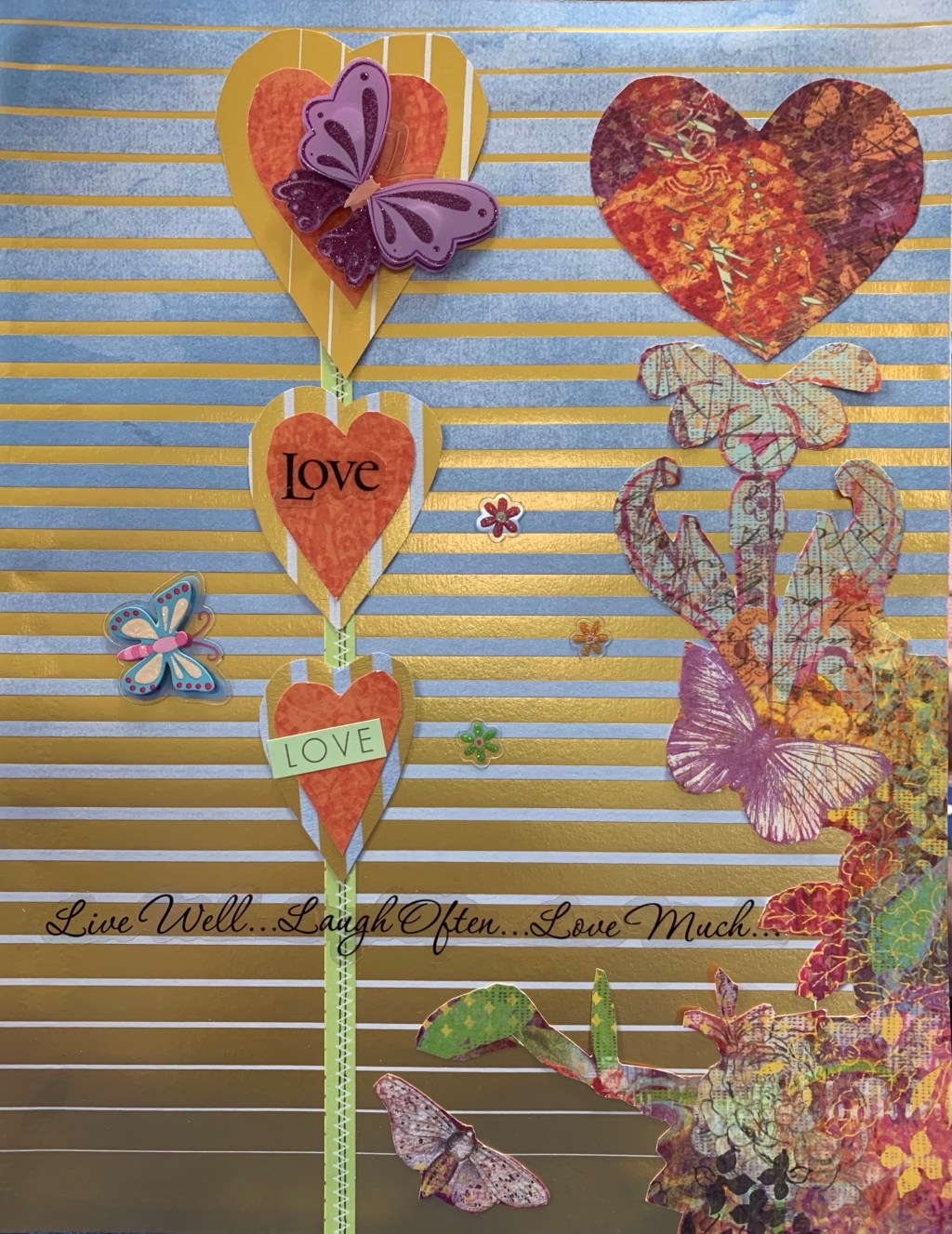
I made mine as a landscape, rather than a card. The message, “Live, Laugh, Love” is a variation on a message my grandmother often wrote. I’ve always liked both butterflies and flowers, for they remind me both of the beauty and the transient nature of life. My Valentine is for those of blessed memory, as well as for those I love today, and maybe even for those I’ll love in the days to come.

“Love never fails, But where there are prophecies, they will cease; where there are tongues, they will be stilled; where there is knowledge, it will pass away. For we know in part and we prophesy in part, but when perfection comes, the imperfect disappears…. And now these three remain: faith, hope and love. But the greatest of these is love.”

The verse above is an example of historical consciousness in the arena of faith. All religions “take up the past by telling stories and making visible the arches that span over all times and join them together into a unified whole,” just as writers observe the facts of history and draw conclusions about the streams of history and the direction in which they flow. Yet we humans are also capable of forgetting, sometimes because we don’t want to remember and other times because we can’t recall events due to illness, lack of sleep, or inattention. We depend on trusted others to build the narrative for us, so we need to take care from whom we receive our instruction.

On this Super Bowl weekend, much will be made of the heroic efforts of the athletes on the field. There’ll be hype galore, costly commercials, illustrious and notorious folks in attendance for sure, and excessive eating and drinking across America. It may be a different game day than what we’ve been accustomed to, but then as Bob Dylan sings, “The times, they are a-changing.” If the NFL is writing a different narrative, it’s only because they’re finally including voices once suppressed. We can know the facts of history, yet fail to have an historical consciousness, just as we can identify the different styles of art and put them in historical order, but fail to have an aesthetic appreciation of the art itself.

President Lincoln delivered the 272 word Gettysburg Address on November 19, 1863 on the battlefield near Gettysburg, Pennsylvania on the occasion of the dedication of the national cemetery for the war dead. Overall, casualties in that three day battle were enormous. At least 25,000 Confederates fell, representing nearly one-third of its army. One-third (12 out of 53) of Robert E. Lee’s generals were killed, wounded, or captured. More than 20,000 Union soldiers fell; General Meade’s subordinate command also suffered heavy losses. Lincoln helped to reframe citizens’ thinking about the cost and nature of this war.

The Super Bowl extravaganza will last nearly four hours and play $500 million in advertisements (about 70 in all),not to mention a preface of more than three hours of entertainment. Compare that to Lincoln’s speech, which lasted three minutes at most:

“Fourscore and seven years ago our fathers brought forth, on this continent, a new nation, conceived in liberty, and dedicated to the proposition that all men are created equal. Now we are engaged in a great civil war, testing whether that nation, or any nation so conceived, and so dedicated, can long endure. We are met on a great battle-field of that war. We have come to dedicate a portion of that field, as a final resting-place for those who here gave their lives, that that nation might live. It is altogether fitting and proper that we should do this. But, in a larger sense, we cannot dedicate, we cannot consecrate—we cannot hallow—this ground. The brave men, living and dead, who struggled here, have consecrated it far above our poor power to add or detract. The world will little note, nor long remember what we say here, but it can never forget what they did here. It is for us the living, rather, to be dedicated here to the unfinished work which they who fought here have thus far so nobly advanced. It is rather for us to be here dedicated to the great task remaining before us—that from these honored dead we take increased devotion to that cause for which they here gave the last full measure of devotion—that we here highly resolve that these dead shall not have died in vain—that this nation, under God, shall have a new birth of freedom, and that government of the people, by the people, for the people, shall not perish from the earth.”

Go Bengals!

Joy, love, peace, and Go Bengals!

Cornelia

Super Bowl Winners and Results – Super Bowl History – National Football League – ESPN
http://www.espn.com/nfl/superbowl/history/winners

The Gettysburg Address
https://www.lincolncollection.org/discover/ask-an-expert/qa-archive/did-lincoln-write-the-gettysburg-address-on-the-back-of-an-envelope/

https://rmc.library.cornell.edu/gettysburg/good_cause/transcript.htm

View of Historical Consciousness in Youth. Theoretical and Exemplary Empirical Analyses | Forum Qualitative Sozialforschung / Forum: Qualitative Social Research
https://www.qualitative-research.net/index.php/fqs/article/download/904/1974?inline=1

Simplify, Simplify, Simplify

adult learning, art, bottles, butterflies, Creativity, Faith, flowers, Icons, Imagination, nature, Painting, pre-diabetes, purpose, risk, Stress

When faced with a complicated task, what’s the first thing we need to do? I usually vote to have a cup of coffee and sit down to think about it. Some may call this procrastination, but I call it contemplation. I need to settle my mind, focus my senses, and discern the most important parts of my task. This is necessary, for if I were cutting off a limb from a tree, I’d sure want to get my body placed on the part of the tree that wasn’t going to fall. Keep the most important thing the first thing in mind is always the best practice.

Manet: Chrysanthemums and Clematis

Once our youth group from church went to the Appalachian Mountains for a mission work project. Most of our kids came from poor homes and we arrived in a single church bus, which for some reason the license plate hadn’t got renewed. The group even let me be the navigator. Only by the grace of God did we arrive, for I’m known to be directionally challenged among all my friends.

The other group who attended this session with us came with another truck, complete with all their own tools. Our children were despondent at first, for they felt they couldn’t “compete.” Our adult team leaders reminded them, “We’re here to do the work God has called us to do. This isn’t a contest. Everyone has value and all our work counts toward the greater good.”

Cross Stitch Motto from my Mother

That big, well provisioned group got the job of replacing a front porch and a roof. They divided up into a porch and roof team. The porch team finished first, but then they got mad when the roof team had to destroy their work to put the roof on right. They had failed to talk out an overall plan first. If the roofers had started on the porch end, then the porch team could come behind them and work would progress along properly.

This is called team work in groups. Our small group was experienced in talking out the process before we began working, so we knew the consequences of our actions. “If…then” is always an important consideration, especially in our artistic endeavors.

If we’re familiar with the work of Dr. Stephen R. Covey, he talks about putting first things first by organizing and executing around our most important priorities. We live and are driven by the principles we value most, not by the agendas and forces which surround us. Pleasing others isn’t God’s purpose for us, but to do God’s work of loving all and serving the least of God’s people.

Spider Plants in the Classroom

When we look at a landscape, we have to select the primary image to emphasize, and relate the other forms around this important image. In the still life, we might drive ourselves crazy trying to paint every single petal, pistil, and leaf of some flowers in a vase, or we could find the most important shapes, which give us enough visual cues to let the viewer say, “Yes, this is a flower painting.” Not every leaf needs to be given the same attention, since our goal is to make a painting, not a rendering of the subject before us.

Cornelia’s Spider Plant Painting, 2020

Some might ask, “Why do we return to this well worn theme from time to time?” The best answer is we continue to learn from our repeated exposure to this theme. For another, our drawing skills improve over time, so we can see our progress. Also, our ability to handle the paint gets better, so we are more comfortable with mixing our colors and planning our composition. Besides, the great artists over the centuries have found this discipline fruitful, so if it benefited them, most likely we’ll get some good from it also. My nanny’s wisdom comes clear here: “What’s sauce for the goose is sauce for the gander.”

Beauty Berry Plant

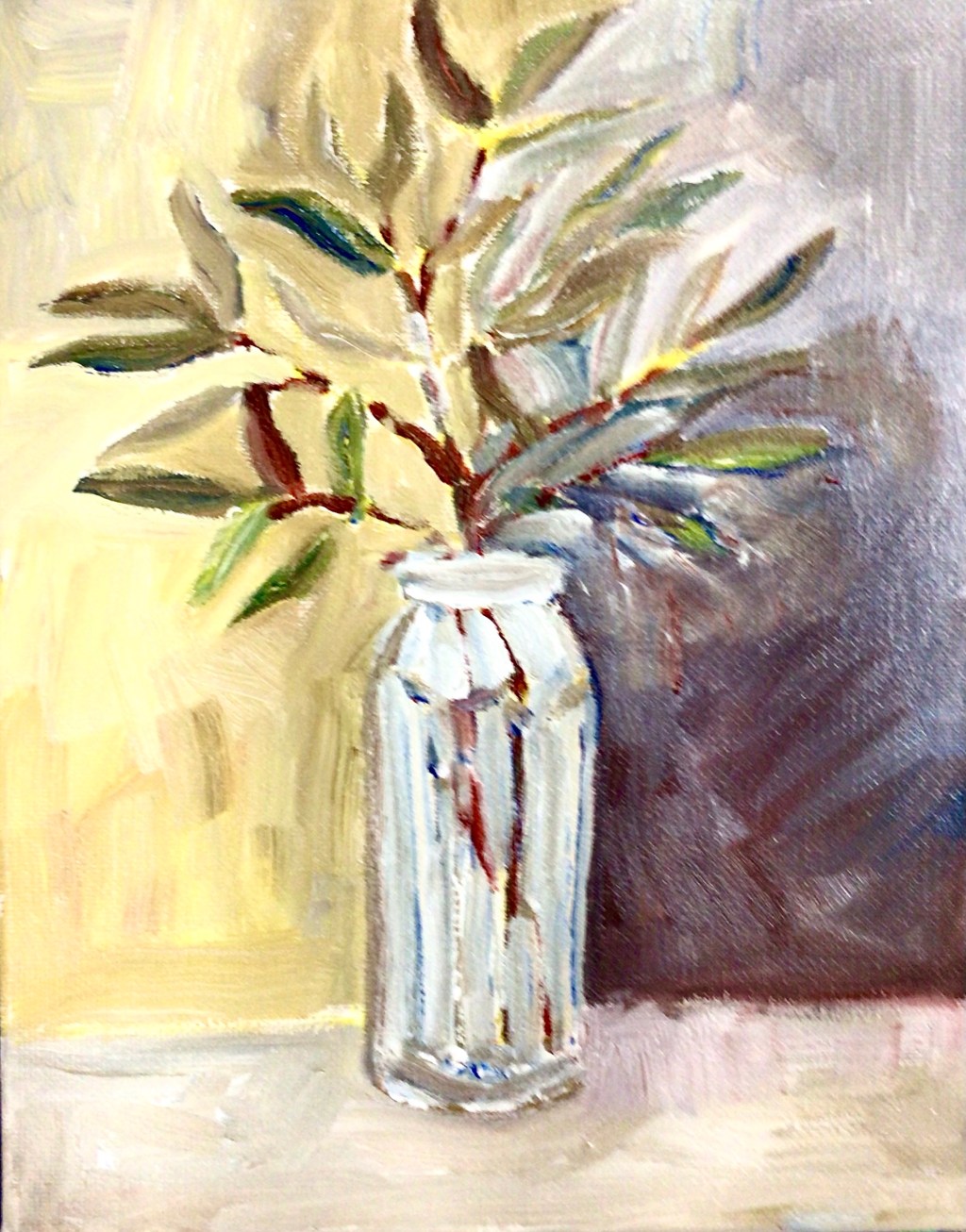
When faced with so many shapes of leaves, a central stem, and a glass vase with ridges and reflections, our untrained brain wants to explode. We have to catch our breath, inhale, and exhale to cleanse our nerves. This is the point we begin our first simplification. If we note the proportions, the leaves are about the same height as the vase, and we can set the vase on a plane (the table) so it has depth. We can mark these off on the bare canvas with light pencil or a light wash of yellow paint. We’ll paint over it later.

Cornelia’s Beauty Berry Painting, 2020

The next step of simplification is to get the basic lines and shapes down. These don’t have to be perfect, but give you an idea of where you’re going to paint. If you do this in a pale wash, you can paint over it with the heavier colors in the more exact form. In sculpture, Michelangelo was known for chipping away from the stone everything that didn’t look like his subject. In painting, we add color, tint, and shade until it looks like our subject.

Cornelia’s False Wild Indigo

The final stage of simplification is to get the background in. Here you can paint up close to the individual shapes and “clean up the edges.” You can add highlights in places to bring out the foreground shapes, and add a shadow in the background for variety. By this time, the vase ought to be dry enough to put highlights on it also. Notice the leaves aren’t all the same color and they don’t bend the exact same way. Nothing in nature is perfect, for each part grows according to the amount of sun, shade, and nutrients it receives. As one of my old teachers reminded me, “Nature has no straight lines, so you never have to worry about that.”

Daffodils from 2019

To show you how sustained effort and intentional looking over time can helps student’s work improve, I offer the following examples from February, 2019, and September, 2020. One was the spider plants and the other the daffodils. I’m not sure who did these, so I won’t identify them.

Daffodils from 2019

I merely throw these in here because Gail and Mike have been working with me for several years. If practice hasn’t yet made perfect, it certainly has made improvements, and that’s all anyone can ask for. After all, we’re not asked to be perfect, but to go on to perfection (in love of God and neighbor).

Spider Plants from 2020

For history buffs a side note. Wild indigo is in the genus Baptisia, which derives from the Greek word, βάπτω, which means “to dip” or “immerse,” just as our baptism (βαπτίζω) does. North American indigenous peoples and early settlers would extract yellow, brown, and green dyes from the leaves and stems of wild indigo, notably blue false indigo (Baptisia australis) and other species. Indigo dye was extracted from yellow wild indigo (Baptisia tinctoria), but it proved to be an inferior source compared to the treasured true indigo (Indigofera species).

For years, wild indigo remained an obscure historical relic, its ornamental and ecological contributions undiscovered and under appreciated. Yet, in the springtime, wild indigo produces tall spikes of pea-like flowers that rise above the gray- to blue-green three-lobed leaves to provide nearly a month long display of color. The flowers sustain bumblebees and other winged pollinators, while the leaves feed the larvae of a variety of butterflies that include the wild indigo duskywing, frosted elfin, eastern tailed-blue, silver-spotted skipper, and various sulphurs. If you want to encourage butterflies in your garden, this is a hardy, drought tolerant, and deer resistant plant.

Gail’s Wild Indigo

Gail found the plants with their unique seed heads on a hike last week. This subject matter was received with more joy than my suggestion of apples. Evidently, what was good enough for the great master Cezanne is an acquired taste for my students. I might need to bring apple pie to soften them up. I’m not above bribery for a good cause. Besides, pie would be a great still life. Gail got a very detailed drawing of the leaves, the vase, and the grouping’s placement on the table. She sketched in the counterbalanced stick with its mossy growth. This was the quickest I’ve seen her work, for she’s usually very deliberate in her choices.

Mike’s Vase of Leaves

We had a full house last Friday, so Mike sat at a different table. He had to paint with the added burden of looking over his shoulder periodically to check his work. He began to paint more from emotions than from sight, which isn’t a bad choice. As long as his work carries enough of the vocabulary of the image to speak its message, he’s good with it. It’s the energy, the experience of painting, and using his mind to solve a problem in his own creative way that engages his interest. So if his painting looks “less real” than Gail’s, it doesn’t mean it’s less successful. He began from a different place, so his destination is also different.

Sally’s Vase of Leaves

A new member of our group, Sally is experimenting with techniques and tools, as well as the paint itself. This week she came with heavy body Liquitex paints, the professional quality paint, which has more pigment than binder. She was so used to the thin bodied paints, however, she watered down these excellent colors. When she asked why they weren’t working like she thought, I pointed out, “You’re supposed to use them straight out of the tube, thick.” This is why we have a group session, so we can learn together. Sally also had a new fan brush, which she used to make brown decorative marks all over her canvas. “I just wanted to try it!” Now that she knows, maybe she’ll plan ahead. I really like the swaying energies of her leaves. They’re happy and full of life. If this were in bright colors, Matisse would be proud.

Lauralei’s Vase

Lauralei brought an interesting solution to our subject this past week. The clear vase was a little intimidating, so she, like several others, colored it solid. When we first learn to swim, we want the security of water wings or the proximity of the edge of the pool. We all take small steps before we take bigger steps. She got the stick and fringed moss down and the many leaves of the plant.

Making all these decisions takes a lot of energy. Our brains use about 20% of our calories, so if we’re engaged in a new challenge, our blood sugar can dip if we’re not careful. If we aren’t aware of this, we can run out of energy or make careless choices. As someone who has prediabetes, I get low blood sugar easily. Stress and excitement can cause my blood sugar to dip. I always bring a small snack as well as eat a good breakfast with whole grain complex carbohydrates, like old fashioned oats. That snack is important, since I test my blood sugar before I drive home.

I’ve learned the hard way if my blood glucose reading is under 80, it’s falling and my driving skills will be going south too. I usually know I’m having trouble, for I can’t string two thoughts together and I begin to overwork my painting. I can’t make the good decision to stop while I’m ahead. Not everyone has this problem, but learning to recognize when you’re tired or just painting with no purpose in mind, is also an acquired skill. Taking care of our bodies so we can fully enjoy exploring a new adventure is a gift we can give ourselves. We only have one body in which to live out God’s purpose for our lives.

Dusty’s Icon of Vase and Leaves

Dusty concentrates well and gets a good shape on his canvas before he sets out to paint. I can’t read his mind, but it seems as he draws, the steps he needs to paint his image come into his mind. This is contemplating at a deep level. It’s not surface thinking, but an inner, deep knowledge that percolates up from within. I mention it’s an icon, for the tablecloth is tipped upward as if it were a background, not a flat plane on which the vase sits. This isn’t something he did by choice, since we haven’t done a lesson on perspective together. In the language of icons, the four cornered shape represents the world and its cardinal directions, or all creation. So we have one plant and all creation, as Paul said to the Romans (8:19-21):

“For the creation waits with eager longing for the revealing of the children of God; for the creation was subjected to futility, not of its own will but by the will of the one who subjected it, in hope that the creation itself will be set free from its bondage to decay and will obtain the freedom of the glory of the children of God.”

We’ll take Friday, February 4, off due to the frozen roads. On February 11, we’ll do paper Valentine collages. Y’all stay warm and safe. Eat hearty soups and enjoy the beauty of the snow.

Joy and peace,

Cornelia

Manet: Chrysanthemums and Clematis in a Crystal Vase, 1882, oil on canvas, Musée d’Orsay, Paris, France.

The 7 Habits of Highly Effective People®: Habit 3 – FranklinCovey
https://www.franklincovey.com/habit-3/

Wild or False Indigo | Home & Garden Information Center
https://hgic.clemson.edu/wild-or-false-indigo/

The City

adult learning, art, city, cognitive maps, Creativity, hope, Imagination, inspiration, Painting, pandemic

As an itinerant Methodist pastor I, along with my sisters and brothers, have had the privilege of answering God’s call to minister in different cities and towns. Sometimes I questioned the wisdom of the Holy Spirit working through my district superintendents and bishop, but I wasn’t alone in this. Other clergy have wondered why they were sent to “exile cities, ” just as our congregations often wondered why the bishop sent them the very last person at the bottom of the clergy bucket.

The prophet Jeremiah spoke to the people taken from their homeland into exile in Babylon after the fall of Jerusalem in 587 BCE:

“But seek the welfare of the city where I have sent you into exile, and pray to the LORD on its behalf, for in its welfare you will find your welfare.” (29:7)

God has a way of putting us where we need to be, just as God has a way of providing the leaders we need. Maybe not the leader we want, but the leader we need. Also maybe not the location we’d put at the top of our bucket list, but the place where God needs us to be in this present moment.

Making a painting has some of this same expectation and disappointment. In class we had the inspiration of “The City.” We don’t paint just the shapes, but also the emotions we feel about the subject matter. If we like the city, we’ll respond well, but if the idea of the city is distressing to us, we might not even be able to work at all. If I don’t have sufficient caffeine by 10 am, my creative juices don’t flow swiftly.

City in the Dark of Night

This was one of the inspiration images. It may be best understood as, “Who knows what evil lurks in the hearts of men? The Shadow knows!” Also a poem, “The Cities Inside Us,” by Alberto Ríos, says “what the Shadow knows:”

We live in secret cities
And we travel unmapped roads.

We speak words between us that we recognize
But which cannot be looked up.

They are our words.
They come from very far inside our mouths.

You and I, we are the secret citizens of the city
Inside us, and inside us

There go all the cars we have driven
And seen, there are all the people

We know and have known, there
Are all the places that are

But which used to be as well. This is where
They went. They did not disappear.

We each take a piece
Through the eye and through the ear.

It’s loud inside us, in there, and when we speak
In the outside world

We have to hope that some of that sound
Does not come out, that an arm

Not reach out
In place of the tongue.

Overpainted Houses

These brightly colored houses are the last layer of a heavily overpainted canvas. Underneath the house shapes with their gabled roofs, we can still see the faint images of rectangular buildings. The artist also scratched through the paint in places for texture and stumbled colors on top of other colors. This technique takes more time than two hours, since the bottom layers need to dry before the upper layers are added. The quality of paint is different also, since thin paint isn’t able to handle this type of work. It yields a much livelier and more optimistic image than the dark one above.

Seaside Houses

This image has not only the brightly colored houses of a seaside city, but also their reflections in the water below. The sky is broken up into planes of various tints of blue. There’s three distinct sections: foreground, middle ground, and background. It’s located in a real space, even though it’s rendered in flat and decorative colors.

Dusty’s Buildings on the Lawn

Dusty painted his buildings on a green lawn for a nice landscape setting. While he didn’t have time to render any details in our short class time, I could tell he was thoughtful about the placement of his colors and shapes.

Mike’s Atmospheric Sky and Cityscape

I asked Mike what his Myers Briggs Type was, since he has no trouble making a plan and executing it. My guess his first and last letters are E and J, and most likely S and T in the middle. Not everyone can make a plan right away, but some have to work on the canvas and let the painting begin to call itself into being. It becomes more of a conversation between the artist and the artwork.

Mike enjoyed bringing to life the night sky with its clouds and full moon. The mystery of a city and its buildings’ windows blazing with light in the night must be a memory he holds dear.

Lauralei’s City Under the Clouds

Lauralei’s city had some moody, overhanging clouds. The buildings underneath were transparent and fragile. It was as if they were a glass city, and a threatening storm cloud hung over the city. Worry and stress can wear a person down. I know anxiety is something I’ve had to deal with my whole life. “You can’t cross the bridge until you get to it,” my mother always said. My Nannie would chime in, “Today’s trouble is enough. Don’t go borrowing trouble from tomorrow!” It’s best sometimes to put the work down and try again after giving our concerns over to God:

“The prayer of the humble pierces the clouds,
and it will not rest until it reaches its goal;
it will not desist until the Most High responds.”
~~ Sirach 35:21

Sally’s City

Sally would have liked to work some more on last week’s painting, but tried this project instead. She’s still learning the limits of her paints, so this is why the building on the left has one green dot darker than the others. It was painted into the wet ground, so it picked up that color and dulled it. I saw that move out of the corner of my eye and suggested she let the building dry first. If we work all over the surface, or “do the big before the small,” we have a good chance our colors will stay clean and fresh. If we want grayed colors, we go ahead and paint into wet areas. The orange and blue complementary colors contrast nicely with the grays and violets.

Gail’s Copenhagen Painting

Gail used a photo to do her painting at home while under quarantine. She made a good rendering. I’d suggested to the group the week before we would do a city scene, so if they had a photo on their phone, or a postcard from a vacation, they were welcome to bring it. I guess the dog ate everyone’s homework! Except for Gail.

Gail’s inspiration image and painting
Cornelia’s Cognitive Map—1

My work went through several stages, rather like our continuing COVID pandemic. The map covers the area between our two city hospitals, National Park Medical Center and CHI St. Vincent. The former is at 100% occupancy in its ICU beds and the latter is at half capacity. National Park’s regular beds are almost 80% full, while CHI’s are about 55% full. In class time, I laid down some base colors according to a pattern from Google maps. Then it was time to pick up, clean our tools, and go home.

Cognitive Map—2

At home, after I recovered from a weekend of four exciting football games, I took several of my oldest fabric face masks, which are inadequate for our latest highly transmissible omicron variant. Abandoned masks are a common sight, joining the rest of the urban detritus that sully our city sidewalks now. I also added some of my grandmother’s crocheted rickrack for one of the main streets. I overpainted the bright colors with dark blue colors. Somehow rolling into the third year of this pandemic has sucked some of the energy out of me.

Cognitive Map—3

The dark night of COVID couldn’t last long for me, for I always have hope. I picked up my iridescent colors: silver, gold, and bronze. Mixing these, as I scumbled them over the base colors, I thought of the Psalmist (104:30):

“When you send forth your spirit, they are created;
and you renew the face of the ground.”

Cognitive Map—4

I wasn’t truly satisfied until I pulled the gold, silver, and bronze mix over all the whole surface. Only a few of the bright colors from the original under painting remained as key notes to bring the eye around the canvas. I think I might have to make more three dimensional areas in another work. This one doesn’t have quite enough.

When I taught young children, I used to remind their parents children have a different purpose in art than adults do. Children are excited about the process, while adults want a finished image. Kids will push a work beyond its “boundary” just to experience the activity of making art, while adults often hold themselves back for fear they might go over the edge. We grownups need to have more of that childlike abandon, since going over the edge in art isn’t going to threaten life or limb.

This week we’ll paint from wildflowers. Drawing from our imagination is difficult if we haven’t practiced this skill. Drawing from an object we can see is much easier. We can look at it and sort out the basic shapes and lines. We can check the proportions to see if they relate to one another correctly. Sometimes we discover drawing from real life is actually just as hard as making something up out of our own creative ideas. Actually, everything about art is equally easy and difficult at one and the same time. We just have to relax and make the colors and shapes appear on the surface.

Remember the words of hope from Jeremiah to the captives in Babylon:

“For surely I know the plans I have for you, says the LORD, plans for your welfare and not for harm, to give you a future with hope. Then when you call upon me and come and pray to me, I will hear you. When you search for me, you will find me; if you seek me with all your heart, I will let you find me, says the LORD, and I will restore your fortunes and gather you from all the nations and all the places where I have driven you, says the LORD, and I will bring you back to the place from which I sent you into exile (29:11-14).”

Joy and peace,

Cornelia

The Cities Inside Us by Alberto Ríos – Poems | Academy of American Poets
https://poets.org/poem/cities-inside-us

COVID-19 (Coronavirus) Hospital Capacity in Garland County, Arkansas
https://data.progress-index.com/covid-19-hospital-capacity/arkansas/05/garland-county/05051/

Color Theory Paintings

adult learning, Altars, art, color Wheel, Creativity, Faith, Hilma af Klint, Imagination, inspiration, Ministry, mystery, Painting, shadows, Spirituality

Cezanne: Four Apples, 1880-1881, oil on canvas

Cezanne once said, “We live in a rainbow of chaos.” Perhaps he meant we’re surrounded by colors, in various and sundry shades, and through art, we try to find some order to this chaos, even if our resulting work seems outwardly disorderly. In his own lifetime, Cezanne was accused of being a madman, “afflicted while painting with delirium tremens.” His response was to shrug off the guardians of the Academy: “With an apple I want to astonish Paris.” He worked in isolation for a very long time, only gaining financial success in the last ten years of his life.

Jackson Pollock: Number 32, 1949, auctioned in 2018 at Sotheby’s

Another artist who broke ground is Jackson Pollock. When we view a Pollock action painting, we realize there’s actually an order to this chaos. The drips and pours are more like calligraphy and live in tension with one another. They vary in color, size, and energy, not unlike a song. The action paintings are not just “drip paintings,” but energies expressing emotions by means of fluid dynamics. This is why we don’t say, “My grandkid could do this.” People try to forge Pollocks and fail. Even Pollock had difficulty creating these unique works, the best of which belong primarily to a two year period when he refrained from his alcohol habit, which affected his depressive disorder.

As compositions, each of Pollock’s drip pictures simultaneously dissolves into a chaotic jumble of individual lines, while also coming together as a structurally uniform, whole field. We’re mostly used to works best viewed from a single fixed point, such as a High Renaissance painting. Instead, to view a Pollock, we must move across the whole surface, and look deep into the layers. His works draw their audience in to inspect the details closely, passage by passage, and at the same time overwhelm the viewer with their monumental size. Their coloristic and textural richness emphasizes the expansive surface, yet the elaborate and totally visible overlay of multiple layers of paint (and sand, cigarette butts, glass, and other materials) create a very real depth and space. It’s definitely not your grandchild’s artwork.

HANS HOFMANN: Elysium, 1960, oil on canvas, BLANTON MUSEUM OF ART

Hans Hofmann, a 20th C American abstract expressionist, once said, “Colors must fit together as pieces in a puzzle or cogs in a wheel.” Often we use the colors straight out of the tube, or we flail around trying to figure out which yellow and which blue will give us the shade of green we want to use. Experience is the best teacher, for learning how to see the colors of life is like solving a puzzle that doesn’t have a photo for a guide. Once we begin to recognize their composite colors, we begin to see the order in the midst of chaos. Then we have the cogs to the wheel and it will turn the next wheel in good order. Experience becomes our Rosetta Stone for decoding the other mysterious languages of color we hear around us every day.

Color Wheel with Neutral Grey at Center

One of the cues we’ve come to recognize in our painting class is the color of our brush wash water. If it’s a lovely neutral gray, like the center circle in the wheel above, we’ve balanced the warm and cool colors on our canvas. Most of our group in attendance chose colors from this wheel.

Paul Klee: Watercolor Word Study

We saw a number of color theory examples from history, including Paul Klee’s geometric watercolors, which vary from color blocks, landscapes, and written images.

Hilma af Klint: Primordial Chaos, Number 7

A little known colorist is the Swedish artist, Hilma af Klint, who was one of the earliest abstract painters. She developed a language, or visual imagery, to share the spiritual experiences she received during her participation in automatic drawing. As with many others of her era at the turn of the 20th century, she and her friends, in the group called The Five, mixed elements of traditional Christianity with seances and beliefs in a mystical guiding higher spirit. If she lived today, we’d likely call her beliefs “new age.” She also incorporated new advances in science for her time in her explorations.

Hilma af Klint: Altar Piece, Number 1

Her work for The Temple was heroic in size, with each of the 193 paintings measuring about 7 x 9 feet.These were completed between 1906 and 1915. The whole sequence can perhaps be understood as af Klint’s pursuit of an original “oneness,”or the basic unity which she believed existed at the world’s creation. She believed this integrity had since been lost, giving way instead to a world of polarities: good and evil, woman and man, matter and spirit. In her work after 1912, af Klint seemed to move stylistically away from techniques related to spirit channeling, such as the fluid lines of The Five’s automatic drawings. Her use of Christian iconography and geometric forms increased. By 1917, af Klint stopped producing art through a spirit altogether. Her 2,000 plus works are owned and administered by The Hilma af Klint Foundation in Stockholm, Sweden.

Dusty: Circle in Space

Dusty used a plastic plate to draw his circle. This plate served a secondary purpose as well: it was also his palette to mix his colors. “Art imitates life, even in abstraction.” He used the ruler to measure out equal pie shaped segments, and divided the background planes. I almost stopped him in the midst of his planning, but I wasn’t about to stop that train of thought. I could only admire it for its balance and symmetry. He mixed the shades of the colors, and filled in the spaces. Then he added a few “motion” marks to indicate the movement of the disc in the atmosphere.

Gail: Sun and Waves

Gail pulled a plastic French curve drawing shape out of her toolbox to make the unique shapes in her painting. The blue and green curves are the waves of the sea and the central oranges of the resulting negative shape is the sun above the water. I always appreciate her paintings, which connect to her love of nature and have a sense of order to them.

Lauralei: Geometric Shapes

I think I have this painting right side up. I followed the path of the brush strokes. Lauralei wins the prize for most different number of colors mixed on the palette. So often we get accustomed to using the same familiar colors over and over. Everyone had a café au lait colored interior two decades ago, then we all went white, and gray predominated for a while. Maybe soon we’ll paint our homes actual colors instead of following the crowd.

Mike: Rainbow Cross

Mike had this idea percolating in his mind before he came to class, but didn’t have time to work on it at home. As soon as he saw our inspiration works, he decided to follow his inner guide, which had opened this image to him. He took the ruler to mark off some guide lines, then focused on bringing this idea to life. The radiating energy bolts of dynamic rainbow colors coming from the cross remind us of God’s love in Jesus Christ for all things and all people. We’re also one in Christ and belong to the one family of God, no matter how we worship, or what our understanding of God is.

Cornelia’s First Stage: Light and Dark

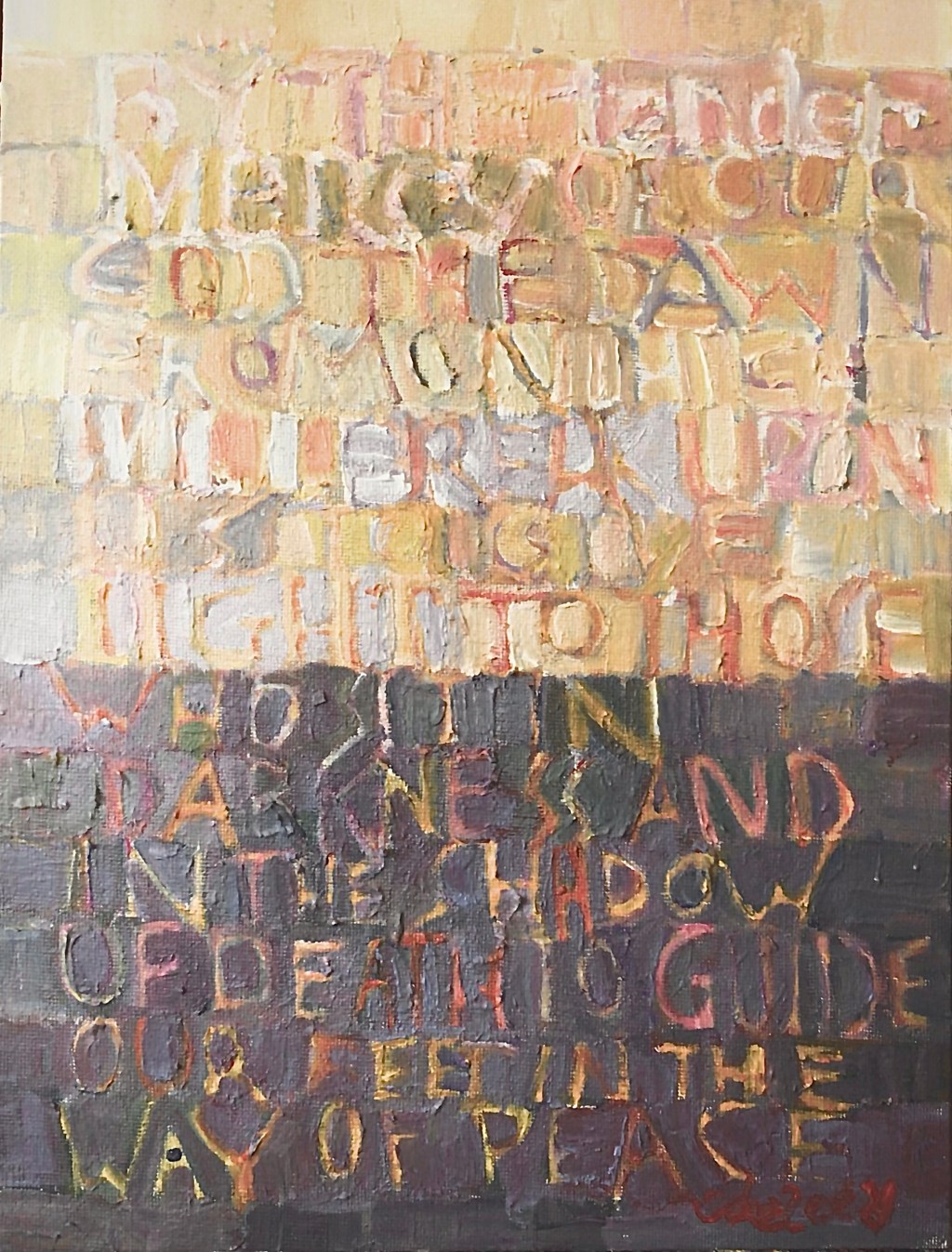
I began my little painting as a homage to Klee, but I didn’t get far in the 90 minutes we have for painting. I attempted to leave the negative space for the letters, but my brush was either too large or my painting surface was too small for the text I chose. I brought it home and worked another six or seven hours on it in the following week.

Cornelia’s Final Stage: Light and Dark

In the quiet of my studio, I realized I wasn’t paying attention to the emotions of the words, but only to the technical aspects of mixing the colors. I reread again my text from Luke 1:78-79:

“By the tender mercy of our God,
the dawn from on high will break upon us,
to give light to those who sit in darkness
and in the shadow of death,
to guide our feet into the way of peace.”

At this time, I saw the upper half needed to be light, while the lower part of the painting needed to be in darkness, since the two verses broke in this direction. This also gave my painting a landscape feel, as if the dark earth hadn’t yet seen the dawn of God’s light. As I painted, I began to lose the sense of the letters and the words, and the patches of color became more important than trying to keep the sentence legible.

I’m very impressed with this group, who’ve taken to heart my teaching mantra: Everyone will find their own voice if they engage in creative thinking and do the work. In the spiritual life, we’re saved by faith, but in art, we do find “works righteousness.” Amazingly, we get better the more we practice, especially if we have positive critiques and goal oriented lessons designed to help us grow. This provides fertile ground to awaken the spirit living within each of us, so that we can become co-creators in God’s renewal of the world. Maybe Hilma af Klimt was on to something special after all.

Our next class will be The City. We can either treat this as a lesson in perspective, poster design, abstraction, or a close up view of a building. Vacation photos are a good resource to bring, if you have a special place you want to remember. Antique photos are good too. Till next time, keep your hearts full of

Joy and Peace,

Cornelia

The Fascinating Physics of Jackson Pollock’s “Drip” Paintings
http://hyperallergic.com/526383/the-fascinating-physics-of-jackson-pollocks-drip-paintings/

Jackson Pollock’s Paintings: Characteristics of Drip Painting Technique
http://www.visual-arts-cork.com/famous-artists/jackson-pollock-paintings.htm

Paintings for the Temple | The Guggenheim Museums and Foundation
https://www.guggenheim.org/teaching-materials/hilma-af-klint-paintings-for-the-future/paintings-for-the-temple

Hilma af Klint The Paintings for the Temple 1906–1915 ARTBOOK | D.A.P. 2021 Catalog Bokförlaget Stolpe 9789189069114
https://www.artbook.com/9789189069114.html

Pomegranates and New Life

adult learning, Altars, art, change, Creativity, Faith, greek myths, Habits, incarnation, inspiration, Israel, mystery, New Year, Painting, Persephone, pomegranate, renewal, shame, vision

Pomegranates are one of those seasonal fruits which show up at my grocery store along with tangerines and other Florida citrus fruits. When I was young, these were rare and extraordinary foods, unlike today, when we have fresh fruits from all corners of the world all year long. The only difference is the cost: if they come from nearby, they cost less than if they come from afar. When my daddy was a boy, fresh citrus at Christmas were a treat indeed.

Those that want to go back to the “good old days” often forget food was sometimes hard to get, for earlier generations also had supply chain disruptions as well as economic collapses. In the Depression Era, food became a gift, for it was often hard to come by. Oranges had a secondary meaning, for since they had segments, they could be shared. The lesson was all gifts were meant to be shared with others.

Dante Gabriel Rossetti: Proserpina, 1874

In art, the paintings of the saints follow a certain iconography, or visual images and symbols used in a work of art. Once we learn this language, we can “read the icon” and understand its meaning. The pomegranate typically stands for the Christian church, for it has many seeds within one fruit. In earlier Greek and Roman mythology, the fruit stands for Persephone/Proserpina, the daughter of Demeter/Ceres, the goddess of harvest and agriculture. Pluto, the god of the underworld, abducted Persephone for his wife. Ceres became despondent and nothing above ground would grow. The Olympian gods arranged Persephone’s   release, but she eaten a few seeds of a pomegranate. Therefore, she could spend only part of the year above ground. This is how the ancients explained the seasons.

Pomegranate from Torlonia Catacomb

This story illustrates how Persephone became connected to the idea of dying and rebirth, so her symbol, the pomegranate,  also transferred over into Christian art as a symbol of immortality and resurrection. The term for appropriation of another culture’s symbol is syncretism. In a similar manner, in mythology, the dove was an attribute of Aphrodite/Venus; but in the Old Testament, Noah’s dove signified God’s covenant with mankind; and in the New testament, John the Baptist likened the dove to the Holy Spirit, which descended upon Jesus at his baptism. Painted pomegranates can be found on the frescoes of the Roman catacombs of Torlonia.

5th century CE church mosaic with pomegranates and fish, Israel

The imagery continued into the 5th century in a floor mosaic with a cross, stylized fish, pomegranates, and three chevrons representing Golgotha. Death on the cross is connected with the resurrection appearance of Christ and the disciples’ meal on the beach at Galilee.

Fra Angelico: Virgin and Child with Pomegranate, c. 1426

Fra Angelico’s Virgin and Child with Pomegranate is a beautiful example of a late icon. The Virgin of the Pomegranate takes its name from the pomegranate held by the Virgin and which attracts the attention of the Christ Child, who touches it. In this context the fruit has a double meaning: in the Virgin’s hands it refers to her chastity, while by touching it the Christ Child prefigures his own death and resurrection. It reminds us of Ephesians 5:25-26–

“Husbands, love your wives, just as Christ loved the church and gave himself up for her, in order to make her holy by cleansing her with the washing of water by the word.”

This iconography of chastity, cleanliness, and sacrifice was widely used in 15th-century Florence, where it interested artists such as Sandro Botticelli and Leonardo da Vinci.

Unknown Artists: Unicorn In Captivity, 1495–1505

The unicorn, a mythical animal to all but eight year old girls (and those of us who retain our eight year old hearts inside our full grown bodies), is a creature of fantasy, both then and now. From the same era as the Virgin of the Pomegranate is the beautiful tapestry of “The Unicorn in Captivity,” now at the Metropolitan, which may have been created as a single image rather than part of a series. In this instance, the unicorn probably represents the beloved tamed. Tethered to a tree and constrained by a fence, we see he could escape, for the chain isn’t secure and the fence is low enough to step over.

Clearly, however, his confinement is a happy one, to which the ripe, seed-laden pomegranates in the tree—a medieval symbol of fertility and marriage—testify. The red stains on his flank don’t appear to be blood, for we see no visible wounds. Instead, they represent juice dripping from bursting pomegranates in the tree above. Many of the other plants represented here, such as wild orchid, bistort, and thistle, echo this theme of marriage and procreation; they were acclaimed in the Middle Ages as fertility aids for both men and women. Even the little frog, nestled among the violets at the lower right, was cited by medieval writers for its noisy mating.

Botticelli: Madonna and the Pomegranate, c. 1487, Uffizi, Florence.

Botticelli also painted his version of the Madonna and the Pomegranate about 1487. This painting now hangs in the Uffizi, in Florence, Italy. The Virgin seems aloof, reserved, or far away, as does the Christ child. The angels in attendance also seem not connected to one another or engaged with the viewer. They carry roses and lilies, flowers connected with purity. One angel has the Latin words of the beginning of the rosary on his clothing, which is notable since this prayer became popular in devotions in the 15th century. The baby holds a pomegranate, cut open to reveal the multiple seeds of suffering.

Botticelli was influenced by the loss of his patrons, the Medici family, and the rise of Savonarola, a Dominican monk, who wanted to not only reform a corrupt church, but also redeem a materialistic and humanistic society. He was the very opposite of the trade oriented and culturally progressive Medici family. Moreover, as the year 1500 approached, Savonarola preached an apocalyptic message of the end of the world. Botticelli’s delightful Birth of Venus would give way to the 1497 Mystical Crucifixion. Things didn’t end well for Savonarola, who was tried, convicted of heresy, hanged, and burned in 1498. Florence then returned to the city’s prior communal ideals, led by the next generation of the Medici family.

Lorenzo di Credi: Madonna and Child with Pomegranate

Often attributed to Da Vinci or Verrocchio, this Madonna and Child with a Pomegranate by Lorenzo di Credi, now in the National Gallery of Art, was painted in 1475-1480. He and da Vinci apprenticed under the same master, so their styles show some similarities. He’s better known for his portraits.

Lucy’s Italian Movie, 1951

I brought the pomegranates to art class because the new year deserves a new start and a new way of thinking about our lives. In the sacrament of holy communion, we recognize “many are made one,” for how many individual grains are ground for the bread and how many grapes must be crushed to fill a cup? I keep thinking of that Lucy and Ethel skit from I Love Lucy—you just knew walking in a circle in a grape vat would not end well, but you held your breath waiting to burst out laughing. Lucy’s comedic genius never failed us.

Mike’s Pomegranate

The joy of abundance jumps out in the bold brush strokes and colors of Mike’s painting. He loves coming to class, for it’s a time when he’s free. No one’s life depends on him in this time. He can give expression to this sense of freedom.

When we elevate the elements over the altar, we remind ourselves, “the one loaf is broken for all, just as the one cup is offered for all.” The pomegranates have many seeds, but they’re one fruit. The pomegranate reminds us of the mystical body of Christ, which we call the church. When we take communion, we receive the symbolic body of Christ, but we also receive the mystical body. We often limit ourselves to thinking the body of Christ is his actual body or perhaps only our church fellowship. We often forget there’s a greater body of Christ beyond our doors, and it’s not just formed of all the believers. The greater body of Christ is all of humanity, for we all share the same incarnation of his  spirit.

In several ways we can open our eyes to the “many within the one.” We can trace the history of the symbols we use to communicate our hopes and dreams with one another. Some of these are positive and worth keeping, but others might need retirement, under the “it’s good not to eat meat or drink wine or do anything that makes your brother or sister stumble” (Romans 14:21). We get attached to the visible symbol, failing to realize others see the same symbol as harmful. For instance, some are so attached to their “authorized version” of a scripture translation, they idolize it above all other translations. In doing so, they make the vehicle more important than the content. No one would ever make an Amazon Prime delivery truck more important than its content, but we sure get distressed when our package gets mangled in shipping. I personally use an ebook for my Bible now, since it has more recent and multiple translations plus a Greek New Testament. Nevertheless, the God revealed is more important than the object itself, as we’re reminded twice in Exodus 20:2-3 and Deuteronomy 5:6-7:

“I am the LORD your God, who brought you out of the land of Egypt, out of the house of slavery; you shall have no other gods before me.”

Gail’s Pomegranate

Gail is always careful to look closely for the details in everything she paints. Naturalism is her calling. In our brief time together, she might not finish her work, but finishing isn’t the goal. Learning to see is our goal and the secondary goal is making a likeness. The detail on the crown of the pomegranate is superb.

Sally’s Pomegranate

Sally has a good rendering of the pomegranate, yet she was unhappy with the background. We solved part of that together by identifying how the horizontal line dipped down at the intersection with the outer edges of the fruit. It’s a straight line now, because she fixed the places where the Hulk had hit the table behind the pomegranate. (If only we could do this in real life, disaster recovery would be a piece of cake). She has a circular pattern working, since she’s working on another piece with this same idea. It’s another example of how art is a continuity, not an isolated moment in time.

Cornelia’s Pomegranate

I went home to finish my painting. I took a photo to have a reference, rather than just painting from memory. As soon as I was in my quiet place, I realized my perspective was off—I could tell because the plate on which the fruit was resting didn’t break at the right height of the fruit. White overpainting fixed that problem. Our blue table cover, which has paint stains on it, became my background. As I told the class, my painting is brighter because it’s a primary color scheme: red, yellow, and blue. I also painted the juices, the secondary shadows, and the highlights of the nibs. Adding earth colors or black to a painting darkens its tone considerably.

Can we break old habits right away? If those who start a diet in the New Year have anything to teach us, restricting our eating lasts for about 10 days at best before we begin to cheat on it. Strava, a fitness brand, named  January 19th “Quitter’s Day,” since most people ditch their fitness resolutions then. Our question then becomes, how do we learn something new? How do we make progress? Perhaps, are we teachable, or willing to grow beyond what we know? The last question calls us to step out of our safe places, as Peter did when he stepped out of the boat onto the storming waves. When he was frightened, he called out, “Lord, save me!”

The good news about art class is no one will drown if we struggle to make what’s in our mind come out on our canvas. Sometimes our ideas are ahead of our technical abilities. Some days we’re tired or distracted. If I’m coming down sick, but not “sick sick” enough to be home, my work looks dead. It’s a sure sign I need to visit the doctor soon!

Next week we’re going to do color theory. We need to revisit the color wheel and make some of the interesting colors that don’t come straight from the tube. We’ll paint in squares, so this is a “entry level” class. Actually, all classes are entry level. Like a one room schoolhouse, you enter at your own level and progress from there. Your only competition is you. There’s no grades, no pass or fail. We come to give our best self a chance to grow and shine.

We’ll also be wearing masks again, due to that pesky omicron variant.

Joy and peace,

Cornelia

Signs & Symbols in Christian Art – George Ferguson, George Wells Ferguson – Google Books

https://books.google.com/books/about/Signs_Symbols_in_Christian_Art.html?id=GF4XDp-eSTwC

Jewish Catacombs: The Jews of Rome: funeral rites and customs – Elsa Laurenzi – Google Books

https://books.google.com/books/about/Jewish_Catacombs.html?id=PmKBBj_qRbwC

Vaults of Memory—Roman Catacombs

http://archives.catacombsociety.org/vom/vomframes.html

Why We Put Oranges in Christmas Stockings

https://www.thekitchn.com/heres-why-we-put-oranges-in-stockings-at-christmas-holiday-traditions-from-the-kitchn-213985

Sandro Botticelli | Biography, Paintings, Birth of Venus, Primavera, & Facts | Britannica

https://www.britannica.com/biography/Sandro-Botticelli

The Museo del Prado acquires The Virgin of the Pomegranate by Fra Angelico for €18m 


A Study of 800 Million Activities Predicts Most New Year’s Resolutions Will Be Abandoned on January 19: How to Create New Habits That Actually Stick | Inc.com

https://www.inc.com/jeff-haden/a-study-of-800-million-activities-predicts-most-new-years-resolutions-will-be-abandoned-on-january-19-how-you-cancreate-new-habits-that-actually-stick.html

Guido di Pietro, known as Fra Angelico: Virgin and Child with Pomegranate,  or The Virgin and Child with two Angels, or The Virgin of the Pomegranate, c.1426. Tempera on panel, 83 x 59 cm, Prado, Madrid.

Unknown Artists: The Unicorn Rests in a Garden (from the Unicorn Tapestries), weaving, Made in Paris, France (cartoon); Made in Southern Netherlands (woven), Wool warp with wool, silk, silver, and gilt wefts, 1495–1505, Metropolitan Museum of Art, Gift of John D. Rockefeller Jr., 1937, Accession Number: 37.80.6.


STARS AND THE WINTER SOLSTICE

adult learning, art, Astrology, chocolate, Christmas, cosmology, Creativity, Faith, Family, greek myths, grief, holidays, hope, Icons, Imagination, incarnation, Marcus Aurelius, Ministry, nature, Painting, Philosophy, poverty, Spirituality, Stonehenge, trees, winter solstice

Stonehenge at Winter Solstice

This is a time of year when we look to the night sky for a sign. It’s not for nothing the depths of darkness are the beginnings of hope and our desire for the return of the healing light. People around the world and over the generations of time have celebrations of feasting, family reunions, and honoring their culture’s gods on the darkest day, or the Winter Solstice. The term solstice derives from the Latin word “sōlstitium”, meaning “the Sun stands still”. On the Winter Solstice, the sun reaches its southern-most position, shines directly on the Tropic of Capricorn, and seems to stand still there.

We’re all familiar with Stonehenge, a Neolithic stone monument in England built about 4,500 years ago to track important moments in the solar year. A later custom is the blazing Yule Log, a Norse tradition. The family would drag a huge piece of wood into their house, set it into the main fireplace, and let it burn for several days. It was a type of sympathetic magic to encourage the distant and faint sun to return, reinvigorated. The family often wrote down their desires for the new year as an offering to the gods. These were then burned in the fire. Afterwards, the family scattered ashes from the fire in the corners of every room in the house for good luck.

Hiroshige: The Sixty-nine Stations of the Kiso Kaidō

The Chinese also have a Winter Solstice festival, which once was a new year’s festival. The family gathers to eat traditional foods, and they honor their ancestors, as well as the old ones still living among them. This poem by Ruan Yue, in the late Northern Song Dynasty speaks of this:

罗袜新成,更有何人继后尘。
The socks for elders are newly woven;
the custom should be handed down.

A later poet of the Song Dynasty, Fan Chengda, had a more optimistic outlook on the dreary and dark days before the Winter Solstice, or perhaps he was using “positive pep talk to reframe his grumpy mind.”

休把心情关药裹,但逢节序添诗轴。
Don’t be thinking about medicines all the time;
write a new poem at the solar term.

I can relate to Fan Chengda, for I find I have difficulty waking up without the sun streaming into my bedroom windows. I’m also more irritable and mopey on these dark days. It’s probably Seasonal Affective Disorder, which is a form of depression related to the lack of light in this season. I tend to think dark thoughts, feel more pain, and lose my appetite, except for medicinal chocolate, which I consume under the Tim Allen mantra, “If some is good, more should be better!”

For Medicinal Purposes Only

When I get this type of mood on, the commercial Christmas we see on television and in the movies strikes a discordant note in my soul. I think about the ancient text, which reminds us when the parents of Jesus went to Bethlehem to be counted in the census: “And she gave birth to her firstborn son and wrapped him in bands of cloth, and laid him in a manger, because there was no place for them in the inn.” (Luke 2:7)

What most of us glide right over is Joseph had kinfolks galore in this town, but none of them opened their home to Mary, for she was pregnant before he married her. The innkeepers in town weren’t going to risk their reputations for these two either. Only one innkeeper took pity on them and let them stay with the animals in the stable. This marks the birth of the Christ child as an outsider to his whole extended family, the House of David.

Botticelli: Nativity, 1475

The Magi, or Wise Men, came from the East to visit King Herod, asking, “Where is the child who has been born king of the Jews? For we observed his star at its rising, and have come to pay him homage.”( Matthew 2:2)

Herod was worried he would be deposed, so he sent the Magi to find this child, then return and report to him. The Magi followed the star until it stopped over the place where the family was staying. They offered their gifts and returned home, without telling Herod where the baby was. Jesus was an outsider to the Roman occupation which propped up the local kings. He was a threat to the way governments rule the world.

Shepherds are the epitome of outsiders in the Bible, for they live outdoors among sheep and goats, neither of which are clean. In fact, anyone who’s gone camping knows how hard staying clean is. Glamping isn’t camping, and neither is RVing. My youthful experiences in Girl Scout camps of pitching tents and digging rain gutters is the closest I’ve ever been to living on the land. Even then, we had outhouses and cold water showers. The biblical city folk who could keep the ritual rules of cleanliness looked down on the shepherds as a lower class group, or outside of society.

Imagine a group of shepherds sitting around a nighttime fire, eating a simple meal, and chatting about their day or their families at home. Then an angel of the Lord stood before them, and the glory of the Lord shone around them, and they were terrified (Luke 2:9). I’d be terrified also, as I imagine you would be too! There’s a good reason the first words out of angels’ mouths are “Do not be afraid!”

But the angel said to them, “Do not be afraid; for see—I am bringing you good news of great joy for all the people: to you is born this day in the city of David a Savior, who is the Messiah, the Lord. This will be a sign for you: you will find a child wrapped in bands of cloth and lying in a manger.” (Luke 2:10-12)

Giotto: Nativity at Padua

If ever the outcasts of the world needed good news, if ever the hopeless needed a savior, if ever the least of all needed one just like them, it was these lowly shepherds, who went to find a newborn child lying in an animal’s feeding stall. No fancy crib for the newborn king, no royal robes or golden crown, just ordinary swaddling clothes. He looked just like any other child, except his birth was proclaimed by angels, honored by Magi from afar, and given a place through the grace of a kind innkeeper.

Those of us who will celebrate Christmas with our families, our extended friends, and our relations in a wild, chaotic buzz of coming and going, feasting and drinking, and perhaps exchanging of gifts, don’t know the quiet and holy night when the light of the world entered “to give light to those who sit in darkness and in the shadow of death, to guide our feet into the way of peace.” (Luke 1:79)

We keep our homes lit inside and out with megawatts of electric lights, both colored and white. Some of us even cue our lights to blink to seasonal music. Those of us who live beyond the great urban areas, can better see the stars at night, since there’s no light pollution. This is one reason we need to keep our national parks as close to nature as possible, for one day, these may be the only places people can marvel at the bright stars against the dark canopy of the sky above.

Gail: Stars across the Sky

Gail brings her love of the outdoors and her experience as a park ranger to her work. Over the trees, a floating band of stars become a pathway across the night sky.

Mike: Sun, Moon, and Stars

Even if our assignment was stars, that never means “only stars.” After all, the sun is a star, which is very close to us, astronomically speaking. If you’re going to have the sun and stars, you might as well have the moon also. I always say, “Why not?” The Tim Allen rule sometimes applies in art class: “More power!” When you go too far on the Tim Allen scale, that’s when his sidekick Al reminds him, “Sometimes less is more.” Mike certainly captures the energy and joy of the celestial bodies in this painting through the bold colors and strong brush strokes.

Sally: The Cosmos

Sally had an idea in her mind, but no image to look at. She wanted to show the cosmos in motion, as if God were looking down upon it. In her mind’s eye, she imagined this from memory. As she worked on the small canvas, she’d add more paint into the areas which weren’t quite dry and got somewhat frustrated at the paint not bending to her will. As a matter of technique, painting into a dry area is better than continuing to add color to a wet area, since the wet brush picks up the wet layers below that. Mike and Gail, having many sessions under their belts, have already crossed this particular bridge. She also learned something significant. It’s easier to paint something when you can look at it. I think it’s a good start and it holds promise: “There is one glory of the sun, and another glory of the moon, and another glory of the stars; indeed, star differs from star in glory” (1 Corinthians 15:41).

Cornelia: Starry Night

I’m not a fast walker, nor do I get down the road quickly. I’m too busy noting the color of the sky, thinking what colors to mix to get the grey trees of a late December day, or how to paint the towering cumulus clouds of summer. I file these thoughts away in the treasure house of my mind, for one day I’ll need them. I look at the shadows of the leaf clumps on trees, but not at each leaf alone. The tree leaves are communities, not individuals. They exist as groups, so the artist treats them as such.

I’m not sure about others, but many walkers are fixed on their personal best speed, or going a half mile longer. Some people drive to the grocery store and make their list in their head as they go. In the store, they make a new to do list for the home, and once that’s done, they make another list for the next day. The cycle starts all over again. They never once raise their eyes to greet the stars, to note the cycles of the moon, to enjoy the sunset colors, or the sunrise either. They’re probably more productive than I am, but I take time to reflect deeply on the “why of things” rather than repeating the same rhythms over and over. Most people like the familiar rhythms, however, while I question if they still have meaning in today’s world.

Today I saw the Winter Solstice Dawn

In ancient times, the Greeks and Romans thought the stars had a power and energy to determine the fates of human beings. Marcus Aurelius, a Roman emperor and stoic philosopher of the 2nd century, wrote in his Meditations: “Dwell on the beauty of life. Watch the stars, and see yourself running with them.” From his privileged location, he could identify with the heroic persons in the astrological figures of mythology.

Some people are “born under a bad sign,” or are unlucky in life. Of course, some say we make our own luck, but people born into harsh circumstances lack the same resources to make choices for good. The deck is stacked against them, from living in trauma filled neighborhoods to a lack of quality foods due to a paucity of grocery stores. As Albert King, the great blues artist once sang, “If it weren’t for bad luck, I wouldn’t have no luck at all.”

The good news is the bright light of the Christmas star points to the new light, which has come into the world. We hear, amidst the cacophony of commercials and piped in musical carols, the words of the prophet Isaiah: “Arise, shine; for your light has come, and the glory of the LORD has risen upon you” (60:1).

As a gift, you can listen to the great Albert King sing “Born Under a Bad Sign,” by copying the link below to your browser.
https://music.youtube.com/watch?v=F2IqJtBL6yk&list=OLAK5uy_kRTT9VaZ7Ht_pjIoBhtqhS_99sMi_D5a4

Our art class returns Friday, January 4, 2022, at 10 am. I hope to bring pomegranates, if I can still find them in the store. We’ll make a fresh start in the New Year, so if you want to join, you’ll start where you are. We are a “one room schoolhouse,” so there’s no grade levels with us. We’re all learning and improving from where we are at the moment.

Joy and peace,

Cornelia

How to Make a Yule Log
https://www.learnreligions.com/make-a-yule-log-2563006

5 Most Beautiful Chinese Winter Solstice Poems to Appreciate
https://www.travelchinaguide.com/essential/holidays/winter-solstice-poems.htm

The New World Atlas of Artificial Sky Brightness | CIRES
https://cires.colorado.edu/Artificial-light

KISS Principle and The Six Degrees of Hydrangeas

adult learning, art, Bartram’s Nursery, brain plasticity, butterflies, Creativity, Faith, flowers, garden, inspiration, Ministry, nature, Painting, purpose, renewal, righteousness, risk, Spirituality, Travel

These dried hydrangeas, a gift from North Carolina, traveled home with me from my vacation back east to see my youngest nephew marry the love of his life. My childhood friend cut them from the bushes in front of her beautiful retirement home in the Blue Ridge Mountains near Lake Junaluska, the famed Methodist Retreat Center. Her home is about an hour away from the Biltmore Estate, America’s largest home. I’ve now been to both historic places, known for their hospitality, and enjoyed the hospitality of two friends’ homes, who live not an hour apart. I knew both of these gals growing up back home, and now they know each other through me.

Hydrangeas and Coffee on a Cloudy Carolina Morning

Hydrangeas are native to America. Two well-known hydrangea species, among others, grow wild in North America — the H. aborescens (smooth leaf) and H. quercifolia (oak leaf). Their actual cultivation began in the 1700s. An historic trifecta of our forefathers’ estates is proof: Mount Vernon, Monticello, and Montpelier all cultivated these hydrangeas.

Bartram’s Garden, possibly drawn by a young William Bartram

William Bartram, of Bartram’s Nursery in Philadelphia, provided the seeds and plants for these historic homes. James Madison’s home, Montpelier, in Vermont, still has the creamy white heads of H. arborescens as a border for his garden wall. The Bartram Gardens were a natural history project begun by his father John Bartram and continued through the generations, with William’s love of travel and exploration leading to a four-year collecting trip to the American Southeast and the publishing of an account of his travels in 1791. It became a classic text in the history of American science and literature.

Documents from Mount Vernon record how in 1792, George Washington planted a native hydrangea, H. arborescens, on the bowling green at his home. Nearby, when Thomas Jefferson was designing his gardens and walkways at Monticello, he also included these new shrubs. Today, gardeners can purchase heirloom H. quercifolia seeds from the Thomas Jefferson Center for Historic Plants in Monticello.

The notion everyone is connected by just six stages of separation gained popularity in the early 2000’s based on scientific studies done in the 1960’s. The game Six Stages of Kevin Bacon was based on this idea. Today, due to social media and the internet, some people have only 3 or 4 stages of separation. Our founding fathers ran in the same circles, so their stages of separation were small.

Hydrangeas also come from Japan, where they’re the subject of many brush and ink paintings. The flowers hold a solid role in Japanese culture. The Japanese celebrate the hugely popular Ajisai (hydrangea) festivals in the blooming seasons of late spring and summer. Pink hydrangeas are given on the fourth wedding anniversary. Hydrangea gardens often grace the grounds of sacred Buddhist temples. People enjoy amacha, or tea from heaven, on April 8, Buddha’s birthday. Amacha is brewed from leaves of the Hydrangea serrata.

Steps ascending to Meigetsu-in Temple

While western churches are sited in lawns, as if they were sheepfolds to shelter the sheep within and protect them from the outer world, eastern Buddhist temples incorporate nature into their design and sites. This reminds us everything is one. As Father Richard Rohr reminds us in his book, The Universal Christ, the author of Colossians 1:19-20, puts this idea plainly:

“For in him all the fullness of God was pleased to dwell, and through him God was pleased to reconcile to himself all things, whether on earth or in heaven, by making peace through the blood of his cross.”

A classic example is the Buddhist Meigetsu-in Temple, which was founded in 1160 as a Rinzai Zen temple of the Buddhist Kenchō-ji school. Located in Kamakura, Japan, its nickname is the hydrangea temple, for from the end of May through July, thousands of hydrangeas bloom during the rainy season. The temple is a Japanese national historic site.

When I first brought in the dried flowers to class, the first reactions I heard were, “Wow! You brought those all the way from North Carolina intact?” and “This is gonna be hard!” I’ll let you figure out who said what!

My answer was, “Sure, I’m an old art teacher, and I’m prepared for anything. I had a travel box in my SUV trunk, so they nestled quietly there on the journey home. As for hard to paint, remember what I always tell you, don’t paint the eyelashes before you get the shape of the face. The KISS principle always applies.”

“You mean keep it simple, stupid?”

“Mike, the one who wants to learn and stretch their mind is never stupid. KISS stands for KEEP IT SIMPLE, STUDENTS.”

They all laughed. Most of us can’t see the big forest because we’re looking at all the individual trees. If we step back and get a sense of the whole first, we can see how the parts relate to one another. This helps us put the basic sketch onto the surface of our work. It also gives us a moment to observe the subject before us and catch that moment of interest, which we can then emphasize.

Image Ball in Shadow and Light

As I reminded folks, “This looks difficult, but the basic shape here is a big ball. We’ve already done geometric balls. You thought those were boring, but they had a purpose. You needed that skill to be able to see the same shape in nature and recognize the same pattern of light and dark shadows.”

They nodded their heads. Teaching often is just reminding people what they already know or reinforcing previous skills from a different viewpoint. We went on to the slide show. It helps to see how other artists have handled the subject of the day. I’ve always enjoyed show and tell time, for it gives us inspiration and education both. Every time we learn something new, we have a new wrinkle in our brains. At a certain age, this is the only place we want to get wrinkles!

Inuzuka Taisui: Butterfly and Hydrangea, 1930, Woodblock print

This lovely Japanese woodblock print is from the era when Japan moved from its historic monarchy into the beginning of its new democratic government. The old emperor was confined to the palace due to illness, so the western educated prince regent Hirohito was the default leader. During this time, the people favored western art styles, such as this romanticized Shin-hanga print, instead of the older artists’ works of the floating world, or Ukiyo-e. The Japanese continued to prefer the works of the floating worlds, with the dancers, actors, musicians, and tea houses.

Of course, Taisui and the other artists of the Shin-hanga movement were producing for a distant audience, who may never have set foot upon the island of Japan. What we think we know of a place is one thing, but until we experience it first hand, we won’t know its truth and its power, except by word of mouth. Taisui was active for only a decade, as far as we know, from 1920 to 1930, but he made numerous prints of plants, insects, and birds, which still bring joy to us today.

T. Adams: Hydrangeas and Lilacs, palette knife technique

I found this painting on Pinterest. I pointed out how the artist didn’t paint every single flower petal, but still got the message of “hydrangeas” across. This is a palette knife work, so it builds up the shapes from back to front. An artist can’t just throw paint on the canvas like some piece of spaghetti against the wall and hope it sticks. We always have to put our thinking cap on and build up the shapes from back to front and from dark to light. We also have to pay attention to the direction of the light if we’re doing a realistic image.

Allison Chambers: Yesterday (Hydrangeas), oil on canvas, c. 2017-21

This second rough image by Allison Chambers is another example of not painting all the minute details, but getting the main idea across (KISS). This is why billboards don’t use small print and politicians use sound bites. We’re moving too fast on the highway to read the fine print and our attention spans now are less than a goldfish! Sad but true, a goldfish can focus for nine seconds, but the average human only for eight seconds.

We can blame phones, social media, and our desire to be connected all the time. Once we were content to call once a day, but now we have to check in twice a day or more. Some of us find that much contact interferes with getting things done, but then self starters don’t need anyone checking up on them. These folks tend to think frequent callers need to find another hobby to fill their time. Everyone needs a purpose in life, so those who’re trying to micromanage others might need to spend that energy helping the poor with food distribution or expending that excess energy doing good elsewhere. Then again, maybe those frequent callers are just lonely. They might need to use those dialing fingers for good as part of a community prayer chain. Then they can connect in prayer and feel useful too.

Doris Joa: Hydrangea with Ivy, watercolor on paper, 2015

This last image does have many details. It’s a watercolor built up in thin layers of washes to get the desired result. When working with washes, we have to have time and patience, and channel our inner goldfish, so we can manage our attention spans. Our first inclination is to work wet in wet, over and over, but that just muddies up our colors in that space. We need to let that spot dry, move to a new spot, paint it, and keep painting and moving, until we get the whole first layer done. Then we can come back and lay in darker tones in certain areas, once again moving about the canvas, for if we repaint too soon, we’ll just lift up the underpainting.

This takes focus and intent, as well as the ability to reserve judgement on our work, since it takes time for it to come into being. This isn’t a simple skill, for delayed gratification isn’t practiced often today. Even when we work our plan and execute our technique to the best of our ability, the end result may seem lacking. Yet, we’ve grown, or else we wouldn’t realize our struggle didn’t meet our expectations. When we want more, we can see how far short our efforts fall. This should encourage us to continue the challenge.

As Philippians 3:12-14 reminds us about the spiritual life:

“Not that I have already obtained this or have already reached the goal; but I press on to make it my own, because Christ Jesus has made me his own. Beloved, I do not consider that I have made it my own; but this one thing I do: forgetting what lies behind and straining forward to what lies ahead, I press on toward the goal for the prize of the heavenly call of God in Christ Jesus.”

After show and tell, we sat down to paint. We’d done enough talking and presenting of models. We had enough to chew on for the short time our class meets. If we have two hours, we use the first 15 minutes on presentation and the last 15 minutes on cleanup. This gives us about 90 minutes to paint. We don’t make large works, but sometimes we take an extra day to finish what we started. I’d call most of our work “studies,” since they’re quickly done.

Gail’s Hydrangeas

Gail chose to do color exploration and deeper, more saturated applications of paint, rather than her usual washes. This was a bold experiment for her. Art is a risky business. We can’t always control what the brush will do. Most of us have been trained since childhood to “color within the lines.” Once the paint gets loose, we’re in uncharted waters, sailing out into the deep ocean and out of sight of familiar landmarks. We can either turn back and hug the safe shore, or sail out to discover the unknown land. Taking risks is how we grow.

Mike’s Hydrangeas

Mike’s love of texture is apparent in his painting, as well as a variety of color. While the colors aren’t natural to the subject, he chose the colors which made him feel good. His is an emotional response to the beauty of the flowers. He wasn’t happy with the opening of the vase, but he got so carried away with the flowers, he forgot his perspective principles.

We might need to reteach that lesson once again. Some lessons need reteaching multiple times. This is why Jesus spoke in the gospels about God 264 times and love 44 times. Money rated 24 mentions, riches 2, the neighbor 10, and the poor 25. If we ever wondered what Jesus was focused on, we might look at what he emphasized in his ministry.

Cornelia’s Hydrangeas

I noticed we each gave our flower pots a different look when we painted our canvases. None of us are dedicated copyists. My color scheme tilts toward the red-orange, yellow-green, and blue-violet. This is a secondary triad, rather than a primary triad of red, yellow, and blue. The mixed colors give the flowers their muted look.

Secondary Triad on Cornelia’s Hydrangeas

By adding white to some of the brush strokes, and darker tones to others, I was able to suggest individual flowers as well as shapes. It’s just a quick sketch, a work I would do in preparation for a larger painting. Doing this would help me get some ideas down and help me solve some problems in advance, as if I were training for a competition. I would know if my color scheme was working, or if I needed to change the values or tints. I might want to choose a deeper color, or certainly a larger canvas.

So we come back for another day and another try. We can “see the promised land,” but like Moses, we don’t know if we’ll ever reach it. Artists have to be incurable optimists, for they keep trying again and again, even though we know human perfection in art will always be out of reach. Yet as Paul reminds us in Romans 3:21-24, if perfection in art eludes us, we can still have “Righteousness through Faith:”

“But now, apart from law, the righteousness of God has been disclosed, and is attested by the law and the prophets, the righteousness of God through faith in Jesus Christ for all who believe. For there is no distinction, since all have sinned and fall short of the glory of God; they are now justified by his grace as a gift, through the redemption that is in Christ Jesus.”

May we all go onto perfection, with God’s help—
Joy and Peace,

Cornelia

Hydrangeas: A History
http://thehouseandhomemagazine.com/culture/hyndrangeas-a-history/

Taisho Democracy in Japan: 1912-1926
https://www.facinghistory.org/nanjing-atrocities/nation-building/taisho-democracy-japan-1912-1926

William Bartram – History of Early American Landscape Design
https://heald.nga.gov/mediawiki/index.php/William_Bartram

Kamakura’s Famous Hydrangea Temple: Walk Among Flowers in Japan’s Ancient Capital
https://livejapan.com/en/in-tokyo/in-pref-kanagawa/in-kamakura/article-a0001996/

Science: You Now Have a Shorter Attention Span Than a Goldfish
https://time.com/3858309/attention-spans-goldfish/

The Science Behind Six Degrees
https://hbr.org/2003/02/the-science-behind-six-degrees

The Autumn Colors

adult learning, apples, arkansas, art, autumn leaves, change, Creativity, Faith, inspiration, nature, Painting, perfection, photography, shadows, trees, vision

Robert Frost, in his poem “Nothing Gold Can Stay,” speaks to the transitory nature of fall colors:

Nature’s first green is gold,
Her hardest hue to hold.
Her early leaf’s a flower;
But only so an hour.
Then leaf subsides to leaf.
So Eden sank to grief,
So dawn goes down to day.

Nothing gold can stay.

When I was in North Carolina recently, I was a tad early for the best colors of autumn, but I didn’t miss the Apple Festival in Waynesville, where I bought a half peck of apples fresh from a local orchard. Every time I encounter the word peck, it it brings back memories of my dad and his older brother schooling us children on the tongue twisters they learned in school. Back in the Stone Age, proper elocution was emphasized, along with cursive writing. To this day, l still hear their dulcet duet:

Peter Piper picked a peck of pickled peppers;

A peck of pickled peppers Peter Piper picked;

If Peter Piper picked a peck of pickled peppers,

Where’s the peck of pickled peppers Peter Piper picked?

Don’t get me started on sister Suzy’s seaside seashells or the amount of wood a woodchuck could chuck if a woodchuck could chuck wood. I’d much rather talk about autumn leaves!

Here in Arkansas, our colors up north are about spent, but near and south of the I-40 corridor, peak leaf change generally takes place in early November. The colors usually don’t last long because as soon as the leaves change, strong cold fronts tend to knock off the leaves quickly as we head toward Thanksgiving.

Of course, with climate change, our first frosts are occurring later in the season. In fact, some climate scientists think we could be on the path to two main seasons—winter and summer—with transitional short shoulders of temperate weather we once knew as fall and spring. This will affect not only agriculture’s growing seasons, but also insect populations, flower blooms, and the wildlife dependent upon them, not to mention our utility bills.

Waynesville, NC Trees

After a three week hiatus from art class, I was excited to return. While I was gone, Gail has had many sleepless nights helping with the new grand babies and Mike has been extra busy, as is his normal usual. I was glad to see Erma and catch up with her to give condolences in the passing of her dear husband. COVID has kept us apart and out of touch, so I was late to know this. Others were sick or out of town, so Mike, Gail, and I looked over some art works for inspiration.

Georgia O’Keefe: Leaves, 1925

The Georgia O’Keefe Leaf painting treated these single shapes as unique objects, a radical idea in its day. This allowed her to limit her color palette and focus her design on the positive and negative spaces. A somewhat similar painting is Norman Black’s surrealist Autumn Leaves. It differs in feeling because the individual leaves are isolated, floating in space, rather than being layered one upon the other like cozy coverlets.

Norman Black: Autumn Leaves

One of the aspects in painting we often overlook is the source of light. Light is what gives our work sparkle, just as the light makes the world visible. As we wake to darkness now, we’ll appreciate the light more and more when we come home in the dark, for the days gradually grow shorter. Most artists pick one direction as the source for their light in the painting. This allows them to control the shadows of the objects in their canvases. They prefer the afternoon or morning light, not just because the sun is lower in the sky, but also because these times have distinctive temperatures. The morning has cooler colors, while the afternoon has warmer colors.

Paige Smith-Wyatt: Autumn Sunset

We looked in our cell phones for images of autumn leaves. This is when we discovered our phone search systems aren’t all created equal. While my phone will turn up every single yellow, red, or orange tree or leaf photo, plus a few pumpkins thrown in for good measure, other peoples’ phones list photos by month and date. Technology frustrated us right off the bat. Rather than waste half our class time looking for an image, Gail and I decided on one.

Sometimes the perfect is sacrificed in favor of the good when the time is short. Perfection is a goal, not the necessity to begin the journey. This is why we Methodists say we’re “going onto perfection,” rather than we’ve already arrived.

Gail’s Red Leaves

Mike chose the first one that popped up in his phone. He went straight to work. Gail likes to find the best before she starts. Sometimes we need to accept what is before us and make the best of what we have. The perfect isn’t always available. Also, she was working on too little sleep. Newborn babies will do that to grandmas. We can take a halfway good image from our phone and use it as an inspiration or jumping off point. We don’t have to recreate the image.

Beacon Manor Landscape Photoshopped

When working from a photo, it’s good to crop the image to the same scale as the canvas. This helps you get the proportions of the subject true to form. I also photoshop the colors, sharpness, and contrast. This preparatory work helps the mind sort out the important shapes. Once these decisions are made, drawing the basic shapes on the canvas starts and colors start happening.

Cornelia’s Autumn Landscape

Mike got out of the class to get back to the office before I could set a photo of his tree, but I recall it was an overall image with multicolored leaves. I worked from an old autumn photo from the grounds of my condo. I’d pushed the colors past realism in my computer software program, so it was already bold. I eliminated much of the extraneous details and painted just the simplest elements of the landscape. This is called “artistic license.” We don’t have to paint every leaf, but we can paint the shape of all the leaves in the mass together.

Artists and poets both seek to strike a chord in the hearts of their audience: one uses colors, light, shape, and form, while the other creates their images and emotions through word and metaphors.

Song for Autumn by Mary Oliver

If we remember nothing about this glorious autumn, let’s remember John 8:12, in which we hear Jesus proclaimed as the Light of the World:

Again Jesus spoke to them, saying, “I am the light of the world. Whoever follows me will never walk in darkness, but will have the light of life.”

Fall Foliage Dates

https://www.5newsonline.com/article/weather/when-is-peak-fall-color-across-the-usa-state-by-state-foliage/527-c4986dff-ffb9-4b27-9335-65ead54a1c10

History of Tongue Twisters

https://www.mentalfloss.com/article/513952/history-behind-famous-tongue-twisters

USGCRP, 2018: Impacts, Risks, and Adaptation in the United States: Fourth National Climate Assessment, Volume II [Reidmiller, D.R., C.W. Avery, D.R. Easterling, K.E. Kunkel, K.L.M. Lewis, T.K. Maycock, and B.C. Stewart (eds.)]. U.S. Global Change Research Program, Washington, DC, USA, 1515 pp. doi: 10.7930/NCA4.2018.

https://nca2018.globalchange.gov/chapter/19/

Portraits in the Style of the Modern Masters

adult learning, art, Creativity, Holy Spirit, Icons, inspiration, Matisse, Ministry, Painting, picasso, risk, Spirituality, vision

“ Good artists copy, great artists steal,” Pablo Picasso once said. If we’re going to learn art, we should learn from the masters, and not from ordinary purveyors of paint. In art school, we often copied the old master paintings and drawings to learn their techniques and develop those traditional styles of execution so we could “break the rules” later on if we so chose.

Learning to paint and draw is a process. In ancient times, young people were apprenticed out to a master. In this workshop, they would learn their trade from the ground up, from cleaning brushes and sweeping the workshop floors, to later mixing colors, and then painting backgrounds. Later on they’d be drawing figures, so when they were competent, they would fill in the lesser people in the painting. By the time they achieved master status and were able to leave and establish a studio of their own, they could paint faces, hands, and the complete figure with appropriately draped clothing. This was about five to ten years of full time work in their master’s workshop and included the journeyman designation by the local guild.

When I taught art in the kindergarten through eighth grades at a private school, I always reminded the high achieving parents, “Your children’s art is an exploratory and experimental exercise. It may not look like a beautiful finished product, although it might have gone through that stage at some point in the process. If it’s a picture of daddy cutting the lawn, but all you see is black circles covering the page, that’s the sound of the lawnmower engine and the smoke it makes as it crisscrossed the yard.” For children that age, the story is more important than the image. For the parents, the image is more important, but parents have to learn where their children are in their development.

Icon of Christ

We can’t judge a book by its cover, nor can we judge a painting done in a weekly art class the same way we look at a painting in a museum. Still, we look to the better image for our inspiration, rather than to a lesser image, as 2 Corinthians 3:18 reminds us:

And all of us, with unveiled faces, seeing the glory of the Lord as though reflected in a mirror, are being transformed into the same image from one degree of glory to another; for this comes from the Lord, the Spirit.

DeLee: Repainted Icon with fabric and multimedia embellishment

Edgar Degas once said, “Art is not what you see, but what you make others see.” The past two weeks our group has been working with faces and master artists. We looked at Picasso in his multiple styles, along with Matisse and his more decorative style. We also painted portraits from our own photos in the styles of these two masters. Both Picasso and Matisse transitioned through several different styles during their artistic lifetimes, so we weren’t limited in our inspiration.

MATISSE: THE DREAM

“Creativity is allowing yourself to make mistakes. Art is knowing which ones to keep,” said Scott Adams, the American cartoonist who created Dilbert. Or as the late Bob Ross would say, “There’re no mistakes, only happy little accidents.” Most of us can’t bring ourselves to make mistakes, however, even though mistakes are how we learn. Falling off the bicycle is part of learning how to find the proper balance to stay upright. We take tests in school to discover what we need to restudy. Tests aren’t a measure of our worth, but a measure of our learning. This desire to “appear faultless” often keeps us from trying something new, for fear we might not be good right out of the gate. Mature people know life isn’t a horse race, but everyone has their own gifts and graces to hone and embellish. If we don’t try, we might always be a diamond in the rough. We’ll never rise to our best if we don’t extend ourselves beyond our safe places.

Mike: The Indian

Mike took a look at an image and went to work on his painting. He worked mostly from memory, adding designs and colors as he felt moved to place them on the canvas. “Likeness” wasn’t his goal, but the joy of playing with color and shape instead.

MATISSE: WOMAN WITH HAT

Matisse’s portrait of his wife caused a scandal at the 1905 Salon Exhibition. Matisse’s studio colleagues asked the painter, “What kind of hat and what kind of dress were they that this woman had been wearing which were so incredibly loud in color?” Matisse, exasperated, answered, “Black, obviously”.

Cornelia: Green Portrait

“The chief enemy of creativity is ‘good’ sense,” is another Picasso quote. After all, those who always stay within the lines and always color the sky blue won’t be able to imagine sunsets or sunrises. This is why James Whistler said, “An artist is not paid for his labor but for his vision.”

Picasso: Double Face
Gail’s Grandfather

What is vision in the world of art? We’re familiar with visions from God, or the lack thereof in certain times, as when Samuel was called:

Now the boy Samuel was ministering to the LORD under Eli. The word of the LORD was rare in those days; visions were not widespread.
(1 Samuel 3:1)

In God given visions, the prophet is open to God’s word, hears God’s voice, speaks for God, calls God’s people back to God, and reminds people of the consequences of their actions, both good and bad. Like a prophet, an artist needs to be open to the same move of the Spirit in the natural world, for the light calls and the trees speak, and the waters whisper of the deep mysteries of God’s Providence for God’s creation. Perhaps we need still hearts and quiet minds to receive these messages, but thankfully nature has a way of renewing the life of the human soul.

Gail’s Double Face Portrait

As we become more our true selves before God, we begin to find our artistic vision. Cezanne called Monet, who was famous for his Waterlilies, “only an eye, but what an eye!” If the eye is the window into the soul, we also reflect outwards what we are inside. We keep working on both our inner selves and our outer talents, with the thought one day the two might intersect. As Picasso said, “It took me four years to paint like Raphael, but a lifetime to paint like a child.” He could learn all the art techniques in a short time, but to become his true self, without pretense before others, took him a lifetime.

We Methodists should have a good jump on this goal, since we have the spiritual tradition of “going onto perfection.” This is one of our classic grace teachings. Prevenient grace brings us to know the saving grace of God before we’re even aware of God’s working in our lives. Justifying grace is the work that lets us understand Christ’s gift on the cross for our salvation, and Sanctifying grace empowers our works to renew us in the image of God.

Gail’s Matisse Portrait

If God’s grace is available for our spiritual development, it’s also there for our personal development. Is art a frill, or a necessity? Those of us who make art, find our lives are enriched by our creative endeavors. Neuroaesthethics is the emerging field in the science of how art affects the brain. These scientists define creativity as “the generation of something new,” and art as “the most homogenous form of total creativity.” However, we still have no understanding of how the brain generates new ideas, despite a tidal wave of neuroscientific research. This is why my art classes have always had learning environments with projects with no one right answer, but rather multiple possible solutions. All art comes from a true self, not from a stockpile of manufactured and multiplied standardized reproductions.

Cornelia: Yellow Portrait

Recent thinking suggests art should be regarded as a cognitive process in which artists engage the most perplexing issues in their present experience and try to find a way of symbolizing them visually so they can bring coherence to their experience. As a result, the definition of art is constantly changing. Understanding how we symbolize our experience, how we use symbolic form to organize our thinking processes, and what are the neuroanatomical corollaries to these processes will have obvious implications for future learning. Additional neuroscience research supports the idea of enhancing transfer of learning abilities from the arts to other cognitive domains. More importantly, as Yayoi Kusama, the painter of polka dotted pumpkins says, “I followed the thread of art and somehow discovered a path that would allow me to live.”

One of the best reasons to pursue art is for our spiritual and mental health, rather than to make salable products. Improvement is a goal in itself, as is persistence. Also, concentrating on creating an object that has no real purpose, but to allow the artist to express their inner emotions and solve the challenges of a three dimensional world on a two dimensional surface. “Life beats down and crushes the soul, and art reminds you that you have one,” said Stella Adler, the American actress. In the studio, we find our true self, not who others think we are or what we do for a living. We can be children once again and paint because we want to.

In art class we lift up “studio habits of mind” or the skills we teach in painting class. For every painting or project, we always first

  1. Observe—to see with acuity
  2. Envision—to generate mental images and imagine
  3. Express—to find their personal voice
  4. Reflect—to think meta-cognitively about our decisions, make critical and evaluative judgments, and justify them
  5. Engage & persist—to work through frustration
  6. Stretch & explore—to take risks, “muck around,” and profit from mistakes
  7. Develop craft skills and
  8. Understand the history of art.

These are thinking or reasoning skills anyone can apply to any area of their lives, even if they’re improvising or “working in the Spirit.” We all can build resilience for our lives through our experiences in art. For some of my former students I taught in the classroom, art class was the only place they were well behaved, for they didn’t have to come up with one right answer, but had the opportunity to discover their own answer within certain boundaries. Also, they were graded on improvement, as well as their work ethic. “Practice makes perfect, or at least improvement, so keep working.”

Just remember what Salvador Dalí said: “The reason some portraits don’t look true to life is that some people make no effort to resemble their pictures.”

Excellent discussion of Matisse and Cezanne here:
T.J. Clark · Madame Matisse’s Hat: On Matisse · LRB 14 August 2008
https://www.lrb.co.uk/the-paper/v30/n16/t.j.-clark/madame-matisse-s-hat

The Salzburg Global Seminar: The Neuroscience of Art
https://www.salzburgglobal.org/fileadmin/user_upload/Documents/2010-2019/2015/Session_547/SalzburgGlobal_Report_547_FINAL_lo_res.pdf

Art, Creativity and Learning
June 11-13, 2008 National Science Foundation

https://www.nsf.gov/sbe/slc/ACL_Report_Final.pdf