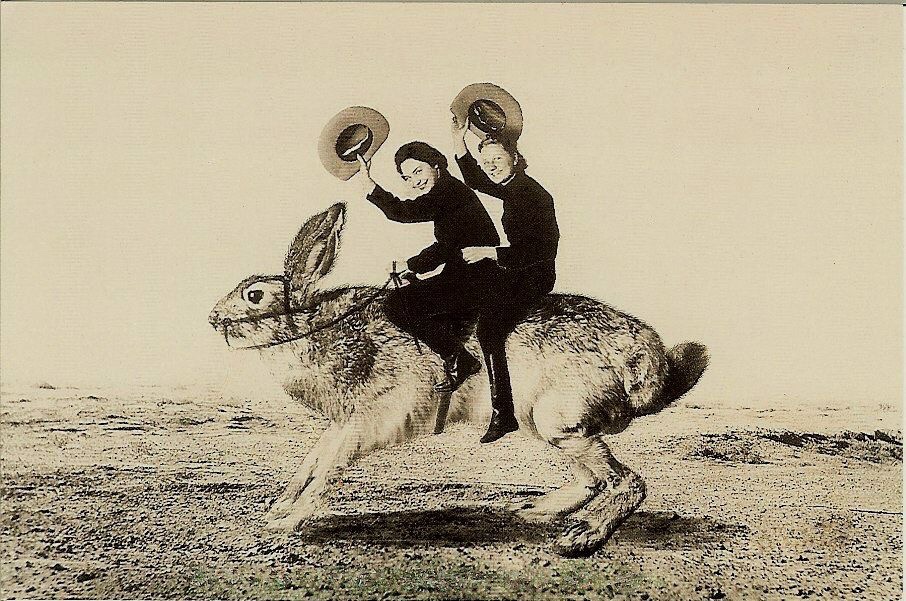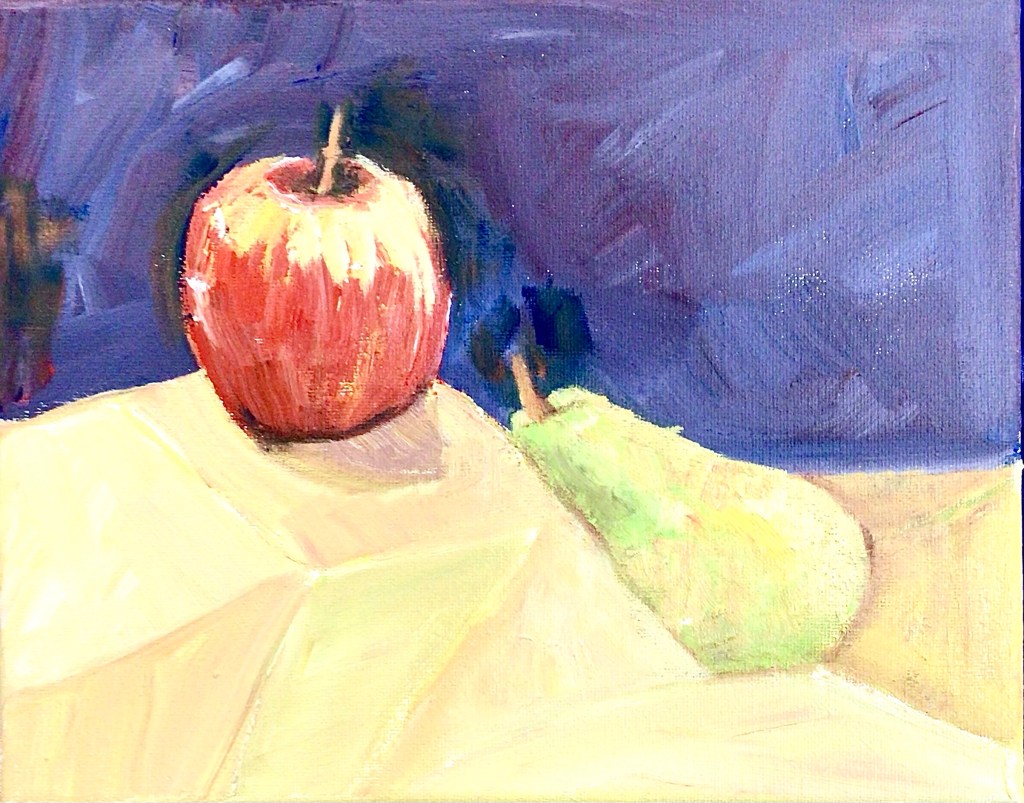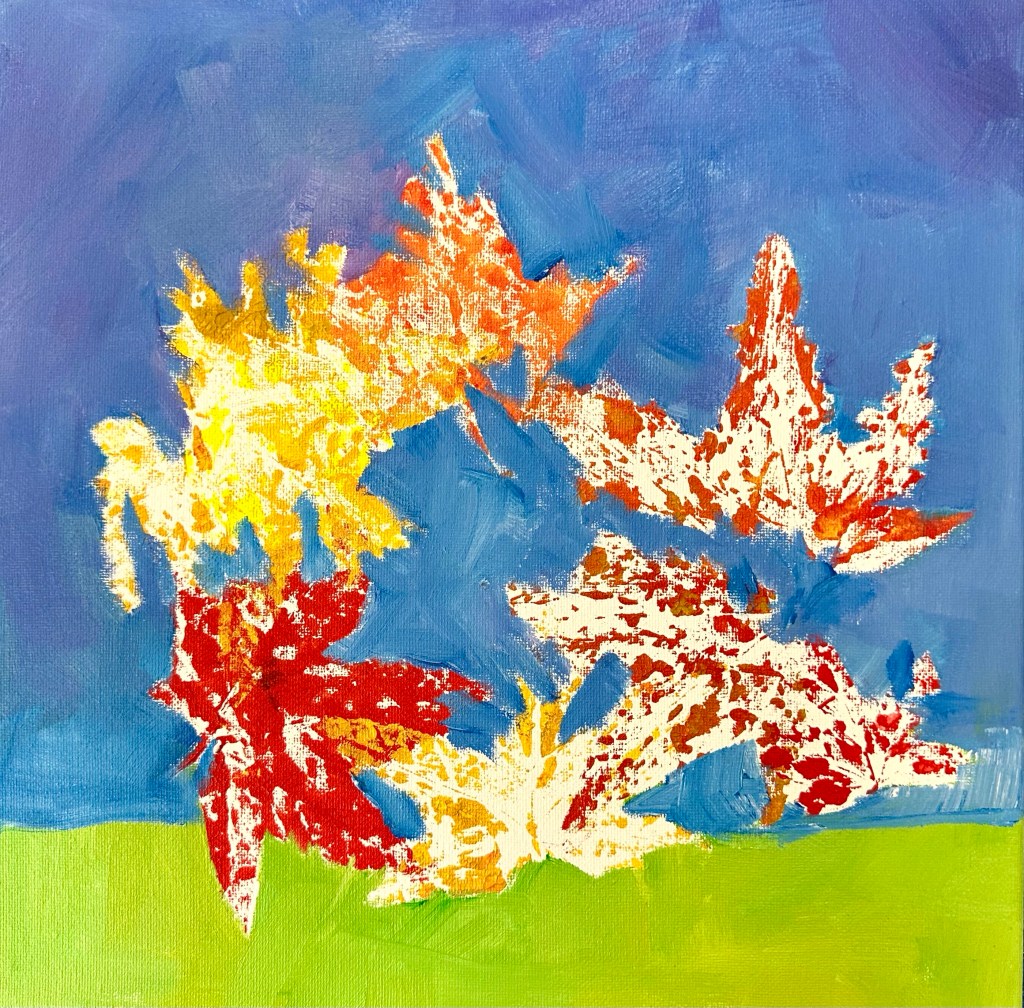
Rabbit! Rabbit! Welcome to November

Abraham Lincoln, All Saints Day, Altars, art, change, chocolate, Civil War, Constitution, Day of the Dead, exercise, Faith, Family, Food, generosity, Habits, Health, holidays, inspiration, Love, nature, poverty, pre-diabetes, pumpkins, rabbits, Thanksgiving, trees, Ukraine, Uncategorized, US Constitution, Van Gogh

My parents would often say, “Time flies when you’re having fun.” If this is so, I’ve had a one whale of a time in 2023. I don’t know where the time has gone, for I’d swear I just woke up in the bright new year of 2023, and now this year has grown a beard of some length. Indeed, the ground was bare, awaiting the warm breath of spring, and now it has experienced its first freeze.

Autumn is a time of transitions. Not only do the trees change colors, and then lose their wardrobe altogether, but we rabbits go from Halloween’s sugar high on October 31st to overstuffing ourselves and the roast beast at the Thanksgiving feast on the Fourth Thursday of this new month. Then we segue into Christmas somnolence with yet more cookies and egg nog (spiked and plain). On occasion we tramp out to decorate the house or scour the woods for greenery, but those days are long gone for most urban dwellers. We’re going to buy from local providers or have it delivered online.

Some of us on the first day of November will still have some of the 35 million pounds of candy corn which are still produced each year. That’s about 9 billion pieces — over a billion more than there are people on Earth. As far as this bunny is concerned, this is 8,999,999,999 pieces of candy corn too many. I’m not a lover of this form of sugar; give me dark chocolate any day. Fortune reported the “dangerous” amount of sugar consumed by kids on Halloween — three cups of sugar in 7,000 calories of candy. For context: That’s 675 grams of sugar, or the same as chomping down almost 169 standard sugar cubes, according to a Fortune article published in 2017.

A Young Bunny

When I was a young bunny, sugar was so restricted in our home, my friends and I would escape our parents’ notice during fellowship time at church to go to the empty adult Sunday school classrooms. We knew where they kept the wonderful Domino Pure Cane sugar cubes for the coffee the grownups drank. We didn’t care for coffee, which was already gone, but the sugar we fell upon like pirates on buried treasure. We didn’t ever consume 169 cubes at once, since that would’ve destroyed the entire stash.

If these had been the 35 million pounds of candy corn, which are still produced each year for Halloween, neither I nor my bunny friend would have ever touched them. The idea about 9 billion pieces — over a billion more than there are people on Earth—are still produced today is incomprehensible to my bunny brain. I think the texture of corn syrup and gelatin isn’t my first choice.

Of course, when the weather turns colder, our bunny bodies sense the need to stoke our internal fires. We do this by consuming more calories, especially the quick acting carbohydrates we find in the sugars and starches that provide the instant “heat” boost our bodies crave. Actually, any food will heat us up, but fruits and vegetables don’t have the same appeal as warm, savory, and fatty foods do in colder weather. The shorter days and the decrease of light in the winter cause problems with our body’s biological clock and lower the levels of the brain chemical serotonin. Plus, many of us reduce our physical activity, so our exercise induced levels of serotonins drop.

Healthy Eating includes More Fiber

We can overcome this loss by planning to be outside during the daytime and making sure to exercise at least 30 minutes daily. Having protein rich snacks and fiber rich soups with complex carbohydrates will help control our hunger spikes. Perhaps this transition time into longer nights and shorter days is why the First Wednesday in November is always National Eating Healthy Day (November 1). If we do only one new healthy choice per week, and add a new healthy option each week thereafter, we can transition our lifestyle into “Eating Healthy.” As a bunny, I remind my friends, it’s also National Vinegar Day—have compassion on yourself and on others. We can love ourselves and others into a better life with kindness rather than harshness. As my grandfather Bunny always said, “You catch more flies with honey than vinegar.”

Day of the Dead Skull

All Saints Day and Dia de los Muertos both are celebrated on November 1. Both recognize the departed loved ones. All Saints recognizes both those who have worked miracles as well as those ordinary saints who have lived among us and given quiet witness to their faith. Dia de los Muertos, the Day of the Dead, is a three-day festival to remember the ancestors and friends who predeceased us. People decorate altars with marigold flowers, photos, and skulls in memory of the dead. They make special food offerings in their honor also.

All Soul’s Day on November 2 is a Catholic holiday to pray for the souls which aren’t yet in heaven, but are in purgatory. Protestants don’t believe in purgatory, so we don’t attend upon this day as holy.

Cookie Monster: “Me want COOKIES!”

Many of us do celebrate Cookie Monster Day on November 2, because who doesn’t like cookies?! The same goes for National Sandwich Day on November 3, for hot or cold, almost anything can be slapped between two slices of bread and get slathered with avocado or mayonnaise, and it’s good to go.

Sandwiches first appeared in American cookbooks in 1816. The fillings were no longer limited to cold meat, but the recipes called for a variety of things: cheese, fruit, shellfish, nuts and mushrooms. After the Civil War sandwich consumption increased and were sold both in high-class lunch rooms and in working-class taverns. A typical turkey sandwich in the 1980s contained about 320 calories, according to a report from the National Heart, Lung and Blood Institute. Twenty years later, a turkey sandwich contained about 820 calories. Choose whole grain bread if possible.

We seniors have more than time on our hand

“Fall Back” on Sunday, November 5, when Daylight Savings Time Ends. We get another hour of sleep on this day when the clocks go back 1 hour at 2 am. I won’t be awake to notice it, but I suggest those of you who aren’t good sleepers begin to look at your evening routines. Set a wind down time on your clock, watch, or mobile device. Let it remind you to turn on quiet music, read inspirational books, or begin your bedtime routine. Sometimes taking off our outside clothes and wearing our “at home” clothes is a signal to our mind to let go of the cares of the world.

Fighting over Van Gogh Pokémon Gifts at the Museum

Go to an Art Museum Today Day and National Chaos Never Dies Day are both celebrated on November 9 this year. I don’t normally consider chaos and art museums as being in the same category, but Disney has made several Night at the Museum movies that revolve around the trope of ancient Egyptian gods awakening to cause havoc. Actual chaos recently erupted at the Van Gogh Museum in Amsterdam when visitors realized the gift shop had already sold out of the Pikachu with Grey Felt Hat promo card, which was modeled on the Vincent self-portrait. Evidently a small group of fans descended on the gift shop, causing a ruckus, and buying out the merchandise. It’s now for sale on eBay.

2023 Veterans Day Poster

Armistice Day marks the November 11,1918 anniversary of World War I, a war which began in August 1914, that few expected to last beyond Christmas. In 1921, an unknown soldier was buried in Arlington National Cemetery. This First World War was “the war to end all wars,” but we’re an overly optimistic nation. We’ve had a Second World War since then, plus many a regional conflict. Every time our battle ships show the flag somewhere, people think it’s going to be WWIII. Fear mongering doesn’t help the nation. We’re better and stronger than that. Plus, we have the moral duty of leadership: our country needs to show the world there’s a better way.

As I recall, both the North and the South expected the great Civil War to last just a short while, just as Putin entered Ukraine believing his army would roll into Kiev in mere weeks. Yet WWI lasted four years, WWII was six years (the US was involved only the four years from 1941-1945), and our Civil War was another 4-year slog. Wars aren’t so much “won” as lost by attrition: one side loses more men, materiel, and willpower so they surrender to the other. War is the most brutal way to settle our differences.

Armistice Day now is Veterans’ Day, November 11, but observed a day earlier (10th) this year. We celebrate our veterans who do the difficult and challenging work of using judicious force against enemy combatants, rather than civilian populations. All of our enlisted personnel take the same oath to protect and to defend our Constitution against all enemies, foreign and domestic:

I, (state name of enlistee), do solemnly swear (or affirm) that I will support and defend the Constitution of the United States against all enemies, foreign and domestic; that I will bear true faith and allegiance to the same; and that I will obey the orders of the President of the United States and the orders of the officers appointed over me, according to regulations and the Uniform Code of Military Justice. (So help me God).”

The US Constitution, 1787

We are an unusual people, we Americans, for our loyalty isn’t to a party, a president, or a person. We are loyal to the constitution, which protects our democratic institutions, values, and freedoms. We can be thankful for those who were inspired to write it, heard the prophetic call to amend it, and have the wisdom to keep us on the straight and narrow.

National Hunger and Homeless Awareness Week is November 11-19 this year. While the economy is recovering, the loss of pandemic assistance funds Is hurting lower income households. They are making hard choices: food or rent, medicine or food. The number of homeless veterans has decreased, but so has the overall population of veterans. The bad news is veterans are still overrepresented in the homeless population. As you prepare for your own feast this year, I hope you remember the hungry in your community. The best way to help is with a financial donation to the local food bank. The bank can purchase food from the warehouse food bank at greatly reduced prices, thereby providing more food per dollar than individuals can purchase on their own.

World Diabetes Day is November 14. Diabetes is a disease on the increase in the world today. In the US alone, over 37 million people have this disease and over 8.5 million have it but are undiagnosed. Over 96 million US adults have prediabetes, a condition in which their insulin doesn’t take the sugar out of the bloodstream well. Switching to whole grains, less processed foods, and adding more fiber to the diet usually helps lower the blood sugar. So does daily moderate exercise.

National Clean Out Your Refrigerator Day is November 15. This is a good day to practice this task, since you’ll be filling it up with excess foods if you’re hosting the feast, or you’ll be traveling away from home. If the latter, you don’t want to return home to spoiled food if the power goes off for any length of time. Ugh: I won’t regale you with the story of stench of the refrigerator in the garage which didn’t power back on after a power outage. Those outlets need to be reset manually because they’re in a “might get wet” zone. The refrigerator inside will come back on automatically. (This turned out to be a get rid of the refrigerator day.)

National Stuffing Day is November 21. If you bake your bread mixture outside of the great bird, it’s called dressing, but if you cram it into the bird, it’s stuffing. It’s safer to cook the bird without stuffing, also quicker. When baking stuffing inside a turkey, it can get get wet and mushy. If you make a flavorful stock from the turkey neck and giblets, you can make your stuffing moist and flavorful without turning it into mush.

If you live in a giant pumpkin, buy a smaller pumpkin for your pie

Pumpkin Pie Day is also November 21, so you can prepare this ahead of time if you wish. You can make a handmade crust or use a store-bought crust from the grocery. Pre bake it and fill it with the pumpkin mixture.

National Cranberry Relish Day is November 22. You can easily make your own with the juice of an orange, some sugar to taste, and cinnamon combined with a package of rinsed cranberries. Heat over medium in a saucepan, stirring frequently to keep from sticking. When the berries burst, reduce heat to simmer and reduce the liquid. Taste and adjust the seasoning. Take off the heat and put into container for icebox. Chill overnight to let seasonings combine. Serve cold as side dish.

Thanksgiving Day is Thursday, November 23. You’ve baked the turkey, and it smells amazing! Let me introduce you to pan gravy from the drippings. You need a little flour, about 2 Tbs; some pepper, about ½ cup of drippings, and 1 cup of hot water. Put the drippings in a heavy saucepan or skillet, add the flour, stirring constantly over medium high heat until flour turns caramel color. This is a medium roux. Slowly add hot water, stirring so no lumps form. Keep stirring till smooth, reducing heat. Add more water slowly if gravy thickens too much. Pepper and salt if necessary.

The idea of “thanksgiving” for the harvest is as old as time, with records from the Egyptians, Greeks, and Romans. Native Americans in North America celebrated harvest festivals for centuries long before Europeans appeared on their soil and before Thanksgiving was formally established in the United States.

In the 1600s, settlers in Massachusetts and Virginia had feasts to thank for surviving, fertile fields, and their faith. The Pilgrims in Plymouth, Massachusetts, had their infamous Thanksgiving feast in 1621 with the Wampanoag Native Americans. The three-day feast consisted mainly of meat: wild fowl procured by the colonists and five deer brought to the feast by the Wampanoag. A a stew called sobaheg was most likely served as a side dish to the main course. It was an easy way to make use of seasonal ingredients, for the stew often included a mixture of beans, corn, poultry, squash, nuts and clam juice. All are used in the traditional dish today, and all would have been available in 1621.

Potatoes weren’t around in 17th-century New England, but corn was plentiful. Natalija Sahraj

Corn and cornmeal were the main carbohydrates on the first thanksgiving meal. The first New England crop of potatoes was grown in Derry, New Hampshire in 1722, so no mashed potatoes were on the menu. Corn bread, corn mush, and corn puddings abounded, since the Native Tribes had shown the colonists how to plant beans, squash, and corn together to maximize growth of all three. The harvest of 1621 likely included beans, squash, onions, turnips and greens such as spinach and chard. All could have been cooked at length to create a green, pulpy sauce that later became a staple in early New England homes. Sweet dishes concocted from sugar or maple syrup weren’t on the menu, nor were honey sweetened deserts. At least, the Pilgrims didn’t have to save room for pie.

After the Pilgrims, for more than two centuries, individual colonies and states celebrated days of thanksgiving. The first national celebration of Thanksgiving was observed for a slightly different reason than a celebration of the harvest—it was in honor of the creation of the new United States Constitution! In 1789, President George Washington issued a proclamation designating November 26 of that year as a ”Day of Publick Thanksgivin” to recognize the role of providence in creating the new United States and the new federal Constitution. During the Civil War, President Lincoln called for a national Thanksgiving Day on the last Thursday of November after the Battle of Gettysburg. In the Great Depression President Franklin Roosevelt moved Thanksgiving Day to the next to last Thursday in November. After two years of public unhappiness, Congress passed a law in 1941 setting Thanksgiving on the fourth Thursday of November.

Thanksgiving, 1858, by Winslow Homer, Boston Public Library

During the week of Thanksgiving, from November 19-25 or 26, we have the holidays of Church/State Separation Week and National Bible Week. If you haven’t been giving thanks for your blessings up to this time, take a break, breathe, and rejoice that you are alive. Give thanks for your hands, your food, your breath, and your heart of love. Share this thanksgiving with someone else. If each of us gives a bit of hope to someone else, we can help others have something to be thankful about.

Chocolate answers all questions.

After the rush of Thanksgiving, some of us bunnies may need medicinal chocolate. November 29 is Chocolate Day. Depending on your personality, you can buy fancy chocolate to share, or you can enjoy it by yourself along with a good book and some lavender tea. If Thanksgiving Day was really overwhelming, National Personal Space Day on November 30 might be calling your name. We all have times in our lives when we don’t need hugs, either because of physical or emotional distress. Besides, we bunnies need to catch our breath before we dash into the Christmas season.

I’m thankful for each of you who read and share my stories.

Joy and peace,

Cornelia


2023 November Holidays Information from Holidays and Observances

http://www.holidays-and-observances.com/november-holidays.html

15 Mind-Blowing Facts About Halloween Candy Consumption in the US

https://www.businessinsider.com/halloween-candy-consumption-usa-facts-statistics-2019-10

Control Your Winter Appetite

https://www.webmd.com/diet/features/control-your-winter-appetite


History of Thanksgiving in America | The Old Farmer’s Almanac

https://www.almanac.com/www.almanac.com/content/when-thanksgiving-day

What the first Thanksgiving dinner actually looked like

https://theconversation.com/what-the-first-thanksgiving-dinner-actually-looked-like-85714


Is Stuffing Your Turkey Safe?

https://www.marthastewart.com/8163046/is-it-safe-stuff-turkey


Wall Street Journal: The American Diet Has a Sandwich Problem – Center for Health Incentives and Behavioral Economics (CHIBE)

https://chibe.upenn.edu/news/wall-street-journal-the-american-diet-has-a-sandwich-problem/


History of the Sandwich | The History Kitchen Blog | PBS Food

https://www.pbs.org/food/the-history-kitchen/history-sandwich/

Van Gogh Museum pulls its Pokémon promo card after opening day chaos

https://www.engadget.com/van-gogh-museum-pulls-its-pokemon-promo-card-after-opening-day-chaos-083349757.html


The Persistence of Effort

adult learning, Altars, art, Attitudes, beauty, brain plasticity, Children, cognitive decline, Creativity, exercise, Food, Habits, Health, Holy Spirit, inspiration, knitting, Love, Ministry, mystery, nature, Painting, Prayer, pumpkins, purpose, rabbits, renewal, Right Brain, sleep, Van Gogh, vision

These shoes are made for walking

I was reading an article in the New York Times the other day. In “How I Learned to Love Finishing Last,” the author wrote about her slow pace as a runner. As one who regularly finishes last in my age group in the annual Spa 5K Walk each November, I’m optimistic one day I might get old enough to be in a nonagenarian age group all on my own. Perhaps if I’m 90 and still doing a 5K, they’ll give me a ribbon just for participating! “The last will be first and the first will be last,” especially if there’s only one of us in the race!

“When we compare ourselves to others,” said Dr. Justin Ross, a clinical psychologist in Denver who specializes in athlete mental health and performance, “we set ourselves up to suffer. Instead, the real psychological benefits come from enjoying what your body can do.”

Portrait of Yayoi Kusama in costume in front of pumpkin painting, photo: Noriko Takasugi

Suffering physically isn’t what art class is about, although we may suffer indignities to our egos, but this shouldn’t hold us back from doing our art works. The case of the Japanese artist Yayoi Kusama is evidence even hallucinations of voices and images can’t keep an artist from creating. If our daily efforts don’t measure up to what we imagined in our mind, it’s merely because our inner eye sees better than our hands can execute our vision. Sometimes our eye forgets what it once learned, for we haven’t used our skill of looking in a while. A runner doesn’t leap off the couch and immediately run a marathon or even a 5K. The smart athlete takes the time to train progressively for the distance beforehand. Also, they get new shoes.

Kroger Run: Two ghost pumpkins and a small pie pumpkin

Sometimes the coach has slept over the summer also. Just as students in school need a time to relearn last year’s lessons, as a coach in art class I sometimes forget the lessons, which are second nature to me because they’ve been inculcated by multiple teachers since I was eight years old, aren’t as ingrained to my own students. I also forget I’m always observing everything around me: cloud patterns, changing colors on trees, sunlight dappling on tree branches, shadows on the ground, and reflections in windows. I think about these patterns rather than about what I need to do next or next week. My calendar will remind me of these things in due time. I’ll be wrapping this up soon so I can work on my monthly Rabbit blog.

Rabbit playing “Hide the Pumpkin.”

A National Institute on Aging study found five healthy lifestyle factors — physical activity, not smoking, not drinking heavily, following the Mediterranean-style diet, and engaging in mentally stimulating activities — can have important benefits. People who engaged in four or five of these behaviors had a 60% lower risk of developing Alzheimer’s compared to those who only followed one or none. People who followed two or three of the activities had a 37% lower risk. This is your free wellness plan from Dr. Cornie, who has no medical degree, but did stay in a Holiday Inn once.

Debunking the Myth of the Split Brain Theory

Although we commonly think art is a “right brained” activity, in 2013 a group of researchers at the University of Utah discovered people actually use both sides of their brains equally. Back in the 1970’s when I was seeking employment after graduate school, the “Art is a right brain myth” ruled the creative work world. I once suggested I’d be a good candidate for a museum position because I understood both the artistic and the logical mind. I was not hired. Intuitive understanding of the brain a half century ahead of time doesn’t exactly open the doors to a fancy job.

As I recall, I got a checker’s job in a grocery store and ended up counting the teller trays and preparing the bank deposits for that store. The good news is creating works of art is a multi-process activity, one that depends on several brain regions and on redundancy of art-related functional representation rather than on a single cerebral hemisphere, region or pathway. This means even when we lose our ability to form words (typically a left hemisphere activity) our ability to create art still exists. We can still express our inner feelings and thoughts. This is good news for the aging and those who love them.

Yayoi Kusama – Pumpkin, 2014, installation view, Donum Estate, California, photo: Robert Berg

One one the great sadnesses in my ministry is being with young people who desperately want to have their old one’s memories recorded, but waited too late to ask them or were too busy with their own lives to sit and listen to these stories of the olden days. Once their old person has a stroke and loses the ability to form words, the opportunity has passed. Those stories will be locked in their minds due to aphasia, and no one or no amount of time will pull them out. We always tell young parents their babies need to be enjoyed while they’re still young, but we should also tell families to get the stories of their elders while they still can. “Strike while the iron is still hot” will take on a new meaning one day.

We needed bigger pumpkins

Gail and I were the only ones in class today. Lauralei showed up to gift us chocolate cake and keep us company. Tim and Mike were out of town. Gail and I both repainted old canvases. I showed some of the unusual ways pumpkins have been decorated by various artists, but none of them sparked any interest. We got down to work by covering our old canvas with a base of titanium white paint. Then I located all three of the pumpkins with circles and drew a baseline for the object on which they sat. I didn’t look over at Gail’s work for a while, but then I noticed she’d almost completely finished one pumpkin without roughing in the shapes of the others.

Gail had a big canvas today.

“Did you plan on finishing that one pumpkin before drawing the other two?” I asked.

Gail gave me a “needs more caffeine” stare.

“That’s what I thought. Maybe next time draw in the rough shapes so you get everything located in space relevant to each other.”

Pumpkin Spice Latte Time

We kept on painting until clean up time. I often say “I’ve slept since then.” It’s my all purpose excuse for forgetfulness or just plain airheadedness. Sometimes I have my mind on other things and I’m not focused on what’s in front of me. I forget about the wisdom of Brother Lawrence, who said “many do not advance in the Christian progress because they stick in penances and particular exercises while they neglect the love of God which is the end. This appeared plainly by their works and was the reason why we see so little solid virtue.” He also said, “there needed neither art nor science for going to God, but only a heart resolutely determined to apply itself to nothing but Him and to love Him only.”

Cornelia’s small painting of pumpkins

We know Brother Lawrence from the classic text, The Practice of the Presence of God. Although it dates from the late 17th century, his lessons on living life in joy in the present moment, all for the love of God are invaluable for us modern folks who tend to live for our 15 minutes of personal fame, social media clicks, or self interest. We aren’t used to the monastic life today, or to the discipline of that lifestyle. We live in a Burger King world, in which each individual gets his or her own way to every extent possible. Unfortunately, the Christian lifestyle is one of discipline, but not harsh punishment:

“Now, discipline always seems painful rather than pleasant at the time, but later it yields the peaceful fruit of righteousness to those who have been trained by it.” ~~ Hebrews 12:11

In art class we focus on the disciplines, just as the guild artists taught the apprentices back in the day. These disciplines are not only for safety, for some of our art tools are dangerous, but also some of our techniques are proven to yield better results than others. This is why carpenters measure twice and cut once. They also cut on the outside of the line, rather than the inside. They can shave down a piece easier than adding to it. Murphy’s Law recognizes this: “A wire cut to length will be too short.”

Zen Tangle drawing of pumpkins: exercise in texture

Art class has no mysteries, but we can forget the “secret gnostic knowledge passed down by word of mouth” from our previous classes. I often use the excuse “I’ve slept since then.” Another good excuse is “My mind has gone to Pluto.” I share these with you all, for they’ve always worked for me. Of course it helps to be a natural blonde. Then again, I’m very organized, but I’m also very active, so sometimes my calendar gets overwhelmed, and I pull out the “OOPS! Card.” Even in retirement I’m still creating and sharing my faith through art and writing. It’s my way of exercising those brain cells to keep them from dying off. We old folks can still learn new things, even if it takes longer. This is what we call the persistence of effort. Those who keep using their skills won’t be losing those skills.

The same goes for learning a new skill. It’s all a matter of repetition. We can’t get frustrated if we don’t get it on the first try. We won’t be a good role model for the young if we have that attitude. We need to lower our expectations. I used to think I couldn’t knit, but only crochet. After my mom, who was a stellar knitter passed on, a friend taught me to knit in an afternoon! Where this sudden bilateral coordination came from I have no idea, but it was so welcome. Perhaps I needed to be in the right frame of mind, or I wanted to be able to carry on my mom’s memory, but I was definitely receptive to her teaching.

Letter to Theo Van Gogh, September 18, 1888

It’s never too late to learn and we’re never too old to start learning. Art isn’t just good for the brain, but it’s good for the soul. Art is our attempt to represent truth, beauty, and nature in media that can be accessible to others. By doing this, we bear witness to the creation and the Creator. We only need give our best efforts, and let God’s Spirit guide our growth.

Joy, peace, and perseverance,

Cornelia

We have pumpkins galore on the autumn altar.

How I Learned to Love Finishing Last


How the Aging Brain Affects Thinking | National Institute on Aging

https://www.nia.nih.gov/health/how-aging-brain-affects-thinking

The creative-right vs analytical-left brain myth: debunked! – Dr Sarah McKay https://drsarahmckay.com/left-brain-right-brain-myth/

Art and brain: insights from neuropsychology, biology and evolution – PMC

https://www.ncbi.nlm.nih.gov/pmc/articles/PMC2815940/

The Project Gutenberg eBook of The Practice of the Presence of God, by Brother of the Resurrection Lawrence (free ebook)

https://www.gutenberg.org/cache/epub/5657/pg5657.html

Perspective: How We See

adult learning, art, Attitudes, Creativity, inspiration, Leonardo da Vinci, Ministry, mystery, Painting, perfection, perspective, Philosophy, risk, salvation

Perspective is both a mental outlook on life and our ability to view things in their true relations or relative importance. In art class, we use the tools of perspective to make a two dimensional surface appear three dimensional. One of the techniques is drawing parallel lines as converging in order to give the illusion of depth and distance. An untrained eye doesn’t see this at first, but once the illusion is pointed out to them, they never can unsee it. We worked last year with one vanishing point—railway tracks—and two vanishing points—buildings seen on the corners.

Two Point Perspective

There are mysteries in this world which we don’t understand, but those of us who have been taught by others with this “secret hidden wisdom” can share it with others. The Ancient Greek mystery religions kept their knowledge for only the select few, who learned it by word of mouth in secret ceremonies. The early Gospel, however, was proclaimed openly to all who would receive it. Yet even in Corinth, some believers wanted to be more special or spiritual than others. Paul wrote them, saying they needed  to know “Nothing beyond what is written,” for the scriptures contained within enough for their salvation (1 Corinthians 4:6). As an apostle, he was a steward of the “Mysteries of God,” and even if he were to understand “all mysteries and all knowledge, and…have all faith, so as to remove mountains, but… not have love…(he’d be) nothing.” (1 Cor 13:2)

Cornelia: Art Room Door

As a teacher, I can provide students with learning opportunities for every skill in art. Thanks to  Oaklawn UMC, and the generosity of my clergy pals over the years, I have a space in which to teach. I don’t charge for the lessons, since I consider this my ministry in retirement. I’ve taught every age from kindergarten through adulthood. There’s no age I don’t relate to. As Dale Chihuly says about art: “Most of art is the work. Not every piece is a success. We learn from our mistakes more than from our successes. If we don’t show up to work, we never have a chance to do well.” (It’s not an exact quote—I watched the film last night).

Gail: stage 1

As I tell folks, we may be saved by grace, but progress in art is by works. We can’t have our egos invested in the product. Right now Tim is in recovery from carpal tunnel surgery. Doing light exercises with pencil is good for his wrist muscles. Art class is a form of physical therapy. He wanted to draw a pumpkin because it had some shapes he’s struggled with over time. He noticed if he moved forward or backward by mere inches, the image he saw was different. This too is a matter of perspective. What is our view point: is it fixed or variable?

Gail: stage 2

Gail and I worked on painting an interior scene. I freehanded my painting, while Gail used her ruler and pencil to draw in the door shapes. I still wasn’t totally recovered from my colonoscopy—my age is catching up on me. My brain felt foggy, but I was trying. We came back for a second week to work on this project.

Gail: stage 3—extended floors

When we leave our work, we have an opportunity to clear our minds and reflect on other things. On returning to our canvas, we then look at our image with fresh eyes. My engineer friends call this the “saturation principle.” Just as the land can only absorb so much water before it runs off, our minds will get clogged up and we just can’t seem to make progress. Getting up for a drink or a walk about is a good thing. Sometimes the paint won’t dry fast enough for us either! That’s an indication to work in another area, even if we don’t want to. We must listen to what our work is telling us.

I often let my paintings rest overnight while I get a good night’s sleep also. In the morning, I’ll see if it still holds up, or if I need to keep painting. Sometimes I’ll take a “finished” painting down after a few months and repaint it. If it won’t last three months under my eye, it doesn’t leave the house. But I’ve learned from the experience. If we ever quit learning, we are dead. I don’t plan on being dead any time soon.

ABC—Positive and Negative Choices

Learning how to see in art is the most important lesson in art. Most of us won’t be Michaelangelo or Leonardo, but we can be the best of who we are. Our outlook on life in art means accepting our imperfections and our weaknesses. Some people can’t accept the learning curve necessary to make acceptable looking products. The point of art class isn’t the product. It’s the process of doing. With the doing, the “product” will come around eventually. We just need to have a positive attitude. Besides, our salvation isn’t dependent upon our accomplishments in art, but our faith in Christ and our love for Christ spread abroad into God’s world.

A Gift from my Mom

Perspective is also our attitude towards life. As Bob Ross, the great philosopher of happy trees and the joy of painting once said,

“If you have light on light, you have nothing. If you have dark on dark, you have nothing. It’s like in life. You gotta have a little sadness once in a while, so you know when the good times are coming. I’m waiting on the good times now.”

He said this in a PBS episode filmed shortly after his wife had passed away. Art class is also therapy for the soul, for we paint our emotions on the canvas, whether we realize it or not. We don’t have to talk about our feelings, but art helps us express them.

When I taught art back in the dark ages, I told my students if they learned only one thing from me, they would never forget it. A positive attitude leads to positive behavior and positive behavior leads to positive consequences. A negative attitude leads to negative behavior and negative behavior leads to negative consequences. That’s the simple ABC’s of life in the art room. Try it. You’ll like it. This is how we teach “Perspective.”


Joy and peace,


Cornelia

Master of Glass: The Art of Dale Chihuly

https://www.imdb.com/title/tt24862190/?ref_=ext_shr_lnk


Feeling Down? Here Are the Best Bob Ross Pep Talks


REMEMBERING SEPTEMBER 11th

9/1/11, 911, Altars, art, Attitudes, Christmas, Easter, Faith, Forgiveness, grief, Healing, hope, Icons, inspiration, Ministry, Painting, renewal, Spirituality

Looking up at the night sky, I think of the Eskimo Proverb which says, “ Perhaps they are not stars, but rather openings in Heaven where the love of our lost ones pours through and shines down upon us to let us know they are happy.” The fatal September 2001 event at 7:14 am CDT impressed its significance on the nation to such a great extent that 93% of American adults 30 years old or greater can tell you exactly where they were when they first heard about the attacks. Only 42% of those 25 and younger can do the same.

NGC 3603: From Beginning To End
Credit: Wolfgang Brandner (JPL/IPAC), Eva K. Grebel (U. Wash.), You-Hua Chu (UIUC), NASA

I remember my church was fuller than for Easter or Christmas on the Sunday after the devastation of the Twin Towers, the collapse of the Pentagon, and the crash of the airplane in which the terrorists had hoped to hit the White House. Only those brave passengers of Flight 93 stood between the terrorists achieving a psychological victory and their ultimate ignoble demise. As I recall, people were eager to hear “What is the Christian Response to Violence?” If they hoped to hear the one and only response, as the THE implies in the sermon title, the air was let out of their balloons.

A photo taken on September 11, 2001 by the New York City Police Department as the North Tower collapses, engulfing lower Manhattan in smoke and ash.

Of course, Christians across the centuries have had three major responses to violence. The first is “turning the other cheek” or nonviolence. We see this in the Biblical witness, for Jesus admonishes his followers in Matthew 5:38-42—

“You have heard that it was said, ‘An eye for an eye and a tooth for a tooth.’ But I say to you, Do not resist an evildoer. But if anyone strikes you on the right cheek, turn the other also; and if anyone wants to sue you and take your coat, give your cloak as well; and if anyone forces you to go one mile, go also the second mile. Give to everyone who begs from you, and do not refuse anyone who wants to borrow from you.”

Il Tintoretto: Christ before Pilate, Museum Scuola di San Rocco, Venice

Jesus himself practiced a non-violence response to violence when he appeared before Pilate after his arrest. Pilate questioned Jesus in Matthew 27:11-14—

Now Jesus stood before the governor; and the governor asked him, “Are you the King of the Jews?” Jesus said, “You say so.” But when he was accused by the chief priests and elders, he did not answer. Then Pilate said to him, “Do you not hear how many accusations they make against you?” But he gave him no answer, not even to a single charge, so that the governor was greatly amazed.

Unknown German artist: Aquamanile in the Form of a Mounted Knight, Copper alloy, ca. 1250, used to pour water over hands at the altar or at dinner table, Metropolitan Museum of Art, New York City.

The opposite of non-violence is the Crusade mindset. In this response, the infidel is “othered” to the point of inhumanity. Because the unbelievers don’t share the same god, purging them from the living is a good deed, worthy of merit for salvation or for forgiveness of past sins. As you can imagine, this makes people who believe in other gods “less than human,” so what we modern people would consider war crimes would be easy to commit for a person in Crusade mentality. We still hear vestiges of this dualist mindset in the vocabulary of people who talk about “weaponizing government” or those who feel the need to “hit the ground running.” If we’re always in “attack mode” at work, we need to question how we think about others if we believe we’re in a hostile environment or in enemy territory.

If the Christian has both a head and a heart, both of which are being conformed to the love, mercy, and justice of God, then we must have a middle way between passive nonviolence and crusade extremism. This golden mean is the Just War Theory. It’s taught in all our military academies and has its beginnings in Christian theology. The saints Augustine of Hippo and Thomas Aquinas developed the primary ideas:

  • Make war only for a just cause
  • Be sure your intentions are right
  • Only legitimate authority can make war
  • Use just proportionally in the war, nothing to excess
  • Go to war as a last resort 
  • During war only attack military targets, not civilians 
  • Following unjust orders isn’t a legal defense for unjust actions 
  • Punish war crimes, compensate victims
  • Peace treaties must be fair and just to all, even the warmongers
Psalter Saint Louis et Blanche de Castile, MS 1186, BnF, folio 11b

Those of us who struggle with conflict—if we have a family, we have conflict or if we live in a community, we have conflict—yes, I’m starting to meddle now. You knew I’d get around to it. After all, God the Father had Adam and Eve, and God tossed those two kids out of the House. They had everything, and still wouldn’t follow the one rule (Don’t eat from that one tree). Just one rule. How hard could that be? It was downhill from there.

I always take comfort, knowing God had troublesome children. It means perfect parents can still have conflict at home. This gives hope to us less than perfect folks. The Bible reminds us always how God still loves the human race and hasn’t give up on us, so we don’t give up on those we have fusses with. We don’t roll over and play dead, yet we don’t set out on a crusade against unruly kids or others with whom we have conflicts. As Micah 7:18 reminds us about God’s Compassion and Steadfast Love:

Who is a God like you, pardoning iniquity and passing over the transgression of the remnant of your possession? He does not retain his anger forever, because he delights in showing clemency.

Remnant of the Twin Towers

Maybe we should look at the just war thoughts and modify our attitudes and behaviors. We can come to a peace, even if others cannot. As Jesus says in Matthew 5:9—

“Blessed are the peacemakers,

for they will be called children of God.”


Joy and Peace,

Cornelia


Two Decades Later, the Enduring Legacy of 9/11 | Pew Research Center


Just War Theory – The Ethics Centre Ethics Explainer
https://ethics.org.au/ethics-explainer-just-war/


New Eyes, New Visions

art, Attitudes, cataracts, Faith, Healing, Health, Holy Spirit, Imagination, inspiration, Medical care, nature, Painting, renewal, Spirituality, trees, vision

This week as I recovered from cataract surgery, a memory from my childhood finally surfaced. In the late 1950’s in my hometown, I had met an artist who could barely see to paint anymore because of her vision loss due to cataracts. Doctors hadn’t yet invented the modern replacement lenses and use of small incisions for implantation. Complications back then were common, rather than rare. I can still remember my dad’s response to my desire for contact lens, “What? Put a foreign object in your eye? You’re asking for an infection!” Perhaps this was why I worried myself to exhaustion while waiting for my first surgery.

Unknown Artist: Inlay in the Form of an Eye, Glass and gypsum, Egypt

As it turns out, I can now see my television set without my glasses and I read my iPad with my untreated eye. I’ve always had my glasses within arm’s reach of my bed or my chair for over sixty years. It feels strange not to put them on first thing in the morning.

If there were things I could not see before, I could always feel them if I were still enough to notice their subtle movements. Most of the time I, as many others do, stress over what “might happen,” instead of being present to the moment in which the important stuff is actually happening.

Luke Howard: Graph of wind, rain, and temperatures from 1815-1832

After I worried myself into an exhausted heap on my couch, I woke up in a different mood. I realized I’d been going “from house to house” to borrow a cup of trouble for a cake I didn’t need to bake or eat. It was going to be a decadent cake with multiple layers and a. rich icing. If it were autumn, I’d probably get first prize in the cake competition at the state fair.

Wayne Thiebaud, Cakes, 1963

But no one needs a Trouble Cake. I saw all my ingredients were as nothing, for I had a great doctor, people who would care for me, and this was a new age in medicine. Moreover, the Spirit of God would sustain me in my recovery and remind me my wellbeing depends on following my doctor’s instructions. As we read in John 3:5-8 NRSV—

Jesus answered, “Very truly, I tell you, no one can enter the kingdom of God without being born of water and Spirit. What is born of the flesh is flesh, and what is born of the Spirit is spirit. Do not be astonished that I said to you, ‘You must be born from above.’ The wind blows where it chooses, and you hear the sound of it, but you do not know where it comes from or where it goes. So it is with everyone who is born of the Spirit.”

Sometimes we need to feel the wind and not try to know from whence it comes or why it goes, but merely thank it for arriving to be with us in this present moment.

Utagawa Hiroshige: Yokkaichi: Mie River, 1833-34

Who Has Seen the Wind? by Christina Rossetti

Who has seen the wind? Neither I nor you: But when the leaves hang trembling, The wind is passing through.

Who has seen the wind? Neither you nor I: But when the trees bow down their heads, The wind is passing by.

Sometimes we need a fresh wind blowing through our hearts and minds to get a new outlook on life. We can’t be wedded to the past like the old farmer who said of the new fangled plow he saw at the farm supply store, “My daddy plowed with a two pronged plow, so a two pronged plow is good enough for me.” He never bought the new and improved three pronged plow.

Bernard Evans: Cannock Chase – ‘When the sweet wind did gently kiss the trees, and they did make no noise’, circa 1885

Much like the church that can’t recognize the fresh movement of the Spirit moving through the world today, if we can’t feel that wind, maybe cataract surgery would help us see the movement in the leaves.

Joy and Peace,

Cornelia

NOTE: The Greek word for Spirit and wind are the same: πνεῦμά. Strong’s Greek Concordance 4151 pneúma – properly, spirit (Spirit), wind, or breath. The most frequent meaning (translation) of 4151 (pneúma) in the NT is “spirit” (“Spirit”). Only the context determines which sense(s) is meant. When used with Holy, the word is Holy Spirit, not holy breath!

Christina Rossetti: Who Has Seen The Wind? Source: The Golden Book of Poetry (1947). https://www.poetryfoundation.org/poems/43197/who-has-seen-the-wind

Utagawa Hiroshige: Yokkaichi: Mie River (Yokkaichi, Miegawa), from the series “Fifty-three Stations of the Tokaido (Tokaido gojusan tsugi no uchi),” also known as the Hoeido Tokaido, wood block print, 1833-34, Art Institute of Chicago.

Luke Howard: Graph detailing prevailing wind directions, rain depth, and mean temperature over a period of eighteen years, 1815-1832, in London. The Royal Society.

Bernard Evans: Cannock Chase – ‘When the sweet wind did gently kiss the trees, and they did make no noise’, circa 1885, watercolor. Art Gallery of New South Wales, Sidney, Australia.

Unknown Artist: Inlay in the Form of an Eye, Glass and gypsum, Egypt, (9/16 × 1 13/16 × 3/8 in.), 1540–1070 BCE, J. Paul Getty Museum, Los Angeles, CA.

Wayne Thiebaud, Cakes, 1963, National Gallery of Art, Washington D. C.

Pears and Apples

adult learning, Altars, apples, Aristotle, art, brain plasticity, change, cognitive decline, color Wheel, Creativity, exercise, Fear, Habits, Holy Spirit, inspiration, Lent, Leonardo da Vinci, Painting, perfection, Physical Training, purpose, risk, Thomas Merton, Van Gogh

Still Life with canvas, pallet, and brushes

Aristotle said in his Poetics, “The aim of art is to represent not the outward appearance of things, but their inward significance, and this, and not the external manner and detail, is true reality.”

He spoke mainly about poetry, which was the highest art of his age, but his words also apply to the fine arts. Today, many people are still mesmerized by artists who practice various styles of realism, but they overlook the artists who show us the realities of emotion and inner vision.

The good news about art.

“Art enables us to find ourselves and lose ourselves at the same time,” said the spiritual writer, Thomas Merton. Some people use art as a cathartic exercise, and pour out their inner emotions on the canvas or their chosen media. Jackson Pollock’s drip paintings and Van Gogh’s late works are good examples of emotional expression. We all know folks who have a project going in their garage. They go work on “that worthless piece of junk” to focus their attention and energy on fixing something on which they can make a difference, instead of getting tied up in knots about things they can’t change and must accept. Gardening and knitting are also good hobbies for focusing this energy.

We know our nervous system grows to the modes in which it has been exercised. This is what we call building a habit over time. Just as a child doesn’t walk straight out of the womb, they have preparatory skills that must be acquired by stages as they grow. Exercising their muscles by rolling over also helps to strengthen their necks to hold their heads up. Crawling leads to pulling up, and that leads to letting go to learn balance.

Each time a child repeats these movements, he or she will simplify the movements required to achieve the needed result, make them more accurate, and diminish fatigue. In this, they’re building habits that bring them closer to walking. Rushing them to achieve “early” walking actually puts them behind cognitively.

Not only are there twenty five body parts in a baby’s body that are used in the crawl movement, but crawling also strengthens the hip sockets, so the baby will have a strong platform on which to stand. Crawling helps the corpus callosum, which is a band of nerve fibers between the hemispheres of the brain. Criss-cross crawling on the knees and hands stimulates the corpus callosum to develop in a balanced way, facilitating the hemispheres of the brain to communicate. These cross lateral movements work both sides of the body evenly and involve coordinated movements of the eyes, ears, hands, feet, and core muscles. This helps support cognitive function, problem solving, and ease of learning. Exploring the floor in a baby proofed home allows your baby to achieve his or her optimal potential.

Gail’s Painting

“Practice makes perfect” is only as true as the practice is directed in a true direction. This is where a teacher, a parent, a coach, or a spiritual guide comes into play. Only one who’s been led well can lead others with grace. We don’t tear down the learner, but ask questions, give guidance, help them see alternative paths, and allow them a safe place to explore their choices.

Art class isn’t brain surgery. No one will die if the painting isn’t successful, and no one’s salvation is at risk if the painting doesn’t come out the way we hoped it might. Art class is a safe place to take risks, unlike jumping from a tall tower without a parachute. Learning to accept failure on our canvases and coming back next time to try again is a mark of resilience and courage. Every time we fail closer to our target, we realize we’re gaining on it! We never say I CAN’T in art class.

Crawl before you Walk or Run

The sad reality is we can teach and expand the horizons of young people up til the age of 25 or 30. After that, they seem to lose energy and desire to learn more or to change. They “habitually” repeat their previous acts, for good or for ill. We’ve all heard the old saying, “You can’t teach an old dog new tricks.” Those of us who are no longer young have sometimes been accused of being set in our ways. Some of us are afraid we won’t excel at a new challenge, for we’ve always been held to a high standard of achievement. Since none of us will be the next Georgia O’Keefe or Leonardo da Vinci, we can set that worry aside. They both had more years to practice than we have left in front of us. Instead, we should give our remaining time our most focused attention, so we can get the most from our experience.

My high school chemistry book had the same information in it which my daddy’s college chemistry book covered. He was amazed I was learning “advanced” ideas at my young age. In 1982 R. Buckminister Fuller introduced the idea of the “knowledge doubling curve.” Up until 1900, knowledge doubled every century. By 1945, knowledge doubled every 25 years and by 1982, it doubled every year. Some say it’s now doubling twice a day! The newest computer we buy off the shelf today is already obsolete.

We can’t train our students for the jobs of today because these jobs likely won’t exist tomorrow. We need to train people to be lifetime learners instead. Luckily, we don’t have to know all things, but we do need the skills to find the knowledge and sort through the best sources for the best possible information.

1930-2006

Today, knowledge we acquire in high school, college, graduate school, and our last job may already be obsolete. (I’m one who still grieves the loss of Pluto as a planet; it exists but is a dwarf planet in the Kuiper Belt). This is especially true in fast moving fields like technology. As futurist Alvin Toffler wrote, “the illiterate of the 21st century will not be those who cannot read and write, but those who cannot learn, unlearn, and relearn.”

This means all of us will need to become lifelong learners or we’ll risk losing touch with an ever evolving world. Maybe we think our brains can’t handle something new, for we’ve heard about the effect of aging. Cognitive process studies with older brains show learning, memory, and problem-solving in humans are often less efficient in these areas.

However, it has recently been established that dogs show many of the same kind of age related changes that humans do. A study in Vienna showed that older dogs learned new tasks just as well as younger dogs, although they took longer to do so and required more repetitive corrections. This aptitude is also known as “resilience training.”

I think it’s also important to know why we want to keep our brains agile as we move into our later years. John Wesley was fond of repeating William Law’s summary from the Practical Treatise on Christian Perfection,

“Do all the good you can, to all you can,
by any means you can, as long as you can.”

Because Wesley was better known than William Law, this quote is now attributed to Wesley alone. We Methodists have made it our own, however, and have carried its banner around the globe in our world wide mission efforts made possible by our Connectional ministries. Wesley thought enough of Law’s writing to reprint 19 editions of his work.

My late mother, at the age of eighty, learned how to use a laptop computer. She was motivated because she wanted to see emailed photos of her grandchildren, but then she realized she also could find recipes. When a child in her hometown needed a Mercy Flight, she used her new skills to get him transportation to an out of state hospital for treatment. I occasionally had to reteach her on how to double click quickly on her icons, rather than slowly, but she finally caught on.

iPad drawing of pear and apple

If we want to keep our brains agile throughout our middle, silver, and golden years, we always need to try new things. Doing art challenges makes our brain build new neural pathways. Every time we look at a still life or a landscape, we have to make multiple decisions: what shapes do I see—circles, squares, triangles, or rectangles; how do these shapes relate to one another on the plane of our canvas; what is most important; what colors will I use; what emotions do I want to express; and where will I begin?

Eventually, we will find our “style.” We don’t find a style by copying another’s work, but we create enough works until our hand becomes one with our spirit. Since God has placed a special spark of God’s own creative Spirit within each of us, eventually we’ll experience the joy of being one with God when we are in our painting moments. As Paul said to the Romans (8:16):

“The Spirit Himself bears witness with our spirit
that we are children of God.”

Last Friday we had a simple still life as our inspiration. Half our class was out sick with spring pollen troubles, but it was good to see those who could come after a two week hiatus. After a brief show and tell to get us inspired by other artists’ takes on the subject for the day, we got started. I reminded everyone not to make the fruit too tiny, so it wouldn’t get lost on the canvas. I believe everyone succeeded with this goal!

Mike’s painting

Mike painted his whole canvas with one brush. This gave the fruit a certain texture with contrasting colors, and the background, which was in a close value, didn’t show much brush strokes or texture. I like the perspective he chose, which brings the viewer in close to these fruit.

Gail tried a larger canvas with bolder colors than she normally uses. It was more dramatic and stronger in contrast than usual, while she kept her smooth strokes of paint as usual. She also took a view from above.

Cornelia’s Fruits

I stuck to a traditional rendering of the still life, since I do many abstract paintings in my own studio. I’d call these two Day and Night, for the Apple is quite awake and the Pear seems to need a little nap. It’s a study in contrasts: red and green, blue violet and yellow orange—a color wheel study masquerading as a still life.

Next week we’re in the season of Lent. As Christ turns his face towards Jerusalem, we’ll begin a study on the icons. This will be accessible and interesting. You’ll end up with your own icon for your personal worship center also.

Joy and Peace,

Cornelia

Classics in the History of Psychology — James (1890) Chapter 4
https://psychclassics.yorku.ca/James/Principles/prin4.htm

Crawling is important for childhood brain development
https://thefnc.com/research/crawling-is-important-for-childhood-brain-development/

You Can Teach an Old Dog New Tricks | Psychology Today
https://www.psychologytoday.com/us/blog/canine-corner/201602/you-can-teach-old-dog-new-tricks

Letters of John Wesley – John Wesley, Augustine Birrell – Google Books, p.423
https://books.google.com/books/about/Letters_of_John_Wesley.html?id=zgYu6NpqWDEC

What It Takes To Change Your Brain’s Patterns After Age 25 https://www.fastcompany.com/3045424/what-it-takes-to-change-your-brains-patterns-after-age-25

Radical Love

art, Attitudes, Faith, Forgiveness, Healing, holidays, Holy Spirit, hope, inspiration, Love, Martin Luther Ling, Ministry, Reflection, silkscreen, Spirituality, Uncategorized, Valentine’s Day

Victorian Embossed Valentine Card

Valentine’s Day is all about love. Television advertisements push candies, dipped gold “eternal” roses, gaudy jewelry—a price for every pocketbook—and the dating apps have been in full swing since the new year.

“Everybody needs somebody to love,” the old song goes. The Blues Brothers sing this oldie before their mad escape from the Illinois Law Enforcement Community. Solomon Burkes treats it with his indigenous soul blues from his lived experience and The Rolling Stones give it their percussive upbeat treatment. Wilson Picket has a good cover, but I don’t recommend the explicit version of Rod Wave’s Sneaky Links. Fitz and the Tantrums was interesting. My “old person “ is probably showing about the edges here.

Martin Luther King, Jr. Quote

We all can love our friends or sweethearts, especially in mid February. After all, February is “for lovers.” The bigger question is, How do we love our enemies? Dr. Martin Luther King, Jr., in his book, A Gift of Love, writes:

“First, we must develop and maintain the capacity to forgive. (The one) who is devoid of the power to forgive is devoid of the power to love. It is impossible even to begin the act of loving one’s enemies without the prior acceptance of the necessity, over and over again, of forgiving those who inflict evil and injury upon us.”

Well, how can I forgive the person who hurt me, my child, my family, my tribe, or my community? We all want that person to come crawling to us and ask for forgiveness, but that’s not how radical love works. We want the wrong doer to show remorse and ask us for mercy and forgiveness. This puts them in a subordinate position and us in a position of power. But that’s not how radical love works. Radical love initiates forgiveness, even if the wrongdoer never shows contrition.

Dr. King goes on to say:

“It is also necessary to realize that the forgiving act must always be initiated by the person who has been wronged, the victim of some great hurt, the recipient of some tortuous injustice, the absorber of some terrible act of oppression.”

Sir Terry Frost: Sun Tree, 2003, Silkscreen on Paper with 9 collage elements. Frost was a prisoner of war in WWII with Adrian Heath, who taught him to paint. They were both imprisoned in Stalag 383, in Germany.

Why must the wronged take on the indignity of offering forgiveness to unrepentant wrongdoers? In this act, we become most like Christ on the cross, who in his final moments, forgave not only the thief who asked for forgiveness, but also all those who crucified him, who had no intention of repenting. Our problem is we enjoy being like the risen Christ, the one with the “name above all names,” but most of us don’t want to “pick up our cross and follow” Jesus, especially if it leads to an ignominious death on that very cross.

Sir Terry Frost: Blue Love Tree, 2003, Silkscreen on Paper

As Dr. King wrote,

“The wrongdoer may request forgiveness. He may come to himself, and, like the prodigal son, move up some dusty road, his heart palpitating with the desire for forgiveness. But only the injured neighbor, the loving father back home, can really pour out the warm waters of forgiveness.”

The injured one, whose heart has been broken and wounded by someone else’s words or deeds, is the only one who can heal the broken rift between them. This is why the deepest lovers of Christ are most often the wounded ones who’ve been healed by God’s mercy, grace, and forgiveness. The woman with the alabaster jar of ointment anointed Jesus’ feet in the house of the Pharisee, but the host had failed at the minimum hospitality for his guest, so Jesus reminded him (Luke 7:47):

“Therefore, I tell you, her sins, which were many, have been forgiven; hence she has shown great love. But the one to whom little is forgiven, loves little.”

Mending Broken Hearts, silkscreen, artist unknown

If we would be healers in our broken and fragmented world, we need to first address our own woundedness. Each of us has a hidden pain or suffering, for this is the human condition. If we give this to God, our healing makes us into vessels where our cracks are filled with precious gold. We can offer more love, more forgiveness, and more hope to people who have been sitting in darkness and despair. People are waiting for joy and love to flow out in abundance from God’s heart into our hearts and into their world. Then we can be the light in the darkness for them, the holy fire that lights the embers of hope in their hearts, not just on St. Valentine’s Day, but every day.

Joy, Peace, and Love,

Cornelia

Kintsugi: Mending cracks with gold

Excerpt from A Gift of Love | Penguin Random House Canada
By Dr. Martin Luther King, Jr.
Chapter 5, Loving Your Enemies

https://www.penguinrandomhouse.ca/books/212014/a-gift-of-love-by-martin-luther-king-jr/9780807000632/excerpt

Rabbit! Rabbit!

art, Attitudes, autumn leaves, autumnal equinox, brain plasticity, cognitive decline, Faith, Imagination, ministry, nature, Painting, perfection, poverty, pumpkins, rabbits, renewal, Rosh Hoshanah

Welcome to September

On September 5, we celebrate Labor Day, and our kids are already back in school. We’re once again slowing down in school zones in the morning and afternoon, and setting an extra plate at the kitchen table for our absent college freshman. We might even see the first fall colors when the Fall Equinox comes around at the end of the month.

Edwardian Summer Gown, 1905

September is when we set aside our summer white clothes and shoes to change our closet over for darker colors and longer lengths. My dear mother had a rule of never wearing white past Labor Day. This quaint fashion principle dates from before Memorial Day, which was instituted in 1868 after the Civil War. This rule helped to separate the old money families, who summered in the country and at the seashore, from those who stayed to struggle on in the grimy cities, which were polluted by coal fired engines. These urban families usually wore dark clothes year round, as the rich did when they returned to their city residence.

Air conditioning has changed this now, but wearing starched, white cotton still reminds people you either have money to send your clothes to the cleaners or hire laborers to do it for you. Or, you might just work extra hard to look like one of the first two. This bunny has reached the age of dripping dry all those cotton clothes. I actually do more ironing when I do a craft project, such as quilting, since those seams need to be pressed open to make a good square. As this bunny has aged, I’ve changed my mind about what I think is important enough to worry about.

Rabbit Ironing

September is also a time to reassess the three core myths which animate much of American life. These myths are we can give 100% to our work, 100% to our family, and 100% to our personal health. I don’t know about you, but I’ve never been able to do this type of higher math without going bananas or feeling significant amounts of guilt that I’m not doing enough in one of those areas. Eventually I learned I was only Wonder Woman in my fantasies, but not in real life. I also realized other people who managed better than I hired help for the housework to free themselves up for family time.

My Wonder Woman Fantasy

Somewhere along the line we’ve bought into the myth of the “ideal worker,” who “has no competing obligations that might get in the way of total devotion to the workplace.” The second myth is the “perfect parent,” who “always puts family first.” The last myth is the “ultimate body,” which is cultivated through diligent dieting and exercise, and doesn’t deteriorate with age.

The authors of Dreams of the Overworked, note in the digital age, when people can post curated images of their best lives, “Achieving even one of these myths would be impossible, but achieving all three is ludicrous.” If your daily stress has increased and you feel like everything you do isn’t enough, I suggest deep breathing with your eyes closed (unless you’re driving a vehicle!). Once you get some extra oxygen to your brain, you’re in a position to calmly reconsider your situation. Not all situations are hair on fire, unless you’re a two year old with separation anxiety. Most of us beyond this age have experience and memories which can guide our future behaviors. An ancient proverb is “Experience is the mother of wisdom,” or as my folks used to say, “The school of hard knocks is the most expensive degree you’ll ever pay for.” Live and learn. With age comes wisdom.

Now that you’re calmer, you can decide, “Do I have options? Do I have a support system with people who can help me discern my way? Can I lay down my false self image of competence so I can ask for help? Can I triage my priorities to say NO to the less important ones, even if it means not pleasing everyone in my social circle?”

Google it, Ask friends for recommendations, and Breathe!

Speaking of options, women are primarily responsible for housework and childcare, not only in America, but also across the pond. About 91% of women with children spend at least an hour per day on housework, compared with 30 % of men with children. The latest available data shows that employed women spend about 2.3 hours daily on housework; for employed men, this figure is 1.6 hours. Gender gaps in housework participation are the largest among couples with children, at 62 p.p., demonstrating an enduring imbalance in unpaid care responsibilities within families. This leads to women taking lower and slower career paths.

Animated Map of 2022 Fall Color Change

September 22 is the Fall Equinox. We’re already seeing signs of seasonal leaf color changes, due to heat stress and drought. Some call this “False Fall,” but I call it a sign of hope. Trees will drop their leaves in order to survive in extreme conditions. Although some claim plants are sentient, they don’t have a brain or consciousness that we can recognize. They do interact and react to their environments. Their first priority is survival.  Photosynthesis and the subsequent leaf abscission after changing color is part of this process. I always look for the change of light which precedes this event. One morning last week, I noted the color of the morning light had turned cooler, and wasn’t the warm yellow of summer. I also had a spark of energy I hadn’t had before. I look forward to more daylight.

This bunny is very fond of September, since I’ve always been eager to start fresh and new. I always got new pencils and a new manilla paper writing pad when I started elementary school. Later on, as I progressed up in grades, ink pens with cartridges were a special treat. Even to this day, I keep my journals with hand written ink in good paper books. I love the feel of these materials in my hands. I probably would have stayed in school my whole life if possible. The day our brains quit learning something new is the day our minds begin to die.

School Bunnies and Friends

That leads me to remind my bunny friends that Alzheimer’s disease is the 7th leading cause of death in the USA and it’s the most common cause of dementia in persons over 65. While most of you may not be baby boomers, you young bunnies have grandparents or parents of that age. Today, about 6.5 million Americans have Alzheimer’s disease, but that number is expected to almost double to 12.7 million by 2050. Perhaps beginning September with World Alzheimer’s Day is a good reminder for all of us to be proactive about our health choices, so we can live independently as long as possible into our senior years.

Talk Like a Pirate

I also like Positive Thinking Day, since reframing negative thoughts into positive ones changes our attitude, our behaviors, and then we get better outcomes as a result. If you don’t feel like being Batman on the 17th, you can ARRRGUH yourself about, MATEY, as you Talk Like a Pirate on the 19th. Bonus points if you wear an eye patch, earring, and tricorne hat or bandana on your head.

The Jewish New Year of Rosh Hashanah begins at sunset on the 25th. It’s one of the four “new year” celebrations in their religious calendar. This one recalls God’s creation of humanity, as well as the legal new year. On this one night in September, when the faithful eat apples dipped in honey or other sweet sauces, they remember how God originally created humans in a sinless state and wish each other a good year to come.

Magic Bacon Carpet Ride

Did I forget International Bacon Day? How can any rabbit forget bacon? Someone will cut my carrot rations for the future, I fear. But if I remember to keep the coffee pot full, I’ll probably get out of the rabbit hoosegow before National Coffee Day on the 29th.

Some interesting holidays we can celebrate this month are: Better Breakfast Month (I suggest bacon, eggs, and pancakes on the weekend and old fashioned oatmeal during the week). There’s also Hispanic Heritage Month and National Sewing Month. Finally, every year on September 30th is National Love People Day. The purpose of the day is to show love to everyone—no exceptions. National Love People Day offers us the opportunity to show unconditional love, which many have never experienced. When we genuinely love our neighbors and express it with kind words and thoughtful deeds, we make our world a better place. This the true meaning of “love your neighbor as yourself.”

Maybe one meaning of loving your neighbor is offering a meal to them. Food insecurity is increasing once again, this time due to increased rents and costs of transportation. Consider a weekly meal service from your church building or organization’s meeting place. It doesn’t need to be fancy, but calories and nutrition would help hungry people have the strength to move on from their current situations. Joining with other groups to cover all the days of the week would be a bonus to your community, not only for the hungry, but also for the smaller groups who could team up to share in the blessing of loving their neighbors.

Until the spice is on the pumpkin, I wish all my bunny friends

Joy, peace, and Bacon,

Cornelia

America’s Ideal of Working Parents Has Become Unattainable – The Atlantic
https://www.theatlantic.com/family/archive/2020/06/working-parents-impossible/613429/

Beckman and Mazmanian: Dreams of the Overworked: Living, Working, and Parenting in the Digital Age

Gender differences on household chores entrenched from childhood | European Institute for Gender Equality https://eige.europa.eu/publications/gender-equality-index-2021-report/gender-differences-household-chores

Debunking a myth: plant consciousness | SpringerLink. https://link.springer.com/article/10.1007/s00709-020-01579-w

September Monthly Observances – National Day Calendar
INTERNATIONAL CHOCOLATE DAY – September 13, 2022 – National Today

Home – National Love People Day – National Love People Day

Alzheimer’s Facts and Figures Report | Alzheimer’s Association
https://www.alz.org/alzheimers-dementia/facts-figures


OAKLAWN FRIDAY ART CLASS

adult learning, art, Attitudes, brain plasticity, cognitive decline, Creativity, Faith, Imagination, inspiration, john wesley, Ministry, Painting, perfection, purpose, Retirement, United Methodist Church, vision

WE’RE BACK!!!

Ready or not, the creative juices must be stirred. If the brain has lain fallow all summer, or it’s been overworked keeping the youngsters occupied, now you can find your own groove again. Yes, it’s time for Adult Art Class at Oaklawn UMC.

Our first meeting will be Friday, September 9, at 10 am in the old fellowship hall. Bring your own acrylic paints, brushes, and a canvas or canvas panel to paint on. We begin with a short visual inspiration from some great art works, I’ll give some direction on the skill we’ll work on in the session, and then everyone is free to bring their own unique expression to their paintings. We don’t copy my work and judge how well a person can match it. We learn from the great masters and stretch our own skills to create something new.

Walter Nowatka: Abstract Ferris Wheel

Of course, making great art isn’t our first purpose. As we age, we will lose our ability to learn new skills until we lose our memory of what we just ate for breakfast. Challenging our brains is one of the best ways to keep our brain cells firing and “chatting with one another.” Our brains have the immensely powerful ability to remodel themselves because each of us have 1,000 trillion synapses, which are constantly being modified every second of every day. Socialization and encouragement also helps to keep our brains young.

Frank Lloyd Wright: March of Balloons

Of course, we have to give up our desire to be perfect. Perfection comes from practice, or working at it. Every baby stumbles and falls when they learn to walk, but dotting adults encourage every trembling step. This is what art teachers also do. I’ve always had a rule in my classes, especially when I taught in middle school: No Negative Talking about People or Art. This included a student’s own art works. They always had to give at least three positive comments about their work before they spoke about the negative. “My work needs improvement” became the replacement phrase for “My work stinks!”

De Fem. Titel saknas, 1908. HAK 1274. Kat. 12. 52,5 x 62,8 cm

Of course, we’ve all grown up and worked in environments where negativity is the rule. Art class is a place of grace because this is how life should be. If we can transform a blank canvas into a field of color, why can’t we transform our communities and our world into fields of hope, joy, and love? Perhaps because we try to make everyone copy/fit into our idea of the proper end product, rather than allow everyone discover their own creative response to the given subject of the day. The museums of our world are richer and more vibrant because artists have listened to the Spirit of the Creating God. We might do well to realize God’s creative energies are varied and vibrant also, just as Isaiah wrote about his vision of God’s Glorious New Creation:

“For I am about to create new heavens and a new earth;
the former things shall not be remembered or come to mind.
But be glad and rejoice forever in what I am creating;
for I am about to create Jerusalem as a joy, and its people as a delight.” (65:17-18)

James Wyper: City of Dreams

I hope to see you there. I don’t charge for the class sessions, since this is one of my ministries as a retired elder in the United Methodist Church. As John Wesley once said, “The World is my Parish.”

Joy and Peace,

Pastor Cornelia

Wes Ely: How long covid reshapes the brain — and how we might treat it

https://www.washingtonpost.com/outlook/2022/08/25/long-covid-brain-science-fog-recovery/

Rabbit! Rabbit! Welcome to July

adult learning, art, Children, Declaration of Independence, Family, Foundational Documents, Habits, holidays, Independence Day, inspiration, instagram, Painting, purpose, rabbits, risk, sleep, summer vacation, Virginia Bill of Rights, vision

It s time to celebrate!

Are we the United States of America or the Un-Tied States of America? One of the apocryphal sayings misattributed to the great Benjamin Franklin is “We must all hang together, or assuredly we shall all hang separately.” Many are the words of wisdom from those who can’t speak up for themselves anymore, but especially numerous are the aphorisms of those we hold in high esteem, the founders of our nation.

As a young rabbit, my summers were often spent in the game of “School,” as the days lengthened beyond the end of actual school. My mother rabbit, a school teacher in real life, would find me underneath the shade tree in our backyard where I’d be instructing my younger neighbor rabbits sitting in neat rows. Since old school teachers never lose their calling to teach, the upcoming anniversary of the birth of our nation is an opportunity for all of us to remember our national struggle for independence and liberty was a cause both difficult and hard won.

I’ll take one of each flavor, thank you!

As we rabbits pull out our flags, bunting, firecrackers, and ice cream churns, we might want to take a moment to remember the danger and risk our ancestors took to become an independent nation, rather than colonies subservient to the English crown. For many great reasons we can thank our ancestors for their refusal to endure the insults of taxation without representation and the indignities of having all their judicial decisions subject to revision by a foreign party. Indeed, the colonists lived as second class citizens, a fact which grated upon their very souls. Many were their entreaties to the King of England for redress of these wrongs, but to no avail.

Redress is the righting of a wrong. Some wrongs are more wrong than others, to be sure. As a young rabbit in the first year of junior high school, I discovered all my classmates had later bedtimes than I did. In fact, I was still turning in at 7 pm along with my baby brother, who was a mere 8 years old. I made an extensive survey of my different class groups and discovered the average bedtime was 8 pm. I knew my old fashioned rabbit parents would never let me stay up until 10 pm at my tender age.

Every Bunny Needs a Good Night’s Sleep

My daddy was always saying, “Young rabbits need their sleep to grow up big, strong, healthy, smart, and good looking.” I never had a good argument against these reasons, so I’d go to bed, even if I might sneak a flashlight and read a book under the covers. I did get permission to stay up to the late hour of 8 pm, however. Perhaps rebellion is part of the American DNA.

Birthing the American Union wasn’t easy. The collection of individual colonies operated separately and had their own interests. Joining them together into one whole wasn’t an easy task, for each would have to put the common good ahead of their own individual needs and desires. Benjamin Franklin proposed The Albany Plan In July 21, 1754, for a union of the American provinces, which he proposed to a conference of provincial delegates at Albany, New York, to better battle the French and their Indian allies. We remember this era as the French and Indian Wars.

Benjamin Franklin. Plan of Proposed Union (Albany Plan), 1754. Manuscript. Hazard Papers in the Peter Force Collection, Manuscript Division, Library of Congress (2.00.02)

The Albany Plan called for proportional representation in a national legislature and a president general appointed by the King of Great Britain. It served as a model for Franklin’s revolutionary Plan of Confederation in 1775. His original idea germinated in people’s minds, along with other writings which Franklin “lay upon the table.” Not everyone was ready to approve these proposals, but his proposed Draft Articles of Confederation helped the committee when they finally began to focus their action in July, 1775 to write what became our constitution.

In November, 1755, Governor Morris of Pennsylvania pressed for a Militia Act in order to recruit persons for defense of the area from Indian and French attacks. The military units contemplated were purely voluntary and the officers, though commissioned by the governor, were to be elected from below, not appointed from above. The most important difference was that in 1747 the Association was a completely extra-legal body created by the volunteers themselves, while in 1755 the military units were, for the first time in Pennsylvania history, to be established by formal legislative act. And during the eleven months before news of its disallowance by the King reached the colony, the act did serve, in spite of its limitations, as a basis for raising reserve forces for provincial defense.

The Virginia delegates to the Philadelphia convention of 1774 went with this charge in hand:

“It cannot admit of a Doubt but that British Subjects in America are entitled to the same Rights and Privileges as their Fellow Subjects possess in Britain; and therefore, that the Power assumed by the British Parliament to bind America by their Statutes, in all Cases whatsoever, is unconstitutional, and the Source of these unhappy Differences.”

The crown had placed an embargo on the colonists and had forbidden them to import any manufactured goods, books, and while they might trade with other parts of the realm, those countries didn’t have to reciprocate. Economic sanctions were used for political purposes even in the 18th century.

Richard Henry Lee of Virginia introduced a Resolution of Independence on June 7, 1776.

Thomas Paine’s pamphlet Common Sense, published in January 1776, was sold by the thousands. By the middle of May 1776, eight colonies had decided that they would support independence. When the Continental Congress met in Philadelphia Hall on June 7, 1776, Richard Henry Lee of Virginia read his resolution beginning: “Resolved: That these United Colonies are, and of right ought to be, free and independent States, that they are absolved from all allegiance to the British Crown, and that all political connection between them and the State of Great Britain is, and ought to be, totally dissolved.”

After 21 years of planning, priming, and planting of the seeds for the fragile fruit of a New Democratic nation, it would finally come to life in the July 1776 Declaration of Independence and the 1789 Constitution of the United States of America. Yet not everyone was on board, not everyone wanted to leave the established relationship, even if it wasn’t the best situation.

Thomas Jefferson: Rough Draft of Declaration of Independence

Jefferson modeled the Declaration of Independence on the Virginia Bill of Rights, which became the basis for the Bill of Rights of the new Constitution of the United States of America. Notice the sections on 3: Governance by the Majority, 5: Separation of Governmental Powers, with Executive and Legislative members returned to private service, 12: Freedom of the Press, and 13: Armed State Militias.

“That a well-regulated militia, composed of the body of the people, trained to arms, is the proper, natural, and safe defense of a free state; that standing armies, in time of peace, should be avoided as dangerous to liberty; and that in all cases the military should be under strict subordination to, and governed by, the civil power.”

Virginia Declaration of Rights, one of several pages

Section 13 of the Virginia Bill of Rights is one of the founding documents of our nation. Many today talk about “what the founders wanted.” One way we can know in part is to look at the historic records, although they are few and far between. We can find these in the National Archives, the Library of Congress, and at the Smithsonian Museum, among others. We don’t have to be mind readers or seek some medium to channel the spirits of their ancestral vision. We’re fortunate they and their descendants recognized their importance to history. Today we throw away records at a fast pace, not knowing what will be important for the future.

Rabbit Picnic in the Present Moment

While today nearly every young rabbit instagrams their lunch or their night out with a comment, which lasts in perpetuity on the internet, sometimes to a more mature rabbit’s shame and embarrassment, people nearly 250 years ago had to sit down, collect their thoughts, sharpen a quill pen, dip it frequently into the ink well, and write on precious sheets of paper.

Scholars think the Declaration of Independence was not signed by any of the delegates of the Continental Congress on July 4. The huge canvas painting by John Trumbull hanging in the grand Rotunda of the U.S. Capitol depicting the signing of the Declaration is a work of imagination. In his biography of John Adams, historian David McCullough wrote: “No such scene, with all the delegates present, ever occurred at Philadelphia.” We do have Jefferson’s draft copy as well as several printed copies that are “originals,” plus the clean, handwritten copy we treasure as a founding document.

John Trumbull, American, 1756–1843
The Declaration of Independence, July 4, 1776
1786–1820, Oil on canvas,
Yale University Art Gallery,
New Haven, Connecticut

If we had been members of the Second Continental Congress in 1776, we would have been rebels and considered traitors by the King. He would have posted a reward for the capture of each of us, since we were the most prominent rebel leaders. Soon enough the largest British armada ever assembled would anchor just outside New York harbor. By affixing our names to the document,we pledged our life,our fortune, and our sacred honor to the cause of freedom. Perhaps this would causes us today to pause. Then again, we might dip the quill into the ink well and take our first breath as a free American. We’d sign our name with pride. We would be part of history now.

As we prepare our menus for our backyard barbecues and make our plans for block parties, let’s remember in most urban areas firecrackers and explosive devices are banned, except for professional light and sound experiences. Be safe in large crowds, especially at night and in entertainment districts. Be safe, be smart, keep hot food hot and cold food cold.

Jello Pudding Icebox Cake with Graham Cracker Layers and Fresh Fruit Flag Design

Joy, peace, and history,

Cornelia

Choose your preferred font and “sign the Declaration of Independence”
https://www.archives.gov/founding-docs/join-the-signers

Jefferson’s Rough Draft of Declaration of Independence. [Digital ID# us0002_2]//www.loc.gov/exhibits/creating-the-united-states/DeclarationofIndependence/RevolutionoftheMind/Assets/us0002_2_725.Jpeg

Is July 2 America’s true Independence Day? John Adams thought so. – The Washington Post. https://www.washingtonpost.com/news/answer-sheet/wp/2016/07/01/is-july-2-the-true-independence-day-john-adams-thought-so/

Silk Declaration of Independence Scarf, Full size, supports the US National Archive
https://www.nationalarchivesstore.org/products/declaration-of-independence-silk-scarf

Militia Act, [25 November 1755]
https://founders.archives.gov/documents/Franklin/01-06-02-0116