Prints, Pumpkins, and Possibilities

adult learning, art, Attitudes, beauty, Creativity, Faith, Family, Food, holidays, Imagination, Ministry, Painting, purpose, Spirituality, Stress, Thanksgiving

Go Fish: Recycled Print and Collage

Here we are shortly before Thanksgiving, at the time I call the “high holy days of family gatherings.” We’ll be in this space-time continuum until the last whistle of the last Bowl Game—the grandaddy of them all: Sunday, February 11, 2024. That would be Super Bowl LVIII, or three days before Valentine’s Day, as a reminder to those who forget these things. As far as big games go, this tradition is almost old enough to take an early retirement. Thanksgiving is a much older tradition, however, for folks have been celebrating harvests as long as autumn has been a season. It’s always good to get a few pounds on before the winter gets here for good.

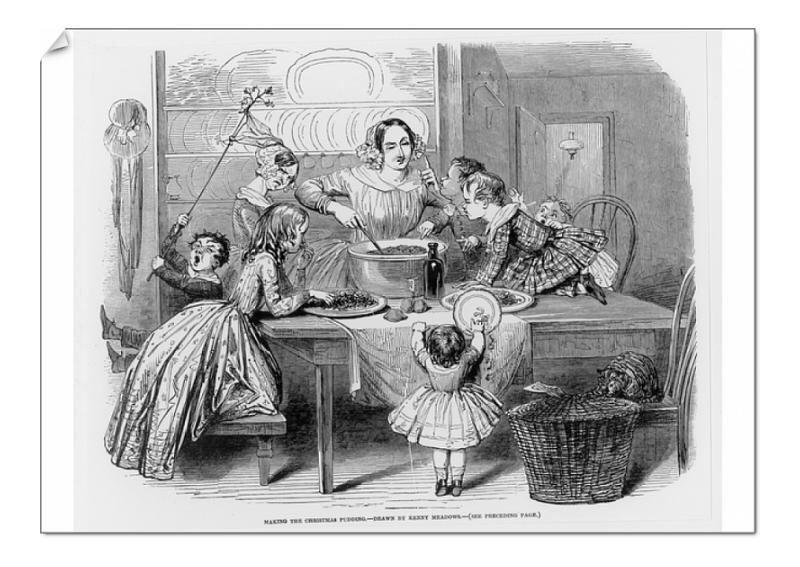
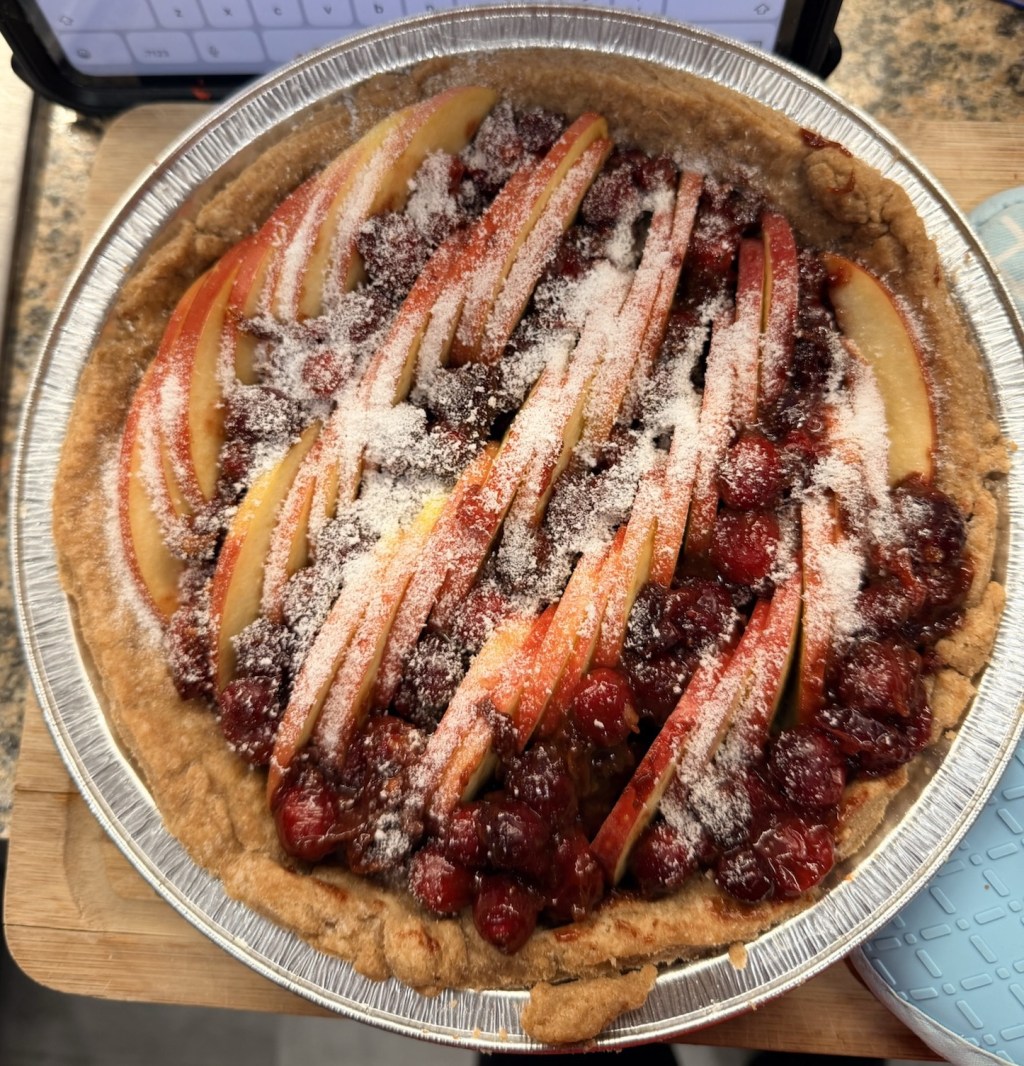
Leftover Blueberry Donut Bread Pudding

Our final class for November had a celebratory snack. Both Tim and Gail brought gifts of food: a delicious pumpkin spiced cream cheese roll and yummy blueberry and cake doughnuts. Tim let me bring the remaining doughnuts home, so I made a leftover blueberry doughnut bread pudding from them. Very good!! The recipe is on my Cornie’s Kitchen blog now (link below).

Gail’s Turban Pumpkins

Gail painted a still life of turban pumpkins and Tim finished up his leaf drawing. I worked to complete my print project. I added some bible verses cut from an almost century old Bible. The pages fall apart when I try to read it, but fixing it to the canvas will keep keep it from decaying further. As Isaiah 40:8 says—


“The grass withers, the flower fades; but the word of our God will stand forever.”

Tim’s Textured Leaf Study

Sometimes the best part of art class isn’t learning how to create a more beautiful painting, but discerning how to live a more beautiful life. We’re constantly surrounded by the woes and suffering of our world, and this experience can cause us to cast a jaundiced eye on life. We can end up with negative attitudes and emotions that affect our own equanimity and wellbeing.

This is a time when my life experiences in ministry and personal suffering help others see God’s transformational grace at work in human suffering. God doesn’t cause suffering, but God can use this time for good. As Paul reminds us in Romans 8:28—“We know that all things work together for good for those who love God, who are called according to his purpose.”

Even Jesus suffered and those of us who bear his name and image aren’t spared this fate. How we handle suffering is the mark of a redeemed person. No one is called to submit to abuse, but we’ll all suffer from illness, indignity, lack of respect, or the ravages of old age. Some of us suffer needlessly because we don’t measure up to an unrealistic ideal image, so we tear ourselves down and say, “we’re no good.” We’re just fine; our expectations are excessive.

Greetings from a Distant Time: It was a hope even then, not a reality.

The high holy days, which we enter into now, are fraught with expectations for many people. Families, who have estranged relationships, may feel a sense of loss if someone doesn’t appear at the family table. Likewise, those who’ve experienced a death will feel the pain of the empty chair. We can’t bring back what was, but we can honor their memories and tell their stories. We can live in the present and build new joys for the family we have now.

In the Bible, inviting someone to eat with you is equivalent to making them part of your family. Therefore, family is the people you choose, not just your blood relatives. We can have many families, but we are to love, care, and protect them all. I consider my art students as part of my chosen family.

In the new year we plan to experiment with watercolors, so if that’s an interest, a Prang 8 color watercolor box, brush, and watercolor paper should be on your Christmas list. Our December schedule is light:


• December 1–class—
• December 8–no class—I’m going to Raney Lectures at PHUMC
• December 15–class—
• December 22 to January 3—vacation—no classes
• January 5—Watercolor class

Joy and peace,

Cornelia

Post Prandial Poses

Recipe for Leftover Blueberry Donut Bread Pudding:
https://cornieskitchen.wordpress.com/2023/11/22/leftover-blueberry-donut-bread-pudding/

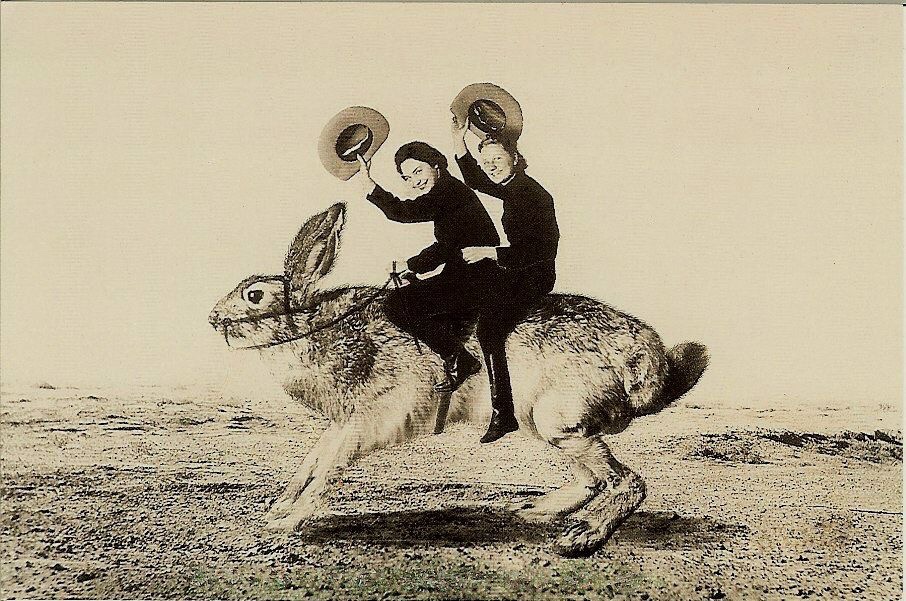
Rabbit! Rabbit! Welcome to November

Abraham Lincoln, All Saints Day, Altars, art, change, chocolate, Civil War, Constitution, Day of the Dead, exercise, Faith, Family, Food, generosity, Habits, Health, holidays, inspiration, Love, nature, poverty, pre-diabetes, pumpkins, rabbits, Thanksgiving, trees, Ukraine, Uncategorized, US Constitution, Van Gogh

My parents would often say, “Time flies when you’re having fun.” If this is so, I’ve had a one whale of a time in 2023. I don’t know where the time has gone, for I’d swear I just woke up in the bright new year of 2023, and now this year has grown a beard of some length. Indeed, the ground was bare, awaiting the warm breath of spring, and now it has experienced its first freeze.

Autumn is a time of transitions. Not only do the trees change colors, and then lose their wardrobe altogether, but we rabbits go from Halloween’s sugar high on October 31st to overstuffing ourselves and the roast beast at the Thanksgiving feast on the Fourth Thursday of this new month. Then we segue into Christmas somnolence with yet more cookies and egg nog (spiked and plain). On occasion we tramp out to decorate the house or scour the woods for greenery, but those days are long gone for most urban dwellers. We’re going to buy from local providers or have it delivered online.

Some of us on the first day of November will still have some of the 35 million pounds of candy corn which are still produced each year. That’s about 9 billion pieces — over a billion more than there are people on Earth. As far as this bunny is concerned, this is 8,999,999,999 pieces of candy corn too many. I’m not a lover of this form of sugar; give me dark chocolate any day. Fortune reported the “dangerous” amount of sugar consumed by kids on Halloween — three cups of sugar in 7,000 calories of candy. For context: That’s 675 grams of sugar, or the same as chomping down almost 169 standard sugar cubes, according to a Fortune article published in 2017.

A Young Bunny

When I was a young bunny, sugar was so restricted in our home, my friends and I would escape our parents’ notice during fellowship time at church to go to the empty adult Sunday school classrooms. We knew where they kept the wonderful Domino Pure Cane sugar cubes for the coffee the grownups drank. We didn’t care for coffee, which was already gone, but the sugar we fell upon like pirates on buried treasure. We didn’t ever consume 169 cubes at once, since that would’ve destroyed the entire stash.

If these had been the 35 million pounds of candy corn, which are still produced each year for Halloween, neither I nor my bunny friend would have ever touched them. The idea about 9 billion pieces — over a billion more than there are people on Earth—are still produced today is incomprehensible to my bunny brain. I think the texture of corn syrup and gelatin isn’t my first choice.

Of course, when the weather turns colder, our bunny bodies sense the need to stoke our internal fires. We do this by consuming more calories, especially the quick acting carbohydrates we find in the sugars and starches that provide the instant “heat” boost our bodies crave. Actually, any food will heat us up, but fruits and vegetables don’t have the same appeal as warm, savory, and fatty foods do in colder weather. The shorter days and the decrease of light in the winter cause problems with our body’s biological clock and lower the levels of the brain chemical serotonin. Plus, many of us reduce our physical activity, so our exercise induced levels of serotonins drop.

Healthy Eating includes More Fiber

We can overcome this loss by planning to be outside during the daytime and making sure to exercise at least 30 minutes daily. Having protein rich snacks and fiber rich soups with complex carbohydrates will help control our hunger spikes. Perhaps this transition time into longer nights and shorter days is why the First Wednesday in November is always National Eating Healthy Day (November 1). If we do only one new healthy choice per week, and add a new healthy option each week thereafter, we can transition our lifestyle into “Eating Healthy.” As a bunny, I remind my friends, it’s also National Vinegar Day—have compassion on yourself and on others. We can love ourselves and others into a better life with kindness rather than harshness. As my grandfather Bunny always said, “You catch more flies with honey than vinegar.”

Day of the Dead Skull

All Saints Day and Dia de los Muertos both are celebrated on November 1. Both recognize the departed loved ones. All Saints recognizes both those who have worked miracles as well as those ordinary saints who have lived among us and given quiet witness to their faith. Dia de los Muertos, the Day of the Dead, is a three-day festival to remember the ancestors and friends who predeceased us. People decorate altars with marigold flowers, photos, and skulls in memory of the dead. They make special food offerings in their honor also.

All Soul’s Day on November 2 is a Catholic holiday to pray for the souls which aren’t yet in heaven, but are in purgatory. Protestants don’t believe in purgatory, so we don’t attend upon this day as holy.

Cookie Monster: “Me want COOKIES!”

Many of us do celebrate Cookie Monster Day on November 2, because who doesn’t like cookies?! The same goes for National Sandwich Day on November 3, for hot or cold, almost anything can be slapped between two slices of bread and get slathered with avocado or mayonnaise, and it’s good to go.

Sandwiches first appeared in American cookbooks in 1816. The fillings were no longer limited to cold meat, but the recipes called for a variety of things: cheese, fruit, shellfish, nuts and mushrooms. After the Civil War sandwich consumption increased and were sold both in high-class lunch rooms and in working-class taverns. A typical turkey sandwich in the 1980s contained about 320 calories, according to a report from the National Heart, Lung and Blood Institute. Twenty years later, a turkey sandwich contained about 820 calories. Choose whole grain bread if possible.

We seniors have more than time on our hand

“Fall Back” on Sunday, November 5, when Daylight Savings Time Ends. We get another hour of sleep on this day when the clocks go back 1 hour at 2 am. I won’t be awake to notice it, but I suggest those of you who aren’t good sleepers begin to look at your evening routines. Set a wind down time on your clock, watch, or mobile device. Let it remind you to turn on quiet music, read inspirational books, or begin your bedtime routine. Sometimes taking off our outside clothes and wearing our “at home” clothes is a signal to our mind to let go of the cares of the world.

Fighting over Van Gogh Pokémon Gifts at the Museum

Go to an Art Museum Today Day and National Chaos Never Dies Day are both celebrated on November 9 this year. I don’t normally consider chaos and art museums as being in the same category, but Disney has made several Night at the Museum movies that revolve around the trope of ancient Egyptian gods awakening to cause havoc. Actual chaos recently erupted at the Van Gogh Museum in Amsterdam when visitors realized the gift shop had already sold out of the Pikachu with Grey Felt Hat promo card, which was modeled on the Vincent self-portrait. Evidently a small group of fans descended on the gift shop, causing a ruckus, and buying out the merchandise. It’s now for sale on eBay.

2023 Veterans Day Poster

Armistice Day marks the November 11,1918 anniversary of World War I, a war which began in August 1914, that few expected to last beyond Christmas. In 1921, an unknown soldier was buried in Arlington National Cemetery. This First World War was “the war to end all wars,” but we’re an overly optimistic nation. We’ve had a Second World War since then, plus many a regional conflict. Every time our battle ships show the flag somewhere, people think it’s going to be WWIII. Fear mongering doesn’t help the nation. We’re better and stronger than that. Plus, we have the moral duty of leadership: our country needs to show the world there’s a better way.

As I recall, both the North and the South expected the great Civil War to last just a short while, just as Putin entered Ukraine believing his army would roll into Kiev in mere weeks. Yet WWI lasted four years, WWII was six years (the US was involved only the four years from 1941-1945), and our Civil War was another 4-year slog. Wars aren’t so much “won” as lost by attrition: one side loses more men, materiel, and willpower so they surrender to the other. War is the most brutal way to settle our differences.

Armistice Day now is Veterans’ Day, November 11, but observed a day earlier (10th) this year. We celebrate our veterans who do the difficult and challenging work of using judicious force against enemy combatants, rather than civilian populations. All of our enlisted personnel take the same oath to protect and to defend our Constitution against all enemies, foreign and domestic:

I, (state name of enlistee), do solemnly swear (or affirm) that I will support and defend the Constitution of the United States against all enemies, foreign and domestic; that I will bear true faith and allegiance to the same; and that I will obey the orders of the President of the United States and the orders of the officers appointed over me, according to regulations and the Uniform Code of Military Justice. (So help me God).”

The US Constitution, 1787

We are an unusual people, we Americans, for our loyalty isn’t to a party, a president, or a person. We are loyal to the constitution, which protects our democratic institutions, values, and freedoms. We can be thankful for those who were inspired to write it, heard the prophetic call to amend it, and have the wisdom to keep us on the straight and narrow.

National Hunger and Homeless Awareness Week is November 11-19 this year. While the economy is recovering, the loss of pandemic assistance funds Is hurting lower income households. They are making hard choices: food or rent, medicine or food. The number of homeless veterans has decreased, but so has the overall population of veterans. The bad news is veterans are still overrepresented in the homeless population. As you prepare for your own feast this year, I hope you remember the hungry in your community. The best way to help is with a financial donation to the local food bank. The bank can purchase food from the warehouse food bank at greatly reduced prices, thereby providing more food per dollar than individuals can purchase on their own.

World Diabetes Day is November 14. Diabetes is a disease on the increase in the world today. In the US alone, over 37 million people have this disease and over 8.5 million have it but are undiagnosed. Over 96 million US adults have prediabetes, a condition in which their insulin doesn’t take the sugar out of the bloodstream well. Switching to whole grains, less processed foods, and adding more fiber to the diet usually helps lower the blood sugar. So does daily moderate exercise.

National Clean Out Your Refrigerator Day is November 15. This is a good day to practice this task, since you’ll be filling it up with excess foods if you’re hosting the feast, or you’ll be traveling away from home. If the latter, you don’t want to return home to spoiled food if the power goes off for any length of time. Ugh: I won’t regale you with the story of stench of the refrigerator in the garage which didn’t power back on after a power outage. Those outlets need to be reset manually because they’re in a “might get wet” zone. The refrigerator inside will come back on automatically. (This turned out to be a get rid of the refrigerator day.)

National Stuffing Day is November 21. If you bake your bread mixture outside of the great bird, it’s called dressing, but if you cram it into the bird, it’s stuffing. It’s safer to cook the bird without stuffing, also quicker. When baking stuffing inside a turkey, it can get get wet and mushy. If you make a flavorful stock from the turkey neck and giblets, you can make your stuffing moist and flavorful without turning it into mush.

If you live in a giant pumpkin, buy a smaller pumpkin for your pie

Pumpkin Pie Day is also November 21, so you can prepare this ahead of time if you wish. You can make a handmade crust or use a store-bought crust from the grocery. Pre bake it and fill it with the pumpkin mixture.

National Cranberry Relish Day is November 22. You can easily make your own with the juice of an orange, some sugar to taste, and cinnamon combined with a package of rinsed cranberries. Heat over medium in a saucepan, stirring frequently to keep from sticking. When the berries burst, reduce heat to simmer and reduce the liquid. Taste and adjust the seasoning. Take off the heat and put into container for icebox. Chill overnight to let seasonings combine. Serve cold as side dish.

Thanksgiving Day is Thursday, November 23. You’ve baked the turkey, and it smells amazing! Let me introduce you to pan gravy from the drippings. You need a little flour, about 2 Tbs; some pepper, about ½ cup of drippings, and 1 cup of hot water. Put the drippings in a heavy saucepan or skillet, add the flour, stirring constantly over medium high heat until flour turns caramel color. This is a medium roux. Slowly add hot water, stirring so no lumps form. Keep stirring till smooth, reducing heat. Add more water slowly if gravy thickens too much. Pepper and salt if necessary.

The idea of “thanksgiving” for the harvest is as old as time, with records from the Egyptians, Greeks, and Romans. Native Americans in North America celebrated harvest festivals for centuries long before Europeans appeared on their soil and before Thanksgiving was formally established in the United States.

In the 1600s, settlers in Massachusetts and Virginia had feasts to thank for surviving, fertile fields, and their faith. The Pilgrims in Plymouth, Massachusetts, had their infamous Thanksgiving feast in 1621 with the Wampanoag Native Americans. The three-day feast consisted mainly of meat: wild fowl procured by the colonists and five deer brought to the feast by the Wampanoag. A a stew called sobaheg was most likely served as a side dish to the main course. It was an easy way to make use of seasonal ingredients, for the stew often included a mixture of beans, corn, poultry, squash, nuts and clam juice. All are used in the traditional dish today, and all would have been available in 1621.

Potatoes weren’t around in 17th-century New England, but corn was plentiful. Natalija Sahraj

Corn and cornmeal were the main carbohydrates on the first thanksgiving meal. The first New England crop of potatoes was grown in Derry, New Hampshire in 1722, so no mashed potatoes were on the menu. Corn bread, corn mush, and corn puddings abounded, since the Native Tribes had shown the colonists how to plant beans, squash, and corn together to maximize growth of all three. The harvest of 1621 likely included beans, squash, onions, turnips and greens such as spinach and chard. All could have been cooked at length to create a green, pulpy sauce that later became a staple in early New England homes. Sweet dishes concocted from sugar or maple syrup weren’t on the menu, nor were honey sweetened deserts. At least, the Pilgrims didn’t have to save room for pie.

After the Pilgrims, for more than two centuries, individual colonies and states celebrated days of thanksgiving. The first national celebration of Thanksgiving was observed for a slightly different reason than a celebration of the harvest—it was in honor of the creation of the new United States Constitution! In 1789, President George Washington issued a proclamation designating November 26 of that year as a ”Day of Publick Thanksgivin” to recognize the role of providence in creating the new United States and the new federal Constitution. During the Civil War, President Lincoln called for a national Thanksgiving Day on the last Thursday of November after the Battle of Gettysburg. In the Great Depression President Franklin Roosevelt moved Thanksgiving Day to the next to last Thursday in November. After two years of public unhappiness, Congress passed a law in 1941 setting Thanksgiving on the fourth Thursday of November.

Thanksgiving, 1858, by Winslow Homer, Boston Public Library

During the week of Thanksgiving, from November 19-25 or 26, we have the holidays of Church/State Separation Week and National Bible Week. If you haven’t been giving thanks for your blessings up to this time, take a break, breathe, and rejoice that you are alive. Give thanks for your hands, your food, your breath, and your heart of love. Share this thanksgiving with someone else. If each of us gives a bit of hope to someone else, we can help others have something to be thankful about.

Chocolate answers all questions.

After the rush of Thanksgiving, some of us bunnies may need medicinal chocolate. November 29 is Chocolate Day. Depending on your personality, you can buy fancy chocolate to share, or you can enjoy it by yourself along with a good book and some lavender tea. If Thanksgiving Day was really overwhelming, National Personal Space Day on November 30 might be calling your name. We all have times in our lives when we don’t need hugs, either because of physical or emotional distress. Besides, we bunnies need to catch our breath before we dash into the Christmas season.

I’m thankful for each of you who read and share my stories.

Joy and peace,

Cornelia


2023 November Holidays Information from Holidays and Observances

http://www.holidays-and-observances.com/november-holidays.html

15 Mind-Blowing Facts About Halloween Candy Consumption in the US

https://www.businessinsider.com/halloween-candy-consumption-usa-facts-statistics-2019-10

Control Your Winter Appetite

https://www.webmd.com/diet/features/control-your-winter-appetite


History of Thanksgiving in America | The Old Farmer’s Almanac

https://www.almanac.com/www.almanac.com/content/when-thanksgiving-day

What the first Thanksgiving dinner actually looked like

https://theconversation.com/what-the-first-thanksgiving-dinner-actually-looked-like-85714


Is Stuffing Your Turkey Safe?

https://www.marthastewart.com/8163046/is-it-safe-stuff-turkey


Wall Street Journal: The American Diet Has a Sandwich Problem – Center for Health Incentives and Behavioral Economics (CHIBE)

https://chibe.upenn.edu/news/wall-street-journal-the-american-diet-has-a-sandwich-problem/


History of the Sandwich | The History Kitchen Blog | PBS Food

https://www.pbs.org/food/the-history-kitchen/history-sandwich/

Van Gogh Museum pulls its Pokémon promo card after opening day chaos

https://www.engadget.com/van-gogh-museum-pulls-its-pokemon-promo-card-after-opening-day-chaos-083349757.html


The Persistence of Effort

adult learning, Altars, art, Attitudes, beauty, brain plasticity, Children, cognitive decline, Creativity, exercise, Food, Habits, Health, Holy Spirit, inspiration, knitting, Love, Ministry, mystery, nature, Painting, Prayer, pumpkins, purpose, rabbits, renewal, Right Brain, sleep, Van Gogh, vision

These shoes are made for walking

I was reading an article in the New York Times the other day. In “How I Learned to Love Finishing Last,” the author wrote about her slow pace as a runner. As one who regularly finishes last in my age group in the annual Spa 5K Walk each November, I’m optimistic one day I might get old enough to be in a nonagenarian age group all on my own. Perhaps if I’m 90 and still doing a 5K, they’ll give me a ribbon just for participating! “The last will be first and the first will be last,” especially if there’s only one of us in the race!

“When we compare ourselves to others,” said Dr. Justin Ross, a clinical psychologist in Denver who specializes in athlete mental health and performance, “we set ourselves up to suffer. Instead, the real psychological benefits come from enjoying what your body can do.”

Portrait of Yayoi Kusama in costume in front of pumpkin painting, photo: Noriko Takasugi

Suffering physically isn’t what art class is about, although we may suffer indignities to our egos, but this shouldn’t hold us back from doing our art works. The case of the Japanese artist Yayoi Kusama is evidence even hallucinations of voices and images can’t keep an artist from creating. If our daily efforts don’t measure up to what we imagined in our mind, it’s merely because our inner eye sees better than our hands can execute our vision. Sometimes our eye forgets what it once learned, for we haven’t used our skill of looking in a while. A runner doesn’t leap off the couch and immediately run a marathon or even a 5K. The smart athlete takes the time to train progressively for the distance beforehand. Also, they get new shoes.

Kroger Run: Two ghost pumpkins and a small pie pumpkin

Sometimes the coach has slept over the summer also. Just as students in school need a time to relearn last year’s lessons, as a coach in art class I sometimes forget the lessons, which are second nature to me because they’ve been inculcated by multiple teachers since I was eight years old, aren’t as ingrained to my own students. I also forget I’m always observing everything around me: cloud patterns, changing colors on trees, sunlight dappling on tree branches, shadows on the ground, and reflections in windows. I think about these patterns rather than about what I need to do next or next week. My calendar will remind me of these things in due time. I’ll be wrapping this up soon so I can work on my monthly Rabbit blog.

Rabbit playing “Hide the Pumpkin.”

A National Institute on Aging study found five healthy lifestyle factors — physical activity, not smoking, not drinking heavily, following the Mediterranean-style diet, and engaging in mentally stimulating activities — can have important benefits. People who engaged in four or five of these behaviors had a 60% lower risk of developing Alzheimer’s compared to those who only followed one or none. People who followed two or three of the activities had a 37% lower risk. This is your free wellness plan from Dr. Cornie, who has no medical degree, but did stay in a Holiday Inn once.

Debunking the Myth of the Split Brain Theory

Although we commonly think art is a “right brained” activity, in 2013 a group of researchers at the University of Utah discovered people actually use both sides of their brains equally. Back in the 1970’s when I was seeking employment after graduate school, the “Art is a right brain myth” ruled the creative work world. I once suggested I’d be a good candidate for a museum position because I understood both the artistic and the logical mind. I was not hired. Intuitive understanding of the brain a half century ahead of time doesn’t exactly open the doors to a fancy job.

As I recall, I got a checker’s job in a grocery store and ended up counting the teller trays and preparing the bank deposits for that store. The good news is creating works of art is a multi-process activity, one that depends on several brain regions and on redundancy of art-related functional representation rather than on a single cerebral hemisphere, region or pathway. This means even when we lose our ability to form words (typically a left hemisphere activity) our ability to create art still exists. We can still express our inner feelings and thoughts. This is good news for the aging and those who love them.

Yayoi Kusama – Pumpkin, 2014, installation view, Donum Estate, California, photo: Robert Berg

One one the great sadnesses in my ministry is being with young people who desperately want to have their old one’s memories recorded, but waited too late to ask them or were too busy with their own lives to sit and listen to these stories of the olden days. Once their old person has a stroke and loses the ability to form words, the opportunity has passed. Those stories will be locked in their minds due to aphasia, and no one or no amount of time will pull them out. We always tell young parents their babies need to be enjoyed while they’re still young, but we should also tell families to get the stories of their elders while they still can. “Strike while the iron is still hot” will take on a new meaning one day.

We needed bigger pumpkins

Gail and I were the only ones in class today. Lauralei showed up to gift us chocolate cake and keep us company. Tim and Mike were out of town. Gail and I both repainted old canvases. I showed some of the unusual ways pumpkins have been decorated by various artists, but none of them sparked any interest. We got down to work by covering our old canvas with a base of titanium white paint. Then I located all three of the pumpkins with circles and drew a baseline for the object on which they sat. I didn’t look over at Gail’s work for a while, but then I noticed she’d almost completely finished one pumpkin without roughing in the shapes of the others.

Gail had a big canvas today.

“Did you plan on finishing that one pumpkin before drawing the other two?” I asked.

Gail gave me a “needs more caffeine” stare.

“That’s what I thought. Maybe next time draw in the rough shapes so you get everything located in space relevant to each other.”

Pumpkin Spice Latte Time

We kept on painting until clean up time. I often say “I’ve slept since then.” It’s my all purpose excuse for forgetfulness or just plain airheadedness. Sometimes I have my mind on other things and I’m not focused on what’s in front of me. I forget about the wisdom of Brother Lawrence, who said “many do not advance in the Christian progress because they stick in penances and particular exercises while they neglect the love of God which is the end. This appeared plainly by their works and was the reason why we see so little solid virtue.” He also said, “there needed neither art nor science for going to God, but only a heart resolutely determined to apply itself to nothing but Him and to love Him only.”

Cornelia’s small painting of pumpkins

We know Brother Lawrence from the classic text, The Practice of the Presence of God. Although it dates from the late 17th century, his lessons on living life in joy in the present moment, all for the love of God are invaluable for us modern folks who tend to live for our 15 minutes of personal fame, social media clicks, or self interest. We aren’t used to the monastic life today, or to the discipline of that lifestyle. We live in a Burger King world, in which each individual gets his or her own way to every extent possible. Unfortunately, the Christian lifestyle is one of discipline, but not harsh punishment:

“Now, discipline always seems painful rather than pleasant at the time, but later it yields the peaceful fruit of righteousness to those who have been trained by it.” ~~ Hebrews 12:11

In art class we focus on the disciplines, just as the guild artists taught the apprentices back in the day. These disciplines are not only for safety, for some of our art tools are dangerous, but also some of our techniques are proven to yield better results than others. This is why carpenters measure twice and cut once. They also cut on the outside of the line, rather than the inside. They can shave down a piece easier than adding to it. Murphy’s Law recognizes this: “A wire cut to length will be too short.”

Zen Tangle drawing of pumpkins: exercise in texture

Art class has no mysteries, but we can forget the “secret gnostic knowledge passed down by word of mouth” from our previous classes. I often use the excuse “I’ve slept since then.” Another good excuse is “My mind has gone to Pluto.” I share these with you all, for they’ve always worked for me. Of course it helps to be a natural blonde. Then again, I’m very organized, but I’m also very active, so sometimes my calendar gets overwhelmed, and I pull out the “OOPS! Card.” Even in retirement I’m still creating and sharing my faith through art and writing. It’s my way of exercising those brain cells to keep them from dying off. We old folks can still learn new things, even if it takes longer. This is what we call the persistence of effort. Those who keep using their skills won’t be losing those skills.

The same goes for learning a new skill. It’s all a matter of repetition. We can’t get frustrated if we don’t get it on the first try. We won’t be a good role model for the young if we have that attitude. We need to lower our expectations. I used to think I couldn’t knit, but only crochet. After my mom, who was a stellar knitter passed on, a friend taught me to knit in an afternoon! Where this sudden bilateral coordination came from I have no idea, but it was so welcome. Perhaps I needed to be in the right frame of mind, or I wanted to be able to carry on my mom’s memory, but I was definitely receptive to her teaching.

Letter to Theo Van Gogh, September 18, 1888

It’s never too late to learn and we’re never too old to start learning. Art isn’t just good for the brain, but it’s good for the soul. Art is our attempt to represent truth, beauty, and nature in media that can be accessible to others. By doing this, we bear witness to the creation and the Creator. We only need give our best efforts, and let God’s Spirit guide our growth.

Joy, peace, and perseverance,

Cornelia

We have pumpkins galore on the autumn altar.

How I Learned to Love Finishing Last


How the Aging Brain Affects Thinking | National Institute on Aging

https://www.nia.nih.gov/health/how-aging-brain-affects-thinking

The creative-right vs analytical-left brain myth: debunked! – Dr Sarah McKay https://drsarahmckay.com/left-brain-right-brain-myth/

Art and brain: insights from neuropsychology, biology and evolution – PMC

https://www.ncbi.nlm.nih.gov/pmc/articles/PMC2815940/

The Project Gutenberg eBook of The Practice of the Presence of God, by Brother of the Resurrection Lawrence (free ebook)

https://www.gutenberg.org/cache/epub/5657/pg5657.html

Rabbit! Rabbit!

arkansas, art, chocolate, Easter, Faith, Food, Garden of Gethsemane, Good Friday, holidays, Holy Thursday, john wesley, Love, Painting, photography, rabbits, Salvador Dali, Spirituality, Spring Equinox, United Methodist Church


Welcome to April 2023

April Fool! Caught you! Were you the prankster or the pranked? Even an institution as stuffy as the British Broadcasting Corporation isn’t above pranking the public on the first day of April. If a fool and his money are soon parted, then whatever the BBC was selling, they were having a jolly good time in their advertising department. You can watch their mini documentary on Flying Penguins below:

When I was at Perkins Seminary, we editors of the weekly newsletter had a tradition of an April Surprise. This followed the practice of the former Babylonian Schismatic, which was an alternative, satirical student newsletter published occasionally between 1981 and 1988.

One year, when I was coeditor, it was more of an April Debacle. My partner in crime and I were sure the beach ball bouncing off the usual chapel steeple logo would be enough to clue our community into the prank. However, we failed to realize how little sleep our fellow students actually got during school weeks, how seriously they took the printed word, and worst of all, that our newsletter also went to bishops’ widows in faraway places. This last was what got us into the real trouble.

Our faux reports of Perkins losing its accreditation due to shenanigans of prior graduates, who were in the news at the time, had graduate students storming the dean’s office. Even worse, the bishop’s widows were calling him to inquire what kind of school he was overseeing. The fact schools can only lose accreditation for their own failures (and not the trespasses of former students or faculty) never crossed anyone’s mind in the ensuing uproar. So of course, we criminals wrote handwritten letters of apology to the widows and printed retractions in the next newsletter for the students. I now understand why my mother said I sometimes take things too seriously. Still, I’ve have found others who make me look like a giggle queen.

The Giggle Queen and her Pet Rabbit

Speaking of giggles, although the historical roots of April Fool’s Day are shrouded in mystery, the British, who are mostly known for their dry wit and stiff upper lip, seem to enjoy this holiday to excess. Especially at the BBC, which back in 1957, produced a fascinating prank documentary on the Swiss Artisanal Spaghetti Industry. They showed a Swiss family harvesting ripe spaghetti strands from their spaghetti bushes. At the time because of rationing, spaghetti wasn’t widely available. After 1956 in the British Isles, Italian companies opened spaghetti factories and Italian immigrants opened restaurants. The British developed a taste for this food. As a result, some British families were so enthusiastic, they wanted to purchase their own spaghetti bushes for a home garden. Others were unhappy to be pranked. This may be one of the first times the medium of television was used to stage an April Fool’s Day hoax.

Moveable Feasts: Passover and Easter

Israel was an ancient agricultural culture and followed a lunar calendar, so sighting the full moon was important. Passover is always pegged to the Hebrew calendar, which is based on the lunar cycle. It starts in the middle of the month of Nisan, when the moon is full, typically falling in March or April of the modern Gregorian calendar. As a result, Passover typically begins very close to Easter. Easter Sunday is always the first Sunday after the first full moon after the Spring Equinox. However, due to the shorter Hebrew calendar, sometimes it gets a leap month to keep it in tune with the seasons. In 2024, when the leap month plays a part, we’ll have an early Easter on March 21st, but Passover won’t start until April 22nd.

Rabbit Last Supper

These religious holidays are forever entertwined because of the historical events of the Last Supper, which we assume was a ritual meal or Seder, and the crucifixion on a Friday, which required Christ’s body to be taken down from the cross due to the beginning of Passover at sunset.The Last Supper took place on a Thursday night, even though the actual Passover didn’t begin until Friday night.

Dali: The Sacrament of the Last Supper, 1955, oil on canvas, National Gallery of Art, Washington D. C.

As Wesley’s Notes on The New Testament observe, “Jesus took the bread—the bread or cake, which the master of the family used to divide among them, after they had eaten the passover. The custom our Lord now transferred to a nobler use. This bread is, that is, signifies or represents my body, according to the style of the sacred writers.”

We know this because Jesus was arrested in Gesthemane after this meal and then taken to the Roman Governor Pilate on Friday morning, the day of Preparation for the Passover. John 18:28 reminds us how the temple priests “…took Jesus from Caiaphas to Pilate’s headquarters. It was early in the morning. They themselves did not enter the headquarters, so as to avoid ritual defilement and to be able to eat the Passover.”

Early Handdrawn Valentine, 1814, writing in an unending circle

The Jews in the first century kept faithfulness according to laws of separation and purity, so they kept away from unbelievers on holy days. This was the biblical practice of the time. Early Christians continued this practice until Paul began his outreach to the Greek and Roman citizens of the world. When in the later gospel of John (14:15) Christ says, “if ye love me, keep my commandments, Wesley’s commentary understands this to mean: “Immediately after faith he exhorts to love and good works.” This is why we United Methodists practice an open table at Holy Communion, or the Lord’s Supper, for all who love the Lord and desire to be in love and fellowship with their neighbors are welcome at his table. We don’t exclude anyone, for God includes all people into the circle of God’s love.

Love never ends and love never dies

Since Easter Sunday is always the first Sunday after the first full moon after the spring equinox, this makes Easter a “moveable feast.” Unlike a picnic, for which we tote our fixings from our kitchen to a park or to the countryside, or unlike a house to house “progressive dinner,” Easter is called “moveable” because it’s not on a fixed date like Christmas or New Year’s Day.

Baked Ham with Canned Pineapple Rings and Cloves

My family’s Easter feast always centered about a baked ham, often covered with canned pineapple rings and studded with cloves. We were a modern American 1950-60’s family and Betty Crocker reigned in my mother’s kitchen. Just this week I saw a tv advertisement of a family feast with this very same baked ham. I suppose when the economy gets dicey, people pull out old familiar recipes from the great-great-grandmother’s kitchen. Since I have a new great-grandchild on the way, and a knitting project started, I can safely say, this isn’t an April Fool’s joke. I’ve seen the sonogram images!

2012-2022 Top Ten Cities for Extreme Weather Warnings issued by National Weather Service

“April showers bring May flowers” is an ancient rhyme. Unfortunately, these showers also bring pollens of every kind, since trees and flowers both acquire crowns of glory. The Old Farmer’s’ Almanac notes while November has a bit more rain in store for Arkansas than April usually brings, this month’s warmer weather favors conditions for flowers to bloom and trees to bud. While we might tire of the storms and the havoc they wrack upon the populace, we’re always thankful if they only cause damage to property and don’t take human lives.

Sick Bunny

Across North America, the pollen season has lengthened by 20 days since 1990. Pollen concentrations have also increased by 21 percent over the past three decades. This means some of us have been doctoring ourselves or visiting the RD—real doctor—since February. The stubbornest of us waited until almost April because we were convinced we could heal ourselves. If you still have no energy and are grumpy to boot after a month, you too need a RD. Better living through chemistry with put a perk back into your bunny hop.

Stylish Bunnies

Speaking of the weather, I have seen many years now of Easter sunrise services, and even more later noontime Easter feasts. One thing ties them all together: no matter how cute my spring outfit is, no one ever sees it because I’m always wearing a raincoat or a winter coat over it. My guess is rain and cool weather will come and our egg hunts will likely be inside. As long as there’s a dark chocolate Easter rabbit for my personal gratification, I’ll be happy. I discovered last year’s version stored in the cabinet, so I’d better make some chocolate chip cookies soon.

Only hugging can save us

There’s plenty of silly or merchandising holidays in April, but you can read about them at the link below my name. Until May, I remain your April Fool…

Joy, peace, and chocolate rabbits for everyone,

Cornelia

April Daily Holidays, National, International. Holiday Insights.
https://www.holidayinsights.com/moreholidays/april.htm

Why Easter and Passover are observed on different dates each year
https://www.azcentral.com/story/travel/arizona/2018/03/28/why-easter-and-passover-have-different-dates-each-year/466341002/

The worst cities in the U.S. for allergies
https://www.washingtonpost.com/climate-environment/2023/03/16/allergy-season-pollen-count-climate/

BBC Flying Penguin Documentary April Fool Prank
https://youtu.be/9dfWzp7rYR4

BBC 1957 Spaghetti Documentary April Fool Prank
https://youtu.be/8scpGwbvxvI

BBC ON THIS DAY | 1 | 1957: BBC fools the nation
http://news.bbc.co.uk/onthisday/hi/dates/stories/april/1/newsid_2819000/2819261.stm

No spuds please, we’re British
https://www.theguardian.com/g2/story/0,3604,371547,00.html

Is April Really The Month of Showers? – Farmers’ Almanac
https://www.farmersalmanac.com/april-showers-bring-may-flowers-34814

Where the Most Weather Warnings Are Issued in the U.S. | Weather Underground
https://www.wunderground.com/article/safety/thunderstorms/news/2022-03-18-most-national-weather-service-warnings-us

From the Shadows to the Light

architecture, art, Carl Jung, change, Faith, Family, Fear, Food, greek myths, hope, inspiration, mystery, nature, New Year, purpose, rabbits, renewal, Roman Forum, shadows, Spirituality, Temple of Janus, Zeitgeist

Rabbit! Rabbit! Welcome to 2023! This old bunny may not see the clock strike midnight, but I’m recovering from a bad cold. Rest is more important than ringing in the New Year. Every year has its own character.

Live with Optimism, even when the nights are long.

Zeitgeist is a word that comes straight from German — zeit means “time” and geist means spirit, so the “spirit of the time” is what’s going on culturally, religiously, or intellectually during a certain period. When it comes to the turn of the New Year, we bunnies wonder if our new broom will sweep clean or if the old broom will leave the same mess as always in our cozy rabbit dens.

Always use a New Broom on the New Year for Good Luck.

Are we filled with hope or with foreboding? Do these dark days and deep nights of winter fill us with a gloomy spirit? Or do the imperceptibly lengthening minutes of daytime give hope to the shadows the cold of winter has left in the depths of our souls? Or have the coastal grandmother bunnies among us learned to ignore all this stum and drang by blending their afternoon tea time into early evening wine tasting?

Everything a culture considers taboo, evil, or immoral typically ends up being proscribed or “consigned to the outer darkness.” From there it ends up inside us in what Carl Jung called “the Shadow,” or our inner “Satan,” as it were. Repressed and inhibited, it festers and rages in the darkness of our “unconscious.” Even in extreme cases, it takes on a quasi-autonomous existence of its own, occasionally intruding as the famous “voices in the head” or even as a multiple personality.

Dr. Jeckyll and Mr. Hyde is a famous light and dark shadow character from fiction, but too often in real life we rabbits point out our own dark shadows in the lives of those we so easily demonize. As my wise old granddaddy rabbit would reprimand me, “When you point out the faults of others, you have three fingers pointing back at you.”

Luke 6:41
“Why do you see the speck in your neighbor’s eye, but do not notice the log in your own eye?”

I always find life more refreshing on the first day of the year, perhaps because I don’t over indulge in strong drink as I once did in my wayward bunny youth. We bunnies all have a wayward youth, for how else would we know what the immature among us are getting into? My old daddy rabbit believed, “Experience was the greatest teacher of all time, as well as its most costly tutor.” Indeed, we remember the costliest lessons best of all. The young ones today say, “Go big or go home.” My grannie would say, “If you’re in for a penny, you might as well be in for a pound.” After all, everyone who participated, either in a small or large way, would be held accountable.

Janus: Bloodstone intaglio of Roman god of transition, passages, and new beginnings.

As I look back on old 2022, grizzled and worn out by conflicts both at home and abroad, I can understand why the ancients thought of Janus, for whom January’s named, as a two faced god. One face, which looked backwards, was lined, bearded, and craggy featured, while the forward looking face of the new year was youthful, smooth, and clean shaven. Every new year is fresh and clean as a beardless youth’s face, as well as untroubled by any recollection of pains or past memories. Most of us bunnies also have short memories, for we tend to repeat the same mistakes over and over. Rabbits have short term memories of around 4 minutes, but can remember bad experiences for longer periods, just as humans can.

Unknown Roman Artisan: Soldier’s Brooch in the Form of a Rabbit, 100–300 CE, Copper alloy with champlevé enamel, found in Britain, Metropolitan Museum of Art, NYC.

In Ancient Rome, as the poets Ovid and Horace recount, Janus was the god of war and peace. They differ as to whether the Temple of Janus was a prison for peace or war, but they both agree the prison was meant to maintain PAX ROMANA, or the great Roman Peace. If peace were impounded, peace would be guaranteed to the nation. If war were imprisoned, it wouldn’t rampage about to destroy the countryside. Just as Janus had two faces, Roman religion was open to multiple interpretations and meanings. Perhaps today, they’d be known as “freethinkers,” as opposed to “literalists” or “strict constructionists” in their interpretation of their ancient stories.

Seeing the Night Skies through Bunny Eyes

Maybe in 2023 we bunnies might want to look at different ways of thinking, instead of one fixed way. There’s a difference between a straight and narrow path and a rut. On the path we can still see other twists and turns, which might change the outcome of our experience and existence. In a rut we’re stuck for life, with no where out, until it becomes our grave. If the world is changing more quickly than is comfortable for us, I give the example of my old granddaddy again. He pushed a button to turn on one of the first electric lights in his home town and lived to see men walk on the moon. Be resilient, be adaptable, and embrace change. After all, we’re always changing, so the option of never changing is death.

Ancient Greek Black Figure Vase, Wasps Attacking Men Robbing Zeus’ Bee Hives for Honey, c. 540 BCE, British Museum, London.

Romans would celebrate January 1 by giving offerings to Janus in the hope of gaining good fortune for the new year. They believed their acts set the stage for the coming year, so it was a common practice to make a positive start to the year. Not only did they exchange well wishes and sweet gifts of figs and honey with one another, but according to the poet Ovid, most Romans also chose to work for at least part of New Year’s Day because they saw idleness as a bad omen for the rest of the year. If 1st century Romans were to drop into some of our 21st century celebrations by means of Dr. Who’s traveling blue Police Box, they would wonder how the barbarians, who sacked Rome in 455 CE, had managed to take over our modern New Year.

Some days I need to be in two places at once.

We toga wearing bunnies, who are long of tooth, know from experience the barbarians are always at the gate of our safe little gardens. Sometimes they’re even inside the gardens of delight, as Peter Rabbit and his Cottontail friends perpetually discover when Mr. McGregror chases them with a rake. If we cast a look back on 2022 with our rheumy eyes, we saw Russia attack Ukraine, an outrageous act which sent millions of people to emigrate from their the destroyed cities and ravaged countryside, with the hope of finding safe haven in another European country.

Mr. McGregor thinks Peter is a Barbarian, who has slipped through his impenetrable garden gate.

Across the pond, on our southern border, thousands of migrants have fled disaster and violence in their homelands, but even though the US economy is hurting for workers in our entry level jobs, they have difficulty getting in. Are these people actually “barbarians at the gate?” Or have we projected our Shadow Fears upon them because they are foreigners? We did this with the Japanese, who m we placed into Internment Camps in World War II, much to our disgrace. This bunny asks us to search our hearts in 2023 to see if our three fingers are pointing back at our own selves.

Think about how Woodstock symbolized the 1960s: Woodstock was part of the Zeitgeist of the 1960s. Whatever seems particular to or symbolic of a certain time is likely part of its Zeitgeist. I came home from college one Christmas wearing a necklace of tiny black and white seed beads, only to be greeted by my old fashioned daddy, “Are you a hippy now?” For him, any one thing represented the whole, for he grew up with the ancient bunny wisdom, “One bad apple spoils the bushel.” We were only reconciled when he realized I hadn’t lost my fondness for his beloved Cowboys football team.

If we can find one common interest in this strange and fraught world with those with whom we would be at war, then we might be able to come to peace with them. If we insist on all or nothing, no bunny will get anything. We all want to have endless days of peace and joy, but the life of a bunny also has days of struggle and sorrow.

Earth as seen from Space

Carl Jung, the great psychologist once said, “There are as many nights as days, and the one is just as long as the other in the year’s course. Even a happy life cannot be without a measure of darkness, and the word ‘happy’ would lose its meaning if it were not balanced by sadness.”

We also have this promise from 1 Corinthians 10:13—

“No testing has overtaken you that is not common to everyone. God is faithful, and he will not let you be tested beyond your strength, but with the testing he will also provide the way out so that you may be able to endure it.”

Many of my southern bunny kinfolks will eat a variety of this New Year’s Day meal: black eyed peas, ham, greens, and cornbread. We think every pea consumed equals another day of good luck. Of course, we’re not the only superstitious clan.

Our cousins in Japan, celebrating Ōmisoka, or New Year’s Eve, gather together to eat long noodles to cross over from one year to the next. At midnight, many visit shrines or temples for Hatsumōde. Shinto shrines prepare amazake, a sweet low alcohol drink, to pass out to crowds and most Buddhist temples have large cast bells that are struck once for each of the 108 earthly desires believed to cause human suffering.

Year of the Rabbit

I found some interesting New Year’s good luck traditions, which are practiced around the world. In Greece, folks hang onions outside on their front doors to ward off evil. On New Year’s Eve, Colombian households have a tradition, called agüero, of placing three potatoes under each family member’s bed—one peeled, one not, and the last one only partially. At midnight each person, with eyes closed, grabs for one. Depending on the potato they select, they can either expect a year of good fortune, financial struggle, or a mix of both.

Ruined House (suspected fruitcake damage)

In Ireland, people bang Christmas bread against the walls of their house for good luck. If any of you bunnies have a Christmas fruitcake still lying around, please choose another loaf to prevent damage to your walls. Good contractors are backed up and hard to find, especially around the holidays.

The Danes chunk plates at their friends’ doorsteps for good luck on New Year’s Eve. Perhaps all that darkness from the winter solstice makes my northern relatives harebrained, but we love them just the same. I suppose every bunny has some weird relatives.

New Year’s Eve Weather Predictions

Old bunny weather lore says, “The first 12 days of January foretell the weather for each month of the year.” Another way to forecast the weather for the coming year depends on the wind. The old bunnies are at odds as to when this poem should be recited, with some advocating for sunset on New Year’s Eve and others at the break of dawn on New Year’s Day. This bunny notes the poem mentions New Year’s Eve, and since none of our ancient bunnies had time traveling abilities, I’d think we are safe to practice this on the Eve at sunset, then go out to do our responsible reveling.

If New Year’s Eve the wind blows south
It betokens warmth and growth.
If west, much milk and fish in the sea.
If north, cold and storms there will be.
If east, the trees will bear much fruit.
If north east, then flee it, man and brute. Then throw your new year wishes to the wind!

GOOD HEALTH AND JOY FOR EVERY BUNNY

My New Year’s wish for 2023 is for each and every one of my bunny friends to have a better year than last year. And especially to know deep in your hearts, each of you are God’s own beloved children. Remember this good word from Romans 8:28—

“We know that all things work together for good for those who love God, who are called according to his purpose.”

Joy, peace, and love each and every day in 2023,

CORNELIA

Multiple Interpretation of the Opening and Closing of the Temple of Janus:
A Misunderstanding of Ovid “Fasti” by S.J. Green, 1.281 on JSTOR
https://www.jstor.org/stable/4433099

5 Ancient New Year’s Celebrations – HISTORY
https://www.history.com/news/5-ancient-new-years-celebrations

15 New Year’s Traditions From Around the World | Glamour
https://www.glamour.com/story/new-years-eve-day-traditions

New Year’s Weather Folklore: Predicting Weather in the New Year | The Old Farmer’s Almanac
https://www.almanac.com/new-years-day-weather-folklore

The Zeitgeist and the Shadow | The Chrysalis https://longsworde.wordpress.com/2018/07/20/the-zeitgeist-and-the-shadow/

Winter Solstice 2022

arkansas, art, Faith, Food, hope, inspiration, Light of the World, Ministry, New Year, shadows, Spirituality, Stonehenge, trees, winter solstice

This shortest day of the year is the Winter Solstice, which is on Wednesday, December 21, at 4:48 P.M. EST, in the Northern Hemisphere. Some think of this as the Longest Night, but I’m a person of the light, not the darkness. I always prefer to look to the light, no matter how dim or feeble it may seem.

Be the Light

Yet darkness is a necessary experience in our lives. We do not yet live in the land of the “unclouded sky” or the heavenly realm:

“And the city has no need of sun or moon to shine on it, for the glory of God is its light, and its lamp is the Lamb.” —Revelation 21:23

Kindness is a warm fire

In the darkness, growth often happens: germination and rooting are two types of unseen activity that help produce the plant we see above ground. Without adequate light, the visible plant won’t thrive. So both darkness and light are at work to produce fruit in our lives.

“We know that all things work together for good for those who love God, who are called according to his purpose.” —Romans 8:28

Rejoice! The days will get brighter soon!

The Winter Solstice in Hot Springs is at 3:48 pm CST on Wednesday, December 21, 2022. In terms of daylight, this day is 4 hours, 37 minutes shorter than the June solstice. In most locations north of the equator, the shortest day of the year is around this date. The good news about the Winter Solstice is the days will begin to lengthen, although imperceptibly at first: one minute, four minutes, seven minutes, ten minutes, thirteen minutes, sixteen minutes, and so on.

In Scandinavia, the Norse celebrated Yule from December 21, the winter solstice, through January. In recognition of the sun’s return, fathers and sons would bring home large logs, which they would set on fire. The people would feast until the log burned out, which could take as many as 12 days. Today we recognize the source of the “Twelve Days of Christmas” song in this festival. The Norse believed that each spark from the fire represented a new pig or calf that would be born during the coming year. Prosperity for all in the New Year!

In this present darkness, a small light still shines brightly

In this time of stress and strain, grief and gripes, let’s look to the in-breaking light, and the renewal of life and love. Here’s a “Winter Solstice Chant” by Annie Finch, for your pleasure:

Vines, leaves, roots of darkness, growing, now you are uncurled and cover our eyes with the edge of winter sky leaning over us in icy stars Vines, leaves, roots of darkness, growing, come with your seasons, your fullness, your end.

Rice Krispy Stonehenge

Of course, if you can’t get your travel plans together at the last minute to visit Stonehenge, England for the winter solstice celebration, you can always make Rice Krispies Bars in the shape of the ancient monument. The recipe link is at the bottom of the page. Hint: don’t turn the heat up high or your treats will be hard. Due to high carbohydrate count, one “pillar” of Stonehenge Krispies is actually two servings.

Modern Yule Log

Joy and peace and a Good Yule log,

CORNELIA

Annie Finch, “Winter Solstice Chant” from Calendars, published by Tupelo Press. Copyright © 2003 by Annie Finch. Reprinted by permission of the author.

Sunrise and sunset times in Hot Springs https://www.timeanddate.com/sun/@4115412

The Original Rice Krispies Treats™ Recipe https://www.ricekrispies.com/en_US/recipes/the-original-treats-recipe.html

Rabbit! Rabbit! Welcome to February!

art, Civil War, epilepsy, Evangelism, exercise, Faith, Food, Forgiveness, generosity, Healing, Health, holidays, Love, Ministry, rabbits, Reflection, Spirituality, Valentine’s Day

Mother Theresa

February is a cold month here in the northern hemisphere. Maybe that’s why we rabbits yearn for the warmth of love, since those emotions kindle a fire in our hearts. It’s a cold, dead heart of a bunny that can’t quicken with love. I find those who have difficulty loving others often are struggling with an inner pain or grief, which often expresses itself in depression. Depression closes a person off from others. As we used to say when we were young, “Been down so long, it looks like up to me.” That phrase was originally used by bluesman Furry Lewis in his 1928 song “I Will Turn Your Money Green.” Both Jim Morrison of the Doors in 1966 and Bob Dylan in 1978 incorporated a lyric from the old bluesman’s song.

Reliquary Arm of St. Valentine, now in the Metropolitan Museum of Fine Art, New York City

Yet February is also known as a month for love. In the middle of the month, for this one has only 28 days, we celebrate Valentine’s Day. Of course, history gives us not one, but three men by the name of Valentinus, Latin for strong or powerful. It was a common name in the Roman Empire back in the early years of the Christian church. One Valentinus was a general stationed in North Africa, who died on February 14th with his men in battle. The other two, who also died on the same date, have a better claim to the sainthood. One was the bishop of Terni, who healed a crippled boy and converted his whole family to Christianity.

The Roman senate heard of this heresy, arrested Valentinus, and decapitated him. The boy’s family arranged to take his body back to Terni, but all of the funeral procession was killed by the Romans. Chopping up bodies doesn’t just belong to Zombie movies. This is how pieces of the saints’ bones were distributed to various churches. Of course, sometimes this results in multiple skulls, but the saints didn’t have double heads.

Roman emperors didn’t like contending with other gods

The third Valentinus had a similar story about healing and conversion. He came to the attention of the emperor because he was preaching Christianity.  Then he was sent to house arrest, where the owner was promised a bounty if he could dissuade Valentinus from his faith. Instead, the faithful man healed his jailer’s daughter. Then he baptized the householder and all who lived there, more than forty in all. Of course, everyone went to jail and did not pass go. No one collected $200. There was no get out of jail free card. This is how one becomes a red martyr, which is why our Valentine hearts are red, not white or blue.

Vintage Valentine

What’s interesting is none of the historic Valentines were ever connected to love and affection. They were known instead for healing and faith, especially epilepsy. There are almost 40 saints associated with epilepsy, a number only surpassed by those related to the black plague. In France they were called “saints convulsionnaires” (convulsion saints). During the middle ages the difference between epilepsy and chorea (neurodegenerative diseases affecting movements) wasn’t well known yet. This is how St. Vitus became one of the saints to which patients with epilepsy prayed more often for help. Epileptic people also sought the help of St. Willibrord, St. John the Baptist and St. Matthew.

19th CE German card: St. Valentine Healing an Epileptic Youth

Undoubtedly, the most renowned was Valentine. The cult began in several European countries, up to the point that this condition became linked with the saint’s name. In France epilepsy was called “maladie de Saint Valentin,” in Germany the “plague of Saint Valentine” and in Dutch the word sintvelten was a synonym of the type of epilepsy with falling seizures. In German, Valentine is pronounced “fallentin” and is connected with one of the symptoms of epilepsy, the falling sickness or the falling-down disease.

Every birdie needs some birdie to love

How did we get to cute cupids with tiny bows and heart shaped arrows aimed at our sweetie pie’s love center? We can thank Chaucer, who wrote The Parliament of Fowls in 1380, and mentioned “seynt Volantynys day/ Whan euery bryd comyth there to chese his make. [Saint Valentine’s day, when every bird comes there to choose his mate.]” Bird love apparently occurred on Valentine’s feast day at the start of the English spring. If birds can do it, maybe we rabbits and humans should take the hint. After all, it’s been a long cold winter.

Bad bun puns abound

February 2nd is Ground Hog Day, and if Punxsutawney Phil sees his shadow on Groundhog Day, then that means there are six more weeks of winter. If not, then we’ll have an early spring. Or so the legend goes. Of course, any time Phil’s prediction has turned out to be wrong, it’s always been a result of a “mistranslation” by his handlers. Of course, we’ll have what we have. We rabbits take the good with the bad. An early spring means fresh greens in Mr. McGregor’s garden, while more winter means more warm soup and cuddling by the fireplace.

Music score illustration in heart shaped book

Everybody needs somebody to love. We can love another person, we can love our country, we can love our neighbors, we can love god, and we can’t forget to love ourselves. Love is one of the most popular themes in music, as the lion’s share of pop music lyrics in every decade contained references to relationships and love (67.3%) and/or sex and sexual desire (29.9%). In my own music library, I found 117 songs for 8 hours and 43 minutes worth of “love” playlist.

When I think of love, I remember the many texts I’ve preached to various congregations over my time in ministry. The most important is 1 John 4:19-20—

“We love because he first loved us. Those who say, “I love God,” and hate their brothers or sisters, are liars; for those who do not love a brother or sister whom they have seen, cannot love God whom they have not seen.”

With Love

Gods love for God’s creation is the source of all other love, for if we’ve known God’s unconditional love for us, then we can share that same love for others. Our lack of forgiveness for others and our need to control them “so they deserve our love,” only shows how little most of the rabbit population understands the steadfast love of God, which persists, even when our love fails and turns away.

Popular music reminds us over and over, “Everybody needs somebody to love.” Jerry Wexler signed Solomon Burke to Atlantic Records in the early ’60s. Together, with producer Bert Berns, they turned that song for the offering into Burke’s most famous 1964 song: “Everybody Needs Somebody to Love.” You can hear him preach and sing it here:

The original Everybody Needs Somebody to Love

We probably know this same song better from The Blues Brothers movie. The Blues Brothers’ version of “Everybody Needs Somebody to Love” not only included Burke’s introductory spoken words, it modified those words to adapt to the plot. It was the climactic performance of the movie, and as such, it became one of the more memorable renditions of the song. In 1989, The Blues Brothers’ “Everybody Needs Somebody to Love” was released as a single in the UK, peaking at Number 12. Here’s the movie clip:

The Blues Brothers at their Best

“Everybody Needs Somebody to Love” has been covered by groups as famous as The Rolling Stones, the Grateful Dead, as well as Wilson Pickett, not to mention psychedelic garage rock bands. Those rabbits are still having flashbacks, and there’s no accounting for taste if they’re still listening to that in garages today.

If bunnies could talk…

February 20th is Love your Pet day. I know you want to give your pet the love and attention it deserves as one of God’s creatures, for it didn’t ask to be born into this world and it depends on us, just as a child does. Pets give us unconditional love and appreciation, something we can learn from them. Too often we love only if someone reciprocates tit for tat for us. This is called conditional love. It’s transactional, a give and get, or a mutual backscratching. This is the lowest form of rabbit love: “I’ll give you a carrot if you don’t interrupt me for fifteen minutes.” I confess I’ve stooped to this in my life with my own small daughter bun.

The third Monday is always Presidents’ Day, which is a three day holiday for many people. This is a day to love your country. It celebrates George Washington, our first President, who led our ragtag armies, but was a man of deep thought: “The foundations of our national policy will be laid in the pure and immutable principles of private morality, and the preeminence of free government be exemplified by all the attributes which can win the affections of its citizens, and command the respect of the world.”

The other President we honor is Abraham Lincoln, who steered our nation through its most divisive period, the Civil War. In his first Inaugural Address to Congress on March 4, 1861, he closed with these fateful words, only to have the Confederate States fire on Fort Sumpter in the early morning hours of April 12, 1861.

“In your hands, my dissatisfied fellow countrymen, and not in mine, is the momentous issue of civil war. The government will not assail you. You can have no conflict, without being yourselves the aggressors. You have no oath registered in Heaven to destroy the government, while I shall have the most solemn one to “preserve, protect and defend” it.

I am loth to close. We are not enemies, but friends. We must not be enemies. Though passion may have strained, it must not break our bonds of affection. The mystic chords of memory, stretching from every battle-field, and patriot grave, to every living heart and hearthstone, all over this broad land, will yet swell the chorus of the Union, when again touched, as surely they will be, by the better angels of our nature.”

In 1862, Confederate soldier Robert King made this basket weave folded card for his wife from scrounged paper. Opened up, it showed two crying lovers, a particularly sad foretelling of his death.

So much for the “war of northern aggression,” for some rabbits have been dispensing “alternative facts” for over a century and a half. But, we yearn always to make the broken whole, for like the Saints Valentinus of old, love is a healing balm. The love of God flows through these miracle workers and it’s God’s power, not the human beings, that heals the afflicted. Indeed, even today, when we have modern medicine, we faithful rabbits say, God called people into healing ministries, God provided the resources of intelligence and inspiration, and also the generosity of funding.

Visiting the Rabbit Doctor

Some rabbits want to restrict God’s miracles to those which happen without medical assistance (extraordinary means), but some of us recognize God most often works in and through ordinary means. This isn’t an alternative fact, but healing miracles happen all the time. At the time of the Civil War, life expectancy in the USA was only 40 years. Today, it’s almost twice that! We have 40 more years to live, love, and laugh. We now have 40 years to be “over the hill,” so I think for every rabbit’s sake, we need to banish this ridiculous rite of passage, or at least move it to age 50.

If today’s rabbits would take better care of their bodies than my generation, they might extend the life expectancy and enjoyment by some years. Love your body and care for it with nutritious food, adequate sleep each night, and appropriate exercise at least three to five days a week. Also think of activity minutes, and move about a bit every hour, rather than just sitting all day.

Love is a divine energy

There’s many a holiday in February, but Fat Tuesday will be March 1 with Ash Wednesday on the following day. So let’s practice LOVE all month long to prepare our hearts for the greatest gift of love of all (John 3:16-17):

“For God so loved the world that he gave his only Son, so that everyone who believes in him may not perish but may have eternal life. Indeed, God did not send the Son into the world to condemn the world, but in order that the world might be saved through him.”

Remember, Every bunny needs some bunny to love!

Joy, peace, and love,

Cornelia

Percentage of top-40 songs referring to 19 content categories by decade. | Download Table

https://www.researchgate.net/figure/Percentage-of-top-40-songs-referring-to-19-content-categories-by-decade_tbl1_322664390

Been Down So Long by The Doors – Songfacts

https://www.songfacts.com/facts/the-doors/been-down-so-long

Who Was Saint Valentine? A History of The Figure’s Origins – HistoryExtra

https://www.historyextra.com/period/roman/valentine-day-history-saint-who-real-story-cured/

Saint Valentine: Patron of lovers and epilepsy – ScienceDirect

https://www.sciencedirect.com/science/article/pii/S0121737217300833

George Washington, The First Inaugural Address

Cover Songs Uncovered: “Everybody Needs Somebody to Love” – The Pop Culture Experiment

Abraham Lincoln, First Inaugural Address (March 4, 1861)

United States: life expectancy 1860-2020 | Statista

https://www.statista.com/statistics/1040079/life-expectancy-united-states-all-time/

STARS AND THE WINTER SOLSTICE

adult learning, art, Astrology, chocolate, Christmas, cosmology, Creativity, Faith, Family, greek myths, grief, holidays, hope, Icons, Imagination, incarnation, Marcus Aurelius, Ministry, nature, Painting, Philosophy, poverty, Spirituality, Stonehenge, trees, winter solstice

Stonehenge at Winter Solstice

This is a time of year when we look to the night sky for a sign. It’s not for nothing the depths of darkness are the beginnings of hope and our desire for the return of the healing light. People around the world and over the generations of time have celebrations of feasting, family reunions, and honoring their culture’s gods on the darkest day, or the Winter Solstice. The term solstice derives from the Latin word “sōlstitium”, meaning “the Sun stands still”. On the Winter Solstice, the sun reaches its southern-most position, shines directly on the Tropic of Capricorn, and seems to stand still there.

We’re all familiar with Stonehenge, a Neolithic stone monument in England built about 4,500 years ago to track important moments in the solar year. A later custom is the blazing Yule Log, a Norse tradition. The family would drag a huge piece of wood into their house, set it into the main fireplace, and let it burn for several days. It was a type of sympathetic magic to encourage the distant and faint sun to return, reinvigorated. The family often wrote down their desires for the new year as an offering to the gods. These were then burned in the fire. Afterwards, the family scattered ashes from the fire in the corners of every room in the house for good luck.

Hiroshige: The Sixty-nine Stations of the Kiso Kaidō

The Chinese also have a Winter Solstice festival, which once was a new year’s festival. The family gathers to eat traditional foods, and they honor their ancestors, as well as the old ones still living among them. This poem by Ruan Yue, in the late Northern Song Dynasty speaks of this:

罗袜新成,更有何人继后尘。
The socks for elders are newly woven;
the custom should be handed down.

A later poet of the Song Dynasty, Fan Chengda, had a more optimistic outlook on the dreary and dark days before the Winter Solstice, or perhaps he was using “positive pep talk to reframe his grumpy mind.”

休把心情关药裹,但逢节序添诗轴。
Don’t be thinking about medicines all the time;
write a new poem at the solar term.

I can relate to Fan Chengda, for I find I have difficulty waking up without the sun streaming into my bedroom windows. I’m also more irritable and mopey on these dark days. It’s probably Seasonal Affective Disorder, which is a form of depression related to the lack of light in this season. I tend to think dark thoughts, feel more pain, and lose my appetite, except for medicinal chocolate, which I consume under the Tim Allen mantra, “If some is good, more should be better!”

For Medicinal Purposes Only

When I get this type of mood on, the commercial Christmas we see on television and in the movies strikes a discordant note in my soul. I think about the ancient text, which reminds us when the parents of Jesus went to Bethlehem to be counted in the census: “And she gave birth to her firstborn son and wrapped him in bands of cloth, and laid him in a manger, because there was no place for them in the inn.” (Luke 2:7)

What most of us glide right over is Joseph had kinfolks galore in this town, but none of them opened their home to Mary, for she was pregnant before he married her. The innkeepers in town weren’t going to risk their reputations for these two either. Only one innkeeper took pity on them and let them stay with the animals in the stable. This marks the birth of the Christ child as an outsider to his whole extended family, the House of David.

Botticelli: Nativity, 1475

The Magi, or Wise Men, came from the East to visit King Herod, asking, “Where is the child who has been born king of the Jews? For we observed his star at its rising, and have come to pay him homage.”( Matthew 2:2)

Herod was worried he would be deposed, so he sent the Magi to find this child, then return and report to him. The Magi followed the star until it stopped over the place where the family was staying. They offered their gifts and returned home, without telling Herod where the baby was. Jesus was an outsider to the Roman occupation which propped up the local kings. He was a threat to the way governments rule the world.

Shepherds are the epitome of outsiders in the Bible, for they live outdoors among sheep and goats, neither of which are clean. In fact, anyone who’s gone camping knows how hard staying clean is. Glamping isn’t camping, and neither is RVing. My youthful experiences in Girl Scout camps of pitching tents and digging rain gutters is the closest I’ve ever been to living on the land. Even then, we had outhouses and cold water showers. The biblical city folk who could keep the ritual rules of cleanliness looked down on the shepherds as a lower class group, or outside of society.

Imagine a group of shepherds sitting around a nighttime fire, eating a simple meal, and chatting about their day or their families at home. Then an angel of the Lord stood before them, and the glory of the Lord shone around them, and they were terrified (Luke 2:9). I’d be terrified also, as I imagine you would be too! There’s a good reason the first words out of angels’ mouths are “Do not be afraid!”

But the angel said to them, “Do not be afraid; for see—I am bringing you good news of great joy for all the people: to you is born this day in the city of David a Savior, who is the Messiah, the Lord. This will be a sign for you: you will find a child wrapped in bands of cloth and lying in a manger.” (Luke 2:10-12)

Giotto: Nativity at Padua

If ever the outcasts of the world needed good news, if ever the hopeless needed a savior, if ever the least of all needed one just like them, it was these lowly shepherds, who went to find a newborn child lying in an animal’s feeding stall. No fancy crib for the newborn king, no royal robes or golden crown, just ordinary swaddling clothes. He looked just like any other child, except his birth was proclaimed by angels, honored by Magi from afar, and given a place through the grace of a kind innkeeper.

Those of us who will celebrate Christmas with our families, our extended friends, and our relations in a wild, chaotic buzz of coming and going, feasting and drinking, and perhaps exchanging of gifts, don’t know the quiet and holy night when the light of the world entered “to give light to those who sit in darkness and in the shadow of death, to guide our feet into the way of peace.” (Luke 1:79)

We keep our homes lit inside and out with megawatts of electric lights, both colored and white. Some of us even cue our lights to blink to seasonal music. Those of us who live beyond the great urban areas, can better see the stars at night, since there’s no light pollution. This is one reason we need to keep our national parks as close to nature as possible, for one day, these may be the only places people can marvel at the bright stars against the dark canopy of the sky above.

Gail: Stars across the Sky

Gail brings her love of the outdoors and her experience as a park ranger to her work. Over the trees, a floating band of stars become a pathway across the night sky.

Mike: Sun, Moon, and Stars

Even if our assignment was stars, that never means “only stars.” After all, the sun is a star, which is very close to us, astronomically speaking. If you’re going to have the sun and stars, you might as well have the moon also. I always say, “Why not?” The Tim Allen rule sometimes applies in art class: “More power!” When you go too far on the Tim Allen scale, that’s when his sidekick Al reminds him, “Sometimes less is more.” Mike certainly captures the energy and joy of the celestial bodies in this painting through the bold colors and strong brush strokes.

Sally: The Cosmos

Sally had an idea in her mind, but no image to look at. She wanted to show the cosmos in motion, as if God were looking down upon it. In her mind’s eye, she imagined this from memory. As she worked on the small canvas, she’d add more paint into the areas which weren’t quite dry and got somewhat frustrated at the paint not bending to her will. As a matter of technique, painting into a dry area is better than continuing to add color to a wet area, since the wet brush picks up the wet layers below that. Mike and Gail, having many sessions under their belts, have already crossed this particular bridge. She also learned something significant. It’s easier to paint something when you can look at it. I think it’s a good start and it holds promise: “There is one glory of the sun, and another glory of the moon, and another glory of the stars; indeed, star differs from star in glory” (1 Corinthians 15:41).

Cornelia: Starry Night

I’m not a fast walker, nor do I get down the road quickly. I’m too busy noting the color of the sky, thinking what colors to mix to get the grey trees of a late December day, or how to paint the towering cumulus clouds of summer. I file these thoughts away in the treasure house of my mind, for one day I’ll need them. I look at the shadows of the leaf clumps on trees, but not at each leaf alone. The tree leaves are communities, not individuals. They exist as groups, so the artist treats them as such.

I’m not sure about others, but many walkers are fixed on their personal best speed, or going a half mile longer. Some people drive to the grocery store and make their list in their head as they go. In the store, they make a new to do list for the home, and once that’s done, they make another list for the next day. The cycle starts all over again. They never once raise their eyes to greet the stars, to note the cycles of the moon, to enjoy the sunset colors, or the sunrise either. They’re probably more productive than I am, but I take time to reflect deeply on the “why of things” rather than repeating the same rhythms over and over. Most people like the familiar rhythms, however, while I question if they still have meaning in today’s world.

Today I saw the Winter Solstice Dawn

In ancient times, the Greeks and Romans thought the stars had a power and energy to determine the fates of human beings. Marcus Aurelius, a Roman emperor and stoic philosopher of the 2nd century, wrote in his Meditations: “Dwell on the beauty of life. Watch the stars, and see yourself running with them.” From his privileged location, he could identify with the heroic persons in the astrological figures of mythology.

Some people are “born under a bad sign,” or are unlucky in life. Of course, some say we make our own luck, but people born into harsh circumstances lack the same resources to make choices for good. The deck is stacked against them, from living in trauma filled neighborhoods to a lack of quality foods due to a paucity of grocery stores. As Albert King, the great blues artist once sang, “If it weren’t for bad luck, I wouldn’t have no luck at all.”

The good news is the bright light of the Christmas star points to the new light, which has come into the world. We hear, amidst the cacophony of commercials and piped in musical carols, the words of the prophet Isaiah: “Arise, shine; for your light has come, and the glory of the LORD has risen upon you” (60:1).

As a gift, you can listen to the great Albert King sing “Born Under a Bad Sign,” by copying the link below to your browser.
https://music.youtube.com/watch?v=F2IqJtBL6yk&list=OLAK5uy_kRTT9VaZ7Ht_pjIoBhtqhS_99sMi_D5a4

Our art class returns Friday, January 4, 2022, at 10 am. I hope to bring pomegranates, if I can still find them in the store. We’ll make a fresh start in the New Year, so if you want to join, you’ll start where you are. We are a “one room schoolhouse,” so there’s no grade levels with us. We’re all learning and improving from where we are at the moment.

Joy and peace,

Cornelia

How to Make a Yule Log
https://www.learnreligions.com/make-a-yule-log-2563006

5 Most Beautiful Chinese Winter Solstice Poems to Appreciate
https://www.travelchinaguide.com/essential/holidays/winter-solstice-poems.htm

The New World Atlas of Artificial Sky Brightness | CIRES
https://cires.colorado.edu/Artificial-light

Rabbit! Rabbit! Welcome to December!

art, Christmas, coronavirus, Faith, Family, Food, grief, Hanukkah, holidays, Imagination, Ministry, nature, pandemic, purpose, vaccinations, winter solstice

“The more things change, the more they stay the same,” my daddy was fond of saying. We often long for the “way things used to be,” as if the Golden Age of the past was the best of all times. Yet, that past often exists only in our memories, but not in the lived reality of all persons. This is the classic story of the young prince, who while sheltered within the confines of his sumptuous palace never knew want, but once he walked among his people, he saw suffering and need everywhere. Today we know him as the Buddha, or Siddhartha Gautama. Many over the centuries have wondered why suffering exists in the world, or why they themselves must suffer. The Buddha saw all life as suffering, or rather our inability to accept the impermanence, change, and dissatisfaction with the present moment.

Rabbit Buddha

The Golden Age is a myth and poetic concept, as well as a political and philosophical construct. It began in Greece and was fixed in people’s minds by the time of the Roman Emperor Augustus. The Golden Age is a dream of an “earlier time when people lived peaceful, untroubled lives, and the earth supplied all their wants.” Those who read the Bible can easily find a parallel story in the first humans, who lived in the Garden of Eden. Of all the high and holy days in our cultural calendar, Christmas rates number one for nostalgia, both the personal kind and the universal type.

Nostalgia is the state of being homesick, or a wistful or excessively sentimental yearning, either for the return to or of some past period or irrecoverable condition. It can be a salve for those who suffer, or it can be more salt poured into an open wound. It just depends on how one frames the experience. We feel “homesick “ in the worst possible way, for we yearn for the security of the familiar and the safe. Mostly we yearn for the people we love and are kin to us.

Happy Rabbit Family

I remember the year I divorced my husband. It was necessary, for I couldn’t trust him to care for our daughter due to his alcoholism. The first Christmas was hard, for his family chose him and shut me out, as did all his friends. Decorating the Christmas tree was always a family affair in the Golden Age of my memories of Christmas. If this year I had no family, I would bring friends to decorate my tree. Just because I’d always celebrated one way before, I wouldn’t let my circumstances keep me from finding joy this Christmas. I called my young mother friends, invited their families to my home, and we decorated my tree within an inch of its life. It was my best tree ever! And then we ate and drank a toast to our creation. My friends were salve for my suffering, and helped me create a good memory, which still gives me pleasure to this day, four decades later.

Big Holiday Family Dinners

Christmas brings families together, but this is a double edged sword. While we all want to be with our families, we also know oil and water don’t mix. After both my parents died, I often ate with some of my clergy pals’ families. I was glad to know they had relatives who also wore their crazy pants to dinner. If I ate with congregation members, they were often on their best behavior, as if I were some sort of god on earth. You’d think after six months at a charge, I’d already have disabused them of that notion, but some people never see your true nature, but only the image of every pastor they’ve ever known before. More often, I’d get pastoral calls of family crises during holiday seasons, so after years of this recurrence, I finally learned to plan for it. I eventually realized we all have a Golden Age of Christmas in our minds, but in real life, we live in the Age of Iron. When reality hits our delusions, the disconnect is palpable. We feel it in our very bones.

1896 Thomas Nast illustration in Clement Clark Moore’s ‘Twas the Night Before Christmas

For many Americans, images of Victorian Christmases include memories of “children all snug in their beds with their visions of sugar plums dancing in their heads,” which we recognize as one of the opening lines of Clement Clark Moore’s “A Visit from St. Nicholas,” a.k.a. “Twas the Night Before Christmas.” These sugar plums aren’t sugared fruits, but are more like candy covered peanuts or almonds. Jelly beans also are made by this same process. Whatever these treats were, the children dreamed of a world of happiness, sweetness, and delight.

As my Depression Era mother would say, “If wishes were horses, beggars would be kings.” That outlook never stopped me or my brothers from wanting everything in the Sears Christmas catalog, even though we knew these were just suggestions for Santa. Yet we never felt deprived, for whatever we received was a gift, plus it was more than we had before. On Thanksgiving day this year, consumers spent at a pace of at least $3.5 million per minute on line due to stores being closed for the holiday. This year, the average household is pegged to spend $924 for online shopping, more than double the $440 expected for in-store.

December 15 is Wear Your Pearls Day

The National Retail Federation (NRF) projects November/December retail sales of $843.4 billion to $859 billion, up 8.5% to 10.5% from 2020 results. NRF said its forecast — excluding automobile dealers, gas stations, and restaurants, and covering Nov. 1 to Dec. 31— tops the previous high of $777.3 billion. This total is up 8.2% over 2020, as well as the average gain of 4.4% over the past five years. This increase is in spite of supply chain hiccups, rising gas prices, and the pockets of as yet unvaccinated individuals, who continue to be the greatest number of COVID admissions to our hospitals. It’s as if we’re trying to replace the suffering of our present with presents for those we love. This also accounts for our desire to donate to charities at this season.

Scrooge of Christmas

Yet the Scrooge of Christmas continues to be COVID, for as an Augusta University Medical analysis released in May of 2021 revealed, which looked at COVID-19 related deaths in vaccinated versus unvaccinated individuals—only .8% (150) of vaccinated people accounted for the 18,000 COVID-19 deaths in May. If you want to give someone the gift of life this Christmas, take them to the local pharmacy and get them started on their vaccinations.

The Centers for Disease Control and Prevention has found both infection-induced and vaccine-induced immunity are durable for at least six months — but vaccines are more consistent in their protection and offer a huge boost in antibodies for people previously infected. Unfortunately, unvaccinated persons are also the prime hosts in which the virus can mutate, so the Grinch has already brought us the latest variant of concern, Omicron.

This variant was first identified in the South African peninsula, due to their excellent testing facilities. Of course, now the nations of the world have isolated the countries there, so they now feel punished by these bans. Travelers arriving in major world airports already have tested positive for for this variant, so we can expect disruptions and quarantines worldwide to follow. During this holiday season of restoring relationships, COVID keeps breaking our ties instead of rebuilding them.

DeLee: Found Objects find a home in the No Room Inn

We can long for the Golden Age of light from our younger days, when our parents took on the big worries so we could have the pleasant memories of an untroubled childhood, or we can fix our sight on the lights of our faith. The great star of the east which announced the birth of Jesus was a pale light compared to “The true light, which enlightens everyone, (which) was coming into the world.” (John 1:9) His was “The light (which) shines in the darkness, and the darkness did not overcome it.” (John 1:5).

Colorful Menorah

Our Jewish friends meet the darkness of this Hanukkah season with prayers and menorahs, nightly lighting candles to disperse the darkness of hopelessness against great foes. They remember doing battle against spiritual powers, with God empowering their weakness. God never comes for the strong, but has a special kindness for the poor and weak. This is why we should feel blessed, no matter our personal experience, but especially during the holidays. The ceremony begins on November 28 and ends December 6, since it’s set by the lunar calendar.

So also are these December celebrations light filled: Burning the Yule Log on the 4th, St. Lucia on the 13th, the Winter Solstice on the 21st, Kwanzaa on the 26th, and finally, New Year’s Eve. Our good earth will bring its tilt back towards the sun gradually in the days following the winter solstice. This darkness too shall pass, whether it’s our personal grief or our universal suffering.

Winter Solstice brings back the Light

We’ll keep walking until we meet the better land beyond the horizon. If this isn’t yet the Golden Age of our memories or the Golden Age of our sugar plumb dreams, let’s work together as we walk to build a better world for all people, “for we are what he has made us, created in Christ Jesus for good works, which God prepared beforehand to be our way of life.” (Ephesians 2:10)

Merry Christmas and Happy Holidays to all my Bunny Friends!

May you have a mindful holiday, full of joy and peace,

Cornelia

Dukkha: What the Buddha Meant by ‘Life Is Suffering’
https://www.learnreligions.com/life-is-suffering-what-does-that-mean-450094

Reckford, Kenneth J. “Some Appearances of the Golden Age.” The Classical Journal, vol. 54, no. 2, The Classical Association of the Middle West and South, 1958, pp. 79–87, http://www.jstor.org/stable/3294223.

Wynne Parry: Why We Feel Nostalgic During the Holidays
https://www.livescience.com/17571-nostalgia-holidays-memories.html

Sugar Plums: They’re Not What You Think They Are – The Atlantic
https://www.theatlantic.com/health/archive/2010/12/sugar-plums-theyre-not-what-you-think-they-are/68385/

U.S. Thanksgiving Online Shopping Spending to Set Record
https://www.bloomberg.com/news/articles/2021-11-26/u-s-thanksgiving-spending-to-set-record-as-shoppers-move-online

U.S. holiday retail sales outlook brings good tidings
https://www.supermarketnews.com/consumer-trends/us-holiday-retail-sales-outlook-brings-good-tidings

The Washington Post: CDC finds immunity from vaccines is more consistent than from infection, but both last at least six months
https://www.washingtonpost.com/health/2021/11/01/what-works-better-vaccines-or-natural-immunity/

Staggering COVID-19 Statistic: 98% to 99% of Americans Dying are Unvaccinated – AU/UGA Medical Partnership
https://medicalpartnership.usg.edu/covid-19-staggering-statistic-98-to-99-of-americans-dying-are-unvaccinated/

Night before Christmas, Creator: Moore, Clement Clarke, 1779-1863 ( Author, Primary ), date: c1896, The University of Florida, George A. Smathers Libraries, Donor: Egolf, Robert
McLoughlin Bros., inc ( Publisher )
Nast, Thomas 1840-1902 ( Illustrator ) https://ufdc.ufl.edu/UF00085407/00001

All of the versions of Clements’ work can be found at the UF Library site. The illustrations are telling of the age in which they drawn.

Rabbit! Rabbit! Welcome to May!

Altars, apples, art, Civil War, coronavirus, exercise, Family, flowers, Food, greek myths, grief, Healing, Health, holidays, Holy Spirit, Love, Memorial Day, Ministry, ministry, pandemic, purpose, rabbits, renewal, Retirement, righteousness, shadows, sleep, Strength, Stress

We’ve made it to May, the official door to summer, picnics, swimming pools, backyard cookouts, and slower paced lives. Or so we hope, as the temperatures warm and the pandemic wanes. Of course, this last is dependent not just on our individual responses, or even on our citizens’ cooperative actions, but it also depends on the developed nations of our world sharing our expertise and resources with the larger world’s need. If we ever thought we could build a wall and isolate our people and economy from the outside, our need for imported goods and our desire to travel on cruise ships seems to trump our need for isolation. India’s ongoing coronavirus catastrophe results from an inadequate health care system and a lack of vaccines, oxygen, and PPE. Less than 10 percent of Indians have gotten even one dose, despite India being the world’s leading vaccine manufacturer.

Matisse: Swimming Pool, paper cutouts, 1952, MOMA

As we come out of our enforced hibernation, like bears we shed our winter coats and start foraging for foods in an ever widening territory. We’re looking for reasons to celebrate and tantalizing foods to taste. The yum factor and new environments suddenly become sirens singing irresistible songs, which have the opportunity to dash our small bark against the rocks if we’re not careful. Like Ulysses, the ancient Greek hero, we travel between Scylla and Charybdis, hoping not to wreck.

J. M. W. Turner: Ulysses Deriding Polyphemus, 1829, Tate Gallery, London.

Fictional heroes make a big splash in May. On May 1, 1939, Batman, the caped crusader, made his first appearance in Detective Comics Issue #27. Star Wars Day is “May the 4th be with you.” On May 5, 1895, Richard F. Outcault published the first ever cartoon, The Yellow Kid. Since all those years ago, cartoons have seeped into our lives through every media outlet possible. If it weren’t for The Yellow Kid all those years ago, we probably wouldn’t be watching Iron Man and Captain America slugging it out on the big-screen. May 25 is a tribute to author Douglas Adams, who wrote the famed novel, The Hitchhiker’s Guide to the Galaxy.

Quote from The Hitchhiker’s Guide to the Galaxy

It’s a rather easy day to celebrate and it’s done by taking a towel with you wherever you go: to work, school, or just to the shops. This way you can celebrate such gems of wisdom as, “Nothing travels faster than the speed of light with the possible exception of bad news, which obeys its own special laws.” The only thing that’s truly important on this day is you don’t forget to bring a towel!

Don’t Panic: Carry a Towel

Oh, and the answer to the “Great Question of Life, the Universe and Everything” is “forty-two.” In the 1979 novel, the supercomputer Deep Thought takes 7.5 million years to calculate the answer to this ultimate question. The characters tasked with getting that answer are disappointed because it isn’t very useful. Yet, as the computer points out, the question itself was vaguely formulated. To find the correct statement of the query whose answer is 42, the computer will have to build a new version of itself. That, too, will take time. The new version of the computer is Earth. To find out what happens next, you’ll just have to read Adams’s books. For a math geek discussion of the significance of 42, read the link “For Math Fans” below.

Salad of spring greens and edible flowers

Having dispensed with heroes, we can move onto the significant May Days that truly appeal to me. “April showers bring May flowers” is a saying I’ve heard since my childhood ever so long ago. Historians believe this phrase may date back to a 1610 poem, which contained the lines, “Sweet April showers, do spring May flowers.” A longer phrase, “March winds and April showers bring forth May flowers,” has also been traced back to 1886. Of course, this tidbit of wisdom depends upon your geographic location, for folks inland and north may wait until what we southern folks call “early summer” before they get their “springtime.”

Rabbit and animals dancing around a Maypole

“The month of May was come, when every lust heart beginneth to blossom, and to bring forth fruit,” wrote Sir Thomas Malory in Le Morte d’Arthur. The early Greeks called this month Maia, after the goddess of fertility, many of the early May festivals relate to agriculture and renewal. May Day, celebrated on the first with the Maypole, is one such festive event that was more debauched in earlier times, but now survives as a chaste minuet of colorful ribbons woven around a tall pole by children dancing in an interweaving circle below it.

Maypole dance patterns

Other modern May festivities include No Pants Day on 5/1, originally an end of the college year prank at the University of Texas, Austin, which spread to other realms needing release, and World Laughter Day, celebrated on the first Sunday of May. This holiday helps raise awareness about the benefits of laughing and promotes world peace through laughter. Laughing can instantly help reduce stress and brings us closer to other people, as we share our happiness with them. Those who take part in World Laughter Day can help spread positivity and cheerfulness to help change the world for the better. As Ralph Waldo Emerson said, “What potent blood hath modest May.”

No Diet Day is May 6, a good day to remember our good health isn’t based on a scale number or a pant size. Instead, our health is dependent on nutritious foods, adequate exercise, and sufficient sleep. Extreme weight loss, except under a doctor’s supervision, usually leads to yo-yo weight gain, with the body gaining back the lost weight and more after severe deprivation. Slow, long term, weight loss is more likely to be permanent loss, since we aren’t “dieting,” but changing our habits. May 11th is Eat What You Want Day. I suggest we don’t follow Oscar Wilde’s habit: “My doctor told me to stop having intimate dinners for four, unless there are three other people.”

Speaking of breaking a fast, May 12th ends the month of Ramadan, the holy month of observance for Muslims. It was during Ramadan Muhammad, the prophet of Islam, received the revelations from angel Gabriel that allowed him to compile the holy book of Quran. Upon arriving in Medina, Muhammad announced Allah had established two days of celebrations for Muslims, Eid Al Fitr and Eid Al Adha. The purpose of Eid Al Fitr was to commemorate the end of the fasting of Ramadan, and mark the start of the Shawwal month, as well as to thank Allah for giving Muslims the perseverance to fast during Ramadan. The customary feast day greeting is “Eid Mubarak,” which translates to “blessed celebration” or “Happy Eid.”

Wayne Thiebaud: Bakery Counter, Oil on canvas, 1962, Private Collection,
© 2019 Wayne Thiebaud / Licensed by VAGA at Artists Rights Society (ARS), NY

The dessert of May is apple pie. Originally invented in England, the earliest apple pie recipe dates all the way back to 1381. The original recipe is very similar to the one we currently know, but it also included figs, raisins, pears, and saffron. The Dutch also created their own version of the apple pie, and the first recipe was published in a 1514 cookbook. This recipe is very similar to the apple pie we know and love today. Apple Pie Day is May 13th.

English and Dutch settlers brought the apple pie recipes into the colonies of what would become the United States, during the 17th and 18th centuries. They had to wait until the apple trees they planted grew and bore fruit, so at first apples were mainly used to make cider. It was only in the 18th century, when the first apple pie recipes were printed in America, that the dessert quickly grew in popularity. Following this came the 19th century Legend of Johnny Appleseed, whose real name was John Chapman. He crisscrossed the expanding American frontier to bring seeds for apple orchards for homesteaders. He also brought news and the gospel for fifty years.

Apple Pie 5 cents a slice and Homemade

Chapman, or Appleseed, lives on as a barometer of the ever-shifting American ideal. Some see him as a pacifist, others as an example of the White Noble Savage (so remembered long after the settlers drove indigenous peoples from the land), and others see a mere children’s book simpleton. Some see him as a frontier bootlegger, since he helped expand the hard cider industry. Others see Johnny Appleseed as the patron saint of everything from cannabis to evangelical environmentalism and creation care—everything, that is, but the flesh-and-blood man he really was.

Our heroes are too often cardboard cutouts, and we don’t spend much time reflecting on their shadow sides. Of course, much like a Flat Stanley, a two dimensional character doesn’t have enough density to cast much of a shadow, unless the light is just right. This is why continuing Bible study is so important: most of us stop in grammar school and never get an adult insight into the scriptures. When we meet grownup problems, we have to wrestle the questions of faith that we once easily accepted trustingly. Or we walk out the door and never come back.

A Single Rose in Memory

One of the most difficult sermons I ever preached was on the first Mother’s Day after my mother died. One of my best clergy pals, who was a mentor in my ministry, had arranged for a single rose to be on the pulpit beside me on that morning. It was a gift of grace and an empowering symbol, for roses were my mom’s favorite flower. Every time I thought I might cry, I held on tight to the polished oak wood and inhaled the fragrance of the rose. Even now, nearly two decades later, I can clearly see this rose and pulpit, and while I remember where I was, I recall the congregation’s faces were a blur on that day. It’s always the second Sunday in May.

I talk about my fresh grief from years ago, for during this current Pandemic too many of us have had present grief and stress, but either have no words for it, or perhaps have no safe place to express it. Then again, we may be “managing the grief of others,” and don’t have time for caring for our own needs. I call this Deferred Maintenance Grief. If you have an old, leaky faucet, you can keep turning the handle tighter for only so long. You can keep the leak stopped for a while, but soon you’ll strip out the insides of the faucet. Once it’s stripped down, it both streams steadily and needs a completely new fixture to replace it, instead of a minor repair.

I experienced this DMG once after a spate of ten deaths in a week, or maybe it was seven in ten days, followed by the death of one of the old, beloved black clergymen in my community. As I lay on the parsonage couch watching a rerun of Babylon 5, I was crying as if old E.D. were my own daddy. I then realized I’d been too busy caring for others and doing the “work I was called for,” to do the grief work I needed to do for myself. I needed to honor my loss and give myself dedicated spaces to deal with my feelings, so I could be present for others. That’s Deferred Maintenance Grief in a nutshell. If I were eating Cheetos by the bucketful, I’d be in a deep hole of DMG and digging it deeper!

Most of the churches I served had a “Don’t fix it unless it’s broke” policy. I grew up in a Depression Era family, so I was familiar with this attitude. However, these same people didn’t live this way in their own homes. We usually had a long list of deferred maintenance projects in the church property to finish in my time there. Then I’d go to the next place and do it all over again. “Always leave a place better than you found it, both structurally and theologically. Teach people the law of love. As we learn in Romans 13:8, “Owe no one anything, except to love one another; for the one who loves another has fulfilled the law.”

Most of us human beings have “deferred maintenance projects” also: days off, doctor visits, exercise, healthy meals, quiet times, and family times. Taking time for ourselves means we’re refreshed and eager to serve from the quickening power of the Spirit. Without this resting or love for our own embodied image of God, we end up working from the dying embers of our body’s frail resources—burnout calls our name.

When we get this broken, our families and our ministries both suffer along with us. We know better than to drive our vehicles with the gas gauge on empty past every filling station on the road of life. We aren’t called to die on the cross to prove our worth to Christ or to anyone else. He’s our savior and we claim his work on the cross. Anything else is workaholism or salvation by works. We need to name and claim this.

For clergy moving to a new appointment, this is an opportunity for a reset. For those who remain in place, I suggest a planning book. Mark off in advance quiet times, office hours, and visitation times. Take educational events, even if zoom is the only offering. Read for pleasure. Take a day off out of town. Don’t answer the phone after 9 pm unless it’s an emergency. Boundaries are blessings. I always told people up front, “I take my brain out of my head and put it inside a brain box at 9 pm. I put it back in at 9 am. If you call me between those hours, somebody better have died, be on the way to the ER, or the church is burning down.” They laugh, but I’ve had friends who wanted their pastor to be their bedtime Bible expositor. Boundaries keep us from burning out.

Speaking of burning, the official door to summer begins with Memorial Day Weekend. This holiday celebrates those who gave their lives in the great wars of our nation. It began after the Civil War in 1865 as a way to deal with the shared grief of a nation, which lost 750,000 people, or 2.5% of the population, in the struggle. If we were to translate this to today’s world, the number would equal 7,000,000 deaths. War is a pandemic all its own.

An engraving of The Dying Soldier – The last letter from home during the US civil war, circa 1864. (Photo by Kean Collection/Archive Photos/Getty Images)

As a parting commentary on Memorial Day, the Pandemic, and Extreme Care Giving, I leave you with a portion of the 1865 Walt Whitman poem, “The Wound Dresser,” which he wrote after serving as a hospital volunteer in the Civil War.

But in silence, in dreams’ projections,
While the world of gain and appearance and mirth goes on,
So soon what is over forgotten, and waves wash the imprints off the sand,
With hinged knees returning I enter the doors, (while for you up there,
Whoever you are, follow without noise and be of strong heart.)

Bearing the bandages, water and sponge,
Straight and swift to my wounded I go,
Where they lie on the ground after the battle brought in,
Where their priceless blood reddens the grass the ground,
Or to the rows of the hospital tent, or under the roof’d hospital,
To the long rows of cots up and down each side I return,
To each and all one after another I draw near, not one do I miss,
An attendant follows holding a tray, he carries a refuse pail,
Soon to be fill’d with clotted rags and blood, emptied, and fill’d again.

I onward go, I stop,
With hinged knees and steady hand to dress wounds,
I am firm with each, the pangs are sharp yet unavoidable,
One turns to me his appealing eyes—poor boy! I never knew you,
Yet I think I could not refuse this moment to die for you, if that would save you.

Remember to wear sunscreen to protect your skin if you plan outdoor activities on the first three day weekend of the summer and watch the temperature of the grill. We don’t want anything to burn if we can help it. Charred meat and burned skin are both indicated for cancer risks. Be safe and continue to mask up in public. Get vaccinated as an act of love for your family, your neighbors, and the world community. Since we’re all wound dressers, as well as the wounded also, we want to give as much care to healing our own wounds as we do to the wounds of others.

Joy and Peace,

Cornie

The Project Gutenberg eBook of The Wound Dresser, by Walt Whitman.
https://www.gutenberg.org/files/35725/35725-h/35725-h.htm
This contains first source material from Whitman’s era as well as his works from the Civil War period.

Do April Showers Really Bring May Flowers? | Wonderopolis
https://wonderopolis.org/wonder/do-april-showers-really-bring-may-flowers

As Covid-19 Devastates India, Deaths Go Undercounted
https://www.nytimes.com/2021/04/24/world/asia/india-coronavirus-deaths.html?referringSource=articleShare

For Math Fans: A Hitchhiker’s Guide to the Number 42 – Scientific American
https://www.scientificamerican.com/article/for-math-fans-a-hitchhikers-guide-to-the-number-42/

42 Of The Best Hitchhiker’s Guide to the Galaxy Quotes | Book Riot
https://bookriot.com/the-42-best-lines-from-douglas-adams-the-hitchhikers-guide-to-the-galaxy-series/

No Diet Day (6th May) | Days Of The Year
https://www.daysoftheyear.com/days/no-diet-day/

World Laughter Day | May 2
https://www.calendarr.com/united-states/world-laughter-day/

National Apple Pie Day | May 13 – Calendarr
https://www.calendarr.com/united-states/national-apple-pie-day/

Johnny Appleseed Planted Stories Of Myth, Adventure : NPR
https://www.npr.org/2011/04/17/135409598/johnny-appleseed-planted-stories-of-myth-adventure

Statistics From the Civil War | Facing History and Ourselves
https://www.facinghistory.org/resource-library/statistics-civil-war

Chemicals in Meat Cooked at High Temperatures and Cancer Risk – National Cancer Institute
https://www.cancer.gov/about-cancer/causes-prevention/risk/diet/cooked-meats-fact-sheet