Season of Light

art, Astrology, Christmas, Civil War, Faith, Family, Hanukkah, holidays, hope, Israel, Light of the World, Love, Saturnalia, Spirituality, Ukraine

The damaged Drobytsky Yar memorial near Kharkiv, Ukraine after reportedly being hit by Russian artillery fire, on March 26, 2022

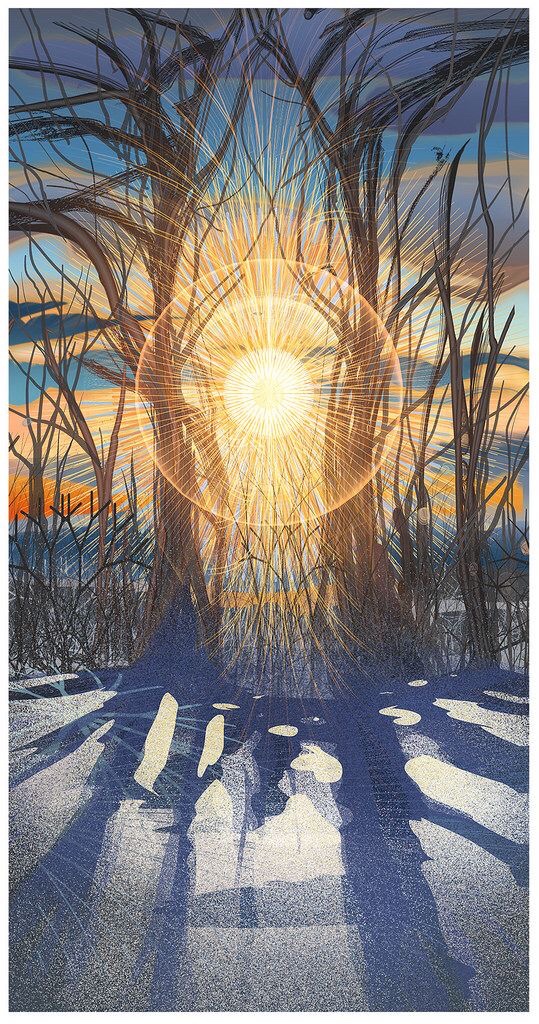
As the days grow shorter and the nights lengthen, the chill air adds to the darkness of our world. We can give into this dour outlook, especially this year with devastating wars in Ukraine and Gaza, or we can light a candle against the gathering gloom. Cultures across history have seen the time before year end as an opportunity for reflection, concern, or fear. Others have found reasons to rejoice.

Rainbow Menorah

Hanukkah (inauguration) is the eight-day Festival of Lights, which occurs in 2023 from sunset December 7 to December 15. It’s a moveable festival, for in 2024 the holiday will occur from December 25 to January 2. The Jewish calendar is a lunar calendar, not a solar calendar. This holiday celebrates the rededication of the Second Temple after the victory of the Maccabees over the Seleucid Greeks in 164 BCE. On discovering in the temple a vial of unpolluted oil, with only enough to light the candle for one day, this oil kept the candle burning for eight days. To commemorate this miracle, faithful Jews now light a special menorah with nine candles. The ninth candle is called the “helper” or “shammash” candle. The root word is from the Hebrew for “servant.”

Helping Hand Menorah

While not everyone is Jewish, all persons can learn from the menorah and the shammash candle. We may have only a little to give, but with God’s help it can be multiplied many times over. We can all be a helper candle, and bring a light to the candles who need a light. Many in this season experience a loss of some kind. Some are mourning a loved one, others have broken relationships, or have lost jobs or status. We are not our jobs and we aren’t our paychecks, but we are the beloved children of God. God will love us when everyone else turns aside. God will remember us when others forget we are alive.

Perhaps these darkening days at the end of the year are why people in all parts of the world have brought fire and light to this time of the year. The Yule Festival in German and Scandinavian countries was part of the pagan festival incorporated into Christianity’s Christmas celebrations. It likely began as a winter solstice or year-end celebration. “Yule” became a name for Christmas about the 9th century, and in many languages yule and its cognates are still used to describe that holiday.

Father Christmas and the Yule Log

The burning in a giant fireplace of a large Yule log until it’s reduced to cinders is one of my favorite mythic memories of the season. Alas, growing up in the Deep South, gas logs were the closest fireplace equivalent, and these were the same yesterday, today, and tomorrow. We rarely turned on the flickering colors of these blue flames because cold nights were few and far between.

By 336 CE, the Christian church in Rome celebrated Christmas on December 25, which coincided with the Roman winter equinox festival of Saturnalia. In medieval England, Christmas was a 12-day festival involving all kinds of revelry, from plays to wild feasts to pageants celebrating Jesus’ birth. Music, gift giving, and decorations all became the norm. Anyone who’s been in a choir singing “The Twelve Days of Christmas” with its repetitive “and a partridge in a pear tree” has those ancestors of ours to thank. Some traditions never die!

Our family stitched and sequined one exactly like this.

Christmas is better known for decorated trees, however. The use of evergreen trees and wreaths in religious ceremonies dates from ancient Roman times, if not earlier. However, the first documented use of a tree in a winter Christmas celebration wasn’t until 1510. In that year, members of a merchant’s guild in Riga, Latvia, placed a tree in the town square. They decorated it with flowers, ribbons, and dried fruit. After the festivities—which included the singing of songs and dancing—were concluded, they burned the tree as a great bonfire to close out the celebrations.

The Grinch Torches Whoville’s Christmas Tree into a Bonfire

Christmas trees gained popularity in Germany and other parts of northern Europe by the 1700s, but the practice of decorating a pine or fir tree during the holiday season remained virtually unknown in the English-speaking world prior to the 19th century. When Queen Victoria married her German cousin Prince Albert in 1840, the Christmas tree became widely accepted and practiced throughout the British Isles.

1836 edition of The Stranger’s Gift: A Christmas and New Year’s Present

In the United States, the practice of placing a decorated tree inside the family home was most likely introduced by German immigrants who arrived soon after the Revolution. The otherwise unassuming volume seen above, the 1836 edition of The Stranger’s Gift: A Christmas and New Year’s Present, is significant for it’s the first book printed in the Americas containing an image of a Christmas tree. Franklin Pierce in 1856 was the first president to erect a tree in the White House. In the United States, Christmas wasn’t celebrated with much gusto until after the Civil War, which reinforced for many the importance of home and family. In 1870, after the war’s end, Congress made Christmas one of nation’s first federal holidays.

Franklin Pierce in 1856 was the first president to erect a tree in the White House.

Light has always been a part of winter festivals, with their signature long, dark nights. Electric Christmas lights are a modern spin-off of the old-fashioned candles that Germans and Scandinavians placed on their trees. Thomas Edison, inventor of the lightbulb, also invented the first strand of lights and hung them outside his Menlo Park, New Jersey laboratory in 1880. In 1882 his business partner, Edward H. Johnson, created the first Christmas tree illuminated with colored lights. In 1895, President Grover Cleveland placed multi-colored electric lights on the White House tree. Since electricity wasn’t available except to the wealthy, most people didn’t have electric lights on their trees at home. Not until the end of the 1920s were electric lights affordable for the average family.

Fast forward to the 1950’s and the postwar period of rural electrification and large family gatherings, colored electric lights of every kind were readily available to the middle classes, not just the wealthy. This was the era of big bulbs and bubble lights, but in a few years, inexpensive miniature colored and white lights imported from China would become popular. Now even single parent households could decorate both the house and tree to their hearts’ content.

Untitled (Lux in tenebris inest—Light in the darkness)
Elisa Sighicelli 2003/2003

The lights bring out our hope of what’s good and wonderful in this world. Christmas and Hanukkah are times when the light burns bright, even when the days are dark. If these holidays didn’t exist, we would need to invent them, for we need the reminders of what is light and good in the world. As Baruch prophesied (5:9):

“For God will lead Israel with joy, in the light of his glory, with the mercy and righteousness that come from him.”

While we don’t know exactly what the Christmas star was, one theory is it was a conjunction of Jupiter, Regulus and Venus. Another possibility includes a set of conjunctions of the planets Jupiter and Venus, and the bright star Regulus. In this case, the mythologies associated with the objects become important. Jupiter in Hebrew is known as ‘Sedeq’, which is often translated as meaning righteousness. Jupiter is also often viewed as being the ‘king’ of the planets. Regulus is Latin for ‘prince’ or ‘little king’, and Venus is often viewed as a symbol of love, fertility and birth. Therefore, the combination of these objects close in the sky could have led to the interpretation of the birth of the ‘King of Kings.’ We do know Matthew records the visit to King Herod:

“After Jesus was born in Bethlehem in Judea, during the time of King Herod, Magi from the east came to Jerusalem and asked, “Where is the one who has been born king of the Jews? We saw his star when it rose and have come to worship him.”
(2:1-2 NIV)

Gerrit Dou: Astronomer by Candlelight, oil, late 1650s, J. Paul Getty Museum

The magi were astrologers, those who studied the heavens for the star signs of rising and falling influences in the ancient world. Herod died soon after their visit, but not before he tried to consolidate his power. He meant his dire deeds to benefit himself, but God spared his son by sending a message to Joseph in a dream to flee to Egypt with Mary and Jesus. The magi were warned not to return to Herod also.
This one who John wrote about in the opening chapter of his gospel (1:5):

“The light shines in the darkness, and the darkness has not overcome it.”

Gerardo Dottori: Nativity, 1930/1930, Museum of modern art

As we celebrate the holidays of light this year, remember to be a “shammash”, or a servant of light, and don’t let this present darkness overwhelm you. Your one light shining may be the brightness that brings someone safely home. Today I wore my bright pink exercise pants, even though I’m sinusy and achy all over. I made at least one person’s day when I said, “They’re stretchy, so I can eat more Christmas cookies!” We spread the joy even when the Grinch has stolen ours. This is a way of taking the darkness back, by making others feel better.

God bless and shine 🕯️on,

Joy and peace,

Cornelia

Jewish Festivals |Britannica
https://www.britannica.com/topic/Jewish-festivals

Shammash | Judaism | Britannica
https://www.britannica.com/topic/shammash

Yule Festival | Britannica
https://www.britannica.com/topic/Yule-festival

O Tannenbaum: Or, a Brief History of the Christmas Tree | The New York Public Library
https://www.nypl.org/blog/2016/12/12/christmas-trees-arrival

Who Invented Electric Christmas Lights |
https://www.eei.org/en/delivering-the-future/articles/who-invented-electric-christmas-lights

A Look Back: 100 Years of Christmas Tree Trends

https://www.bhg.com/100-years-christmas-trees-6751023

Rabbit! Rabbit!

Altars, architecture, art, Christmas, Creativity, Faith, holidays, hope, inspiration, Light of the World, Marcus Aurelius, Painting, photography, poverty, rabbits, renewal, Roman Forum, Saturnalia, Temple of Saturn, winter solstice

Welcome to December! While I was writing this blog, it was Black Friday in November, when many rabbit families were either shopping in person or online. I once did this with my dear rabbit mother, for she loved to shop. As a child of the Great Depression, the thrill of giving gifts, however small to all her friends, was a joy denied to her while growing up. Today we rabbits aren’t so much into giving gifts, but in sharing experiences. We’re making different choices. We aren’t rejecting our forebears’ decisions, but we have different values. As the writer of Ecclesiastes 3:1 reminds us, everything has its time:

“For everything there is a season, and a time for every matter under heaven.”

Christmas Gift

The holiday season begins earlier and earlier, or maybe I’m just an old rabbit having a fever dream. Last year the supply chain snafus were the Grinch that stole Christmas. Some of you rabbits may have been in a FIFA World Cup worthy soccer scrimmage last year at a big box discounter while trying to score one of the few PlayStations that managed to make its way from China to America on one of the large container ships that wasn’t lost at sea or stuck in the Suez Canal. The good news is the resulting logjam at the shipping docks has since been cleared and all the major retailers expect to get their holiday goods on time, compared to only 53% in 2021. We rabbits aren’t getting this news, however, so about half of us are pessimistic about being able to find our desired gifts in stock.

On March 23 2021, the containership Ever Given ran aground in the Suez Canal, blocking all traffic going both ways.

As a young rabbit, I learned about Murphy’s law from the “Rambling Wrecks from Georgia Tech, who were all one heck of an engineer.” If you’re not familiar with Murphy, his law states, “Anything that can go wrong will go wrong,” and the corollary law is “It’ll go wrong at the worst possible time and cause the most damage possible.” One would think these engineers were all chronic pessimists who saw the proverbial water glass half empty, but they would claim they’re just realists. Murphy’s Law simply reflects the natural fact we can’t control outcomes or people. Since the results of future actions can’t be avoided, you always should prepare for the worst and rejoice if the best happens instead.

Murphy’s Laws

I’ve always been fond of Murphy’s Law, but never more so during the holidays. Holiday festivities always include people, activities done only once a year, and often larger, unsupervised groups (often including alcohol), which means Mr. Murphy is often an uninvited guest. How he manages to sneak in, I have no idea, but he’s shown up in my rabbit den or kitchen more than once. Maybe he has an affinity for my rabbit clan, or perhaps he’s drawn to chaos and confusion. I’m not saying my rabbit family is a rowdy bunch, but we’ve always been loud and active. There’s not much difference between a whirlwind, a tornado, and my two brothers.

Grand Rabbit Wisdom

I don’t remember Murphy appearing at my Grand Rabbits’ celebrations, but they were of the generation who believed “little rabbits should be seen and not heard.” I imagine they showed Murphy the door if he dropped by. Likewise, when my mother began hosting the holiday meals, the Murphy drama of “anything that can go wrong will go wrong at the worst possible time” also never happened. My mom took on a drill sergeant’s precision when she produced the roast beast feast.

Not my tree, not my cats, but same Murphy result

When I bought a little house, Murphy made himself welcome. I invited friends over to decorate the Christmas tree. We stepped back to toast our creation, but the tree crashed forward to the floor, as if it were taking a bow in response. Our toast interrupted, we set the tree upright, tied it to the window handle, and resumed our toast in peace. One day I’ll tell you about my experiences of raking the roof on that little house before the rainy season set in each fall.

Murphy wouldn’t leave me alone. I moved to Texas, bought another little house, and my dear mom and dad invited themselves and my brother’s family over for a holiday feast. She pushed all the potato peels into my starter home’s basic garbage disposal and turned it on. If “Anything can go wrong at the worst possible time and cause the worst damage possible,” my dear bunny mom discovered it.

“I don’t understand; my disposal at home will handle all this.”
“Yes, mother. You have a real, custom house, not a starter home. This is a baby disposal.”

Then we got the wastebasket, the pliers, and I put on my plumber’s hat. We pulled out the clog, drained the water, and put it all back together again. Mom was traumatized. Mom kept apologizing, but I reminded her, “It’s no big deal. It won’t happen again. And we have food to eat. We’ll laugh about this one day!”

Murphy still visits me on occasion. But I’ve learned to prepare for him to limit his damages. This thanksgiving I had a friend for dinner. They made a bathroom visit before they left. When I went there, I found the faucet still running and I wasn’t able to turn it off. Water was all over the floor and inside the original cabinet from 1965. I turned off the water under the sink, thinking I was glad I’d asked my plumber to give me new shutoffs when I put the new faucet in. The old ones had froze shut. I’m now brushing my teeth in the kitchen sink, but that’s all right. I’ll probably have to replace this whole thing, all for the demise of a $5 faucet washer. This is Murphy’s Law in a nutshell. Santa will have to visit Lowes or Home Depot for my Christmas gift this year. I hope I’ve been a good rabbit, as the saying goes. And my stocking is extra big.

Christmas isn’t the only holiday of December, although an estimated $942.6 billion in holiday retail sales in the United States might cause us rabbits to think otherwise. One study found that 60% of workers were more distracted and less motivated as the Christmas holidays approached, with some workers even saying this feeling started as early as November. Likewise, during the holiday time many employees will take off to spend time with family or just to enjoy the holiday. That cuts into productivity as well. We have our own Mr. Scrooge in our rabbit towns too. I have any number of rabbit buddies who need time off to hunt and be alone in the woods for a bit. I begrudge them not, as long as their spouses can take care of holidays uninterrupted.

Postal Worker delivering packages

The coming darkness of the Winter Solstice causes people all around the world to light fires and burn candles to overcome the gloom. We’ve done this for ages and in many places. In fact, humans may have observed the winter solstice as early as Neolithic period—the last part of the Stone Age—beginning about 10,200 BCE. The Romans celebrated Saturnalia, a winter solstice celebration dedicated to the Saturn, the god of agriculture, wealth, and time. While it began as a one-day celebration in early December, this pagan festival later expanded into a riotous weeklong party stretching from December 17 to 24.

Robert Macpherson: Roman Forum—Temple of Saturn, 1850s, J.Paul Getty Museum

The Temple of Saturn, the oldest temple recorded by the pontiffs, had been dedicated on the Saturnalia around 497 BCE on a site originally occupied by an altar to the god. Due to the link between Saturn and agriculture, the original source of Rome’s wealth, the temple was also the repository for the State Treasury, or the Aerarium Populi Romani, which was located beneath the stairs under the high podium. It also contained the bronze tablets on which Roman law was inscribed.

Saturn with Harvest Scythe

The woolen bonds, which fettered the feet of the ivory cult statue of Saturn within, were loosened on the festival day to symbolize the god’s liberation. On this festival day, after a sacrifice at the temple, the people held a public banquet attended by both slave and free persons. An image of the god was placed as if in attendance at this meal, or a lectisternium (reclining on a couch), a tradition which Livy says was introduced in 397 BCE. (Others date this to 399 BCE.) The practice was introduced as a specific emergency response to a natural crisis: extremes of temperature occurring in both summer and winter had given rise to a devastating plague that had proceeded to ravage the population. It was celebrated from December 17 to 23, ending on ending on the Dies Natalis Solis Invicti, or the birthday of the Unconquerable Sun.

Not only were public rites celebrated with all the splendour then available, but Livy goes on to describe the general tenor of the private celebration in the late 1st C BCE (around the time of the birth of Jesus Christ):

“They also celebrated the rites in their own homes. All through the city, it is said, doors stood wide open, all kinds of food were setout for universal consumption, all comers were welcomed, whether known or not, and men even exchanged kind and civil words with personal enemies; there was a truce to quarreling and legal action; even prisoners were released from their chains for those days, and they hesitated thereafter to imprison men whom the gods had befriended.”

Roman coin with a image of of Marcus Aurelius on obverse and on reverse, a lectisternium associated with an atonement meal, c 167/168 CE. Münzkabinett, Berlin

This ritual meal was commonly shared by the worshippers, in contrast to normal sacrifice, which distinguished human from divine portions. In other words, in the Lectisternium the gods were not only present in spirit, but in form, and they shared in the ritual meal.

The question we have to ask is how did Saturnalia move from a feast of appeasement to reduce harm to the people, to the debauchery which most history books write about today? The powers that be tried over the years to limit the length and celebratory excesses of the season, whether they were civic or religious powers. I suppose they had no counselor rabbits to advise them of Murphy’s Law: “Very little work will get done in the holiday season, and what does manage to get done will most likely need redoing in the New Year.”

Beaker with Inscription, “Rejoice Much,” 1st century AD, Eastern Mediterranean.
Glass, 3 1/16 × 2 7/8 in. The J. Paul Getty Museum, 2004.35

By the 1st CE, Pliny, the Roman historian, was holed up in his room during Saturnalia, while the rest of the family celebrated the feasts, hijinx, and tomfoolery. In the 4th CE, the Christian church decided Christ’s birthday should be celebrated in the winter near the solstice, instead of in the more likely time of spring. The first reference to December 25 as the Nativity of Jesus occurs in a section of the Chronography of AD 354 known as the Calendar of Philocalus, which, even by this late date, still identified December 17 as ludi Saturnalia. By this time, some of the traditions of Saturnalia had already transferred into the Christian era. These were the green decorations of holly, a plant sacred to Saturn, in people’s homes; the small gifts of affection for all comers; the feasts; and the welcoming of strangers with fruit treats and nuts. Upending social conventions for a while reminds us God has no favorites, unlike our stratified social structures of the past and present.

Monogramme of Christ (the Chi Rho) on a plaque of a sarcophagus, 4th-century AD, marble, Musei Vaticani, on display in a temporary exhibition at the Colosseum in Rome, Italy. / Photo by Jebulon

December 17 was recognized as the date of the Saturnalia as late as 448 CE, when the ecclesiastical calendar or laterculus (“list”) of Polemius Silvius noted it as feriae servorum (“festival of the slaves”), a festival now deprived of its pagan significance. By the eighth century CE, church authorities complained how even people in Rome were still celebrating the old pagan customs associated with the Saturnalia and other winter holidays. The Temple of Saturn was largely destroyed in the mid-fifteenth century, so all that remains today is six of its Ionic granite columns crowned with a frieze thought to date to approximately 30 BCE.

As we approach the solstice time and the season of the Lord’s birth, we give thanks along with the gospel writer of John 1:5—

“The light shines in the darkness, and the darkness did not overcome it.”

Along with all my bunny friends and family, I hope you all remember what my little daughter said about that “Luke guy, who had such a big part in the Christmas Eve service” the year she learned to read:

“By the tender mercy of our God,
the dawn from on high will break upon us,
to give light to those who sit in darkness and in the shadow of death,
to guide our feet into the way of peace.” — Luke 1:78-79

Holman Hunt: Behold, I Stand at the Door and Knock , 1854, Kebel College, Oxford, England

Joy, peace, and Good Cheer,

CORNELIA

Consumers Expecting Issues in Survey on Holiday Supply Chain Issues | Transport Topics
https://www.ttnews.com/articles/consumers-expecting-issues-survey-holiday-supply-chain-issues

Murphy’s Laws—CMU School of Computer Science
https://www.cs.cmu.edu/~fgandon/miscellaneous/murphy/

How Murphy’s Law Works | HowStuffWorks
https://people.howstuffworks.com/murphys-law.htm

Statistics on Holiday Retail Sales 2022
https://www.statista.com/statistics/243439/holiday-retail-sales-in-the-united-states/

The business of Christmas | Hult International Business School
https://www.hult.edu/blog/the-business-of-christmas/

8 Winter Solstice Celebrations Around the World – HISTORY
https://www.history.com/news/8-winter-solstice-celebrations-around-the-world

December Solstice Traditions and Customs
https://www.timeanddate.com/calendar/december-solstice-customs.html

Temple of Saturn – History and Facts | History Hit
https://www.historyhit.com/locations/temple-of-saturn/

(99+) ‘Guess who’s coming to dinner?’: the origins and development of the lectisternium. | Michael Beer – Academia.edu
https://www.academia.edu/2076041/_Guess_who_s_coming_to_dinner_the_origins_and_development_of_the_lectisternium

Saturnalia: How Did The Romans Celebrate ‘Christmas’? | HistoryExtra
https://www.historyextra.com/period/roman/how-did-the-romans-celebrate-christmas/

Saturnalia
https://penelope.uchicago.edu/~grout/encyclopaedia_romana/calendar/saturnalia.html