It’s Not Under Control!

adult learning, art, Attitudes, bottles, brain plasticity, Cezanne, Creativity, failure, Family, Fear, Healing, Lent, Marcus Aurelius, Painting, perspective, Ralph Waldo Emerson, renewal, risk, samuel Beckett, shadows, Stress, Super Bowl

All things will renew themselves in good season, yet we have only the present moment before us. We can’t live in the past, nor can we control the future. We have to recognize even our present moments aren’t always in our control, as we witnessed in the big Super Bowl game last Sunday.

Random Actions Often Determine the Outcomes of Sporting Events

Who would ever believe a punt would hit a receiving teammate’s foot, and suddenly become a live ball? Then get recovered by the Chiefs for a quick touchdown? If you think you can control your circumstances or the actions of others, just watch the NASCAR races at Daytona this weekend. The wonder is they don’t wreck in every turn, but only occasionally during the 500 mile race on Sunday.

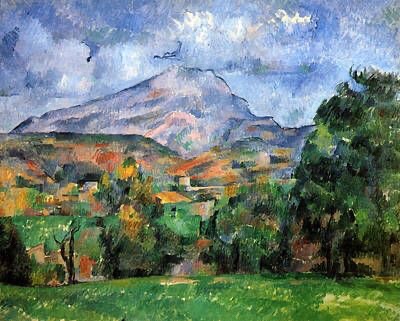
Cezanne Watercolor “Mont Sainte-Victoire (La Montagne Sainte-Victoire vue des Lauves)”( 1902–06) by Paul Cézanne. (The Museum of Modern Art, New York/Photo © 2021 MoMA, NY)

Watercolor is more difficult medium to manage than acrylic paints because it’s wetter and refuses to dry as quickly as we want to paint in that same area. It’s not being obnoxious; it’s just being its own true self. Cezanne used watercolors to think out his ideas beforehand, and then worked in oils. Often, he tossed aside the watercolor work, sometimes even leaving it out in the landscape which he’d just painted. He’d learned all he could from it and now was ready to paint his new image, but not a copy of the original painting. This mountain shows up in sixty of Cezanne’s artworks.

Paul Cézanne: La Montagne Sainte-Victoire, 1888, oil, The Stedelijk Museum, Amsterdam.

The stoic philosopher and Roman Emperor Marcus Aurelius wrote a series of meditations on life. In one he speaks of all life experiences as being the same. This attitude keeps him from getting too high or too low about what happens in his life. He takes it as it comes. Even death, which some fear as a loss, doesn’t bother him, for if he isn’t bothered about the present, he can’t be bothered about losing that too. Marcus Aurelius wasn’t a Christian, but his quest for equanimity is admirable. Take life as it comes and worry not:

“First, that all things in the world from all eternity, by a perpetual revolution of the same times and things ever continued and renewed, are of one kind and nature; so that whether for a hundred or two hundred years only, or for an infinite space of time, a man see those things which are still the same, it can be no matter of great moment. And secondly, that that life which any the longest liver, or the shortest liver parts with, is for length and duration the very same, for that only which is present, is that, which either of them can lose, as being that only which they have; for that which he hath not, no man can truly be said to lose.”

The Still Life in Our Classroom

When we work in watercolor, we have to take what the watercolor gives us. While we can plan, design, and control the outcomes to a certain extent, watercolor often goes its own way. If we work over the whole surface, rather than noodling around in one little space like a puppy sniffing a single spot while out on its morning constitutional walk, we get more done, just as the puppy is more likely to get its “business” done.

One of the reasons we work in a new medium is for the challenge. In school, when I was bored, I’d take notes in class by writing upside down. When that got too easy, I began using my left hand to write upside down. This was a true challenge! I didn’t have any ingrained pathways in my brain for left-handedness, much less the upside-down images. I was truly bored, however, so I struggled on until I got serviceable images. This was the year in which I went to art school as a midyear junior and was taking a freshman level history course.

Tim’s Painting

Tim has voluntarily switched to his left hand because he will have surgery on his right side, which will knock out his ability to use that arm for several months as he recovers. This is a good effort for his non dominant hand. You can tell he focused on the scoop, for it has the most detail. Training our alternate hand to do the work of our dominant hand requires resetting the brain to prefer the new hand. If you try brushing your teeth with your other hand, you’ll see exactly how strange it feels to use a different hand. This is because you have no well-worn pathways in your brain circuitry that makes this routine effort possible.

The fancy pants word for this is neuroplasticicy. We meet this concept with stroke survivors who do physical therapy to rewire their brain connections to make new pathways so they can speak, write, or walk. Everyone who tries a new game, learns a new language, or tries a new hobby also builds new pathways in their brains. Be learners for life, if you want to keep your mind healthy.

Gail’s Painting

Our still life was challenging today. It had solid shapes, a clear bottle, and a metal scoop. Not only were there multiple colors, but textures and transparency also. Gail has had several years of drawing under her belt, so she was able to render the perspective of the still life well. Note the clear blue bottle, which has a wonderful oval bottom. The lemons and limes are distinct also. The grey shape is an antique scoop, sans the handle.

In 2008, J.K. Rowling spoke at the Harvard commencement exercises, telling the graduates, “Talent and intelligence never yet inoculated anyone against the caprice of the Fates.” Because we don’t know what tomorrow will bring, taking care for today is the best preparation for the future. Rowling studied the Classics at Harvard, a subject most people would consider useless for this modern era. Yet after a divorce, as a single parent working for Amnesty International, she began writing her wizard novels. Harry Potter is now part of our cultural heritage.

As Jesus said in Luke 12:25-26–

“And can any of you by worrying add a single hour to your span of life? If then you are not able to do so small a thing as that, why do you worry about the rest?”

Worry is stressful, for sure, and it’s an example of “bad stress,” along with traumatic events, such as adverse childhood experiences (ACE), disease, divorce, and death of a loved one. We also endure “good stress,” as when we challenge ourselves to lift heavier weights, cook a new recipe, or learn a new language. As Ralph Waldo Emerson wrote in his 1841 essay Heroics, paragraph 14:

“The characteristic of a genuine heroism is its persistency. All men have wandering impulses, fits and starts of generosity. But when you have chosen your part, abide by it, and do not weakly try to reconcile yourself with the world. The heroic cannot be the common, nor the common the heroic. Yet we have the weakness to expect the sympathy of people in those actions whose excellence is that they outrun sympathy, and appeal to a tardy justice. If you would serve your brother, because it is fit for you to serve him, do not take back your words when you find that prudent people do not commend you.

“Adhere to your own act and congratulate yourself if you have done something strange and extravagant, and broken the monotony of a decorous age. It was a high counsel that I once heard given to a young person, —”Always do what you are afraid to do.”

When I was in high school, the ancient Latin teacher, who had taught my daddy when he went to school, tossed out the challenge, “No one has ever made 100% on my final Latin exam.”

I bit on that challenge like a starving dog bites on a bone, even if it has no scrap of flesh remaining on it. I made flash cards and studied for an hour every night before bed, I was so determined to be the exception to the rule. On the test, I got all the Latin correct, but lost ½ point for misspelling an English word. I never followed up on her retirement, but I fully expect her record remained unblemished. Also, I’m still spelling challenged. I’m thankful for SpellCheck in our writing apps.

Gail W.’s Painting

Gail W. paid attention to the still life and took care to lay down a close image in a pale wash before she began to add darker washes of color. Her left lime is most successful, with at least six shades of green and yellow in the shape. I also like the highlight on the central lemon. These two images capture the essence of the watercolor medium. Her perspective on the bottle bottom indicates it sits well on the cloth.

Failure teaches us what we don’t know, so we can improve the next time. This is what we call resilience. When I taught art, my students had to find three things they did well in their work before they named anything they needed help on. This was to build up their confidence. For some of them, just making a mark on the page was a start. If we fear making a mistake, we can sketch in a pale-yellow wash. This is very forgiving, like a whisper in the wind. If it’s not quite right, the next few marks may be nearer our desired outcome.

This Is Fine—Leave Me Alone, I’m Having a Crisis

Our mindset is what controls how we react to events in our lives. As one of my friends would remind me, “Not everything is a hair on fire moment.” Of course, when I was a young teen, the least slight or distress caused me to fling myself over my bed in a paroxysm of sobs, wailing loudly, “I’m going to die!” My parents would look at each other and shrug, “What boy is it now?” Fifteen minutes later I’d be in the kitchen looking for a snack, having cried my eyes out, and now I was on to the next thing. As I had more experiences, I learned to roll with the moment. Sometimes you need to wait for the next wave to rise before you take your ride. God’s timing is always right, for our experiences, both the failures and successes, prepare us for what comes next in our lives.

Cornelia’s Watercolor

I had some of the same perspective problems as everyone else, especially with the base of the bottle. Actually, it’s a challenge to get a “transparent three-dimensional object on a flat surface” to appear as if it’s actually sitting on a flat surface in two dimensions. Learning some shading techniques and remembering a round bottle bottom becomes an ellipse helps to bring off this sleight of hand. I got my paint too dark on the front of the bottle base and had to let it dry so I could come back in with some clear water and an almost dry brush to pick up the color. This gave me the highlight I needed.

Cornelia’s Drawing over the Watercolor

When I got home, I noticed my eyesight seems to be going amiss with my increased age. Lately I’ve not been careful to paint my verticals straight. Either I’m being lazy, or I’m tilting my head as I look at the subject. Maybe my neck injury has something to do with it. I duplicated the photo and used the Apple Pencil to straighten up the bottle and even up its symmetry. I also touched up a few of the lemons and limes. Maybe I’m still the puppy that likes to noodle around and sniff about until I can wrest all I can get from a work. This way I learn all I can from it. Like a kindergartner, if my work ends up a huge grey blob, I can say, “That was a great learning experience!”

My grandmother, who painted portraits and still lifes, kept a saying written on the back of an envelope, near her easel:  “Ever tried. Ever failed. No matter. Try again.” She passed in 1970. Years later, Samuel Beckett, in his 1983 story, Worstword, Ho wrote:

“Ever tried. Ever failed. No matter. Try again. Fail again. Fail better.”

We need to be like great artists and athletes, or the Michelin chefs who just keep trying, falling short, until they get close enough to qualify for their stars. Persistence makes all things possible, and if we “fail,” we’re only getting closer to perfection.

I hope for you a blessed Lent,

Joy and peace,

Cornelia


Emperor of Rome Marcus Aurelius: Meditations, XII   https://books.apple.com/us/book/meditations/id396136148

Neuroplasticity: re-wiring the brain | Stroke Association

https://www.stroke.org.uk/effects-of-stroke/neuroplasticity-rewiring-the-brain

10 Brain Exercises to Help Boost Memory

https://www.everydayhealth.com/longevity/mental-fitness/brain-exercises-for-memory.aspx

Neurobiological and Systemic Effects of Chronic Stress – PMC

https://www.ncbi.nlm.nih.gov/pmc/articles/PMC5573220/

​“Try Again. Fail Again. Fail Better”: Beckett’s unlikely Mantra – Goethe-Institut Los Angeles – USA

https://www.goethe.de/ins/us/en/sta/los/bib/feh/21891928.html


The Project Gutenberg eBook of Essays, by Ralph Waldo Emerson

https://www.gutenberg.org/files/16643/16643-h/16643-h.htm#HEROISM


Paper Valentines

Abraham Lincoln, adult learning, art, brain plasticity, butterflies, Civil War, Creativity, Faith, Gettysburg Address, holidays, Love, Super Bowl, Valentine’s Day

Does anyone else find it unusual that Lincoln’s Birthday, the Super Bowl, and Valentine’s Day all fall within a single three day period? When I was young, we celebrated every holiday possible in public school, since these were teaching opportunities. I always loved them for the art periods and the story telling events. Not that I was deeply invested in the facts of history, but I cared about the personalities and the principles of their lives’ work.

This meant February focused on Lincoln and Washington both. Of the two, I always preferred Lincoln, perhaps because my teacher had our class memorize the Gettysburg Address. I was entranced by the thought Lincoln wrote this speech on the back of an envelope on the train ride out to that fateful battle field. It wasn’t true, but that’s just one of the hallowed myths of history we’ve spun about the giants of the past.

Of course, we always celebrated Valentine’s Day in the classroom with decorated boxes or bags for exchanging cards. The rule in class was to bring a card for everyone and leave no one out. No one meant no one. The cards didn’t have to be fancy, but everyone needed to get a card, handmade or bought. Of course, we always had some parental snack provided. I think we overdosed on sugar back in those days.

When we’re young, we don’t really have a sense of history, so we don’t see the connections from one act to the later consequence of another. It takes time for young people to mature, process, and grasp the connections between past, present, and future in order to navigate their place in time. When someone says the past is meaningless to them, they’ve built their house on a foundation of sand. The first lesson I always taught in art class was “Attitude, Behavior, and Consequences.” The second lesson was “Clean up after yourself and leave the art room good for the next group.” That first lesson was about how individual actions affected their own work and grades. The second was about community responsibility. And some folks thought I was just letting the kiddos have fun with colors, scissors, and glue.

But back to this Trifecta weekend. The very first Super Bowl was January 15, 1967. I’ve slept several decades since then, so I don’t remember if I watched it. Super Bowl XXXVI, was the first one held in February, but all of the prior February games have been held in the first week until this LVI event. That’s 56, for the non Romans among us. This is quite a streak, but all streaks are meant to be broken. This is how we get the great Trifecta of Lincoln, Super Bowl, and Valentine’s all in a row.

Scrap Paper Valentine: Civil War Era

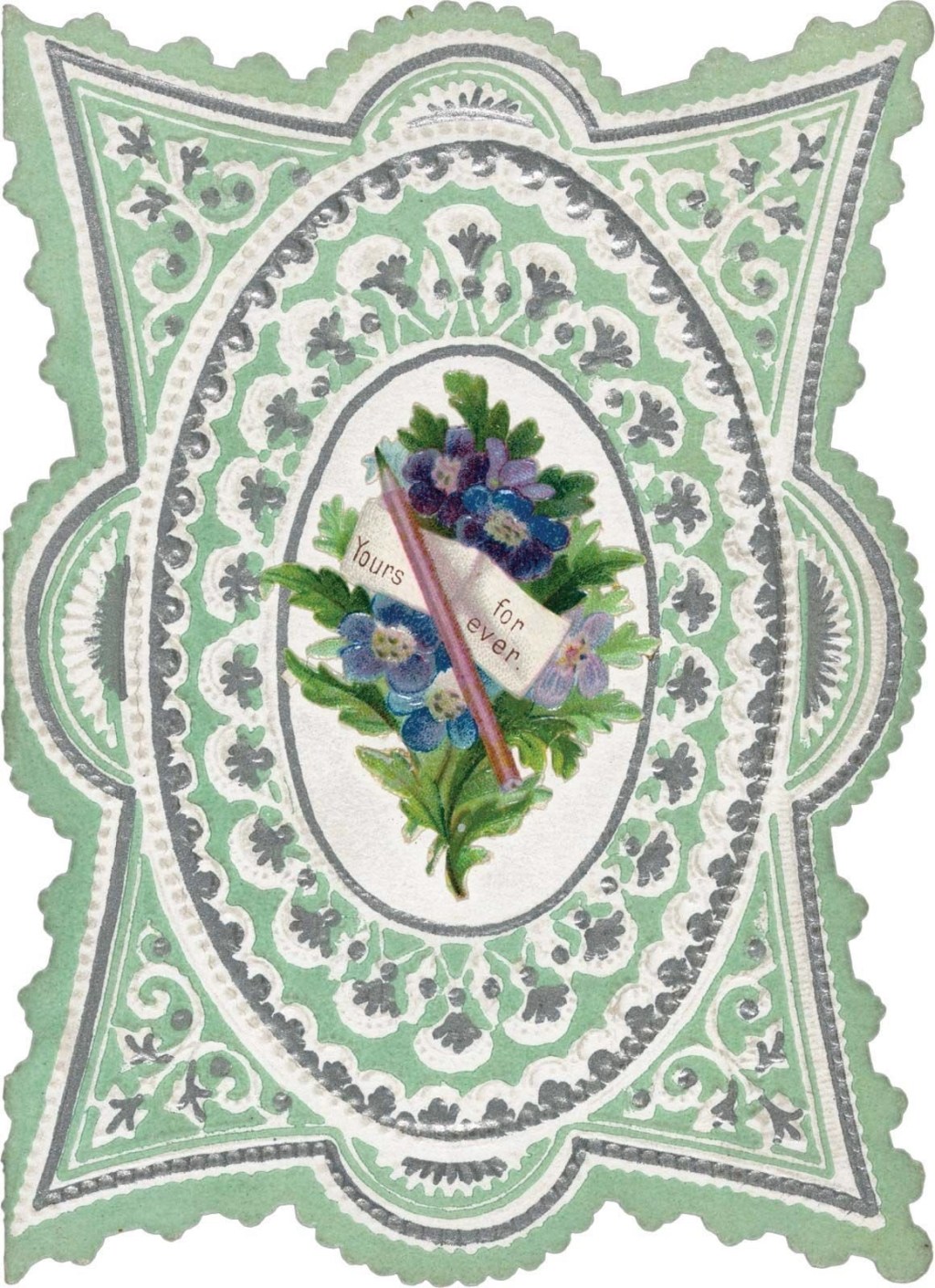
Back during the Civil War, supplies were scarce. The supply chain nightmare isn’t a recent issue, for during the war, the South lacked supplies due to the Union embargo for imports and their crops were confiscated by both armies as they marched through the areas near the battlefields. One of the touching homemade valentines of the era was made in 1862 from scrounged paper by the Confederate soldier Robert King for his wife. The basket weave folded card, when opened up, showed two crying lovers, a particularly sad foretelling of his death.

Our class brought scrapbook papers, doilies, craft store items, and leftover crafting materials from past projects. All crafters seem to be packrats, but we also share our largess with others. None of us can say NO to the offer of free stuff. Our materials filled one whole table, so settling on a few items was our first choice. Sometimes we get overwhelmed with too many choices, but our group has learned to go with what strikes their fancy first. Digging through everything to look for a better option often is just a waste of time in a short class. Go with what calls your name. As my daddy would say, “Decide to fish or cut bait, honey. The day’s not getting any longer.”

Lauralei’s Valentine

As Lauralei was working on her Valentine, Jerry came into the room. Immediately she called out, “Don’t look—go away!” He laughed, and took a wide berth around our work tables. If you want to surprise someone, it’s hard if they’re also working at the church. I like the energy of the patterns on her Valentine. Love is never a static thing, even if it is steadfast and forever, but it’s constantly reaching out and pulling us toward one another.

Gail’s Valentine

Gail added another dimension to her work by bending the central heart image so it would stand up. This gave it depth and made the heart into a basket from which the butterflies could exit into the open space around it. That took an extra level of thought.

Outside of Gail’s Valentine

The birds and butterflies on the outer cover of Gail’s card are another variation on the theme.

Mike’s Valentine

I can always count on Mike to fill the surface with texture and color. He has no fear whatsoever. Exuberance is his middle name. He claims sarcasm is his love language, but that’s just his outward personality speaking. The inner messages on his card to his lovely wife tell her how wonderful she is and how glad he is to be with her.

Cornelia’s Valentine

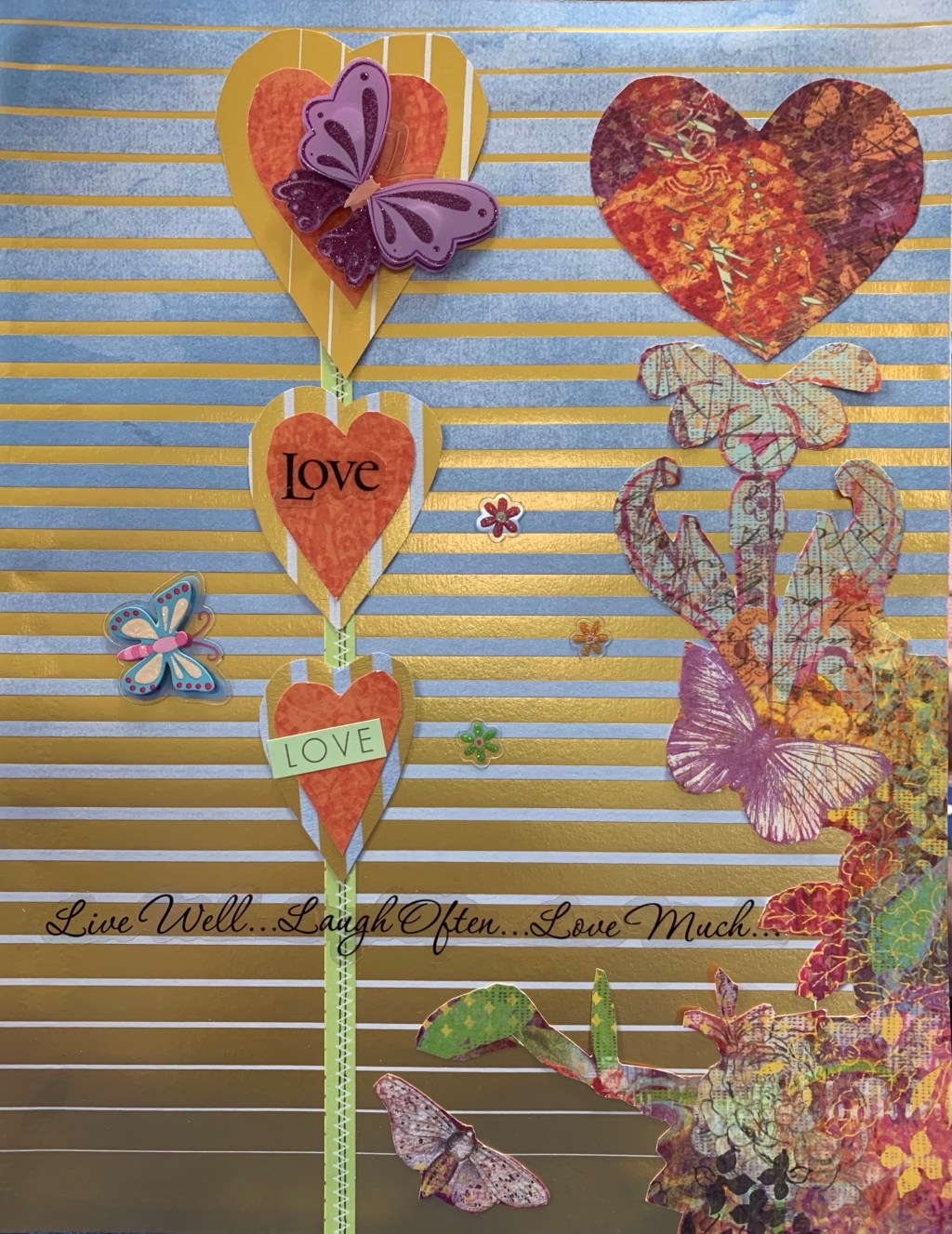
I made mine as a landscape, rather than a card. The message, “Live, Laugh, Love” is a variation on a message my grandmother often wrote. I’ve always liked both butterflies and flowers, for they remind me both of the beauty and the transient nature of life. My Valentine is for those of blessed memory, as well as for those I love today, and maybe even for those I’ll love in the days to come.

“Love never fails, But where there are prophecies, they will cease; where there are tongues, they will be stilled; where there is knowledge, it will pass away. For we know in part and we prophesy in part, but when perfection comes, the imperfect disappears…. And now these three remain: faith, hope and love. But the greatest of these is love.”

The verse above is an example of historical consciousness in the arena of faith. All religions “take up the past by telling stories and making visible the arches that span over all times and join them together into a unified whole,” just as writers observe the facts of history and draw conclusions about the streams of history and the direction in which they flow. Yet we humans are also capable of forgetting, sometimes because we don’t want to remember and other times because we can’t recall events due to illness, lack of sleep, or inattention. We depend on trusted others to build the narrative for us, so we need to take care from whom we receive our instruction.

On this Super Bowl weekend, much will be made of the heroic efforts of the athletes on the field. There’ll be hype galore, costly commercials, illustrious and notorious folks in attendance for sure, and excessive eating and drinking across America. It may be a different game day than what we’ve been accustomed to, but then as Bob Dylan sings, “The times, they are a-changing.” If the NFL is writing a different narrative, it’s only because they’re finally including voices once suppressed. We can know the facts of history, yet fail to have an historical consciousness, just as we can identify the different styles of art and put them in historical order, but fail to have an aesthetic appreciation of the art itself.

President Lincoln delivered the 272 word Gettysburg Address on November 19, 1863 on the battlefield near Gettysburg, Pennsylvania on the occasion of the dedication of the national cemetery for the war dead. Overall, casualties in that three day battle were enormous. At least 25,000 Confederates fell, representing nearly one-third of its army. One-third (12 out of 53) of Robert E. Lee’s generals were killed, wounded, or captured. More than 20,000 Union soldiers fell; General Meade’s subordinate command also suffered heavy losses. Lincoln helped to reframe citizens’ thinking about the cost and nature of this war.

The Super Bowl extravaganza will last nearly four hours and play $500 million in advertisements (about 70 in all),not to mention a preface of more than three hours of entertainment. Compare that to Lincoln’s speech, which lasted three minutes at most:

“Fourscore and seven years ago our fathers brought forth, on this continent, a new nation, conceived in liberty, and dedicated to the proposition that all men are created equal. Now we are engaged in a great civil war, testing whether that nation, or any nation so conceived, and so dedicated, can long endure. We are met on a great battle-field of that war. We have come to dedicate a portion of that field, as a final resting-place for those who here gave their lives, that that nation might live. It is altogether fitting and proper that we should do this. But, in a larger sense, we cannot dedicate, we cannot consecrate—we cannot hallow—this ground. The brave men, living and dead, who struggled here, have consecrated it far above our poor power to add or detract. The world will little note, nor long remember what we say here, but it can never forget what they did here. It is for us the living, rather, to be dedicated here to the unfinished work which they who fought here have thus far so nobly advanced. It is rather for us to be here dedicated to the great task remaining before us—that from these honored dead we take increased devotion to that cause for which they here gave the last full measure of devotion—that we here highly resolve that these dead shall not have died in vain—that this nation, under God, shall have a new birth of freedom, and that government of the people, by the people, for the people, shall not perish from the earth.”

Go Bengals!

Joy, love, peace, and Go Bengals!

Cornelia

Super Bowl Winners and Results – Super Bowl History – National Football League – ESPN
http://www.espn.com/nfl/superbowl/history/winners

The Gettysburg Address
https://www.lincolncollection.org/discover/ask-an-expert/qa-archive/did-lincoln-write-the-gettysburg-address-on-the-back-of-an-envelope/

https://rmc.library.cornell.edu/gettysburg/good_cause/transcript.htm

View of Historical Consciousness in Youth. Theoretical and Exemplary Empirical Analyses | Forum Qualitative Sozialforschung / Forum: Qualitative Social Research
https://www.qualitative-research.net/index.php/fqs/article/download/904/1974?inline=1