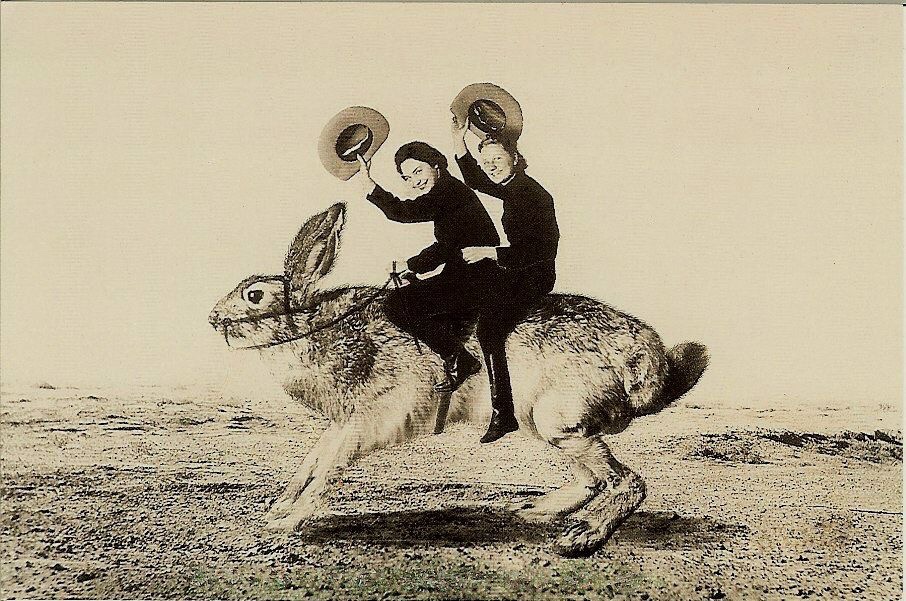
Rabbit! Rabbit! Welcome to November

Abraham Lincoln, All Saints Day, Altars, art, change, chocolate, Civil War, Constitution, Day of the Dead, exercise, Faith, Family, Food, generosity, Habits, Health, holidays, inspiration, Love, nature, poverty, pre-diabetes, pumpkins, rabbits, Thanksgiving, trees, Ukraine, Uncategorized, US Constitution, Van Gogh

My parents would often say, “Time flies when you’re having fun.” If this is so, I’ve had a one whale of a time in 2023. I don’t know where the time has gone, for I’d swear I just woke up in the bright new year of 2023, and now this year has grown a beard of some length. Indeed, the ground was bare, awaiting the warm breath of spring, and now it has experienced its first freeze.

Autumn is a time of transitions. Not only do the trees change colors, and then lose their wardrobe altogether, but we rabbits go from Halloween’s sugar high on October 31st to overstuffing ourselves and the roast beast at the Thanksgiving feast on the Fourth Thursday of this new month. Then we segue into Christmas somnolence with yet more cookies and egg nog (spiked and plain). On occasion we tramp out to decorate the house or scour the woods for greenery, but those days are long gone for most urban dwellers. We’re going to buy from local providers or have it delivered online.

Some of us on the first day of November will still have some of the 35 million pounds of candy corn which are still produced each year. That’s about 9 billion pieces — over a billion more than there are people on Earth. As far as this bunny is concerned, this is 8,999,999,999 pieces of candy corn too many. I’m not a lover of this form of sugar; give me dark chocolate any day. Fortune reported the “dangerous” amount of sugar consumed by kids on Halloween — three cups of sugar in 7,000 calories of candy. For context: That’s 675 grams of sugar, or the same as chomping down almost 169 standard sugar cubes, according to a Fortune article published in 2017.

A Young Bunny

When I was a young bunny, sugar was so restricted in our home, my friends and I would escape our parents’ notice during fellowship time at church to go to the empty adult Sunday school classrooms. We knew where they kept the wonderful Domino Pure Cane sugar cubes for the coffee the grownups drank. We didn’t care for coffee, which was already gone, but the sugar we fell upon like pirates on buried treasure. We didn’t ever consume 169 cubes at once, since that would’ve destroyed the entire stash.

If these had been the 35 million pounds of candy corn, which are still produced each year for Halloween, neither I nor my bunny friend would have ever touched them. The idea about 9 billion pieces — over a billion more than there are people on Earth—are still produced today is incomprehensible to my bunny brain. I think the texture of corn syrup and gelatin isn’t my first choice.

Of course, when the weather turns colder, our bunny bodies sense the need to stoke our internal fires. We do this by consuming more calories, especially the quick acting carbohydrates we find in the sugars and starches that provide the instant “heat” boost our bodies crave. Actually, any food will heat us up, but fruits and vegetables don’t have the same appeal as warm, savory, and fatty foods do in colder weather. The shorter days and the decrease of light in the winter cause problems with our body’s biological clock and lower the levels of the brain chemical serotonin. Plus, many of us reduce our physical activity, so our exercise induced levels of serotonins drop.

Healthy Eating includes More Fiber

We can overcome this loss by planning to be outside during the daytime and making sure to exercise at least 30 minutes daily. Having protein rich snacks and fiber rich soups with complex carbohydrates will help control our hunger spikes. Perhaps this transition time into longer nights and shorter days is why the First Wednesday in November is always National Eating Healthy Day (November 1). If we do only one new healthy choice per week, and add a new healthy option each week thereafter, we can transition our lifestyle into “Eating Healthy.” As a bunny, I remind my friends, it’s also National Vinegar Day—have compassion on yourself and on others. We can love ourselves and others into a better life with kindness rather than harshness. As my grandfather Bunny always said, “You catch more flies with honey than vinegar.”

Day of the Dead Skull

All Saints Day and Dia de los Muertos both are celebrated on November 1. Both recognize the departed loved ones. All Saints recognizes both those who have worked miracles as well as those ordinary saints who have lived among us and given quiet witness to their faith. Dia de los Muertos, the Day of the Dead, is a three-day festival to remember the ancestors and friends who predeceased us. People decorate altars with marigold flowers, photos, and skulls in memory of the dead. They make special food offerings in their honor also.

All Soul’s Day on November 2 is a Catholic holiday to pray for the souls which aren’t yet in heaven, but are in purgatory. Protestants don’t believe in purgatory, so we don’t attend upon this day as holy.

Cookie Monster: “Me want COOKIES!”

Many of us do celebrate Cookie Monster Day on November 2, because who doesn’t like cookies?! The same goes for National Sandwich Day on November 3, for hot or cold, almost anything can be slapped between two slices of bread and get slathered with avocado or mayonnaise, and it’s good to go.

Sandwiches first appeared in American cookbooks in 1816. The fillings were no longer limited to cold meat, but the recipes called for a variety of things: cheese, fruit, shellfish, nuts and mushrooms. After the Civil War sandwich consumption increased and were sold both in high-class lunch rooms and in working-class taverns. A typical turkey sandwich in the 1980s contained about 320 calories, according to a report from the National Heart, Lung and Blood Institute. Twenty years later, a turkey sandwich contained about 820 calories. Choose whole grain bread if possible.

We seniors have more than time on our hand

“Fall Back” on Sunday, November 5, when Daylight Savings Time Ends. We get another hour of sleep on this day when the clocks go back 1 hour at 2 am. I won’t be awake to notice it, but I suggest those of you who aren’t good sleepers begin to look at your evening routines. Set a wind down time on your clock, watch, or mobile device. Let it remind you to turn on quiet music, read inspirational books, or begin your bedtime routine. Sometimes taking off our outside clothes and wearing our “at home” clothes is a signal to our mind to let go of the cares of the world.

Fighting over Van Gogh Pokémon Gifts at the Museum

Go to an Art Museum Today Day and National Chaos Never Dies Day are both celebrated on November 9 this year. I don’t normally consider chaos and art museums as being in the same category, but Disney has made several Night at the Museum movies that revolve around the trope of ancient Egyptian gods awakening to cause havoc. Actual chaos recently erupted at the Van Gogh Museum in Amsterdam when visitors realized the gift shop had already sold out of the Pikachu with Grey Felt Hat promo card, which was modeled on the Vincent self-portrait. Evidently a small group of fans descended on the gift shop, causing a ruckus, and buying out the merchandise. It’s now for sale on eBay.

2023 Veterans Day Poster

Armistice Day marks the November 11,1918 anniversary of World War I, a war which began in August 1914, that few expected to last beyond Christmas. In 1921, an unknown soldier was buried in Arlington National Cemetery. This First World War was “the war to end all wars,” but we’re an overly optimistic nation. We’ve had a Second World War since then, plus many a regional conflict. Every time our battle ships show the flag somewhere, people think it’s going to be WWIII. Fear mongering doesn’t help the nation. We’re better and stronger than that. Plus, we have the moral duty of leadership: our country needs to show the world there’s a better way.

As I recall, both the North and the South expected the great Civil War to last just a short while, just as Putin entered Ukraine believing his army would roll into Kiev in mere weeks. Yet WWI lasted four years, WWII was six years (the US was involved only the four years from 1941-1945), and our Civil War was another 4-year slog. Wars aren’t so much “won” as lost by attrition: one side loses more men, materiel, and willpower so they surrender to the other. War is the most brutal way to settle our differences.

Armistice Day now is Veterans’ Day, November 11, but observed a day earlier (10th) this year. We celebrate our veterans who do the difficult and challenging work of using judicious force against enemy combatants, rather than civilian populations. All of our enlisted personnel take the same oath to protect and to defend our Constitution against all enemies, foreign and domestic:

I, (state name of enlistee), do solemnly swear (or affirm) that I will support and defend the Constitution of the United States against all enemies, foreign and domestic; that I will bear true faith and allegiance to the same; and that I will obey the orders of the President of the United States and the orders of the officers appointed over me, according to regulations and the Uniform Code of Military Justice. (So help me God).”

The US Constitution, 1787

We are an unusual people, we Americans, for our loyalty isn’t to a party, a president, or a person. We are loyal to the constitution, which protects our democratic institutions, values, and freedoms. We can be thankful for those who were inspired to write it, heard the prophetic call to amend it, and have the wisdom to keep us on the straight and narrow.

National Hunger and Homeless Awareness Week is November 11-19 this year. While the economy is recovering, the loss of pandemic assistance funds Is hurting lower income households. They are making hard choices: food or rent, medicine or food. The number of homeless veterans has decreased, but so has the overall population of veterans. The bad news is veterans are still overrepresented in the homeless population. As you prepare for your own feast this year, I hope you remember the hungry in your community. The best way to help is with a financial donation to the local food bank. The bank can purchase food from the warehouse food bank at greatly reduced prices, thereby providing more food per dollar than individuals can purchase on their own.

World Diabetes Day is November 14. Diabetes is a disease on the increase in the world today. In the US alone, over 37 million people have this disease and over 8.5 million have it but are undiagnosed. Over 96 million US adults have prediabetes, a condition in which their insulin doesn’t take the sugar out of the bloodstream well. Switching to whole grains, less processed foods, and adding more fiber to the diet usually helps lower the blood sugar. So does daily moderate exercise.

National Clean Out Your Refrigerator Day is November 15. This is a good day to practice this task, since you’ll be filling it up with excess foods if you’re hosting the feast, or you’ll be traveling away from home. If the latter, you don’t want to return home to spoiled food if the power goes off for any length of time. Ugh: I won’t regale you with the story of stench of the refrigerator in the garage which didn’t power back on after a power outage. Those outlets need to be reset manually because they’re in a “might get wet” zone. The refrigerator inside will come back on automatically. (This turned out to be a get rid of the refrigerator day.)

National Stuffing Day is November 21. If you bake your bread mixture outside of the great bird, it’s called dressing, but if you cram it into the bird, it’s stuffing. It’s safer to cook the bird without stuffing, also quicker. When baking stuffing inside a turkey, it can get get wet and mushy. If you make a flavorful stock from the turkey neck and giblets, you can make your stuffing moist and flavorful without turning it into mush.

If you live in a giant pumpkin, buy a smaller pumpkin for your pie

Pumpkin Pie Day is also November 21, so you can prepare this ahead of time if you wish. You can make a handmade crust or use a store-bought crust from the grocery. Pre bake it and fill it with the pumpkin mixture.

National Cranberry Relish Day is November 22. You can easily make your own with the juice of an orange, some sugar to taste, and cinnamon combined with a package of rinsed cranberries. Heat over medium in a saucepan, stirring frequently to keep from sticking. When the berries burst, reduce heat to simmer and reduce the liquid. Taste and adjust the seasoning. Take off the heat and put into container for icebox. Chill overnight to let seasonings combine. Serve cold as side dish.

Thanksgiving Day is Thursday, November 23. You’ve baked the turkey, and it smells amazing! Let me introduce you to pan gravy from the drippings. You need a little flour, about 2 Tbs; some pepper, about ½ cup of drippings, and 1 cup of hot water. Put the drippings in a heavy saucepan or skillet, add the flour, stirring constantly over medium high heat until flour turns caramel color. This is a medium roux. Slowly add hot water, stirring so no lumps form. Keep stirring till smooth, reducing heat. Add more water slowly if gravy thickens too much. Pepper and salt if necessary.

The idea of “thanksgiving” for the harvest is as old as time, with records from the Egyptians, Greeks, and Romans. Native Americans in North America celebrated harvest festivals for centuries long before Europeans appeared on their soil and before Thanksgiving was formally established in the United States.

In the 1600s, settlers in Massachusetts and Virginia had feasts to thank for surviving, fertile fields, and their faith. The Pilgrims in Plymouth, Massachusetts, had their infamous Thanksgiving feast in 1621 with the Wampanoag Native Americans. The three-day feast consisted mainly of meat: wild fowl procured by the colonists and five deer brought to the feast by the Wampanoag. A a stew called sobaheg was most likely served as a side dish to the main course. It was an easy way to make use of seasonal ingredients, for the stew often included a mixture of beans, corn, poultry, squash, nuts and clam juice. All are used in the traditional dish today, and all would have been available in 1621.

Potatoes weren’t around in 17th-century New England, but corn was plentiful. Natalija Sahraj

Corn and cornmeal were the main carbohydrates on the first thanksgiving meal. The first New England crop of potatoes was grown in Derry, New Hampshire in 1722, so no mashed potatoes were on the menu. Corn bread, corn mush, and corn puddings abounded, since the Native Tribes had shown the colonists how to plant beans, squash, and corn together to maximize growth of all three. The harvest of 1621 likely included beans, squash, onions, turnips and greens such as spinach and chard. All could have been cooked at length to create a green, pulpy sauce that later became a staple in early New England homes. Sweet dishes concocted from sugar or maple syrup weren’t on the menu, nor were honey sweetened deserts. At least, the Pilgrims didn’t have to save room for pie.

After the Pilgrims, for more than two centuries, individual colonies and states celebrated days of thanksgiving. The first national celebration of Thanksgiving was observed for a slightly different reason than a celebration of the harvest—it was in honor of the creation of the new United States Constitution! In 1789, President George Washington issued a proclamation designating November 26 of that year as a ”Day of Publick Thanksgivin” to recognize the role of providence in creating the new United States and the new federal Constitution. During the Civil War, President Lincoln called for a national Thanksgiving Day on the last Thursday of November after the Battle of Gettysburg. In the Great Depression President Franklin Roosevelt moved Thanksgiving Day to the next to last Thursday in November. After two years of public unhappiness, Congress passed a law in 1941 setting Thanksgiving on the fourth Thursday of November.

Thanksgiving, 1858, by Winslow Homer, Boston Public Library

During the week of Thanksgiving, from November 19-25 or 26, we have the holidays of Church/State Separation Week and National Bible Week. If you haven’t been giving thanks for your blessings up to this time, take a break, breathe, and rejoice that you are alive. Give thanks for your hands, your food, your breath, and your heart of love. Share this thanksgiving with someone else. If each of us gives a bit of hope to someone else, we can help others have something to be thankful about.

Chocolate answers all questions.

After the rush of Thanksgiving, some of us bunnies may need medicinal chocolate. November 29 is Chocolate Day. Depending on your personality, you can buy fancy chocolate to share, or you can enjoy it by yourself along with a good book and some lavender tea. If Thanksgiving Day was really overwhelming, National Personal Space Day on November 30 might be calling your name. We all have times in our lives when we don’t need hugs, either because of physical or emotional distress. Besides, we bunnies need to catch our breath before we dash into the Christmas season.

I’m thankful for each of you who read and share my stories.

Joy and peace,

Cornelia


2023 November Holidays Information from Holidays and Observances

http://www.holidays-and-observances.com/november-holidays.html

15 Mind-Blowing Facts About Halloween Candy Consumption in the US

https://www.businessinsider.com/halloween-candy-consumption-usa-facts-statistics-2019-10

Control Your Winter Appetite

https://www.webmd.com/diet/features/control-your-winter-appetite


History of Thanksgiving in America | The Old Farmer’s Almanac

https://www.almanac.com/www.almanac.com/content/when-thanksgiving-day

What the first Thanksgiving dinner actually looked like

https://theconversation.com/what-the-first-thanksgiving-dinner-actually-looked-like-85714


Is Stuffing Your Turkey Safe?

https://www.marthastewart.com/8163046/is-it-safe-stuff-turkey


Wall Street Journal: The American Diet Has a Sandwich Problem – Center for Health Incentives and Behavioral Economics (CHIBE)

https://chibe.upenn.edu/news/wall-street-journal-the-american-diet-has-a-sandwich-problem/


History of the Sandwich | The History Kitchen Blog | PBS Food

https://www.pbs.org/food/the-history-kitchen/history-sandwich/

Van Gogh Museum pulls its Pokémon promo card after opening day chaos

https://www.engadget.com/van-gogh-museum-pulls-its-pokemon-promo-card-after-opening-day-chaos-083349757.html


Rabbit! Rabbit! Welcome to October

All Saints Day, art, Children, coronavirus, Creativity, Faith, Family, Fear, grief, Halloween, Healing, holidays, Imagination, Israel, pandemic, rabbits

The Pandemic killed Halloween Then and Now

Nearly a century ago, no one had “Pandemic Shuts Down Halloween “ on their bingo card. The Great Influenza Pandemic griped the nation back in 1918, so most Halloween celebrations were cancelled due to quarantines. At least 195,000 people had died of this novel disease in America by October, 1918. The CDC estimates about 500 million people—or a third of the world’s population—had come down with this killer virus. By the1920’s, at the end of the Pandemic, at least 50 million people died, with 675,000 victims in the United States alone.

USA Red Cross volunteers in 1918 flu epidemic
APIC / Getty Images

At the time, we had no vaccines to protect against influenza and no antibiotics to treat secondary bacterial infections. Many doctors and nurses were serving in World War I, so the civilian medical professionals around the world tried to control infections with nonpharmaceutical interventions such as isolation, quarantine, good personal hygiene, masks, use of disinfectants and limitations of public gatherings. An interesting side note is all the flu pandemics which have happened since — 1957, 1968, 2009 — are derivatives of the 1918 flu, according to scientists at the National Institutes of Health.

The world back then was falling apart on two fronts from the first world war and disease. People at home were dropping like flies. Bodies were stacking up like cordwood and were placed in mass graves. Then, as now, we rabbits, like people, can only take so much stress before we need to release it. Many of us are pots with tight fitting lids: as soon as we reach the boiling point, our lid begins to rattle and clatter. If the cook doesn’t remove the lid and stir down the goo inside, we’ll be an over flowing volcanic mess, much like my morning oatmeal I’ve neglected when I’ve had too little coffee. Then Halloween, with its ghouls, goblins, witches, and other demons of the dark, arrives like Washington Irving’s ghost of the Headless Horseman, which we meet in The Legend of Sleepy Hollow, written in 1820.

The Headless Horseman Pursuing Ichabod Crane (1858) by John Quidor

Flu Pandemic Inspired Fiction

H. P. Lovecraft was one of the great horror writers, famous for his zombies, which may have been inspired by the grisly experiences of the influenza pandemic. Providence, Rhode Island, Lovecraft’s hometown, wasn’t spared the pandemic’s ghastly atmosphere.

As one local witness remembered, “all around me people were dying… [and] funeral directors worked with fear… . Many graves were fashioned by long trenches, bodies were placed side by side.” The pandemic, the witness laments, was “leaving in its wake countless dead, and the living stunned at their loss” (letter by Russell Booth; Collier Archives, Imperial War Museum, London).

White Zombie: First Zombie Movie, 1932

Lovecraft channeled this existential horror into his stories of the period, producing corpse-filled tales with infectious atmospheres from which sprang lurching, flesh-eating invaders who left bloody corpses in their wake.

In his 1922 story “Herbert West: Reanimator,” Lovecraft created a ghoulish doctor intent on reanimating newly dead corpses. A pandemic arrives that offers him fresh specimens. This echoes the flu scenes of mass graves, overworked doctors and piles of bodies. When the head doctor of the hospital dies in the outbreak, Dr. West reanimates him, producing a proto-zombie figure that escapes to wreak havoc on the town. The living dead doctor lurches from house to house, ravaging bodies and spreading destruction, a monstrous, visible version of what the flu virus had done worldwide. Lovecraft wrote about a zombie super-spreader even before we knew such a thing existed. Who says “life sometimes doesn’t imitate art?”

Thriller: Zombie Dancers backing up Michael Jackson, 1983

Infection, Prejudice and the Viral Zombies

In other episodes and stories, Lovecraft’s proto-zombies suggest an additional thread of prejudice that runs through the zombie tradition, one fueled by widespread fears of contagion during the pandemic. Even before the outbreak, Lovecraft believed that foreign hordes were infecting the Aryan race generally, weakening the bloodlines. These xenophobic anxieties weave their way into his stories, as contagion and pandemic-soaked atmospheres blend into racist fears of immigrants and nonwhite invaders. We hear these same themes repeated today in our pandemic times by white supremacists and far right groups who want a sovereign nation within the land of the free.

Indeed, many of Lovecraft’s stories are unwitting templates for how prejudicial fears may be problematically amplified at moments of crisis. Such fears are evoked and often critiqued in later depictions of viral zombie hordes, such as the infectious monsters of Romero’s 1968 movie, “Night of the Living Dead” and the film’s subtle commentary on race, as when the white police force mistakes the main African American character for a viral zombie. Amazing how systemic racism persists in making “walking while black equate to viral zombie” even today.

Small Rabbits Fear Large Monsters

Lovecraft’s proto-zombies also provided a strange compensation for some of the pandemic’s worst memories. Like the covid-19 virus of today and the flu of the last century, these monsters consumed the flesh of the living, spread blood and violence, and acted without cause or explanation. Lovecraft assures his readers that these monsters are far worse than anything they saw in World War I or in the pandemic, the twin defining tragedies of his era. Unlike the virus, though, these literary monsters could be seen, stopped, killed, and reburied. Every decade seems to need its own monster or zombie, and Lovecraft offered his readers a version that spoke deeply to the anxieties of his moment.

Modern Fears Birth Modern Monsters

Our modern monsters are more in tune with the unimaginable horrors of our present world. In the 1950’s we had nuclear terrors, so our monsters were Godzilla and the Creature From The Black Lagoon. In the 1990’s, cloning was a scientific advance we knew could go amiss, so we had dinosaurs run amuck in Jurassic Park. Aliens have always been the most foreign of foreigners, so whether it’s the Thing from Outer Space or Invasion of the Body Snatchers, we can scream into our popcorn all afternoon long. If we don’t scream, everyone will know we’re one of the “pod people.” Even before cinema took over entertainment, Orson Welles’s radio broadcast of the H.G. Wells novel War of the Worlds caused mass panic among listeners who believed Earth really had been invaded by Martians on October 30, 1938.

Image Invasion of the Body Snatchers, 1956

Dangers of Dualistic Thinking

Maybe this is why we rabbits need structured experiences which bring us up to the edge of fear, but in a safe environment. We need to learn to deal with our feelings and emotions as they threaten to overwhelm us. We need reassurance we can handle the frightening experience. We don’t need to be thrown off a cliff, but tested appropriately. If we don’t deal with our inner fears, we’ll see a ghoul in every dark shadow. This is why movies today have ratings for age groups.

When I was young, I was certain monsters lived under my bed and in my closet. I couldn’t sleep unless my closet door was shut. I was in art school before I could leave that door open. Something clicked in my mind, or I realized I was now at the age of responsibility. If this were so, I needed to give up this childish fear of invisible monsters. It was time for me to be the monster slayer in real life.

My daddy had a fear of monsters all his life—he called them communists. As a member of the now discredited John Birch Society, he claimed there was a “commie in every breadbox.” We’re no different today, for we rabbits seem to need our own monsters in the world beyond us. If we can’t deal with the brokenness or fears within us, we’ll project it outward onto an outside “other” group. Just as we too often put certain rabbits on a pedestal and are shocked when they fall, we also put some rabbits in a pit and wonder why they can’t get out of it. We tell ourselves “they don’t try hard enough” or “they aren’t worthy enough,” but neither of these statements are true. People are individuals, so we can’t make conclusions about them as a group.

Mischief Abounds All Night

By the 1920s, Halloween in America had become synonymous with mischief, which young people used as an excuse to break windows or damage property. Mischief comes from the Middle English word meschief, or “misfortune,” which itself derives from the Old French meschever, “to end up badly.” In the U.S., mischief has a legal definition: “Criminal mischief” includes true vandalism, such as the defacement or destruction of property, but also includes fully reversible pranks, like toilet-papering a house. In some states, it covers even vanishingly minor annoyances, like ding-dong-ditch, or ringing the doorbell and running off before the homeowner can answer the door. In 1923, the police chief commissioner in Omaha, Nebraska, went so far as to designate the “city’s worst boys” as junior police officers on October 31 and relied on them to report criminal behavior in an attempt to curb vandalism.

The first known printed reference to “trick-or-treat” appeared in the Alberta Canada Herald on Nov. 4, 1927, according to the Smithsonian.

Modern Mischief Makers

I met two of my young students dressed in black garbage bags as my daughter and I returned from trick or treating one Halloween night. Their too guilty grins as they said hello and hid their hands underneath their costumes was a dead giveaway they were the likely culprits for the artistically draped toilet paper on my giant live oak tree. I let them pass on by and got my car keys to go visit their home, which was just up the street. After a drink and a chat with the parents, we agreed the boys would clean up my tree. My parents also were visited with this “sign of endearment” more than they liked when I was young. I imagine it’s still going on today.

Image of Other Outstanding Mischievous Vandals and Toilet Paper Trees

Reflections on a Non Traditional Halloween

While we grownup rabbits think our little bunnies are going to miss Halloween traditions, the smallest ones don’t know what is tradition yet and the older ones can understand why this year will be different. Trick or treating began in the USA after WWII, as a way to discourage mischief, for if the kids get candy, they’ll be less likely to wreck havoc. As far as long term memories go, I’ve stretched mine, and can remember only one neighborhood walk about. I was slowed by my Carmine Miranda costume, while my brothers ran two houses ahead. I was delayed by holding my fruited headdress on my head.

Another Halloween we had a party at home with apple bobbing, snack making, and games. This was probably due to a fear of poison or pins in candy bars. This fear comes around every year, but it seems to be an urban legend. I also remember attending a school haunted house and walking through the dark and spooky cloakroom. There I touched all sorts of icky, gooey substances purporting to be “brains, eyeballs, and assorted body parts.” I do remember I did everything I could to not be banished to that same cloakroom for bad behavior the rest of year. No sense tempting fate, for sure, my eight year old mind reasoned.

If this holiday is for four year olds to twelve year olds, I can only remember one third of the years. In the short run it seems important, but in the long life of a person, only a few extraordinary moments will rise to peak memory. If this isn’t a year for house to house galavanting, or trunk to trunk acquisitions of treasure, then we’ll use our creativity to make it special, for that’s what we do.

Carmen Miranda Fruit Hat

This Is Not the Apocalypse

We rabbits live in a world of apocalyptic scenarios, yet we have safer, healthier, and longer lives than people in any other point in history. Still we constantly imagine our whole world could all fall apart in a heartbeat. We take our worries and translate a lot of our anxiety into fears about our children. If we listen to the new or hang out on social media, we might get caught up in “doom scrolling.” This is the internet version of rubbernecking at a gory traffic accident. Halloween began as the dark and terrifying compliment to the following bright and glorious All Saints Day celebration of November 1st, when the faithful remembered the saints, martyrs, and ordinary believers who have touched the lives of all the living.

The World of the Living and the Dead Meet

In both these festivals, the world of the living and the dead is permeable and fluid. These two days help us meet our fears about death, the uncertainty of our world, and our inability to control the seeming chaos of a world spinning out of control. We look to fallible individuals today for the change we seek, forgetting that we ourselves need to become the change we want to happen. Moreover, we forget the power of faith and the purpose of our combined faith communities called to work for a just and better world, which reflects the heavenly world to come.

The prophet Isaiah (65:17-18) speaks of God’s glorious new creation:

For I am about to create new heavens
and a new earth;
the former things shall not be remembered
or come to mind.
But be glad and rejoice forever
in what I am creating;
for I am about to create Jerusalem as a joy,
and its people as a delight.

The promises for the Hebrew people in exile belong also to us today, for we find ourselves living in “exile from the life we once knew.” If we live in the past, we’ll always live in exile from the present. Perhaps we should choose to live in hope for a better future and spend our time in this now making that promise come true.

Carve a Bunny Pumpkin for Halloween

Pumpkin Dance
https://www.youtube.com/watch?v=v4IC7qaNr7I&app=desktop

Herbert West: Reanimator
https://www.hplovecraft.com/writings/texts/fiction/hwr.aspx

Vintage Halloween – What Halloween Was Like the Year You Were Born
https://www.countryliving.com/entertaining/g460/vintage-halloween/

The Sinister History of Halloween Pranks
https://www.theatlantic.com/national/archive/2012/10/a-sinister-history-of-halloween-pranks/264127/

American College of Emergency Physicians// 1918 Influenza Pandemic: A United States Timeline
https://www.acep.org/how-we-serve/sections/disaster-medicine/news/april-2018/1918-influenza-pandemic-a-united-states-timeline/

The Myth of Poisoned Halloween Candy
https://www.vox.com/science-and-health/2018/10/31/18047794/halloween-candy-poisoned-needles-pins-razors

‘The 1918 flu is still with us’: The deadliest pandemic ever is still causing problems today
The pandemic ended in the early 1920s, but the virus left its mark for the next 100 years.
By Teddy Amenabar
https://www.washingtonpost.com/history/2020/09/01/1918-flu-pandemic-end/

Your Halloween zombie costume may have its roots in the 1918 flu that killed 20,000 Philadelphians
https://www.inquirer.com/health/zombies-1918-flu-pandemic-philadelphia-20191030.html

The American Influenza Epidemic of 1918: A Digital Encyclopedia – Browse newspaper clippings
https://quod.lib.umich.edu/f/flu/browse/titles/h.html

Open Air Police Court, San Francisco, California, 1918 Flu Pandemic
https://www.cdc.gov/flu/pandemic-resources/1918-commemoration/historical-images.htm

Day of the Dead Altars

adult learning, All Saints Day, Altars, Ancestry, art, Creativity, Day of the Dead, Faith, Family, grief, Healing, Health, Imagination, Meditation, Ministry, photography, poverty, Reflection, renewal, Spirituality, vision

DeLee—Ancestor Altar

Some things I take for granted, since I had the great privilege of knowing my great grandmother in her last years. I knew all but one of my grandparents, since my daddy’s father died when I was only a year old. Even my daughter knew both her Nana and all four of her grandparents. Growing up we attended family reunions or homecomings every summer without fail. We renewed ties with the distant or “kissing cousins” who also showed up for the food and fellowship. I also have family members who care about genealogy, especially if this gets them into exclusive organizations, but I’ve never joined these.

The Mexican festival for the Day of the Dead pays respects to the ancestors. In truth, we don’t need to know who they are, or to have had an intimate relationship with them. After all, I certainly didn’t know my great great ancestors! I can appreciate I wouldn’t be here without their gift of life to my more proximate relatives. This is what the writer of Hebrews means by, “we are surrounded by so great a cloud of witnesses” (12:1).

The Day of the Dead is celebrated on or around All Saints Day, and sometimes for several days on either side of it. It began with an Aztec custom, and blended into the Catholic tradition. This is a time for feasting, celebrations, and joy, to make memorable the experience of recalling the lives of the ancestors. Sweet foods shaped like skulls are one of the traditions.

Michael—Altar

Michael worked on a pyramid of foam core boards, which he painted to look like stones. He decorated it with store bought skulls and a photo of his deceased brother. He has more nuts and bolts from a found object stash to add to it. Telling the story of his beloved one is part of the project. Art is part therapy and part project. We may work with our hands, but our hearts and minds are also involved.

Michael—Found Objects

Gail worked on a tombstone painting with images of her ancestors and their pets. She figured our how to transfer photos to cloth via the printer! Technology! I was impressed! Plus Gail made coffee for my sake, and it was a means of grace, since I’ve had a serious sinus infection that won’t go away. Coffee really is a blessing.

Gail—Ancestral Line

I’m slowly working on a new box for my daughter’s memory. This is the third anniversary of her death. When we think of the Dead, we remember
we believe “he is God not of the dead, but of the living; for to him all of them are alive” (Luke 20:38). So we don’t grieve like others do, for our loved ones aren’t lost to us. Since God is close to us, and our loved ones are with God, this means our loved ones are always as close to us as God is.

In these past three years, grief has roiled not only our nation, but the nations of the world. Since 2015, more than 33,000 Americans have died as a result of the opioid epidemic, but drug overdose deaths overall are even larger. In 2015 alone, 52,404 people died from a drug overdose and 64,070 died in the year ending in January, 2017. Across the world, 2015 was remarkable for forcibly displaced persons: 21.3 million refugees, 40.8 million internally displaced persons, and 3.2 million asylum seekers. The photo of the drowned Syrian boy, who washed up on a Turkish beach, helped open Europe’s doors to people fleeing the war torn country they once called home. Now we have neighbors from the south fleeing gangs and corruption in the hope of a place to work and give their families a better life.

Perhaps we’ve had so much of our own grief, we can’t deal with any more. We’ve become numb to the pain of others. If this is the case, we are dead inside, and others need to grieve for us. The fancy name for our condition is “compassion fatigue,” for we hear folks saying, “We should take care of our own first,” but our own go hungry and sleep in the bushes behind our churches or on our city streets.

To live with joy isn’t easy in the early days after the death of a loved one, but as our journey progresses toward recovery, we come to remember who we are and whose we are. Making a scrapbook, writing a journal, or building an altar are all physical means to engage the senses. Once we tap these, we can open the floodgates to our emotions and thoughts, and then healing can begin. We aren’t healed in a moment, but by a process over time.

“Hear, LORD, and be merciful to me; LORD, be my help.
You turned my wailing into dancing;
you removed my sackcloth and clothed me with joy”
~~ Psalms 30:10-11

NEXT WEEK: We begin a new still life painting series—Ornamental Gourds.
No, we aren’t painting ON the gourds…Bring paints and a canvas!

Joy and Peace, Cornelia

Drug Overdose Statistics:
https://jamanetwork.com/journals/jama/fullarticle/2657548