SURVIVAL SKILLS

Family, Fear, home, Imagination, Meditation, Prayer, purpose, sleep, Strength, Stress, Uncategorized, Work

“in the shadow of your wings I will take refuge,
until the destroying storms pass by.”
~~ Psalm 57:1

Drop me behind enemy lines with my machete and I’ll make my own way out. I was born for challenges: I am a first child. My parents had to learn on me and I always had to test the boundaries as I was growing up. Not that I was a particularly wild child, but when I discovered my other friends in the seventh grade had bedtimes ranging from eight PM to midnight, I was able to convince my folks I didn’t need to be put to bed at seven PM with my younger brothers. I was always the first to do anything new, since I was the oldest.

When it came time to pick a college, my parents wanted me to live at home and attend their alma mater, Centenary College. I wanted to go far away to Wellesley College, but my dear southern Daddy said, “No daughter of mine is going north of the Mason Dixon Line!” So I said I wanted to go to the notorious state party school LSU, and was told that was not an option. We compromised on Agnes Scott College, a small Presbyterian woman’s college that sends 90% of its graduates on to postgraduate work.

In the midst of my junior year, my art teacher was killed in a freak accident. We had a very modern art building that had all the floors cantilevered over the ones below so that it was open and airy. Sounds also carried very well. Those of us that were in the building heard the last screams before the sheer silence. The death of my mentor in the midst of an ordinary art activity had a profound effect on me. She was remixing clay by adding it into a grinder, but her sleeve got caught and that pulled her into the machine. There is nothing like the death of someone you love to focus your mind and to focus your actions.

When the storms of life come, and come they will, taking shelter is sometimes the better part of courage. The storm chasers who photo extreme weather events have special, modified vehicles in which they chase these powerful natural events. “Professional driver, closed course, do not attempt” ought to scroll under their videos. We need to remember that the best way to ride out a tornado is in the bathroom or closet (the most interior room without a window), and never to ride out a tornado in our car (think matchbox toy blown to kingdom come).

I can sleep through anything, but one morning when I was on the Blevins Charge, I awoke to this horrid sound roaring right over the roof of the parsonage. I looked at the clock, thought it was way too dark thirty to wake up, and went back to sleep. When I woke for good, my coffee pot wouldn’t work because the electricity was out. I went to the Gas and GO, three houses away (Blevins has more chickens than people), but they were in the same shape. I am a woman who needs my coffee (it is my machete). When I inquired, the clerk said “Are you not aware that a tornado came through here this morning!? No one has electricity! You might find coffee in Hope.” Oh, so that horrible loud sound early this morning was a tornado? And I just opened my eyes and went back to bed.

That tornado didn’t even lift a shingle off the parsonage, but that is the vagaries of the animal. The recent OKLAHOMA tornados were much larger and more devastating. Half of a city blown away, but thankfully not many lives lost considering the amount of physical destruction. The recent thunderstorms that brought flooding to Arkansas also caused several deaths. Some may ask, where is God in all this? People lose loved ones, their homes, and their business. Why does God let bad things happen to good people? Couldn’t a good God keep this from happening?

God is with us at all times, whether we acknowledge this fact or not. God’s steadfast love is a gift to us, for when our love fails and we turn away from God, God still remembers God’s pledge to love us. “You have granted me life and steadfast love, and your care has preserved my spirit.” ~~ Job 10:12 there was a time in my life that I decided there was no God, but God still remembered me even when I had forgotten God.

When we ask, why does God let bad things happen to good people, sometimes we re asking “does God cause bad things to happen?” This is a broken and fallen world in which we live. The world itself isn’t in harmony with God’s good purposes, but one day there will be a new heaven and a new earth. We too are part of the broken and fallen world, and as much as it pains us to hear this word, we are not yet “good” in biblical terms, for good is a term belonging to God alone (Mark 10:18–
Jesus said to him, “Why do you call me good? No one is good but God alone.”)

Could a good God keep these disasters from befalling his loved ones? I think if we humans thought we were immune to disasters, we would throw caution to the winds and go bat crazy. I also think we would soon forget the source of our protection and begin to worship ourselves. Oh wait, that sounds like us right now!

The question we ought to answer is “How do folks endure tragedy?” For some it is a challenge: they thrive when they have a machete in hand and are behind enemy lines. When you come out of your safe place and see your whole neighborhood blown away, you are behind enemy lines. When you find out your kid is on drugs, you are behind enemy lines. When your job gets downsized, you are behind enemy lines. The doctor tells you it’s cancer: grab the machete, honey. It’s time to meet the challenge standing up.

Even behind enemy lines, we need to rest. We have to find a hiding place, a quiet place in which we can restore ourselves and be ready for the next day. We need to be “in the shadow of your wings” and “take refuge, until the destroying storms pass by.” (Psalm 57:1)Those can be the storms of doubt, fear, hopelessness, weakness, anger, grief or inadequacy. When others depend on us to be strong, we need to take time to care or ourselves. A quiet time to meditate, to pray, to read scripture, or to hold hands with your family and to speak aloud the thanksgivings of your day can be “refuge in the shadow of God’s wings.”

20130602-095404.jpg

The Journey Never Ends

Creativity, Family, home, Imagination, Love, Meditation, photography, Prayer, purpose, renewal, Spirituality, Travel, Turkey, Uncategorized, Work

Hot Air Balloons in Turkey

Hot Air Balloons in Turkey

“A highway shall be there and it shall be called the Holy Way; the unclean shall not travel on it, but it shall be for God’s people; no traveller, not even fools, shall go astray.”~~ Isaiah 35:8

All good things come to an end, but the ending is just the beginning of something new. This week a fifty year old jockey came out of retirement and rode Oxbow, a 15/1 long shot, into the winner’s circle at the Preakness: they beat the favorite and his mud covered jockey who finished fourth, out of the money. I have a dear friend who just turned 66 and is contemplating retirement after forty years in medicine: he wonders what he could have done if he had more time in his career or if he had more time in retirement. Thousands of graduates from all educational levels are celebrating with their families this end of their journey with a mixture of joy and sadness. Whether they are “kiddie kollege” grads or college graduates, there is a mixture of sadness in knowing that this shared journey with friends is over, and in a few days the classrooms will be empty as others come to take your place.

This is the way of all journeys, whether we are going for a weekend at the lake or for two weeks in the Footsteps of Paul on a pilgrimage. When I came home after being in two countries, seven hotels, multiple airports, a taxi ride by myself in Istanbul, and finally slept in my own bed within my own four walls, I woke up feeling sad that there wasn’t some new and compelling place to be that day. Already I wanted to see more of Greece, for I only tasted of her beauty and delights. I didn’t get to see the ancient sites of mythology or the northernmost cities that Paul visited.  When I said goodbye to some of my travel companions that I enjoyed touring with, I knew that they were just seasonal friends, but one friend I have kept in touch with through Facebook. Sometimes this is the way life is, for we can’t manufacture friendships over a short period of time.

My first Sunday at home I was still on Istanbul time, so I woke at 2 AM (10 AM Istanbul time). This was “sleeping late” by their clock, but my eyes were wide open. Coffee in the kitchen, writing in my journal, a very early breakfast, meeting my newspaper man, and getting to church early for a change were on tap for today.

I did notice that I had a difficult time clapping in rhythm with the band, however, as if I were straddling different time zones or time travelling between the two places I had been and the place where I was now. My driving was also a tad impaired, for while I was able to navigate the highway, the glowing scenery distracted me. The landscape had an effervescent glow that I remember only one other time in my life, a radiance that it gave off as if God was touching all his creation and sanctifying it.  I remember the land, the trees, the grass, and all living things giving off this glow for weeks after I visited the Holy Land. This didn’t transfer to the streets or to bridges or houses, but only to growing things.  It is a holy moment, when one realizes that the journey that was once thought to be over is now just beginning.

When we get our diplomas, our gold watches, or our plaques for our faithful years of service, we think we have finished our course. When we cross the finish line or win first place, we think we have succeeded and can rest on our laurels.  The journey isn’t over yet! We are not called to be a settled people. We are a nation that was called to move west, to improve the widget, to build a new land, and to send humanity to the moon.  Now we have greater problems: within two generations, our great seacoast cities around the world may be inundated if the global warming folks are correct, over 7 ½ million people die of hunger every year around the world (http://www.statisticbrain.com/world-hunger-statistics/), and as our world becomes more urbanized, more will lack access to fresh water (w.globalresearch.ca/un-800-million-people-without-drinking-water/23843).

The ideas we are taught today won’t solve the problems of tomorrow, and we can’t wait until tomorrow to begin solving them! We have to become travelers and not settlers. Our education is just the passport to the next leg of our journey, and our first retirement annuity payment is merely the visa to the next country of destination on this great lifetime adventure we are about.

So how can we bring the Traveler’s experience to our daily lives? Travelers believe they are going someplace, that they have a destination in mind. If we don’t physically leave home, where are we going? I think it is the sense of a life well lived, or a life full of reasons to get up in the morning. We United Methodists have a saying from our founder, John Wesley: “Do all the good you can, by all the means you can, in all the ways you can, in all the places you can, at all the times you can, to all the people you can, as long as ever you can.” If this were your goal in life, each and every day can be an exciting day! We don’t know whom God will place into our path, but if we pass some helpless one by so that we can take care of our own important business, we will miss the opportunity to be a Neighbor like the Good Samaritan and detour from our daily routine to help someone in need (Luke 10”28-38).

Travelers expect the journey to be exciting and renewing. Daily life in the same old routine can get so predictable and humdrum. Our alarm goes off at the same hour and minute, we take the same rut to work, see the same old crowd at work, fight the same traffic snarl on the way home, and maybe even our home fires are barely flickering.  We miss the old excitement and passion we once had in life! Where has our energy gone—sucked down a black hole into oblivion, washed down by one too many drinks or spoonfuls of ice ream?

How can we keep faith and fidelity while reigniting that spark of excitement we used to feel when we were first sharing our passion for one another?  Sometimes we are just trading information with one another, rather than really sharing our lives and our hearts with the one we really care about.  Taking a new course in an experiential class, learning a new skill or sport together, or reading a book together and sharing our lives/thoughts/hopes/dreams/mistakes/achievements/joys means that we are suddenly vulnerable to one another again, for we are both travelers in an “unknown country.” Now we have to depend on each other just as travellers do; we strengthen our bonds.

As travelers, we expect to return home changed by our experiences. Once you’ve been to Turkey, you’ve always been to Turkey. Even if you break your camera or lose the filmcard, you have your memories and your postcards and souvenirs. The experiences have transformed you. If they didn’t, then all you did was pay a lot of money to wander around a wonderful place to complain about how “it wasn’t like home.” Of course not! It’s Turkey!

We do this in our daily life when we fail to engage the promise and potential of the gift God offers to us with each new day.  We say that each sunrise brings a new gift, “the present.” It may be a silly pun, but it’s also a truism. Some of us spend our daily gifts grieving about our yesterdays or yearning for them to come again. Yesterday is water under the bridge: we can’t bring it back and neither can we hold it here with us now.

Others of us miss the gift of the present because we are dreaming about our futures: things will be different when the kids leave the house, I will find someone to love me when I lose 40 pounds, or when the highway comes through this city will thrive again.  The future we dream about may not come to fruition. Moreover we set ourselves up for unhappiness and failure to act in the present while we wait for this future chimera to appear.

The best way to live as a traveler in our daily lives is to realize that we are all on a journey to God, for we are all on a “Holy Way.” We think some folks are fools and won’t make it to the goal, but God is gracious and cares for fools even when the rest of us aren’t suffering them gladly. We aren’t assigned to be the tour guide for this journey, and we don’t assign seats according to status.

As a spiritual exercise, take a respite from your journey to make self-examination. Where are you on this journey, physically and spiritually? You may want to make a time line or a time circle. Another way is to journal your experience to date or journal about a particular special event on this journey.  As on a real journey, your experience is your own and no one else’s. You feelings can’t be right or wrong: they just are. Give them to God.

Leaving The Garden of Guilt and Shame

Creativity, Family, Food, Forgiveness, Health, home, Imagination, Mental Illness, Physical Training, salvation, Secrets, shame, Spirituality, Strength, Uncategorized, Work

Adam & Eve Hiding in the Garden of Eden

Adam & Eve Hiding in the Garden of Eden

“They heard the sound of the Lord God walking in the garden at the time of the evening breeze, and the man and his wife hid themselves from the presence of the Lord God among the trees of the garden.”  ~~ Genesis 3:8

 None of us have ever grown up in the Garden of Eden: we grew up in our families of origin. Our parents are generations away from Adam and Eve, but the shame and guilt of these primal ancestors still operate in our family histories today. My own family operated on a shame culture: the honor of the family’s name and our place in society was very important. Often we children were punished in a group: as the oldest, I should have known better and prevented my two brothers from being trouble makers; the boys were punished because one started the fight and the other finished it, or he came back to tattle.

“Wait till your Father gets home!” was a promise of a second round of punishments, which was always meted out from oldest to youngest. I was glad to be the oldest at this time, for I wouldn’t have enjoyed anticipating my turn: I was relieved to get it over with. I was trained early not to get into trouble, or to hide my duplicity well. My brothers were slower to learn.

In our family, guilt didn’t operate as in the criminal justice system, in that the individual was held accountable for his own actions. My parents figured all of us had a hand in the pie of corporate corruption and our behavior, either inside or outside the home, brought dishonor to the family name. “No child of ours is going outside dressed like that! Go change your clothes!” This meant, “what will others think of us if you go out looking like a tramp, or in rags, or mismatched, or like a hippy, or without makeup, or (heaven forbid) wearing white after Labor Day?” Boys brought honor to the family by working after school because they had to learn how to earn a living, but girls who worked an afternoon job brought shame: “people will think your father can’t earn enough money to take care of this family.”

Some of us learn from classes, others from experience. and still others of us learn from stories.  Our ancestors were great storytellers. The sum of human nature they could wrap up in just a few sentences: “Once upon a time, the Lord God walked with Adam and Eve in the Garden of Eden each evening when the cool breezes broke the day’s heat.” We don’t know the form or aspect of the Lord, but we know he was present daily and intimate with his whole creation. This must have been a time of joy and wonder, and a privilege to look forward to at the end of the day.

Yet the man and the woman wanted more, “to be like God knowing good and evil” (Gen 3:5). Deciding to become wise, they ate of the tree and their eyes were opened: “they knew that they were naked and they sewed fig leaves together and made loin cloths for themselves” (Gen 3:7). Biblical writers do have a sense of humor, for if these first people were truly “wise” they wouldn’t have chosen fig leaves for their garments, since figs give off an itchy sap.  They may have “hid their nakedness,” but they were also “scratching their nakedness” at the same time.

When the Lord God came for his evening walk, they hid themselves. Do they feel guilt or shame? Our modern, individualist point of view says they feel guilt, but the Bible is written from an ancient Middle Eastern Shame & Honor Culture. They feel shame for breaking ties with the Lord God and not listening to his words, but to the words of his creation (the snake, Gen 3:1-5). Their nakedness is a symbol of their new vulnerability before God: before they were free to be themselves, but now they hide behind inadequate clothing and behind the trees of the garden. They are afraid to reveal their wrongdoing out of the shame they feel.  They have dishonored the one who gave them life.  Their consequence is to lose their former intimacy with God and be banished from the garden, but God puts protective clothing on them.

Even today, God asks his people, “Where are you?”  and we think we can hide behind our false fronts: our happy faces, our spiritual posts on Facebook, our meticulously groomed bodies, our 100% attendance ribbon at religious events, and our other outward evidence of our faith lives.  Or we might be hiding in our “caves/homes” hoping that God won’t see that our once well-constructed lives are falling apart like some Bangladeshi garment factory. God is all knowing, however (Psm 147:5), so there is no place we can hide. We can try to coverup our shameful past or our guilty present from God, but to no avail. These things are not important to the God who knows all that we are and all that we can be.  Accepting responsibility and returning to a relationship is what God wants from us.

One thing Adam and Eve failed to do was take personal responsibility for their deeds. Adam blamed it on God: “you gave me the Woman & she gave me the fruit,” while Eve blamed it on the Snake: “he talked me into it” (Gen 3:12-13). There must be some terrible and overwhelming experience in the discovery of our true selves, for we have had it hidden under our parents’ expectations, our society’s expectations, our religions’ expectations, and our community’s expectations. When we begin to strip these extraneous layers off to reveal the true self and the child of God, we find the individual who used to walk freely with the Lord God in the garden when the evening winds were blowing.

For some of us, our secret pasts bring us shame and dishonor. We need to remember that guilt is for something that we have done wrong, and we can atone for. We can pay a penalty for it, make amends, and make it right where it was once wrong, or we can do a right act in replacement for a past wrong. Time we heal the pain of guilt. We can confess the guilt and receive release from its stain.  This is the hope of justice, or righteousness in Christ.

For shame and dishonor, we need to understand that these are deeper issues: feeling that we will not measure up no matter how hard we try, that we will never be good enough, and our suffering will not ever end.  We who hide behind our frozen smiles and our itchy fig leaves need to stand under the flooding shower of pure grace and hear the words from the Lord God:  “You are my Son, You are my Daughter! With you I am well-pleased!” (Mark 1:11)

There are many great artists’ works of Adam and Eve in the Garden of Eden. Google these images.  Notice how the artists handle the nudity over the years and how the body image changes. Think about your own body image.

Do you have shame thoughts when you observe your own body? Listen to the words you hear in your mind.

Ladies—Are you trying to be a size 0 runway model when your body frame is really a 16—and is that a healthy goal? Is this a goal of society or your own goal?

Men—does your trainer want you to look like a magazine photo or do you just want to be healthier? Do you want to workout 8 hours a day or 1 hour daily? Is focusing on an ideal body image healthy, or is focusing on your whole life a better choice?

I recommend you “like a Facebook page” I host:

Cornie’s Kitchen: Whole Foods for Whole People. http://www.facebook.com/pages/Cornies-Kitchen/411859538836606

Read more: Shame-Culture and Guilt-Culture

Atherton J S (2011) Doceo; Shame-Culture and Guilt-Culture [On-line: UK] retrieved 22 April 2013 from http://www.doceo.co.uk/background/shame_guilt.html

Under Creative Commons License: Attribution Non-Commercial No Derivatives

Making Sense of Grief

Creativity, Family, home, Imagination, Mental Illness, mystery, purpose, purpose, renewal, salvation, Secrets, Spirituality, Strength, Travel, Uncategorized

“A voice is heard in Ramah, lamentation and bitter weeping. Rachel is weeping for her children; she refuses to be comforted for her children, because they are no more.”~~ Jeremiah 31:15 

Reflections of sky and sun in  a pool of water.

Reflections of sky and sun in a pool of water.

We crossed the Isthmus of Corinth to the Old City to hike among the ruins of Acro-Corinth. Two famous and sacred springs flow there beneath the renowned Doric Temple of Apollo.  Its spare monolithic columns rise above the old city center’s area of commerce and religion. One spring is the Peirene Fountain, the city’s major source of water. It was named for the woman who wept so hard when Artemis accidentally killed her son in a hunting accident that the goddess took pity upon her and turned her into a spring of water. Nearby is a hidden spring of water, sacred to Artemis herself and located underground beneath the ancient Temple of Apollo. Because Artemis was both a protector of youths and the bringer of harm to them, devotion to her cult of “protection” became interwoven with that of the “fates,” mythological beings who controlled the lives and destinies of humankind.

Into this underground shrine and spring, devotes of Artemis would come for protection during childbirth, bring their young children for blessings of protection, and families would come to celebrate the great transitions of life just as we do in our faith communities today: hatching, matching, and dispatching. After invoking the goddess’ blessing, they would sacrifice a living animal. Having appeased the god’s power, the people went off to live their daily lives. A sign in the underground sanctuary said “Do not enter: forbidden—Eight coin fine.” Even today this warning holds true, for we can’t access this tunnel.  It has yet to be excavated. It may have led to the hidden chambers for the priests and priestesses of the Artemis cult, it could have been a passage between the spring and the Temple of Apollo, or it could have been the passageway into the rooms for the initiates into the mystery cult of Artemis.

Artemis as “protector” brought prosperity to fields and crops, herds and wild beasts, as well as long life, peace and health to her human devotes (Callimachus, Hymn 3 to Artemis, 3rd C BC, www.theoi.com/olympios/Artemis.hmtl). However, just as she could protect, so also she could bring down, for she was a hunter and her arrows were swift and true. One never knew if today’s blessings would continue on the morrow. Over the years, the Greeks developed a mythological concept of Fate or Moira to further explain their understanding and meaning of life.

The Fates were illustrated as ancient women: one spun the fiber of our lives, one measured the length of the thread, and the last cut the thread with shears to determine the end of our lives. “Moria/Fate brings good and ill to mortals and the gifts of the immortal gods are inseparable” (Solon, Frag. 13, 6th C BC). They didn’t believe in a person’s freedom of will to choose, for they believed a person’s destiny was set at birth (people who believe in astrology and horoscopes are examples of this type of thinking).  “But mortals are not free to choose prosperity nor stubborn war, nor all destroying civil strife: Aisa (Destiny), giver of all things, moves a cloud over this land, now over that” (Bacchylides, Frag. 24, www.theoi.com.Daimon.moirai.html).

We all deal with death in our lives.  Our own bodies are dying every month: at least our outer layers of skin are, which we shed every thirty-five days. In a sense, we are “new people” about eleven times a year! This loss happens so often that we ignore it until the house needs dusting. However, when we are struck with a great loss, a huge grief, or an inconsolable sorrow, we can become like Peirene weeping and wasting, or Rachel refusing to be comforted.  It doesn’t matter what our loss is: death of a child, loss of a breast, demotion at work, disability, terminal diagnosis, loss of limb, death of a beloved pet, divorce or breakup of a relationship—we are blindsided by this event.  “It isn’t supposed to happen this way! What kind of God lets these kinds of bad things happen to good people?”

At times like these, we forget that God has experienced first hand the suffering of his Son’s agony on the cross. God isn’t unfamiliar or unaware of the cost of pain and the experience of death. Anything that the Son experienced here on earth was also experienced within the Holy Trinity, which never ceased to be Holy or Three in One. Even when we forget this subtle piece of reasoning in our own pain, and all we want to do is kick the shins of the Almighty or put our boot into his hind parts, God knows that we are consumed with our own suffering and agony. Our anger against God is just a reflection against the circumstances in which we find ourselves: bereft, abandoned, hurting, despairing, and worn out by sorrows.

I think of my cousin Tommy Mac: brilliant, good boy, golden child. Not like his older brother Earl Jr., who would barely get through high school due to his good old boy party ways. Tommy had a full scholarship to a big East college and was going to law school and make his parents proud. The summer before law school, he drowned in a tubing accident on a swift running stream.  His parents were in the bedroom to receive visitors, but all they could say was, “Why would God take this one?” I don’t know if Earl Jr. was there also, but if he were, I hope he heard only the grief of his parents speaking. More likely he would have thought, “Have you not reserved a blessing for me?” (Gen 27:36).

I walk into the home of the one who took his own life and left his family devastated.  They didn’t know how troubled he was, for they would have helped, or they may have been reaching out, but nothing they could have done would have been enough.  Wracked with guilt, they ask, “How could he leave us? Will we see him again?” All I know is that sometimes our “real self” is lost to our “dark self.” This darkness convinces us that no hope exists, no one cares, no help is available, and no life is worth living.  The dark self can’t see God, but God can see all things: “Everything exposed by the light becomes visible, for everything that becomes visible is light” (Ephesians 5:13-14). Many believe that suicide puts one’s self outside of the love of God, but scripture affirms that “not anything else in all creation will be able to separate us from the love of God in Christ Jesus our Lord” (Rom 8:39).

How do we get beyond the grief that binds us to it or causes us to waste away until we are mere fountains of tears? Some parents make their child’s room into a shrine. This “guest bedroom” is like visiting Graceland or Neverland Valley Ranch. It pays homage to a “star” but it isn’t meant to host visitors overnight, for it is prepared for the return of the King.  Others grieve inwardly, and move on, but live within a shroud. They expend their energy of grief in giving back to others in their community, just as Peirene did. Her tears became a fountain of life giving water for the city.  Children gathered to play there, women met to share their lives, men gathered to make business deals, and the city thrived. If Peirene couldn’t answer, “Why was my child taken by the goddess?” then the only peace that Artemis could give her was to let her share the gift of life for others in exchange for the stolen death of her son.

Perhaps this is how the ancients came to tell this story to understand how one recovers from a great grief.  To give one’s self for others is the greatest gift:  “No one has greater love than this, to lay down one’s life for one’s friends” (John 15:13). Peirene’s Fountain kept the valley watered, lush and beautiful the year round. Her outpouring of grief gave a blessing of life and beauty to the town. In the hidden and sacred spring, Artemis was worshiped as a protector and savior for the family.

Today we recognize that these waters of life come from one Savior: “Let anyone who is thirsty come to me, and let the one who believes in me drink” (John 7:37-38). Find a mug, cup, glass, or your favorite drink container.  Fill it with your favorite beverage.  Sit down with it and begin a page of memories about the person(s) or situation(s) that fill you with grief. If at first all you can do is write their name or the word identifying them on the page, that is fine.  Sit with this and drink for a while. As the words come up, write them down. Now is not the time for pretty paragraphs, outlines, or perfect punctuation. Organization isn’t necessary. In fact, if you just write in jotted notes all over the page or in boxes, you can “organize it later.” We are looking for FOUNTAIN FLOWING THOUGHTS—automatic writing, if you will.  Let the words flow out of you like the tears of Peirene or Rachel.  Later you can put this catharsis to good use.  This is your spiritual cleansing experience for the week.

Why Do The Righteous Suffer?

Creativity, Imagination, Ministry, Prayer, purpose, purpose, renewal, Spirituality, Uncategorized


“When I looked for good, then evil came unto me;   
and when I waited for light, there came darkness.” ~~ Job 30:26

Easter morning may not be bright and sunny; at least the Weathermen aren’t predicting that this weekend. However, for Christians today, we can celebrate because we know the rest of the story. That first Easter morning, while it was still dark, the disciples were holed up in the Upper Room for fear of their lives and only Mary Magdalene was out in the darkness of the garden.  Wandering in her grief and pain, she came upon an empty tomb. Thinking that Jesus had been stolen in the night, she raced to bring the disciples to confirm this. After they left, she stayed behind to mourn (John 20).

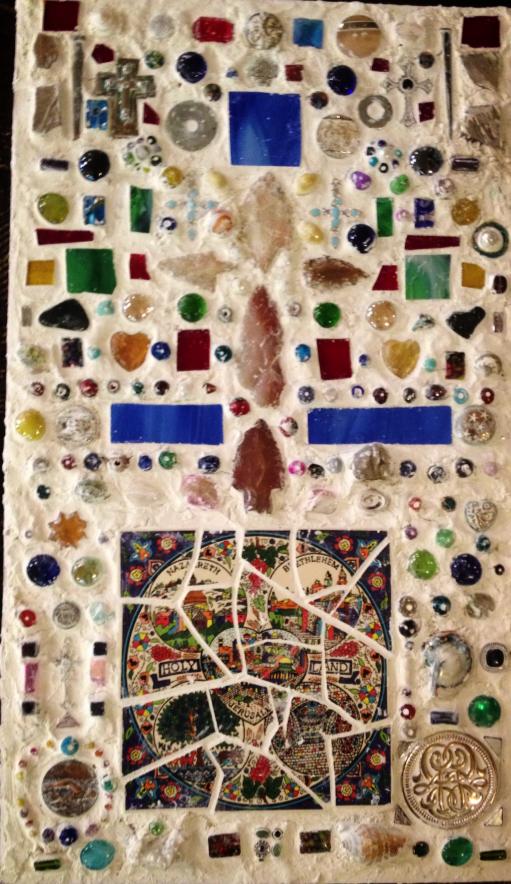
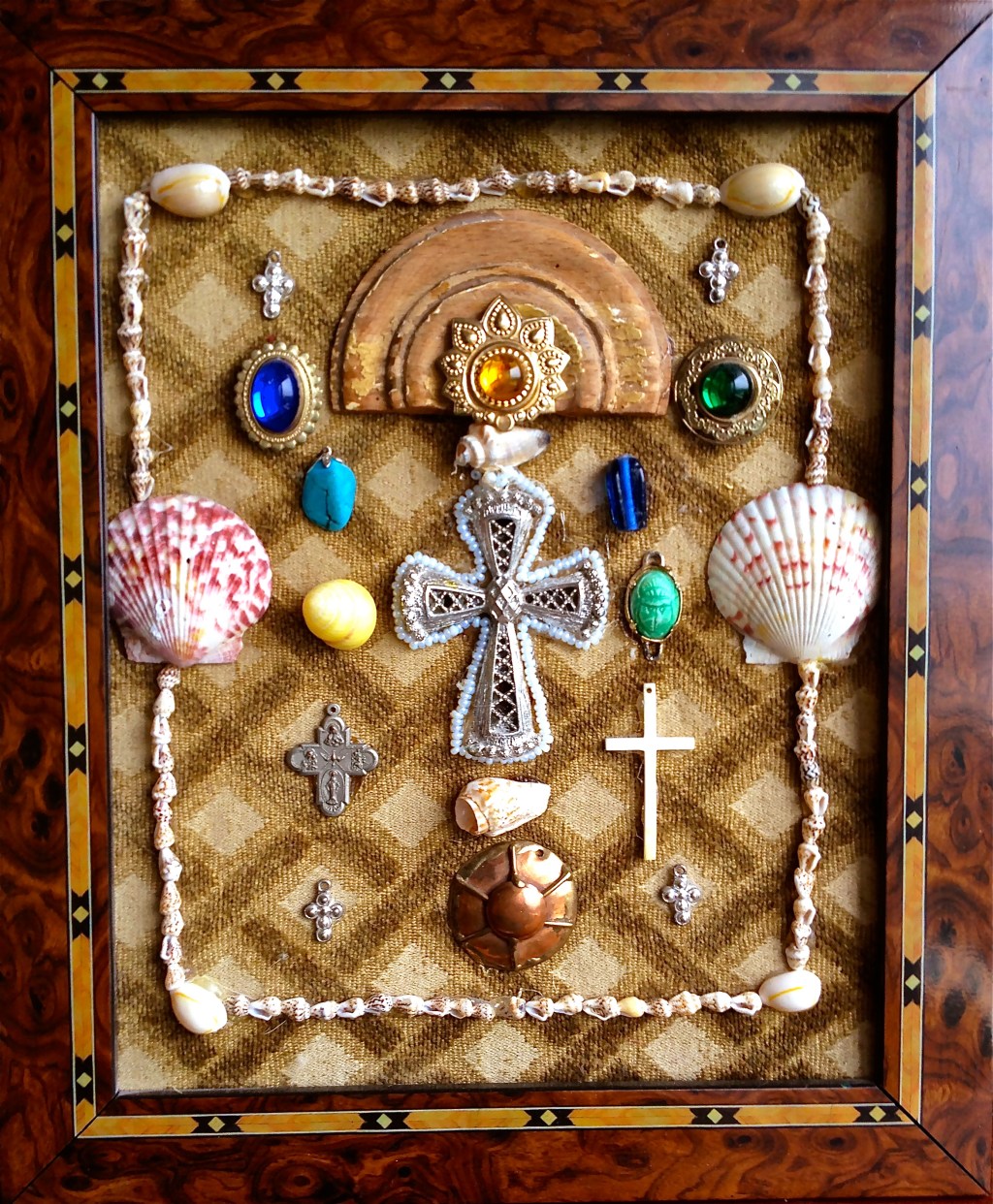
Mixed Media Icon of the Cross

Mixed Media Icon of the Cross

On that first Easter morning, Mary Magdalene might have been thinking, “No good deed goes unpunished. Why do the dogs bite the hand that feeds them? Why do the righteous suffer?” We aren’t unlike our first century cousin, for we ask the same question when bad things happen to good people. In fact, for most of us believers and non-believers alike, we aren’t thrilled when suffering comes into our lives! Most of us adults are like Job, the uber-Father: he offers sacrifices to God on behalf of his children just in case they fail to fulfill their responsibilities of faith (Job 1:5). We too try to keep our children free from suffering, and then when we or they suffer, we wonder why the righteous have to suffer when we too have been the protector of widows, orphans, and the weak (Job 4:5-6). Unfortunately, suffering is a fact of life, even of the blessed life, as Job was to discover. If we read the final chapters of the Gospels, the histories of the letters in the New Testament, and the stories of the lives of the Prophets, we will discover that those who are called to the God life are not immune to suffering.

Some strains of Christianity practice “Happy Face Theology,” but this is just the wearing of a mask to hide the inner struggles of our truly human suffering.  “Jesus suffered on the cross to take away our suffering, their theology says, so have faith and be happy.” Unfortunately, this notion denies the believer the crucial struggle with reconciling contradictory ideas and emotions.  It keeps the believer from building a rigorous faith that will stand up to the winds and turmoil that come from the storms of life. In the darkness we don’t need a shiny happy faith; we need a strong, deeply rooted faith, even if it can’t be seen above ground.

Another tradition of this Christian Feel Good Message is that those who do good will be rewarded and if we do wrong we are punished.  Christ’s death on the cross gets complicated for this theology: here the good person gets punished, but then gets rewarded in the end.  Suffering can have a purpose, if it’s for God. This opens up a whole bag of negative implications from permitting spousal abuse, sexual harassment, or accepting corporate child punishment “because the Bible has a text supporting it.” The Bible also has texts supporting slavery, eating only kosher foods, not wearing clothes made of two kinds of cloth, marrying more than one woman, and handling poisonous snakes during worship.  Most of us ignore those things, much to our credit! Jesus said we aren’t punished for our misdeeds by God, but God wants us to repent and live a new life (Luke 13:1-5).

Riches and honor, long life and good health are also promised blessings of this tradition in Christianity that we know as Prosperity Theology. It’s belief is that salvation’s blessings are to be found today’s world, which is attractive to people who are attached to this world.  Of course, the one who died on the cross and lay in the grave for three days said, “My kingdom is not from this world. If my kingdom were from this world, my followers would be fighting to keep me from being handed over to the Jews. But as it is, my kingdom is not from here” (John 18:36). We are like King Solomon of old, and the Wisdom Tradition that was popular during his kingdom. We are in love with wisdom/reason, foreign gods/idols, power, and we care for ourselves rather than the poor of the land. The kingdom of Israel doesn’t survive this second king after David, but splits into a northern and southern territory. The Promised Land doesn’t hold together when humanity choses to place the love of earthly riches and power above the love of God.

When the dark days of despair come into our lives and we are wandering and grieving around in a garden, perhaps we even ask if God has abandoned us.  We wonder if we lost the last coin in our pocket for the magic vending machine in the sky that has produced all the goodies we have been used to receiving just by dropping into church on a regular basis or by offering up prayers.  Now these words go out to the emptiness and our coin drops back with a depressing clink. What we forget to do is to read the Bible for ourselves. Preaching is for encouragement, so it usually is upbeat. Reading the Bible will give us the whole story. In the Bible we discover that faithful people suffer as often as they have joy. The blessings of faith aren’t for our enrichment, but to glorify God and build his kingdom. We are meant to spend ourselves and be spent for God’s kingdom: to give the best of ourselves to the least, to the last, and to the lost.

Salmon swim upstream against all odds to spawn to create the next generation, even though for some this will be the last act of their lives. This is an act of suffering and sacrifice for the good of those who come after them. We want to have our faith and keep it for ourselves.  We don’t want our young to suffer in any way possible, yet discipline is a mark of a faithful Christian. Are we different from the world, which chases profit, prosperity, security, social position and pleasure over pain? What marks you as one that swims upstream?

As a spiritual exercise, draw or photograph your idols: perfection, pure health, freedom from pain, wealth, security, or what ever you have made into your own little god.  Next to this draw a rectangle:  This is the void into which God will write the words and show you how God wants to use you.  Use this as a meditation time this week. Don’t feel rushed to write on the first day. Write whatever comes into your mind, individual words or images day by day. May this be a New Day for you!

Dream, Explore, Go

Creativity, Food, home, Imagination, mystery, photography, purpose, renewal, Travel, Turkey, Uncategorized, vision

Sunlight in the Pines

Sunlight in the Pines

“You shall take possession of the land and settle in it,  for I have given you the land to possess.”  ~~ Numbers 33:53

I overslept this morning, a behavior that seems more common lately. I did make to church yesterday. It was a grand day at Bristol-Baby! Even watching on TV, it had the makings of being there. Wrecks that took out the leaders, who would have expected that? Kyle winning, again. Joey Logano getting into a fight: the older he gets, the more his testosterone kicks in. Everyone will be glad to go to next week!

I am reading an ancient book THE ODD WOMAN, set in the early days of the women’s movement. In early industrial England, women of certain classes had limited choices: marriage, teaching, clerking, governess, or unwholesome occupations. The primary characters either ply these trades or have the economic means to live off the income of their estates. Two are out to change the world by teaching the shop girls how to type so they may move up a class and gain better working conditions.

Then last night I woke up several times with a very dry mouth. In between, I had several dreams, only one of which I even recall a fragment. As I slept, dogs and I spoke together as if we understood each other perfectly. Perhaps I need to write a book, DREAMING WITH DOGS!

As I made my morning ablutions, this verse popped into my mind, “You shall take possession of the land and settle in it, for I have given you the land to possess.” I had been thinking of exploring beyond my memoirs of Turkey and Greece, and what it means to be an explorer who never leaves home. How can one be both a settler and an explorer at the same time?

Settlers and explorers don’t share the same skill sets.  Nor do they share the same callings. If they were sailors, settlers would hug the known shores, while explorers would follow a star until they discovered an unknown land. Explorers want to try the new restaurant in town, while settlers feel secure ordering from a known menu and eating a familiar repast. I suppose this is why when church people move, they look for a place that feels like home and a church that feels their home church. These are settlers. Explorers, however, lead them, for the clergy are always moving into a land “God has given us” by virtue of our appointments. I grew up in a big church, thought I was getting a small church experience in seminary, and learned that there are still even smaller churches out in the world!  Culture shock is the sure sign of being out of your comfort zone, and a pointer that you travel not in the shallow waters anymore. John Wesley identified the explorer DNA of the Methodist clergy when he told them to be ready at a moment’s notice to “pray, preach, move or die.”

Agoraphobia–the fear of open spaces–affects nearly 1.8 million American adults (.8% of the population). Xenophobia–the fear of strangers– affects more of us, sometimes in subtle and unrecognized ways. The “other” is the one we fear because they aren’t like us. The tension this sets up between their settlement and our settlement constructs a “no man’s land” across which neither of us can transit. So we both lob bombs of hate, suspicion and denigration across into each other’s territory. US vs. THEM is our tribal rivalry, our devotions to our pack, and our adherences to our specific creeds.

The other race, immigrants, the poor, the rich, the educated, the ignorant, the churched, the unbelievers, and all other contrasts of our world, such as those that shop at Wal-Mart and those that wouldn’t be caught dead in the parking lot.  All of these are “strangers who live in strange lands.”

Sometimes we artists, creative people, and persons of faith think we must leave home to find the new experience that will open the eye of our imagination and set our creative juices flowing. We believe that only by traveling can we find the novelty that will awaken our senses that have been jaded by the constant bombardment of repetition. What we fail to do is to be explorers at all times, even when we return to the same address and the same bed each night. I have a set of coffee mugs for DST and for CST. I get bored drinking from the same set all year round and begin to miss the spring colored ones. These then are too bright in the fall and winter, so I bring out the deep colors and snow scenes. Monet painted his backyard many times: think Water Lilies!

Sometimes I feel the need to rearrange my 768 square foot condominium: then again, I decide to rehang the artwork to give myself a fresh look on the walls. Buying a new rug in Turkey was my big redecorating project for a while. I will change the cover on my bed according to the season, just to keep the room fresh. I am thinking of redoing the valence in the bedroom. I could still add crown molding and baseboards to the rooms, but I won’t do that until I change the floor covering. These projects are all worthy, but they take away from true creative pursuits. They are just signs that I want to strike out in a new direction, but I am afraid to leave the shore.

“You shall take possession of the land and settle in it, for I have given you the land to possess.” This word is for the explorers who yearn to be settlers also, for the Hebrews had been wandering for a long time in the wilderness when they heard this promise from God. For them, the land would be new, wonderful, exciting, full of surprises, and an explorer’s delight. Only later would they be a settled people, forgetting how God fed them daily in the wilderness, and instead trusting their own labor to wrest a crop from that land. They would forget as they sat at their looms patiently weaving that for 40 years in the wilderness, their clothes never wore out and their saddle leather never failed. As they became settled, they trusted themselves more and depended on God less.

The explorer, however, is always going into the unknown, so trusting God in all things is a highly developed characteristic.  “It is the Lord who goes before you. He will be with you; he will not fail you or forsake you. Do not fear or be dismayed” (Deuteronomy 31:8).  This is what the Hebrews were told crossing into the Promised Land, but within a generation they began to trust themselves and other gods. The explorers still trusted the same God who had been with them in the cloud by day and the pillar of fire by night.

“Where is my next meal coming from” is the same question as “from what source is my next creative idea or expression?”  How can I make ends meet is a question both settlers and explorers ask. Settlers will tie themselves to a plot, whereas explorers will find a way to live off the land. The same God provides for them all. “Look at the birds of the air; they neither sow nor reap nor gather into barns, and yet your heavenly Father feeds them. Are you not of more value than they?” (Matthew 6.26:). I think we would all be improved by trusting God a little more, by risking entry into the unknown land where God resides, and opening our hearts and minds to the other.

Perhaps that is why we travel, to discover amidst the uniqueness in others an essential humanity. I would be sad to think that some folks traveled hoping to discover the unusual, but yearned for only the familiarity of home, but then they would be settlers. People who travel looking for home, who spend time comparing their experience to home, and talk about how glad they will be when they get home have missed the joy of traveling! Why did they spend $4000 on a grand tour of the holy places when they could have stayed home and complained!? They may have just needed a change of scenery or the weather was poor at that time of year. I too can find a growl bear mood, but when this happens, I like to take my iPhone out and wander about to photograph the common scenes of my everyday life.

Taking photos that are interesting and might be useful for a painting requires me to pre-compose or imagine the image through the lens. Then I brighten and/or use one of the Instagram filters before I share it on Facebook or twitter. I will put the camera inside the flowering bush, lie down on the sidewalk to shoot upwards (just because I’m a granny doesn’t mean I can’t get up again!), or bend down to get eye to eye with a low subject. People’s photos often fail because they aren’t close enough, the light is from the wrong direction, the viewpoint is ordinary, and the subject or photo itself lacks contrast. In other words, they are safe, shore hugging pictures. Explore what your camera can do. Take it for a ride out on a big wave out beyond the breakers.  Feel the exhilarating breeze upon your face as your bark rushes over the tops of waves that have yet to break! You are flying! This is art! This is fun! You can bring your ship home anytime you want, but you’ll never be the same again. You are now an EXPLORER.

This quote is often attributed to Mark Twain, but it hasn’t been found in any of his writings. It still speaks the truth to all of us:

“Twenty years from now you will be more disappointed by the things you didn’t do than by the ones you did.  So throw off the bowlines, Sail away from the safe harbor. Catch the trade winds in your sails. Explore. Dream. Discover.”(—attributed in error to Mark Twain, first found in H. Jackson Brown Jr.’s P. S. I Love You (Rutledge Hill Press, 1990). Brown’s book is a collection of quotes and maxims attributed to his mother.)

Exploring New Lands

Creativity, Imagination, Prayer, purpose, renewal, Uncategorized, vision

“Now the LORD said to Abram, ‘Go from your country and your kindred and your father’s house to the land that I will show you.’” ~~ Genesis 12:1 

All Women Are Flowers--Sign in Turkish Public Restroom

All Women Are Flowers–Sign in Turkish Public Restroom

Finding a restroom in the States is pretty simple. Most of us eat in “box” restaurants, not that we always eat fast food. Every chain restaurant is built according to the same design, so the one in which I eat in my hometown is the same as the one on either coast of these United States.  We may be divided in our politics, but were united in our affection for the Cheesecake Factory, the Texas Roadhouse, Olive Garden, and PF Chang’s China Bistro (Forbes, 2011: Ten Best Casual Dining List).

In a foreign country we are bereft of these common designs as we travel. Each day presents a new challenge, a new place, and new discoveries to be made. Travel can be exciting or overwhelming. Take the matter of finding the restroom in a foreign country. Will you understand the directions if you ask “WC?” and suddenly a rush of many words flood from the native mouth? If they point, how far is it and will it be one of those clean modern facilities or a stand up primitive lavatory? Some folks just decide to let the more adventurous do the discovery work and report back.

Some in our small band seem to have difficulty finding the restrooms without these common cues from home. They don’t ask if they don’t see the signs. The signs are hard to pick out among all the items offered for sale in every place that we stop! (Maybe they don’t play the hidden object games on iPad: today there were 591 results for hidden object games!) Perhaps because I am a firstborn child, I am a natural explorer. I just follow my nose because I “know it is there or I will walk until I find it.” Nothing will get between me and a bathroom break, for I am a woman on a mission when I have a need.  Then again, I am a mother and have had a small child who loved to visit every bathroom in every facility she entered.  I learned quickly to pick up on the cues for location of restrooms in every type of building you can imagine.  We explored some interesting places! I can still see the look on that precious face that said, “Now! Mom! Now!”

“To go” now is implied in God’s command. To make a clean break from his country, his kin, and his family is a big deal. For Abram, for any of us, to turn our backs to all that we have ever known and loved would have been heart wrenching. If we are uncomfortable finding the WC in a strange land, we probably aren’t the type of folks who would chuck it all as Abram did.

I have met families in my ministry who have four generations living within a half mile of each other. My own family is spread across the entire USA.  Perhaps my family has the type of faith required to “go to a land I will show you” rather than stay put among the known and the secure.

In this “journey to the unknown land,” faith and art have much in common. In art, we work from an original design idea or concept, but any piece that doesn’t grow beyond that initial premise hasn’t been fully developed.  The same goes for our faith. If it doesn’t grow beyond our childhood notions of “being nice” and “Jesus is my friend” then we won’t have a robust or rigorous enough commitment that will help us stand our ground when the trials and tribulations of the road we travel assail us.

Insipid works of art, as well as faith that has lost its saltiness, aren’t worth much. I bought a painting for $10 at the Habitat Restore. The clerk said, “you got a deal.” Yes, I said. The frame is worth more than $10 and I’ll use the stretcher strips with new canvas and make my own new painting. The raw materials alone are worth $60. It’s a good buy, but it isn’t a good painting. Our faith can be like this painting: it looks pretty to someone without the ability to discern what is true and real, but it is only meant for destruction (Matt 5:13).

To turn our backs on all that we are and to go out to become some new creation is the very essence of faith. This is called “regeneration” or rebirth/new birth.  It is the state of the believer who becomes a “new creation in Jesus Christ “(2 Cor 5:17).  We are able to live a new life in Christ, to live as Christ, and to live sustained by the Holy Spirit. We will not live it perfectly at first, but we will grow into increasing holiness of heart and life over time.

So why do so many artists and people of faith hit a comfortable spot on their journeys and fail to move beyond it? Artists get comfortable with a style and recreate new works in the old style for commercial success.  In faith, we get to the point where we don’t want to be challenged anymore, and we switch to cruise control for the rest of our lives, as we say, “I’m good enough; God will complete the rest.” Are we afraid to push beyond our small success? Do we think God isn’t big enough to take us farther? Or do we fear going too far away from “home?”

To discover the answers to these questions, draw your artistic and spiritual maps. Are they going to a land God will show you, or have you been taking the well-worn paths near home? Are you listening to the call God has placed on your heart? This may be the week to try a new medium just to shake out the cobwebs and to give you a challenge in your studio.


Doing Battle With The Dragon

Children, Creativity, Fear, Health, Holy Spirit, Icons, Imagination, Mental Illness, mystery, purpose, purpose, renewal, Stress, Travel, Uncategorized, vision, Work

“The horse is made ready for the day of battle, 
but the victory belongs to the Lord.”  ~~ Proverbs 21:31

Mount Erciyes, Cappadocia, Turkey As I journeyed with my group along the Silk Road on the fourth day of our pilgrimage, we saw the twin peaked volcano Mount Erciyes, on which St. George of Cappadocia was said to have slain the dragon. As we made our 400 miles across the sunlit fields with poplar trees into the tufted fairy mountain volcanic formations, I had several conversations about art and artists with my fellow travelers. We had visited the Firca Ceramic Factory in the morning. The artisans there explained their apprentice program and the process of training to become a master potter. Not everyone makes the cut, of course, but they can still be employed at the level of tradesman or tourist ware producer.

For people who have no concept of the time, effort, sensibility or spirit that is necessary to produce a great work of art, this “educational session” went right over their heads. Others had their “consciousness raised,” as we used to say back in the old days. This latter group happily gave a fair price for the extraordinary works of these artists’ hands.  I myself brought home a small plate of colorful fish to remind me that I am always called to “fish and to catch the hearts, souls, minds, and bodies of others for the sake of Christ and his church” (Matt 4:19).

At lunch I visited with one of my new friends. She asked, “Why did it take Michelangelo so long to paint the Sistine Chapel?” Because it was fresco—fresh plaster. He could only work while the plaster was wet. Bodies with clothes and landscapes went quickly, but nudes and faces were painted more slowly. If we could get up close we could tell by the edges and lines how much he did in a sitting. “Oh. Everyone who saw the chapel on our tour was kind of bored with it all. Now I understand why it was so important.”

I realized it’s because not many of us make art anymore, just as most of us don’t can jams or jellies. We also don’t quilt, knit, crochet or embroider. We buy our clothes premade and our foods prepackaged. Cooking from “scratch” is a lost art. We don’t seem to want to dirty our hands any more with the creative process. Instead, we have lost the spirit that calls us to enter into battle with the raw materials. We are a people without faith that God is with us in these fights. It is as if we are afraid to risk losing the battle, so we do not enter the fray.

I have recently been teaching art to prekindergarten children. The first thing I had to teach their classroom teacher was that “failure in art is part of the process of learning how to succeed.” In other words, it’s not the finished product of polished perfection that we seek, but the child’s growth in using the tools correctly and their creative response to the imagination challenge of the day.

The second teaching principle was allowing the child to do his/her own work.  Many of our parents have “taken over” doing for our children so they can have a good outcome. These children will have poor motor skills and will not be self-sufficient when they grow older. They will be less independent and less confident.  However, they can master skills in art class that can give them a sense of self-esteem that comes from accomplishing a task, taking charge of their own work, and creating their own designs from their own fertile imaginations.

The third principle about art is joy, and I usually don’t have to teach this to the children.  They love to play and the colors, materials, textures, and tools are great ways to explore the world in play. For adults, however, art is about the finished product from the get-go, so we worry that our idea will not come across on the canvas or paper.  For the work to come alive, the artist must let go of that original idea and go with the image that begins to come to life on the canvas. Sticking with the old idea is like staying with the old battle plan when the lines of engagement begin to shift. We all know what happened to General Custer at Little Big Horn.  The same death will happen to our creative product if we don’t pay attention to the new information coming t us from the front lines.

Likewise, in our lives, we don’t listen to the battles going on in our hearts, minds and bodies. Some might call this our conscience, or that voice that whispers “this isn’t right for you.” That other voice that whispers so sweetly, “but everyone else is doing it…” is like St. George’s dragon, or the personification of evil. Flip Wilson’s character Geraldine used to say, “The Devil made me do it!”

We can go along with the “demon voice” of “everyone else is doing it” and discover that our moral standards are at the lowest common denominator, and we make decisions not on any ultimate truths or standards, but on conditional and relative criteria. The ground is always shifting under us, like a mountain about to erupt. If we refuse to fight this particular dragon and “go along to get along,” then either our mental health or our physical health will begin to fail us. We may intellectually marshal the arguments of reason for our refusal to do battle against this insidious dragon, but like the fiery beasts of the old tales, they will surely begin to ravish the countryside.  In this case, the country isn’t Cappadocia, but the heart and mind of the one who needs to gird the horse for battle.

Many of our modern illnesses are related to stress, which comes from having to reconcile two discordant tunes in one’s head. Only when we can fine that one tune to hear will we be both well and at peace.  Another image is trying to “spot paint a wall that was painted too many years ago.” Putting fresh paint over dull color will make this one spot stick out like a sore thumb.  One must paint the whole wall, and of course, the other three walls and the ceiling, for the rest will look too sad next to that freshly painted wall. The truth is we can’t just put a new piece of cloth on to an old garment; we must change out the whole thing. This is called a “make over” or a life style change, or the “new life in Christ.”

I myself have had a lifestyle change from the hectic, caring for the lives of others that is the life of a pastor to the new life of caring for myself in these years of being on incapacity leave.  These past four years others from my old life have pushed me to be “more involved and to do more ministry with and for others” in the hope that I will be able to return one day to full or part-time ministerial service.

As I listen to my body, I realize that the stresses of these activities aren’t for me anymore. I can do them on an occasional basis, but not on a weekly basis, and definitely not on a daily basis. I am healthier when I am in the solitude of my studio writing and painting. I need the quiet to stay well and avoid the stress that brings on the seizures. Here I can reflect on the battles between good and evil, the struggles we all have to live the full Christian life.

We all do battle against the dragon.  Some of us want to be at the heart of the action, to receive the affirmations of the people to be there for them and to touch their lives. We think if we can make a difference here, it will atone for our failures to make a difference somewhere else or in some one else. We will be at peace when we understand that while we may gird the horse and swing the sword, “the battle belongs to the LORD.”

As an artwork for spiritual reflection, find an icon of St. George and the Dragon. As you meditate upon it, write out the words of your particular “dragons.” These are the powers and principalities that you struggle against: pride, fear, self-doubt, worry, hopelessness, arrogance, anger, weakness, hate, etc.  You can make the words of any size or shape. Embellish them with wings, give them an elongated tail, scales and an open gaping mouth. Now draw a large sword, gleaming brightly in the light of day. Upon this sword write the words of power that come from scripture: “The battle belongs to the LORD!”

Keep this image near you this week and draw strength from it: God is at your right hand!

For photo & info on the volcano at Mt. Erciyes:  http://volcanocafe.wordpress.com/2012/03/29/cappadocia-upright-volcano-of-turkey/

For Illnesses related to Stress:  http://www.webmd.com/balance/stress-management/features/10-fixable-stress-related-health-problems

The Fairy Nativity: A Simple Christmas

Creativity, home, Imagination, photography, purpose, renewal, Uncategorized, vision

“There are winds created for vengeance and in their anger they can dislodge mountains. On the day of reckoning they will pour out their strength and calm the anger of their Maker.” ~~ Ecclesiasticus 39: 28 

Seventeen days and counting to Christmas: Grey Thursday, Black Friday holy family and the Great Christmas Sales are upon us. Wal-Mart is covered up with people like the great ski slopes in the mountains should be covered with snow at this time of year. The Salvation Army bell ringers are out, but their friendly jingles and smiles aren’t making much of a dent into the general mood with Fiscal Cliffadedron, Egyptian Meltdown, Iranian Idiots, or Syrian Chemical Weapon threats weighing heavy in the air.

People aren’t much in the mood for Christmas this year, perhaps because our expectations are too high. We wanted a “Good Thanksgiving” with a happy family all gathered around the table, but the drunk uncle made his appearance once again and the kids all wanted to text the entire meal, while Dad wanted the food served in the “media room” so he wouldn’t miss any of the game.  This didn’t make any of the lady folks happy after baking and cooking for two days for the thirty-minute meal. So the gals took the credit cards and maxed them out on the early deals Thursday afternoon.

Now we have the incessant commercials of increasing expectations berating us on the TV: moving up to a bigger car, a bigger diamond, or giving your stepchild a diamond just like the one you gave her Mom (this is outrageous, children shouldn’t get diamonds until they are grownups! They need to have something to look forward to!). But most of our lives today aren’t like this, for we are more like the 99% and less like the 1%.

I was recently in Turkey in the region of Cappadocia. There is an area called the Fairy Mountains that has unusual stone pillars and shapes that have been worn away by the wind, rain, and blowing sand.  One such

fairy mountains cappadocia

fairy mountains Cappadocia

shape is a camel, and another grouping of three is known as the “holy family.” This Nativity Scene makes me think of all the precious sculptures I’ve seen. Most of them are highly sophisticated, brightly colored, and “clean” for that is truly how we view holiness.  This isn’t the world the Christ Child was brought into by his parents, however.

Mary was a young teenager when the angel came to tell her she would bring the Christ into the world without benefit of a husband, that is, it would be a virgin birth. Folks in the village soon began to talk, and Joseph was going to break off their engagement, but an angel told him in a dream it would all work out ok.  When Mary began to show, however, she needed to leave town, so she went to see her older cousin Elizabeth who was also with child.  These two were alike in that they were “outsiders:” Elizabeth was alone because her husband wasn’t able to speak because he doubted the Lord was at work in his wife’s pregnancy and Mary was alone because her family and town doubted her story.

When the census time came, everyone had to go to their ancestral hometown. Mary and Joseph went to Bethlehem, the city of David, but no one would let them stay in their inn. The text says there was no room for them in the inn, but Joseph wasn’t a stupid or slow man.  He didn’t wait until the last minute to take his very pregnant wife on this trip, so that all the hotels and motels were already full. People back then are just like people now: they talk, they make judgments, and folks decide that out of wedlock babies are unwelcome in their nice establishments.  One innkeeper did take pity upon them and gave the family a place in the stable among the animals. The baby was born there; the king of the world had a manger for his throne, and the animals for his court.  Angels proclaimed the Savior’s birth to shepherds, outcast persons on the margins of society because they were not clean. They were the first to honor him. Strangers from the east came to worship him and give him gifts, aliens and nonbelievers rather than the Jews themselves.  His mother  “…treasured all these words and pondered them in her heart” (Luke 2:19).

The King and the priests heard the strangers from the east ask: “Where is the child who has been born king of the Jews? For we observed his star at its rising, and have come to pay him homage” (Matthew 2:2).  They conspired among themselves to murder all the newborn baby boys when they didn’t find out the one name. Joseph took Mary and Jesus in the middle of the night out into Egypt, for he was warned in a dream that the child was in danger.

This Christ Child knows the pains of the world from the very beginning of conception, for he knows the loneliness of the poor and the isolated, the rejected and the misunderstood. He knows that if the king of the world will be rejected and despised, so will all we lesser human beings. If we are persecuted in this world, we are in good company, since he was singled out from birth and many innocents died on his behalf (Matt 2:13-33). His family fled with the clothes on their backs, but they carried the gold, frankincense and myrrh gifts he received as gifts for his ministry and burial.

Most people don’t read the Nativity Story this way, but when I look at the way the wind wears away the stone, I have to think that these figures are the strength that is left after the winds have torn away the soft parts. The hard parts, that core that remains, is the true part that is the inner strength that comes from the inner spirit of a person.  The winds may move mountains and reveal a new shape, but that is just God’s recreating power at work.

The biblical word for wind and spirit are the same, so the Holy Spirit can be the rushing wind that changes our hearts and minds into the new shape God has in mind for us.  The American Bible Society says that each American home has 4.3 bibles in it in 2012. However, most people aren’t reading it, for 46% couldn’t tell the difference between the Koran, the Bible, or the Book of Mormon.  What’s worse, 50% of Americans, including Christians, couldn’t name ANY of the four gospels (Matthew, Mark, Luke, & John). The Bible’s oral traditions have been around for 6,000 years, and it’s been written down for 4,000 years.  Surely that is a testimony to its robustness: the winds of other ideas may blow against it, but its inner strength stands firm against all the storms.

As a spiritual art project, make your own nativity from found objects, the more humble the better.  If you go on a nature walk, find rocks or pine cones and paint them with minimal decoration so that they are recognizable as “figure” or “animal”. If you make them from toilet paper rolls, use construction paper and simplify the figure drapery.  These should be fun because you need to quit thinking “perfect” and allow yourself to “enjoy Christmas for a change!”  Have yourself a Merry Simple Christmas!

Money Can’t Buy Art

Creativity, generosity, Grand Bazaar, Holy Spirit, Imagination, Meditation, photography, purpose, Spirituality, stewardship, Turkey, Uncategorized, vision, Work

“But where shall wisdom be found? …It cannot be bought for gold, and silver cannot be weighed out as its price.” ~~ Job 28:12, 15

The recent national elections for President, Senate and House seats cost around $6 billion dollars. At the end of all this storm and fury, the Republicans still hold the House, the Democrats still dominate the Senate, and Mr. Obama is still the President of these United States of America. One candidate, Linda McMahon, the former CEO of World Wrestling Entertainment, spent nearly $100 million of her personal fortune on her two failed bids for the US Senate seat from Connecticut. This is proof that money itself doesn’t buy elections.

Some of my younger friends are prepared to leave the country: anywhere but here is looking good to them. Then there are the secession petitions on the government’s own web site (https://petitions.whitehouse.gov) filed from all fifty states since this election, including one from Vermont (a “safely Democratic state”), from disaffected citizens who are unhappy with the outcome and don’t want to live under this elected government. (We live in America, not Burger King; we all don’t get to have it “our way.”) We seem to think that the grass is greener on the other side of the fence, or things would be better if other leadership were in charge.

Having just returned from a recent journey to Greece and Turkey, I can say with certainty that every person in every place is in some way unhappy with their own government, but they all continue to muddle along. Our own founders designed a famous “system of checks and balances,” so that no part of our government can get the upper hand. Sometimes nothing gets done for a while, as the politicians wait to see if new leadership will take the reins when an election year comes around. When that fails to happen, they get down to brass tacks and do their deal making, especially if they can see the proverbial “fiscal cliff” looming ahead. We don’t act until the last minute either, for we’ll wait until push comes to shove, and then make the hard decisions that have to be made.

The ordinary deals that we make every day pale in comparison, however, to these big number compacts and agreements that our leaders make that affect not only Americans’ pocketbooks but also the whole world’s economy. For us, we make the small decisions: Should I shop at this employee owned grocery store, where the prices are a little higher, or should I shop at a big box grocer who buys in bulk and passes on the low price savings to me? Both are providing jobs for people, but one pays its dividends to its employee-owners and the other pays its dividends/profits to stockholders. We probably aren’t thinking of this secondary consequence of our use of money, for most of us want only the “biggest bang for our buck.” We don’t often consider the moral or ethical consequences of our money’s impact.

What guides our economy today is the “low price.” We outsource jobs overseas to take advantage of lower wage labor that will lower the costs of products to entice Americans to purchase them. It doesn’t matter that the quality of the goods aren’t as high, for unskilled persons are replacing skilled American crafts people who earned a higher wage. We have become adjusted to paying less and expecting less, and we say, “You just don’t get good stuff anymore.” We are so used to mass-produced, manufactured goods that our senses are dulled and we are unable to appreciate the truly good things of life.

On my recent trip to Turkey I shopped with some of my touring companions in the Grand Bazaar of Istanbul, a city of more than 13 million people. Here we saw spices, pipes, leather, gold, silk, cashmere, art, souvenirs, clothing, silver and baked goods. This Byzantine Bazaar has 61 covered streets, but we covered only a few on our short tour. It’s one of the oldest covered markets still in existence, with nearly 500,000 people visiting daily. This was our first day in a foreign country, so everyone was worried about safety: personal and financial. This is a big pickpocket area, but then anywhere folks are spending money is a pickpocket area, even in the USA. Folks “lose their wallets in Wal-Mart” when they don’t pay attention to their surroundings. As the holidays approach, I expect the stories of loses will go up also.

We window-shopped and I stopped to finger the scarves. The merchant began to educate me: “Very fine: 50% cashmere & 50% silk. All cashmere, this one. These rayon and wool. This group just rayon.” Oh yes, very beautiful. My group says to me, “You’ll pay too much for a scarf here, Cornelia. There’re some pretty ones for 12 Lira ($6) back there.” This is when I realized that my group was not trained in art, but was trained by the Bottom Line. They bought into the idea of the Low Price, but my Mother taught me that “you get what you pay for.” At this one merchant, I purchased the silk and cashmere shawl in a beautiful green pattern. It was a “value” buy, but not a “cheap or inexpensive” purchase. Later on in Turkey, I purchased several of the lesser quality and lower priced colorful shawls to have a variety of fun throws for everyday wearing.

We get what we pay for. We artists sometimes wonder why our work doesn’t come out the way we imagined it. We may be using inferior materials, “cheap” paints unworthy of good ideas. If you are a hobbyist or a student and you aren’t progressing in your work, try moving up to professional grade pigments & brushes. Great ideas deserve great materials! You will get more intense colors, more rich interactions with the paint, and more intimate involvement with your work. Don’t worry that you are “spending more money,” for these paints will last longer than your “cheap” paints, for you will use less paint to cover more space. Why throw good money after bad paint? Buy the best! Use the best! Become the best!

Wisdom isn’t bought for silver or gold, it is found in the heart and mind of God. Perhaps you need to reassess your calling: do you seek only the mass produced and the low priced? Where does your money go? Are you supporting great corporations only, or does part of your money also support small farmers or fair trade growers? Do you purchase any handmade crafts or is everything manufactured? Consider what that does to your soul.

This week make something hand made to add to your home. An easy project is a pillow cover. It is two squares of cloth sewed together on three sides and a pillow form for the insert. Once it’s stuffed, turn the 4th open edges inside, pin together and whip the opening closed by hand stitching. You can add embellishments on the corners if you like.

This link from the Huffington Post identifies the true costs of secession from the USA. http://www.huffingtonpost.com/mobileweb/2012/11/20/cost-of-seceding-from-united-states_n_2165696.html